Showing posts with label Security Council. Show all posts

Wednesday, April 10, 2013

Don’t Deny BRICS its Relevance


Kanwal Sibal, 
Dean, Centre for International Relations and Diplomacy, VIF

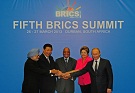
Media commentary in India on the fifth BRICS Summit, held in South Africa on March 27th, has not been particularly positive. Attention has been drawn to the artificial character of this grouping originally thought up by Goldman Sachs, the conflicting interests of its constituents, the disparate nature of their political systems, the doubtful advantages to India of membership, and, now fears of Chinese domination of this ensemble because of its overwhelming economic and financial weight.

If the logic of this criticism were to be accepted, it will apply partially to the United Nations, the IMF and the World Bank too, where differences in the political systems, power equations and interests of countries are even more marked, with the influence of one country-the United States- being the most decisive. The G-20 also cannot be exempt from such criticism too. Yet India is a member of all these international organizations or groupings, without self-questioning.

Nature

The perceived anti-West orientation of BRICS is troubling for some. True, the Russians pushed for its creation in order to forge a partnership between major non-western countries to promote multipolarity. Members like India- and this would apply to Brazil and South Africa as well- believe in a reform of the West-dominated international system in which their voice is not sufficiently heard. Groupings like BRICS can act as platforms for calls for change, without the three countries in question slipping into any futile anti-westernism.

We should not overuse the democracy argument to question our cohabitation with China and Russia in BRICS. If we are supposedly in bad company, then it is worth recalling that US financial and economic links with China, or those of major European democracies, are incomparably greater than ours. We should also be careful not to buy into the highly tendentious western criticism of Russian democracy for geopolitical reasons.

We are against policies of regime change, interference in the internal affairs of sovereign countries, politicization of human rights issues and doctrines of humanitarian intervention etc. India-Russia annual summit declarations show congruence of thinking on the principles that should govern international relations. With Brazil and South Africa too we have such consonance. The BRICS platform enables all of us to project our opposition to western efforts to create new, destabilizing norms.

In BRICS only India and China have sharp bilateral differences. Should we be in a grouping that provides space to China to expand its influence internationally, eventually at our expense? Russia too should have similar concerns theoretically, but it is working closely with China politically, economically and, once again, militarily, as the decision to sell it 24 SU-35 aircraft, the very that lost out in competition for the supply of 126 aircraft to us, shows. This is discomforting for us as it devalues the relative importance of India-Russia relations to China’s advantage.

Despite this negative feature of BRICS for us, there are clear strategic advantages of membership. BRICS is an instrument of pressure for change in the international system. The eThekwani Declaration calls for new models and approaches as regards global governance. It notes the negative spillover effects of the monetary policy of US, Europe and Japan which have led to increased volatility of capital flows, currencies and commodity prices, with negative growth effects in developing countries. It calls for prioritizing the G20 development agenda. It expresses concern at the slow pace of IMF reforms and demands that International Financial Institutions should reflect in their structures the growing weight of BRICS and other developing countries. The core principles and the developmental mandate of the Doha Round are stressed, besides asking that the next Director-General of the WTO should be a representative of a developing country. All this reflects India’s thinking and interests.

Declaration

The declaration calls for a comprehensive reform of the UN, including its Security Council, with Russia and China reiterating the importance they attach to the status of Brazil, India and South Africa in international affairs and supporting their aspiration to play a greater role in the UN. This kind of patronizing formulation was not needed by India, which is less than what Russia offers us bilaterally.

The eThekwani declaration is moderate, with no anti-western bias. The paragraph on Syria is balanced; the one on Palestine repeats standard formulations. On Iran, there is a call for a negotiated solution, with concern expressed about threats of military action as well as unilateral sanctions. The paragraph on terrorism accords with India’s position. The one on Afghanistan is unobjectionable. The paragraph on climate change is non-controversial. The importance of peaceful, secure, and open cyberspace through universally accepted norms, standards and practices is emphasized.

Steps

Because the summit was held in Durban, the focus on Africa in the proceedings- with participation of several African countries in discussions- and the final declaration is prominent.

The decision to set up a New Development Bank with substantial and sufficient initial contribution to finance infrastructure in emerging and developing countries has attracted adverse attention, as if working outside the World Bank or ADB is unacceptable. Differences over the size of funding and fears of Chinese domination have been highlighted. A Contingent Reserve Arrangement (CRA) with an initial size of 100 billion US $ to help BRICS countries forestall short-term liquidity pressures has also been established. These are steps in the right direction.

We should not be dismissive about the declared aim of progressively developing BRICS into a full-fledged mechanism of current and long-term coordination on a wide range of key issues of the world economy and politics. This is part of our sensible policy of playing on all chess boards with prudence, calibration and no ideological bias.

Thursday, March 7, 2013

Friends with Benefits


Kanwal Sibal 
(Member, VIF Advisory Board)

The back-to-back visits of the president of France, Francois Hollande, and the Prime Minister of Britain, David Cameron, last month have put the spotlight on India’s relationship with Europe. Some belittle the importance of this relationship as Europe is seen as economically crisis-ridden, lacking in dynamism, to be declining militarily and too prone to act as a super NGO in propagating its values. The belief that economic, political and even military power is shifting towards Asia underlies this depreciation of our partnership with Europe. While the relative decline of the United States of America is recognized, its recovery is considered more certain than that of Europe. The high growth rates in India in recent years, the projection that India will become the third largest economic power by 2030 and the bracketing of India with China has also inflated our sense of self-importance vis-à-vis Europe.

Some pundits have the gumption to say, without being too self-conscious of India’s own glaring governance failures that allow abysmal levels of poverty to persist, that if France is to become a partner more in sync with a new post-liberalization India, the key would be to make itself meaner and leaner at home. This refers to the hard decisions France needs to take on welfare costs and government-spending. The United Kingdom, which is financial-services reliant, is scoffed at as a serious economic partner in view of its eviscerated manufacturing sector and the economic crisis afflicting it, a reality seen to limit the scope of any substantial UK investment in India’s infrastructure. The non-committal language of the India-UK joint statement on British participation in a possible Mumbai-Bangalore industrial corridor reflects this.
Yet, the European Union is India’s biggest trade and investment partner. India weathered well the US financial crisis, but the Eurozone turmoil has affected it appreciably. India and the EU are negotiating a free trade agreement in which both France and Britain have an important say. France and the UK, as the fifth and sixth largest economies in the world respectively, are all-important partners for a rising India. France has great strengths in the nuclear, space and defence sectors, and these, along with urban development and infrastructure areas got highlighted during Hollande’s visit. The UK too has several advanced defence technologies to offer and its strengths — healthcare, education and other services — came under focus during Cameron’s visit. Both, as permanent members of the United Nations Security Council, weigh critically on international security issues. Both engage with India within the G-20. In the World Trade Organization and climate change negotiations, India has to contend with European positions determined with French and British participation.

Some argue that France is not as much a diplomatic and strategic asset for India as before because the US is setting the pace for global accommodation of India, and Paris and London now follow in Washington’s wake. But this argument exaggerates both the degree of strategic convergence between India and the US and the degree of US hegemony over Europe. Such thinking implies that we should simply adjust ourselves to US’s strategic priorities and the vagaries of its political processes and moods. Such strategic over-reliance on any one country is hardly compatible with India’s global ambitions. Partnership with a country like France, still attached to its independence in decision-making, helps India to maintain its strategic autonomy.

Despite a remarkable improvement in India-US ties, our respective views differ on, for instance, handling Pakistan, its role in terrorism and its nuclear activity supported by China, the end-game in Afghanistan and overtures to the Taliban. Views are also different on the sanctions on Iran and military threats against it that have squeezed India’s oil trade and potentially imperil its interests in the Gulf, the bombing of Libya, the regime-change being promoted in Syria and the willingness to accommodate extremist religious forces in the Arab world. On some of these issues, as for example, seeking accommodation with the Taliban and the responsiveness to Pakistani ambitions in Afghanistan, Britain is ahead of the Americans and India needs to press it to be more transparent with it on British diplomacy in the region. France is with the US on Iran and Syria, but it has ceased supplying advanced or new military platforms to Pakistan in deference to India’s sensitivities, which the US disregards. With both countries, strengthened counter-terrorism cooperation is an asset for combating a threat to which India is especially vulnerable because its epicentre lies in Pakistan next door.

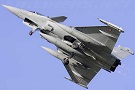
Britain and France are allies of the US and therefore on political and security issues, though not on economic issues, their policies have considerable convergence. But the edgy competitiveness between France and the Anglo-Saxon world for political space should not be underestimated either, not to mention their clashing versions of capitalism, with the French welfare model with strong unions and labour laws inviting relentless American and British broadsides. All three compete quite ferociously with each other in India, as the 126 fighter aircraft contract demonstrated. The US felt mortified at the loss of the contract to the Europeans, and the British continue to question India’s wisdom in choosing the Rafale over the Eurofighter and still hope the deal to get somehow unravelled to their advantage. Hollande’s visit, however, saw both sides noting the progress of ongoing negotiations on the medium multi-role combat aircraft programme and looking forward to their conclusion. This was, no doubt, much to the discomfiture of the British. As compared to the highly legalistic, intellectual property rights ridden US approach to technology transfers, the French are much easier partners in this regard. All in all, France is way ahead of the US in meeting India’s defence needs in terms of aircraft, submarines, missiles and so on. France is negotiating a major project of joint development and manufacturing of a short range surface-to-air missile with India’s Defence Research and Development Organization, which, until President Barack Obama’s India visit, was under US sanctions. Cameron supports greater cooperation between DRDO and the UK Defence Science and Technology Laboratory. French and British supplies of defence equipment are, furthermore, not accompanied by intrusive end-use monitoring requirements, as is the case with US supplies.

France has much more advanced nuclear reactors to offer India than the US. Its civilian nuclear deal with India excludes many controversial provisions of the India-US deal and provides for “full civilian nuclear cooperation”— a code word for the transfer of enrichment and reprocessing technologies, which the US has excluded from the purview of its cooperation with India. France is ready to work with India within the framework of the rules of our Nuclear Liability Act, which the US companies refuse to do. As agreed during Cameron’s visit, India and the UK will now begin negotiations on a civil nuclear cooperation agreement. Indo-French cooperation in space has been intensive, with Arianespace launching India’s INSAT satellites, the launching of jointly-developed satellites on Indian launchers — the SARAL being the second — and France using the PSLV to launch its SPOT 6 satellite in September last year. The two countries are drawing up a long-term plan of cooperation in satellite technology, an area that remains outside the scope of India-US cooperation. The UK is not India’s partner in space.

Both Hollande and Cameron manifestly want deeper ties with India. We have an opening to build stronger partnerships with both.

Wednesday, October 10, 2012

Pakistan’s Russian Roulette


Sushant Sareen
Senior Fellow, VIF

From the day of its creation, Pakistan has always looked for an external patron, one which will pay its bills (or at least a part of them), indulge it with easy money for national projects, provide it with military hardware (or if you will, ‘toys for the boys’ so that they could indulge in their adventurism, mostly against India), lend it diplomatic and political support (once again mostly against India), and bolster its security against imagined and self-created enemies. The country which did all this and more for a larger part of the last sixty five years was the USA. During this period, China also started playing a crucial role in Pakistan's strategic calculus. But unlike the US, which ideologically never subscribed to giving a free lunch but always ended giving one to Pakistan, the Chinese who always spoke about giving free lunches (remember they are at least nominally communists), never gave a single free lunch to Pakistan. Not surprisingly, China has never really been able to stand in as a replacement for the US and the Pakistanis understood this even if they never publicly acknowledged this.

In recent years, however, relations between Pakistan and the US have seen a sharp downturn and nearly reached breakpoint on a couple of occasions. Although both countries have, for the moment at least, papered over their very deep differences, there is no trust, and certainly no love, left in the relationship which is all but broken. Notwithstanding expressions and assurances of fidelity by both sides, they are both preparing for life after separation. As a superpower, the US could easily turn its back on Pakistan except for the fact that Pakistan is not only a fountainhead of Islamist terror but also a nuclear weapon country and a nuclearised Jihad is probably the US’ worst nightmare. Add to this the US desire for maintaining a presence in the form of military bases in Afghanistan, for which it will need to remain engaged in some form or another with Pakistan. As far as Pakistan is concerned, it needs to scour for possible sources for replacing all the goodies and benefits it enjoyed from a patron state like the US. Thus it is that in the last couple of years Pakistan has been trying to readjust and reorient its foreign policy so that it can stay afloat after it loses the anchor of the US and its allies, both Islamic (read Saudi Arabia) and infidel (read Western bloc). Domestically too, it pays the government and military establishment in Pakistan well to make an attempt to break out of the US stranglehold and open new diplomatic options.

It is precisely in pursuit of this objective that Pakistan has been sweet-talking India (but without any change in its inimical policy towards India or any let or hindrance in exporting terror, illegal arms and narcotics into India), trying to re-energise its relations with Iran, and desperately wooing Russia. In the Pakistani calculus, if it can enlist the support of both Russia and China – the only two countries that Pakistanis believe can together serve as a possible, even likely, countervailing force to the US – it will be able to tackle the fallout of a divorce with the Americans. The example of Syria, which is being propped up by Russia and China in the face of an onslaught by opposition forces backed by the West and the Saudi-led Arab bloc, has only buttressed this viewpoint. Russia, along with China, is not only seen as a alternative source of supply for military hardware but also as a counterweight to the US in international fora like the UN Security Council.

Over the last couple of years, a number of visits have been exchanged between Pakistan and Russia. President Asif Zardari went to Moscow last year and met his then Russian counterpart Dmitri Medvedev. Later, Pakistan foreign minister Khar visited Moscow. The Russians also held meetings with Pakistani leaders on the sidelines of SCO summits and became part of a Quadrilateral arrangement which included Tajikistan and Afghanistan to discuss regional security issues and economic cooperation. Russian delegations have been visiting Pakistan and making a pitch for some high profile infrastructure projects like the Iran-Pakistan gas pipeline, restructuring the Pakistan Steel Mills, building electricity transmission lines for export of electricity from Central Asian states like Kyrgyzstan and Tajikistan to Pakistan through Afghanistan under the CASA 1000 project. There is also a big security dimension to the quest for improved ties. The Russians would like to engage with Pakistan to contain the fallout in its own Muslim dominated regions as well as its soft underbelly in Central Asia from a destabilised, or worse, Taliban controlled Afghanistan. The Pakistanis on the other hand are looking for Russian investments, Russian political and diplomatic support in the event of a breakdown in relations with the US, Russian military supplies and of course a higher volume of trade with Russia.

But, as the old saying goes: if wishes were horses, beggars would be ride. While Pakistan’s motives in wooing the Russians are quite clear, the big question is what does Pakistan bring on the table that will make the Russians want to thumb their nose at the US? This is the point on which the entire Pakistani strategy, and indeed Russian coquetry with the Pakistanis appears very iffy. For now it seems that the Russians are only exploring the possibilities of deepening their relations with Pakistan and the benefits this will bring and costs it will entail. It would therefore be highly pre-mature to talk of a budding strategic relationship between Russia and Pakistan at this stage. One obvious problem in building this relationship is that Pakistanis have convinced themselves that the Russians will be more than willing to embrace Pakistan in order to even the scores with the US in Afghanistan. Perverse though it may be, the Pakistani logic is that just as they used the US to unravel the Soviet Union, now they can probably use Russia to bloody, if not break, the US. Of course, the Pakistani mind is unable to factor in the possibility that if indeed the Russians want to even the scores with the Americans, then how come they don’t want to do the same with the Pakistanis who never stop boasting about their role in the breakup of the erstwhile Soviet Union. And if the Russians are hankering for revenge, then is it possible that they could be willing to tie up with Pakistan because this way they will kill two birds with one stone. In other words, the Russians could be getting even with both the principal (US) and the proxy (Pakistan) by playing them against each other and settling the scores for the loss and humiliation suffered by Russia in Afghanistan. After all, if it only wanted revenge against the US then all Russia would need to do is block the Northern Distribution Network and this will fix the Americans while giving the Pakistanis a leg up to squeeze the US for keeping open its logistics lines. 

Revenge as a motive might appeal to an immature country like Pakistan. But it would be puerile for a Great Power like Russia to base high policy on a matter of far reaching significance on something as silly as revenge. It is important to evaluate the strategic and economic benefits that a relationship with Pakistan offers Russia. For now at least, it seems that the Russians are taking a page out of the Chinese book on dealing with the Pakistanis. Just as the Chinese use Pakistan as a ready market for dumping its obsolete technology and armaments and as a virtual captive market for building infrastructure projects at highly inflated costs, the Russians too want that they be given contracts for projects (for instance on the IP pipeline and Pakistan Steel Mills expansion) without any competitive bidding. So far the Pakistanis haven’t said yes but they also haven’t said no. But this dilly-dallying is touted as a major reason for Russian president Putin cancelling his much anticipated visit to Pakistan late last month. That despite all the tall talk of a fruitful relationship, fuelled in part by the visit of the Russian foreign minister to Islamabad and the Pakistan army chief to Moscow, things are not quite hunky dory is clear from the fact that there was no meeting between Putin and Kayani in Moscow, nor one between the Russian foreign minister and Asif Zardari in Islamabad. Normally, if things were good and there was a deal in the offing then Zardari isn’t the sort of man who would stand on protocol or prestige to avoid a meeting with a visiting dignitary to show his displeasure. That he decided to do so with Sergei Lavrov suggests that there was more optics and little substance in the relationship for now.

In purely strategic terms, Pakistan's utility for Russia and China in terms of controlling the spread of Islamist terrorism is very doubtful. Even though Pakistan would like to present itself as a critical player and a stabilising force in the region, the facts on the ground suggest something completely contrary: Pakistan has practically no ability to contribute meaningfully to bringing in peace, prosperity and stability in the region; its real value is its nuisance value in terms of its ability to destabilise the region, something it has demonstrated over the last few decades. In other words, Pakistan can fuel the fire of Islamic terror; it cannot douse this fire. Forget about stabilising Afghanistan, there is a big question mark over whether Pakistan can even get a handle on the Islamist terror groups which are operating inside Pakistan. While the Pakistani military establishment retains a large measure of control over jihadist terror groups that operate against India, it has steadily been losing its hold over the Taliban proxies like Tehrik-e-Taliban Pakistan (TTP) and its affiliates. Therefore, if the Russians are looking towards Pakistan keeping in view the experience of the 1990’s when the Pakistanis spawned the Taliban to establish control over Afghanistan, then they need to understand that the past was a different country, both in Afghanistan as well as in Pakistan. Back in the 1990s the Taliban were neither fighting Pakistan, nor were they aiming to Talibanise Pakistan. Today, both these conditions do not obtain and there are serious questions being raised over whether or not the Taliban will be amenable to following Pakistan's lead or even breaking ties with international jihadist groups like Al Qaeda, East Turkestan Islamic Movement, Islamic Movement of Uzbekistan or the militants from Chechnya, Dagestan and other parts of Russia.

Both the Russians and Chinese are also confronted with another big dilemma. While they are not comfortable with the presence of US troops in the region, they are also aware of the instability that will result once the Americans leave the region. Post 2014, the menu of options before Russia and China is basically a Hobson’s choice: they can do most of the heavy lifting themselves and at the same time depend partly on a mercenary state like Pakistan to handle the political and military affairs in Afghanistan in return for some military and economy aid; alternatively, they can just wait and watch and try to insulate themselves to the extent possible from the adverse fallout of Afghanistan’s descent into chaos. In either of these cases, Pakistan will almost certainly get sucked into the Afghan vortex, something that will only destabilise Pakistan further and spell ruin for its already bankrupt economy.

There is of course the possibility that China and Russia might lend some economic and military support to Pakistan. But chances are that this support will be woefully short of anything that Pakistan might require to continue staying afloat. On the flip side, a close military relationship with Pakistan will rob Russia of a lucrative market like India, especially in the field of defence supplies. No amount of military and economic cooperation with a basket case like Pakistan will be able to compensate Russia for the loss of a market like India’s. After all, how many countries will be willing to spend close to $ 3 billion for a worthless tub like the aircraft carrier Admiral Gorshkov and sill uphold it as an example of close defence relationship with Russia? Unlike India which pays Russia in hard currency for defence equipment, Pakistan will only want it either gratis or on long deferred terms of payment (which in the Pakistani context generally translates into ‘forget about the money’).

Put it all in perspective, and it becomes quite clear that the much of the talk in Pakistan of building an alliance with Russia is for the moment at least only that. 

Thursday, August 23, 2012

Right Choice of Friends


Kanwal Sibal
Member Advisory Board, VIF


A new debate has started on the nature of a redefined Indian foreign policy that takes into account the country’s transformed relations with the United States of America. The latter is openly seeking a close political, economic and security relationship with India. The rhetoric is at times high-flown, calling US ties with India indispensable for the 21st century and describing India as a lynchpin of America’s ‘re-balancing’ towards the Asia-Pacific region.


Some experts would prefer a ‘non-alignment 2.0’ policy for India to deal with the reconfiguration of geo-politics caused by the relative decline of the US and the West and the rise of China. While this nomenclature may arouse misgivings in some quarters because of its ideological overtones and, more so, its political irrelevance in a world no longer divided into rival alliances, in reality the authors of this concept propose issue-based collaboration with diverse partners depending on the confluence of interests. This seems pragmatic and non-ideological.

Many advocate a foreign policy of ‘strategic autonomy’ for India. This implies that India retain its independence in foreign policy making, and not be obliged to follow any powerful actor or a set of actors in any course of action that does not conform to its long term national interest. Rather than be caught in strategic rivalries between countries that are hurtful to its interests, it should have the freedom to engage with opposing sides if that is useful.


This debate would suggest that India’s foreign policy remains in a fluid state and is seeking to discover its moorings, with the implication that India has not yet come to terms with the radically altered global situation of today. It carries the nuance that India is under pressure to tilt towards one side (the US), which India should not succumb to.

In reality, there should be no need to define Indian foreign policy in core conceptual terms. Defining it thus does not give it a coherence, a sense of purpose and clarity that might be otherwise missing. The big powers do not seem to need to define their foreign policies for conceptual clarity. They just conduct their foreign affairs, based on certain broad principles and practical considerations. An analysis of their positions on a range of international issues would bring out the prominent features of the policies they pursue, but encapsulating them in one or two words would hardly be enlightening.

How would one, in any case, define US or Chinese foreign policies? No single-word definition is possible. US foreign policy, for instance, is full of contradictions. It is supposedly anchored in the promotion of democracy worldwide but it supports some of the most anti-democratic regimes in the world. Military intervention to support human rights in one country is contradicted by military protection to other countries that suppress the fundamental human rights of their population. Religious extremism is fought on the one hand and promoted on the other. Overdependence on China is coupled with hedging strategies against its rise that is seen as adversarial.

China claims that its rise is not a threat, that it wants a peaceful periphery, yet it is developing powerful military capabilities, asserting extensive land and maritime claims in the South China Sea, thriving on Japanese investments but has a visceral hatred of Japan, it is benefiting hugely from its partnership with the US even as in East Asia it is US power that it principally confronts. In other words, it, too, manages contradictions.

In this background, only confusion is caused by seeking to define in political shorthand India’s foreign policy as non-alignment 2.0 or strategic autonomy. India’s foreign policy can simply be loosely described as protecting its national interests as effectively as possible in a globalized world that demands cooperative solutions and a competitive world that demands management of conflicting interests without confrontation. This would eliminate the implicit intrusion of the US factor in explaining the core of our foreign policy objectives. In a situation where India can, by skilful handling, gain much from its improved relations with the US, it would be undesirable to frame its foreign policy objectives in terms of the strategic distance it wants to maintain from the US.

In actual fact, this debate about strategic autonomy is behind the times. India’s post Cold War policies testify to its desire to maintain ‘strategic autonomy’ in a situation of strategic shifts in global power equations. India, for example, has established strategic partnerships with several countries that include, besides the US, Russia, France, the United Kingdom, Germany, Afghanistan, Kazakhstan, Japan and so on. It has a strategic dialogue even with China, its principal geo-political adversary. By establishing such partnerships with countries with key differences and conflicting interests amongst themselves, India is, in fact, expanding its strategic room for manoeuvre.

India is member of the Russia-India-China or RIC dialogue, with member countries opposing regime change policies and interference in the internal affairs of sovereign countries, and supporting multipolarity. It is member of BRICS, which, by including Brazil and South Africa, extends strategic understandings on some basic norms of international conduct to key countries in South America and Africa. India supports the US led Community of Democracies, capitalizing on its democratic credentials, even if the sense of the grouping is directed against countries like China and even Russia. India has agreed to a trilateral US-India-Japan dialogue, including naval exercises, with its anti-Chinese thrust quite clear although officially denied. The intensive US-India naval exercises in the Indian Ocean have a China related strategic purpose, even as India is open to maritime cooperation with China in the Indian Ocean area. India cooperates with China in the climate change and World Trade Organization negotiations because it serves a common purpose of countering the US/European attempts to avoid equity in agreements.

India respects Russia’s special interests in Central Asia but is open to US strategic moves to promote strategic energy links between Central Asia and South Asia. It is willing to strengthen its role in the Shanghai Cooperation Organization even if the US sees it as an arrangement to limit US influence in Central Asia. India supports an extended US presence in Afghanistan even though Iran is opposed to it. India is avoiding getting caught in the Shia (Iran)-Sunni (Saudi Arabia) conflict building up in the Gulf. It successfully resisted Western pressures to reduce its engagement with Myanmar.

India’s independent posture explains why it has obtained support for its Security Council permanent membership from both the West and Russia. Russia’s position as India’s biggest partner for defence supplies has not prevented India from now expanding its defence ties with the US. The US seems reconciled that India will not be an ally and will want to retain its independence in foreign policy decisions. It will nevertheless seek to tie India closer to itself in a way that India’s pragmatic choices will pull India in that direction. If India continues to have a clear-sighted view of its longer term interests, it will be able to balance its relationship with all the major players in a constructive way. But without a domestic defence manufacturing base, high rates of economic growth and improvement in decision-making, our independent foreign policy will always have weak foundations.

Monday, August 13, 2012

Indo-European Relations: Strategic Alliances


Kanwal Sibal
Member Advisory Board, VIF

To appreciate better the subject of India’s defence relations with Europe some reflections of a general nature would be pertinent. The point needs to be made right at the start that India does not have defence relations with Europe as such; it has them with individual European countries. Europe has forged a strong economic personality in the form of the European Union, but it has failed to develop a common foreign and defense policy in the true sense. When it comes to economic issues India, like other countries, has to deal with Brussels.

In foreign affairs Europe has acquired some role as an interlocutor through the High Representative of the Union for Foreign Affairs and Security Policy, with India holding a regular dialogue with the EU as a dialogue partner. But in defence relations India deals, not with Brussels, but with individual capitals.

It also needs to be pointed out that even though the EU exists as a shared economic space protected by common external tariffs, individual European countries commercially compete with each other intensely in foreign markets. In the defence area such competition is even more spirited as the overall cake is much smaller, the opportunity to win sizable contracts is not many, the contracts are generally high-valued and the margins are considerable. Also, the contracts create a long term relationship, with provision of spare parts, training, overhauling, periodic upgrades, modernization etc. providing plentiful returns.

Defence ties, besides, have a political element that comercial exchanges do not have. Countries with serious political differences, including the potential of conflict, can have flourishing economic ties, as is the case between US and China or Japan and China, not to mention political differences between Russia and Europe not standing in the way of their close energy ties. In such cases defence ties are excluded because that pre-supposes a degree of geo-political understanding beforehand.

Such ties also give the country that sells arms a degree of political leverage over the recipient country because the latter becomes dependent on the former for its defence preparedness. The danger is always there that at a critical moment spare parts may not be released or needed ordnance may not be available because of imposition of sanctions or the existence of a conflict situation. All these aspects are very relevant to India’s defence ties with European and other countries.

India’s defence relations with European countries have reflected, over the years, India’s foreign policy choices, its adherence to the policy of non-alignment during the Cold War and the impact of the Cold war on our region with Pakistan deciding to join western military pacts and receiving military aid from the West. The position taken by European countries and others on India-Pakistan differences, especially on J&K, that taken by individual European countries on sanctions imposed on India because of India-Pakistan hostilities or the degree of reticence in selling arms in order to avoid sharpening tensions in a region seen as unstable. India’s nuclear and missile programmes have also had a bearing on the policies of European countries with regard to transfer of sensitive or dual use technologies barred under the technology denial regimes set up by the West.

Not many countries, even in Europe, manufacture advanced defence systems that can be sold in the international market. Defence manufacturing is a high-cost enterprise as very advanced technologies are involved, which, in turn, require huge outlays on R&D for development. The need to export in order has some economies of scale and amortizes development costs is therefore a pressing one. All the more so because in the absence of any real external threat European countries have had to reduce their defence budgets and the size of their standing armed forces, with the consequence that domestic orders for defence equipment are not sufficient to achieve the wanted economies of scale.

Conflict-Free Space

Europe’s great success is, in fact, the creation of a genuinely conflict free geographical space in a continent that has witnessed the most inhumane and destructive wars in the past. No European country is threatened with aggression by a neighbour. This should have argued in favour of a massive contraction of the European defence sector. Ironically, outside the US which maintains a gargantuan defence sector and Russia which inherited an oversized defence manufacturing base from the Soviet Union but which has declined considerably, individual European countries still retain impressive defence manufacturing capabilities. There is little relationship between the external threat European countries face and the wherewithal they maintain to defend themselves.

For the bigger European powers which have wielded power internationally for a very long period and are habituated to it, and which have fought with each other and with others in order to advance or preserve their interests or impose their will, the possession of a sizable defence industry is an expression of their continued big power status. It gives credibility to their role in maintaining international peace and security whether institutionalized in the Security Council, within the ambit of NATO, a “coalition of the willing” or self-assumed in the light of their national interests. Their military capabilties give them the means to project their power outside. Besides this, the civilian off-shoots of defence technologies are also very important as they have a bearing on the efforts of these countries to remain in the forefront of global-level technological innovation.

For Europe, rivalry with the US, which is both an ally and a competitor, is a powerful reason to maintain a sizable, independent defence manufacturing base. If, on the one hand, the trans-Atlantic alliance in the form of NATO provides Europe with the US defence umbrella and allows it to reduce its defence expenditure, fears of loss of independence in foreign policy making and subservience to the US makes the major European countries retain sizable defence capabilities.

With the lessons from the conflict in Yugoslavia in mind, these countries also want to be able to maintain peace at least on the periphery of Europe largely on their own rather than relying entirely on the US for this. The French, for example, have long pushed for a common European defence policy, but without much success because of the NATO factor and the opposition of many European countries, especially those from the erstwhile Soviet block, not to mention the UK, to any dilution of the US role in European defence.

One needs to keep also in mind that while India and others deal with individual European countries for defence cooperation and purchases, in actual fact Europe’s defence manufacturing has become mostly “multinational”. Much of this sector has either been privatized in Europe or enterprises are jointly owned by governments and private capital.

The economies of scale are sought to be obtained within Europe itself by various countries pooling requirements and jointly funding defence production programmes. Work is shared between countries often in proportion to the size of the procurement orders placed by them. Equipment manufactured by one country has in it components manufactured in other countries, such is the nature of collaboration in defence manufacturing today.

In view of all the acquisitions and mergers that have taken place as part of a consolidation process the industry has undergone in the face of high costs, competition and declining orders. Hardly any product is now purely “national”. Even when a European product is being bought it is likely to have US made components in it. At the level of tie-ups in capital, the trans-national nature of major European defence manufacturing companies is even more of a reality.
The European Aeronautics, Defence and Space company (EADS), for example, was created in 2000 by merging French (Aerospatiale-Matra), German (DASA) and Spanish (CASA) companies. Its missile branch was merged with BAE systems of the UK and Finmeccanica of Italy to form the MBDA. The Eurofighter, the other contender for our MMRCA contract, is jointly produced by Germany (DASA), Britain (BAE), Italy (Aeritalia) and Spain (CASA). Dassault, whose Rafale has been selected for negotiations for the acquisition of 126 combat aircraft by India, is owned by Dassault Group (50.55%) and EADS(46.33%), which means that even if the Eurofighter has been excluded from the 126 aircraft competition, EADS, the manufacturer of the Eurofighter, will financially benefit from the Rafale deal.

Augusta Westland, which has signed a joint venture agreement with Tata Sons to assemble its AW 119 helicopters is an Anglo-Italian company. Turbomeca, the French aircraft engine maker is tied up with Rolls Royce. Thales, another French company, which is involved in India defence programmes, is tied up with Raytheon from the US and BAE from the UK. BAE, the manufacturer of the Hawk trainer aircraft sold to India, the Ultra Light Howitzers that India has decided to acquire through the US FMS route and a parther in the Eurofighter, has made several acquisitions in the US.

For historical reasons India had close defence ties with the UK for some years after 1947, to the extent that India’s Naval Chief was a Britisher till April 1958, with Britishers also the Air Chief till April 1954 and Army Chief till January 1949. India’s Centurion tanks, Vampires, Canberra, Hunter and Gnat aircraft, and Leander class frigates were of British origin. But Cold war politics, British support for Pakistan and interference in the Kashmir issue in Pakistan’s favour, a reluctance to strengthen India miltarily against Pakistan, inevitably led to a dilution of the defence relationship.

Within Europe, France, whose commitment to Pakistan was not of the same order and which was not mentally hostage to any colonial era responsibilities towards Pakistan or the sub-continent, was an alternative source. India acquired from France, in the 1950s itself, Ouragan, Mystere and Alize aircraft, AMX tanks and air to surface and anti-tank missiles. In the 1960s India went in for licensed production of French Alouette helicopters, to which were added Lama helicopters for high-altitude operations in the 1970s.

The biggest consequence of Cold War politics was India’s turn towards the Soviet Union beginning in the 1960s for defence supplies and licensed production of equipment, to the point that Russia accounts today for almost 70% of India’s military hardware.

France, amongst all the European countries, has been seen as the most reliable partner. It has studiously avoided imposing sanctions on India whether because of India-Pakistan tensions or even in the wake of India’s nuclear tests in 1998, besides being the first to establish a strategic partnership with India, indicating clearly how it perceived India’s role in a developing multipolar world. In the 1980s India signed the agreement to procure Mirage aircraft from France. A $2.4 billion deal was inked in July 2011 with Dassault Aviation and Thales to upgrade 51 of these Mirage aircraft.

The selection of Rafale for final negotiations for the MMRCA contract, even if done strictly on the basis of technical and commercial parameters, testifies to the underlying confidence in the stability and security of defence ties with France.

In December 2005 India and France signed the $3 billion Scorpene deal, opening up cooperation in an area the French were especially keen on, in part to obtain orders for their state-owned naval shipyard, the DCN, and, in part, to attenuate negative feelings in India about their considerable naval cooperation with Pakistan.

The element of competition with Germany, which had supplied 4 type 209 submarines to India between 1986 and 1994, was strong. Two of these German submarines were built in Germany and two assembled in Mazagaon docks. In 1991, however, HDW, the manufacturers of the submarines, was blacklisted by India, which opened up space for France to enter the Indian submarine market.

The bagging of the Scorpene contract was a political success for France, given that Germany had greater experience and a more established reputation in submarine building and technology. This success was not unconnected with the goodwill France had earned by its accommodative position on India’s 1998 nuclear tests. The delay in implementing the Scorpene project did cause some bickering about where the responsibility lay, but this has been overcome.

Other projects with France include development of engines for the ALH, the Kaveri engine for the LCA and the Shakti engine for Dhruv. A major project involving substantial technology transfer that has been negotiated with MBDA and awaits governmental approval is joint development and manufacture of the SR-SAM, the short range surface to air missile. A successful implementation of this project can open up more cooperation in the missile field, including, potentially, ballistic missile defence.

During the Indian Prime Minister’s visit to France in July 2009, President Sarkozy had reportedly promised to open all doors for Indo-French defence cooperation. The Indian decision in favour of Rafale creates a favourable ground for India to press for implementation of that promise. For the time being, French attention is focussed on finalizing the Rafale contract and other major steps in defence cooperation, especially in restricted technologies, will probably have to wait till then.

In 1979, with India ordering around 130 aircraft Anglo-French Jaguar aircraft, with licence production and transfer of technology as part of the package, the British made a sizable come-back into the Indian market. In February 2003 India ordered 66 Hawk trainer jets from Britain worth $1.7 billion. India insisted these planes carry no US parts because of the experience with its Harrier aircraft detained in Britain after the imposition on nuclear sanctions on India in 1998.

In July 2010, during Prime Minister Cameron’s visit India India placed an order for an additional 57 Hawk aircraft worth $1.1 billion to be built by HAL, with Indian complaints about delays in transfer of technology for the earlier contract apparently resolved. Apart from defence sales, India and Britain have held air and naval exercises.

In the area of R&D, the tie-up between DRDO and the British DSTL (Defence Science and Technology Lab) is of potential interest. Britain is offering participation to India in the Global Combat Ship (GCS), a flexible role frigate. Britain, as we know, has a very large defence manufacturing base, the largest in Europe, with almost 2600 defence companies. BAE systems, which have contracted to sell 140 Ultra Light Howitzers to India, is looking at a role in artillery modernization in India, for which it has tied up with the Mahindra Group to create a Centre for Excellence for artillery projects.

The German Connection

Germany’s Kurt tank was involved in the manufacture of HAL’s Marut jet fighter in the 1950s. Since 1999 Germany, which is the fifth largest exporter of defence items to India, has been providing parts for construction of ships and submarines, such as fire control systems, sonar and navigation systems, parts for planes, helicopters and tanks. Apart from supplying 4 Type 209 submarines, it has supplied a large number of Dornier 228 aircraft. India and Germany signed a new Defence and Security agreement in 2006; an Indo-German High Defence Committee has been formed; visits of service chiefs have been exchanged. In 2008, the first joint naval exercise was held off Kochi.

Of course the Germans have had their set-backs in defence deals, having lost the submarine contract to the French and failing to win the MMRCA contract for which they were the lead country for negotiations. Earlier, in December 2007, they saw the cancellation of the $ 500 million 197 helicopter deal that had been won by Eurocopter. The result of the re-tender remains uncertain because of competition from the Russia’s Kamov helicopter. Similarly, in the first tender for 6 Refuelling Aircraft, EADS’s Airbus 330 (military version), for which the lead country is Spain (but Germany is a big shareholder of EADS), came out lowest in price but this tender too was cancelled in 2009 and has been re-tendered. The competition is again with a Russian aircraft, the IL76 with new engines, with uncertain result.

India’s defence relations with Italy are relatively limited. Italy’s Alenia Aeronautica has 21% share in the Eurofighter, but this plane lost out in the MMRCA race, as we know. Italy is providing consultancy to our Navy for our indigenous aircraft carrier. Finmeccanica of Italy is providing its propulsion system. India is obtaining heavy weight torpedoes for its submarines and frigates from Italy. Finmeccanica’s subsidiary Augusta Westland won the tender for supply of 12 AW101 helicopters to serve as executive transport helicopters for the Indian VIPs. Augusta Westland has established a joint venture with Tata Sons to assemble the 8 seat AW 119 Ke light helicopter in India. In 2003 India and Italy renewed their 1994 MOU on defence cooperation. The India-Italy Joint defence Committee has met once, in January 2010.

India has the dubious distinction of being the world’s largest importer of arms. This reflects extremely poorly on the state of indigenous defence manufacturing. That a large country like ours, with such huge security challenges from China and Pakistan combined aggravated by US and western arming of Pakistan and subjecting India to technology regimes, should have been impelled to build domestic capability on an accelerated basis. No country can follow a truly independent policy without an independent defence base of its own. There can be no strategic autonomy without an independent self-defence capacity. We have not been able to leverage our large scale imports for obtaining the level of transfers of technology needed by us. Fortunately, the allure of the Indian market has persuaded countries like France and Germany not to enter into any new major defence contracts with Pakistan.

Changing Attitudes

Today the situation has improved for us. India has been liberated from nuclear sanctions and our western partners are, in principle, supportive of our membership of the various technology regimes set up by them. This changed attitude towards India should progressively make it easier for us to insist and obtain meaningful technology transfers. The policy on offsets will contribute to building a larger defence manufacturing base, but it would be on a sub-contractual basis and is not likely to lead to the kind of transfers we want. For this a change in our rules on FDI in the defence sector is required. The present 26% ceiling needs to be increased to 49% as a first step. The private sector should be given all encouragement to enter the defence sector.

The entry of the US in the Indian defence market and its success in bagging contracts worth $ 9 billion in the last 5 to 6 years is impressive. This shows that India does not think that the use of sanctions against India is a serious threat anymore. Meanwhile, Pakistan’s relations with the US and the West in general have seriously deteriorated.

US has now begun to focus on the Asia-Pacific region to potentially counter a threat from rising China. These developments are in our favour in terms of building up our defence potential. The technology transfer problems will not be easy to deal with as the defence sector in western countries has been largely privatized and private companies cannot be compelled to part with proprietary technologies. Where governments are standing in the way through export controls that is where India needs to exert pressure.

European countries have to contend with Russia’s entrenched position in our defence sector, the impressive share Israel has carved out for itself- the second largest-in this sector and the advances the US is making. India is caught between the need to limit the inventory of equipment it has for operational and maintenance reasons, and the need to diversify so as not to create over-dependence on any one country.

We are expected to import $200 billion worth of arms in the next 12 years. European countries will certainly have a share of this. They should, as European cooperation comes with much less intrusive demands and fewer chances of disruption of supplies for extraneous reasons. And we have tested our cooperation with European countries for long years now.

Tuesday, July 24, 2012

Delhi’s Craven Policy on Syria


Kanwal Sibal
Member Advisory Board, VIF

The position India is taking on the unfolding Syrian crisis does not do honour to our diplomacy. We supported last week the western resolution providing for sanctions on Syria under Chapter V11 of the UN Charter unless its government effectively ended its military operations against the insurgents who are backed by the West, Turkey, Saudi Arabia and Qatar.

UN

Russia and China vetoed this one-sided resolution which imposed specific and verifiable obligations on the government such as ceasing, within ten days, troop movements towards population centres and all use of heavy weapons there, a complete pullback of military concentrations in and around population centres and withdrawal of troops and heavy weapons from these centres to their barracks etc. No obligation was imposed on the armed opposition groups, apart from a general exhortation to “all parties, including the opposition (to) cease all armed violence in all its forms”. The resolution took no cognizance of the role of the external backers of the armed groups and sought no end to outside interference.

In these circumstances, the provision to extend Kofi Annan’s UN mission to Syria for another 45 days- something that Russia and China(and India) favoured- became a casualty. The West has, in reality, little attachment to Annan’s mission as it serves to delay what they want- President Assad’s quick ouster- while Russia and China (and India) support it in the forlorn hope that some negotiated way out of the crisis can be found.

Kofi Annan’s mission has been subsequently salvaged, with the Security Council unanimously approving( July 20) a compromise western resolution extending the mandate of the UN Supervision Mission in Syria for 30 days, with the possibility of extension should there be a cessation of the use of heavy weapons and a reduction of violence by all parties in Syria. The “all parties” referred to will not abjure violence as religious ideology and larger geopolitical objectives are involved. The regime will combat the armed opposition groups to protect itself and the country’s multi-ethnic secular foundations. The latest resolution is therefore an exercise in cynicism by those who remain bent on regime change and those who are willing to clutch at such diplomatic straws to uphold their position that the Syrians themselves and not external powers should decide on political change in Damascus.

If India’s conduct in the UN Security Council is questionable, it is because India is buffeted by contradictory considerations of principle and pragmatism in adopting a position. Conscious of its transformed relationship with the US, India is reluctant to oppose the latter on issues like Syria in the UNSC where its conduct is under scrutiny in the context of its permanent membership aspirations. India is exhorted by the West to assume its “international responsibilities” as a would-be global power on humanitarian and democracy-related issues, which means endorsing the policy of imposing sanctions on delinquent states as identified by them. India’s foreign investment and growth needs dispose its policy makers to bridge political gaps with the US as much as possible. India’s vast energy, trade, manpower and remittance linkages with the Gulf countries contrast with limited economic ties with Syria, placing a premium on pragmatism in defining our position.

Pragmatism

On the other hand, strategic autonomy means taking positions in conformity with our fundamental thinking about the conduct of international relations, even if our western partners find them disagreeable. The abhorrence for externally enforced regime change seems to have got dissipated in our political thinking. Syria may be different from Iraq and Libya in method but not in objective. Western leaders are insisting on Assad’s departure and warning that his days are numbered. They are supporting the armed opposition groups; their media has launched an information war against Syria; for ostensible humanitarian reasons they are creating conditions for a large scale human disaster there. Why should we implicitly support regime change in Syria?

In our longer term interest we should not be complicit in the destruction of secular authoritarian regimes in the Arab world and their replacement by authoritarian Islamist ones. The veneer of democracy being given to these developments is false. The US, which has managed fundamentalism in the Gulf for decades and even promoted it in our region till recently for geopolitical ends, may believe it retains enough levers to manage the developing Islamist trends in the Arab world in which allies like Saudi Arabia and Qatar are playing a catalysing role. But India is getting exposed to a longer term threat by the lurch of the Islamic world towards Salafism.

Principle

India’s explanation India for voting for the western resolution on Syria is disingenuous, as it refers only to India’s desire to preserve Kofi Annan’s mission and ignores completely the sanctions provision that Russia and China were objecting to. Not taking into consideration Russia’s cogent arguments against the western resolution reflects a departure from our oft-stated positions, along with Russia, on respect for sovereignty, non-interference in internal affairs of countries, opposition to regime change and support for multilateralism and multi-polarity.

Our compliant attitude at New York contrasts with the position taken by South Africa which abstained and criticized the western resolution as one-sided. Pakistan too abstained, and opened up space for itself, unlike us, to jointly work with Russia to draft a joint resolution on extending the Kofi Annan mission as an alternative to the UK draft. This reflects poorly on our diplomcy with Russia on Syria.

A compromise between principle and pragmatism dictated abstention by India on the vote on Syria. If we should not oppose the West when they are right because of old prejudices, we should not support them when they are wrong out of new fears.

Wednesday, May 2, 2012

Iran, Israel and India's Interests


Barry Bharathan
Distinguished Fellow, VIF & Former Vice Chief, Indian Navy

Geo Politics of Civilisations and Culture

Two civilisations, India and Iran and a very ancient culture consecrated in the creation of Israel are in an enigmatic triangle. India is involuntarily at the apex with inimical, Iran and Israel at the two distanced points of this triangle.
India has managed relations on an “Iran & Israel” approach. Iran supplies nearly 12% of oil and the promise of gas though a pipeline is also a critical consideration. An agreement on this pipeline would also perhaps bring down the confrontationist temperature existing in the region. This may be also a pipe dream in the present context of India-Pakistan-China geo-political intransigence. Many also believe that India and Iran enjoy a civilisational relationship that endures periodic differences. Israel and India cooperation that began in the early 90's has progressively evolved into a robust engagement across the span of defense, agriculture, science, technology and research. In many ways, over the last two decades India has successfully responded to “Shalom and Salaam ale kum” of both Israel and Iran. The 13th February attack on an Israeli diplomat's car, the American led Western isolation of Iran has triggered of a reaction asking for India to choose a Iran or Israel approach. The house is divided on this as is expected in our democracy. Pressure from USA too is a significant factor. The media, information highway is full of articles assuming polarised positions. Whatever be the views, India's Interests come first and foremost.

Never a Zero Sum Game

International relationship is never a zero sum game. This self evident truth shows up in all the "Geo Political and Military" happening in the South Asian, Central Asian, Gulf; land and ocean Mass over the last two decades. Most critically, this entire swathe has been subject to cross currents of International interests, inter and intra country upheavals. Artificial divisions of the region by the British also spawned regional tensions. Israeli - Arab animosity, the Iran - Iraq war, the Cold War between the super powers, the, then unique Iraq- Soviet Union engagement and the incessant quest for energy has scarred this swathe into being a land of constant violence, conflict, radical ethnicity and geo-political instability. In effect whatever path India chooses, would be irrelevant in the background of a much larger and simmering volcano of visceral distrust and misperceptions. Even on this single factor India would perhaps do well to maintain status quo in its Iran and Israel relationships.

USA and China

USA and China too are intrinsic to this construct. The former has binding, bonding ties with the Jewish state. It is at present in the politics of confrontation with the Persians on a host of well known issues. Iran's nuclear posturing and anti American stand off, rattles the West. It is also an avowed enemy of Israel with openly declared intentions of completely destroying the latter. The probability of a pre emptive Israeli strike on Iran with attendant ramifications cannot be ruled out. Its attack on Iraq, years ago cannot be forgotten. China has a unique Iran relationship. It is a silent, covert supplier of nuclear and missile material to Iran. Maragin steel for centrifuges, that since have been destroyed by Israel, and the silk worm missiles are but a few glaring examples of Chinese complicity. This is in line with a China policy of pursuing a path of setting up a long-term presence in the Middle East and Africa. An important and ignored aspect is Beijing's plans to influence affairs in Afghanistan, Central Asia. In more ways than one, the wake of an American led NATO withdrawal is waiting to be filled in by China supported by Pakistan. Iran is a proxy Ocean guarantor along with Pakistan. The port of Gwadar and Mir Quasim are already being readied for China.

Cross Domino Effects

There are also some cross domino effects that need to be in the calculus of Gulf geo politics. A few of them are:

Shia- Sunni Schism

The historic Shia- Sunni schism is a silent strategic divider in the region. This divide constantly simmers between tension and violent confrontation. Arab spring happenings do involve this divide in its own dynamic. This Islamic schism is violent, visceral and unrelenting over the last several centuries,

Saudi Arabian - American Appliqué

Applique virtually means external application or superimposition. Appliqué is indeed apt in describing the American- Saudi Arabian connection in the context of a democracy dealing with a theocratic monarchy. The USA, the lone super power, is committed to the free World and the idealism of democracy. Yet it has an open and also closed long lasting relationship with the Saudis. In more ways than one, this borders on invidiousness. Saudi Arabia is distinctly a totalitarian theocracy. It is also a strident sponsor of International terrorism. The horrific 9/11 World Trade Centre attack had many Saudi nationals. Al Qaeda was spawned there and is resident in that kingdom. Saudi Arabian relationship with China and Pakistan is also unique. While USA is its prime arms and military training ally, it is purported to have missiles from China. Terrorism in Pakistan flourishes with Saudi Arabian money. Closer home, in India too, its efforts in engaging many madrassas is motivated by a bigoted obsession to aggressively spread Islam at the cost of everything else. The porous polity of India is passive on this too. The USA is also impervious to a similar successful attempt in its own continent.

Wahabism

In the Gulf region this oil-rich kingdom follows Wahabi Islam alongside a closed society. Saudi Royalty with tacit American support has kept a stranglehold on its people. There is neither freedom nor fairness in that society in the name of Islam. Islamic views on the "infidel" (kafir) are perpetuated in Saudi Arabia. Wahabi ways condone many wrongdoings in the name of Allah. The Arab spring uprisings are only a symptom of the disease of unrest with no real end in sight. Egypt, Libya and now Syria are examples of failed and failing leadership. Western influence was the genesis and is now the ironic, iron force behind the people movement who aspire for freedom from autocratic regimes. It is no more a question of whether the Saudi royalty will cave in but when. This too is bound to trigger a tsunami of uncertainty and chaos! It would be a deja vu repeat of the collapse of the American- Iranian honey moon post the overthrow of Shah Reza Pahlavi.

Energy Security and Security of Energy

Global Energy needs are on exponential rise. Oil is black gold. It controls the pulse of International trade. Keeping sea lanes open and providing security to this energy are onerous tasks. The Persian Gulf, Red Sea, the Indian Ocean and the concerned choke points are all vulnerable, but vital and valuable to ensure the flow of oil and gas from the Middle East to the East and Far East. Any conflict in the region is bound to have a catastrophic impact on energy availability." No oil, No care" is also an Arab fatalistic belief.

Arms Bazzar

The region spreading from the Gulf to the Far East is an arms bazaar. There is a plethora of lethal conventional weapons of intense concentration in the Gulf. The western countries headed by USA and China along with some eastern bloc countries led by Russia are part of the military vendors club. The famous book tilted Arms Bazaar by Anthony Sampson clearly illustrates that the military supplies have been on since the last four decades. More telling is the simple fact of backwards and volatile nations having easy and ready access to fierce fire power. Wild West syndrome echoes in the deserts, dunes and the waters of the land. The West is futilely trying to put out the fires that it had started decades ago!

Indian Ocean

The Indian Ocean is the “Life line” between West and East. Over 1000 million tons of oil pass through close to Indian shores every year. India is dependent on the seas for 95% of its trade and 80% for oil. It cannot simply afford to allow closure of sea lanes for more than 10 days. This Ocean being every one’s lake is the reality today. As the largest stake holder in the region we at least ought to know what is happening in our waters and be able to rightfully secure ourselves as a sovereign democracy. Others may sail away but we cannot. This subtle difference has gross, telling implications in effect, impact and consequences for the Sub-continent. What happens in the Persian Gulf will have a lasting, and long-term impact on all Indian Ocean rim countries. The Indian Ocean is a floating home to about 35 to 40 warships from different nations, not to speak about the Indian, Pakistan, Bangladesh, Sri Lankan navies and task Force 150 led by USA. At any given time there are at least 10 to 15 submarines transiting underwater. Nearly 2000 to 3000 merchant ships ranging from super tankers, gas carriers, cargo ships, container vessels, traverse these waterways every day. Fishing fleets, dhows, trawlers, exploratory vessels, big oil rigs also cross the sea lanes. In peace time alone the Arabian Sea, the Bay of Bengal, the important straits from east to west are all subject to threats of:
  • Mutual interference among submarines
  • Environmental degradation due to discharge of dirty oil by empty oil tankers in violation of UNCLOS(United Nations Convention on laws of the Seas) agreed upon rules of behavior.
  • Major oil Pollution disasters due to collisions between tankers.
  • Tsunamis and cyclones.
  • Low intensity threats of piracy, smuggling and hijacking.
  • Strangulation of traffic, in choke points, due to any of the above.
In these circumstances to ask India to choose between Iran and Israel is hypothetically and geo-politically anathema.

Indian Interests

Indian interests do not need great debate and discussion. We are a benign power, a secular stable democracy from an ancient civilisation. The International arena flocks to us, despite our many endemic weaknesses. Therein lies our intrinsic strengths. Today, the world needs us. We never need to be in a position to choose but let others want us. Our Interests can be realised by being what we are. Let greater or lesser powers do the asking of India to be what it can be for their sake!

Iran

We need Iran for counter balancing the gulf security calculus. Western influence while being of immense use has inherent limitations of distanced and obtuse alien content. India has historic, cultural, commerce and trade foot prints that are etched in the DNA of the Mediterranean, Maghreb, Malacca, Near and Far East long before the influx of the Europeans. We simply cannot abdicate this even if we are tempted to unwittingly attempt this exercise. 12% of oil is also critical. Constructive engagement with Iran would give India some leverage towards resolution of pending contentious issues in the region. Equally important is the Chinese dragon that is breathing fire to anneal an agenda of its own. Countering this without confrontation requires an amalgamated, calming, Indian presence with tacit support of the other players in the region.

Israel

Many Israelis, specially from their Political, Military, diplomatic corps believe that their population is 1. 7 billion by simply adding their 3 half million to our people. They have a fervent belief that the Jews and Indians have a destiny together for the common good of the World. This small State adds great value to India and brings surgical precision to our diplomatic, military, and government matrices. India-Israel cooperation focuses on space, water management, non-conventional energy sources, nanotechnology, biotechnology and self reliance in military technology. There are also agrarian thrusts between both countries. Israel is our sixth largest trading partner. With trade value of nearly $10 billion and increasing, a bi-lateral free trade agreement is also in the offing. Israelis have also learned to live with our pro-Palestine Posture.

Gulf Countries

India enjoys a unique stature in the Arab World. In many ways, Pakistani attempt to discredit India has not found much favour. Over the years the number of Indians who work in the Gulf, have gone up significantly across various disciplines. This is indeed a major factor that brings in valuable foreign exchange, contributing to our economy. The Iraqi Air Force and Navy have once, been trained by us very well on Military basics. Oman and India have also a special relationship that has prospered over the years. Saudi Arabia and India too have now entered into a positive arrangement, highlighting a tectonic shift in perceptions. These have taken place despite our ongoing Israeli connection. India's decision not to join USA in Operation Iraqi Freedom in 2003 was perhaps most prudent and strategically sensible. This has kept us in good stead and earned the appreciation of the regional leadership. Iran-India relationship is also perceived by the Middle East as a salutary influence in the region. India-GCC trade stands around $120 billion. Approximately 6 million Indian nationals work in the Gulf with yearly remittances of $30 billion. 70 to 75% of India’s energy imports are from the Gulf countries, including Iran. These are irrevocable links that have to be further strengthened.

Indian Sovereignty

We are a Sovereign system, with a track record of sound law and order in the national and international arena. Justice and prosecuting terrorist activities are part of our jurisprudence. It goes beyond consideration of our relationships. There is need for objectivity in our dealing with the attack on the Israeli diplomat with the heavy hand of the law. We also need to preempt any Israeli retaliation in our soil. On no account should we be seen as a vacillating system that is indecisive. Our handling of Kasab caught red handed in the 26/11 Mumbai attack, though frustrating does vindicate our full commitment to the letter of the law.

India's Signature Tune

India is an enigmatic miracle. The last 25 years has seen us grow as one of the leading economies starting with our liberalised economic strategy. 1998 saw us become a nuclear power. We are now recognised by the USA through the aegis of defense cooperation and Indo-US civil nuclear cooperation agreements. Several significant partnerships have also emerged with a host of G-8 and G-20 countries. Prospects of us being elected into the UN Security Council also appear bright.

India at home appears diffident and disjointed. Nation Management, Political leadership apathy and lack of accountability are all part of our evolution. Nevertheless the intrinsic strength of India resting with our seasoned office establishment has always ensured that we muddle through, without too much mud on our face. The international image of India is yet another positive paradigm. India is predictable, staid, stable, secular and restrained. Our protests are loud but our violence is subdued. Our elections are peaceful, with our laws mostly enforced. We have come off age without too much trauma of a colonial dominion. Our eclectic absorption, adaptability and the phenomenal success of Indians abroad are all noticed by others.

We are no more in a position of having to choose or measure our march. On the way we may falter at times but would not fall down. Let India continue with Iran and Israel triad and not consider this a triage. This would be our rightful and rational call.