
Showing posts with label Kasab. Show all posts
Showing posts with label Kasab. Show all posts
Tuesday, February 12, 2013
India’s Compass on Terror is Faulty
Afzal Guru’s hanging shows the ineptness with which our political system deals with the grave problem of terrorism.The biggest challenge to our security, and indeed that of countries all over the world that are caught in the cross currents of religious extremism, is terrorism.

Wednesday, May 2, 2012
Iran, Israel and India's Interests

Geo Politics of Civilisations and Culture
Two civilisations, India and Iran and a very ancient culture consecrated in the creation of Israel are in an enigmatic triangle. India is involuntarily at the apex with inimical, Iran and Israel at the two distanced points of this triangle.
India has managed relations on an “Iran & Israel” approach. Iran supplies nearly 12% of oil and the promise of gas though a pipeline is also a critical consideration. An agreement on this pipeline would also perhaps bring down the confrontationist temperature existing in the region. This may be also a pipe dream in the present context of India-Pakistan-China geo-political intransigence. Many also believe that India and Iran enjoy a civilisational relationship that endures periodic differences. Israel and India cooperation that began in the early 90's has progressively evolved into a robust engagement across the span of defense, agriculture, science, technology and research. In many ways, over the last two decades India has successfully responded to “Shalom and Salaam ale kum” of both Israel and Iran. The 13th February attack on an Israeli diplomat's car, the American led Western isolation of Iran has triggered of a reaction asking for India to choose a Iran or Israel approach. The house is divided on this as is expected in our democracy. Pressure from USA too is a significant factor. The media, information highway is full of articles assuming polarised positions. Whatever be the views, India's Interests come first and foremost.
Never a Zero Sum Game
International relationship is never a zero sum game. This self evident truth shows up in all the "Geo Political and Military" happening in the South Asian, Central Asian, Gulf; land and ocean Mass over the last two decades. Most critically, this entire swathe has been subject to cross currents of International interests, inter and intra country upheavals. Artificial divisions of the region by the British also spawned regional tensions. Israeli - Arab animosity, the Iran - Iraq war, the Cold War between the super powers, the, then unique Iraq- Soviet Union engagement and the incessant quest for energy has scarred this swathe into being a land of constant violence, conflict, radical ethnicity and geo-political instability. In effect whatever path India chooses, would be irrelevant in the background of a much larger and simmering volcano of visceral distrust and misperceptions. Even on this single factor India would perhaps do well to maintain status quo in its Iran and Israel relationships.
USA and China
USA and China too are intrinsic to this construct. The former has binding, bonding ties with the Jewish state. It is at present in the politics of confrontation with the Persians on a host of well known issues. Iran's nuclear posturing and anti American stand off, rattles the West. It is also an avowed enemy of Israel with openly declared intentions of completely destroying the latter. The probability of a pre emptive Israeli strike on Iran with attendant ramifications cannot be ruled out. Its attack on Iraq, years ago cannot be forgotten. China has a unique Iran relationship. It is a silent, covert supplier of nuclear and missile material to Iran. Maragin steel for centrifuges, that since have been destroyed by Israel, and the silk worm missiles are but a few glaring examples of Chinese complicity. This is in line with a China policy of pursuing a path of setting up a long-term presence in the Middle East and Africa. An important and ignored aspect is Beijing's plans to influence affairs in Afghanistan, Central Asia. In more ways than one, the wake of an American led NATO withdrawal is waiting to be filled in by China supported by Pakistan. Iran is a proxy Ocean guarantor along with Pakistan. The port of Gwadar and Mir Quasim are already being readied for China.
Cross Domino Effects
There are also some cross domino effects that need to be in the calculus of Gulf geo politics. A few of them are:
Shia- Sunni Schism
The historic Shia- Sunni schism is a silent strategic divider in the region. This divide constantly simmers between tension and violent confrontation. Arab spring happenings do involve this divide in its own dynamic. This Islamic schism is violent, visceral and unrelenting over the last several centuries,
Saudi Arabian - American Appliqué
Applique virtually means external application or superimposition. Appliqué is indeed apt in describing the American- Saudi Arabian connection in the context of a democracy dealing with a theocratic monarchy. The USA, the lone super power, is committed to the free World and the idealism of democracy. Yet it has an open and also closed long lasting relationship with the Saudis. In more ways than one, this borders on invidiousness. Saudi Arabia is distinctly a totalitarian theocracy. It is also a strident sponsor of International terrorism. The horrific 9/11 World Trade Centre attack had many Saudi nationals. Al Qaeda was spawned there and is resident in that kingdom. Saudi Arabian relationship with China and Pakistan is also unique. While USA is its prime arms and military training ally, it is purported to have missiles from China. Terrorism in Pakistan flourishes with Saudi Arabian money. Closer home, in India too, its efforts in engaging many madrassas is motivated by a bigoted obsession to aggressively spread Islam at the cost of everything else. The porous polity of India is passive on this too. The USA is also impervious to a similar successful attempt in its own continent.
Wahabism
In the Gulf region this oil-rich kingdom follows Wahabi Islam alongside a closed society. Saudi Royalty with tacit American support has kept a stranglehold on its people. There is neither freedom nor fairness in that society in the name of Islam. Islamic views on the "infidel" (kafir) are perpetuated in Saudi Arabia. Wahabi ways condone many wrongdoings in the name of Allah. The Arab spring uprisings are only a symptom of the disease of unrest with no real end in sight. Egypt, Libya and now Syria are examples of failed and failing leadership. Western influence was the genesis and is now the ironic, iron force behind the people movement who aspire for freedom from autocratic regimes. It is no more a question of whether the Saudi royalty will cave in but when. This too is bound to trigger a tsunami of uncertainty and chaos! It would be a deja vu repeat of the collapse of the American- Iranian honey moon post the overthrow of Shah Reza Pahlavi.
Energy Security and Security of Energy
Global Energy needs are on exponential rise. Oil is black gold. It controls the pulse of International trade. Keeping sea lanes open and providing security to this energy are onerous tasks. The Persian Gulf, Red Sea, the Indian Ocean and the concerned choke points are all vulnerable, but vital and valuable to ensure the flow of oil and gas from the Middle East to the East and Far East. Any conflict in the region is bound to have a catastrophic impact on energy availability." No oil, No care" is also an Arab fatalistic belief.
Arms Bazzar
The region spreading from the Gulf to the Far East is an arms bazaar. There is a plethora of lethal conventional weapons of intense concentration in the Gulf. The western countries headed by USA and China along with some eastern bloc countries led by Russia are part of the military vendors club. The famous book tilted Arms Bazaar by Anthony Sampson clearly illustrates that the military supplies have been on since the last four decades. More telling is the simple fact of backwards and volatile nations having easy and ready access to fierce fire power. Wild West syndrome echoes in the deserts, dunes and the waters of the land. The West is futilely trying to put out the fires that it had started decades ago!
Indian Ocean
The Indian Ocean is the “Life line” between West and East. Over 1000 million tons of oil pass through close to Indian shores every year. India is dependent on the seas for 95% of its trade and 80% for oil. It cannot simply afford to allow closure of sea lanes for more than 10 days. This Ocean being every one’s lake is the reality today. As the largest stake holder in the region we at least ought to know what is happening in our waters and be able to rightfully secure ourselves as a sovereign democracy. Others may sail away but we cannot. This subtle difference has gross, telling implications in effect, impact and consequences for the Sub-continent. What happens in the Persian Gulf will have a lasting, and long-term impact on all Indian Ocean rim countries. The Indian Ocean is a floating home to about 35 to 40 warships from different nations, not to speak about the Indian, Pakistan, Bangladesh, Sri Lankan navies and task Force 150 led by USA. At any given time there are at least 10 to 15 submarines transiting underwater. Nearly 2000 to 3000 merchant ships ranging from super tankers, gas carriers, cargo ships, container vessels, traverse these waterways every day. Fishing fleets, dhows, trawlers, exploratory vessels, big oil rigs also cross the sea lanes. In peace time alone the Arabian Sea, the Bay of Bengal, the important straits from east to west are all subject to threats of:
- Mutual interference among submarines
- Environmental degradation due to discharge of dirty oil by empty oil tankers in violation of UNCLOS(United Nations Convention on laws of the Seas) agreed upon rules of behavior.
- Major oil Pollution disasters due to collisions between tankers.
- Tsunamis and cyclones.
- Low intensity threats of piracy, smuggling and hijacking.
- Strangulation of traffic, in choke points, due to any of the above.
In these circumstances to ask India to choose between Iran and Israel is hypothetically and geo-politically anathema.
Indian Interests
Indian interests do not need great debate and discussion. We are a benign power, a secular stable democracy from an ancient civilisation. The International arena flocks to us, despite our many endemic weaknesses. Therein lies our intrinsic strengths. Today, the world needs us. We never need to be in a position to choose but let others want us. Our Interests can be realised by being what we are. Let greater or lesser powers do the asking of India to be what it can be for their sake!
Iran
We need Iran for counter balancing the gulf security calculus. Western influence while being of immense use has inherent limitations of distanced and obtuse alien content. India has historic, cultural, commerce and trade foot prints that are etched in the DNA of the Mediterranean, Maghreb, Malacca, Near and Far East long before the influx of the Europeans. We simply cannot abdicate this even if we are tempted to unwittingly attempt this exercise. 12% of oil is also critical. Constructive engagement with Iran would give India some leverage towards resolution of pending contentious issues in the region. Equally important is the Chinese dragon that is breathing fire to anneal an agenda of its own. Countering this without confrontation requires an amalgamated, calming, Indian presence with tacit support of the other players in the region.
Israel
Many Israelis, specially from their Political, Military, diplomatic corps believe that their population is 1. 7 billion by simply adding their 3 half million to our people. They have a fervent belief that the Jews and Indians have a destiny together for the common good of the World. This small State adds great value to India and brings surgical precision to our diplomatic, military, and government matrices. India-Israel cooperation focuses on space, water management, non-conventional energy sources, nanotechnology, biotechnology and self reliance in military technology. There are also agrarian thrusts between both countries. Israel is our sixth largest trading partner. With trade value of nearly $10 billion and increasing, a bi-lateral free trade agreement is also in the offing. Israelis have also learned to live with our pro-Palestine Posture.
Gulf Countries
India enjoys a unique stature in the Arab World. In many ways, Pakistani attempt to discredit India has not found much favour. Over the years the number of Indians who work in the Gulf, have gone up significantly across various disciplines. This is indeed a major factor that brings in valuable foreign exchange, contributing to our economy. The Iraqi Air Force and Navy have once, been trained by us very well on Military basics. Oman and India have also a special relationship that has prospered over the years. Saudi Arabia and India too have now entered into a positive arrangement, highlighting a tectonic shift in perceptions. These have taken place despite our ongoing Israeli connection. India's decision not to join USA in Operation Iraqi Freedom in 2003 was perhaps most prudent and strategically sensible. This has kept us in good stead and earned the appreciation of the regional leadership. Iran-India relationship is also perceived by the Middle East as a salutary influence in the region. India-GCC trade stands around $120 billion. Approximately 6 million Indian nationals work in the Gulf with yearly remittances of $30 billion. 70 to 75% of India’s energy imports are from the Gulf countries, including Iran. These are irrevocable links that have to be further strengthened.
Indian Sovereignty
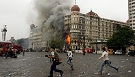
We are a Sovereign system, with a track record of sound law and order in the national and international arena. Justice and prosecuting terrorist activities are part of our jurisprudence. It goes beyond consideration of our relationships. There is need for objectivity in our dealing with the attack on the Israeli diplomat with the heavy hand of the law. We also need to preempt any Israeli retaliation in our soil. On no account should we be seen as a vacillating system that is indecisive. Our handling of Kasab caught red handed in the 26/11 Mumbai attack, though frustrating does vindicate our full commitment to the letter of the law.
India's Signature Tune
India is an enigmatic miracle. The last 25 years has seen us grow as one of the leading economies starting with our liberalised economic strategy. 1998 saw us become a nuclear power. We are now recognised by the USA through the aegis of defense cooperation and Indo-US civil nuclear cooperation agreements. Several significant partnerships have also emerged with a host of G-8 and G-20 countries. Prospects of us being elected into the UN Security Council also appear bright.
India at home appears diffident and disjointed. Nation Management, Political leadership apathy and lack of accountability are all part of our evolution. Nevertheless the intrinsic strength of India resting with our seasoned office establishment has always ensured that we muddle through, without too much mud on our face. The international image of India is yet another positive paradigm. India is predictable, staid, stable, secular and restrained. Our protests are loud but our violence is subdued. Our elections are peaceful, with our laws mostly enforced. We have come off age without too much trauma of a colonial dominion. Our eclectic absorption, adaptability and the phenomenal success of Indians abroad are all noticed by others.
We are no more in a position of having to choose or measure our march. On the way we may falter at times but would not fall down. Let India continue with Iran and Israel triad and not consider this a triage. This would be our rightful and rational call.
Subscribe to:
Posts (Atom)