Showing posts with label Asia-Pacific. Show all posts

Wednesday, December 24, 2014

Abe’s Re-election and India-Japan Relations

Dr Harinder Sekhon, 
Senior Fellow, VIF

Shinzo Abe’s decisive victory in the mid term polls on December 14 augurs well for the future of India-Japan relations. Diplomatic ties between India and Japan that have seen an upswing over the past two decades are slated to assume even greater significance in the coming years. While Prime Minister Mori and Prime Minister Vajpayee laid the foundations for a robust partnership between India and Japan, many factors have contributed to this, the main being the changing strategic balance of power in Asia-Pacific due to China’s rise and domestic economic challenges that have bound both India and Japan to examine ways of fostering economic interdependence through bilateral and multilateral trade security agreements.

Japan has steadily come to occupy an extremely significant place in India's foreign policy and economic calculus and is one of the main pillars of India's Look East Policy. The great bonhomie between Prime Minister Modi and Prime Minister Abe is well known and Japan was the first bilateral visit by Modi outside India’s immediate neighbourhood. Modi and Abe, through their chemistry have been able to establish a new era in relations between both countries. Critical areas where the interests of the two countries converge include the economy, education, science and technology, maritime security, proliferation of nuclear weapons, cyber security and space cooperation.

In their Joint Statement1 in September, the two Prime Ministers pledged to “realize the full potential of India - Japan Strategic and Global Partnership for continuing progress and prosperity for their people and for advancing peace, stability and prosperity in Asia and the world. Elevating the relationship to a Special Strategic and Global Partnership, they called their meeting the dawn of a new era in India - Japan relations.”

The Fact Sheet titled India and Japan - Partners for Common Development, 2 on economic initiatives between India and Japan, enumerated a number of proposals to be carried forward between the two countries. But, given the security architecture in the Asia, defence and security matters received more attention. Defence cooperation between India and Japan is strong and the trilateral Japan-India-US Malabar exercises and the Okinawa exercises between India, Japan and the US along with Singapore and Australia are progressing well.

In particular, the recent developments in Japan’s policy on transfer of defence equipment and technology are a positive outcome. This fits in with India’s own “Make in India” policy announced by Modi. There is a lot that can be done by identifying specific areas for joint production and making relevant policy recommendations to respective Governments. India and Japan can specifically explore working together in cyber security and the maritime domain – where the Indian Navy is in need of urgent modernization and Japan has the expertise in shipbuilding. Talks are at an advanced stage amongst the Joint Working Group3 on cooperation in US-2 amphibian aircraft and its technology, and if this happens, it would mark Japan's first overseas military sale in nearly 50 years.

While the recent India-Japan bilateral discussions focused more on defence and security issues, Modi also sought increased investment from Japan which is India’s fourth largest foreign direct investor. The Indian Prime Minister invited Japanese attention to stepping up cooperation in infrastructure development in India and it is hoped the two Governments will move forward together in this critical area.

India has increasingly begun to realize the benefits of foreign investment, trade, and economic integration, and a development oriented Indian Prime Minister has taken definitive steps to not just “Look East” but “Act East” by following a more vigorous policy to improve economic and strategic relations with Southeast Asia, Japan, and even China. According to Sheila Smith, Senior Fellow at the Council on Foreign Relations, "Modi went to Tokyo with a very clear message for Japanese businesses that he was going to address the country's labyrinth of regulatory and tax complications that get in the way of foreign direct investment, which the Japanese business community has scratched their heads over for a long time."4 The challenge now is for Modi to overcome domestic bureaucratic constraints and move forward on the vision he has articulated for India’s growth.

The task is not easy and Modi now must walk the talk and implement the steps that will both revive India’s economic fortunes while “simultaneously bolstering its defences and strengthening its strategic partnerships with like minded states, thereby promoting regional stability and blocking the rise of a Sino-centric Asia….This dovetails nicely with Abe’s soft nationalism, market-oriented economics, and new Asianism, seeking close ties with Asian democracies to create a web of interlocking strategic partnerships.”5

Trade links between India and Japan grew due to common underlying facets, commonly referred to as the three “Ds” – Democracy, Demography and Demand. But a lot more needs to be done in this sphere and hopefully trade will grow further.6 For Japan and India, Asia’s second and third largest economies, a trade figure of merely $ 15.8 billion in 2013 is extremely inadequate and both have a lot of ground to cover, considering that Japan is an extremely important FDI investor in India. But in the past couple of years, owing to India’s economic slump and a policy paralysis at the political level, Japanese investments in India tapered off and Japanese firms have invested more in newer emerging markets like Vietnam and Indonesia.7

But this will change as there is a complementarity between the economic and security interests of both countries. Modi and Abe, with their respective “Modinomics” and “Abenomics”, are both equally committed to ASEAN. Like Modi, Abe also gives priority to economic issues and the Japanese economy has to show signs of revival if Abe is to succeed politically. This was the reason for the mid term elections that Abe called this month. According to all reports, while Abe has won with a clear majority, there will be pressure on him to deliver on the economic front and ensure that the country comes out of recession. A low GDP growth rate of about 2% and a decline of 0.50 percent in the third quarter of 2014 over the previous quarter is not a very comfortable situation to be in.

To tackle domestic economic challenges, Abe is likely to increase the private consumption tax on rich Japanese tax payers gradually as one of the measures to revive the economy and prove that his policy (Abenomics) is doing well. Hiking the consumption tax is needed to make sure a good and firm social security system can be created and sustained. That is why Japan implemented the first round of the consumption tax of 3 % in July 2014.8 Abe’s plan is to raise it once again next year, and take it to 10 percent by 2016 in the hope that the economic environment would be more stable with Japan no longer in a deflationary state. The ratio of job openings to job seekers reached the highest level in two years, and for the first time in 15 years, incomes also went up. But it is still a fragile situation and can spin out of control if the economy does not revive to more reasonable levels.

Another tricky element of Abe’s attempts at introducing structural reforms to lift Japan’s economy out of its “deflationary malaise” is his decision to join the US led Trans Pacific Partnership being negotiated between the United States and eleven other countries in Asia. Abe announced in March 2013 that Japan—which accounted for 14 percent, or $146 billion, of U.S. goods trade with TPP partners in 2012—would seek to participate in the TPP negotiations. This was met with wide spread opposition by various Japanese groups especially the agriculture lobby. The agriculture industry has argued that this vital sector would take a hit from foreign competition due to the removal of tariffs and other protective measures on imports that would be ruinous for the Japanese farmer. Some Japanese health-care providers have also voiced concerns that Japan's national health insurance system would be adversely affected as Japanese citizens would be compelled to buy foreign-produced pharmaceuticals and medical devices.9

Despite these domestic apprehensions, Abe is of the opinion that in the long run it would be to Japan’s advantage if it was fully integrated into an Asian multilateral trade facilitation channel. India, too, faces similar predicaments at bilateral and multilateral trade fora like the WTO and efforts by the US to get it to agree to a Bilateral Investment Treaty.

There is plenty that binds the leaders of Asia’s two most prominent democracies together. Besides their common economic objectives and goals, both India and Japan, through greater strategic cooperation, are seeking to evolve an effective yet peaceful strategy to counter an increasingly assertive China in the region. The China factor further incentivizes India and Japan to cooperate in many ways and according to Modi, “write a new chapter” in India-Japan relations, while Abe said that their bilateral ties have the “most potential in the world.” Both leaders have displayed political sagacity and a strategic vision to create a strong partnership and it is in the mutual interest of both countries to build upon this promising start.
Endnotes
  1. For details, see http://mea.gov.in/bilateral- documents.htm?dtl/23965/Tokyo_Declaration_for_India__Japan_Special_Strategic_and_Global_Partnership, Tokyo, September 1, 2014. Accessed on 18 December 2014.
  2. Available at http://pib.nic.in/newsite/PrintRelease.aspx?relid=109224, accessed on 18 December , 2014.
  3. Referred to in the Modi-Abe Joint Statement, see foot note 1.
  4. Nyshka Chandran, “There’s More to Modi-Abe Ties than China, September 2, 2014, available at http://www.cnbc.com/id/101961843#. Accessed on 18 December 2014.
  5. Brahma Chellaney, “Narendra Modi: India’s Shinzo Abe,” The Diplomat, May 16, 2014. Available at, http://thediplomat.com/2014/05/narendra-modi-indias-shinzo-abe/ . Accessed on December 18, 2014.
  6. Based on an interaction with Japanese Delegation from the JIIA, Tokyo, at the VIF, December 8,2014.
  7. Michael Schuman, “Why India’s Modi and Japan’s Abe Need Each Other – Badly,” TIME, September 2, 2014.
  8. For details, see Backgrounder of the Council on Foreign Relations, available at http://www.cfr.org/japan/abenomics-japanese-economy/p30383. Accessed on 18 December 2014.
  9. Ibid.

Published Date: 23rd December 2014, Image source: http://www.hindustantimes.com
(Disclaimer: The views and opinions expressed in this article are those of the author and do not necessarily reflect the official policy or position of the Vivekananda International Foundation)

Thursday, January 30, 2014

Japan’s New Defence Guidelines and India

Brig (Retd) Vinod Anand, 
Senior Fellow, VIF

As part of ongoing efforts to further strengthen Indo-Japan relations, Japanese Defence Minister Itsunori Onodera visited India in early January to discuss cementing of military ties. The visit comes close on the heels of China’s declaration of a new Air Defence Identification Zone (ADIZ) over East China Sea which has implications on Japanese sovereignty over Senkaku/Diaoyu islands that are bone of contention between Tokyo and Beijing. India has also been at the receiving end of China’s assertive policies along the disputed Sino-Indian border. In fact, PLA made fresh transgression across the Indian border in Chumar area in the first week of January. Thus both nations have common goals in ensuring that China is restrained from aggressively pursuing its interests at the cost of other nations. While Japan has an alliance with the U.S. to address its security concerns, Tokyo has also been seeking stronger defence relationships with countries like India and others in the Asia-Pacific.

Japan is also in the process of shedding its pacific outlook and is revitalising its defence capabilities. In mid-December 2013, Japan came out with a new National Security Strategy (NSS), a National Defence Programme Guidelines (NDPG) and a much improved Five Year Midterm Defence Programme (2014-18) which indicated that Japan was firmly moving away from its pacifist constitution. In its documents, Japan has expressed concerns over the changing strategic and security environment. Tokyo is strengthening its alliance with the US and has supported America’s rebalance strategy. On the other hand, there is also thinking amongst America’s traditional allies like Japan as to how far the US would go to help them if there is hot conflict with China. Thus, there is a move to strengthen Japanese Self Defence Forces (JSDF) as part of internal balancing. In effect, this would supplement the American capabilities to meet the challenges of Anti Access and Area Denial strategies. And therefore enhancing its defence and security relationship with countries like India and those part of ASEAN are designed to maintain a strategic equilibrium in the region.
Because of convergence of their interests, India, Japan and the U.S are also engaged in trilateral dialogue to work towards peace and stability in the region. In fact, well before the unveiling of the American rebalance strategy, there was a Quadrilateral Security Dialogue initiated between US, India, Japan and Australia in 2007 and a joint naval exercise was also carried out off the shore of Okinawa in that year. Viewed by Beijing as some sort of a concert of powers being formed against China, the level and scope of the joint exercise invited a diplomatic demarche from the PRC. Australia under pressure disassociated itself from the initiative. But later Australia has corrected its policy and seems to be aligning again with the U.S. and Japan. India had clarified its position that the exercises were not designed against any country and has been following some kind of a middle path since then.

Besides strengthening its alliance with the US, Japanese security strategy talks about ‘strengthening cooperative relations with countries with which it shares universal values and strategic interests such as Republic of Korea, Australia, the countries of ASEAN and India’. India is considered as being geo-politically very important especially by virtue of its location, its economy and demographic strengths. Strengthening bilateral relations with India in a broad range of areas including maritime security is one of the cornerstones of the Japanese new defence strategy. It also talks about strengthening trilateral frameworks like Japan-US-India grouping.

Japan’s new NSS indicates that in its efforts of ‘Proactive Contribution to Peace’, it is willing to participate in joint development and production of defence equipment and other related items. Clarifying some of its earlier reservations on the issue, the NDPG states “While giving due consideration to the roles that the three Principles on Arms Exports and their related policy guidelines have played so far, the Government of Japan will set out clear principles on the overseas transfer of arms and military technology, which fit the new security environment.” This in effect means that Japan would be ready to export weapons if it contributes to peace. Evidently, this new guideline is a major departure from the policies it pursued till now. This aspect is very important from the Indian point of view as relaxing of curbs on exports of defence technology and weapons and possibilities of joint development in defence industry would offer tremendous potential for Indo-Japanese defence cooperation which could be strategically and economically beneficial to both sides.
Japan’s midterm defence plan caters for over 240 billion US dollars to be spent over next five years which would largely add to its air and naval capabilities as also would go towards improving the cutting edge of its land forces. Enhancing its military capabilities is obviously being done as a response to the increasingly aggressive behaviour of China in recent times. The Japanese defence budget during its defence plan period is of course much more than India’s likely defence budget for the next five years but less than what China is expected to spend in the same period. Acquiring improved intelligence, surveillance, and reconnaissance capabilities besides a robust command, control and information networks would be essential elements of modernisation of JSDF.

Cyberspace and outer space have been considered as two vital areas where JSDF’s response and capabilities would be strengthened. China has been very active in cyber space wherein besides some other nations India and Japan have been at the receiving end of cyber attacks originating from China. However, mission definition of JSDF in case of a cyber attack is very limited and has not been well defined; for instance, the military is not charged with responding to cyber attacks on critical national infrastructures like in other countries. Further, PLA’s anti-satellite capabilities not only make US satellite networks vulnerable they also pose a challenge to Indian and Japanese space assets. Though India already has an ongoing cyber security dialogue with Japan as part of 2+2 framework which includes a Foreign Secretary level Dialogue and the Defence Policy Dialogue, there is a need for India to expand its engagement with Japan for exchange of cyber and space technologies to address mutual security concerns.

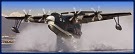
India has been looking forward to acquiring ShinMaywa US-2i amphibian aircraft for the Navy to strengthen its naval aviation arm. In fact, during Prime Minister Manmohan Singh’s visit to Japan in May 2013, a Joint Working Group to explore the modalities for cooperation on the US-2 amphibian aircraft had been established. It needs to be remembered that Japan has a well-developed fighter aircraft production and technological base. The last F-2 aircraft was delivered to JSDF in 2011 but the capabilities available can be exploited for joint production development and export. Provided that possible Japanese reservations could be overcome based on the new NDPG, India should explore cooperation in this area. So far Japan has been keen to sell the aircraft to India but as indicated to Japan during a Joint Working Group Meeting in December 2013, New Delhi is keen to manufacture the aircraft jointly. Further, there is considerable scope for joint research development in high end technologies in both civil and military arena.

In addition, for the first time, a bilateral Joint Naval exercise between the Indian Navy and Japan’s Maritime Self Defence Force was carried out in June 2012 off the coast of Japan. And another joint naval exercise was carried out in Bay of Bengal in December 2013. Increasing frequency of joint naval and maritime exercises is part of the Japan’s NDPG and strategic outlook. Even the Coast Guards of the two countries have been carrying out joint exercises to improve interoperability and address security challenges to maritime security. These areas of defence cooperation were further discussed during Itsunori Onodera’s visit. India supports the principle of freedom of navigation though the seas and cannot but be in agreement with the principle espoused by Onodera that “no country should unilaterally change the status quo”.


Since 2008 when the joint declaration between Japan and India on defence and security cooperation was signed, the strategic relationship has grown multifold. In end November and beginning December 2013, Emperor Akihito and Empress Michiko visited India signifying the close relationship between India and Japan. Defence Minister Itsunori Onodera visit is a precursor to Japanese Prime Minister Shinzo Abe’s coming visit to India as a Chief Guest for the Republic Day parade on January 26, 2014. Both India and Japan share the same democratic values and common political, economic and security concerns. Japan’s new thinking on defence issues provides a stronger platform for India and Japan to pursue their common strategic interests. 

Friday, December 14, 2012

The Divided Oceans


The security challenges in the Asia-Pacific region, which American‘re-balancing’ towards Asia and Barack Obama’s tour of some Asian countries so early into his second presidency seek to address, are many and complex. Territorial disputes remain sharp in the region. China lays claim to Indian territory and so does Pakistan. Afghanistan and Pakistan have border differences. China has maritime territorial disputes with Japan, Vietnam, the Philippines, Malaysia, Brunei and Indonesia. Taiwan is also a party to these disputes, besides China itself having sovereignty claims over Taiwan. Japan and Russia have an outstanding dispute over the Kuril Islands.

The problem of terrorism is more acute in this region than anywhere else. Pakistan, along with the border areas of Afghanistan, is a breeding ground of terrorism targeting India and Afghanistan, and creating a sense of vulnerability in Central Asia. Sri Lanka and Bangladesh have seen terrorism on their soil. So has China in Xinjiang. Terrorism has afflicted Thailand and Indonesia. Nuclear proliferation is a problem in the two extremities of this region, in Iran and North Korea. At the western end, the threat of a military strike against Iran is real despite the position of Russia and China, while it is most unlikely against North Korea at the eastern end in deference to China’s opposition.

The presence of the United States of America in the region is substantial, with its Seventh Fleet as well as military bases in Japan, Australia, the Philippines, Singapore, South Korea, Thailand, Afghanistan, Uzbekistan, and Diego Garcia. With concerns about China’s rise in mind, the US is reinforcing its military assets in the region further. The US defence secretary has described India, a bit exaggeratedly no doubt, as a “lynchpin” of this new strategy. In any case, this shows the direction of American thinking in terms of partnering with India strategically in this region.

With its Fifth Fleet and bases in the Gulf countries, the US has now a presence in the western end of the Indian Ocean and the Strait of Hormuz. Apart from putting pressure on Iran, the US claims that this presence is intended to maintain stability in the region and ensure uninterrupted supplies of oil and gas to American friends and allies, more so now that the US imports only 10 per cent of its hydrocarbon needs, and even this figure will decline with huge discoveries of shale gas in the US.

The US navy has a sizable presence in the Indian Ocean for assuring the security of sea-lanes of communication. For this, it has been engaging the Indian Navy in a big way, with the two countries holding frequent naval exercises together. These exercises are now being held also in the trilateral India-US-Japan format.

It is argued that while the security architectures during the Cold War were based primarily on military alliances, the need today is to base these architectures on shared values, interests and challenges. This Euro-Atlantic-centric view is debatable, as China, India and scores of non-aligned countries were outside the Cold War alliance systems. Today, NATO not only exists, its membership has been expanded and its role has been geographically extended. NATO operated in Yugoslavia and Iraq. It is operating in Afghanistan; it acted in Libya. The US has declared its intention to strengthen its military alliances in the Asia-Pacific region. Russia is working to strengthen the Collective Security Treaty Organization in the erstwhile Soviet space. It is wrong to downplay too much the security role of military alliances today.

The idea of basing the new security architectures on “shared values” is also a Euro-Atlantic view. What are these “shared values”: those of democracy, pluralism, human rights and so on? But then, there are serious differences over these issues. Many countries are either not democratic or have their own concept of democracy. There is serious opposition to what is seen as the US crusade for democracy for geopolitical reasons, a tendency to impose it by force at great human cost, and double standards in the application of this principle.

Similarly, the human rights issue has been highly politicized by the West, there is selectivity in its application and the critics believe the issue has been used cynically for regime change, among other things. So, can the new security architectures be built on highly contested notions in their controversial practical application? Can the US, Russia and China be brought on a common platform on them, not to mention many others, including the Islamic countries?

The question arises whether the Indian and Pacific Oceans constitute a single strategic space? The answer would be “yes” from the US Navy’s point of view with its responsibilities extending across the two oceans. It could be true for India, which dominates the Indian Ocean geographically, only in the specific context of the expansion of the Chinese blue-water navy and its future ability to break through the first and second chain of islands and establish an increasing presence in the Pacific and eventually in the Indian Ocean, for which China is already creating the basis.

Our navy signals its ability to operate far from Indian shores by, for instance, periodically holding exercises with the Russian navy at Vladivostok. The Pacific is also the venue now of the trilateral India-US-Japan naval exercises. But the Pacific Ocean is too vast for India to have strategic interest in it. As regards the security of sea-lanes of communication, the problem pertains largely to the Indian Ocean area, from the Strait of Hormuz through the Malacca Strait to the Taiwan Strait and the South China Sea, not the Pacific as such.

The energy and trade flows across these waters are huge and vital for the economies of Japan, South Korea and China. In this vast stretch, there are problems of piracy in the Indian Ocean area off the coast of Somalia, but no issues of sovereignty that can threaten international navigation rights, except in the South China Sea. All concerned countries would not want these vital lanes to be interfered with in case of tensions or conflict, but how to ensure this?

For the moment, the two navies best placed to provide security in much of this area are the US and Indian navies, but countries like China may want an independent capacity to do so. This is where geo-political concerns come into play and can be a source of mistrust and problems. The challenge is for all to agree to certain rules of the road and norms of conduct. A wider Asia-Pacific security architecture will not be easy to build. Other continents have continental-scale organizations, but not Asia. There are too many players with conflicting interests and ambitions. Several disputes remain unresolved. The world-view as well as political, social and religious values of countries differ.

It would be more realistic to first build bilateral understandings between countries that have differences and then seek to widen the circle of these understandings to solidify them at the multilateral level in an incremental process. As bilateral relations between key countries markedly improve, existing organizations like SCO, SAARC, ECO, CSTO, ARF, IOC-ARC, BIMST-EC, and the East Asia Summit could become the building blocks of a larger Asia-Pacific security architecture. But that seems far away for now.

Thursday, August 23, 2012

Right Choice of Friends


Kanwal Sibal
Member Advisory Board, VIF


A new debate has started on the nature of a redefined Indian foreign policy that takes into account the country’s transformed relations with the United States of America. The latter is openly seeking a close political, economic and security relationship with India. The rhetoric is at times high-flown, calling US ties with India indispensable for the 21st century and describing India as a lynchpin of America’s ‘re-balancing’ towards the Asia-Pacific region.


Some experts would prefer a ‘non-alignment 2.0’ policy for India to deal with the reconfiguration of geo-politics caused by the relative decline of the US and the West and the rise of China. While this nomenclature may arouse misgivings in some quarters because of its ideological overtones and, more so, its political irrelevance in a world no longer divided into rival alliances, in reality the authors of this concept propose issue-based collaboration with diverse partners depending on the confluence of interests. This seems pragmatic and non-ideological.

Many advocate a foreign policy of ‘strategic autonomy’ for India. This implies that India retain its independence in foreign policy making, and not be obliged to follow any powerful actor or a set of actors in any course of action that does not conform to its long term national interest. Rather than be caught in strategic rivalries between countries that are hurtful to its interests, it should have the freedom to engage with opposing sides if that is useful.


This debate would suggest that India’s foreign policy remains in a fluid state and is seeking to discover its moorings, with the implication that India has not yet come to terms with the radically altered global situation of today. It carries the nuance that India is under pressure to tilt towards one side (the US), which India should not succumb to.

In reality, there should be no need to define Indian foreign policy in core conceptual terms. Defining it thus does not give it a coherence, a sense of purpose and clarity that might be otherwise missing. The big powers do not seem to need to define their foreign policies for conceptual clarity. They just conduct their foreign affairs, based on certain broad principles and practical considerations. An analysis of their positions on a range of international issues would bring out the prominent features of the policies they pursue, but encapsulating them in one or two words would hardly be enlightening.

How would one, in any case, define US or Chinese foreign policies? No single-word definition is possible. US foreign policy, for instance, is full of contradictions. It is supposedly anchored in the promotion of democracy worldwide but it supports some of the most anti-democratic regimes in the world. Military intervention to support human rights in one country is contradicted by military protection to other countries that suppress the fundamental human rights of their population. Religious extremism is fought on the one hand and promoted on the other. Overdependence on China is coupled with hedging strategies against its rise that is seen as adversarial.

China claims that its rise is not a threat, that it wants a peaceful periphery, yet it is developing powerful military capabilities, asserting extensive land and maritime claims in the South China Sea, thriving on Japanese investments but has a visceral hatred of Japan, it is benefiting hugely from its partnership with the US even as in East Asia it is US power that it principally confronts. In other words, it, too, manages contradictions.

In this background, only confusion is caused by seeking to define in political shorthand India’s foreign policy as non-alignment 2.0 or strategic autonomy. India’s foreign policy can simply be loosely described as protecting its national interests as effectively as possible in a globalized world that demands cooperative solutions and a competitive world that demands management of conflicting interests without confrontation. This would eliminate the implicit intrusion of the US factor in explaining the core of our foreign policy objectives. In a situation where India can, by skilful handling, gain much from its improved relations with the US, it would be undesirable to frame its foreign policy objectives in terms of the strategic distance it wants to maintain from the US.

In actual fact, this debate about strategic autonomy is behind the times. India’s post Cold War policies testify to its desire to maintain ‘strategic autonomy’ in a situation of strategic shifts in global power equations. India, for example, has established strategic partnerships with several countries that include, besides the US, Russia, France, the United Kingdom, Germany, Afghanistan, Kazakhstan, Japan and so on. It has a strategic dialogue even with China, its principal geo-political adversary. By establishing such partnerships with countries with key differences and conflicting interests amongst themselves, India is, in fact, expanding its strategic room for manoeuvre.

India is member of the Russia-India-China or RIC dialogue, with member countries opposing regime change policies and interference in the internal affairs of sovereign countries, and supporting multipolarity. It is member of BRICS, which, by including Brazil and South Africa, extends strategic understandings on some basic norms of international conduct to key countries in South America and Africa. India supports the US led Community of Democracies, capitalizing on its democratic credentials, even if the sense of the grouping is directed against countries like China and even Russia. India has agreed to a trilateral US-India-Japan dialogue, including naval exercises, with its anti-Chinese thrust quite clear although officially denied. The intensive US-India naval exercises in the Indian Ocean have a China related strategic purpose, even as India is open to maritime cooperation with China in the Indian Ocean area. India cooperates with China in the climate change and World Trade Organization negotiations because it serves a common purpose of countering the US/European attempts to avoid equity in agreements.

India respects Russia’s special interests in Central Asia but is open to US strategic moves to promote strategic energy links between Central Asia and South Asia. It is willing to strengthen its role in the Shanghai Cooperation Organization even if the US sees it as an arrangement to limit US influence in Central Asia. India supports an extended US presence in Afghanistan even though Iran is opposed to it. India is avoiding getting caught in the Shia (Iran)-Sunni (Saudi Arabia) conflict building up in the Gulf. It successfully resisted Western pressures to reduce its engagement with Myanmar.

India’s independent posture explains why it has obtained support for its Security Council permanent membership from both the West and Russia. Russia’s position as India’s biggest partner for defence supplies has not prevented India from now expanding its defence ties with the US. The US seems reconciled that India will not be an ally and will want to retain its independence in foreign policy decisions. It will nevertheless seek to tie India closer to itself in a way that India’s pragmatic choices will pull India in that direction. If India continues to have a clear-sighted view of its longer term interests, it will be able to balance its relationship with all the major players in a constructive way. But without a domestic defence manufacturing base, high rates of economic growth and improvement in decision-making, our independent foreign policy will always have weak foundations.

Friday, June 1, 2012

President Putin Redux


PP Shukla,
Joint Director, VIF

Even with the North Atlantic orientation of today’s
European policy, we cannot forget that NATO and
Europe are not one and the same thing. And I’ve already
said that Russia is a country of European culture, not
NATO culture.

- Vladimir Putin, First Person

On 7 May, as has been happening every four years since 2000, a President was sworn into office on the Kremlin in Moscow. Vladimir Putin took the oath of office for the third time – actually for the fourth time, since he had been acting President since late 1999. It must have been quite a contrast for him. When he took office duly elected in May 2000, he told the Russian people that his predecessor, Boris Yeltsin, had handed over power to him with one plea: “Save Russia”. And at that time, it was a big ask. Russia was going through fresh convulsions, economic and political, and the ailing Yeltsin was demonstrably unequal to the task.

It is to the credit of Putin that he did indeed save Russia. He did more: he restored it to the level of a great power. He brought stability, he ended the free-for-all that Russia, including even its capital city had been reduced to. And he oversaw a revival of the country’s economy as well. As a result, by the early 2000’s, Goldman Sachs had identified it as part of the BRIC economies whose future was to become one of the major economies in the world. True, not all of this was Putin’s doing, but in large measure it was, and he had created the stability that was so essential for the economy to take advantage of the commodity boom that was to follow. And a grateful populace indicated its recognition of his role by giving him a degree of support that - even after discounting for some exaggeration in the opinion polls – most democratic leaders can only dream of.

But time marches on, new events occur, the stability and other basics begin to be taken for granted. Memories fade, and new ideas emerge. Above all, a new President had to be elected as the Russian Constitution allows only two consecutive terms to an incumbent. Medvedev held the job for four years, starting in 2008, and in both tone and substance, his approach to governance was markedly different. Some degree of popular impatience with the “sovereign democracy” that was the flavour of the Putin-Medvedev era was clearly manifest, especially on the streets of Moscow and St Petersburg. The irony was that these were the cities that had gained the most from the policies of Putin, and he himself is a native of St Petersburg.

This would explain why the return of Putin as President has not been welcomed with the enthusiasm that he certainly feels entitled to. Public opinion has clearly shifted in the four years of the Medvedev Presidency, and this has targeted both the leaders, as well as their Party, the United Russia Party [URP]. This would also explain why there have been street demonstrations against both the Parliamentary elections that were held last December [won by URP of course, though with a diminished mandate], and the Presidential elections in March.

Anyway, Putin is in power now for six years – the term of the Presidency was increased to six years by Medvedev in one of his early acts as President, and it is important to try and understand his [Putin’s] persona and current strategic views. It would be important to recognise that the situation in Russia – indeed all of Europe – is fluid, and there are few certainties, including of politics in the continent.

A look at his views as they have been since his first term as President suggests that he sees Russian interests best served in a strong European tie-up. This is coupled with an understanding [right or wrong] that Europe and America are distinct cultures, as the quote given at the opening of this article indicates. This is coupled with a strong personal German exposure during his career in the KGB, with the result that he speaks fluent German, and is well acquainted with the culture. In his early book – a long interview actually – “First Person”, he describes with feeling how he was impressed by Helmut Kohl of Germany, and observes: “And it was especially gratifying to hear him [Kohl] say that he couldn’t imagine a Europe without Russia”. This view has been only reinforced over the years, and German Chancellors like Schroeder have been particularly close to Russia and to Putin. [It would be fair to say that Medvedev is more exposed, and sympathetic, to the Anglo-Saxon world and culture.]

Putin has revealed his attitude very early in his new stint as President. He blamed the street disturbances on the Americans even before he took office; and he has declined to attend the G8 Summit in America. The message clearly is that America is not to be his first visit outside the CIS. In fairness, President Obama also did not help matters by declaring that Putin had one leg in the Cold War era, and demonstrating a clear preference for dealing with Medvedev. Nonetheless, the fact that Putin has retained Medvedev as Prime Minister and sent him to the G8 Summit, suggests that he [Putin] is pragmatic enough to see that the American relationship is important enough not to be damaged just in order to make a point. Of course, this move to stay away may also play into the American Presidential elections, and Putin would not mind that either, for he is not one to forget a slight.

On present indications, the first country Putin is likely to visit outside the CIS will be China. It is reported that there is to be an SCO [Shanghai Cooperation Organisation] Summit, and he will be going for that. This makes it doubly significant, for he is also signalling the importance he attaches to SCO, in contrast to his attitude towards the G8. In turn, China has welcomed Putin’s return to the Presidency. An article in the People’s Daily, under the title “A stable prosperous Russia under Putin is good for China” hailed his electoral success, adding that he rode “a wave of popularity for his no-nonsense incorruptible image” – just the sort of message that would please him.

It is also instructive to examine Putin’s inaugural speech. It is a short speech, as all his inaugural speeches have been, but there is this significant passage: “We must all understand that the life of our future generations and our prospects as a country and nation depend on us today and on our real achievements in building a new economy and developing modern living standards, on our efforts to look after our people and support our families, on our determination in developing our vast expanses from the Baltic to the Pacific,and on our ability to become a leader and centre of gravity for the whole of Eurasia.” [Emphasis added].

This idea of Eurasia is very much part of Putin’s persona, and embraces both a strong tie-up with Europe and Germany as its anchor, and with China at the other end of the Eurasian land-mass. In the same speech, Putin also praised Medvedev for the work he did as President. The latter also spoke at the inaugural ceremony and hinted that the civil and social changes he introduced need to be preserved. This could contain the seeds of future trouble between the two men.

On the same day that he took office, Putin signed a number of Executive Orders, some five in number; of these, three are of immediate interest, as they also tell us something about the priorities that he will follow. They concern Demographics, the Economy, and Foreign Policy. Each of them is worth considering in some detail. The Russian population has been in steady decline for some decades now, particularly the Slavic part. Despite Governmental efforts, this trend has not been arrested. There is not only the question of maintaining the population growth at a level that would be enough to replenish the labour force, important though that is, there is also the problem of depopulation – over time – of the Siberian region. A very small part of the population lives in these regions, no more than 7 million in the Far East. Facing them across the border is a Chinese population that is some 120 million, if not more. At the moment, the problem has been contained, despite scare stories to the contrary in Russian lore, and the number of Chinese settlers, registered and unregistered, in the area are not more than half a million at the most. But the potential imbalance is too serious to be ignored. The Order issued by Putin calls for more incentives to all families that have three or more babies; nothing really new here. The important element is the suggestion that migration is to become a serious effort to address the labour shortage. Again, this is not entirely new, and there are migrants from the CIS in large numbers. But the intent here appears to be to cast a wider net, something that has been bubbling under the surface for some years now. The document is short on substance, but this is a thought that has found high-level expression, and will need to be followed carefully.

On the foreign policy side, there are a number of important indications of what we may expect. The order in which issues are taken up may be taken to reflect their importance. The list of tasks begins with international issues like terrorism, proliferation, drug-trafficking, etc. Then comes the regional prioritisation, and the first area listed is the CIS. Next comes the European Union, where the most important subject is Energy cooperation and the need to develop a common space in this sector. Asia-Pacific is the next and there is the following formulation used to define priority tasks: “deepening equal, trust-based partnership and strategic cooperation with China, strategic partnership with India and Vietnam, and developing mutually beneficial cooperation with Japan, South Korea, Australia, New Zealand and other key nations in the Asia-Pacific region.”

Until recently, India and China were mentioned on par with each other, but here the standing of China is clearly enhanced. There is a suggestion that the two countries are not only trusted partners, but that they also cooperate at the strategic level. This is a trend in Russian thinking and action that needs to be watched carefully. China is the only major power that has shown some understanding of Russian concerns over Western policies towards it, notably Ballistic Missile Defence deployments in East Europe, and NATO expansion, and this has been well-received in the Russian elite policy circles.

The US is the next to be mentioned, and has the distinction of being only one of four countries mentioned in a stand-alone formulation. There is nothing unexpected in the details of policy priorities but it is important to note that there is an explicit reference to the threat Russia perceives from the American plans for a global missile defence system. This is one of the major Russian concerns, as mentioned above, and will continue to bedevil relations. Obama was overheard asking Medvedev to ask Putin to give him some time to work through this issue after the election, but Russia will clearly not cut any slack on this one.

The other countries that get a stand-alone mention are Afghanistan, Iran, and North Korea – all problem areas that concern Russia deeply. There is nothing remarkable in the formulations, though it is worth noting that on Afghanistan, the Order mentions the importance of SCO and of CSTO [Collective Security Treaty Organisation – a grouping of some former Soviet states], and of the Russia-NATO Council. But there is no direct mention of NATO itself, which is odd considering that the Russians at various times have indicated their desire for ISAF not to pull out prematurely from the country.
The economic policy contains some of the expected targets, such as on ease of doing business. But the most significant hint is that concerning the main State monopolies on aircraft manufacturing and ship building. There is a hint that the monopolies hae not performed as expected, and they are to be audited for their performance. These were monopolies from the Soviet times, which were broken up in the 1990’s, then re-consolidated under Putin himself. They have clearly not performed up to the mark, and it is not surprising that their functioning is to be examined. But the approach is still decidedly statist, and it would be fair to say that this is not the thinking that guided Medvedev in his policies as President.

An important aspect that deserves close attention going forward is the nature of the Defence cooperation between Russia and China. After some serious problems in the mid-2000’s, things appear to have got better lately. A recent statement by one of China’s Deputy Ministers emphasised the importance of this in the bilateral strategic partnership between the two countries. and the financial problems of the Russian Defence industry would make China an attractive partner. There are continuing problems over IPR issues, no doubt, but this is where the dynamic between the financial problems and the overall relationship on the one hand, and the IPR issue on the other will bear watching.

The early personnel changes have also been announced. There are some changes in the Government Ministers though the Ministers for Foreign Affairs, Finance and Defence remain unchanged. The most intriguing aspect of the change is the dropping of the powerful Deputy Prime Minister, Igor Sechin, who controlled the Energy and Fuel complex. It has now been announced that he is to become CEO of the State oil company Rosneft – a clear demotion. There were suspected differences between him and President Medvedev, but this looks like a concerted move by both the leaders in the new tandem, Putin and Medvedev.

The removal of Sechin from the post of Deputy Prime Minister opens the way for a Medvedev protégé – Arkady Dvorkovich – to take his place as the overall in-charge of the Energy and Fuel Complex. The retention of Igor Shuvalov as First Deputy Prime Minister, and the only such [there were two First DPM’s in the outgoing arrangement] is another indicator of a willingness to reach out to the West for deeper economic engagement. It is also worth noting that Vladislav Surkov seems to have been forgiven for the disappointing performance of the United Russia Party at the Parliamentary elections and is now to be the Head of the Government Staff, a powerful post. None of the three has any exposure to India, and this would suggest that we would have to continue to work at the top leadership levels in order to keep the economic relationship healthy.

Many of the Ministers who were in charge of economic and social portfolios in the outgoing Government have been moved to the Kremlin as advisers to Putin. This suggests that he will run the Government with tight control over decision-making, and with the help of the team that he had with him as Prime Minister. But perhaps the most important move from the old Government team is the complete rehabilitation and return to power and trust of Sergei Ivanov, who was earlier the Deputy Prime Minister. He was a candidate for the Presidency and very close to Putin in 2008, but Putin chose Medvedev over him then. Ivanov was brought in as the Head of the Presidential Administration in December last year, while Medvedev was still President. However, it was clearly a preparation for the new President, namely, Putin. The position of Head of the Presidential Administration is effectively the most important position after that of the President himself in the Kremlin. Ivanov, who speaks fluent English, knows India well and will be an important channel for developing ties between the two countries.

For India, it is important to take note of the changing overall outlook in the Russian establishment. Nothing drastic is expected in our bilateral ties, and the relationship is strong and stable, as is shown by the quality of the Defence and Hi-tech cooperation between the two countries. The importance of India is also reflected in the positive reference in the foreign policy priorities, even though it comes below China and the description is of a lesser order.

However, of late, our high-level dialogue has been losing the quality it had during Soviet times, or even early in the 2000’s, and is becoming formal and transactional. There is also the changing Russian attitude towards Pakistan. It is not as yet a cause of concern, but the pace of development of the relationship will bear careful scrutiny in the coming months and years. This is almost a Russian reflex: whenever they fear that India is getting too close to America, they reach out to Pakistan. While it may have been a viable approach in the 1960’s and 1980’s, it would be serious mistake in the current context, and it is to be hoped that those in Moscow who understand South Asia well will see the pitfalls of this policy.

All in all, this adds up to a very ambitious approach to Russian policy and ambitions. The big question is whether this is feasible. The Russian system has atrophied quite a bit since the days of the USSR. The kind of capabilities it had in science and technology, in defence, in space – all this has suffered attrition. Above all, their long-standing weakness in economic thinking and management, especially in the context of a market economy, and a probable slowdown in the commodity boom, is going to prove to be a serious challenge. There is also going to be unprecedented resistance to Putin’s vision and programme – it does not take much to see that. The street demonstrations after the Parliamentary and Presidential elections were among the largest since the fall of the USSR. The public mood is changing, and the media are reflecting a desire for more changes – once again in a liberal direction, after the control they accepted in the early period of this century. If the leadership is up to the challenge of adapting to the new circumstances, economic and social, Russia can look forward to another period of stability and economic growth. As a major power on the global scene, Russia will be an important factor in the emerging shape of the world, one way or another.