Showing posts with label SCO. Show all posts

Friday, July 4, 2014

A Roadmap for Sino-Indian Cooperation in Afghanistan

Dr Shisheng Hu , Director, South Asia & Oceania Studies, CICIR
Lt General (Retd) R K Sawhney, Distinguished Fellow, VIF
Raffaello Pantucci, Senior Research Fellow, RUSI

As NATO and Western powers begin to take a backseat in Afghanistan’s future, one of the most pressing questions is what role the region can play in helping Afghanistan to become a prosperous and stable nation. Numerous efforts are already underway through multilateral and bilateral forums, yet the key to regional cooperation for Afghanistan’s future lies through closer interaction between Beijing and New Delhi. Drawing on a research project spanning a number of workshops in Beijing, New Delhi and Qatar and involving influential thinkers and experts from China, India, the UK and Afghanistan, this paper will try to map out specific ideas that policymakers in Beijing and New Delhi can explore as avenues of cooperation. Post-2014 Afghanistan will remain a major regional concern for at least the short to medium term. The earlier China and India can develop workable collaborative undertakings, the sooner they can forge a stable and prosperous neighbourhood.

Sino-Indian ties

Heralding 2014 as the ‘Year of China-India Friendly Exchanges,’ Chinese State Councillor Yang Jiechi declared, ‘Since the beginning of the 21st century, China and India have both embarked on a modernization drive and become the world’s most dynamic emerging markets.’ This declaration was followed by the visit to China of Indian Foreign Secretary Sujatha Singh who, in the middle of election season, visited Beijing as part of a blossoming strategic dialogue between the two countries. While longstanding tensions over a disputed border and differing relationships of both countries towards Pakistan continue to act as irritants to bilateral relationship, the past year has seen some notable diplomatic successes that both sides seem eager to carry over into the new Modi administration.

Both sides have made progress on the border dispute through the creation of a code of conduct – the Border Defence Cooperation Agreement – that promises regularised dialogue between special representatives from both sides. An agreement was also signed to renew and even enhance their hydrological information sharing, which, while going nowhere to address the deeper concern over China’s damming of the Yarlung Zangpo or Brahmaputra (as it is known in India), at least allowed authorities on both sides to claim they are talking about the problem. Progress has also been made through a regularised counter-terrorism dialogue, which now allows Special Forces from both sides to conduct regular joint-exercises. In April, a visit to India by a senior PLA delegation headed by Deputy Chief of General Staff Lt. Gen. Qi Jianguo also paved the way for closer military-to-military ties that have been in deep freeze during recent years. The trend in the Sino-Indian relationship, despite the occasional hiccups, is towards closer coordination on a wide spectrum of issues. And while the election season in India placed something of a hiatus on any major initiatives between Beijing and New Delhi, both sides agree that there exists a potential for a better relationship between the two Asian powers. Commenting to media persons prior to going into meetings with his visiting Indian counterpart, Chinese Vice Foreign Minister Liu Zhenmin stated ‘we are confident that promoting the China-India friendship is a shared consensus of all political parties in India.’1

Coming to the present, the Chinese government have extended their greetings and best wishes to the new Indian Prime Minister Mr Narendra Modi on his resounding victory in the just concluded elections. Vice Minister Liu pointed out that Modi was ‘not an unknown quantity’ to China.2 The new Chinese administration under Xi Jinping has placed a particular premium on its border relationships and there has been a clear signal in the past few years that China is increasingly focused on what Professor Wang Jisi has termed the ‘March Westward.’3 Both powers have increasingly looked to their common Central Asian backyard as an area in which they see possible trade links, as well as a region in which security concerns might emanate from.

There is a perceptible convergence of interests of both countries in Afghanistan where both Asian giants have invested a great deal and are increasingly seeking to find ways of cooperating together. So far, this cooperation has remained at a largely rhetorical level, but as NATO and western interest draws down, the two Asian powers will increasingly find themselves in a position to help steer Afghanistan into a more prosperous and stable future. This task may not be as daunting as it seems. On quite a few issues, there is a sufficient amount of unanimity on Afghanistan between China and India. Both countries agree that the rehabilitation of Afghanistan should be “Afghan-owned and Afghan-led”4; and there is a strong convergence on the importance of investment and economic development. Even cooperation on Afghanistan’s security, where the picture is obscured by the differing attitudes that both countries hold towards Pakistan and its militant proxies, Delhi and Beijing see eye-to-eye on a number of fundamental issues. Both confront a similar domestic threat from terrorism and extremism and worry about overspill from Afghanistan, yet neither country sees the answer to this problem in sending troops. Cooperation between China and India, therefore, is best structured using a three-pillar approach: security, economics and politics, with a fourth pillar of regional cooperation playing a supporting role that feeds all three main pillars. Taken together, these three aspects offer a stable platform upheld by China and India on which Afghanistan can construct its future.

Security

The key to Afghanistan’s future is security. Without security, economic and political stability is unlikely to come about and the country will remain unattractive to external investors. The recent first round of the election campaign was relatively secure, demonstrating that the nation’s security forces are becoming more capable at maintaining their own security, but they still face considerable difficulties. Ultimately, Afghanistan is a country with significant economic potential that has so far remained underdeveloped in part due to an environment that is dominated by warlords or insurgents. But the problems of insurgency and warlordism are in part fed by an underdeveloped economy that weakens the central state. The elimination of these problems and the solution to this dilemma is not immediately apparent, but Afghanistan’s long-term stability is ultimately contingent upon the as yet distant goal of a strong economy - something that will be dependent to some degree on the cessation or reduction of violence. For China and India, bolstering what green economic shoots are visible needs to be a priority to guarantee the country’s long-term stability.

However, in the short-term, more direct measures can be taken by both China and India to strengthen the government and the Afghan National Security Force (ANSF). India has already instituted a program with Russia to bolster ANSF capability5 and China has provided some soft military and policing support in the form of equipment6. And both China and India already play a role in supporting and training the ANSF: following Zhou Yongkang’s visit in September 2012, China agreed to train some 300 police personnel over four years7while India has provided training to at least 650 Afghan Special Forces and officers.8

But when taken within the context of broader ANSF numbers, which currently stand at 352,000 and will probably shrink to 228,500 (in line with the 2012 Chicago declarations),9 China and India’s contributions to training are minimal. So while both China and India are the countries most likely to feel the immediate impact of the growth of instability from Afghanistan (given their physical proximity), their contributions do not reflect this fact. This is at least in part because neither power is eager to involve itself within the difficult quandary of Afghan security too deeply – having watched as NATO and the West have struggled for the past decade. The way forward is to strike a path that means China and India contribute more to Afghanistan’s security, but do it in a way that supports an Afghan-led solution.

In practice, this could mean maintaining a light touch in terms of deploying kinetic forces, but expanding the number of all ranks that China and India train for the ANSF. The current numbers are small, and both countries have suggested that they are willing to contribute more. These words need to be turned into practice. If both countries increase their current contribution to an annual figure rather than a cumulative total over a period of years, this would provide a boost to the ANSF’s capability both physically and psychologically. Focusing these training missions on units that might be of direct support to Chinese and Indian interests might be a way of strengthening the rationale for the missions. This could involve training an elite unit to provide diplomatic security at embassies or consulates, or to provide training for ANSF on border-securing and crisis management. If this plan succeeds, China and India could grow the program by training a mineral assets protection force – potentially drawing on the over 100,000 men currently under arms who are due to be de-mobilized. These forces could then provide security at the many Chinese or Indian-owned mining sites around Afghanistan. These sites are likely to be a focus of future Chinese and Indian economic activity in the country for the immediate future and will also form a substantial part of the tax base for the future Afghan economy. Both countries could discuss their future cooperation in security in post-2014 Afghanistan reconstruction through the many already existing mechanisms, including the Diplomatic level Strategic Dialogues, or the Defence and Security Consultation between the Ministries of National Defence.

Of course, China and India do not agree on all security-related issues, and these differences can feed into mutual suspicion or even hostility. Beijing and Delhi maintain opposing views on whether the Afghan Taliban can be reconciled; to what extent the insurgency is being directed by the Pakistani state – as opposed to rogue elements within it; and whether Kabul should prioritise a predominantly counter-insurgency-based army as opposed to one capable of fighting conventional war.

Yet at the same time, China, India and Afghanistan also agree on the need to counter terrorism from Afghanistan and the threat posed by a renewed and strengthened Taliban. As President Xi Jinping put it after meeting President Karzai in Sochi, Russia, on the fringes of the Winter Olympics, ‘China is ready to strengthen cooperation with Afghanistan in fighting the ‘three evils’ of separatism, extremism and terrorism as well as transnational crime.’10 India has regularly found itself the target of terrorists in Afghanistan, with its Embassy hit by suicide bombers in 2008 and 2009, its consulate in Jalalabad in 2013, and its consulate in Herat was attacked in May 2014. In 2010 a guesthouse known to be popular with Indian doctors in the city was attacked by a suicide bomber and shooting attack. A number of Indian nationals died in these incidents that were clearly aimed at Indian interests, highlighting how India finds itself in the particular crosshairs of the anti-state insurgency in Afghanistan. While China has been spared this level of direct attacks, the reality is that Chinese nationals also work under threat in the country and some have died11. Both clearly see the threat of terrorism in and from Afghanistan as a problem and cooperation in countering it would be a sensible next step. This concurrence in concern about terrorism has already been translated into practical action elsewhere, with China and India having already undertaken three rounds of ‘Hand in Hand’ bilateral training and counter-terrorism training drills.12

It is unlikely that China and India will be willing to deploy forces in great strength on the ground to counter terrorist threats in Afghanistan (or to help stem the insurgency within the country), but working together to help develop a specific Afghan counter-terror force that is able to deal with specific threats both nations see brewing on the ground against their interests offers a way they might build on this bilateral cooperation in a regional framework. The existing bilateral channel for counter-terrorism training exercises could be used for this purpose; yet the Shanghai Cooperation Organization (SCO) could also be made to play a greater role in Afghanistan. Under Chinese chairmanship in 2012, Afghanistan was finally brought into the organization when it was granted Observer Status. And while India is also still only an Observer in the organization, India’s diplomats have never hesitated to highlight the potential benefit the SCO could bring to Afghanistan. In a speech at the Heads of Government meeting in December in Tashkent, Indian Foreign Secretary Sujatha Singh called ‘for a greater role’ for the SCO in ‘rebuilding Afghanistan.’ She also conveyed that ‘India has always held the position that full-scale cooperation by the SCO could be vital for stabilising Afghanistan.’13 Reflecting this, at Sochi in February, President Xi told President Karzai, ‘China is also ready to push the Shanghai Cooperation Organization to play a bigger role on the Afghan issue.’14

In practice it is easy to wonder about the practicality of these statements. The SCO has historically been relatively ineffective: but the organization does provide a useful forum in which members can negotiate over border disputes, conduct training drills and exchange information about terrorist groups and organised crime. These are all issues that China and India (as well as Afghanistan and most members of the SCO) see as common concerns that lie at the heart of potential Sino-Indian cooperation on Afghanistan. The idea could be to push the SCO to become more than simply a regular meeting place, but rather a centre for regional coordination on security measures to help stabilize Afghanistan. Concerns might be raised by other SCO members who prefer to keep their relationship with Afghanistan at a bilateral level: but these issues can be mitigated by the fact that not all SCO activities have historically included all members. For example, China regularly undertakes bilateral military training exercises with individual SCO members, and not all powers have opted to participate in some activities. And finally, China and India could both play a more active game politically within the SCO to try to influence the organization – appointing senior, well-connected and effective diplomats to roles within the organization, or as representatives to meetings. This would create the impetus from within that is required for the SCO to offer practical solutions to Afghanistan’s problems.

Economics

Encouraging security cooperation will help Afghanistan in the short-term, but as highlighted before, the long-term solution for a stable and prosperous nation is a thriving economy. This is also an area in which Chinese and Indian interests overlap. Both are currently invested heavily into Afghanistan, through aid (where India is the largest contributor) as well as through infrastructure projects and investment in the country’s mining potential. This trend is set to accelerate as the Xi Jinping administration in China develops its ‘Silk Road Economic Belt’, which envisages the creation of a vast network of transport arteries and trade routes between China’s western region of Xinjiang, Central and South Asia and, ultimately, Europe. India, meanwhile, launched its own ‘Connect Central Asia’ strategy in 2012 that envisions Afghanistan as a regional trade hub, crisscrossed by energy pipelines and air, rail and road links which it is hoped will one day link up with the subcontinent.

On the ground, Chinese state owned firms MCC and Jiangxi Copper have taken the lead in trying to exploit the Mes Aynak copper mine in Logar province, while in the north, CNPC has paired with the Afghan Watan Group to develop the oil fields in the Afghan part of the Amu Darya basin. India has trodden more gingerly into Afghanistan’s mining sector, with SAIL AFISCO holding back on committing to the contract it won to exploit the Hajigak Iron ore mine, waiting to hear the resolution of Afghanistan’s mining legislation.15 The Chinese firms, which invested and started working on the projects in Amu Darya and Mes Aynak, have increasingly found themselves facing problems on the ground and sought to hold off much further work until the political situation becomes clearer and the mining law is passed16.

The problems China and India face in these cases are very similar. First, of course, there is the security situation. This in part can be resolved by some of the security measures highlighted above, in particular in the fostering of a specific ‘Minerals Security Force’ that could draw on the substantial numbers of demobilized ANSF men and the dissolution of a 17,000-strong guard force (that protects military supply convoys, international aid programs and foreign installations) that are expected in the wake of the West’s drawdown in Afghanistan. Yet the problems that both sides face also concern Afghanistan’s young and inefficient bureaucracy. While there are many smart Afghans who have returned home to help their country grow, the country continues to suffer from a brain drain. This problem is particularly prevalent in the white-collar class that provides the managers, technocrats and scientists who act as the motor for a modern economy. This is a community that China and India could take an active role in helping grow, offering scholarships for young Afghans to take courses at Chinese and Indian technical colleges, with a surety built into the program that guarantees they spend at least three years working in Afghanistan after they finish the course.

A secondary problem that Chinese and Indian firms often encounter is local corruption, be this in terms of partners that fail to deliver or those that offer themselves as short cuts through the system. As the two largest external investors in Afghanistan’s mining industry, China and India have an opportunity to establish some of the ground rules of how business is done. Since India and China are the biggest investors and potential consumers of Afghan resources and goods, both countries should look to cooperate and discuss their respective views for Afghanistan’s economic future, and work with the Afghans to help them map out national development master plans, urbanization plans, five-year like economic development plans, stock markets, market based rules and regulations, quarantine criteria and other practical economic structures. Both countries could highlight their respective support for Afghanistan’s economic development by holding in turn an annual Afghanistan Investment Forum. Given that Chinese and Indian investment in Afghanistan is being led by state owned enterprises, the respective governments in Beijing and New Delhi are in a position to issue edicts to their firms seeking to invest in Afghanistan that they have to adhere to some basic code of conduct that prevent them from paying bribes or using corrupt methods to undercut competition. While both nations already have strong codes of conduct in place for their companies operating abroad, the reality is that in a difficult country like Afghanistan, these measures can sometimes get lost in the difficult terrain. But establishing strict rules for national firms, and agreeing them between Beijing and New Delhi means that two of Afghanistan’s largest prospective investors (and likely competitors in mineral mining tenders) will be on the same page from this perspective and this may help reduce problems and accusations of corruption on larger mining concessions.

Yet Afghanistan’s economy will not thrive if it is only able to mine and export its natural wealth. The extractive industry is not very labour intensive, and the overwhelming majority of Afghanistan’s economy is built on agriculture and textiles. However, at the moment, bad infrastructure and unfair competition from neighbouring countries stifles the ability of Afghanistan’s farmers to profit from their work and encourages communities to grow more profitable opium instead.

Greater collaborative efforts could also be undertaken in infrastructure development in Afghanistan. Longer-term collaboration in this direction could see regional infrastructure being developed at a multilateral level, strengthening regional trade and cooperation between China, India and, Afghanistan.
At a multinational level, China and India are already engaged in the many World Bank (WB) and Asian Development Bank (ADB) driven initiatives in the region: CAREC, CASA 1000 or even TAPI. The Heart of Asia process (to be hosted in Tianjin, China this year) runs in parallel to the WB and ADB initiatives, and is aimed at reconnecting Afghanistan to its region. Even the SCO, which was founded on the principle of border security and counter-terrorism, has been looking into developing more as a vehicle for regional cooperation on joint resource exploration; infrastructure projects and regional finance. Both China and India work alongside each other in all of these formats – but greater coordination between both countries on their positions in these organisations would improve the chances of projects being implemented. Currently, there has been little progress towards achieving this – something that is likely driven by uncertainty over Afghanistan’s future, but is also due to a lack of leadership. As the Asian giants with the wealth and companies to actually implement these ambitious infrastructure projects, China and India should play a more forward role in making them move from rhetoric to action. This is something that would fundamentally be to both China and India’s full advantage, not only because of the positive effect these projects would have on Afghanistan’s stability, but also because they would help secure Chinese and Indian access to the Afghanistan’s mineral wealth – something both countries need to support their domestic economic growth. It would further help provide their national firms another region in which they can win major and lucrative infrastructure projects – projects that will help connect China and India to Middle Eastern markets and their further potential.

Politics

The third important pillar for a stable and prosperous Afghanistan in the longer-term is political reconciliation. This is possibly the most difficult pillar of all three, partially because the current political process in Afghanistan is highly uncertain. It is hard to know what impact the presence of NATO and western forces has on this process and to what extent their removal might change the political environment. Similarly, Hamid Karzai, a politician who has built up considerable negative political capital abroad currently dominates Afghan politics. What Afghan politics will look like with the change of government is unclear, making it difficult to make any quick judgements on how political reconciliation process will unfold post-2014.

But Karzai or no, some realities on the ground will not change. In particular, Pakistan’s fraught relationship with Afghanistan will continue to play a significant role in the country’s future and the political process in the country. This is something that both China and India can play a role in mitigating – for China, to continue to use its close relationship with Pakistan as a way of ensuring that Pakistani concerns and interests in Afghanistan are maintained, while the new government in India could reiterate that their relationship with Afghanistan is not in any way directed against Pakistan.

Ultimately, both China and India believe that the reconciliation process should be Afghan-led. And while outside powers like Pakistan undoubtedly have a role to play, they cannot maintain a veto over the process. Both China and India should help Afghanistan in facilitating this process to the extent possible. Using their regional great power status, Beijing and New Delhi can use their joint influence to bring Afghanistan’s other border partners like Iran or Turkmenistan into any political process.

Conclusions

Standing on the cusp of western withdrawal from Afghanistan, China and India will soon find themselves in a position where they are called upon to help resolve Afghanistan’s problems. This may be because they will be seen as the only regional actors with the capacity to take effective action or perhaps because they are the countries that stand to lose most if things in Afghanistan turn out badly. Either way, both Asian powers need to start thinking now about what they can do to help Afghanistan in the future. The outline offered here is by no means a comprehensive one, but rather a framework with practical ideas that decision makers and policy actors in Beijing and New Delhi could use as the basis for their future interactions with Afghanistan. Kabul has shown that its security capability is growing and has responded positively to many of these ideas and actively called for both nations to help the country in this difficult transition period, but what has been missing are some ideas for what shape cooperation between the two needs to look like.

As the two biggest and most prosperous BRICS countries, the question of what role China and India will play in the future world order is a question at the heart of current conversations about international relations and politics. By focusing on Afghanistan as an area for collaboration and cooperation, Beijing and New Delhi offer a glimpse into what the future might look like and what the world can expect from an increasingly Asian world order, as well as helping a deeply troubled Afghanistan to finally come out from its long night.

Dr Shisheng Hu , Director of South Asia and Oceania Studies at the China Institute for Contemporary International Relations (CICIR)
Lt Gen (Retd) Ravi Sawhney , Distinguished Fellow, Vivekananda International Foundation (VIF)
Raffaello Pantucci , Senior Research Fellow, Royal United Services Institute for Defence and Security Studies (RUSI)

Endnotes
  1. Ananth Krishnan, ‘China 'confident' that good ties 'consensus of all Indian parties', The Hindu, April 14, 2012. http://www.thehindu.com/news/international/world/china-confident-that-go...
  2. Devirupa Mitra, ‘Poll Outcome won’t hit ties, feels China’, The New Indian Express, April 15, 2014. Available at http://www.newindianexpress.com/nation/Poll-Outcome-Wont-Hit-Ties-Feels-...
  3. Wang Jisi, “Marching Westwards: The rebalancing of China’s Geostrategy”, Center for International and Strategic Studies, Peking University, International and Strategic Study Report, No. 73, October 2012
  4. The Times of India,‘Peace process should be Afghan-led, Afghan-owned: India’, 21 July, 2010. Available at http://timesofindia.indiatimes.com/india/Peace-process-should-be-Afghan-...
  5. Rahul Bedi, ‘Sources: India, Russia sign secret deal to supply material to afghan army’, IHS Jane’s Defence Weekly, May 6, 2014. Available at http://www.janes.com/article/37522/sources-india-russia-sign-secret-deal...
  6. Richard Weitz, ‘Beijing braces for Afganistan 2014’, China-US Focus, January 18, 2014. Available at http://www.chinausfocus.com/foreign-policy/beijing-braces-for-afghanista...
  7. BBC News, ‘China and Afghanistan sign economic and security deals’, September 12, 2012. Available at http://www.bbc.co.uk/news/world-asia-china-19693005
  8. Katharine Houreld and Mirwais Harooni, ‘India and Pakistan ramp up aid as they jostle for influence in Kabul’, Reuters, March 4, 2014. Available at http://uk.reuters.com/article/2014/03/04/uk-afghanistan-india-aid-idUKBR...
  9. ‘Chicago Summit Declaration, May 21, 2012. Available at http://www.nato.int/cps/en/natolive/official_texts_87595.htm?
  10. People Daily, ‘Chinese, Afghan presidents agree to promote ties’, February 8, 2014. Available at http://english.peopledaily.com.cn/90883/8529672.html
  11. BBC News, ‘China workers die in Afghan raid’, June 10, 2004, available at http://news.bbc.co.uk/1/hi/world/south_asia/3792901.stm; Reuters, ‘Three Chinese murdered in Afghan capital, one missing: embassy’, August 10, 2013, available at http://www.reuters.com/article/2013/08/10/us-afghanistan-china-murder-id...
  12. Zee News, ‘India, China working to counter terrorism threat: NSA,’ March 24, 2014 http://zeenews.india.com/news/nation/india-china-working-to-counter-terr...
  13. The Hindu, ‘India feels SCO can play a bigger role in Afghanistan’, December 1, 2013. Available at http://www.thehindu.com/news/india-feels-sco-can-play-a-bigger-role-in-a...
  14. People Daily, ‘Chinese, Afghan presidents agree to promote ties’, February 8, 2014. Available at http://english.peopledaily.com.cn/90883/8529672.html
  15. The Economic Times, ‘SAIL-led firms await Afghan law to negotiate investment plan’, March 14, 2014. Available at http://articles.economictimes.indiatimes.com/2014-03-14/news/48222285_1_...
  16. Raffaello Pantucci, ‘China’s Leadership Opportunity in Afghanistan’, China in Central Asia, April 9, 2013, available at http://chinaincentralasia.com/2013/04/09/chinas-leadership-opportunity-i... Jay Price, ‘Delay in mine project shadows hopes for Afghan economy’, McClatchyDC, May 21, 2013, available at http://www.mcclatchydc.com/2013/05/21/191854/delay-in-mine-project-shadows.html

Published Date: 1st July 2014, Image source: http://www.bilaterals.org

Friday, December 28, 2012

Still Comrades after all these years


Kanwal Sibal 
(Member, VIF Advisory Board)

Russia was the first country with which India established a strategic partnership in 2000 when Vladimir Putin became President and reversed the drift in ties under Boris Yeltsin when Moscow veered westwards and lost interest in its Soviet-era friendships. The declaration of a strategic partnership with India was a pragmatic step, calculated to restore Russia’s role in international affairs by linking up with independent-minded, friendly, economically resurgent countries like India that could help promote multi-polarity and resist United States-led policies of regime change and intervention in the internal affairs of sovereign countries.

Since then, India has signed strategic partnership agreements with several countries, including the U.S. whose unilateralism was the motive for espousing multipolarity in the first place. The India-U.S. strategic partnership agreement shifts the balance in India’s foreign policy as its logic is both to deepen bilateral ties and build convergences in policies on regional and global issues. Because of the disparity of power between them, the U.S. has more capacity to influence India’s policies than the reverse, with the result that changes in India’s stance on some domestic and foreign issues is often attributed to U.S. influence, causing misgivings about India’s U.S. tilt.

Perceived westward tilt

If before 2000 it was Russia’s westward tilt that unsettled our bilateral relationship, it is now the perceived westward tilt of India that is causing some unease in Russian thinking.

To underline the claim that the India-Russia relationship is in fine fettle and distinguish it from India’s other strategic partnerships, the two countries declared last year that theirs was a “special and privileged” one. But such well meaning rhetoric does not match reality.

If the economic pillar of relationships is more important today than the political one, then the inability of India and Russia to build a strong bilateral economic relationship weakens the foundations of overall ties. At $10 billion currently, two-way trade, even with a 30 per cent increase over the previous year, is small, compared to $100 billion in economic exchanges with the U.S. and almost $73 billion of trade in goods with China. The target of $20 billion by 2015 appears optimistic. Many efforts at the government level to promote more business to business contacts have not galvanised the economic relationship because of the hangover of the state controlled trade arrangements of the past that blunt real entrepreneurship on both sides, the decline of the public sector in India and the state oriented structure of the Russian economy, and also because the most dynamic, technologically modernising sectors of our economy, especially knowledge-based, are west oriented. In this context, some agreements signed during the summit in IT and pharmaceutical sectors, as well as on satellite based navigation systems using GLONASS (the Russian GPS system), are encouraging.

In areas of obvious complementarities, as in the energy sector, achievements have remained modest despite several summit level discussions during the 12 years of strategic partnership. The joint statement issued at the end of the just concluded summit between Prime Minister Manmohan Singh and President Putin devotes considerable attention to the subject, with some indication of progress. We have, as before, reiterated our interest in equity participation in new projects in Siberia, Russia’s Far East and the Arctic shelf, as well as in discovered/producing assets and proposed LNG projects in Russia. In return, Russia has always pitched for a share in downstream activities in India, to which we are agreeable. The LNG deal between GAIL and the Gazprom group for long-term supply of 2.5 mmt mentioned in the joint statement is to be welcomed. We are looking to Russia to ease the tax liability on Indian investment in Imperial Energy which is making the project unremunerative.

As against this, the atmosphere for Russian investment in India has been soured by the problems Sistema has been facing in the telecom sector with its licences revoked by the Supreme Court’s 2G judgment, putting in jeopardy its multi-billion dollar investment that includes $700 million of Russian debt funds. The issue has got complicated because Sistema contends rightly that it acted within the policy framework and committed no wrongdoing and the Russian government seeks resolution through executive fiat and is unpersuaded that the government of India cannot disregard the Supreme Court judgment. Some amicable solution seems to have been explored as the issue does not figure in the joint statement, while India’s problem with Russian tax laws in connection with Imperial Energy does.

Disappointment

Russia’s disappointment with the delay in signing the agreement on Kudankulam 3 and 4, despite the attractive financial terms offered, is understandable. Having agreed to set up nuclear plants in defiance of U.S.-led international restrictions on civilian nuclear cooperation with India and supply nuclear fuel for Tarapur, the Russians are resentful that India wants to treat them and the Americans and the French alike with regard to our nuclear liability law, especially as the inter-governmental agreement pertaining to these reactors preceded our liability legislation. However, with Fukushima and the public agitation against Kudankulam 1 and 2, not to mention the Supreme Court’s involvement in the matter, the issue has become politically difficult for the government. The answer may lie in increased cost of Russian reactors to cater for liability exposure. If Russia explored a practical solution within the rules framed under our liability law that provides considerable scope for limiting the financial liability of the supplier, Kudankulam 3 and 4 could be signed and Russia would dramatically increase its head start over others in India’s nuclear sector.

Similarly, on defence contracts, the Russians are unhappy at the negative publicity over the inordinate delay in delivering the aircraft carrier, now slated for November 2013, even as the Government of India has been extremely accommodating over the delay. Russia retains its privileged position as the largest source of defence supplies to India, but gets upset when it loses some tenders. Because the India-Russia relationship is excessively defence weighted, such losses are felt all the more acutely. India has to manage Russian expectations even as it is obliged to diversify its sources of supply as part of building strategic ties with other partners. The answer lies in diversifying the India-Russia relationship and giving it strong non-defence legs. On the positive side, the two countries are engaged in joint projects such as the Fifth Generation Fighter Aircraft, Multi-Role Transport Aircraft and the BrahMos missile, while India has ordered an additional 12 MI-17v5 helicopters as well as technological kits for 42 additional Sukhoi 30-MKI aircraft. It is ironic that although India is the biggest user of Russian platforms which are used in exercises with the U.S. armed forces, military level contacts with the Russians, as compared to those with the U.S., are negligible. Beyond all this, it is a huge policy failure on our part that with so much access to advanced Russian equipment we have failed to establish an indigenous defence manufacturing base.

The joint statement has substantive paragraphs with positive formulations on several regional and global issues. Russia has expressed satisfaction with India’s cooperation as a non-permanent member of the U.N. Security Council and reiterated its strong support for its candidature for permanent membership. The formulation on terrorism is robust. Pakistan is not named, but the implication, including in the context of Afghanistan, is clear, easing doubts raised by Russia’s recent overtures to Pakistan. The Taliban is not named, but in the context of attempts to have a dialogue with it, both countries have recalled the redlines for this and have implicitly opposed the dilution of U.N. sanctions against the extremist elements.

The formulation on Syria reflects convergence in thinking on essentials, as also that on Iran where any military option is opposed. In the long paragraph on security in Asia, there is a call for inclusive regional security architecture. In the background of Chinese claims in South China Sea, the need for strengthening maritime security in accordance with the universally accepted principles of international law is stressed. The trilateral India-Russia-China mechanism gets a positive mention, with Russia conveying its support for India’s membership of SCO and APEC. The important role BRICS plays in a multi-polar order and collective decision making is noted. Both countries back a more representative and legitimate international financial architecture that includes an expeditious reform of the IMF.

Russia has extended support to India’s membership of the MTCR (Missile Technology Control Regime) and Wassenar Arrangement as well as the Nuclear Suppliers Group. The Australia Group is a notable omission. In the joint statement, India has “underscored its determination to actively contribute to international efforts at strengthening nuclear non-proliferation regime,” which, apart from the clumsy language, is unclear about what is implied.

All in all, despite a truncated visit consistent with Mr. Putin’s matter-of-fact, businesslike style, the 13th summit was timely in providing an opportunity to the two sides to underline a shared understanding on several important issues and address some vexatious ones creating ripples across the smooth surface of the bilateral relationship.

Friday, December 14, 2012

The Divided Oceans


The security challenges in the Asia-Pacific region, which American‘re-balancing’ towards Asia and Barack Obama’s tour of some Asian countries so early into his second presidency seek to address, are many and complex. Territorial disputes remain sharp in the region. China lays claim to Indian territory and so does Pakistan. Afghanistan and Pakistan have border differences. China has maritime territorial disputes with Japan, Vietnam, the Philippines, Malaysia, Brunei and Indonesia. Taiwan is also a party to these disputes, besides China itself having sovereignty claims over Taiwan. Japan and Russia have an outstanding dispute over the Kuril Islands.

The problem of terrorism is more acute in this region than anywhere else. Pakistan, along with the border areas of Afghanistan, is a breeding ground of terrorism targeting India and Afghanistan, and creating a sense of vulnerability in Central Asia. Sri Lanka and Bangladesh have seen terrorism on their soil. So has China in Xinjiang. Terrorism has afflicted Thailand and Indonesia. Nuclear proliferation is a problem in the two extremities of this region, in Iran and North Korea. At the western end, the threat of a military strike against Iran is real despite the position of Russia and China, while it is most unlikely against North Korea at the eastern end in deference to China’s opposition.

The presence of the United States of America in the region is substantial, with its Seventh Fleet as well as military bases in Japan, Australia, the Philippines, Singapore, South Korea, Thailand, Afghanistan, Uzbekistan, and Diego Garcia. With concerns about China’s rise in mind, the US is reinforcing its military assets in the region further. The US defence secretary has described India, a bit exaggeratedly no doubt, as a “lynchpin” of this new strategy. In any case, this shows the direction of American thinking in terms of partnering with India strategically in this region.

With its Fifth Fleet and bases in the Gulf countries, the US has now a presence in the western end of the Indian Ocean and the Strait of Hormuz. Apart from putting pressure on Iran, the US claims that this presence is intended to maintain stability in the region and ensure uninterrupted supplies of oil and gas to American friends and allies, more so now that the US imports only 10 per cent of its hydrocarbon needs, and even this figure will decline with huge discoveries of shale gas in the US.

The US navy has a sizable presence in the Indian Ocean for assuring the security of sea-lanes of communication. For this, it has been engaging the Indian Navy in a big way, with the two countries holding frequent naval exercises together. These exercises are now being held also in the trilateral India-US-Japan format.

It is argued that while the security architectures during the Cold War were based primarily on military alliances, the need today is to base these architectures on shared values, interests and challenges. This Euro-Atlantic-centric view is debatable, as China, India and scores of non-aligned countries were outside the Cold War alliance systems. Today, NATO not only exists, its membership has been expanded and its role has been geographically extended. NATO operated in Yugoslavia and Iraq. It is operating in Afghanistan; it acted in Libya. The US has declared its intention to strengthen its military alliances in the Asia-Pacific region. Russia is working to strengthen the Collective Security Treaty Organization in the erstwhile Soviet space. It is wrong to downplay too much the security role of military alliances today.

The idea of basing the new security architectures on “shared values” is also a Euro-Atlantic view. What are these “shared values”: those of democracy, pluralism, human rights and so on? But then, there are serious differences over these issues. Many countries are either not democratic or have their own concept of democracy. There is serious opposition to what is seen as the US crusade for democracy for geopolitical reasons, a tendency to impose it by force at great human cost, and double standards in the application of this principle.

Similarly, the human rights issue has been highly politicized by the West, there is selectivity in its application and the critics believe the issue has been used cynically for regime change, among other things. So, can the new security architectures be built on highly contested notions in their controversial practical application? Can the US, Russia and China be brought on a common platform on them, not to mention many others, including the Islamic countries?

The question arises whether the Indian and Pacific Oceans constitute a single strategic space? The answer would be “yes” from the US Navy’s point of view with its responsibilities extending across the two oceans. It could be true for India, which dominates the Indian Ocean geographically, only in the specific context of the expansion of the Chinese blue-water navy and its future ability to break through the first and second chain of islands and establish an increasing presence in the Pacific and eventually in the Indian Ocean, for which China is already creating the basis.

Our navy signals its ability to operate far from Indian shores by, for instance, periodically holding exercises with the Russian navy at Vladivostok. The Pacific is also the venue now of the trilateral India-US-Japan naval exercises. But the Pacific Ocean is too vast for India to have strategic interest in it. As regards the security of sea-lanes of communication, the problem pertains largely to the Indian Ocean area, from the Strait of Hormuz through the Malacca Strait to the Taiwan Strait and the South China Sea, not the Pacific as such.

The energy and trade flows across these waters are huge and vital for the economies of Japan, South Korea and China. In this vast stretch, there are problems of piracy in the Indian Ocean area off the coast of Somalia, but no issues of sovereignty that can threaten international navigation rights, except in the South China Sea. All concerned countries would not want these vital lanes to be interfered with in case of tensions or conflict, but how to ensure this?

For the moment, the two navies best placed to provide security in much of this area are the US and Indian navies, but countries like China may want an independent capacity to do so. This is where geo-political concerns come into play and can be a source of mistrust and problems. The challenge is for all to agree to certain rules of the road and norms of conduct. A wider Asia-Pacific security architecture will not be easy to build. Other continents have continental-scale organizations, but not Asia. There are too many players with conflicting interests and ambitions. Several disputes remain unresolved. The world-view as well as political, social and religious values of countries differ.

It would be more realistic to first build bilateral understandings between countries that have differences and then seek to widen the circle of these understandings to solidify them at the multilateral level in an incremental process. As bilateral relations between key countries markedly improve, existing organizations like SCO, SAARC, ECO, CSTO, ARF, IOC-ARC, BIMST-EC, and the East Asia Summit could become the building blocks of a larger Asia-Pacific security architecture. But that seems far away for now.

Wednesday, October 10, 2012

Pakistan’s Russian Roulette


Sushant Sareen
Senior Fellow, VIF

From the day of its creation, Pakistan has always looked for an external patron, one which will pay its bills (or at least a part of them), indulge it with easy money for national projects, provide it with military hardware (or if you will, ‘toys for the boys’ so that they could indulge in their adventurism, mostly against India), lend it diplomatic and political support (once again mostly against India), and bolster its security against imagined and self-created enemies. The country which did all this and more for a larger part of the last sixty five years was the USA. During this period, China also started playing a crucial role in Pakistan's strategic calculus. But unlike the US, which ideologically never subscribed to giving a free lunch but always ended giving one to Pakistan, the Chinese who always spoke about giving free lunches (remember they are at least nominally communists), never gave a single free lunch to Pakistan. Not surprisingly, China has never really been able to stand in as a replacement for the US and the Pakistanis understood this even if they never publicly acknowledged this.

In recent years, however, relations between Pakistan and the US have seen a sharp downturn and nearly reached breakpoint on a couple of occasions. Although both countries have, for the moment at least, papered over their very deep differences, there is no trust, and certainly no love, left in the relationship which is all but broken. Notwithstanding expressions and assurances of fidelity by both sides, they are both preparing for life after separation. As a superpower, the US could easily turn its back on Pakistan except for the fact that Pakistan is not only a fountainhead of Islamist terror but also a nuclear weapon country and a nuclearised Jihad is probably the US’ worst nightmare. Add to this the US desire for maintaining a presence in the form of military bases in Afghanistan, for which it will need to remain engaged in some form or another with Pakistan. As far as Pakistan is concerned, it needs to scour for possible sources for replacing all the goodies and benefits it enjoyed from a patron state like the US. Thus it is that in the last couple of years Pakistan has been trying to readjust and reorient its foreign policy so that it can stay afloat after it loses the anchor of the US and its allies, both Islamic (read Saudi Arabia) and infidel (read Western bloc). Domestically too, it pays the government and military establishment in Pakistan well to make an attempt to break out of the US stranglehold and open new diplomatic options.

It is precisely in pursuit of this objective that Pakistan has been sweet-talking India (but without any change in its inimical policy towards India or any let or hindrance in exporting terror, illegal arms and narcotics into India), trying to re-energise its relations with Iran, and desperately wooing Russia. In the Pakistani calculus, if it can enlist the support of both Russia and China – the only two countries that Pakistanis believe can together serve as a possible, even likely, countervailing force to the US – it will be able to tackle the fallout of a divorce with the Americans. The example of Syria, which is being propped up by Russia and China in the face of an onslaught by opposition forces backed by the West and the Saudi-led Arab bloc, has only buttressed this viewpoint. Russia, along with China, is not only seen as a alternative source of supply for military hardware but also as a counterweight to the US in international fora like the UN Security Council.

Over the last couple of years, a number of visits have been exchanged between Pakistan and Russia. President Asif Zardari went to Moscow last year and met his then Russian counterpart Dmitri Medvedev. Later, Pakistan foreign minister Khar visited Moscow. The Russians also held meetings with Pakistani leaders on the sidelines of SCO summits and became part of a Quadrilateral arrangement which included Tajikistan and Afghanistan to discuss regional security issues and economic cooperation. Russian delegations have been visiting Pakistan and making a pitch for some high profile infrastructure projects like the Iran-Pakistan gas pipeline, restructuring the Pakistan Steel Mills, building electricity transmission lines for export of electricity from Central Asian states like Kyrgyzstan and Tajikistan to Pakistan through Afghanistan under the CASA 1000 project. There is also a big security dimension to the quest for improved ties. The Russians would like to engage with Pakistan to contain the fallout in its own Muslim dominated regions as well as its soft underbelly in Central Asia from a destabilised, or worse, Taliban controlled Afghanistan. The Pakistanis on the other hand are looking for Russian investments, Russian political and diplomatic support in the event of a breakdown in relations with the US, Russian military supplies and of course a higher volume of trade with Russia.

But, as the old saying goes: if wishes were horses, beggars would be ride. While Pakistan’s motives in wooing the Russians are quite clear, the big question is what does Pakistan bring on the table that will make the Russians want to thumb their nose at the US? This is the point on which the entire Pakistani strategy, and indeed Russian coquetry with the Pakistanis appears very iffy. For now it seems that the Russians are only exploring the possibilities of deepening their relations with Pakistan and the benefits this will bring and costs it will entail. It would therefore be highly pre-mature to talk of a budding strategic relationship between Russia and Pakistan at this stage. One obvious problem in building this relationship is that Pakistanis have convinced themselves that the Russians will be more than willing to embrace Pakistan in order to even the scores with the US in Afghanistan. Perverse though it may be, the Pakistani logic is that just as they used the US to unravel the Soviet Union, now they can probably use Russia to bloody, if not break, the US. Of course, the Pakistani mind is unable to factor in the possibility that if indeed the Russians want to even the scores with the Americans, then how come they don’t want to do the same with the Pakistanis who never stop boasting about their role in the breakup of the erstwhile Soviet Union. And if the Russians are hankering for revenge, then is it possible that they could be willing to tie up with Pakistan because this way they will kill two birds with one stone. In other words, the Russians could be getting even with both the principal (US) and the proxy (Pakistan) by playing them against each other and settling the scores for the loss and humiliation suffered by Russia in Afghanistan. After all, if it only wanted revenge against the US then all Russia would need to do is block the Northern Distribution Network and this will fix the Americans while giving the Pakistanis a leg up to squeeze the US for keeping open its logistics lines. 

Revenge as a motive might appeal to an immature country like Pakistan. But it would be puerile for a Great Power like Russia to base high policy on a matter of far reaching significance on something as silly as revenge. It is important to evaluate the strategic and economic benefits that a relationship with Pakistan offers Russia. For now at least, it seems that the Russians are taking a page out of the Chinese book on dealing with the Pakistanis. Just as the Chinese use Pakistan as a ready market for dumping its obsolete technology and armaments and as a virtual captive market for building infrastructure projects at highly inflated costs, the Russians too want that they be given contracts for projects (for instance on the IP pipeline and Pakistan Steel Mills expansion) without any competitive bidding. So far the Pakistanis haven’t said yes but they also haven’t said no. But this dilly-dallying is touted as a major reason for Russian president Putin cancelling his much anticipated visit to Pakistan late last month. That despite all the tall talk of a fruitful relationship, fuelled in part by the visit of the Russian foreign minister to Islamabad and the Pakistan army chief to Moscow, things are not quite hunky dory is clear from the fact that there was no meeting between Putin and Kayani in Moscow, nor one between the Russian foreign minister and Asif Zardari in Islamabad. Normally, if things were good and there was a deal in the offing then Zardari isn’t the sort of man who would stand on protocol or prestige to avoid a meeting with a visiting dignitary to show his displeasure. That he decided to do so with Sergei Lavrov suggests that there was more optics and little substance in the relationship for now.

In purely strategic terms, Pakistan's utility for Russia and China in terms of controlling the spread of Islamist terrorism is very doubtful. Even though Pakistan would like to present itself as a critical player and a stabilising force in the region, the facts on the ground suggest something completely contrary: Pakistan has practically no ability to contribute meaningfully to bringing in peace, prosperity and stability in the region; its real value is its nuisance value in terms of its ability to destabilise the region, something it has demonstrated over the last few decades. In other words, Pakistan can fuel the fire of Islamic terror; it cannot douse this fire. Forget about stabilising Afghanistan, there is a big question mark over whether Pakistan can even get a handle on the Islamist terror groups which are operating inside Pakistan. While the Pakistani military establishment retains a large measure of control over jihadist terror groups that operate against India, it has steadily been losing its hold over the Taliban proxies like Tehrik-e-Taliban Pakistan (TTP) and its affiliates. Therefore, if the Russians are looking towards Pakistan keeping in view the experience of the 1990’s when the Pakistanis spawned the Taliban to establish control over Afghanistan, then they need to understand that the past was a different country, both in Afghanistan as well as in Pakistan. Back in the 1990s the Taliban were neither fighting Pakistan, nor were they aiming to Talibanise Pakistan. Today, both these conditions do not obtain and there are serious questions being raised over whether or not the Taliban will be amenable to following Pakistan's lead or even breaking ties with international jihadist groups like Al Qaeda, East Turkestan Islamic Movement, Islamic Movement of Uzbekistan or the militants from Chechnya, Dagestan and other parts of Russia.

Both the Russians and Chinese are also confronted with another big dilemma. While they are not comfortable with the presence of US troops in the region, they are also aware of the instability that will result once the Americans leave the region. Post 2014, the menu of options before Russia and China is basically a Hobson’s choice: they can do most of the heavy lifting themselves and at the same time depend partly on a mercenary state like Pakistan to handle the political and military affairs in Afghanistan in return for some military and economy aid; alternatively, they can just wait and watch and try to insulate themselves to the extent possible from the adverse fallout of Afghanistan’s descent into chaos. In either of these cases, Pakistan will almost certainly get sucked into the Afghan vortex, something that will only destabilise Pakistan further and spell ruin for its already bankrupt economy.

There is of course the possibility that China and Russia might lend some economic and military support to Pakistan. But chances are that this support will be woefully short of anything that Pakistan might require to continue staying afloat. On the flip side, a close military relationship with Pakistan will rob Russia of a lucrative market like India, especially in the field of defence supplies. No amount of military and economic cooperation with a basket case like Pakistan will be able to compensate Russia for the loss of a market like India’s. After all, how many countries will be willing to spend close to $ 3 billion for a worthless tub like the aircraft carrier Admiral Gorshkov and sill uphold it as an example of close defence relationship with Russia? Unlike India which pays Russia in hard currency for defence equipment, Pakistan will only want it either gratis or on long deferred terms of payment (which in the Pakistani context generally translates into ‘forget about the money’).

Put it all in perspective, and it becomes quite clear that the much of the talk in Pakistan of building an alliance with Russia is for the moment at least only that. 

Monday, October 8, 2012

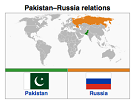
Russia’s New Silk Road Strategy: Connecting to Pakistan


Vinod Anand
Senior Fellow, VIF

Even though much awaited President Putin’s visit to Pakistan in the first week of October has been shelved, causing disappointment among the Pakistani establishment, the doors for finding a new understanding between the two on Afghanistan and regional issues remain wide open. Putin was to pay a bilateral visit to Pakistan before the quadrilateral summit that was scheduled for 2-3 October in Islamabad. Pakistan had become part of the quadrilateral of Russia, Afghanistan, Tajikistan and Pakistan in July 2009 when the forum’s first summit was held in Dushanbe. The main goals of the quartet are to promote regional trade and undertake joint projects in energy, transport, communications, agriculture and infrastructure. Combating terrorism, extremism, illegal trafficking of drugs and trans-national organized crimes, supporting peace and stability in Afghanistan and in the region are the other major objectives. These are usually the objectives of any number of multi-lateral structures and organizations that exist in this troubled region, for instance the Shanghai Cooperation Organisation.

Finding a regional solution to many of the problems being faced by the region especially that of instability, insecurity in Afghanistan and improving the socio-economic environment have driven the major players like the U.S., China and Russia to advance their own formulations and structures. However, the competing strategies of the main players in the arena have only added to the complexity of the regional issues.

At a time when Pakistan’s stock is running at all time low with the U.S. and its coalition partners in Afghanistan, Islamabad has been working to find a new strategic equation in the post-2014 Afghanistan scenario. Russians believe that Pakistan remains central to the Afghan imbroglio and has an important role to play in the unfolding scenario. Pakistan hopes to obtain a favourable outcome in the Afghan end game with Russia on its side. Moscow has also not been much enamoured by the so called ‘reset’ in its relations with the U.S., as promised by Obama administration. American policies on BMD, eastwards expansion of NATO and contesting Russia’s ‘privileged status’ in Central Asian region has soured the U.S-Russian relationship. Even though Russia is providing logistics routes through its territory for ISAF troops in Afghanistan it continues to oppose American bases and transit facilities being provided by Kyrgyzstan and Tajikistan.

Further, in the long run both Russia and Pakistan would like to see the back of the American troops in Afghanistan. They are against the long term presence of the American bases in Afghanistan as these have adverse strategic connotations for both Russia and nuclear Pakistan.

There is also a wide-spread belief that in its approach to Afghanistan, China is becoming wary of putting all its eggs in the Pakistani basket and has embarked on establishing a direct relationship with the Kabul regime. On the sidelines of the SCO Summit in June this year, China and Afghanistan signed a strategic partnership agreement. At the summit, Afghanistan was admitted to SCO as on observer. Further in September Zhou Yongkang – member of the powerful Politburo Standing Committee of the Chinese Communist Party - visited Afghanistan and signed a number of agreements on assisting Afghanistan in its security sector development programmes. He committed to training 300 Afghan national police officers which in effect could help the ISAF/NATO efforts of training the Afghan National Security Forces.
Thus, Pakistan has been aiming at finding new partners in the power play taking place in the region. As part of Pakistan’s desire to forge a cozy relationship with Russia Gen. Kayani has also traveled to Moscow in the first week of October. In fact, as a military head and one who is the final arbiter of Pakistan’s security and foreign policies, his visit would give an opportunity to Russian leaders to obtain insights into Pakistan’s fresh thinking, if any, on Afghanistan and regional security issues. While Kayani was in Moscow, the Russian Foreign Minister was in Islamabad for parleys with his Pakistani counterpart to explain the absence of Putin and identify with Pakistan’s role in the region. Sergei Lavrov supported Pakistan’s stance on the U.S. Drone strikes and denounced these attacks as violations of Pakistani sovereign territory.

Russia and Pakistan are looking for many benefits from mutual cooperation. The Russian gas company Gazprom has been looking forward to being awarded a contract for building the Iran-Pakistan gas pipeline without many of the processes associated with the laid down procedures. Russia has agreed to modernise, reconstruct and expand the Pakistan Steel Mills that has been running far below its capacity. Russia would also be supporting Pakistan Railways by undertaking a joint venture for developing a carriages workshop and may even supply Russian rail carriages. The Russians are also converting two Pakistani thermal power plants from furnace oil to coal.

Gaining access to the warm waters of the Indian Ocean has been a long cherished Russian desire since the days of Tsarist Russia and a route through Pakistan could be one useful option. Writing recently in Pravda, an analyst Lyuba Lulko suggests that “establishing close cooperation with Pakistan will give Russia a real chance to gain a foothold in Central and South Asia. In addition, Russia will be able to access the Indian Ocean, and make the U.S. troops in Afghanistan directly dependent on its logistics.”
The proposed multimodal transport links, another version of the old Silk Road are expected to provide benefits to all the four countries involved. Pakistan will gain access to Central Asian markets while Tajikistan and Russia would gain access to Pakistani ports. Commenting on last year’s Quadrilateral Summit at Sochi, Chairman of the Russian Parliament’s Foreign Affairs Committee Konstantin Kosachev, observed that “Russia may become a donor of economic, social and military-political security for Afghanistan, Pakistan and Tajikistan.”

Russia has also offered to revive all the Soviet era industrial and infrastructure projects (numbering about 140) in Afghanistan. Russia is also willing to help Tajikistan in the hydro-power sector. The Central Asia South Asia 1000 (CASA-1000) power transmission project of exporting electricity from hydro-power rich Tajikistan to Afghanistan and Pakistan is a much touted project. However, it is difficult to be realized because of objections to hydro-power projects by the down stream Central Asian countries like Uzbekistan. Another project is of building a road from Tajikistan across the Wakhan corridor to Pakistan in order to enhance regional connectivity. If Russia is able to support such projects and find the finances for the same then it would also gain a degree of control and enhance its influence in the region.

However, Pakistan and Russia would certainly have competing objectives in Afghanistan and Central Asia. Unlike Pakistan, Russia would be apprehensive of a radical Taliban regime in Kabul that may have the agenda of spreading its ideology to the Central Asian republics and beyond to Chechnya. Pakistan has not been able to control its own radical jihadis and it is unlikely that it would be able to have a degree of control over a resurgent Taliban regime in Kabul.

So far as India is concerned, the pipeline projects like Iran-Pakistan-India or TAPI gas pipeline project or for that any other multi-modal transport corridors can become economically viable only when India is included in them. A limited grouping like Russia-Afghanistan-Tajikistan-Pakistan may only produce a limited benefit. Pakistan’s obtuse policies of denying overland transit to Indian goods to Afghanistan and beyond deprive Pakistan and other regional countries the benefits of revenue and beneficial economic engagement and trade. Equally, its sponsorship of terrorism, and proclivity to use transit for political purposes, as shown most recently by its shutting down the NATO supply lines to Afghanistan, ensure that India remains wary of any such projects.
Connecting South Asia to Central Asia, especially through Pakistan (the shortest overland route) could be a win-win situation for all countries in the region with Afghanistan emerging as an important hub of communications in all directions. This would have positive effect on security, stability and economy of Afghanistan. But Pakistan will have to undertake a root-and-branch transformation of its security outlook for that to happen.