Showing posts with label Sergei Lavrov. Show all posts

Monday, October 8, 2012

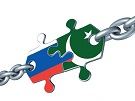
Russia’s New Silk Road Strategy: Connecting to Pakistan


Vinod Anand
Senior Fellow, VIF

Even though much awaited President Putin’s visit to Pakistan in the first week of October has been shelved, causing disappointment among the Pakistani establishment, the doors for finding a new understanding between the two on Afghanistan and regional issues remain wide open. Putin was to pay a bilateral visit to Pakistan before the quadrilateral summit that was scheduled for 2-3 October in Islamabad. Pakistan had become part of the quadrilateral of Russia, Afghanistan, Tajikistan and Pakistan in July 2009 when the forum’s first summit was held in Dushanbe. The main goals of the quartet are to promote regional trade and undertake joint projects in energy, transport, communications, agriculture and infrastructure. Combating terrorism, extremism, illegal trafficking of drugs and trans-national organized crimes, supporting peace and stability in Afghanistan and in the region are the other major objectives. These are usually the objectives of any number of multi-lateral structures and organizations that exist in this troubled region, for instance the Shanghai Cooperation Organisation.

Finding a regional solution to many of the problems being faced by the region especially that of instability, insecurity in Afghanistan and improving the socio-economic environment have driven the major players like the U.S., China and Russia to advance their own formulations and structures. However, the competing strategies of the main players in the arena have only added to the complexity of the regional issues.

At a time when Pakistan’s stock is running at all time low with the U.S. and its coalition partners in Afghanistan, Islamabad has been working to find a new strategic equation in the post-2014 Afghanistan scenario. Russians believe that Pakistan remains central to the Afghan imbroglio and has an important role to play in the unfolding scenario. Pakistan hopes to obtain a favourable outcome in the Afghan end game with Russia on its side. Moscow has also not been much enamoured by the so called ‘reset’ in its relations with the U.S., as promised by Obama administration. American policies on BMD, eastwards expansion of NATO and contesting Russia’s ‘privileged status’ in Central Asian region has soured the U.S-Russian relationship. Even though Russia is providing logistics routes through its territory for ISAF troops in Afghanistan it continues to oppose American bases and transit facilities being provided by Kyrgyzstan and Tajikistan.

Further, in the long run both Russia and Pakistan would like to see the back of the American troops in Afghanistan. They are against the long term presence of the American bases in Afghanistan as these have adverse strategic connotations for both Russia and nuclear Pakistan.

There is also a wide-spread belief that in its approach to Afghanistan, China is becoming wary of putting all its eggs in the Pakistani basket and has embarked on establishing a direct relationship with the Kabul regime. On the sidelines of the SCO Summit in June this year, China and Afghanistan signed a strategic partnership agreement. At the summit, Afghanistan was admitted to SCO as on observer. Further in September Zhou Yongkang – member of the powerful Politburo Standing Committee of the Chinese Communist Party - visited Afghanistan and signed a number of agreements on assisting Afghanistan in its security sector development programmes. He committed to training 300 Afghan national police officers which in effect could help the ISAF/NATO efforts of training the Afghan National Security Forces.
Thus, Pakistan has been aiming at finding new partners in the power play taking place in the region. As part of Pakistan’s desire to forge a cozy relationship with Russia Gen. Kayani has also traveled to Moscow in the first week of October. In fact, as a military head and one who is the final arbiter of Pakistan’s security and foreign policies, his visit would give an opportunity to Russian leaders to obtain insights into Pakistan’s fresh thinking, if any, on Afghanistan and regional security issues. While Kayani was in Moscow, the Russian Foreign Minister was in Islamabad for parleys with his Pakistani counterpart to explain the absence of Putin and identify with Pakistan’s role in the region. Sergei Lavrov supported Pakistan’s stance on the U.S. Drone strikes and denounced these attacks as violations of Pakistani sovereign territory.

Russia and Pakistan are looking for many benefits from mutual cooperation. The Russian gas company Gazprom has been looking forward to being awarded a contract for building the Iran-Pakistan gas pipeline without many of the processes associated with the laid down procedures. Russia has agreed to modernise, reconstruct and expand the Pakistan Steel Mills that has been running far below its capacity. Russia would also be supporting Pakistan Railways by undertaking a joint venture for developing a carriages workshop and may even supply Russian rail carriages. The Russians are also converting two Pakistani thermal power plants from furnace oil to coal.

Gaining access to the warm waters of the Indian Ocean has been a long cherished Russian desire since the days of Tsarist Russia and a route through Pakistan could be one useful option. Writing recently in Pravda, an analyst Lyuba Lulko suggests that “establishing close cooperation with Pakistan will give Russia a real chance to gain a foothold in Central and South Asia. In addition, Russia will be able to access the Indian Ocean, and make the U.S. troops in Afghanistan directly dependent on its logistics.”
The proposed multimodal transport links, another version of the old Silk Road are expected to provide benefits to all the four countries involved. Pakistan will gain access to Central Asian markets while Tajikistan and Russia would gain access to Pakistani ports. Commenting on last year’s Quadrilateral Summit at Sochi, Chairman of the Russian Parliament’s Foreign Affairs Committee Konstantin Kosachev, observed that “Russia may become a donor of economic, social and military-political security for Afghanistan, Pakistan and Tajikistan.”

Russia has also offered to revive all the Soviet era industrial and infrastructure projects (numbering about 140) in Afghanistan. Russia is also willing to help Tajikistan in the hydro-power sector. The Central Asia South Asia 1000 (CASA-1000) power transmission project of exporting electricity from hydro-power rich Tajikistan to Afghanistan and Pakistan is a much touted project. However, it is difficult to be realized because of objections to hydro-power projects by the down stream Central Asian countries like Uzbekistan. Another project is of building a road from Tajikistan across the Wakhan corridor to Pakistan in order to enhance regional connectivity. If Russia is able to support such projects and find the finances for the same then it would also gain a degree of control and enhance its influence in the region.

However, Pakistan and Russia would certainly have competing objectives in Afghanistan and Central Asia. Unlike Pakistan, Russia would be apprehensive of a radical Taliban regime in Kabul that may have the agenda of spreading its ideology to the Central Asian republics and beyond to Chechnya. Pakistan has not been able to control its own radical jihadis and it is unlikely that it would be able to have a degree of control over a resurgent Taliban regime in Kabul.

So far as India is concerned, the pipeline projects like Iran-Pakistan-India or TAPI gas pipeline project or for that any other multi-modal transport corridors can become economically viable only when India is included in them. A limited grouping like Russia-Afghanistan-Tajikistan-Pakistan may only produce a limited benefit. Pakistan’s obtuse policies of denying overland transit to Indian goods to Afghanistan and beyond deprive Pakistan and other regional countries the benefits of revenue and beneficial economic engagement and trade. Equally, its sponsorship of terrorism, and proclivity to use transit for political purposes, as shown most recently by its shutting down the NATO supply lines to Afghanistan, ensure that India remains wary of any such projects.
Connecting South Asia to Central Asia, especially through Pakistan (the shortest overland route) could be a win-win situation for all countries in the region with Afghanistan emerging as an important hub of communications in all directions. This would have positive effect on security, stability and economy of Afghanistan. But Pakistan will have to undertake a root-and-branch transformation of its security outlook for that to happen.

Monday, June 18, 2012

SCO Summit and Afghanistan: Looking for a Regional Solution


Vinod Anand 
Senior Fellow, VIF
The Shanghai Cooperation Organisation’s twelfth Summit held at Beijing in first week of June this year deliberated upon Afghanistan at length.Even though Afghanistan has not been either a member or observer of this group President Karzai has been attending the SCO Summits regularly as a guest since 2004. At last, Afghanistan has now been granted the status of an observer. Attending the 2005 SCO Summit in Beijing and underscoring the geo-strategic relevance of Afghanistan as an important link between Central Asia and South Asia, Karzai had then observed that

“Afghanistan belongs to the region where also lies the SCO. Afghanistan has no other ways, and can't be outside the region.”

Though a SCO-Afghanistan Contact Group was formed in 2005, it was only in 2009 that a plan of action for combating terrorism, illicit drug trafficking and organized crime was signed. On ground there is little evidence to show that this group has made any substantial contribution towards achieving their stated goals. Though it can be said that the SCO members have carried out some counter-narcotics and counter-terrorism exercises amongst themselves.

In 2009 Russia had hosted the SCO Summit at Yekaterinburg with much fanfare. Among others Russia was able get representatives from the U.S. and NATO also. 2009 was also the year when President Obama had taken over and was in the process of resetting its relationship with Russia. Obama had unveiled his new Afghan strategy and was counting on Russia and Central Asian countries for providing transit routes to Afghanistan. In fact the US representative Mr. Patrick Moon had commended the SCO’s joint action plan on Afghanistan. On the other hand Russia’s Foreign Minister Sergei Lavrov had underlined Russia’s concerns by calling on the U.S.-NATO coalition forces to step up anti-narcotics efforts. Currently, even though the US and NATO forces use supply lines to Afghanistan through Russia and Central Asian countries, differences between the US-NATO combine and Russia continue to exist. There is also a view that SCO has not been given due recognition by the US and the West.

Last year in Astana Summit, Karzai indicating his objective of joining SCO had said that Afghanistan “expects real cooperation with the SCO countries in combating the threat of terrorism and trafficking in arms and drugs.” He was looking forward to SCO members for investments in his country for exploitation of mineral resources. Kazakhstan President Nursultan Nazarbayev, the host, observed “The SCO believes with good reason that Afghanistan holds the key to the future of the entire region.”

It is quite evident that the most important concerns SCO are the unstable situation in Afghanistan that has given rise to drug trafficking and the threats of radicalism and terrorism emanating from Afghanistan. In all the SCO Summits held so far counter-narcotics and anti-terrorism discussions have received priority even while economic and other issues find their due place. China, which is one of the major players in the SCO (the other being Russia) has a standard formulation of the threats in the region and describes them as the three evils of “terrorism, extremism and separatism”. Of late, the Chinese are increasingly feeling concerned about the rise in drug trafficking to China from Afghanistan through Central Asia. Russia is the worst sufferer from the menace of Afghan origin drugs. There have been reports that almost 30,000 Russians die annually due to drug abuse. This is more than twice the number of Russian soldiers (around 14,500 or so according to one estimate) that were killed in a decade of their adventure in Afghanistan.

Again this year the SCO summit has stressed on stepping up bilateral and multilateral cooperation to jointly combat terrorism, separatism and extremism, battle illicit trafficking in drugs and weapons and other transnational criminal activities, address illegal migration and meet the new threats and challenges in other security fields.

As for as Afghanistan is concerned; SCO’s twelfth Summit has supported Afghanistan’s effort to build an independent, neutral, peaceful, prosperous country free of terrorism and drug-related crimes. They are of the view that the national reconciliation process in Afghanistan should be Afghan-led and Afghan-owned. The SCO also supported the United Nations' leading role in coordinating the international efforts on the issue of Afghanistan. Support for economic reconstruction of Afghanistan was also promised though not much was spelt out. These are also the formulations which were mentioned during the international conference on Afghanistan in Istanbul in November 2011 and endorsed in the Bonn Conference in the following month. The Istanbul Conference was also meant to find a regional solution to Afghanistan. Though many declarations were made in the conference yet no mechanisms for implementation were instituted. The same can be said about the 12th SCO Summit’s declarations about Afghanistan.

Thus, even while the stated goals of the international community for Afghanistan, at the broader plane are the same different players are adopting different strategies dominated by their respective interests to realize their own objectives. Therefore, the Afghan puzzle has increasingly become very complicated with no signs of an early solution.

One of the important highlights of the 12th SCO Summit was signing of a China- Afghanistan Strategic and Cooperative Partnership agreement on the sidelines of the conference. Even though the text of the declaration covered very broadly the usual areas of cooperation yet there were some specifics which would be beneficial to Afghanistan. The Chinese government will provide a grant of 150 million RMB (equivalent to 23.71 million US dollars) in 2012. However, this is just a piffling sum coming from a rising China that is flush with funds. China stands to gain many times more from its investments in Afghanistan’s natural resource sector. Further, as a sop, some vacancies and scholarships for training of Afghan technical personnel and other students in China have been increased.

According to the partnership agreement the overall cooperation between the two sides would be in areas of political, economic, cultural and security fields in addition to regional and international affairs. They would not allow their respective territory to be used for any activities targeted against the other side. Afghanistan promised that ‘It will take tangible measures to enhance the security of Chinese institutions and people in Afghanistan’. Both sides agreed to continually strengthen their cooperation in such fields as resources and energy development, infrastructure development, engineering and agriculture. The Chinese side reaffirmed its support for the peaceful reconstruction process in Afghanistan. This rhymes very well with China’s plans of exploiting Afghanistan’s mineral reserves and development of connected infrastructure for evacuating them to China.

However, one of the curious clauses of the abovementioned agreement was that China and Afghanistan ‘will further the coordination and cooperation in SARRC’. Though this clause appears to be innocuous it has implications for India. China is an observer in SAARC while Afghanistan is a full member. Some analysts have opined that China is looking for a full membership of SAARC which for obvious geopolitical reasons is not favoured by India. India has applied for a full membership of the SCO and there is a view that China could be looking for a quid pro quo. Therefore, the need on the part of China to get Afghanistan on its side.

China has also averred to play a bigger role in Afghanistan post 2014 withdrawal by the NATO forces. On the sidelines of the Summit President Hu Jintao stated that “We will continue to manage regional affairs by ourselves, be on guard against external turbulence and play a bigger role in Afghanistan’s peaceful reconstruction”. Hu Jintao and Chinese officials were at pains to emphasise that SCO is not a military block like the NATO.

India, which applied for a full membership of the SCO last year has been supporting Afghanistan’s case for entering the SCO and has also favoured SCO performing a role in the stabilization of Afghanistan. India's External Affairs Minister S.M. Krishna had observed during the 11th Summit at Astana that SCO organization "could play an important role in stabilizing Afghanistan after the drawdown of foreign troops." During this year’s Summit he opined that “The SCO provides a promising alternative regional platform to discuss the rapidly changing Afghan situation”. He added that member grouping’s economic projects could be “a meaningful additional effort for Afghanistan’s reconstruction”. He also pitched in for making India a full member of the SCO.

Finding a regional solution to Afghan imbroglio was one of the important pillars of Obama’s strategy of 2009. Yet, nothing substantial has been done by the U.S. to move towards that goal. Whether it is the Istanbul process, Bonn Conference or the SCO’s summits many declarations have been made yet implementation of the same has not come about. A number of players in Afghanistan have competing strategies which leads to generating more friction rather than bringing about a positive outcome in Afghanistan. All the stakeholders in Afghanistan have to reconcile in order to bring about a positive outcome. This can, perhaps, be better done under the aegis of the UN.