Showing posts with label Beijing. Show all posts

Monday, June 18, 2012

SCO Summit and Afghanistan: Looking for a Regional Solution


Vinod Anand 
Senior Fellow, VIF
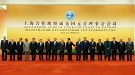
The Shanghai Cooperation Organisation’s twelfth Summit held at Beijing in first week of June this year deliberated upon Afghanistan at length.Even though Afghanistan has not been either a member or observer of this group President Karzai has been attending the SCO Summits regularly as a guest since 2004. At last, Afghanistan has now been granted the status of an observer. Attending the 2005 SCO Summit in Beijing and underscoring the geo-strategic relevance of Afghanistan as an important link between Central Asia and South Asia, Karzai had then observed that

“Afghanistan belongs to the region where also lies the SCO. Afghanistan has no other ways, and can't be outside the region.”

Though a SCO-Afghanistan Contact Group was formed in 2005, it was only in 2009 that a plan of action for combating terrorism, illicit drug trafficking and organized crime was signed. On ground there is little evidence to show that this group has made any substantial contribution towards achieving their stated goals. Though it can be said that the SCO members have carried out some counter-narcotics and counter-terrorism exercises amongst themselves.

In 2009 Russia had hosted the SCO Summit at Yekaterinburg with much fanfare. Among others Russia was able get representatives from the U.S. and NATO also. 2009 was also the year when President Obama had taken over and was in the process of resetting its relationship with Russia. Obama had unveiled his new Afghan strategy and was counting on Russia and Central Asian countries for providing transit routes to Afghanistan. In fact the US representative Mr. Patrick Moon had commended the SCO’s joint action plan on Afghanistan. On the other hand Russia’s Foreign Minister Sergei Lavrov had underlined Russia’s concerns by calling on the U.S.-NATO coalition forces to step up anti-narcotics efforts. Currently, even though the US and NATO forces use supply lines to Afghanistan through Russia and Central Asian countries, differences between the US-NATO combine and Russia continue to exist. There is also a view that SCO has not been given due recognition by the US and the West.

Last year in Astana Summit, Karzai indicating his objective of joining SCO had said that Afghanistan “expects real cooperation with the SCO countries in combating the threat of terrorism and trafficking in arms and drugs.” He was looking forward to SCO members for investments in his country for exploitation of mineral resources. Kazakhstan President Nursultan Nazarbayev, the host, observed “The SCO believes with good reason that Afghanistan holds the key to the future of the entire region.”

It is quite evident that the most important concerns SCO are the unstable situation in Afghanistan that has given rise to drug trafficking and the threats of radicalism and terrorism emanating from Afghanistan. In all the SCO Summits held so far counter-narcotics and anti-terrorism discussions have received priority even while economic and other issues find their due place. China, which is one of the major players in the SCO (the other being Russia) has a standard formulation of the threats in the region and describes them as the three evils of “terrorism, extremism and separatism”. Of late, the Chinese are increasingly feeling concerned about the rise in drug trafficking to China from Afghanistan through Central Asia. Russia is the worst sufferer from the menace of Afghan origin drugs. There have been reports that almost 30,000 Russians die annually due to drug abuse. This is more than twice the number of Russian soldiers (around 14,500 or so according to one estimate) that were killed in a decade of their adventure in Afghanistan.

Again this year the SCO summit has stressed on stepping up bilateral and multilateral cooperation to jointly combat terrorism, separatism and extremism, battle illicit trafficking in drugs and weapons and other transnational criminal activities, address illegal migration and meet the new threats and challenges in other security fields.

As for as Afghanistan is concerned; SCO’s twelfth Summit has supported Afghanistan’s effort to build an independent, neutral, peaceful, prosperous country free of terrorism and drug-related crimes. They are of the view that the national reconciliation process in Afghanistan should be Afghan-led and Afghan-owned. The SCO also supported the United Nations' leading role in coordinating the international efforts on the issue of Afghanistan. Support for economic reconstruction of Afghanistan was also promised though not much was spelt out. These are also the formulations which were mentioned during the international conference on Afghanistan in Istanbul in November 2011 and endorsed in the Bonn Conference in the following month. The Istanbul Conference was also meant to find a regional solution to Afghanistan. Though many declarations were made in the conference yet no mechanisms for implementation were instituted. The same can be said about the 12th SCO Summit’s declarations about Afghanistan.

Thus, even while the stated goals of the international community for Afghanistan, at the broader plane are the same different players are adopting different strategies dominated by their respective interests to realize their own objectives. Therefore, the Afghan puzzle has increasingly become very complicated with no signs of an early solution.

One of the important highlights of the 12th SCO Summit was signing of a China- Afghanistan Strategic and Cooperative Partnership agreement on the sidelines of the conference. Even though the text of the declaration covered very broadly the usual areas of cooperation yet there were some specifics which would be beneficial to Afghanistan. The Chinese government will provide a grant of 150 million RMB (equivalent to 23.71 million US dollars) in 2012. However, this is just a piffling sum coming from a rising China that is flush with funds. China stands to gain many times more from its investments in Afghanistan’s natural resource sector. Further, as a sop, some vacancies and scholarships for training of Afghan technical personnel and other students in China have been increased.

According to the partnership agreement the overall cooperation between the two sides would be in areas of political, economic, cultural and security fields in addition to regional and international affairs. They would not allow their respective territory to be used for any activities targeted against the other side. Afghanistan promised that ‘It will take tangible measures to enhance the security of Chinese institutions and people in Afghanistan’. Both sides agreed to continually strengthen their cooperation in such fields as resources and energy development, infrastructure development, engineering and agriculture. The Chinese side reaffirmed its support for the peaceful reconstruction process in Afghanistan. This rhymes very well with China’s plans of exploiting Afghanistan’s mineral reserves and development of connected infrastructure for evacuating them to China.

However, one of the curious clauses of the abovementioned agreement was that China and Afghanistan ‘will further the coordination and cooperation in SARRC’. Though this clause appears to be innocuous it has implications for India. China is an observer in SAARC while Afghanistan is a full member. Some analysts have opined that China is looking for a full membership of SAARC which for obvious geopolitical reasons is not favoured by India. India has applied for a full membership of the SCO and there is a view that China could be looking for a quid pro quo. Therefore, the need on the part of China to get Afghanistan on its side.

China has also averred to play a bigger role in Afghanistan post 2014 withdrawal by the NATO forces. On the sidelines of the Summit President Hu Jintao stated that “We will continue to manage regional affairs by ourselves, be on guard against external turbulence and play a bigger role in Afghanistan’s peaceful reconstruction”. Hu Jintao and Chinese officials were at pains to emphasise that SCO is not a military block like the NATO.

India, which applied for a full membership of the SCO last year has been supporting Afghanistan’s case for entering the SCO and has also favoured SCO performing a role in the stabilization of Afghanistan. India's External Affairs Minister S.M. Krishna had observed during the 11th Summit at Astana that SCO organization "could play an important role in stabilizing Afghanistan after the drawdown of foreign troops." During this year’s Summit he opined that “The SCO provides a promising alternative regional platform to discuss the rapidly changing Afghan situation”. He added that member grouping’s economic projects could be “a meaningful additional effort for Afghanistan’s reconstruction”. He also pitched in for making India a full member of the SCO.

Finding a regional solution to Afghan imbroglio was one of the important pillars of Obama’s strategy of 2009. Yet, nothing substantial has been done by the U.S. to move towards that goal. Whether it is the Istanbul process, Bonn Conference or the SCO’s summits many declarations have been made yet implementation of the same has not come about. A number of players in Afghanistan have competing strategies which leads to generating more friction rather than bringing about a positive outcome in Afghanistan. All the stakeholders in Afghanistan have to reconcile in order to bring about a positive outcome. This can, perhaps, be better done under the aegis of the UN.

Tuesday, May 1, 2012

Carry Forward The Legacy of Agni-5


Radhakrishna Rao
Research Fellow, VIF
The flawless, twenty minute long maiden flight of India’s most advanced and longest range Agni-V missile capable of hitting targets at a distance of 5,000-kms on April 19 has given a big boost to the nuclear deterrence and long range strategic strike capability of India. Going beyond the debate whether the three-stage Agni-V really deserves the tag of ICBM (Inter Continental Ballistic Missile) or not, India should carry forward the legacy of this most powerful three-stage, solid fuel driven missile to develop a range of missiles capable of hitting targets beyond 10,000 kms. For such a capability alone can help transform India into superpower besides providing parity with China to some extent in long-range missile strike capability. Indeed, in the aftermath of the Agni-V launch, an editorial in the pro-Beijing Global Times had observed, “India should stand no chance in an overall arms race with China.” Going further, it warned New Delhi against relying on its relationship with US and implied the possibility of India joining hands with the West to curb China’s growth. ” India should also not overstate the value of its Western allies and the profits it could gain from participating in a containment of China. If it equated long-range strategic missiles with deterrence of China, and step-up further hostilities, it could be sorely mistaken,” noted the Global Times editorial. There were also reports to suggest that China may pressurize countries to drop exporting critical components used in missile systems to India.

Not surprisingly, the total turnaround of US stance in so far as its muted reaction to Agni-V launch was concerned was on the expected lines. The cryptic response of US which had left no stone unturned to prevent India from testing the Agni-II missile in late 1990s was “all nuclear capable states should exercise restraint regarding nuclear capabilities.” Added to that, following India’s 1998 twin Pokhran nuclear blasts, Washington had blamed India for “proliferation” and brought India under the technology embargo. Obviously, USA which is hard selling its defence hardware to India, cannot afford to offend India at this critical juncture. Indian Prime Minister Manmohan Singh was right in his observation: “The successful Agni-V test launch represents another milestone in our quest to add to the credibility of our security and preparedness to continuously explore the frontiers of science.”

The new generation Agni-V missile with a formidable strike capability and state of the art technological elements marks a massive strategic leap for India as it becomes the sixth nation in the world to capable of delivering warhead across the continents. Clearly and apparently, Agni-V, which has helped India expand its missile foot print far beyond China and Pakistan, has altered the global geo-political scenario in all its manifestations. “Agni-V gives strategic deterrence parity as it provides the same range and clout as Chinese missiles have,” says Bharat Karnad, Professor at the Centre for Policy Research in New Delhi.

Indeed, the decision to equip Agni-V with MIRV (Multiple Independently Targetable Re-entry Vehicle) would help India strike multiple targets spread across a vast geographical swath at one go. “The versatile capability of this missile will enable India to leapfrog into the area of MIRV, anti-satellite weapons and the capability to launch satellites on demand. This will usher in a new era of missile development in India,” says Avinash Chander, Chief Controller (Research and Development) of missiles and strategic systems at DRDO. Indeed, DRDO would need to build its own launch capability to take care of the growing space defence needs of the country. For ISRO with its limited infrastructure, a single operational launch vehicle in the form of PSLV (Polar Satellite Launch Vehicle) and a solitary launch complex on India’s eastern coast is clearly not in a position to build and launch satellites – at short intervals and on a regular basis – required by the three wings of the Services. Indeed, it would be in the fitness of things for DRDO to modify the Agni range of ballistic missiles to hurl satellites into orbit at a short turnaround time. Moreover, DRDO can position Agni range of missiles as one of the key components of India’s space weaponization programme the need for which the country’s political leadership should recognize without any loss of time. For in the context of China’s highly motivated plans for perfecting the techniques space warfare, India cannot afford to remain a silent spectator.

As it is, the plan to equip Agni-V with MIRV capability has been hailed by strategic experts. “MIRV is the right way to go,” says Rajaram Nagappa, Professor of Strategic and Security Studies at National Institute of Advanced Studies(NIAS) in Bangalore. Nagappa who had earlier worked on solid fuel driven motor systems at the Thiruvananthapuram-based Vikram Sarabhai Space Centre(VSSC) of ISRO says “Reduction of structural mass and maximising of fuel efficiency was another important area which the defence scientists have solved.” According to DRDO sources, an MIRV payload would be significantly heavier since it would consist of several nuclear warheads, each of them weighing about 400-kg. “The primary modules of MIRV are in an advanced stage of development. Realization and integration of them into a weapon is just a question of threat perception and the need as it arises,” says Chander.

Incidentally, the MIRV capability of Agni-V has its parallel in the multiple launch of capability of the four-stage Indian space workhorse PSLV, which in April 2008, had created a sort of record by hoisting as many as ten satellites into space in one go. “The MIRV technology is similar to ISRO’s multiple satellite injection technology. The defence scientists have to miniaturize it and install better guidance systems to ensure that warheads hit the targets,” says Karnad. As pointed out by DRDO, the focus of the new generation Indian missiles is on weight reduction and improvement in velocities with high payload capability.

Agni-V featuring many advanced technology elements including state of the art guidance and navigation, stealth features, canister launch capability and carbon composite rocket motor casing, could very well serve as a platform for a robust Indian ICBM programme. According to Zhang Zhaozang, a Professor with PLA (Peoples Liberation Army) University in China, “the Agni-V range could be further enhanced to become an ICBM.” But then, as stated by Avinash Chander, “As of now, most of India’s perceived and potential strategic threats are localized within 5,500-km range. Agni-V will take care of this concern.”

For India the biggest advantage of Agni-V is that it can be launched from any location within the country, in any direction and at any time. DRDO has already hinted that the range of Agni-V can be enhanced through the use of improved materials and enhanced fuel loading capability. According to V. G. Shekaran, Director of the Hyderabad-based Advanced Systems Laboratory (ASL) of DRDO which designed and developed Agni-V “A great advantage of the configuration of Agni-V is that we can further enhance and expand its range. We would upscale Agni-III with a range of 3,500 km to Agni-V in a short time. On similar lines, we can go beyond Agni-V. That is the beauty of Agni-V’s configuration. Its up-scaling and mobility is high.” Interestingly, among the new technologies used for Agni-V are ring laser gyro-based inertial navigation system, micro inertial navigation system, high speed on-board computer based on power PC design, light weight composite motors and 100% home-grown software. Research Centre Imarat (RCI), a DRDO laboratory based in Hyderabad, has made significant contribution to the development of advanced inertial navigation, guidance and control systems which went into Agni-V.

As envisaged now, Agni-V will help India boost its second strike capability in the context of India’s national policy of the no first use of nuclear capability. The short-range Agni-I equipped to strike a target at a distance of 700-kms and medium range Agni-II designed to hit a target at a distance of 2,500-kms have already been inducted into service. The programme for developing improved performance Agni range of missiles – Agni-III, Agni-IV and Agni-V—owes its origin to Agni-I and Agni-II missiles developed as part of the Integrated Guided Missile Development Programme (IGMDP) spearheaded under the guidance of the former Indian President Dr. A. P. J. Abdul Kalam who as the head of DRDO had consistently striven to put the Indian missile development programme on a sound footing. Incidentally, during his stint with ISRO(Indian Space Research Organisation), Kalam had played a key role in the development of India’s first civilian launch vehicle SLV-3 which had its successful debut flight in 1980. Against this backdrop, US think tank have been alleging that the Agni range of missiles have benefited enormously from the solid fuel technology developed for the four stage, 17-tonne SLV-3.

Two more tests of Agni-V need to be carried out before its induction into services hopefully by the middle of this decade. DRDO has already revealed that the development of the naval variant of Agni-V which can be launched from under sea platforms is on hand. This nuclear capable, road mobile missile can reach out to almost entire Asia, East Europe upto the Russian coast in the north and close to the coastline of Australia and South Africa. The target range however, varies depending on the launch site. Agni range of missiles form the mainstay of India’s nuclear deterrence capability based on the no first use of nuclear weapon policy. With the Indo Russian supersonic cruise missile BrahMos already inducted into the army and the navy, the Akash surface-to-air area defence system in service with the IAF and the indigenous nuclear powered submarine Arihant boosting the K-15 underwater launched missile, DRDO claims that India has now a complete range of missiles to take care of multifarious threats emanating from a variety of directions.

By all means, the smooth debut flight of Agni-V exemplifies India’s growing technological self-reliance that stands out as a challenge to technology denial and trade sanction regime. As stated by DRDO chief, V. K. Saraswat “Agni-V is a game changer and India is a major missile power now.” Saraswat drives home the point that the biggest advantage of Agni-V is its short reaction time and high mobility. Agni-V can easily be stored in hermitically sealed canister and quickly transported atop launcher trucks by road to the required destination. This would give armed forces tremendous flexibility to pick and choose from where to launch the missile.

“Three major gains from Agni-V are the technology of MIRV, the capability to launch mini satellites and the capability to engage satellites in its orbit,” says Saraswat. According to Saraswat, Agni-V gave the ability to take a “kill vehicle” instead of a payload to high altitude of about 800-km. This kill vehicle can be used to smash a rogue satellite to ensure the safety of Indian space resources. ”Besides the kill vehicle, one should have some guidance to hit the satellite. We can put advance seekers that are built in the country itself. Satellite position will be given to the kill vehicle that will then inflict the desired change,” said Saraswat. Saraswat, who has all along been stressing on the need for the developing the building blocks of Indian space weaponization programme, views Agni-V as a key anti satellite device.

Incidentally, Prithvi, a tactical battlefield system, happens to be the first missiles developed under IGMDP which was initiated in 1983 by DRDO. Following the successful launch of Prithvi-1 liquid fuel driven missile in February1989, the US and other developing countries imposed technology embargo on India under MTCR (Missile Technology Control Regime) adversely affecting the availability of advanced electronic devices such as computer processor chips, radio frequency devices, electro hydraulic components, maraging steel and composite materials such as carbon fibre. But then unfazed by technology denial regime, DRDO chose to develop the critical components and hardware through consortium approach involving national laboratories, universities and private industries. Thanks to the vision of DRDO India became self sufficient in the development of components including phase shifters, magnesium alloys ,servo valves, resins and carbon fibres. Today around 80% of the components and hardware going into the Indian missile systems are produced within the country.

There is no denying the fact that the nuclear capable Agni range of missiles along with the supersonic cruise missile BrahMos developed by India in partnership with Russia makes for a win-win combination in taking care of the possible misadventure from across the Himalayan border. The plan to deploy both these missiles, which are formidable in their own way, in India’s north eastern sector, has the potential to give Indian defence forces a tremendous strategic advantage .Similarly, DRDO’s well conceived plan to put in place a two layered ballistic missile defence shield in place seeks to protect the Indian skies with two interceptor missiles—Prithvi Air Defence (PAD) missile for high altitude interception and the Advanced Air Dfence (AAD) missile for lower altitude interception—assumes significance. With a number of other home grown missile systems—Nirbhay intermediate range subsonic land attack missile now awaiting its debut flight, Prahar quick reaction battlefield missile currently being weaponised for use by the Indian army and Astra air to air beyond the visual range missile awaiting firing from Su-30 MKI combat aircraft--- Indian defence forces will have no reason to worry about defending the country against the evil design of the potential aggressors.

The unqualified success of Agni-V clearly demonstrates that DRDO means business and it can no longer be considered a laggard in so far as developing a range of advanced missiles of different class is concerned. Indeed, as stated by Saraswat, nowhere else in the world does a single agency has so many on-going programmes. DRDO which not long back was at the receiving end for its shortcomings , now stands transformed into a centre of excellence in state of the art missile technologies. And for the Indian Defence Minister A. K. Antony who has all along been urging DRDO to take a leaf out of the success story of ISRO, the Agni-V successful flight cannot but be the “happiest moment of his life”.