Showing posts with label BRICS. Show all posts

Monday, September 15, 2014

Will President Xi Jinping’s Visit change the Contours of Sino-Indian Ties?

Brig Vinod Anand, 
Senior Fellow, VIF

The coming visit of President Xi Jinping is being viewed as a visit that could define the next decade of engagement between the two Asian giants. It is generally accepted that Sino-Indian relationship could turn out to be more important than the Sino-US engagement if leadership of both the countries were to cooperate and give substance to the conception that the locus of global economy and power has shifted to Asia. Notwithstanding the fact that there is dissonance between the two countries on a number of issues, both nations do share common perceptions on many of the international issues and especially so on the nature of the emerging world order.

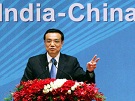
Further, the visit also needs to be seen in the backdrop of the unprecedented two summit meetings between PM Li Keqiang and Manmohan Singh last year, recent visit of Vice President Hamid Ansari to China to celebrate 60 years of Panchsheel and not to be left behind the visit of Indian Army Chief Gen. Bikram Singh to China in first week of July (after a gap of 9 Years). All these engagements were topped by Xi and Modi meeting on the sidelines of BRICS where both leaders established a good rapport. These multifarious engagements have already brought to fore the Indian concerns and have indicated the direction in which both countries want to proceed further. One thing which is certain is that no dramatic breakthroughs in the relationship should be expected.

Modi’s mantra is development and growth and that has been the basis on which he has come to power. Having had firsthand experience during his visits to China as Gujarat Chief Minister, he has been thoroughly impressed by the development and economic growth of China and especially its infrastructure in terms of roads, ports, highways and some of the new cities and towns. Therefore, he is keen to conclude agreements with the visiting President regarding Chinese infrastructure companies undertaking projects in India. India is looking for infusion of China’s surplus funds in Indian infrastructure and in other avenues of investment. Though an MOU for setting up an Industrial Park has been signed by our Trade and Commerce Minister during Vice President Ansari’s visit to China, it is just a small step; Modi is looking for a framework agreement on investment by China. Modi is keen to push infrastructure development by the Chinese in Gujarat, Madhya Pradesh and Tamil Nadu.

India’s requirements of funds are a huge one trillion US dollars as per its current Five Year Plan and it is hoped that China can contribute possibly 30 percent of such requirement over a period of time. But a Sino-Indian agreement for anything closer to 30 billion USD or even somewhat lesser amount in the coming visit could be a game changer. There would be some problems like the absorption capacities and many other difficulties connected with the local environment but all such issues can be overcome provided the political will is there from both sides. Recently, a country like UK offered 1 billion pounds (around 1.75 billion USD) for infrastructure development in India. Obviously, China’s capacities are much beyond this amount.

Second agreement that could give a positive momentum to Sino-Indian ties needs to be in the field of trade and commerce. The trade imbalance between the two nations is now to the tune of around 35 billion USD which needs to be addressed. In all the previous top level political engagements, while promises have been made to come to grips with the issue, no substantial progress has been made. Therefore, in the coming visit, New Delhi is looking forward to an agreement that grants greater access of Indian goods and services to the Chinese market, for instance Indian pharmaceutical products, IT enabled services, cotton textiles & home furnishings etc. There are many non-tariff barriers on Indian exports of goods and services. Removal of these would enable India to close the trade gap; though it is also not expected that the trade should always be balanced yet another way is that China invests in India. Under the present circumstances, it appears unlikely that the projected bilateral trade figure of 100 billion USD by 2015 can be achieved.

Thirdly, whenever a bilateral visit takes place, there is a pattern of behavior from China’s side which needs to be avoided. Such a behavior has been exhibited with regularity on the eve of all previous political visits. Before the Indian Vice President’s visit, a controversial map was released by China besides transgression by PLA troops in Pangong Lake. Last year before PM Li Keqiang’s visit to New Delhi, there was the Depsang valley intrusion. In fact, it is difficult to recall any visit where before the event there has been no negative incident. Largely, the perception is that such events/incidents are deliberately planned to put Indian decision-makers on the back foot and in order to test their resolve.
Though it may not be necessary to have any written agreement on the above aspect, both leaders can reach an understanding that such incidents should be avoided in order to give positive atmospherics to the bilateral meets.

While many agreements have been signed culminating into Border Area Development Cooperation (BADC) agreement of 2013, the border incidents continue to take place. Several incursions in Ladakh sector by Chinese troops have taken place since January 2014. PLA’s posture has become increasingly very assertive and it has been attempting to expand its claimed areas (which are in any case ill-defined). After the signing of BADC, such incidents should have been a rarity; both leaders need to reach an understanding on the same and need to enforce their writ; any fresh formal agreement on the issue would not be of any avail if the previous agreements are not adhered to in their true spirit. There is a need to arrive at a mutual modus vivendi on the issue. Peace and tranquility along the border remains an important element for growth and development. This has been recognized so in the previous agreements.

Fourthly is the question of lack of Chinese sensitivity to India’s core concern of Kashmir issue. Since nineties till 2005, China had been following somewhat of a neutral approach but after 2005 or so, there has been perceptible difference in China’s approach with its tilt towards Pakistan. China’s developmental and other activities in Pakistan occupied Kashmir have a negative impact on India’s security. It also needs to be remembered that even Pakistan considers Kashmir as disputed therefore; if China wants to reduce dissonance with India, then China’s return to a neutral stand would add to positivity of Sino-Indian relationship.

Fifth is the Tibet question. This year is being celebrated as the 60th year of Panchsheel Agreement. India is not much enamored with the Panchsheel Agreement as it recognized China’s suzerainty over Tibet without any concession to India in the bargain. It is considered as a lack of strategic vision on part of Nehru. While the Five principles of peaceful coexistence are quite all right, it was the preamble of the agreement that became more significant than the clauses in the main text. The fact that India was represented at the celebratory event in China by its Vice President is also some kind of message that Panchsheel does not hold that level of significance. In the bilateral summits for last three years or so, even though India has been adhering to one China policy, the same is not being mentioned in the Joint Communiques issued after the summits. This has been largely as a response to China’s failure to recognize Jammu & Kashmir as part of India. There have been many other irritants like the stapled visas issue to residents of Arunachal Pradesh.

Further, the presence of Lobsang Sangay, Kalon Tripa / Sikyong of Tibet Administration at Modi’s swearing ceremony also indicates the current government’s stance in some measure though there is no change in Indian government’s policy that Tibetans cannot carry out any political activities in India etc.
Another significant issue that needs further discussions is the damming activities on Yarlung Tsangpo/Brahmaputra River; some discussions took place during VP Hamid Ansari’s visit to Beijing; the two governments signed an implementation plan on provision of hydrological information on the Brahmaputra River in flood seasons by China and India. Expansion in areas of cooperation in this field has to take note of the interests of lower riparian nations like Bangladesh and India. So far Chinese policies on the issue are not conducive to good relationship.

Coming to the regional situation, the most important issue would be that of Afghanistan post 2014. Both sides largely share similar perceptions on the emerging scenario and have common concerns on the security implications of the unfolding scenario. There is a JWG on the subject; both sides are expected to explore practical ways of cooperating in Afghanistan so that peace and stability is brought to that nation. However, on the question of terrorism, China still continues to see through Pakistani prism. While the Americans, the Western nations and possibly the Chinese have seen through the double game of Pakistan, they feel constrained to take any action against Pakistan for a number of geo-strategic reasons. The negative role of Pakistan needs to be recognized by China otherwise peace and stability in the region including in Xinjiang would remain elusive.

While at the international level, both nations largely identify with each other’s aims, objectives and interests in the multilateral forums, on climate and trade issues, WTO etc. yet, China is yet to endorse India becoming a permanent member of UNSC as also a member of the Nuclear Suppliers Group. Meanwhile, China led by President Xi Jinping has become increasingly aggressive and assertive in Asia both militarily and economically indicating that it aspires for leadership role in Asia. Promotion of a number economic corridors and silk roads, offering funding by establishing Asian Infrastructure Development Fund, Shanghai Cooperation Organisation Development Fund and many other economic initiatives by China are aimed to enhance its strategic presence.

On the other hand, China needs India on its side for the success of its view of the new Asian security architecture where according to Chinese perceptions the US and the others have no role. India favours a strategic equilibrium in Asia whereas China is anti-status quo aspiring to dominate the Asian firmament. Thus, Modi’s visit to Japan, Australian PM Abbot’s visit to India before President Xi’s visit and later Modi’s visit to the US need to be seen in the context of India attempting to balance the emerging strategic equations.

Overall, the forthcoming visit of President Xi is unlikely to change the fundamental nature of Sino-Indian relationship as China is not ready to relent on issues considered by India to be part of its core national interests. Some advances on economic and connected issues are possible. Modi’s approach includes management of the conflict areas between the two nations while at the same time striving to have enhanced economic, political, diplomatic and people to people engagements.


(Disclaimer: The views and opinions expressed in this article are those of the author and do not necessarily reflect the official policy or position of the Vivekananda International Foundation)

Friday, July 4, 2014

A Roadmap for Sino-Indian Cooperation in Afghanistan

Dr Shisheng Hu , Director, South Asia & Oceania Studies, CICIR
Lt General (Retd) R K Sawhney, Distinguished Fellow, VIF
Raffaello Pantucci, Senior Research Fellow, RUSI

As NATO and Western powers begin to take a backseat in Afghanistan’s future, one of the most pressing questions is what role the region can play in helping Afghanistan to become a prosperous and stable nation. Numerous efforts are already underway through multilateral and bilateral forums, yet the key to regional cooperation for Afghanistan’s future lies through closer interaction between Beijing and New Delhi. Drawing on a research project spanning a number of workshops in Beijing, New Delhi and Qatar and involving influential thinkers and experts from China, India, the UK and Afghanistan, this paper will try to map out specific ideas that policymakers in Beijing and New Delhi can explore as avenues of cooperation. Post-2014 Afghanistan will remain a major regional concern for at least the short to medium term. The earlier China and India can develop workable collaborative undertakings, the sooner they can forge a stable and prosperous neighbourhood.

Sino-Indian ties

Heralding 2014 as the ‘Year of China-India Friendly Exchanges,’ Chinese State Councillor Yang Jiechi declared, ‘Since the beginning of the 21st century, China and India have both embarked on a modernization drive and become the world’s most dynamic emerging markets.’ This declaration was followed by the visit to China of Indian Foreign Secretary Sujatha Singh who, in the middle of election season, visited Beijing as part of a blossoming strategic dialogue between the two countries. While longstanding tensions over a disputed border and differing relationships of both countries towards Pakistan continue to act as irritants to bilateral relationship, the past year has seen some notable diplomatic successes that both sides seem eager to carry over into the new Modi administration.

Both sides have made progress on the border dispute through the creation of a code of conduct – the Border Defence Cooperation Agreement – that promises regularised dialogue between special representatives from both sides. An agreement was also signed to renew and even enhance their hydrological information sharing, which, while going nowhere to address the deeper concern over China’s damming of the Yarlung Zangpo or Brahmaputra (as it is known in India), at least allowed authorities on both sides to claim they are talking about the problem. Progress has also been made through a regularised counter-terrorism dialogue, which now allows Special Forces from both sides to conduct regular joint-exercises. In April, a visit to India by a senior PLA delegation headed by Deputy Chief of General Staff Lt. Gen. Qi Jianguo also paved the way for closer military-to-military ties that have been in deep freeze during recent years. The trend in the Sino-Indian relationship, despite the occasional hiccups, is towards closer coordination on a wide spectrum of issues. And while the election season in India placed something of a hiatus on any major initiatives between Beijing and New Delhi, both sides agree that there exists a potential for a better relationship between the two Asian powers. Commenting to media persons prior to going into meetings with his visiting Indian counterpart, Chinese Vice Foreign Minister Liu Zhenmin stated ‘we are confident that promoting the China-India friendship is a shared consensus of all political parties in India.’1

Coming to the present, the Chinese government have extended their greetings and best wishes to the new Indian Prime Minister Mr Narendra Modi on his resounding victory in the just concluded elections. Vice Minister Liu pointed out that Modi was ‘not an unknown quantity’ to China.2 The new Chinese administration under Xi Jinping has placed a particular premium on its border relationships and there has been a clear signal in the past few years that China is increasingly focused on what Professor Wang Jisi has termed the ‘March Westward.’3 Both powers have increasingly looked to their common Central Asian backyard as an area in which they see possible trade links, as well as a region in which security concerns might emanate from.

There is a perceptible convergence of interests of both countries in Afghanistan where both Asian giants have invested a great deal and are increasingly seeking to find ways of cooperating together. So far, this cooperation has remained at a largely rhetorical level, but as NATO and western interest draws down, the two Asian powers will increasingly find themselves in a position to help steer Afghanistan into a more prosperous and stable future. This task may not be as daunting as it seems. On quite a few issues, there is a sufficient amount of unanimity on Afghanistan between China and India. Both countries agree that the rehabilitation of Afghanistan should be “Afghan-owned and Afghan-led”4; and there is a strong convergence on the importance of investment and economic development. Even cooperation on Afghanistan’s security, where the picture is obscured by the differing attitudes that both countries hold towards Pakistan and its militant proxies, Delhi and Beijing see eye-to-eye on a number of fundamental issues. Both confront a similar domestic threat from terrorism and extremism and worry about overspill from Afghanistan, yet neither country sees the answer to this problem in sending troops. Cooperation between China and India, therefore, is best structured using a three-pillar approach: security, economics and politics, with a fourth pillar of regional cooperation playing a supporting role that feeds all three main pillars. Taken together, these three aspects offer a stable platform upheld by China and India on which Afghanistan can construct its future.

Security

The key to Afghanistan’s future is security. Without security, economic and political stability is unlikely to come about and the country will remain unattractive to external investors. The recent first round of the election campaign was relatively secure, demonstrating that the nation’s security forces are becoming more capable at maintaining their own security, but they still face considerable difficulties. Ultimately, Afghanistan is a country with significant economic potential that has so far remained underdeveloped in part due to an environment that is dominated by warlords or insurgents. But the problems of insurgency and warlordism are in part fed by an underdeveloped economy that weakens the central state. The elimination of these problems and the solution to this dilemma is not immediately apparent, but Afghanistan’s long-term stability is ultimately contingent upon the as yet distant goal of a strong economy - something that will be dependent to some degree on the cessation or reduction of violence. For China and India, bolstering what green economic shoots are visible needs to be a priority to guarantee the country’s long-term stability.

However, in the short-term, more direct measures can be taken by both China and India to strengthen the government and the Afghan National Security Force (ANSF). India has already instituted a program with Russia to bolster ANSF capability5 and China has provided some soft military and policing support in the form of equipment6. And both China and India already play a role in supporting and training the ANSF: following Zhou Yongkang’s visit in September 2012, China agreed to train some 300 police personnel over four years7while India has provided training to at least 650 Afghan Special Forces and officers.8

But when taken within the context of broader ANSF numbers, which currently stand at 352,000 and will probably shrink to 228,500 (in line with the 2012 Chicago declarations),9 China and India’s contributions to training are minimal. So while both China and India are the countries most likely to feel the immediate impact of the growth of instability from Afghanistan (given their physical proximity), their contributions do not reflect this fact. This is at least in part because neither power is eager to involve itself within the difficult quandary of Afghan security too deeply – having watched as NATO and the West have struggled for the past decade. The way forward is to strike a path that means China and India contribute more to Afghanistan’s security, but do it in a way that supports an Afghan-led solution.

In practice, this could mean maintaining a light touch in terms of deploying kinetic forces, but expanding the number of all ranks that China and India train for the ANSF. The current numbers are small, and both countries have suggested that they are willing to contribute more. These words need to be turned into practice. If both countries increase their current contribution to an annual figure rather than a cumulative total over a period of years, this would provide a boost to the ANSF’s capability both physically and psychologically. Focusing these training missions on units that might be of direct support to Chinese and Indian interests might be a way of strengthening the rationale for the missions. This could involve training an elite unit to provide diplomatic security at embassies or consulates, or to provide training for ANSF on border-securing and crisis management. If this plan succeeds, China and India could grow the program by training a mineral assets protection force – potentially drawing on the over 100,000 men currently under arms who are due to be de-mobilized. These forces could then provide security at the many Chinese or Indian-owned mining sites around Afghanistan. These sites are likely to be a focus of future Chinese and Indian economic activity in the country for the immediate future and will also form a substantial part of the tax base for the future Afghan economy. Both countries could discuss their future cooperation in security in post-2014 Afghanistan reconstruction through the many already existing mechanisms, including the Diplomatic level Strategic Dialogues, or the Defence and Security Consultation between the Ministries of National Defence.

Of course, China and India do not agree on all security-related issues, and these differences can feed into mutual suspicion or even hostility. Beijing and Delhi maintain opposing views on whether the Afghan Taliban can be reconciled; to what extent the insurgency is being directed by the Pakistani state – as opposed to rogue elements within it; and whether Kabul should prioritise a predominantly counter-insurgency-based army as opposed to one capable of fighting conventional war.

Yet at the same time, China, India and Afghanistan also agree on the need to counter terrorism from Afghanistan and the threat posed by a renewed and strengthened Taliban. As President Xi Jinping put it after meeting President Karzai in Sochi, Russia, on the fringes of the Winter Olympics, ‘China is ready to strengthen cooperation with Afghanistan in fighting the ‘three evils’ of separatism, extremism and terrorism as well as transnational crime.’10 India has regularly found itself the target of terrorists in Afghanistan, with its Embassy hit by suicide bombers in 2008 and 2009, its consulate in Jalalabad in 2013, and its consulate in Herat was attacked in May 2014. In 2010 a guesthouse known to be popular with Indian doctors in the city was attacked by a suicide bomber and shooting attack. A number of Indian nationals died in these incidents that were clearly aimed at Indian interests, highlighting how India finds itself in the particular crosshairs of the anti-state insurgency in Afghanistan. While China has been spared this level of direct attacks, the reality is that Chinese nationals also work under threat in the country and some have died11. Both clearly see the threat of terrorism in and from Afghanistan as a problem and cooperation in countering it would be a sensible next step. This concurrence in concern about terrorism has already been translated into practical action elsewhere, with China and India having already undertaken three rounds of ‘Hand in Hand’ bilateral training and counter-terrorism training drills.12

It is unlikely that China and India will be willing to deploy forces in great strength on the ground to counter terrorist threats in Afghanistan (or to help stem the insurgency within the country), but working together to help develop a specific Afghan counter-terror force that is able to deal with specific threats both nations see brewing on the ground against their interests offers a way they might build on this bilateral cooperation in a regional framework. The existing bilateral channel for counter-terrorism training exercises could be used for this purpose; yet the Shanghai Cooperation Organization (SCO) could also be made to play a greater role in Afghanistan. Under Chinese chairmanship in 2012, Afghanistan was finally brought into the organization when it was granted Observer Status. And while India is also still only an Observer in the organization, India’s diplomats have never hesitated to highlight the potential benefit the SCO could bring to Afghanistan. In a speech at the Heads of Government meeting in December in Tashkent, Indian Foreign Secretary Sujatha Singh called ‘for a greater role’ for the SCO in ‘rebuilding Afghanistan.’ She also conveyed that ‘India has always held the position that full-scale cooperation by the SCO could be vital for stabilising Afghanistan.’13 Reflecting this, at Sochi in February, President Xi told President Karzai, ‘China is also ready to push the Shanghai Cooperation Organization to play a bigger role on the Afghan issue.’14

In practice it is easy to wonder about the practicality of these statements. The SCO has historically been relatively ineffective: but the organization does provide a useful forum in which members can negotiate over border disputes, conduct training drills and exchange information about terrorist groups and organised crime. These are all issues that China and India (as well as Afghanistan and most members of the SCO) see as common concerns that lie at the heart of potential Sino-Indian cooperation on Afghanistan. The idea could be to push the SCO to become more than simply a regular meeting place, but rather a centre for regional coordination on security measures to help stabilize Afghanistan. Concerns might be raised by other SCO members who prefer to keep their relationship with Afghanistan at a bilateral level: but these issues can be mitigated by the fact that not all SCO activities have historically included all members. For example, China regularly undertakes bilateral military training exercises with individual SCO members, and not all powers have opted to participate in some activities. And finally, China and India could both play a more active game politically within the SCO to try to influence the organization – appointing senior, well-connected and effective diplomats to roles within the organization, or as representatives to meetings. This would create the impetus from within that is required for the SCO to offer practical solutions to Afghanistan’s problems.

Economics

Encouraging security cooperation will help Afghanistan in the short-term, but as highlighted before, the long-term solution for a stable and prosperous nation is a thriving economy. This is also an area in which Chinese and Indian interests overlap. Both are currently invested heavily into Afghanistan, through aid (where India is the largest contributor) as well as through infrastructure projects and investment in the country’s mining potential. This trend is set to accelerate as the Xi Jinping administration in China develops its ‘Silk Road Economic Belt’, which envisages the creation of a vast network of transport arteries and trade routes between China’s western region of Xinjiang, Central and South Asia and, ultimately, Europe. India, meanwhile, launched its own ‘Connect Central Asia’ strategy in 2012 that envisions Afghanistan as a regional trade hub, crisscrossed by energy pipelines and air, rail and road links which it is hoped will one day link up with the subcontinent.

On the ground, Chinese state owned firms MCC and Jiangxi Copper have taken the lead in trying to exploit the Mes Aynak copper mine in Logar province, while in the north, CNPC has paired with the Afghan Watan Group to develop the oil fields in the Afghan part of the Amu Darya basin. India has trodden more gingerly into Afghanistan’s mining sector, with SAIL AFISCO holding back on committing to the contract it won to exploit the Hajigak Iron ore mine, waiting to hear the resolution of Afghanistan’s mining legislation.15 The Chinese firms, which invested and started working on the projects in Amu Darya and Mes Aynak, have increasingly found themselves facing problems on the ground and sought to hold off much further work until the political situation becomes clearer and the mining law is passed16.

The problems China and India face in these cases are very similar. First, of course, there is the security situation. This in part can be resolved by some of the security measures highlighted above, in particular in the fostering of a specific ‘Minerals Security Force’ that could draw on the substantial numbers of demobilized ANSF men and the dissolution of a 17,000-strong guard force (that protects military supply convoys, international aid programs and foreign installations) that are expected in the wake of the West’s drawdown in Afghanistan. Yet the problems that both sides face also concern Afghanistan’s young and inefficient bureaucracy. While there are many smart Afghans who have returned home to help their country grow, the country continues to suffer from a brain drain. This problem is particularly prevalent in the white-collar class that provides the managers, technocrats and scientists who act as the motor for a modern economy. This is a community that China and India could take an active role in helping grow, offering scholarships for young Afghans to take courses at Chinese and Indian technical colleges, with a surety built into the program that guarantees they spend at least three years working in Afghanistan after they finish the course.

A secondary problem that Chinese and Indian firms often encounter is local corruption, be this in terms of partners that fail to deliver or those that offer themselves as short cuts through the system. As the two largest external investors in Afghanistan’s mining industry, China and India have an opportunity to establish some of the ground rules of how business is done. Since India and China are the biggest investors and potential consumers of Afghan resources and goods, both countries should look to cooperate and discuss their respective views for Afghanistan’s economic future, and work with the Afghans to help them map out national development master plans, urbanization plans, five-year like economic development plans, stock markets, market based rules and regulations, quarantine criteria and other practical economic structures. Both countries could highlight their respective support for Afghanistan’s economic development by holding in turn an annual Afghanistan Investment Forum. Given that Chinese and Indian investment in Afghanistan is being led by state owned enterprises, the respective governments in Beijing and New Delhi are in a position to issue edicts to their firms seeking to invest in Afghanistan that they have to adhere to some basic code of conduct that prevent them from paying bribes or using corrupt methods to undercut competition. While both nations already have strong codes of conduct in place for their companies operating abroad, the reality is that in a difficult country like Afghanistan, these measures can sometimes get lost in the difficult terrain. But establishing strict rules for national firms, and agreeing them between Beijing and New Delhi means that two of Afghanistan’s largest prospective investors (and likely competitors in mineral mining tenders) will be on the same page from this perspective and this may help reduce problems and accusations of corruption on larger mining concessions.

Yet Afghanistan’s economy will not thrive if it is only able to mine and export its natural wealth. The extractive industry is not very labour intensive, and the overwhelming majority of Afghanistan’s economy is built on agriculture and textiles. However, at the moment, bad infrastructure and unfair competition from neighbouring countries stifles the ability of Afghanistan’s farmers to profit from their work and encourages communities to grow more profitable opium instead.

Greater collaborative efforts could also be undertaken in infrastructure development in Afghanistan. Longer-term collaboration in this direction could see regional infrastructure being developed at a multilateral level, strengthening regional trade and cooperation between China, India and, Afghanistan.
At a multinational level, China and India are already engaged in the many World Bank (WB) and Asian Development Bank (ADB) driven initiatives in the region: CAREC, CASA 1000 or even TAPI. The Heart of Asia process (to be hosted in Tianjin, China this year) runs in parallel to the WB and ADB initiatives, and is aimed at reconnecting Afghanistan to its region. Even the SCO, which was founded on the principle of border security and counter-terrorism, has been looking into developing more as a vehicle for regional cooperation on joint resource exploration; infrastructure projects and regional finance. Both China and India work alongside each other in all of these formats – but greater coordination between both countries on their positions in these organisations would improve the chances of projects being implemented. Currently, there has been little progress towards achieving this – something that is likely driven by uncertainty over Afghanistan’s future, but is also due to a lack of leadership. As the Asian giants with the wealth and companies to actually implement these ambitious infrastructure projects, China and India should play a more forward role in making them move from rhetoric to action. This is something that would fundamentally be to both China and India’s full advantage, not only because of the positive effect these projects would have on Afghanistan’s stability, but also because they would help secure Chinese and Indian access to the Afghanistan’s mineral wealth – something both countries need to support their domestic economic growth. It would further help provide their national firms another region in which they can win major and lucrative infrastructure projects – projects that will help connect China and India to Middle Eastern markets and their further potential.

Politics

The third important pillar for a stable and prosperous Afghanistan in the longer-term is political reconciliation. This is possibly the most difficult pillar of all three, partially because the current political process in Afghanistan is highly uncertain. It is hard to know what impact the presence of NATO and western forces has on this process and to what extent their removal might change the political environment. Similarly, Hamid Karzai, a politician who has built up considerable negative political capital abroad currently dominates Afghan politics. What Afghan politics will look like with the change of government is unclear, making it difficult to make any quick judgements on how political reconciliation process will unfold post-2014.

But Karzai or no, some realities on the ground will not change. In particular, Pakistan’s fraught relationship with Afghanistan will continue to play a significant role in the country’s future and the political process in the country. This is something that both China and India can play a role in mitigating – for China, to continue to use its close relationship with Pakistan as a way of ensuring that Pakistani concerns and interests in Afghanistan are maintained, while the new government in India could reiterate that their relationship with Afghanistan is not in any way directed against Pakistan.

Ultimately, both China and India believe that the reconciliation process should be Afghan-led. And while outside powers like Pakistan undoubtedly have a role to play, they cannot maintain a veto over the process. Both China and India should help Afghanistan in facilitating this process to the extent possible. Using their regional great power status, Beijing and New Delhi can use their joint influence to bring Afghanistan’s other border partners like Iran or Turkmenistan into any political process.

Conclusions

Standing on the cusp of western withdrawal from Afghanistan, China and India will soon find themselves in a position where they are called upon to help resolve Afghanistan’s problems. This may be because they will be seen as the only regional actors with the capacity to take effective action or perhaps because they are the countries that stand to lose most if things in Afghanistan turn out badly. Either way, both Asian powers need to start thinking now about what they can do to help Afghanistan in the future. The outline offered here is by no means a comprehensive one, but rather a framework with practical ideas that decision makers and policy actors in Beijing and New Delhi could use as the basis for their future interactions with Afghanistan. Kabul has shown that its security capability is growing and has responded positively to many of these ideas and actively called for both nations to help the country in this difficult transition period, but what has been missing are some ideas for what shape cooperation between the two needs to look like.

As the two biggest and most prosperous BRICS countries, the question of what role China and India will play in the future world order is a question at the heart of current conversations about international relations and politics. By focusing on Afghanistan as an area for collaboration and cooperation, Beijing and New Delhi offer a glimpse into what the future might look like and what the world can expect from an increasingly Asian world order, as well as helping a deeply troubled Afghanistan to finally come out from its long night.

Dr Shisheng Hu , Director of South Asia and Oceania Studies at the China Institute for Contemporary International Relations (CICIR)
Lt Gen (Retd) Ravi Sawhney , Distinguished Fellow, Vivekananda International Foundation (VIF)
Raffaello Pantucci , Senior Research Fellow, Royal United Services Institute for Defence and Security Studies (RUSI)

Endnotes
  1. Ananth Krishnan, ‘China 'confident' that good ties 'consensus of all Indian parties', The Hindu, April 14, 2012. http://www.thehindu.com/news/international/world/china-confident-that-go...
  2. Devirupa Mitra, ‘Poll Outcome won’t hit ties, feels China’, The New Indian Express, April 15, 2014. Available at http://www.newindianexpress.com/nation/Poll-Outcome-Wont-Hit-Ties-Feels-...
  3. Wang Jisi, “Marching Westwards: The rebalancing of China’s Geostrategy”, Center for International and Strategic Studies, Peking University, International and Strategic Study Report, No. 73, October 2012
  4. The Times of India,‘Peace process should be Afghan-led, Afghan-owned: India’, 21 July, 2010. Available at http://timesofindia.indiatimes.com/india/Peace-process-should-be-Afghan-...
  5. Rahul Bedi, ‘Sources: India, Russia sign secret deal to supply material to afghan army’, IHS Jane’s Defence Weekly, May 6, 2014. Available at http://www.janes.com/article/37522/sources-india-russia-sign-secret-deal...
  6. Richard Weitz, ‘Beijing braces for Afganistan 2014’, China-US Focus, January 18, 2014. Available at http://www.chinausfocus.com/foreign-policy/beijing-braces-for-afghanista...
  7. BBC News, ‘China and Afghanistan sign economic and security deals’, September 12, 2012. Available at http://www.bbc.co.uk/news/world-asia-china-19693005
  8. Katharine Houreld and Mirwais Harooni, ‘India and Pakistan ramp up aid as they jostle for influence in Kabul’, Reuters, March 4, 2014. Available at http://uk.reuters.com/article/2014/03/04/uk-afghanistan-india-aid-idUKBR...
  9. ‘Chicago Summit Declaration, May 21, 2012. Available at http://www.nato.int/cps/en/natolive/official_texts_87595.htm?
  10. People Daily, ‘Chinese, Afghan presidents agree to promote ties’, February 8, 2014. Available at http://english.peopledaily.com.cn/90883/8529672.html
  11. BBC News, ‘China workers die in Afghan raid’, June 10, 2004, available at http://news.bbc.co.uk/1/hi/world/south_asia/3792901.stm; Reuters, ‘Three Chinese murdered in Afghan capital, one missing: embassy’, August 10, 2013, available at http://www.reuters.com/article/2013/08/10/us-afghanistan-china-murder-id...
  12. Zee News, ‘India, China working to counter terrorism threat: NSA,’ March 24, 2014 http://zeenews.india.com/news/nation/india-china-working-to-counter-terr...
  13. The Hindu, ‘India feels SCO can play a bigger role in Afghanistan’, December 1, 2013. Available at http://www.thehindu.com/news/india-feels-sco-can-play-a-bigger-role-in-a...
  14. People Daily, ‘Chinese, Afghan presidents agree to promote ties’, February 8, 2014. Available at http://english.peopledaily.com.cn/90883/8529672.html
  15. The Economic Times, ‘SAIL-led firms await Afghan law to negotiate investment plan’, March 14, 2014. Available at http://articles.economictimes.indiatimes.com/2014-03-14/news/48222285_1_...
  16. Raffaello Pantucci, ‘China’s Leadership Opportunity in Afghanistan’, China in Central Asia, April 9, 2013, available at http://chinaincentralasia.com/2013/04/09/chinas-leadership-opportunity-i... Jay Price, ‘Delay in mine project shadows hopes for Afghan economy’, McClatchyDC, May 21, 2013, available at http://www.mcclatchydc.com/2013/05/21/191854/delay-in-mine-project-shadows.html

Published Date: 1st July 2014, Image source: http://www.bilaterals.org

Tuesday, September 10, 2013

Biden’s India Visit – Points to Ponder Over

Prabhat P Shukla 
(Joint Director, VIF)

Vice President Joe Biden was in India for four days in July, visiting Delhi and Mumbai. The visit got less than the usual level of media exposure than high-level visits from the US normally attract. This was effectively the second visit at this level since Independence, not counting the visit of Hubert Humphrey for Shastri’s funeral, and therefore a purely protocol affair. Then it was Vice President George HW Bush who visited India in 1984. And now, after a gap of almost three decades, Vice President Biden came visiting.

Whatever the reason for the low-key treatment of the visit, it deserved more attention, not so much for the discussions in Delhi, but for a noteworthy speech he delivered in Mumbai. This was made before a gathering of business persons, but covered more than the normal fare at business gatherings.

Two important points were made by Biden, among several others of course, that need attention, both in the public discourse and among the officials dealing with the US. For some time now, the dominant one-word summation of the Indo-US relationship has been stagnation. There appears to be a resignation, on both sides, that nothing more can happen until a new Government takes office in Delhi. This is probably true, but not because of any calculations or policies, or even compulsions – it is more a function of this Government being unable to muster up the intellectual energy to address the emerging opportunities in the India-US relationship.

And that is what the two openings mentioned by Biden are about. The first was about the “rebalance” towards Asia, and the second was about the Trans-Pacific Partnership (TPP). Both of these require some elucidation.

Biden was up-front in telling the audience that India was an indispensable element in the rebalance. This is something we have been hearing from American leaders for some time now. What is not clear – at least in the public domain or even in Track II exchanges – is what this means in terms of detail or action. But first, it is important also to note that Biden waded into the internal debate here by adding that there was no contradiction between strategic autonomy and strategic partnership. This is an important practical point, because in India, the view seems to dominate that nonalignment – 1.0 or the new, improved version 2.0 – is the key to strategic autonomy.

In point of historical fact, this is not true; Indira Gandhi enhanced her strategic autonomy by signing the Indo-Soviet Treaty in 1971. Without that, India would have been restricted in its actions even as events hurtled towards war in the subcontinent. Of course, we all made statements that nonalignment was not affected by the Treaty, but for that brief period of 1971-72, India was aligned with the Soviet Union – and a good thing it was too. The Treaty formally ran on until 1991, but had lost much of its strategic value by the mid-1970’s. Similarly, Nehru was all too willing to jettison nonalignment in the face of the Chinese aggression in 1962, by asking for not just US military equipment, but even personnel to man the weaponry. It was, in fact, so much the subject of controversy within Indian political circles that many of the Americans, who visited India with different missions to extend military and other aid, were plied with this very question – was America bent upon India giving up nonalignment?

To the fear that the US was keen to steal the nonaligned crown jewels under the guise of military assistance, the US Ambassador in India then, JK Galbraith, put his thinking with his characteristic mix of frankness and acerbity. He wrote the following passage to his President and repeated it to any questioner from the Indian press, though this last he did with a little more finesse:
If the Chinese should really come down the mountain in force, there will be more political changes here. Much so-called nonalignment [has already gone] out the window... Popular opinion and our military assistance has worked a further and major impairment. The problem in face of a really serious attack would be how we would react to the prospect of a new, large and extremely expensive ally. I personally hope the Chinese do not force this choice. The Indians are busy worrying about the end of nonalignment. It is we that should be doing the worrying on this. [Galbraith, Ambassador’s Journal; letter to President Kennedy on 13 November 1962]
These are home truths that we need to ponder even today, for we seem to be agonising over the same issues. Putting aside the question of nonalignment, what really needs an answer is – just how much autonomy does India have at the moment? It is unable to take even basic measures in defence of its own security in the face of Chinese and even Pakistani provocations. This is what Galbraith meant when he described India as an “extremely expensive” ally. And we really ought not to have too many illusions regarding continuity and change since those times. In the polite terms employed in the Asia-Pacific Region, the code word for the same syndrome is that India needs to be a “net provider of security”. But that can only happen once we have the means and the will to provide for our own security. The bitter reality is that there is not much strategic autonomy we are exercising in producing dossier after dossier on the Mumbai terror attacks, only to have them rejected with disdain by the recipient.

This should be the basis of the dialogue with America on the issue of the rebalance. Whereas America is seeing India as the indispensable partner in adding to the economic and military strength in the Western Pacific, we have serious issues on our land frontiers where we are facing military and sub-conventional pressure simultaneously on two fronts. A serious partnership would need to address these concerns of ours just as much as the concerns of our putative partners in the Pacific.

To spell this out in some detail: one small step that can quite easily be taken by our partners, for which the US would have to provide the lead, would be to adopt clear positions on the Indian territorial claims vis-a-vis both China and Pakistan. In 1962, at the height of the war, the US made a formal declaration through the Embassy in Delhi that it recognised the McMahon Line. It is time now to come down on India’s side in the western sector – Aksai Chin – as well.

Similarly, the Line of Control with Pakistan needs to be extended from beyond where it was left off in 1949 – Pt NJ 9842. It is time for America to extend recognition to the Actual Ground Position Line along the Saltoro Ridge. This is both the legally correct position, and accurate from the viewpoint of the ground reality. And yet, American maps continue to depict the line as joining the current end point of the LoC to the Karakoram Pass – for reasons that nobody can explain.

Understanding on these issues is important for India, and it is to be hoped that it is also important for those in America who believe that India needs to be part of their Asia-Pacific strategy. And to be blunt about it, it is not any atavistic attachment to nonalignment that is holding India back, but the fact that our security concerns are not being addressed in the framework of this pivot.

The second major point in the remarks by Biden concerns the Trans-Pacific Partnership. This proposal has been under discussion for some years now, and most of the large economic players in the region are in it. Japan, Canada, and Mexico have all signed on in recent months, while China is out. The project looks well set to become a reality, though it will take time for the negotiations to be completed.

First, of course, we need to be certain as to what the remarks made by Biden actually portend. The formulation used by Biden falls short of inviting India to join, but that could be a conscious decision to couch it in terms that do not embarrass India into taking a position – just as the pivot appears to be doing. But they were sufficiently clear for the Chinese press to take note and to conclude that India was being invited to join the TPP. Nonetheless, the burden of comment in the Chinese press maintains, India will not abandon its nonalignment and become a strategic ally of America, in part because it also fears that America will abandon the pivot and set up a G2 with China.

None of this is to say that the TPP will make easy progress. And as far as India and America are concerned, we have not even been able to work out an investment treaty so far. Moreover, American positions on outsourcing and visas for Indians are incomprehensible, especially for a country that touts the benefits of free trade. The known clauses of the proposed TPP – for the details are closely held – also suggest that India will have difficulties with some of the commitments on labour standards, on environmental obligations and on intellectual property issues. Granting all of this, it is still at least worth India’s while to take the dialogue forward. Several of the current negotiating members of the TPP began by becoming observers in the dialogue. This should certainly be something for India to consider favourably too.

We also need to understand that our current economic slow-down is not one that will be fixed easily or quickly, notwithstanding the positive assertions being made at the official level. The days when we took a 6-7 percent GDP growth rate as a given are gone, and it will take careful policy planning to get back to a steady and high rate of growth. We are going to need all the leverage that the world’s largest economy can provide. America is clearly fashioning a new economic strategy, the twin pillars of which are the TPP and its mirror in the Atlantic region. The obvious exclusions are the BRICS countries, and they will lose out on economic opportunities if these strategies come to fruition. Not surprisingly, Goldman Sachs, the originator of the term BRIC, has recently stated that the judgement on them was mistaken.

For the doubters, Biden had a word of caution – it is not a good idea to bet against America. This piece of advice is particularly valid for Indian audiences, who have largely convinced themselves that America is yesterday’s story, and China is tomorrow’s. Judging by the kind of writing that we are seeing in the Chinese press, this latter conclusion needs very careful examination. As does the theory of America’s decline – and here Biden’s admonition was on the mark.


Thus, the visit of Vice President has left much of substance for the Indian policy makers to chew on. Although it was largely projected as a visit to prepare for Prime Minister Singh’s visit to the US, it went well beyond this, as it should have done. And to the extent that it was a curtain-raiser for the visit of the Prime Minister, it would be good if our side did have well-argued positions on the issues discussed above. They do not, of course, exhaust the agenda, which is full of urgent and operational matters of concern, not the least to do with Afghanistan. But there are longer-term currents flowing globally and across the Asia-Pacific region that will affect us materially in the coming years. It would be good if we were to move with serious intent on these issues.

Thursday, June 27, 2013

Foreign Policy under the new Chinese Leaders: India needs to be Wary

Amb PP Shukla (Joint Director, VIF) 

The new Chinese leaders have been active in foreign affairs almost immediately after taking over their new offices in March this year. Premier Li Keqiang visited India, Pakistan, Switzerland and Germany as part of his first outing. President Xi Jinping visited Russia on his first foreign visit, as well as several African countries, including South Africa for the BRICS Summit; more recently, he visited several South and Central American countries before going for an informal summit – the first such – with President Obama in California in the inappropriately-named Rancho Mirage. 

There are several aspects in these travels that should be of special interest to India. To anticipate the analysis, what seems to be on Chinese minds is that they need to work on the US and India in order to prevent the “rebalance” in American policy towards the Asia-Pacific from taking firm hold, and to keep countries like India out of such a strategic arrangement in any case.

To begin with the India end – it was much touted in the Chinese media and official comment as the first visit abroad of the new Premier – an indication of the importance they attach to India. This is fair enough as far as it goes, but we in India need to parse this without getting emotional. The real importance is in the context of the US pivot, and the need to keep India out of any kind of alignment with this unfolding strategy. The US archives make frequent reference to the Indian leaders’ weakness for flattery [and the need to play on this], and it would not escape the Chinese that this is indeed an approach worth trying. 

Premier Li’s visit itself yielded mixed results. There was the positive side in the reference to the need to fix the trade deficit and to ensure greater transparency on the exploitation of common rivers. Both are genuine causes of concern for India, and these need to be addressed with despatch. Positive too, were the references to building the BCIM [Bangladesh, China, India, Myanmar – alphabetical rather than geographical order] corridor for connectivity, and support for India’s aspirations for a greater role in the UN, including the Security Council. This is not quite the support for India’s permanent membership of the Security Council that we seek, but this is as far as the Chinese will go. 

Nonetheless, there was usually a catch in all of this, and the details were spelt out in the Premier’s speech at the Indian Council of World Affairs (ICWA), where he was freer to spell out China’s own thinking. On trade, for instance, there was the catch that Indian products needed to be competitive; on the boundary issue, there is to be another agreement [the so-called Border Defence Cooperation Agreement] before a final settlement, and this is aimed, from the Chinese side, to freeze the current infrastructure in the border areas. The joint statement released while Li was still in India, contains no reference to such an additional agreement, and rightly so. The two agreements of 1993 and 1996 are adequate for the purpose, and this is hinted at in the joint document too. The real requirement is only that they should be acted upon. This is not happening, and China is the violator. However, Li’s speech suggests that we have not heard the last of this proposal.

The joint statement itself also contained two contradictory formulations: on the one hand, it enjoined on both countries the need to be sensitive to each other’s core concerns, while on the other, there was the reference to each country being free to pursue its relations with other countries. These are, of course, not necessarily contradictory, but both countries’ leaders were to bring out the contradictions within days – Li in Pakistan, Singh in Japan.

The real aim of the visit was made clear by Li in his speech at the ICWA – the passage setting it out is worth quoting in full. 

“No country can choose its neighbors, and a distant relative may not be as helpful as a near neighbour. China and India should not seek cooperation from afar with a ready partner at hand.” 

The hint is plain enough: India cannot hope to use America in its face-off with China. The truth is that it is not true, and we should know this better than most. Pakistan has successfully used America for its purposes in the region – against India. And that is not the only thing wrong with this assertion; as shown below, in the discussion on President’s Xi’s visit to California, China is itself seriously seeking cooperation with the US. Clearly, the intent is that India should not seek the support of the “distant relative”, and should avoid the rebalancing being offered by the US.

During his stay, Premier Li laid emphasis on the need for trust between India and China. This thought was spelt out clearly by Foreign Minister Wang when he said that “the establishment and enhancing of strategic mutual trust is a key to the future trend of China-India relations.” Nobody can quarrel with this, but it does reflect a curious disregard of the ground reality – just a few weeks prior to the visit, there had been a tense stand-off in Depsang in Ladakh, and trust was the last thing that either side showed. 

In fact, there is less to fixing the trust issue than many people think. All it takes is for China to share its perception of where the Line of Actual Control [LAC] runs. This is a formal undertaking made in 1996, in the Agreement on Confidence Building Measures along the LAC, and signed by then-President Jiang Zemin and then-Prime Minister Deve Gowda. In the seventeen years since then, there has been no move from the Chinese side to clarify its perception of the LAC. The Depsang incident brought out once again, not for the first time, the importance of an agreed perception of the LAC. Short of this, talk is cheap.

On the contrary, there has been some regression. For years, it has been the Chinese position that the western sector to be discussed with India begins at the Karakoram Pass, a position they adopted in 1960, at the officials’ talks launched after Zhou Enlai’s visit to India in April of that year. Since then, they signed the border agreement with Pakistan, in 1963, thus effectively closing off any meaningful talks on that portion of the border. Of late, they have also been advancing the position that the common border is only 2000 km long, thus effectively closing out the entire border between J&K and Tibet. It is these substantive issues that are undermining trust. And mere statements, however sincerely delivered, cannot overcome the trust deficit.

Li went on to Pakistan where the substance and tone of his statements gave additional grounds for a second hard look at Chinese approaches to the region. From the Indian perspective, the most negative formulation is the following excerpt from the joint statement issued after the visit: 

“The two sides agree to continue encouraging relevant countries in the region to resolve their differences through consultations and negotiations in accordance with relevant principles of UN Charter.”

In using this formulation, the Chinese agreed to something they know is unacceptable to India, one of the “relevant countries” at whom this formulation is aimed. Moreover, it is something that both India and Pakistan have effectively dropped from their bilateral discussion since the Lahore Declaration of 1999.

There were also references to Pakistan being a bridge between China on the one part, and South, Central, and West Asia on the other. Maritime cooperation is also reflected in the communiqué, though there is a general formulation to safeguarding the security of the sea-lanes. And there was a bland reference to Afghanistan. All of these are also touched upon in the India-China document - nothing that one could take exception to in this, but these can have implications for India, depending on how they are implemented.

Prime Minister Singh visited Japan a few days later, and it was clear that the quality of the relationship was entirely different from that between India and China. It went beyond the references to democracy and the rule of law, or even the maritime dimension, where India and Japan stated their agreed positions. The closer understanding was reflected in the formulations used on defence cooperation, Afghanistan, terrorism, the international technology control regimes, and even North Korea. The joint statement made it clear that India and Japan were in almost complete agreement on all these issues in a way that neither was with China. A comment from the Chinese press highlights this: 

“The financial assistance offered by Japan is nothing compared to the strategic complementarities struck by India and Japan during Singh's Japan visit.”

It was clear that the Chinese were quite rattled by this kind of understanding between the two Asian democracies, and this was reflected in the media projection on the visit. Japan is clearly beyond the pale for China, and therefore the focus was on India: there was advice for India not to be swayed by anti-China considerations in the Global Times, which suggested, in a cartoon accompanying one of the commentaries, that even in combination, India and Japan were no match for China.

This was the backdrop to the visit of President Xi Jinping to the US. This was the first such informal summit between the American and Chinese leaders. As a result, there were no formal speeches or joint communiqués. Instead, there were only some brief remarks to the press. Even these, though, gave some idea of what the Chinese had in mind: Xi hinted at the need to revive the notion of a G2. His remarks throughout the visit had one leitmotif, that the US and China had a special role to play in global affairs and that both countries should try and build a new type of relations, which would avoid the historical pattern of a clash between an established and a rising power.

The message was given sharper focus during the joint press conference of the two leaders on 8 June. It came in answer to a question addressed to President Xi from China Central TV, so we know it was an anticipated question. It asked about whether there had been any discussion on the proposal made by Xi about building a new type of great power relations. An excerpt from the reply given by Xi will illustrate the point being made:

“And that is to say the two sides must work together to build a new model of major country relationship based on mutual respect and win-win cooperation for the benefit of the Chinese and American peoples, and people elsewhere in the world. 

“The international community looks to China and the United States to deliver this. When China and the United States work together, we can be an anchor for world stability and the propeller of world peace.” [Emphasis added

The message is unmistakable: there should be no military confrontation between the US and China, and the two can cooperate to play the role of anchor for stability and peace. The rebalancing is again the heart of the message, though it is dressed in different language.

What emerges from this brief survey of early Chinese foreign policy activity is that the new leaders are making an effort to address their principal security concern – the US pivot and the danger that India [and Japan] will be drawn into this arrangement. They do not harbour much hope from Japan, indeed, (they) seem to be clear that Japan will have to be confronted, especially under the current LDP Government. However, they hope to influence India and the US, which is why they were both the early targets of attention. 

President Obama gave a guarded response to the remarks made by President Xi, but it is worth noting that he did not endorse any of the notions put forward. Instead, he concentrated on the nitty-gritty of the relationship, and this could be interpreted to mean that he was equally non-committal in the private conversations. The only point worth noting in this context is that Xi repeatedly said that both leaders agreed on what he was proposing, and his was not contradicted by Obama.

These, then, appear to be the early moves by the new Chinese leaders, and it is important for India to understand them and evaluate them carefully. It would appear that, in substantive terms, there was little that was new in the offers made by Premier Li. Our response has been similarly restrained. The Americans have not shown their hand, but the kind of actions they have been taking provide some indication of where they are going. They have stepped up their military presence in Australia, and are increasing their presence in Guam. They are forging ahead with the Trans-Pacific Partnership, into which they have included Japan, but not China [or India – we need to ponder over this]. 

Moltke the Elder remarked once that no military plan survives first contact with the enemy. The same is true of international relations. Obama began with his own notion of G2, and of dialogue with Iran, but both these fell away as reality took hold. The same may happen with the new charm offensive of the Chinese leaders. It is important for India to keep a close eye on the emerging contours of their policy, and especially to watch out for the nature of the evolving US-China relationship.

Tuesday, April 23, 2013

Let’s not Get too Relaxed on China


Kanwal Sibal, Dean, 
Centre for International Relations and Diplomacy, VIF

Reports of Chinese soldiers intruding 10 kilometres into Ladakh challenge once again our assumptions about the stability of the situation on the unsettled India-China border. Our expanding relationship with China has encouraged thinking that the border issue is no longer central to the future of the relationship and can await resolution as and when possible. We have adjusted ourselves to China’s India strategy. We downplay such incursions.

Hopeless

The low priority attached by the Chinese leadership to the resolution of the border dispute is ignored by us. President Xi Jinping has lost no time in telling us that the border issue is not easy to resolve, reiterating former Chinese premier Wen Jiabao’s remarks in Delhi in 2010. He has scotched any hope of changed thinking in Beijing on an issue that generates distrust and apprehensions about China’s longer term intentions. In effect, President Xi has closed the doors to a settlement for the next ten years when he will be in power. We have not reacted.

President Xi’s five point proposal for conducting relations with India is self-serving, as it is calculated to play to China’s strenghts and side step India’s concerns.

After ruling out a border settlement, the Chinese President proposes that the two countries cooperate to maintain peace and tranquillity. This is singularly unimaginative as the two are maintaining peace and tranquillity for the last two decades, following the relevant agreements of 1993 and 1996.

When President Xi proposes that border differences shoud not affect the overall relationship, he is only nodding at existing realities. The bilateral relationship has progressed tremendously despite Chinese periodic provocations, such as those laying claim to Arunachal Pradesh and describing it as “South Tibet”, protesting the visits of our political leaders there, shortening the length of the Sino-Indian border in a bid to question India’s territorial sovereignty in the eastern and western sectors, giving Kashmir-linked stapled visas etc.

These provocations have been one-sided. Notwithstanding them, our Prime Minister has met China’s leaders oftener than others; we have a strategic dialogue with China at political, economic and defence levels; our armed forces now conduct joint exercises, albeit limited. The two countries engage with each other in the Russia-India-China format, that of BRICS and G-20, apart from collaborating in WTO and climate change negotiations. Now China has proposed a dialogue with us on Afghanistan, which we have welcomed.

In proposing that differences over the border should not affect the overall relationship, President Xi wants to preserve the freedom to continue provoking us and undermining our interests in our neighbourhood, as the latest strategic decision to take over Gwadar demonstrates. His proposal that India should maintain close strategic communication in order to keep bilateral relations on the right track excludes any explanation from China about its strategic ties with Pakistan, its continuing assistance in building Pakistan’s nuclear capability, its opposition to our joining the Nuclear Suppliers Group and our permanent membership of the Security Council, etc.

Telecom

President Xi calls for harnessing each other’s comparative strengths and expand mutually beneficial cooperation in infrastructure, investment etc. India has comparative strength in Information Technology and pharmaceuticals for instance, but it faces hurdles in accessing the Chinese domestic market. China, on the other hand, has become India’s largest trading partner in goods despite our unsustainable trade deficit with it. Chinese telecommunication and power companies have bagged huge contracts in India despite serious cybersecurity concerns. China would like to have a share of the $1 trillion we intend investing in upgrading our infrastructure in the next 5 years, especially when it has huge unutilized capacities in this sector and opportunities abroad are declining because of a global slow down. It can use its financial strength to advantage in countries like India if the politics can be managed. Unsurprisingly with the border issue “effectively controlled”, the People’s Daily advocates more focus on trade and multilateral issues with India.

President Xi’s emphasis on strenghtening cultural ties is unobjectionable. Enhancing cooperation in multilateral forums to safeguard the legitimate rights and interests of developing countries in tackling global challenges- another point that President Xi makes- is desirable although China has hardly championed the rights of developing countries in the past, though today its hunger for natural resources and markets accounts for a different stance.

Concerns

When the Chinese President says that the two countries should accommodate each other’s core concerns, the hard kernel of his message becomes evident. India has never identified its core concerns to the international community or to China bilaterally. Consequently, President Xi is not talking about China accommodating India’s stated core concerns. In any case, whether in the case of transferring nuclear and missile technologies to Pakistan, undermining our position in our neighbourhood, whether in Nepal, Sri Lanka, Maldives or Bangladesh, China disregards our obvious core concerns.

The Chinese leader is expecting India, in a one-sided proposition, to accommodate China’s core concerns, evidently in South China Sea and Tibet, as Taiwan and Sinkiang are not contentious issues with us. China wants its sovereignty over these areas to be respected, while using Tibet to claim Indian territory and expanding its presence in territory under Pakistan’s illegal occupation in J&K.

We have chosen to interpret President Xi’s remarks positively. We possibly believe that we are in control of our relations with China, that China is reaching out to us and we must therefore seize this opportunity to explore the potential of the bilateral relationship. We are disregarding hard realities and confusing China’s tactical moves with its strategic intent. President Xi has signalled that China will not compromise on territorial issues, whether today in the east with others and tomorrow in the west with us.