Showing posts with label Li Keqiang. Show all posts

Thursday, May 21, 2015

A forthright Modi in China

Amb Kanwal Sibal, 
Dean, Centre for International Relations and Diplomacy, VIF

During his China visit, Prime Minister Modi has been unusually forthright in speaking about the problems that hold back the India-China relationship. He probably feels that his desire to strengthen ties with China being so clear, he has earned the confidence of the Chinese leaders enough to be able to pinpoint India’s concerns about some aspects of China’s policies that we find difficult to digest. This is a new approach Modi has fashioned. Our earlier approach has been to soft pedal differences, avoid airing them in public and pretend they are more manageable than they actually are. There has been a tendency also to explain China’s behaviour to ourselves by becoming their spokespersons to our own people, and in the process accept some of the blame for the problems that endure.

Modi is following a different tack, that of creating consciousness in the Chinese public that China has a responsibility of addressing outstanding issues if it wants the bilateral relationship to move forward and bring about the Asian century that its leadership visualises. This is a more self-confident approach. Whether this more robust attitude will produce the results we want is not certain. China is used to such exhortations by the US, which, unlike our case, are also backed by US power. Yet, China both bends and defies to the degree necessary to manage the relationship with the US, but without changing its fundamental course of building its national power and commensurately raising the level of its strategic challenge to the US. In other words, China does not get cowed down, nor is willing to yield on essentials even when its policies do not make sense always in the light of its own self-interest as seen by external observers.

Whatever the caveats, Modi is moving the Chinese out of their present comfort zone and dealing with China with greater self-assurance which cannot but have some impact on how it treats India in the future. This is a new balance that Modi is establishing between leveraging economically the China connection for India’s development and not losing politically by diffidence in mentioning differences that endure. There are some indications that China believes that of all the partners that India is wooing for investments, it is the one best placed to meet India’s needs, especially in modernising its poor infrastructure. In other words, India’s choices are limited and this gives China a strong hand to play even in the economic field. Modi is implicitly making China reexamine its assumptions.

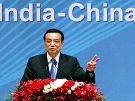
By choice or consequence, Modi is linking the economic to the political by his double messaging in Beijing. On the one hand, the joint statement issued during the visit explicitly says that outstanding differences, including on the boundary question, should not be allowed to come in the way of continued development of bilateral relations. On the other, Modi stressed in his joint press conference with Chinese premier Li Keqiang that China needed to “reconsider its approach on some of the issues that hold us back from realising the full potential of our partnership" and “take a strategic and long term view of our relations”. This suggested that the long term relationship could be either jeopardised or impeded if China continued with its present approach. It is interesting that in asking China to think long term he summarily debunked the widely accepted myth that China thinks not years but decades ahead in policy making. Standing alongside Li Keqiang, Modi reiterated the “importance of clarification of the Line of Actual Control”, a point he had made in Xi’s presence during the latter’s September visit to India, and “tangible progress on issues relating to visa policy (stapled visa issue, no doubt) and trans-border rivers”. He also alluded to “some our regional concerns” (undoubtedly China’s policies in our neighbourhood, especially in Pakistan). It is clear that Modi raised all these issues in his private conversations with Xi and Li Keqiang, as otherwise publicly mentioning them in the latter’s presence would have seen as a form of political ambush by the Chinese premier. Modi’s intention was obviously to make public his political expectations from China in the years ahead.

Modi expatiated further on these points in his address at the Tsinghua University. He put more pressure on the Chinese government by stating publicly that if the two countries “have to realise the extraordinary potential of our relationship, we must also address the issues that lead to hesitation and doubts, even distrust, in our relationship”. This is extraordinary plain speaking. He spoke of trying “to settle the boundary question quickly” in a way that does “not cause new disruptions”- an allusion no doubt to China’s unreasonable demands in the eastern sector. This amounts to, again, asking the Chinese publicly to rethink its posture on the package deal on the border. To remove “a shadow of uncertainty” that “hangs over the sensitive areas of the border region” because “neither side knows where the Line of Actual Control is in these areas”, he recalled his proposal to resume the process of clarifying the LAC “without prejudice to our position on the boundary question”. This is a via media he is seeking between, on the one hand, stabilising the border and eliminating periodic stand-offs that damage the political relationship and make headway in other areas that much more difficult and, on the other, a permanent solution to the boundary question. It is doubtful whether China would accept this option that was always open. indeed, China was committed to this process but abandoned it favour of the Special Representatives (SR) mechanism. It is unclear, moreover, how the LAC clarification process and the SR mechanism can proceed simultaneously.

Voicing concerns about China’s increased engagement “in our shared neighbourhood”, Modi, in his Tsinghua address, called for “deeper strategic communication to build mutual trust and confidence” so as to “ensure that our relationships with other countries do not become a source of concern to each other”. In talking of “shared neighbourhood” Modi is talking about South Asia and not the western Pacific, and this is significant. To strengthen our international cooperation, he frontally sought China’s support for India’s permanent membership of the UN Security Council and India’s membership of export control regimes like the Nuclear Suppliers Group. This was unusual as such a public appeal does not normally come from his elevated position. A prime Minister should not seen as a supplicant. Anyhow, by stating all this, Modi has, in a sense, laid out the political agenda of the relationship in the years ahead from his side, which if not achieved in some measure in a reasonable time frame can become a source of criticism and could even make the economic agenda with China even more controversial as a one-sided strategic compromise.

The joint statement and the Tsinghua speech contain some notable formulations, omissions and iterations, some curious, many positive and a few negative. If the India relationship was for president Obama a defining one for the 21st century, the joint statement notes, as a rhetorical balance, that the “India-China relations are poised to play a defining role in the 21st century in Asia and, indeed, globally”. A China that supposedly rejects an equal status for India accepts in the joint statement that the two countries are “major poles in the global architecture”. On the boundary question, the old, cliched language is repeated and the emphasis remains on improved border management. No mention is made to China’s self-serving One Road One Belt (OBOR) initiative to which Xi attaches much importance, and which figured prominently in his recent Pakistan visit. Our neighbours like Sri Lanka and Nepal would have particularly noted this omission. Significantly, the joint statement contains no reference to security in the Asia-Pacific region, unlike in September 2014, which suggests a failure to agree on language on this sensitive issue. Maritime cooperation too does not figure in it, which suggests difficulties in drafting the joint statement.

We have again thanked China’s Foreign Ministry and the government of “the Tibetan Autonomous Region of the People’s Republic of China” for facilitating the Kailash Manasarovar Yatra. It would have been sufficient to have simply thanked “China” in September 2014 and now, but the Chinese obviously press us to include formulations that recognise TAR as part of the PRC in our joint statements- a practice that was discontinued by the UPA government in the face of China’s increasingly strident claims on Arunachal Pradesh. These offensive claims unfortunately continue and therefore do not justify such politically one-sided gestures by us. Maybe we think this is too sensitive a subject for us to reticent about and to keep the relationship on even keel we feel we can keep giving China comfort over Tibet even when China cynically uses Tibet to make outlandish territorial claims on us. This gesture could also have been a quid pro quo for the stronger formulation on terrorism in the joint statement that could not have pleased Pakistan (though it should be noted that the statement refers not to “cross-border terrorism” which is a formulation India uses to accuse Pakistan, but to “cross border movement of terrorists” which has a different connotation), as well as the separate joint statement on Climate Change that fully reflects India’s position and assumes importance in the context of the Climate Change summit in Paris where the effort would be to isolate India and use the US-China agreement to that end. The question though remains how India will reconcile its commitment to work closely with the US to make the Paris Conference a success with the enunciation of a common position with China which conflicts with the basic US approach.

The reference in the joint statement to the “commonalities” in the approach of the two countries to global arms control and nonproliferation is puzzling as it conflicts with reality and whitewashes China’s historical and current proliferation activities in Pakistan. To have China in return “note” our aspirations to join the NSG, is an altogether insufficient reason to make this concession and lose a political card against China and Pakistan. Opening ISRO to China through a Space Cooperation Outline (2015-2020) Cooperation may also seem premature to some, given the actual state of India-China relations.

In his Tsinghua speech, Modi noted pointedly that while both countries seek to connect a fragmented Asia, “there are projects we will pursue individually”, which implies cold shouldering China’s idea of linking our Mausam and Spice Route projects with OBOR. Progress in the BCIM (Bangladesh, China, India, Myanmar) Economic Corridor is mentioned in the joint statement, despite the danger of opening up our inadequately nationally integrated northeast to more economic integration with China. Why Modi mentioned this corridor again in his university speech is unclear, but then, having participated in the joint working group discussions on the project for some time now, it might have been tactically difficult to close the door on it abruptly.

That Modi himself announced at the last minute at Tsinghua the grant of e-visas to the Chinese after the Foreign Secretary had told the media earlier that no decision had been taken, raises questions about policy making, especially as the stapled visa issue remains unresolved. Of course, enhanced economic engagement requires easier visas and to that extent such a decision can be seen as pragmatic, but we have given up a valuable card touching upon sovereignty issues without sufficient return. No wonder the Chinese Foreign Minister was delighted by this gift from the Prime Minister.
The driving force behind Modi’s wooing of China being trade and investment, the progress achieved on that front was of principal interest in terms of outcomes. Here, the results have been less than expected. In a sense this was to be expected as too little time had elapsed between Xi’s visit to India and Modi’s visit to China to produce dramatic results. The $20 billion of investment five years promised by Xi would take time to materialise under any circumstances, but more so in the case of China as it has so far invested little in the country, its investors have limited experience of working in India, its leaders are looking for preferential treatment and want a better understanding of the legal conditions. The joint statement largely repeats what was said in September 2014 during Xi’s visit on taking joint measures to alleviate the problem of deficit and cooperate in providing Indian products more market access in China. The language is very noncommittal and it is left to the India-China Joint Economic Group to work on these issues. It was agreed that the next meeting of the Strategic Economic Dialogue, co-chaired by Vice Chairman of NITI Aayog of India and Chairman of NDRC of China, will be held in India during the second half of 2015. On the other hand, China’s economic interests in India are treated more concretely, with satisfaction expressed with the progress achieved in the Railway sector cooperation including the projects on raising the speed on the existing Chennai-Bengaluru-Mysore line, the proposed feasibility studies for the Delhi-Nagpur section of high speed rail link, the station redevelopment planning for Bhubaneswar & Baiyappanahalli, heavy haul transportation training and setting up of a railway university.

Although 24 agreements were signed during the visit and the number is impressive, in reality the most significant one relates to the opening of our respective consulates in Chengdu and Chennai and space cooperation. There is no economic agreement of note that figures in the list. Surprisingly, the joint statement contains no reference to the two industrial parks that China will be setting up in India, even if it were to merely record some progress in implementing this initiative. Even the figure of $20 billion of Chinese investments in India in the next 5 years- if nothing but for its positive optical effect- is not mentioned this time. No doubt 26 “agreements” were signed during the visit to Shanghai- mostly MOUs involving the private sector that have no binding value- in the areas of renewable energy, power, steel etc. These are sectors in which China is either already strongly present in India or is a global player as in the case of solar power. Its aim would be to capture the Indian market in what would be a highly fecund area for Chinese business given India’s massive plans in developing the solar power sector. A point to consider is whether the unfettered entry of Chinese firms would suffocate Indian enterprise in the renewable industry sector as has happened in the power and telecom sectors. Even financing of private Indian companies by Chinese banks has been put on the positive ledger in projecting the results of Modi’s visit, even though all that is meant is that China will lend money to Indian companies to buy more Chinese products and only add to the burgeoning trade deficit between the two countries. That these MOUs, if and when implemented ( many are in the form of intentions only) are potentially worth $ 22 billion is a PR exercise, which all countries resort to in order to embellish the economic “success” of visits by their leaders abroad, and can therefore be excused as standard diplomatic practice.

All in all, the China challenge for India has not been reduced by Modi’s visit. On the contrary, Modi has highlighted the political challenges ahead, as China has remained reticent on the points raised by him. Modi is to be commended for largely making the right points during the visit. There were some slippages, but this was perhaps inevitable because China holds the stronger hand. The attempt always is to enlarge the areas of real or potential convergences rather than get bogged down over contentious issues and create a situation where it becomes difficult to issue any meaningful joint statement. The problem in the India-China case is that we are not strategic partners in reality and yet claim that we are. At the end of the day, making the right points and winning them the are two different things.

As for personal chemistry between Xi and Modi, it would have been better if Xi too had avowed publicly that the two had a “plus one” friendship, otherwise the psychological advantage is with the side that remains silent. Let us also note personal chemistry can have a short shelf life in the face of hard political and strategic realities. Obama and Xi have had a shirtsleeves meeting in Palm Springs in California in 2013, Bush read Putin’s soul in Slovenia in 2001 and Obama had hamburgers with Medvedev in Washington in 2010, but these get-to-know informal meetings intended to create a personal rapport do not help resolve issues beyond a point. It remains though that both Xi and Li Keqiang made unprecedented personal gestures to Modi.

Published Date: 21st May 2015, Image Source: http://indianexpress.com

Monday, September 15, 2014

Will President Xi Jinping’s Visit change the Contours of Sino-Indian Ties?

Brig Vinod Anand, 
Senior Fellow, VIF

The coming visit of President Xi Jinping is being viewed as a visit that could define the next decade of engagement between the two Asian giants. It is generally accepted that Sino-Indian relationship could turn out to be more important than the Sino-US engagement if leadership of both the countries were to cooperate and give substance to the conception that the locus of global economy and power has shifted to Asia. Notwithstanding the fact that there is dissonance between the two countries on a number of issues, both nations do share common perceptions on many of the international issues and especially so on the nature of the emerging world order.

Further, the visit also needs to be seen in the backdrop of the unprecedented two summit meetings between PM Li Keqiang and Manmohan Singh last year, recent visit of Vice President Hamid Ansari to China to celebrate 60 years of Panchsheel and not to be left behind the visit of Indian Army Chief Gen. Bikram Singh to China in first week of July (after a gap of 9 Years). All these engagements were topped by Xi and Modi meeting on the sidelines of BRICS where both leaders established a good rapport. These multifarious engagements have already brought to fore the Indian concerns and have indicated the direction in which both countries want to proceed further. One thing which is certain is that no dramatic breakthroughs in the relationship should be expected.

Modi’s mantra is development and growth and that has been the basis on which he has come to power. Having had firsthand experience during his visits to China as Gujarat Chief Minister, he has been thoroughly impressed by the development and economic growth of China and especially its infrastructure in terms of roads, ports, highways and some of the new cities and towns. Therefore, he is keen to conclude agreements with the visiting President regarding Chinese infrastructure companies undertaking projects in India. India is looking for infusion of China’s surplus funds in Indian infrastructure and in other avenues of investment. Though an MOU for setting up an Industrial Park has been signed by our Trade and Commerce Minister during Vice President Ansari’s visit to China, it is just a small step; Modi is looking for a framework agreement on investment by China. Modi is keen to push infrastructure development by the Chinese in Gujarat, Madhya Pradesh and Tamil Nadu.

India’s requirements of funds are a huge one trillion US dollars as per its current Five Year Plan and it is hoped that China can contribute possibly 30 percent of such requirement over a period of time. But a Sino-Indian agreement for anything closer to 30 billion USD or even somewhat lesser amount in the coming visit could be a game changer. There would be some problems like the absorption capacities and many other difficulties connected with the local environment but all such issues can be overcome provided the political will is there from both sides. Recently, a country like UK offered 1 billion pounds (around 1.75 billion USD) for infrastructure development in India. Obviously, China’s capacities are much beyond this amount.

Second agreement that could give a positive momentum to Sino-Indian ties needs to be in the field of trade and commerce. The trade imbalance between the two nations is now to the tune of around 35 billion USD which needs to be addressed. In all the previous top level political engagements, while promises have been made to come to grips with the issue, no substantial progress has been made. Therefore, in the coming visit, New Delhi is looking forward to an agreement that grants greater access of Indian goods and services to the Chinese market, for instance Indian pharmaceutical products, IT enabled services, cotton textiles & home furnishings etc. There are many non-tariff barriers on Indian exports of goods and services. Removal of these would enable India to close the trade gap; though it is also not expected that the trade should always be balanced yet another way is that China invests in India. Under the present circumstances, it appears unlikely that the projected bilateral trade figure of 100 billion USD by 2015 can be achieved.

Thirdly, whenever a bilateral visit takes place, there is a pattern of behavior from China’s side which needs to be avoided. Such a behavior has been exhibited with regularity on the eve of all previous political visits. Before the Indian Vice President’s visit, a controversial map was released by China besides transgression by PLA troops in Pangong Lake. Last year before PM Li Keqiang’s visit to New Delhi, there was the Depsang valley intrusion. In fact, it is difficult to recall any visit where before the event there has been no negative incident. Largely, the perception is that such events/incidents are deliberately planned to put Indian decision-makers on the back foot and in order to test their resolve.
Though it may not be necessary to have any written agreement on the above aspect, both leaders can reach an understanding that such incidents should be avoided in order to give positive atmospherics to the bilateral meets.

While many agreements have been signed culminating into Border Area Development Cooperation (BADC) agreement of 2013, the border incidents continue to take place. Several incursions in Ladakh sector by Chinese troops have taken place since January 2014. PLA’s posture has become increasingly very assertive and it has been attempting to expand its claimed areas (which are in any case ill-defined). After the signing of BADC, such incidents should have been a rarity; both leaders need to reach an understanding on the same and need to enforce their writ; any fresh formal agreement on the issue would not be of any avail if the previous agreements are not adhered to in their true spirit. There is a need to arrive at a mutual modus vivendi on the issue. Peace and tranquility along the border remains an important element for growth and development. This has been recognized so in the previous agreements.

Fourthly is the question of lack of Chinese sensitivity to India’s core concern of Kashmir issue. Since nineties till 2005, China had been following somewhat of a neutral approach but after 2005 or so, there has been perceptible difference in China’s approach with its tilt towards Pakistan. China’s developmental and other activities in Pakistan occupied Kashmir have a negative impact on India’s security. It also needs to be remembered that even Pakistan considers Kashmir as disputed therefore; if China wants to reduce dissonance with India, then China’s return to a neutral stand would add to positivity of Sino-Indian relationship.

Fifth is the Tibet question. This year is being celebrated as the 60th year of Panchsheel Agreement. India is not much enamored with the Panchsheel Agreement as it recognized China’s suzerainty over Tibet without any concession to India in the bargain. It is considered as a lack of strategic vision on part of Nehru. While the Five principles of peaceful coexistence are quite all right, it was the preamble of the agreement that became more significant than the clauses in the main text. The fact that India was represented at the celebratory event in China by its Vice President is also some kind of message that Panchsheel does not hold that level of significance. In the bilateral summits for last three years or so, even though India has been adhering to one China policy, the same is not being mentioned in the Joint Communiques issued after the summits. This has been largely as a response to China’s failure to recognize Jammu & Kashmir as part of India. There have been many other irritants like the stapled visas issue to residents of Arunachal Pradesh.

Further, the presence of Lobsang Sangay, Kalon Tripa / Sikyong of Tibet Administration at Modi’s swearing ceremony also indicates the current government’s stance in some measure though there is no change in Indian government’s policy that Tibetans cannot carry out any political activities in India etc.
Another significant issue that needs further discussions is the damming activities on Yarlung Tsangpo/Brahmaputra River; some discussions took place during VP Hamid Ansari’s visit to Beijing; the two governments signed an implementation plan on provision of hydrological information on the Brahmaputra River in flood seasons by China and India. Expansion in areas of cooperation in this field has to take note of the interests of lower riparian nations like Bangladesh and India. So far Chinese policies on the issue are not conducive to good relationship.

Coming to the regional situation, the most important issue would be that of Afghanistan post 2014. Both sides largely share similar perceptions on the emerging scenario and have common concerns on the security implications of the unfolding scenario. There is a JWG on the subject; both sides are expected to explore practical ways of cooperating in Afghanistan so that peace and stability is brought to that nation. However, on the question of terrorism, China still continues to see through Pakistani prism. While the Americans, the Western nations and possibly the Chinese have seen through the double game of Pakistan, they feel constrained to take any action against Pakistan for a number of geo-strategic reasons. The negative role of Pakistan needs to be recognized by China otherwise peace and stability in the region including in Xinjiang would remain elusive.

While at the international level, both nations largely identify with each other’s aims, objectives and interests in the multilateral forums, on climate and trade issues, WTO etc. yet, China is yet to endorse India becoming a permanent member of UNSC as also a member of the Nuclear Suppliers Group. Meanwhile, China led by President Xi Jinping has become increasingly aggressive and assertive in Asia both militarily and economically indicating that it aspires for leadership role in Asia. Promotion of a number economic corridors and silk roads, offering funding by establishing Asian Infrastructure Development Fund, Shanghai Cooperation Organisation Development Fund and many other economic initiatives by China are aimed to enhance its strategic presence.

On the other hand, China needs India on its side for the success of its view of the new Asian security architecture where according to Chinese perceptions the US and the others have no role. India favours a strategic equilibrium in Asia whereas China is anti-status quo aspiring to dominate the Asian firmament. Thus, Modi’s visit to Japan, Australian PM Abbot’s visit to India before President Xi’s visit and later Modi’s visit to the US need to be seen in the context of India attempting to balance the emerging strategic equations.

Overall, the forthcoming visit of President Xi is unlikely to change the fundamental nature of Sino-Indian relationship as China is not ready to relent on issues considered by India to be part of its core national interests. Some advances on economic and connected issues are possible. Modi’s approach includes management of the conflict areas between the two nations while at the same time striving to have enhanced economic, political, diplomatic and people to people engagements.


(Disclaimer: The views and opinions expressed in this article are those of the author and do not necessarily reflect the official policy or position of the Vivekananda International Foundation)

Friday, August 22, 2014

Geopolitical Developments and India-China Relations

Jayadeva Ranade

The world is in a state of continuing flux. The economies of the major powers are still fragile and vulnerabilities exist in those of the bigger emerging powers in the Asia-Pacific like China and India. The balance of power is concurrently undergoing a shift with competing focal points of power surfacing in the East. The fragile nature has been accentuated in the past few years with Beijing’s accelerated push for recognition as the dominant power in the Asia-Pacific. This is resisted by the US, Japan and India and has made South East Asian countries nervous.

China’s sudden assertiveness since the end of 2007 was prompted by a combination of factors, but mainly by: the global economic downturn; China’s considerably enhanced economic and military strength; and Beijing’s perception that the US as a global power is on the decline and this is now the opportune moment for China to regain its self-perceived rightful position on the world stage and alter the status quo in Asia. The Chinese Communist Party (CCP) leadership is divided on the issue of whether to write off the US as the sole world power. One view is that the US is a power irreparably on the decline while the other, which seems to be gaining ground, argues that the intrinsic strength and resilience of the US will ensure its return on to the world stage as a stronger, more effective power. There is consensus, however, that the US ability to project power simultaneously in different theatres is presently constrained, thus offering China a window of opportunity that would last at most between 5-10 years.

China’s impetuousness and decision to ‘take on’ the US anticipatedly triggered a response signalling quite clearly that the US is not about to cede either power or influence in the Asia-Pacific. The US encouraged particularly Japan and the Philippines, to react to China’s aggressiveness. It additionally unveiled the seemingly short-lived ‘Asian Pivot’ with its definite military content. The US has now shifted emphasis though, to the Trans-Pacific Partnership (TPP) and Trans-Pacific Intellectual Property Rights (TPIP), which are economic equivalents of the ‘Asian Pivot’. China is now leaning towards joining the TPP/TPIP.

China, however, has not been deterred and continues to press ahead with achieving its global and regional ambitions. The continuing tense stand-off with US ally and East Asia’s strongest power, namely Japan, amidst steady escalation in tensions in the South China Sea, underlines Beijing’s willingness to push the envelope in the apparent confidence that the US will stop shy of confronting it and so will Japan and Vietnam. China reasserted the role it desires in the Asia-Pacific in a statement in Washington DC by its Ambassador to the US, Cui Tiankai, in February 2014. There is little doubt that US credibility as a reliable ally willing to back its partners in the region has been dented in the past 5-odd years.

In the South China Sea, after a series of confrontations with Vietnam and the Philippines where China seized some maritime territories, Beijing has begun to assert its claims over a larger area. It has revived its claims on St. James’ Shoal off Thailand and South Korea’s Ieodo Rock and recently began building airports on some islands and extending others. On May 24, 2014, China’s largest US $ 1 billion oil rig the ‘Haiyang Shi You 981’ sailed into Vietnamese-claimed waters escorted by 86 armed ships and Beijing has now sent four more rigs. Simultaneously, tension with Japan over the Senkaku Islands (called Diaoyu in Chinese) rose in recent weeks with the increased frequency of patrols by Chinese Navy ships and People’s Liberation Army Air Force (PLAAF) aircraft flying very close to Japanese Self Defence Force (SDF) aircraft and at times coming near collision range.

Meanwhile, modernisation of the 2.3 million-strong People’s Liberation Army (PLA), which coincides with China’s continuing assertiveness that has unsettled its neighbours, has entered the final stage of its current phase. The Chinese Communist Party (CCP)’s Third Plenum, which was held in November 2013, provided it a substantive push. On January 18, 2014, the Party Secretary of Liaoning province disclosed that the second domestically-produced aircraft carrier being built at Dalian would be ready in six years. China also allocated US$ 1.6 billion for the first phase of indigenous design, development and production of jet engines.

The Third Plenum approved organisational reforms in the PLA’s command structure and the PLA Navy (PLAN), PLAAF and China’s strategic missile strike force, namely the Second Artillery, have been allotted enhanced operational roles and will receive priority in allocation of budgets and manpower. The PLA is to be downsized by 800,000 personnel including a large number of non-combatants. Reports filtering out of Beijing disclose that plans have been finalised to merge the seven military regions into five “combat zones”. This reorganisation will give the PLA a definite “outward orientation” and implies that “recovery” of territories claimed by Beijing will be a central feature of China’s strategic agenda and the PLA will reinforce diplomacy aimed at realising “China’s Dream”.

All this is relevant to India-China relations as is Beijing’s stance on ‘core national issues’ in bilateral relations. Beijing has made it explicitly clear in two despatches of China’s official news agency ‘Xinhua’ in August 2011, addressed to Japan and the Philippines, that ‘burgeoning economic ties do not mean good bilateral relations’ which depend entirely on the recognition and acceptance of China’s ‘core national interests’. The despatches are important because ‘Xinhua’ is China’s authoritative official news agency and even the CCP Central Committee (CC)’s powerful Propaganda Department instructs all Chinese journalists reporting on sensitive topics to adhere strictly to the text of ‘Xinhua’ reports.

To digress slightly, Chinese Premier Li Keqiang’s 2-day visit (June 17-18, 2014) to UK is pertinent. Apart from the fact that Beijing was particular about the minutiae of protocol, the 30-Article Joint Statement issued after the visit revealed UK’s capitulation to China. Article 23 stated that Britain recognises Tibet as an integral part of China and does not recognise Tibetan independence. The English-language ‘Global Times’, a subsidiary of the CCP’s official newspaper ‘People’s Daily’, gloated that Britain was finding it difficult to accept that it was now a “poor power compared to China”. A major inducement were the over US$ 40 billion trade deals signed during the visit and establishment last year of a Yuan swap centre in London.

While assessing a country’s foreign and strategic policies, and particularly in the context of India- China relations where there are major stakes and we are directly affected, it is important to understand the nature of the State and its internal leadership dynamics.

There has been a major change in China’s politics and leadership style since 2011 and particularly with the ouster of former Politburo (PB) member Bo Xilai in 2012. That was a major event in China’s politics, perhaps the first major political upheaval since the Tiananmen Event of 1989, and has seen a visible ‘hardening’ of the Chinese State. Details revealed during the events leading to Bo Xilai’s ouster reinforced the conviction of the CCP’s nomenklatura that the US remains intent on its strategy of ‘peaceful evolution’ -- China’s short-hand for US efforts to dismantle the CCP; deprive the CCP of its monopoly rule and introduce multi-Party democracy; and replace the ‘socialist economy’ with a ‘free-market capitalist economy’. Factional differences were subordinated to protecting the Party Centre and ensuring the CCP’s monopoly on power. All senior veteran cadres backed Xi Jinping and supported him as ‘leader’ of the Politburo Standing Committee (PBSC). As a consequence, in addition to the three all important posts of CCP CC General Secretary, Chairman of the CMC and President of China, Xi Jinping now additionally heads seven of the Party’s Central Leading Small Groups, which are the most important and highest decision making bodies. The Party has, in effect, asserted itself and further tightened its grip over key levers of the State.

Doctrinaire policies have also gained ascendance in the Party in the past few years with renewed emphasis on Marxist and Maoist ideology and Party discipline. The Party’s guiding narrative is being enforced by the CCP CC’s powerful Propaganda Department which has been steadily tightening restrictions on the media, social media and journalists (including most recently last week), since Xi Jinping took over. The elevation of Liu Yunshan, former Director of the CCP CC Propaganda Department, as Member of the PBSC and the country’s Propaganda and Ideology Czar is demonstration that the ‘hardening’ of the State is the decision of the Party Centre.

Particularly relevant in this context is Xi Jinping’s ‘China Dream’ which envisages: making the Chinese people wealthy; making China a strong nation; and the rejuvenation of China. This muscular aspiration for China spelt out by Xi Jinping at the 18th Party Congress has been adopted by the entire Party and has already entered the lexicon of the CCP. It is particularly pertinent to India-China relations as ‘rejuvenation’ implies the restoration of China to its self-perceived rightful international status and recovery of all its territories. The new passports published by China depict its claimed territories, as do its actions in the South China Sea and East China Sea and the increased assertiveness and expanding claims over Arunachal Pradesh and Jammu and Kashmir.

The Party has concretised Xi Jinping’s status in the CCP hierarchy, thus legitimising his status in China. The Party theoretical fortnightly journal ‘Qiu Shi’ in its latest issue (June 2014) described Xi Jinping as “one of China’s greatest Communist leaders”. Xi Jinping is today China’s most powerful leader since Mao Zedong.

In India too, there has been a radical change with a new leader emerging after a resounding democratic electoral victory. New Prime Minister Narendra Modi has a reputation as a strong, decisive leader and the BJP as a ‘right wing’ Party and they have a majority in Parliament unprecedented for thirty years. Modi very quickly used his swearing-in ceremony as an opportunity to outline India’s view of its strategic neighbourhood and where Indian interest will focus. The visit to Bhutan and planned visit to Japan reinforces this. The current government can shape and implement medium to long-term policies. In other words, India and China both have strong leaders and this itself offers an opportunity for engagement on fresh and revised terms.

Chinese Foreign Minister Wang Yi’s visit was intended to show China’s eagerness in engaging with India’s new right-wing Government and is part of its strategy of ‘Peripheral Diplomacy’. It sought to project that China desires good relations with India and prevent India from moving close to Japan or towards a US-led anti-China grouping. A Chinese-language official ‘Xinhua’ despatch of May 29, 2014, is, however, pertinent. Its tone differed noticeably from that of other Chinese media reports which assessed that India’s policies towards China would not change and that economic relations would receive a boost. This Xinhua despatch asserted that Modi has no option other than economic cooperation with China as India perforce has to recognise China’s economic and military superiority in Asia. It stressed that Modi would have to accommodate China, not out of choice or inclination, but out of necessity. While this is arguable, but the Xinhua despatch exhibits China’s self-confidence and at the same time implies there is potential for cooperation.

China’s focus is on economic cooperation with India: Xi Jinping and PM Modi’s meeting on the sidelines of BRICS Summit also pointed towards the same though differences on some of the strategic issues remained. Chinese President Xi Jinping’s forthcoming visit to India has the economy as its focus and he is reportedly being accompanied by 350 Chinese Chief Executives (CEOs) amidst much talk of investing in India’s infrastructure, high-speed railways and the Bullet Train. Chinese diplomatic missions in India have already begun selecting locations for the ‘Special Industrial Parks’ and, at least in Maharashtra, Rajasthan and Bengal, have identified middle-men for ‘benami’ purchases of land. China is anxious to find a new market for its huge reserves of surplus cash and as another avenue for investment, and India is an attractive vast market. Undoubtedly it will benefit if China invests in India’s infrastructure, but India will need to carefully decide the direction in which to steer Chinese business as otherwise, in a democratic set up such as India’s, China will soon acquire a powerful business lobby capable of adversely influencing national strategic decisions. Roads, flyovers, railways, hydro-electric projects, multi-storey office and residential buildings, are sectors that can benefit from Chinese investment. In order to ensure strategic flexibility and increased investment, however, these must be balanced by offering similar competitive opportunities to other countries like Japan, Taiwan and Singapore. India can particularly benefit in the hi-tech, advanced electronics and defence sectors by encouraging investments from Japan and Taiwan on very preferential terms.

Nevertheless, two events are worthy of note in this context. First is the protracted 20-day incursion by Chinese troops in Apr/May 2013 in the Depsang Plains of Ladakh that cast a cloud over the bilateral relationship and Chinese Premier Li Keqiang’s visit. The intrusion was apparently planned and deliberate. It was proposed by the PLA and approved by the Politburo which, after discussions, assessed that India would not cancel Li Keqiang’s visit for fear of offending China. It was certainly not, as sought to be made out, a local action by a local PLA Commander. On May 14, 2013, the influential, official ‘Zhongguo Qingnian Bao’ (China Youth Daily) published an article implicitly laying claim to Ladakh and describing it as part of Tibet.

Second is the visit (June 8 -9, 2014) of Chinese Foreign Minister Wang Yi to New Delhi. In keeping with past practice, just two days before Wang Yi’s arrival China alluded to the outstanding border issue and the Dalai Lama’s presence by officially protesting the presence of Lobsang Sangay, head of the Central Tibetan Administration, at Prime Minister Modi’s swearing-in ceremony. Wang Yi too, at his press conference in New Delhi, asserted China’s territorial claims by brushing aside questions on border intrusions and made a carefully worded remark that the issue of stapled visas by China were a “unilateral” “flexible” “goodwill gesture” or, in other words, that the status of Arunachal Pradesh and Jammu and Kashmir remain disputed.

On the vexed border issue, little progress can be anticipated unless both leaders and, especially Xi Jinping, decide to use their strength and push for a mutually acceptable settlement. China’s recent utterances on issues of sovereignty and territorial integrity, however, make this a distant possibility. China can, in fact, be expected to be insistent and expand its claims on Arunachal Pradesh and J&K and may test the resolve of the BJP government on the territorial issue. The status quo in negotiations will not change till India acquires the capability, through asymmetrical power, to impose unacceptable costs on China’s ‘Han heartland’, including Beijing and Shanghai. This will take a couple of years as the Agni V series of missiles become operational and are deployed.

China will continue to deepen relations with Pakistan, Nepal and Sri Lanka and exert to establish a formal diplomatic presence in Thimpu, which is only a matter of time. A new and worrying feature is China’s focus on Lumbini in Nepal. Not only will construction of a modern airport in Lumbini built by the PLA pose a proximate military threat to India, but more insidious is Beijing’s effort to undermine the influence and the authority of the Dalai Lama amongst Tibetan Buddhist monks and lay the ground work for potentially triggering instability and secessionism across the vulnerable Indo-Tibetan Himalayan border belt. Plans of China’s so-called NGOs to build and operate a monastery-cum-seminary points to this.

Finally, it is pertinent to briefly mention China’s strategy of ‘Peripheral Diplomacy’ formulated in October last year. The ‘Peripheral Diplomacy’ strategy for the first time in the history of communist China designates neighbouring countries as ‘friend’ and ‘enemy’ and promises huge benefits and economic largesse for countries that accept and assist China’s regional ambitions. These three initiatives aim at obtaining new sources of natural resources and new markets for China and will be secured by China’s expanding military might and strategic reach including in the Indian Ocean.

(The author is Member of the National Security Advisory Board and President of the Centre for China Analysis and Strategy, New Delhi. He is a former Additional Secretary, Cabinet Secretariat, Government of India)

(The article is a revised version of the paper presented by the author at the seminar on ‘Engaging China: Opportunities and Challenges’ organised by Vivekananda International Foundation on June 26, 2014)

Published Date: 31st July 2014, Image source: http://www.icec-council.org
(Disclaimer: The views and opinions expressed in this article are those of the author and do not necessarily reflect the official policy or position of the Vivekananda International Foundation)

Wednesday, August 28, 2013

Recent Political Developments in China

Growing signs of ideological hardening

Ambassador PP Shukla 
(Joint Director, VIF)

Back in the days of the Soviet Union, readers of a nationalist newspaper, Sovetskaya Rossiya [Soviet Russia] were exposed to a full-page article by one Nina Andreeva, a chemistry teacher at the Leningrad Technology Institute. The article appeared in March 1988, at the height of the tussle between Mikhail Gorbachev and his opponents in the Soviet Communist Party. The title of Andreeva’s article was “I Cannot Compromise my Principles”, and it was an open attack on the direction that Gorbachev – though without naming him - and his supporters were taking the Party and the country. It created a stir within the Party and became a rallying point for all those who felt that the policies of the westernising neo-liberals were leading the country towards non-socialist pluralism – by implication, to the end of the socialist state. Events were to prove her right, but this was not the response to the article then.

The reason for bringing up this now-obscure event from Soviet history is the appearance of a similar article in the Chinese press. On 1 August, Xinhua carried an article in Chinese under the title “If China Collapses, It Will Be Worse than the Soviet Union”. Before analysing the article and its import, the context needs to be set out. It is actually quite curious how obsessed the Chinese leaders are with the fate of the USSR. Perhaps nowhere else in the world, including in Russia itself, is there the same degree of attention to the developments leading to the collapse of the Soviet Union as in China.

To illustrate, here is a quote from Xi Jinping’s speech at the time of his Southern Tour in December 2012 – he was then already Party leader, but had not yet become President.
Why did the Soviet Union disintegrate? Why did the Soviet Communist Party collapse? An important reason was that their ideals and beliefs had been shaken. In the end, ‘the ruler’s flag over the city tower’ changed overnight. It’s a profound lesson for us! To dismiss the history of the Soviet Union and the Soviet Communist Party, to dismiss Lenin and Stalin, and to dismiss everything else is to engage in historic nihilism, and it confuses our thoughts and undermines the Party’s organizations on all levels. 
Why must we stand firm on the Party’s leadership over the military? ...because that’s the lesson from the collapse of the Soviet Union. In the Soviet Union where the military was depoliticized, separated from the Party and nationalized, the Party was disarmed.
In short, as recently as December 2012, the top leader in China was discussing the collapse of the USSR, and presumably drawing lessons for China from that experience. And the key elements he identifies are the lack of ideological commitment at the top, and the fact that the Armed Forces had been de-politicised – a clumsy word that one Soviet Defence Minister had trouble even pronouncing.

The important thing is that it seems the Chinese leadership is still concerned that it too might go the Soviet way. To the outsider, China is a success story par excellence, but apparently, the reality – at least as perceived by the Party - is more shaky.

And now, to turn to the content of the Xinhua commentary: not surprisingly, it spends most of the time on the collapse of the Soviet Union, and describes in detail what hardships befell the country as a result of the collapse. The GDP fell by more than half; its access to and control over the seas, built up over centuries, was lost; the people were reduced to begging, and war heroes were forced to sell their medals; the country is now reduced to selling its natural resources to get by. It goes on to refer to so stern a critic of the Communist Party as Solzhenitsyn as saying that Stalin and the Party were good for the country, and Russia after the break-up was in a worse plight.

In an interesting side-swipe at India, Xinhua suggests that, since China does not have the resources that Russia has, it will, following a collapse, fall below India in terms of living standards!

The commentary dwells a little more on the collapse of the USSR, and concludes that China will suffer a worse fate if it collapses. It argues that China was enslaved and occupied by foreign powers in the past, and it was only the Communist Party that gave China back its standing. The elderly are enjoying a stable old age, and the children have all the amenities they need – all thanks to the Communist Party. And all this would be lost if China were to collapse.

The solution to the danger of the collapse is to contain the micro-bloggers who apparently seek to copy the western system – the “non-socialist pluralism” of Nina Andreeva’s article. It appears that these bloggers reach millions of recipients, mostly sympathetic to their message of constitutionalism, and of western-style democracy with greater individual freedom. The author concludes that he would allow such a change only over his dead body.

The important point of inquiry is why there has been this kind of writing, especially in the public domain. To understand this, there is another strand in the current Chinese discourse that needs to be focussed on. This is “constitutionalism” – the notion that the Constitution of the country is paramount, and that the provisions on individual rights and freedoms need to be upheld and exercised. It is this kind of constitutionalism that Chinese leaders, including Jiang Zemin and Hu Jintao, have criticised for having separated the Armed Forces from the Party in the Soviet Union. [Yes, all three have talked about the collapse of the Soviet Union.] And this is what they are clear shall not be permitted to happen in China.

Constitutionalism is the very banner that some in the Chinese system are raising. The Southern Weekly, a “liberal” paper that comes out in Guangdong, had written an editorial at the beginning of 2013, under the title “China’s Dream, the Dream of Constitutionalism”. This was a reference to the slogan of the “China Dream” coined by Xi Jinping himself, and the editorial was thus filling its own content into the slogan. As it turned out, the content was unacceptable, and the censors changed the title, removing any reference to constitutionalism.

For good measure, there has also been a spate of articles in the Chinese press on the dangers of constitutionalism. The People’s Daily has taken the lead on this and ran three articles in August alone attacking this concept. One of them went so far as to say that the real aim was to overthrow the socialist system and oust the leaders of the Party. In another context, the People’s Daily accused “spies in the higher echelons of the Party” of colluding with foreign enemies.

This kind of fevered writing on a hypothetical event such as the collapse of China or the upholding of the Constitution would definitely indicate a graver source of concern than a couple of editorials in the regional media on the need to uphold the Constitution. There is, of course, the fact that the economy is in serious trouble, and many are beginning openly to express doubts even about the reliability of Chinese growth figures. We know that Premier Li Keqiang, before he rose to the present post, had himself told visitors that many of the statistics were “man-made”, and that he himself did not take them at face value. China’s public finances are another mess in the economy, and one that will lead to major difficulties.

Similarly, there are a growing number of incidents of unrest in the country. In 2012, the number of such incidents rose to 200,000, which must surely be hard to manage. This would also tie in with the remarks made by Xi about the importance of the Armed Forces being loyal to the Party, and not being allowed to be “nationalised” – ie, to become loyal to the State, rather than to the Party.

As to the Constitutionalists, they pose an unusual type of challenge to the Party establishment. After all, the present Constitution was adopted only thirty years ago, and the anniversary of the event was celebrated last December by the Party itself. It becomes very difficult to argue that upholding its provisions is in any way harmful to the country. And yet, that has been the burden of the attacks on those supporting the Constitution – the People’s Daily declared that Constitutionalism was incompatible with socialism! And yet, both Xi and Li have referred to the Constitution as the supreme law, even after they assumed office.

It would appear that a combination of difficulties is closing in on the Party leaders – economic in the first place, but also social and political. Of this last, the Bo Xilai episode is the most visible manifestation, and it is not yet clear what its implications will be. What does appear to be happening is that there is some unhappiness in the Party over the treatment of the entire episode, and some of the angry charges that are reflected in the writings mentioned above are a response to that. There was also a sense in the run-up to the CPC Congress last November and immediately afterwards, that Xi was a “reformer” of the kind that his father was, and that many people, in China and outside, are looking for. He himself has given little ground for expecting any such change from him, and his remarks on the fall of the USSR, quoted above, were made within weeks of taking over as Party leader. Perhaps there is a fear among the traditional elites in the Party that the pressure for change in the face of the mounting difficulties could lead to some experimentation in the direction of political pluralism. The opponents of this are moving pre-emptively to head off any such change.

For India, these are significant issues to sort through, because such internal pressures frequently affect the foreign policy as well. The emphasis on the role of the Armed Forces in preserving the system is particularly worthy of note. This could be linked to the growing aggressiveness we are seeing on the part of the Chinese forces in the border areas. If the trends towards ideological hardening discussed above were to continue, or worsen, it is likely that tensions on the border along the LAC will also worsen – with unpredictable consequences.


It is to be hoped, against hope really, that our defences are being looked to, for they need to be upgraded, and the earlier the better. History shows that instability in China can spill over into neighbouring countries. Forewarned is forearmed.

Tuesday, July 16, 2013

India-China Ties: Need for a Balanced Policy

Kanwal Sibal, 
Dean, Centre for International Relations and Diplomacy, VIF

China constitutes by far our most difficult diplomatic challenge as its rise impacts us directly in view of its territorial claims on us, the unsettled Tibetan situation, the potential impact of China’s upstream river projects, its “more precious than gold” relationship with “iron brother” Pakistan, its strategic penetration in other neighbouring countries as well as in the Indian Ocean. The imbalance in our bilateral trade ties is also becoming unsustainable.

Chinese power is challenging us in Central Asia, the Gulf and Africa, aided by its much larger financial reservoir which it uses for gaining access to energy and mineral resources for its future growth under State direction that India cannot equal. The India-China equation is getting progressively tilted in China’s favour globally. Politically, this draws countries of interest to us into the Chinese orbit; economically, it affects the direction of international trade and investment flows in Asia to our disadvantage.

Yet, we reach out to China as if it is a partner-in-waiting and project congruence of interests bilaterally and multilaterally even where they are in conflict. There is a palpable disconnect between how we see China in private and how we treat it in public.

We justified our nuclear tests in 1998 because of the China threat. Subsequently, we gave China satisfaction by declaring that we did not view it either as a threat or an adversary. We have established a strategic partnership with China even when it has long countered us strategically. We say glibly that China is not a competitor and that the world is big enough to accommodate the rise of both countries. On the heels of the Ladakh incident, we have affirmed that our relationship is a model of co-existence between big neighbouring countries. We say we support our respective friendships with common neighbours, contrary to reality. We are open to maritime cooperation with China in the Indian Ocean when its increasing presence there causes us concern. Even on the nuclear issue, where China has been the source of our biggest strategic challenge, we talk about civilian nuclear cooperation with it. We are consciously letting China off the hook on every issue of concern to us and attributing a benign air to its policies.

Perhaps we judge that any perception of mounting India-China differences reduces our capacity to bargain with other power centres. We probably want to give less room to those who would prefer China and India to be pitted against each other as such a conflict in Asia’s heart would suit their interests. We might be reasoning that those seeking to incorporate us into their anti- China strategy cannot themselves ignore the reality of China, and that with the already achieved integration of its huge economy with the global one, any scope for confrontation is limited. Moreover, our role in the Association of South East Asian Nations (ASEAN) and the East Asia Summit, our participation in the emerging Asian security architecture, our BRICS dialogue and collaboration with China on the World Trade Organization and climate change issues, would be strained by India-China wrangles.

Such thinking has merit up to a point, but between exaggerating levels of understanding with China to ward off external exploitation of our underlying differences and constantly ceding ground politically to it bilaterally on contentious issues and helping it to present an accommodative face to an anxious international community by being receptive to its tactical grandstanding in India during Li Keqiang’s visit, we have room to craft a more balanced policy.

Just when wariness of China is growing, we make a show of bonhomie with it. When Myanmar wants to dilute its dependence on China and the United States of America and Japan courts it, we advocate an economic corridor between China, Myanmar, Bangladesh and India that would promote Chinese influence in this region. We are ready to allow our North East to move economically into China’s orbit, as if that would help us to better integrate it with the rest of India and Arunachal Pradesh can be insulated from Chinese inroads there. If China was visibly moderating its policies in our periphery and on our territorial differences, our postures would make better sense. But then, The Global Times has just reminded us that “India must accept and adapt to the enviable friendship between China and Pakistan. China cannot scale down this partnership merely because of India’s feelings!”

Under its Prime Minister, Shinzo Abe, Japan is reaching out to India as never before with the shared threat from a muscle-flexing China in mind. China has tried to queer this pitch with the prime minister, Li Keqiang, landing in India before our Prime Minister travelled to Japan in late May and wooing us with rhetoric and smiles, an exercise in which we willingly participated. This contrived show of friendship and harmony lacked diplomatic finesse, as signalling to the Japanese that our relations with them and China followed matching tracks weakens our playing hand with both. Buoyed by the success of Li Keqiang’s visit, Chinese commentators have lectured Japanese politicians — described as “petty burglars” — on the manner in which India and China managed to “properly” solve their border stand-off quickly. Such contemptuous rhetoric towards Japan should caution us not to take China’s engaging tone towards us too seriously.

If China wants full freedom to calibrate the level of its relations with our neighbours, it cannot question India’s freedom to boost its ties with Japan. It is significant that the Sri Lankan President’s visit to China (May 27-30) overlapped with that of Manmohan Singh’s to Japan (May 27-29), with the Chinese Prime Minister announcing during the visit that China-Sri Lanka ties had reached the stage of “strategic cooperation”. Given its own policies to balance us strategically in our own region, China cannot object to the stated intention of India and Japan to strengthen their strategic partnership, including defence ties, with more frequent bilateral naval exercises.

Nothing in our Prime Minister’s visit to Japan was prejudicial to China’s legitimate interests. The formulation in the joint statement on South and East China Seas — a subject of acute sensitivity for China — was a standard one supporting freedom of navigation and unimpeded commerce in accordance with international law. The reaffirmation of the importance of the East Asia Summit forum for building an open, inclusive and transparent architecture of regional cooperation in the Asia-Pacific was standard fare too.


The Prime Minister’s reference to India and Japan as natural and indispensable partners for mutual prosperity and a peaceful and stable future for the Asia Pacific and Indian Ocean regions was unexceptionable. The Global Times nevertheless warned in an article titled, “India gets close to Japan at its own peril” that “overheated strategic cooperation with the Abe administration can only bring trouble to India and threaten its relationships with the relevant East Asian countries”— implying China too. Such finger-wagging predictably ignored the India-China joint statement that unrealistically mentioned that “the two sides are committed to taking a positive view of and support each other’s friendship with other countries”. Such bullying attitudes encouraged by our appeasement of China need to be decried as we forge a durable strategic and global relationship with Japan and others, to circumscribe China’s challenge.

Thursday, June 27, 2013

Foreign Policy under the new Chinese Leaders: India needs to be Wary

Amb PP Shukla (Joint Director, VIF) 

The new Chinese leaders have been active in foreign affairs almost immediately after taking over their new offices in March this year. Premier Li Keqiang visited India, Pakistan, Switzerland and Germany as part of his first outing. President Xi Jinping visited Russia on his first foreign visit, as well as several African countries, including South Africa for the BRICS Summit; more recently, he visited several South and Central American countries before going for an informal summit – the first such – with President Obama in California in the inappropriately-named Rancho Mirage. 

There are several aspects in these travels that should be of special interest to India. To anticipate the analysis, what seems to be on Chinese minds is that they need to work on the US and India in order to prevent the “rebalance” in American policy towards the Asia-Pacific from taking firm hold, and to keep countries like India out of such a strategic arrangement in any case.

To begin with the India end – it was much touted in the Chinese media and official comment as the first visit abroad of the new Premier – an indication of the importance they attach to India. This is fair enough as far as it goes, but we in India need to parse this without getting emotional. The real importance is in the context of the US pivot, and the need to keep India out of any kind of alignment with this unfolding strategy. The US archives make frequent reference to the Indian leaders’ weakness for flattery [and the need to play on this], and it would not escape the Chinese that this is indeed an approach worth trying. 

Premier Li’s visit itself yielded mixed results. There was the positive side in the reference to the need to fix the trade deficit and to ensure greater transparency on the exploitation of common rivers. Both are genuine causes of concern for India, and these need to be addressed with despatch. Positive too, were the references to building the BCIM [Bangladesh, China, India, Myanmar – alphabetical rather than geographical order] corridor for connectivity, and support for India’s aspirations for a greater role in the UN, including the Security Council. This is not quite the support for India’s permanent membership of the Security Council that we seek, but this is as far as the Chinese will go. 

Nonetheless, there was usually a catch in all of this, and the details were spelt out in the Premier’s speech at the Indian Council of World Affairs (ICWA), where he was freer to spell out China’s own thinking. On trade, for instance, there was the catch that Indian products needed to be competitive; on the boundary issue, there is to be another agreement [the so-called Border Defence Cooperation Agreement] before a final settlement, and this is aimed, from the Chinese side, to freeze the current infrastructure in the border areas. The joint statement released while Li was still in India, contains no reference to such an additional agreement, and rightly so. The two agreements of 1993 and 1996 are adequate for the purpose, and this is hinted at in the joint document too. The real requirement is only that they should be acted upon. This is not happening, and China is the violator. However, Li’s speech suggests that we have not heard the last of this proposal.

The joint statement itself also contained two contradictory formulations: on the one hand, it enjoined on both countries the need to be sensitive to each other’s core concerns, while on the other, there was the reference to each country being free to pursue its relations with other countries. These are, of course, not necessarily contradictory, but both countries’ leaders were to bring out the contradictions within days – Li in Pakistan, Singh in Japan.

The real aim of the visit was made clear by Li in his speech at the ICWA – the passage setting it out is worth quoting in full. 

“No country can choose its neighbors, and a distant relative may not be as helpful as a near neighbour. China and India should not seek cooperation from afar with a ready partner at hand.” 

The hint is plain enough: India cannot hope to use America in its face-off with China. The truth is that it is not true, and we should know this better than most. Pakistan has successfully used America for its purposes in the region – against India. And that is not the only thing wrong with this assertion; as shown below, in the discussion on President’s Xi’s visit to California, China is itself seriously seeking cooperation with the US. Clearly, the intent is that India should not seek the support of the “distant relative”, and should avoid the rebalancing being offered by the US.

During his stay, Premier Li laid emphasis on the need for trust between India and China. This thought was spelt out clearly by Foreign Minister Wang when he said that “the establishment and enhancing of strategic mutual trust is a key to the future trend of China-India relations.” Nobody can quarrel with this, but it does reflect a curious disregard of the ground reality – just a few weeks prior to the visit, there had been a tense stand-off in Depsang in Ladakh, and trust was the last thing that either side showed. 

In fact, there is less to fixing the trust issue than many people think. All it takes is for China to share its perception of where the Line of Actual Control [LAC] runs. This is a formal undertaking made in 1996, in the Agreement on Confidence Building Measures along the LAC, and signed by then-President Jiang Zemin and then-Prime Minister Deve Gowda. In the seventeen years since then, there has been no move from the Chinese side to clarify its perception of the LAC. The Depsang incident brought out once again, not for the first time, the importance of an agreed perception of the LAC. Short of this, talk is cheap.

On the contrary, there has been some regression. For years, it has been the Chinese position that the western sector to be discussed with India begins at the Karakoram Pass, a position they adopted in 1960, at the officials’ talks launched after Zhou Enlai’s visit to India in April of that year. Since then, they signed the border agreement with Pakistan, in 1963, thus effectively closing off any meaningful talks on that portion of the border. Of late, they have also been advancing the position that the common border is only 2000 km long, thus effectively closing out the entire border between J&K and Tibet. It is these substantive issues that are undermining trust. And mere statements, however sincerely delivered, cannot overcome the trust deficit.

Li went on to Pakistan where the substance and tone of his statements gave additional grounds for a second hard look at Chinese approaches to the region. From the Indian perspective, the most negative formulation is the following excerpt from the joint statement issued after the visit: 

“The two sides agree to continue encouraging relevant countries in the region to resolve their differences through consultations and negotiations in accordance with relevant principles of UN Charter.”

In using this formulation, the Chinese agreed to something they know is unacceptable to India, one of the “relevant countries” at whom this formulation is aimed. Moreover, it is something that both India and Pakistan have effectively dropped from their bilateral discussion since the Lahore Declaration of 1999.

There were also references to Pakistan being a bridge between China on the one part, and South, Central, and West Asia on the other. Maritime cooperation is also reflected in the communiqué, though there is a general formulation to safeguarding the security of the sea-lanes. And there was a bland reference to Afghanistan. All of these are also touched upon in the India-China document - nothing that one could take exception to in this, but these can have implications for India, depending on how they are implemented.

Prime Minister Singh visited Japan a few days later, and it was clear that the quality of the relationship was entirely different from that between India and China. It went beyond the references to democracy and the rule of law, or even the maritime dimension, where India and Japan stated their agreed positions. The closer understanding was reflected in the formulations used on defence cooperation, Afghanistan, terrorism, the international technology control regimes, and even North Korea. The joint statement made it clear that India and Japan were in almost complete agreement on all these issues in a way that neither was with China. A comment from the Chinese press highlights this: 

“The financial assistance offered by Japan is nothing compared to the strategic complementarities struck by India and Japan during Singh's Japan visit.”

It was clear that the Chinese were quite rattled by this kind of understanding between the two Asian democracies, and this was reflected in the media projection on the visit. Japan is clearly beyond the pale for China, and therefore the focus was on India: there was advice for India not to be swayed by anti-China considerations in the Global Times, which suggested, in a cartoon accompanying one of the commentaries, that even in combination, India and Japan were no match for China.

This was the backdrop to the visit of President Xi Jinping to the US. This was the first such informal summit between the American and Chinese leaders. As a result, there were no formal speeches or joint communiqués. Instead, there were only some brief remarks to the press. Even these, though, gave some idea of what the Chinese had in mind: Xi hinted at the need to revive the notion of a G2. His remarks throughout the visit had one leitmotif, that the US and China had a special role to play in global affairs and that both countries should try and build a new type of relations, which would avoid the historical pattern of a clash between an established and a rising power.

The message was given sharper focus during the joint press conference of the two leaders on 8 June. It came in answer to a question addressed to President Xi from China Central TV, so we know it was an anticipated question. It asked about whether there had been any discussion on the proposal made by Xi about building a new type of great power relations. An excerpt from the reply given by Xi will illustrate the point being made:

“And that is to say the two sides must work together to build a new model of major country relationship based on mutual respect and win-win cooperation for the benefit of the Chinese and American peoples, and people elsewhere in the world. 

“The international community looks to China and the United States to deliver this. When China and the United States work together, we can be an anchor for world stability and the propeller of world peace.” [Emphasis added

The message is unmistakable: there should be no military confrontation between the US and China, and the two can cooperate to play the role of anchor for stability and peace. The rebalancing is again the heart of the message, though it is dressed in different language.

What emerges from this brief survey of early Chinese foreign policy activity is that the new leaders are making an effort to address their principal security concern – the US pivot and the danger that India [and Japan] will be drawn into this arrangement. They do not harbour much hope from Japan, indeed, (they) seem to be clear that Japan will have to be confronted, especially under the current LDP Government. However, they hope to influence India and the US, which is why they were both the early targets of attention. 

President Obama gave a guarded response to the remarks made by President Xi, but it is worth noting that he did not endorse any of the notions put forward. Instead, he concentrated on the nitty-gritty of the relationship, and this could be interpreted to mean that he was equally non-committal in the private conversations. The only point worth noting in this context is that Xi repeatedly said that both leaders agreed on what he was proposing, and his was not contradicted by Obama.

These, then, appear to be the early moves by the new Chinese leaders, and it is important for India to understand them and evaluate them carefully. It would appear that, in substantive terms, there was little that was new in the offers made by Premier Li. Our response has been similarly restrained. The Americans have not shown their hand, but the kind of actions they have been taking provide some indication of where they are going. They have stepped up their military presence in Australia, and are increasing their presence in Guam. They are forging ahead with the Trans-Pacific Partnership, into which they have included Japan, but not China [or India – we need to ponder over this]. 

Moltke the Elder remarked once that no military plan survives first contact with the enemy. The same is true of international relations. Obama began with his own notion of G2, and of dialogue with Iran, but both these fell away as reality took hold. The same may happen with the new charm offensive of the Chinese leaders. It is important for India to keep a close eye on the emerging contours of their policy, and especially to watch out for the nature of the evolving US-China relationship.