Showing posts with label BCIM. Show all posts

Thursday, September 11, 2014

India-Japan Ties: Tokyo Must Move Forward on Nuke Deal to Realise Strategic Potential

Kanwal Sibal, 
Dean, Centre for International Relations and Diplomacy, VIF

Prime Minister Narendra Modi’s just concluded visit to Japan has been successful on various counts. Politically, the India-Japan relationship has been solidified; economically, prospects of major Japanese investments in India have improved; on the security front, enhanced understandings should give substance to defence cooperation in the future. Above all, the visit has been a public relations success, with Modi revealing a capacity to engage even foreign audiences with ease, dexterity and aplomb, and presenting a captivating image of an Indian Prime Minister that for long the public is not familiar with.

Japan, even if stagnating economically for over two decades, is still the world’s third largest economy. Despite India being the large recipient of Japan’s Official Development Assistance (ODA), Japan’s trade with India has been a modest $16 billion and its investments in the country since 2000 have been equally unimpressive at around the same figure. Even South Korea has done better in India than Japan, while with China our bilateral trade, however skewed in China’s favour, is four times more.

With Modi giving primacy to development, the economic part of the visit was obviously uppermost on his mind. Japan has the funds and technology, apart from the political will under Prime Minister Shinzo Abe, to help Modi realise his development goals for India. No other country combines all these three attributes to the same degree. Indeed, Abe’s vision of an economically and politically resurgent Japan fits in with the reinforced relationship that Modi seeks with that country. Japan is already involved in major infrastructure projects in India, such as the Delhi-Mumbai and Chennai-Bengaluru Industrial Corridors and the Western Dedicated Freight Corridor, apart from the Delhi Metro project.

Modi’s five-day visit has produced a commitment by Abe to invest $33.5 billion in India in the next 5 years, a sum apparently much higher than what Japan announced in the past during the visit of a foreign leader. The target areas are smart cities, electronics industrial parks, high speed rail lines, Ganga clean-up, clean energy, skill development, water security, food processing, agricultural cold chains etc. To develop India’s manufacturing base and upgrade its poor infrastructure, which, in turn, is necessary for its economic growth and competitiveness, Japan’s partnership becomes vital.

As India and Japan are major oil and gas importers, the intention to explore a higher level of “strategic collaboration” in the global gas and oil market, including joint procurement of LNG and promoting flexible LNG markets, including relaxation of destination clauses, is important for India to deal with the differential prices that Gulf suppliers charge Asian and western buyers.

Naturally, announcements are one thing, translating them into concrete outcomes is another. The latter would require an overhaul of our internal decision making processes, with improved coordination under more effective leadership. Modi has promised the Japanese a red carpet instead of red tape, but, more importantly, going beyond rhetoric, he has promised a management team in the Prime Minister’s Office (PMO), with two Japanese nominees, to facilitate processing of projects. Now that the target has been set, the follow-up will be watched closely by all sides.

While there are no contentious political issues between India and Japan, the political backdrop of Modi’s visit was important at various levels. The serious deterioration of Japan-China ties over the Senkaku islands, which is an outcome of China’s increasing assertiveness and has stoked tensions with other Asian countries too, is clashing with Abe’s ambitions to restore Japan’s global standing. On the other hand, China seeks to subdue Japan with the aim of steadily exposing the “unreliability” of the US-Japan defence ties and forcing the region to reconcile to its eventual hegemony over it.

US’s economic and financial melding with China constrains its ability and desire to contain China. While still relying on the US for protection, Japan has to build protective walls in conjunction with other Asian countries that also feel threatened by China’s rise. India, with its own serious territorial issues with China which the latter is disinclined to resolve, has a community of interest with Japan in putting constraints on China’s erratic behaviour through defensive dispositions. Neither country wants a confrontation with China: Japan has, in fact, a far deeper economic relationship with China than we would forge even if all of Japan’s proposed investments in India materialises.

Modi’s visit has thrown up many indications of ‘a meeting of minds’ with Japan on security issues, signified in particular by the announcement of a Special and Global Strategic Partnership between the two countries. Japan has wanted to upgrade the strategic relationship with India to a higher level and India has responded, even though Japan is a US ally. The only other country with which India has a “Special and Privileged Partnership” is Russia, but the political context of that is altogether different. The Tokyo Declaration carries many significant messages that China would have noticed, saying, for example, that “a closer and stronger strategic partnership between India and Japan is indispensable…for advancing peace, stability…, in particular, in the inter-connected Asia, Pacific and Indian Ocean Regions.”, or, that “Prime Minister Modi supported Japan’s initiative to contribute to peace and stability of the region…”, or, further, that “The two Prime Ministers affirmed their intention to engage with other countries in the region and beyond to address the region's challenges…”. These are precisely the points on which China is hostile to Abe.

The nods towards the US in the Tokyo Declaration are apparent in the expression of satisfaction “with progress in official level trilateral dialogue among India, Japan and the United States” and the hope “that this would lead to concrete and demonstrable projects to advance their shared interests and that of other partners”. This is clearly signalling a community of interest among not only these three countries but others in the region too. The Japanese wanted this dialogue to be raised to the Foreign Minister’s level, but India has agreed only to “explore” this possibility, not wanting to go too far too quickly. The willingness to “explore the possibility of expanding, at an appropriate time, their consultations to other countries in the region” suggests a revival of a Quadrilateral Plus dialogue in the future with Australia, Vietnam and others as participants.

The Tokyo Declaration also says India and Japan 'affirmed their shared commitment to maritime security, freedom of navigation and overflight, civil aviation safety, unimpeded lawful commerce, and peaceful settlement of disputes in accordance with international law”, in a clear allusion to China’s claims in the South China and East China Seas. Importantly, India has agreed to “regularise” Japanese participation in the India-US Malabar naval exercises that Japan has been seeking. The Declaration also speaks of Japan's cooperation for enhanced connectivity and development in Northeast India and linking the region to other economic corridors in India and to Southeast Asia- which would be a competitive project with the Bangladesh-India-China-Myanmar (BCIM) corridor that China is pushing.
Modi telling a Tokyo symposium that “Everywhere around us, we see an 18th century expansionist mindset -- encroaching on another country, intruding in other's waters, invading other countries, and capturing territory”, has invited some criticism as unnecessary China-baiting. Modi had, in fact, chided China for expansionism during his election campaign in Arunachal Pradesh, and to that extent he was being consistent. More to the point, however, he also told the Japanese journalists that his government was resolved “to utilise the full potential of our Strategic and Cooperative Partnership with China” and that he intended to use the relationship forward. He modulated the talk about rivalries by adding that “India, Japan and China, as major countries in Asia, have many common interests and we need to build on them to convert ours into an Asian Century by working together.” The totalities of his statements have to be seen, and this will not escape the Chinese. In any case, to be so defensive about China’s sensitivities is unnecessary given China’s relationship with Pakistan that remains deeply injurious to our strategic interests, besides its own assertive claims on Indian territory.

China is attacking Japan for revived militarism under Abe. India, however, has a different view, and is interested in forging closer defence cooperation with it. An MOU on defence cooperation and exchanges was signed during the visit. In this connection, the decision by Japan to remove six of India’s space and defence-related entities from its Foreign End User List was appreciated by Modi, with both sides looking forward to enhanced trade and collaboration in high technology. Japan is keen to sell its amphibious aircraft US 2 to India as a civilian platform, whereas India seeks a military platform, but on this Japan continues to hedge because of its self-imposed restrictions on export of defence equipment. A Joint Working Group will continue to examine the proposal.

On the sensitive issue of a civilian nuclear deal with India, Japan continues to drag its feet for unconvincing reasons. Japan may have special sensitivities in matter nuclear but has no compunction in accepting nuclear weapons protection from the very country that used such weapons against it. If Japan can overcome this order of sensitivity, then India-related sensitivities seems more a question of fixed mindsets, especially in the Japanese bureaucracy. There is clear incompatibility between the forging of a “special and global strategic partnership” and the reluctance to lift civilian nuclear sanctions on India. This puts India in an inferior position vis a vis China, more so as China continues to violate its (Nuclear Suppliers Group) NSG commitments by engaging in nuclear cooperation with Pakistan that has neither signed the (Non-Proliferation Treaty) NPT nor the Comprehensive Test Ban Treaty (CTBT). Unfortunately, the American non-proliferation die-hards, unhappy with the Indo-US nuclear deal under President Bush, seek to use the Japanese to extract additional concessions from India on testing and reprocessing. Until Japan moves on the nuclear deal, the strategic potential of our relationship will remain inhibited. The Tokyo Declaration merely repeats past formulations by asking the officials of the two sides “to further accelerate the negotiations with a view to concluding the Agreement at an early date”. One hopes that by the time of the next India-Japan summit in 2015, this outstanding issue will be finalised. On the positive side, the Japanese have committed “to work together for India to become a full member in the four international export control regimes: Nuclear Suppliers Group, Missile Technology Control Regime, Wassenaar Arrangement and Australia Group”.
Abe made extraordinary personal gestures to Modi during the visit, the significance of which should not be underestimated. Modi voiced his “confidence, excitement and optimism” about India-Japan relations, signifying that beyond the personal chemistry between the two leaders, tangible national interests are bringing the two countries together.


Published Date: 11th September 2014, Image source: http://en.prothom-alo.com

Thursday, March 20, 2014

BIMSTEC and BICM: Two Competing Sub-Regional Frameworks? Printer-friendly version

Brig (Retd) Vinod Anand, 
Senior Fellow, VIF

Prime Minister Manmohan Singh recently visited Myanmar to attend the Bay of Bengal Initiative for Multi-Sectoral Technical and Economic Cooperation summit (BIMSTEC). This sub-regional framework came about in 2004 as part of India’s overall strategy of restoring its traditional links and integrating India with its immediate and extended neighbourhood besides responding positively to the imperatives of globalization.

Thus the vision of BIMSTEC is to improve connectivity between India, Bangladesh, Myanmar, Thailand and other members through a network of multi-modal transport corridors. These networks would facilitate trade, exchange of energy through oil and gas pipelines, promotion of tourism and increase of communication links leading to what can be termed as a zone of co-prosperity.

It also needs to be noted that BIMSTEC contains most of the major SAARC countries except Pakistan. Further, India also has a Trilateral Dialogue with Myanmar and Thailand addressing the same issues. It can also be said that because SAARC has not made any progress due to intransigence of Pakistan, BIMSTEC was another alternative to include most of the other South Asian countries to promote economic cooperation. There is also a Ganga –Mekong Initiative to link countries of Mekong Basin (Myanmar, Thailand, Cambodia, Laos and Vietnam) with India. All these are in addition to the major organisation in South East Asia i.e. ASEAN. Even though there is an overlap in goals and objectives of a number of regional and sub regional groupings, BIMSTEC remains an important sub set of India’s ‘Look East Policy’ set in motion in the mid 1990s.

So far as Bangladesh, India, China and Myanmar (BCIM) forum is concerned, it has been in works for over a decade now (since 1999). In fact it was a Track II platform, known earlier as Kunming Initiative, that was formed for sub-regional cooperation revolving around trade, commerce and connectivity. The BCIM grouping gained some traction when it was first mentioned in the Joint India-China communiqué during PM Li’s visit to India in May 2013 and it was again discussed between the two during PM Manmohan Singh’s visit to Beijing in October 2013. Thus, it became a Track I initiative with the prospects of the objectives of BCIM being realized. As a follow up of Heads of State meetings, a Joint Study Group of BCIM to chart out the modalities for achieving the goals of BCIM economic corridor was set up and it held its first meeting at Kunming in December, 2013. However, the question remains as to whether this sub regional grouping would make some headway in the coming years because of the perceived geo-political competition between the BCIM and BIMSTEC.

Even though India has agreed in principle for a BCIM Economic Corridor but it appears highly unlikely that it would be realized in an early timeframe in any meaningful manner. The Indian establishment’s security apprehensions about activities of several insurgent and rebel groups in North East India and their links with some Chinese elements still persist. These groups are involved in a host of anti national activities like gun running, drug trafficking and media reports have indicated they are also being used by foreign intelligence agencies (e.g. Anthony Shimray incident where Chinese intelligence agencies were alleged to have been involved in fuelling insurgency by sending a huge consignment of Chinese arms to NSCN(IM) in the NE; there have also been reports of some Chinese intelligence agents being active there; ISI has also been involved in sending arms).

Further, China lays claim to Arunachal Pradesh and therefore dangers of throwing open the North East to exploitation of Chinese economic juggernaut cannot be overemphasized; it would have its own negative strategic connotations. Tirap district of Arunachal Pradesh is inhabited by Nagas and there is an insurgent activity there. The insurgents have been getting Chinese origin arms through Kachins residing across the Myanmar’s border and beyond from Sino-Myanmar border regions. Even though some funds for constructing Ledo/Stilwell Road have been earmarked yet it would be against India’s security interests to revive the old Burma/Stillwell Road linking India’s NE to Yunnan through Myanmar. This is despite the fact that enormous commercial benefits (especially with reduction of transportation costs) might accrue.
While there is a dire need to develop the North eastern states of India and China can provide the wherewithal for infrastructure development including the much needed funds, Japan remains a better alternative as a source of funding and development for the North East. During the visit of Japanese Prime Minister Shinzo Abe in January 2014, Japan has been invited to take part in the infrastructure development of NE States. It also needs to be noted that China had prevented the Asian Development Bank in 2007 from giving loans for development projects in Arunachal Pradesh.

Additionally, there is a growing trade imbalance between India and China and any free flow of trade and commerce through the envisioned BCIM economic corridor or China’s ‘Southern Silk Road’ would only increase the trade imbalance against India as China has not been able to practically address India’s grievances on this issue in any meaningful way despite remonstrations by India to this effect during summits and other bilateral exchanges.
China has also expressed its desire to join BIMSTEC and there have also been talks of merging or combining of BCIM and BIMSTEC. In a practical sense, it would not be worthwhile to add China to a regional sub-grouping that would be dominated by China taking away India’s central role in this sub-regional initiative. Another contradiction between the objectives of BCIM and BIMSTEC has been that while BIMSTEC aims to develop west to east connectivity, BCIM’s objective is to forge connectivity in North-South direction. The motivating strategic impulse between the two remains at variance thus giving rise to the perceived geopolitical competition.

While Manmohan Singh might have agreed to move towards realizing the BCIM corridor, its prospects do not seem to be bright. Unless there is a fundamental change in the nature of Sino-Indian relations except for hosting some Kolkata to Kunming car rallies and some other peripheral activities the substance in BCIM would remain absent. Substantive issues of BCIM would only receive attention when the geo-politics between both nations move towards a positive resonance.


Indian policy makers should not involve China in such Indian projects that would enable China to influence the local people in the North East in many ways that might prove to be detrimental to Indian interests. If China were allowed access to this region, then Chinese economic influence would become predominant leading to strategic influence in the politically sensitive region. In contrast, India needs to pay more attention to BIMSTEC, put more money and efforts in this regional framework and finish some of the projects at a fast clip as India’s record in implementing such infrastructure projects leaves lot to be desired.

Thursday, June 27, 2013

Foreign Policy under the new Chinese Leaders: India needs to be Wary

Amb PP Shukla (Joint Director, VIF) 

The new Chinese leaders have been active in foreign affairs almost immediately after taking over their new offices in March this year. Premier Li Keqiang visited India, Pakistan, Switzerland and Germany as part of his first outing. President Xi Jinping visited Russia on his first foreign visit, as well as several African countries, including South Africa for the BRICS Summit; more recently, he visited several South and Central American countries before going for an informal summit – the first such – with President Obama in California in the inappropriately-named Rancho Mirage. 

There are several aspects in these travels that should be of special interest to India. To anticipate the analysis, what seems to be on Chinese minds is that they need to work on the US and India in order to prevent the “rebalance” in American policy towards the Asia-Pacific from taking firm hold, and to keep countries like India out of such a strategic arrangement in any case.

To begin with the India end – it was much touted in the Chinese media and official comment as the first visit abroad of the new Premier – an indication of the importance they attach to India. This is fair enough as far as it goes, but we in India need to parse this without getting emotional. The real importance is in the context of the US pivot, and the need to keep India out of any kind of alignment with this unfolding strategy. The US archives make frequent reference to the Indian leaders’ weakness for flattery [and the need to play on this], and it would not escape the Chinese that this is indeed an approach worth trying. 

Premier Li’s visit itself yielded mixed results. There was the positive side in the reference to the need to fix the trade deficit and to ensure greater transparency on the exploitation of common rivers. Both are genuine causes of concern for India, and these need to be addressed with despatch. Positive too, were the references to building the BCIM [Bangladesh, China, India, Myanmar – alphabetical rather than geographical order] corridor for connectivity, and support for India’s aspirations for a greater role in the UN, including the Security Council. This is not quite the support for India’s permanent membership of the Security Council that we seek, but this is as far as the Chinese will go. 

Nonetheless, there was usually a catch in all of this, and the details were spelt out in the Premier’s speech at the Indian Council of World Affairs (ICWA), where he was freer to spell out China’s own thinking. On trade, for instance, there was the catch that Indian products needed to be competitive; on the boundary issue, there is to be another agreement [the so-called Border Defence Cooperation Agreement] before a final settlement, and this is aimed, from the Chinese side, to freeze the current infrastructure in the border areas. The joint statement released while Li was still in India, contains no reference to such an additional agreement, and rightly so. The two agreements of 1993 and 1996 are adequate for the purpose, and this is hinted at in the joint document too. The real requirement is only that they should be acted upon. This is not happening, and China is the violator. However, Li’s speech suggests that we have not heard the last of this proposal.

The joint statement itself also contained two contradictory formulations: on the one hand, it enjoined on both countries the need to be sensitive to each other’s core concerns, while on the other, there was the reference to each country being free to pursue its relations with other countries. These are, of course, not necessarily contradictory, but both countries’ leaders were to bring out the contradictions within days – Li in Pakistan, Singh in Japan.

The real aim of the visit was made clear by Li in his speech at the ICWA – the passage setting it out is worth quoting in full. 

“No country can choose its neighbors, and a distant relative may not be as helpful as a near neighbour. China and India should not seek cooperation from afar with a ready partner at hand.” 

The hint is plain enough: India cannot hope to use America in its face-off with China. The truth is that it is not true, and we should know this better than most. Pakistan has successfully used America for its purposes in the region – against India. And that is not the only thing wrong with this assertion; as shown below, in the discussion on President’s Xi’s visit to California, China is itself seriously seeking cooperation with the US. Clearly, the intent is that India should not seek the support of the “distant relative”, and should avoid the rebalancing being offered by the US.

During his stay, Premier Li laid emphasis on the need for trust between India and China. This thought was spelt out clearly by Foreign Minister Wang when he said that “the establishment and enhancing of strategic mutual trust is a key to the future trend of China-India relations.” Nobody can quarrel with this, but it does reflect a curious disregard of the ground reality – just a few weeks prior to the visit, there had been a tense stand-off in Depsang in Ladakh, and trust was the last thing that either side showed. 

In fact, there is less to fixing the trust issue than many people think. All it takes is for China to share its perception of where the Line of Actual Control [LAC] runs. This is a formal undertaking made in 1996, in the Agreement on Confidence Building Measures along the LAC, and signed by then-President Jiang Zemin and then-Prime Minister Deve Gowda. In the seventeen years since then, there has been no move from the Chinese side to clarify its perception of the LAC. The Depsang incident brought out once again, not for the first time, the importance of an agreed perception of the LAC. Short of this, talk is cheap.

On the contrary, there has been some regression. For years, it has been the Chinese position that the western sector to be discussed with India begins at the Karakoram Pass, a position they adopted in 1960, at the officials’ talks launched after Zhou Enlai’s visit to India in April of that year. Since then, they signed the border agreement with Pakistan, in 1963, thus effectively closing off any meaningful talks on that portion of the border. Of late, they have also been advancing the position that the common border is only 2000 km long, thus effectively closing out the entire border between J&K and Tibet. It is these substantive issues that are undermining trust. And mere statements, however sincerely delivered, cannot overcome the trust deficit.

Li went on to Pakistan where the substance and tone of his statements gave additional grounds for a second hard look at Chinese approaches to the region. From the Indian perspective, the most negative formulation is the following excerpt from the joint statement issued after the visit: 

“The two sides agree to continue encouraging relevant countries in the region to resolve their differences through consultations and negotiations in accordance with relevant principles of UN Charter.”

In using this formulation, the Chinese agreed to something they know is unacceptable to India, one of the “relevant countries” at whom this formulation is aimed. Moreover, it is something that both India and Pakistan have effectively dropped from their bilateral discussion since the Lahore Declaration of 1999.

There were also references to Pakistan being a bridge between China on the one part, and South, Central, and West Asia on the other. Maritime cooperation is also reflected in the communiqué, though there is a general formulation to safeguarding the security of the sea-lanes. And there was a bland reference to Afghanistan. All of these are also touched upon in the India-China document - nothing that one could take exception to in this, but these can have implications for India, depending on how they are implemented.

Prime Minister Singh visited Japan a few days later, and it was clear that the quality of the relationship was entirely different from that between India and China. It went beyond the references to democracy and the rule of law, or even the maritime dimension, where India and Japan stated their agreed positions. The closer understanding was reflected in the formulations used on defence cooperation, Afghanistan, terrorism, the international technology control regimes, and even North Korea. The joint statement made it clear that India and Japan were in almost complete agreement on all these issues in a way that neither was with China. A comment from the Chinese press highlights this: 

“The financial assistance offered by Japan is nothing compared to the strategic complementarities struck by India and Japan during Singh's Japan visit.”

It was clear that the Chinese were quite rattled by this kind of understanding between the two Asian democracies, and this was reflected in the media projection on the visit. Japan is clearly beyond the pale for China, and therefore the focus was on India: there was advice for India not to be swayed by anti-China considerations in the Global Times, which suggested, in a cartoon accompanying one of the commentaries, that even in combination, India and Japan were no match for China.

This was the backdrop to the visit of President Xi Jinping to the US. This was the first such informal summit between the American and Chinese leaders. As a result, there were no formal speeches or joint communiqués. Instead, there were only some brief remarks to the press. Even these, though, gave some idea of what the Chinese had in mind: Xi hinted at the need to revive the notion of a G2. His remarks throughout the visit had one leitmotif, that the US and China had a special role to play in global affairs and that both countries should try and build a new type of relations, which would avoid the historical pattern of a clash between an established and a rising power.

The message was given sharper focus during the joint press conference of the two leaders on 8 June. It came in answer to a question addressed to President Xi from China Central TV, so we know it was an anticipated question. It asked about whether there had been any discussion on the proposal made by Xi about building a new type of great power relations. An excerpt from the reply given by Xi will illustrate the point being made:

“And that is to say the two sides must work together to build a new model of major country relationship based on mutual respect and win-win cooperation for the benefit of the Chinese and American peoples, and people elsewhere in the world. 

“The international community looks to China and the United States to deliver this. When China and the United States work together, we can be an anchor for world stability and the propeller of world peace.” [Emphasis added

The message is unmistakable: there should be no military confrontation between the US and China, and the two can cooperate to play the role of anchor for stability and peace. The rebalancing is again the heart of the message, though it is dressed in different language.

What emerges from this brief survey of early Chinese foreign policy activity is that the new leaders are making an effort to address their principal security concern – the US pivot and the danger that India [and Japan] will be drawn into this arrangement. They do not harbour much hope from Japan, indeed, (they) seem to be clear that Japan will have to be confronted, especially under the current LDP Government. However, they hope to influence India and the US, which is why they were both the early targets of attention. 

President Obama gave a guarded response to the remarks made by President Xi, but it is worth noting that he did not endorse any of the notions put forward. Instead, he concentrated on the nitty-gritty of the relationship, and this could be interpreted to mean that he was equally non-committal in the private conversations. The only point worth noting in this context is that Xi repeatedly said that both leaders agreed on what he was proposing, and his was not contradicted by Obama.

These, then, appear to be the early moves by the new Chinese leaders, and it is important for India to understand them and evaluate them carefully. It would appear that, in substantive terms, there was little that was new in the offers made by Premier Li. Our response has been similarly restrained. The Americans have not shown their hand, but the kind of actions they have been taking provide some indication of where they are going. They have stepped up their military presence in Australia, and are increasing their presence in Guam. They are forging ahead with the Trans-Pacific Partnership, into which they have included Japan, but not China [or India – we need to ponder over this]. 

Moltke the Elder remarked once that no military plan survives first contact with the enemy. The same is true of international relations. Obama began with his own notion of G2, and of dialogue with Iran, but both these fell away as reality took hold. The same may happen with the new charm offensive of the Chinese leaders. It is important for India to keep a close eye on the emerging contours of their policy, and especially to watch out for the nature of the evolving US-China relationship.

Thursday, May 30, 2013

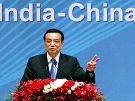
Chinese Premier Li’s Visit to India: Engaging to Contain

Brig (retd) Vinod Anand, Senior Fellow, VIF

Strategic Backdrop

Chinese Premier Li Kequiang’s visit to India took place at a crucial time when the geopolitics at the international level are in a state of flux with the US pursuing its pivot to Asia-Pacific strategy besides its ongoing draw down from Afghanistan. China, as a possible response to the US maneuvers, is moving to forge new strategic equations and strengthen its old ones. China’s involvement in territorial disputes with some of its neighbours like Japan, Vietnam and Philippines also not only restricts its freedom of strategic maneuver but also paints a negative image of China’s peaceful rise theory and motivates affected countries to move closer to the US and the West to balance China. Therefore, President Xi Jinping’s first visit abroad to Russia was in this context aimed at stressing the importance of its relations with a close ally. Similarly, Prime Minister Li’s visit to India was with an understanding that India was a key power that could tilt the emerging international strategic balance either way. While Indian Prime Minister Manmohan Singh’s visit to Beijing was due in the coming months, yet Li’s visit to India prior to that exhibited the level of urgency and keenness with which the new leadership wishes to engage India and possibly reduce the trust deficit and address mutual differences on a number of issues of concern to both. Chinese leadership is also concerned with Indian moves to forge a closer relationship with Japan and therefore the timing of Li’s visit before Singh’s scheduled trip to Tokyo was also significant in the strategic context.

That Li chose to make India his first visit abroad after assuming office has given a positive thrust to Sino-Indian relations and also underscored the importance of this relationship in shaping the emerging world order. The Joint statement issued at the end of the visit notes that "both countries view each other as partners for mutual benefit and not as rivals or competitors."

Issues of Concern: No Easy Solutions

Evidently, the most important issue is the settlement of border dispute where both sides have failed to find a solution despite 15 rounds of talks by Special Representatives’ (SRs). This is further compounded by the fact that the Chinese side has not communicated to India their perception on as to where does the Line of Actual Control (LAC) lie. Despite the so called ‘candid and frank’ exchange of views there is a general impression that the Indian Prime Minister was not assertive enough in communicating New Delhi’s views on recent incursion by PLA. Singh’s statement terming it as an ‘incident’ in the Western Sector has not been well-received in the strategic community.

As expected, the Chinese proposal for formulating a new mechanism in the shape of a Border Cooperation Agreement/Border Defence Management Agreement has not been agreed to by India, as according to New Delhi, the ‘existing mechanisms have proved their worth’ in the recent border stand-off. Not only India had put forward its own proposals to deal with border flare-ups India also sought more time to examine Beijing’s proposal. Further, suggestions for demilitarization of border areas are fraught with risk so far as India is concerned because of lack of development of strategic infrastructure on the Indian side. However, what has been stressed by India is that an early boundary settlement is a necessary pre-condition for stabilizing the relationship between the two nations. Though these issues have been left for the next round of SR talks, yet the dissonance in Sino-Indian relations is likely to persist unless this fundamental divergence is addressed in a substantive manner.

Another issue flagged by Indian leadership was the construction of dams on Yarlung Tsangpo/Brahmaputra River without taking into account the interest of lower riparian countries. India proposed a joint mechanism for the same but this did not find any positive response from the Chinese side. China was only ready to share some hydrological data of river flows which might cause floods on the Indian side. In fact, India’s demand was that the mandate of existing Expert Level Mechanism should be expanded to include information sharing on upstream development projects on these rivers. Li also spoke reassuringly of China's respect for the rights of the lower riparian states. This has been interpreted by Indian officials as a “movement forward” but it is not clear up to what degree. Generally, China has been known for disregarding the rights of downstream countries over the rivers flowing down from Chinese territory which is contrary to international conventions on river water flows.

The third important issue from Indian perspective was a large number of Chinese (possibly PAP or some other militia personnel) working on projects in Pakistan Occupied Kashmir (POK) which is recognized by even China as a disputed area. Though this point was not brought up by India during the deliberations with Li, it remains an area of concern for New Delhi. Conclusion of an agreement with Pakistan on constructing an economic corridor through POK with construction projects in admittedly disputed territory indicates double standards being followed by China. It needs to be remembered that China had prevented the Asian Development Bank from advancing funds for projects in Arunachal Pradesh.

Trade Imbalance and connected issues: Some Promises

Imbalance in trade was another area which was sought to be addressed by both sides though; largely the Chinese delegation consisted mostly of export representatives rather than importers. A number of proposals were made, and these included greater Indian access to the Chinese market, investment in each country by the other, and exploring ways to allow Indian manufactures to export their products to China. Beijing also offered to invest in and build infrastructure in this country. India’s infrastructure requirements are huge but there are also some concerns about Chinese ways of working and investing in such projects which may be disadvantageous to Indian firms.

The Chinese Premier did promise to help the IT, pharma and other Indian companies to promote their businesses in China. Apparently, this may not help much as the trade deficit with China is very large and India would have to think of innovative ways to reduce the imbalance. India was also not keen to enter into a bilateral Regional Trade Agreement as also a Regional Comprehensive Economic Partnership (RCEP) which would have further skewed the trade balance in favour of China.

It was also the first time that a mention of promoting the Kunming Initiative or BCIM (Bangladesh-China-India-Myanmar) Forum for Regional Cooperation for improving connectivity and trade relations through multimodal corridors from Yunnan- Myanmar and India’s North East was made at the highest level.

Earlier, India viewed it as only a provincial initiative by Yunnan; it had also not gained much traction due to reservations by India on grounds of security and connected issues. Hopefully, some substance would be added to it in the coming years. So far only conferences of the forum have been held and some publicity to the BCIM concept has been given through Kolkata to Kunming car rally. Surprisingly, there were no members from Yunnan in China’s business delegation. However, overall on the question of addressing trade imbalance and allied issues Li exhibited receptivity and reasonableness.

Apparently, the Joint Statement also reflected that China and India were ready to discuss bilateral cooperation in civil nuclear field for the first time. India is looking forward to China removing its opposition to India becoming a member of the NSG (Nuclear Suppliers Group). India is also keen that China should not provide its technology etc. to Pakistan for Chashma III and IV nuclear plants. The Joint Statement maintains that “the two sides will carry out bilateral cooperation in civil nuclear energy in line with their respective international commitments.” However, it is envisaged that China would continue to cooperate with Pakistan under grandfathering clause which, perhaps, could be termed by China as part of its ‘international commitments’.

A total of eight agreements were signed between India and China in areas of military-to-military cooperation to include exercises between respective Armies, Air Forces and Navies; cooperation in non-traditional areas of security, relaxing of visas for enhancing people to people relations etc. These were largely areas of congruence except that in military exercises, the scope and scale is very limited.

Regional and Global issues

For sometime, both India and China were interacting with each other at Track II and even Track I levels on the question of evolving scenario in Afghanistan post 2014 where both countries are concerned about security and stability. India and China have invested huge capital in Afghanistan and are also apprehensive about the adverse fallout of instability in Afghanistan on the region. Both have endorsed an “Afghan-led, Afghan-owned” reconciliation process. India believes that a positive Chinese involvement in Afghanistan may have the effect of moderating Pakistan’s stance on the issue. Though, so far China has largely viewed the Afghanistan issue through Pakistani prism.

There has also been general convergence on most of the global issues where both India and China have largely cooperated on climate and trade issues i.e. in Doha Development Round of WTO and Durban climate change summit and WTO issues. Further, for long both sides have been supporting the central role of the UN in the international affairs which the US has been disregarding for many years.

A mention of Asia Pacific security was also made where both sides observed that principles of international law should be followed to maintain peace and stability; this was somewhat of an indirect and mild criticism of America’s Asian pivot strategy. Another clause in the joint statement states that both sides “take a positive view of each other’s participation in regional and sub-regional cooperation processes, and support each other in enhancing friendly relations with their common neighbors for mutual benefit, and win-win results.” From Chinese perspective, it would mean that India should not be concerned about China’s engagement with its South Asian neghbours while India would interpret it as China should, therefore, take similar view of India’s engagement with Vietnam, other ASEAN nations as also Japan and other East Asian countries.

Assessment

It has been said that that talks took were candid and frank indicating that both sides articulated their views freely. India, in a way, did underline its unhappiness with lack of progress on the border issue and connected issues by not restating the Chinese demand of including the usual averment of Tibet being part of China and ‘One China’ policy etc. However, India did try to play down the issue as basic policy of India on Tibet has not undergone any fundamental change. It appears to be a bargaining tactic for China’s one-sided policies on POK. Indian officials feel that there is no point in making such remarks/commitments without getting anything in return as Kashmir is of core concern to India.

Further, China also wanted to make mention of South China and East China Sea as areas of core concern but was not accepted to be included in the official statement because of the larger ramifications on the sovereignty and freedom of navigation issues.
Overall, the visit can be described as moderately successful from Indian perspective as both sides have strived to resolve the core divergences but no easy solution is likely in the short-term. The new Chinese leadership has tried to reach out to India without offering any strategic concessions while giving minor concessions and making some promises. Positive development could possibly be that the Chinese Premier visited India first thereby indicating the new leadership’s priority. Li’s visit to Pakistan immediately thereafter denotes that China is still playing balance of power games in South Asia. Convergence on most of the global issues will not help much unless the bilateral divergences are settled amicably.