Showing posts with label BIMSTEC. Show all posts

Tuesday, June 3, 2014

BCIM Economic Corridor: Prospects and Issues

Brig (Retd) Vinod Anand, 
Senior Fellow, VIF

Introduction

One of the cornerstones of India’s strategy has been to develop India economically and technologically. Another facet of India’s policy has been to seek partnerships on the strategic, economic and technological fronts to widen its policy and development options in order to safeguard its interests. The strategy adopted to meet these policy objectives is to restore our traditional links and integrate India with its immediate and extended neighborhood besides responding positively to the imperatives of globalization. This translates into an Indian vision of being well connected to Afghanistan, Iran and Central Asian Region and beyond on the western flank and to Bangladesh, Myanmar, Thailand and beyond on the eastern flank through a network of multi-modal transport corridors.

These networks would facilitate trade, exchange of energy through oil and gas pipelines, promotion of tourism and increase of communication links leading to what can be termed as a zone of co-prosperity. Towards this end, a number of regional and sub regional initiatives have been undertaken by India to improve connectivity, promote economic and technical cooperation, enhance people to people relations and usher in peace and prosperity.

Therefore, India is involved in a number of regional and sub-regional initiatives and frameworks. BCIM (Bangladesh, China, India and Myanmar) framework is one such initiative which has recently been given a push both by India and China.

However, there are also other groupings like Bay of Bengal Initiative for Multi-Sectoral Technical and Economic Cooperation (BIMSTEC) which is one such initiative for sub regional integration. Further, India also has a Trilateral Dialogue with Myanmar and Thailand addressing the same issues. There is also a Ganga –Mekong Initiative to link countries of Mekong Basin (Myanmar, Thailand, Cambodia, Laos and Vietnam) with India. All these are in addition to the major regional organisation in South East Asia i.e. ASEAN.

Similarly, China has also been involved in a number of regional groupings i.e Greater Mekong Sub-region initiative that was founded in Yunnan in 1992.

Even though there is an overlap in goals and objectives of a number of regional and sub regional groupings, there is a need to critically analyze whether multitude of such cooperative efforts are beneficial or otherwise.

BCIM Evolution

So far as the BCIM forum is concerned, it has been in works for over a decade now (since 1999). In fact, it was a Track II platform, known earlier as Kunming Initiative, which was formed for sub-regional cooperation revolving around trade, commerce and connectivity.

It was considered as a provincial initiative and did not have much resonance among at least the policy makers and the MEA officials. Some of the earlier meetings that were attended, for instance, by India’s Secretary (East), Mr. Rajiv Sikri in 2006 questioned its utility when several other similar initiatives existed in the region. On the other hand, later in 2011, a Kolkata-Kunming car Rally that was expected to encourage the concept of BCIM found official mention in the Joint Statement between China and India.

However, it was only last year that the BCIM grouping gained some traction when it was first mentioned in the Joint India-China communiqué during PM Li’s visit to India in May 2013 and it was again discussed between the two during PM Manmohan Singh’s visit to Beijing in October 2013. Thus, it became a Track I initiative with the prospects of the objectives of BCIM being realized.

As a follow up of Heads of State meetings, a Joint Study Group (JSG) of BCIM to chart out the modalities for achieving the goals of BCIM economic corridor was set up and it held its first meeting at Kunming in December, 2013. JSG has outlined a number of steps to be taken to convert the concept into a reality. A Joint Working Group was also proposed to be established for improving the working mechanism. The Final Report is expected to be submitted by end September and by end December 2014, it is expected to be adopted and signed for inter-governmental cooperation. Cooperative areas between the four members would include:-

(a) Physical Connectivity
(b) Trade in goods, services and investment including finance
(c) Environmentally sustainable development
(d) People to people contacts

Assessment

However, the question remains as to whether this sub regional grouping would make some headway in the coming years and what are Indian perceptions on the issue. What are its future prospects?

Even while the top leadership has come to an understanding that BCIM has plenty of potential and it needs to be encouraged, there are several difficulties and problems in imparting a degree of substance to achieving the objectives of the forum.

Security environment is one major negative factor inhibiting the successful realization of the forum.
For instance, in February, the influential English language Chinese daily, Global Times commenting on the BCIM Economic Corridor pointed out that even though it has been put on fast track, the border areas are characterized by poverty, ethnic division and collision and rampant transnational crimes. It talks about difficulties of security and development taking place simultaneously. (Construction of rail and road networks, logistics centres, industrial parks and development of scenic areas etc). ‘Thorny security challenges have to be resolved- ethnic conflicts, drug & human trafficking along Sino-Myanmar borders’. This situation is present on all the borders shared by the four countries. Security first or development first or both simultaneously is not an easy question to be answered.

Conflicts between the armed ethnic groups and Myanmar have negative impact on creating conducive climate for investment and development. Sino-Myanmar border has a number of ethnic conflicts and issues which are well known. Transnational crime gangs in the Golden Triangle create many obstacles for bringing peace and stability and law and order in the area.

Similarly, on the Indo-Myanmar border, there are ethnic people who reside on both sides of the borders and some elements continue to remain hostile to either India or Myanmar or both. While Indian and Myanmar security forces have coordinated their patrolling and operations against such groups, peace and stability continues to be at risk in these areas.

Sino-Indian tensions along the border are well known and despite the fact that a new Border Development Cooperation Agreement has been signed, the incursions and misperceptions along the borders continue to take place.

Bangladesh and Myanmar borders have with the problem of Rohingyas crossing over to Bangladesh and the Myanmar government refusing to grant them citizenship rights. Thus, conditions for trade and commerce are not conducive.

The prevailing security situation thwarts the successful outcome of BCIM forum and work against building trust and mutual confidence. China and India, both major countries in the group, could take the initiative to improve mutual trust and confidence between the members of this forum.

Indian Approach

Even though India has agreed in principle for a BCIM Economic Corridor, it also has some apprehensions.

Firstly, there are still several insurgent and rebel groups in North East India which are involved in a host of anti national activities like gun running, drug trafficking; they are also being used by foreign intelligence agencies (e.g. Anthony Shimray incident where Chinese intelligence agencies were alleged to have been involved in fuelling insurgency by sending a huge consignment of Chinese arms to NSCN(IM) in the NE; there have also been reports of some Chinese intelligence agents being active there; ISI has also been involved in sending arms).

Secondly, Sino-Indian border problems are well known and therefore Indian sensitivities concerning the claims and possible insecurities on that account. Tirap district of Arunachal Pradesh is inhabited by Nagas and there is an insurgent activity there. Even though some funds for constructing Ledo/Stilwell Road have been earmarked, India is not in favour of reviving the old Burma/Stillwell Road linking India’s NE to Yunnan through Myanmar because of security reasons. This is despite the fact that enormous commercial benefits (especially with reduction of transportation costs) might accrue. There are apprehensions that this might give China advantage in case of a military conflict.

Thirdly, while there is a dire need to develop the North eastern states of India and China can provide the wherewithal for infrastructure development including the much needed funds, the Indian government remains reticent in involving China in ways that might be detrimental to Indian interests.

Further, during the visit of Japanese PM Shinzo Abe in January 2014, Japan has been invited to take part in the infrastructure development of NE States.

Fourthly, there is a growing trade imbalance between India and China and any free flow of trade and commerce through the envisioned economic corridor would only increase the trade imbalance against India as China has not been able to practically address India’s grievances on this issue in any meaningful way despite remonstrations by India to this effect during summits and other bilateral exchanges.

Additionally, India has several bilateral and multilateral initiatives with the regional countries to address precisely the same issues. For instance, India has Bay of Bengal Initiative for Multi Sectoral Technical and Economic Cooperation (BIMSTEC), Mekong Ganga Cooperation initiative and Trilateral between India, Myanmar and Thailand for improving connectivity; all such initiatives involve either cooperation with Bangladesh or Myanmar or both that have similar objectives to that of BICM.

There is an overlap in goals and objectives of a number of regional and sub regional groupings that remain an important sub set of India’s ‘Look East Policy’ set in motion in the mid 1990s. That is why India had not been very keen to add another sub-regional grouping to its kitty where, possibly, the central role of India in some of these platforms could be undermined. There have also been talks of merging or combining of BCIM and BIMSTEC but regional geo-political environment does not appear to be conducive for acceptance of such proposals.

Conclusion

Though, in the recent conversation between Prime Minister Narendra Modi and Premier Li Keqiang on 29th May, the Chinese leader pushed for realization of BCIM yet it would not be easy to realize the objectives of BCIM Economic corridor or a Southern Silk Road in the short term to mid-term period. While it may be possible to address the security challenges along the borders and there are some signs of improvement along Indo-Myanmar and Indo-Bangladesh borders yet, for some progress to be made, there has to be a fundamental change in the nature of Sino-Indian relationship.

However, the way forward could be to start small joint projects in secure areas along the envisaged economic corridor which benefit the local population and which are not based purely on profit motive. Such joint projects could be initiated in Myanmar and Bangladesh by combined efforts of India and China. This would contribute to confidence building and possibly the goals of BCIM could be realized to some extent in the mid-term period.

Otherwise, except for hosting some Kolkata to Kunming car rallies and some other peripheral activities, it would be difficult to exploit the full potential of the grouping.

Substantive issues of BCIM would only receive attention when the geo-politics between both nations move towards a positive resonance. While specific programmes of BCIM Corridor may be discussed as part of keeping some positive atmospherics alive because of the confabulations at the top level yet implementation of the programmes would take their own time.

(The following is an updated version of the presentation made at Institute of South East Asia Studies during an international conference held at Yunnan University, Kunming, PRC).

Published Date: 2nd June 2014, Image source: http://voiceof.india.com

Thursday, March 20, 2014

BIMSTEC and BICM: Two Competing Sub-Regional Frameworks? Printer-friendly version

Brig (Retd) Vinod Anand, 
Senior Fellow, VIF

Prime Minister Manmohan Singh recently visited Myanmar to attend the Bay of Bengal Initiative for Multi-Sectoral Technical and Economic Cooperation summit (BIMSTEC). This sub-regional framework came about in 2004 as part of India’s overall strategy of restoring its traditional links and integrating India with its immediate and extended neighbourhood besides responding positively to the imperatives of globalization.

Thus the vision of BIMSTEC is to improve connectivity between India, Bangladesh, Myanmar, Thailand and other members through a network of multi-modal transport corridors. These networks would facilitate trade, exchange of energy through oil and gas pipelines, promotion of tourism and increase of communication links leading to what can be termed as a zone of co-prosperity.

It also needs to be noted that BIMSTEC contains most of the major SAARC countries except Pakistan. Further, India also has a Trilateral Dialogue with Myanmar and Thailand addressing the same issues. It can also be said that because SAARC has not made any progress due to intransigence of Pakistan, BIMSTEC was another alternative to include most of the other South Asian countries to promote economic cooperation. There is also a Ganga –Mekong Initiative to link countries of Mekong Basin (Myanmar, Thailand, Cambodia, Laos and Vietnam) with India. All these are in addition to the major organisation in South East Asia i.e. ASEAN. Even though there is an overlap in goals and objectives of a number of regional and sub regional groupings, BIMSTEC remains an important sub set of India’s ‘Look East Policy’ set in motion in the mid 1990s.

So far as Bangladesh, India, China and Myanmar (BCIM) forum is concerned, it has been in works for over a decade now (since 1999). In fact it was a Track II platform, known earlier as Kunming Initiative, that was formed for sub-regional cooperation revolving around trade, commerce and connectivity. The BCIM grouping gained some traction when it was first mentioned in the Joint India-China communiqué during PM Li’s visit to India in May 2013 and it was again discussed between the two during PM Manmohan Singh’s visit to Beijing in October 2013. Thus, it became a Track I initiative with the prospects of the objectives of BCIM being realized. As a follow up of Heads of State meetings, a Joint Study Group of BCIM to chart out the modalities for achieving the goals of BCIM economic corridor was set up and it held its first meeting at Kunming in December, 2013. However, the question remains as to whether this sub regional grouping would make some headway in the coming years because of the perceived geo-political competition between the BCIM and BIMSTEC.

Even though India has agreed in principle for a BCIM Economic Corridor but it appears highly unlikely that it would be realized in an early timeframe in any meaningful manner. The Indian establishment’s security apprehensions about activities of several insurgent and rebel groups in North East India and their links with some Chinese elements still persist. These groups are involved in a host of anti national activities like gun running, drug trafficking and media reports have indicated they are also being used by foreign intelligence agencies (e.g. Anthony Shimray incident where Chinese intelligence agencies were alleged to have been involved in fuelling insurgency by sending a huge consignment of Chinese arms to NSCN(IM) in the NE; there have also been reports of some Chinese intelligence agents being active there; ISI has also been involved in sending arms).

Further, China lays claim to Arunachal Pradesh and therefore dangers of throwing open the North East to exploitation of Chinese economic juggernaut cannot be overemphasized; it would have its own negative strategic connotations. Tirap district of Arunachal Pradesh is inhabited by Nagas and there is an insurgent activity there. The insurgents have been getting Chinese origin arms through Kachins residing across the Myanmar’s border and beyond from Sino-Myanmar border regions. Even though some funds for constructing Ledo/Stilwell Road have been earmarked yet it would be against India’s security interests to revive the old Burma/Stillwell Road linking India’s NE to Yunnan through Myanmar. This is despite the fact that enormous commercial benefits (especially with reduction of transportation costs) might accrue.
While there is a dire need to develop the North eastern states of India and China can provide the wherewithal for infrastructure development including the much needed funds, Japan remains a better alternative as a source of funding and development for the North East. During the visit of Japanese Prime Minister Shinzo Abe in January 2014, Japan has been invited to take part in the infrastructure development of NE States. It also needs to be noted that China had prevented the Asian Development Bank in 2007 from giving loans for development projects in Arunachal Pradesh.

Additionally, there is a growing trade imbalance between India and China and any free flow of trade and commerce through the envisioned BCIM economic corridor or China’s ‘Southern Silk Road’ would only increase the trade imbalance against India as China has not been able to practically address India’s grievances on this issue in any meaningful way despite remonstrations by India to this effect during summits and other bilateral exchanges.
China has also expressed its desire to join BIMSTEC and there have also been talks of merging or combining of BCIM and BIMSTEC. In a practical sense, it would not be worthwhile to add China to a regional sub-grouping that would be dominated by China taking away India’s central role in this sub-regional initiative. Another contradiction between the objectives of BCIM and BIMSTEC has been that while BIMSTEC aims to develop west to east connectivity, BCIM’s objective is to forge connectivity in North-South direction. The motivating strategic impulse between the two remains at variance thus giving rise to the perceived geopolitical competition.

While Manmohan Singh might have agreed to move towards realizing the BCIM corridor, its prospects do not seem to be bright. Unless there is a fundamental change in the nature of Sino-Indian relations except for hosting some Kolkata to Kunming car rallies and some other peripheral activities the substance in BCIM would remain absent. Substantive issues of BCIM would only receive attention when the geo-politics between both nations move towards a positive resonance.


Indian policy makers should not involve China in such Indian projects that would enable China to influence the local people in the North East in many ways that might prove to be detrimental to Indian interests. If China were allowed access to this region, then Chinese economic influence would become predominant leading to strategic influence in the politically sensitive region. In contrast, India needs to pay more attention to BIMSTEC, put more money and efforts in this regional framework and finish some of the projects at a fast clip as India’s record in implementing such infrastructure projects leaves lot to be desired.

Wednesday, March 13, 2013

From Look East to Engage East: How India’s own Pivot will Change Discourse in Indo-Pacific Region


Nitin Gokhale 
(Visiting Fellow, VIF)

Much before President Barack Obama rediscovered Asia’s importance to the world and announced an American “rebalance” towards Asia-Pacific regionin January 2012; New Delhi had quietly upgraded its two decade old “Look East” Policy to “Engage East,” demonstrating a new resolve to play a pivotal role in its extended neighbourhood.

As India has pivoted towards the East, the term “Indo-Pacific” has suddenly gained currency acknowledging India’s growing stature in Asia. At the moment, New Delhi’s surge to the East is dictated primarily by economic and trade ties with ASEAN nations.

Its role in the East Asia Forum has also become important for strategic balance in Asia.

In the three years since a Free Trade Agreement (FTA) on goods was signed between India and ASEAN, trade has risen by 30 per cent. Apart from India’s growing engagement with ASEAN, its economic relations with China, Japan and, more lately, Australia have also grown much faster than before.

Inevitably, there is also a security dimension to the ‘Engage East’ policy. India’s tri-services Andaman Nicobar Command, located closer to Indonesia than the country’s mainland, is fast emerging as a springboard for the country’s growing strategic and security forays into Malacca Straits and beyond.

A rapidly modernising Indian Navy is a factor for stability in the region. The US has been to rope in New Delhi for cooperative security arrangement in Asia, a prospect that is not relished by China. Beijing is especially wary of New Delhi’s bilateral military cooperation with Vietnam, Philippines, South Korea, Indonesia, Malaysia and Japan.

The Indo-Pacific has thus become a key driver of global politics. Stretching from the Indian subcontinent to the western shores of the Americas, the region spans two oceans -- the Pacific and the Indian -- that are increasingly linked by shipping and strategy. India’s outreach through bilateral and multi-lateral organisations like the BIMSTEC (Bangladesh, India, Myanmar, Sri Lanka, and Thailand Economic Cooperation) and the little-known Indian Ocean Rim Association for Regional Co-operation is set to alter the geo-strategic landscape in not too distant future.

‘Engage East’ is thus not a uni-dimensional idea. It has many strands, some seemingly disparate, but they represent New Delhi’s desire to play a more constructive and dare one add, a more decisive role in Asia. I want to concentrate on this relatively less focussed aspect of India’s strategic thought and explore the roadmap that is bound to evolve in the coming decade.

One of the key factors in India’s Look-East-Engage East policy is of course Myanmar. Last year, Prime Minister Manmohan Singh went to Myanmar and said India and Myanmar as "natural partners."

He suggested tapping the huge un-realised potential of the economic relationship between the two countries for mutual benefit. During that two-day trip, India and Myanmar signed a number of agreements and put in place a road map for the rapid development of relations in the years ahead.

As diplomatic visits go, it was a great success. But it takes more than usual platitudes to translate a triumphant state visit into a long lasting relationship, coming as this one does after a relatively low profile engagement over the past decade.

As the Prime Minister pointed out: " Myanmar, with its unique" geographic location, can be a bridge linking South and South east Asia to east Asia and there is much untapped potential in our economic relationship."

After all, India has a major partnership with her neighbouring ASEAN countries in trade and investment.

Myanmar, now a member of ASEAN has become a major link between India and ASEAN countries. And North East particularly Manipur ought to become the center of thriving and integrated economic space linking two dynamic regions with a network of highways, railways, pipeline, and transmission lines crisscrossing the region.

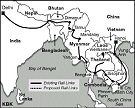
Development of the northeast is thus integral to India’s policy on Myanmar. North East is a corridor and a transit route to Southeast Asia. Infrastructure building tops the priority. A big project already under way is designed to turn the Kaladan River into a shipping route, linking Mizoram to Myanmar’s port of Sittwe, which India is helping develop. India has also agreed to upgrade an extensive network of roads and bridges in Myanmar that would effectively connect the Northeast (and the rest of India) to Thailand as soon as 2016. Both sides are also exploring the possibility of setting up train routes through the country. Facilitating border transit would make the Northeast a gateway to Myanmar --a potential boon for trade as well as tourism.

India's north eastern states and Myanmar should be the main target markets of many products manufactured in the SEZs to once again make India’s north eastern states and northern Myanmar a natural economic zone, which they historically were, providing a sustainable economic life line to the north-eastern states. But this would require enormous fast-paced infrastructure development on the Indian side of the border with Myanmar which is primitive and is hardly geared to handle the traffic that would be generated due to the Kaladan project.

Manipur, shares a 398-km border with Myanmar. But more importantly the border town of Moreh has been a traditional trading hub with Myanmar and therefore has vast potential to become a major export centre from India for the South East Asian region. Here’s why: According to available statistics, bilateral trade between India and Myanmar more than doubled between 2005 and 2010, expanding from US$557 million to $1.2 billion, most of it through Moreh. Disappointingly though, it pales in comparison to the bilateral trade between China and Myanmar which in 2010 amounted to an estimated $3 billion.
In this context, the Trilateral Highway that aims at connecting India’s North-east with Thailand via Myanmar becomes important. It could mitigate the disadvantages of landlocked North-east India. It is a component of the Asian Highway, which is scheduled for completion by 2016. Proposed and implemented by the United Nations Economic and Social Commission for Asia and Pacific (UNESCAP), the Asian Highway Project includes the Asian Highway 1 and 2 that would pass through the North-east, connecting India with its easterner neighbours. Thus, with the coming of the Asian Highway, Myanmar will become the point of convergence as well as the linking route between India and the other South-east Asian countries. That, in turn, will lead to the creation of more secure and safe living spaces for the populace residing on either side of the border.

But there are apprehensions too. Local people in the Northeast fear that the opening of the Asian Highway and absence of inadequate enforceable regulation on immigration, illegal migration into the region may increase manifold.

It is the failure of actualizing intent that rankles in Manipur. That, combined with multiple frustrations emanating from prolonged bouts of economic blockades, a state administration in terminal atrophy and the continued and unchallenged writ of underground armed groups, has left the people despondent. It is this hopelessness that the Centre and State government must work hard to overcome. For that, a solution to long-standing ethnic insurgencies has to be found in double-quick time.

Now is the time to press for peace and security in Manipur since politics in Myanmar are undergoing a dramatic change. With the junta taking tentative steps towards genuine democracy and showing signs of warming towards India, New Delhi must seize this moment to establish lasting trade and cultural ties with its eastern neighbour. But before India can play a larger role in Maynmar, it needs to fix Manipur’s broken socio-political landscape.

Manipur and to a lesser extent Nagaland must take advantage of the liberalisation that is taking place in Myanmar. But that potential can be fully realised only if New Delhi starts looking at Manipur as an important starting point in India’s ‘Look East’ policy instead as a dead end of the country’s road network.

Wednesday, November 21, 2012

India’s Role in the Current Century


Kanwal Sibal
(Advisory Board, VIF)


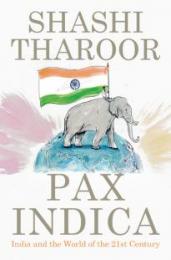
The title of Shashi Tharoor’s new book, Pax Indica: India and the World of the 21st Century, can mislead an unwary reader. The book does not offer a blueprint for India’s rise to imperial status in the current century. A more modest role is envisaged for India, that of helping to define the norms of tomorrow’s new networked world, write the rules and have a voice in their application. But the book is not really about this either. It is more an overview of India’s relations with its neighbours, South- East Asia, China, the US, the Arab countries, Africa, Europe, and Latin America, with separate chapters on India and the UN and Soft Power and Public Diplomacy, and a final chapter on Multi-Alignment as a “Grand Strategy” for India in the decades ahead.

The new norms and rules that India would work on, how they would be different from the ones that the West considers universal, and the means India will deploy to achieve success are not spelt out in the book. In actual fact, the author believes that the world having been made “safe of democracy”, India’s vocation should be the promotion of democracy and human rights worldwide along with “major allies” like the US. This suggests adjusting to Western norms more than redefining them, which is in fact what the West expects of others.

The reader would have greater than usual interest in Tharoor’s latest book because he would be writing from a double perspective – that of his long experience in international diplomacy as a UN civil servant and a brief exposure at the political level to India’s foreign-policymaking as a junior Minister in the Ministry of External Affairs (MEA). However, rather than this double experience combining to give more cohesion to his analysis of India’s foreign policy in the current century, it produces some inconsistencies.

An instance of this is the disproportionate attention given to groups such as BIMSTEC (Bay of Bengal Initiative for Multi-Sectoral Technical and Economic Cooperation) and the IOC-ARC (the Indian Ocean Rim Association for Regional Cooperation) and the exaggerated enthusiasm with which their potential is described. The eight pages devoted to BIMSTEC contrast with one paragraph each that Japan and South Korea merit, and the less than three pages of superficial treatment of Russia. While Europe gets the same space as BIMSTEC, the author considers the continent irrelevant to India’s strategic interests. He claims that “there’s nothing like the IOC-ARC in the annals of global diplomacy” and rhapsodizes thus in UN-speak:

When the IOC-ARC meets, new windows are opened between countries separated by distance as well as politics. Malaysians talk with Mauritians, Arabs with Australians, South Africans with Sri Lankans, Iranians with Indonesians. The India Ocean serves as both a sea separating them and a bridge binding them together.
Doesn’t the UN at New York do all this too?

Some other inconsistencies in the book probably derive from the author’s reluctance as a former Minister and Congress Member of Parliament to criticize the government’s policies. Tharoor’s analysis of the roots of Pakistan’s deep-seated hostility towards India is most perspicacious and hard-headed, but even as the reader is being convinced that Pakistan cannot be trusted and dialoguing with it would not be productive, the author dutifully purveys all the contestable arguments of the government to justify resuming the dialogue, adding some jejune ones of his own, such as “what we say when we talk that will make the difference” and that a dialogue allows India to make clear to Pakistan “its bottom lines and minimum standards of civilized conduct”. He is very dismissive about the India-Pakistan Track-2 dialogues, but slips into candlelight phraseology in advocating a show of “magnanimity and generosity of spirit that in itself stands an outside chance of persuading Pakistanis to rethink their attitude to us”. Homilies such as “To acknowledge that trust does not exist right now, however, is not to suggest that trust can never be built” and that “The time has come ... for the victims of geography to make history” cannot be the basis of serious policy. He does not explain how but wants “New Delhi to do its best to ensure that the Islamabad establishment abandons the conviction that terrorism is the only effective instrument that obliges India to sit up and pay attention to Pakistan and engage with its interests”. Rather surprisingly for a UN hand, he believes India can have sanctions imposed on Pakistan under UN Chapter VII resolutions on terrorism, overlooking that the US, despite serious Pakistani provocations, has not used this instrument against Pakistan and any action in the UN Security Council will need US and Chinese assent.

The author is right to affirm that India is no longer in the same league as China economically, but some of his other views on India-China relations are debatable. He seems to believe, without any apparent basis, that India has a genuine strategic partnership with China and that this relationship has broadened to include “the wider civil society in both nations”. His view that Chinese and Indian economies are complementary will be contested by those who argue that the relationship has become colonial-like in structure – export of raw materials versus import of manufactured goods. He visualizes India- China cooperation on nuclear disarmament when China refuses to hold nuclear parleys with India because it does not consider the latter a nuclear power. His repeated assertions that China and India have a common interest in keeping sea lanes open overlook India’s strategic concerns about China’s increased presence in the Indian Ocean and the South China Sea imbroglio. The author is absolutely right about enhancing relations between India and Taiwan.

The chapter on the US is a mixture of several sharp insights and questionable assumptions. At one point the author notes Obama’s “substantive assurance” of support for India’s permanent membership of the Security Council and at another he characterizes it as “largely symbolic” and a “rhetorical flourish”. (In the chapter on the UN and global commons he gives an excellent analysis of the issues involved in expanding the Security Council in both permanent and non-permanent categories.) How the two countries can cooperate to counter nuclear proliferation is not explained. To say that there is no real clash between India and the US on “geopolitical fundamentals” is exaggerating the degree of convergence. It is debatable whether the relationship with India is going to be as important to American security as that with Europe once was. India and the US, the author says, “share a responsibility for preserving a rule-based open and democratic order” and the global commons, without clarifying the nature of this responsibility and who would define it because India itself has not done it so far. His belief that India and the US as the two principal democracies have special interests and responsibilities exaggerates India’s willingness to assume such a global role and overlooks the United States’ historical and continuing courting of authoritarian states in its larger national interest.

Tharoor rightly underlines the importance of India’s relations with the Arab world because of critical energy, trade, human resources and remittance links. But to say that the centuries-old India-Arab links have given the peoples on the two sides “a similarity of perceptions and cultural mores” is an obvious exaggeration, as is the assertion that “our geopolitical aspirations are entirely compatible”. On Iran, the Shia-Sunni issue, and the role of Saudi Arabia and Qatar in Libya and Syria this is not true. That Iran has been a “kindred spirit of India” on Pakistan, that it is a “friend at Court” in the Islamic world and that it considers India a useful source of “high technology” is not supported by facts.

Africa and Latin America get the requisite attention in the book. While the overview is informative, India’s sentiments towards Africa are expressed in extraordinarily mushy language:

India and Africa have been close to each other for so many centuries that our relationship is not one of immediate give and take but has been that of a family where each one provides the best advice, the best support and the best sharing of experience, so that when we walk the same path, we learn from each other and do not make the same mistakes.

Tharoor exaggerates the impact of India’s soft power on the current century, using mellifluous prose to make his point. While India’s democracy and pluralism, its composite culture, management of diversity, Bollywood et al. earn it respect, how can India be the “land of the better story” globally with its dysfunctional democracy, poor governance, abysmal levels of poverty, low human welfare indices, urban decay, lack of sanitation, etc.? On page 410 he himself lists India’s dramatic underperformance in many areas. Tharoor ignores the hard-power foundation of soft power acknowledged by Robert Nye, the originator of the concept of “soft power”.

The author’s views on the MEA, which he mockingly calls the Ministry of Eternal Affairs, are unflattering. The well-known shortcomings of the Ministry which he lists – to which international attention has been drawn by a US researcher – cannot be denied. While the Ministry is manifestly understaffed, mid-level lateral entry on a large scale is not an answer. Where will competent mid-level recruits come from? A successful remodelling of the MEA has to be part of an overall administrative services reform. The author explains well the ineffectual role of Parliament in foreign affairs and he is right about the centralization of foreign policy decisions on important issues in the PMO.

Not surprisingly, Tharoor deplores the non-aligned phase of India’s foreign policy. In his view, Indian diplomacy is concerned more with principles than interests, privileging intellect over interest and process over outcome, but he does not give any example to sustain this sweeping generalization. He wants India to adopt a gentler and more accommodative tone on the multilateral high table, an advice that would not appeal to those who recall the hectoring of India during the CTBT negotiations and have heard the rantings of some Ambassadors in the Security Council on Libya, Iran and Syria.

Tharoor’s version of India’s “grand strategy” would see us in the US-led camp of liberal democracies besieged by Islamist terrorism and Chinese authoritarianism, forgetting that it is the US that has propped Islamism and China in the first place. He wants India to “be true to its soul in the multilateral arena” and espouse vigorously the “Community of Democracies”, though this would require reconciliation with the rationale of India’s adherence to political groups like RIC (Russia-India-China) and BRICS. Tharoor is wary of multipolarity; but multi-alignment, which he strongly recommends as the axis of India’s future foreign policy, presupposes a diffusion of power within the international system and recognition that in the absence of an international consensus on the promotion of the Western agenda of democracy and human rights, which many countries see as selective and geopolitically driven, India has to maintain a balance between different approaches to such fundamental issues as respect for sovereignty, non-interference in internal affairs, regime change policies and concepts like the right to intervene and protect.

Tharoor decries the fact that India’s “old obsession with strategic autonomy remains”. In his view, “strategic autonomy is all very well, but it cannot be the be-all and end-all of India’s attitude to the world”. While he cautions against antagonizing the US for maintaining energy supplies from Iran, he affirms somewhat inconsistently that “no power on earth can presume to dictate to India on any international issue”. India has “more in common with the countries of the North than the global South”, he says, contradicting his own paeans to BIMSTEC, IOR-ARC, IBSA and relations with Africa, the Arab world, Latin America, India’s neighbours, and, to boot, East Timor.

In virtually every chapter Tharoor quotes extensively David Malone (seventeen times), a former Canadian envoy to India, to buttress his views. His “internationalism” probably explains the need for such external endorsement of his thinking on key facets of India’s foreign policy.

Monday, July 23, 2012

Pox Indica


Kanwal Sibal
Member Advisory Board, VIF

A word of caution: Shashi Tharoor’s new book, “Pax Indica”, is not about India dominating the 21st century world; it is about the less imperial exercise of India helping to write the rules, defining the norms of the new networked world of tomorrow and having a voice in their application. But then rising India should attain such influence normally in time because of its large landmass, population, economy, technological base and armed forces.

The book covers India’s foreign policy widely: relations with Pakistan, other neighbours, China, the Arab world, various Asian countries, the US, Europe, Africa and Latin America. Given his UN passage, de rigueur chapters on Soft Power and Public Diplomacy and India and the UN find place.

The impressive breadth of coverage should enhance an ordinary reader’s understanding of India’s foreign policy, but not in any depth, as several aspects are skimpily treated. Tharoor says the book is a work of reflection, not scholarship. Many specialists will find several of his reflections jarring.

The author’s “extended analytical essay” leaves many vital issues unanalysed, whether the India-US nuclear deal, the nuclear liability law, the Maoist take-over in Nepal, the coup in the Maldives, China’s threat to India, the salience of the border issue in forging relations with China, the strategic aspects of maritime security in the Indian Ocean, etc.

While he does analyse with perspicacity the wellsprings of Pakistan’s endemic hostility towards India, he also endorses liberally the usual facile arguments in favour of engaging that country. Curiously, he scoffs at Track 2 diplomacy with Pakistan, but resorts to the same hope-inspired verbiage to advocate an approach of “accommodativeness, sensitivity and pragmatic generosity”. He seriously believes India has an effective option of dragging Pakistan to the UN to force compliance with Security Council resolutions on terrorism if bilateral dialogue fails!

As part of our neighbourhood policies, he recommends, despite ground realities, connecting China’s military infrastructure up to the Indian border with infrastructure on our side. He believes, in a surge of unwarranted optimism, that a single SAARC currency is no longer a completely unrealistic prospect.

Tharoor’s view that we have a genuine strategic partnership and economic complementarities with China is highly debatable. The assertion that both have a common interest in keeping sea lanes open overlooks our strategic concerns about China’s increased Indian Ocean presence as well as the South China Sea imbroglio. Contrary to the author’s belief, our presence at the Aini base in Tajikstan is not linked to China.

The importance of India’s relations with the Arab world cannot be overstated, but the claim that “our geopolitical aspirations are entirely compatible” overlooks the issues of Iran, the looming Shia-Sunni conflict and the role of some Gulf countries in Libya and Syria. That Iran has been a “kindred spirit of India” on Pakistan is as questionable as the author’s view that Turkey, a NATO member and lurching towards Islamism, should become a BRICS member is novel.

The book disproportionately emphasizes the importance of BIMSTEC (that groups Bangladesh, Bhutan, India, Myanmar, Nepal, Sri Lanka and Thailand), East-Timor and the lyrically described Indian Ocean Rim Association for regional Cooperation (IOR-ARC). In contrast, the author is dismissive of the EU, calling it irrelevant to India’s strategic interests. Russia gets less than three and a half pages of superficial treatment in the chapter on “Familiar Lands and Uncharted Territories”. The overview of Africa and Latin America is informative, but India’s sentiments towards Africa are expressed in needlessly grandiloquent terms.

An author who thinks that “Hollywood and MTV have done more to promote the idea of America as a desirable and admirable society than any US governmental endeavour” will evidently believe that India’s climb to world leadership will be through “soft power”, which he thinks India already has in plenty in its democracy, pluralism, Bollywood and the triumph of “Slumdog Millionaire”. How can India be the “land of the better story” with unresolved problems of abysmal poverty and poor governance? He quotes Nehru elsewhere to, unwittingly, disprove his own thesis: “So long as we have not solved most of our own problems, our voice cannot carry the weight that it normally will and should”.

The chapter on the US mixes sharp insights and questionable assumptions. To say there is no real clash between India and the US on “geopolitical fundamentals” exaggerates the degree of convergence. That India is going to be as important to American security as Europe once was is debatable. He seems to prefer US dominance to multi-polarity. He wants India to be in the US-led camp of liberal democracies besieged by Islamist terrorism and Chinese authoritarianism, forgetting the US role in propping up Islamism and China in the first place. His analysis of the issues involved in expanding the Security Council is excellent.

The author rightly lists MEA’s well known shortcomings in numbers, training, specialization etc, but calling it the “Ministry of Eternal Affairs” is an outdated jibe The issue of mid-level lateral entry to make up for deficiencies needs more informed debate, especially with Tharoor’s withering opinion of our intellectuals and international relations researchers. Why should successful specialists in areas where the Ministry is weak discard their own careers to enter government service at levels where their rise would be precarious because of age and other handicaps as outsiders?

In wanting India to “be true to its soul in the multilateral arena”, the author wants it to make common cause with the West on issues of democracy and human rights and discard its image as “the leading trade unionist of Third Worldism’. He obviously believes that western credentials on these issues are irreproachable enough to morally compel India to join ranks against specific countries.

With his marked distaste for nonalignment, Tharoor rues that our “old obsession with strategic autonomy remains”. He thinks partnerships with “major allies” (since when?) like the US should take precedence over our specific needs- for Iranian energy supplies, for example. India has “more in common with the countries of the North than the global South”, he says, contradicting his own panegyrics in his 428 page book to BIMST-EC, IOR-ARC, East Timor, Africa and others.

Tharoor presents in stylish prose the fashionable views of “globalized” Indians. To take the book seriously actually requires refutation of many of the author’s viewpoints.