Showing posts with label Soft Power. Show all posts

Wednesday, November 21, 2012

India’s Role in the Current Century


Kanwal Sibal
(Advisory Board, VIF)


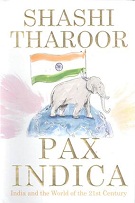
The title of Shashi Tharoor’s new book, Pax Indica: India and the World of the 21st Century, can mislead an unwary reader. The book does not offer a blueprint for India’s rise to imperial status in the current century. A more modest role is envisaged for India, that of helping to define the norms of tomorrow’s new networked world, write the rules and have a voice in their application. But the book is not really about this either. It is more an overview of India’s relations with its neighbours, South- East Asia, China, the US, the Arab countries, Africa, Europe, and Latin America, with separate chapters on India and the UN and Soft Power and Public Diplomacy, and a final chapter on Multi-Alignment as a “Grand Strategy” for India in the decades ahead.

The new norms and rules that India would work on, how they would be different from the ones that the West considers universal, and the means India will deploy to achieve success are not spelt out in the book. In actual fact, the author believes that the world having been made “safe of democracy”, India’s vocation should be the promotion of democracy and human rights worldwide along with “major allies” like the US. This suggests adjusting to Western norms more than redefining them, which is in fact what the West expects of others.

The reader would have greater than usual interest in Tharoor’s latest book because he would be writing from a double perspective – that of his long experience in international diplomacy as a UN civil servant and a brief exposure at the political level to India’s foreign-policymaking as a junior Minister in the Ministry of External Affairs (MEA). However, rather than this double experience combining to give more cohesion to his analysis of India’s foreign policy in the current century, it produces some inconsistencies.

An instance of this is the disproportionate attention given to groups such as BIMSTEC (Bay of Bengal Initiative for Multi-Sectoral Technical and Economic Cooperation) and the IOC-ARC (the Indian Ocean Rim Association for Regional Cooperation) and the exaggerated enthusiasm with which their potential is described. The eight pages devoted to BIMSTEC contrast with one paragraph each that Japan and South Korea merit, and the less than three pages of superficial treatment of Russia. While Europe gets the same space as BIMSTEC, the author considers the continent irrelevant to India’s strategic interests. He claims that “there’s nothing like the IOC-ARC in the annals of global diplomacy” and rhapsodizes thus in UN-speak:

When the IOC-ARC meets, new windows are opened between countries separated by distance as well as politics. Malaysians talk with Mauritians, Arabs with Australians, South Africans with Sri Lankans, Iranians with Indonesians. The India Ocean serves as both a sea separating them and a bridge binding them together.
Doesn’t the UN at New York do all this too?

Some other inconsistencies in the book probably derive from the author’s reluctance as a former Minister and Congress Member of Parliament to criticize the government’s policies. Tharoor’s analysis of the roots of Pakistan’s deep-seated hostility towards India is most perspicacious and hard-headed, but even as the reader is being convinced that Pakistan cannot be trusted and dialoguing with it would not be productive, the author dutifully purveys all the contestable arguments of the government to justify resuming the dialogue, adding some jejune ones of his own, such as “what we say when we talk that will make the difference” and that a dialogue allows India to make clear to Pakistan “its bottom lines and minimum standards of civilized conduct”. He is very dismissive about the India-Pakistan Track-2 dialogues, but slips into candlelight phraseology in advocating a show of “magnanimity and generosity of spirit that in itself stands an outside chance of persuading Pakistanis to rethink their attitude to us”. Homilies such as “To acknowledge that trust does not exist right now, however, is not to suggest that trust can never be built” and that “The time has come ... for the victims of geography to make history” cannot be the basis of serious policy. He does not explain how but wants “New Delhi to do its best to ensure that the Islamabad establishment abandons the conviction that terrorism is the only effective instrument that obliges India to sit up and pay attention to Pakistan and engage with its interests”. Rather surprisingly for a UN hand, he believes India can have sanctions imposed on Pakistan under UN Chapter VII resolutions on terrorism, overlooking that the US, despite serious Pakistani provocations, has not used this instrument against Pakistan and any action in the UN Security Council will need US and Chinese assent.

The author is right to affirm that India is no longer in the same league as China economically, but some of his other views on India-China relations are debatable. He seems to believe, without any apparent basis, that India has a genuine strategic partnership with China and that this relationship has broadened to include “the wider civil society in both nations”. His view that Chinese and Indian economies are complementary will be contested by those who argue that the relationship has become colonial-like in structure – export of raw materials versus import of manufactured goods. He visualizes India- China cooperation on nuclear disarmament when China refuses to hold nuclear parleys with India because it does not consider the latter a nuclear power. His repeated assertions that China and India have a common interest in keeping sea lanes open overlook India’s strategic concerns about China’s increased presence in the Indian Ocean and the South China Sea imbroglio. The author is absolutely right about enhancing relations between India and Taiwan.

The chapter on the US is a mixture of several sharp insights and questionable assumptions. At one point the author notes Obama’s “substantive assurance” of support for India’s permanent membership of the Security Council and at another he characterizes it as “largely symbolic” and a “rhetorical flourish”. (In the chapter on the UN and global commons he gives an excellent analysis of the issues involved in expanding the Security Council in both permanent and non-permanent categories.) How the two countries can cooperate to counter nuclear proliferation is not explained. To say that there is no real clash between India and the US on “geopolitical fundamentals” is exaggerating the degree of convergence. It is debatable whether the relationship with India is going to be as important to American security as that with Europe once was. India and the US, the author says, “share a responsibility for preserving a rule-based open and democratic order” and the global commons, without clarifying the nature of this responsibility and who would define it because India itself has not done it so far. His belief that India and the US as the two principal democracies have special interests and responsibilities exaggerates India’s willingness to assume such a global role and overlooks the United States’ historical and continuing courting of authoritarian states in its larger national interest.

Tharoor rightly underlines the importance of India’s relations with the Arab world because of critical energy, trade, human resources and remittance links. But to say that the centuries-old India-Arab links have given the peoples on the two sides “a similarity of perceptions and cultural mores” is an obvious exaggeration, as is the assertion that “our geopolitical aspirations are entirely compatible”. On Iran, the Shia-Sunni issue, and the role of Saudi Arabia and Qatar in Libya and Syria this is not true. That Iran has been a “kindred spirit of India” on Pakistan, that it is a “friend at Court” in the Islamic world and that it considers India a useful source of “high technology” is not supported by facts.

Africa and Latin America get the requisite attention in the book. While the overview is informative, India’s sentiments towards Africa are expressed in extraordinarily mushy language:

India and Africa have been close to each other for so many centuries that our relationship is not one of immediate give and take but has been that of a family where each one provides the best advice, the best support and the best sharing of experience, so that when we walk the same path, we learn from each other and do not make the same mistakes.

Tharoor exaggerates the impact of India’s soft power on the current century, using mellifluous prose to make his point. While India’s democracy and pluralism, its composite culture, management of diversity, Bollywood et al. earn it respect, how can India be the “land of the better story” globally with its dysfunctional democracy, poor governance, abysmal levels of poverty, low human welfare indices, urban decay, lack of sanitation, etc.? On page 410 he himself lists India’s dramatic underperformance in many areas. Tharoor ignores the hard-power foundation of soft power acknowledged by Robert Nye, the originator of the concept of “soft power”.

The author’s views on the MEA, which he mockingly calls the Ministry of Eternal Affairs, are unflattering. The well-known shortcomings of the Ministry which he lists – to which international attention has been drawn by a US researcher – cannot be denied. While the Ministry is manifestly understaffed, mid-level lateral entry on a large scale is not an answer. Where will competent mid-level recruits come from? A successful remodelling of the MEA has to be part of an overall administrative services reform. The author explains well the ineffectual role of Parliament in foreign affairs and he is right about the centralization of foreign policy decisions on important issues in the PMO.

Not surprisingly, Tharoor deplores the non-aligned phase of India’s foreign policy. In his view, Indian diplomacy is concerned more with principles than interests, privileging intellect over interest and process over outcome, but he does not give any example to sustain this sweeping generalization. He wants India to adopt a gentler and more accommodative tone on the multilateral high table, an advice that would not appeal to those who recall the hectoring of India during the CTBT negotiations and have heard the rantings of some Ambassadors in the Security Council on Libya, Iran and Syria.

Tharoor’s version of India’s “grand strategy” would see us in the US-led camp of liberal democracies besieged by Islamist terrorism and Chinese authoritarianism, forgetting that it is the US that has propped Islamism and China in the first place. He wants India to “be true to its soul in the multilateral arena” and espouse vigorously the “Community of Democracies”, though this would require reconciliation with the rationale of India’s adherence to political groups like RIC (Russia-India-China) and BRICS. Tharoor is wary of multipolarity; but multi-alignment, which he strongly recommends as the axis of India’s future foreign policy, presupposes a diffusion of power within the international system and recognition that in the absence of an international consensus on the promotion of the Western agenda of democracy and human rights, which many countries see as selective and geopolitically driven, India has to maintain a balance between different approaches to such fundamental issues as respect for sovereignty, non-interference in internal affairs, regime change policies and concepts like the right to intervene and protect.

Tharoor decries the fact that India’s “old obsession with strategic autonomy remains”. In his view, “strategic autonomy is all very well, but it cannot be the be-all and end-all of India’s attitude to the world”. While he cautions against antagonizing the US for maintaining energy supplies from Iran, he affirms somewhat inconsistently that “no power on earth can presume to dictate to India on any international issue”. India has “more in common with the countries of the North than the global South”, he says, contradicting his own paeans to BIMSTEC, IOR-ARC, IBSA and relations with Africa, the Arab world, Latin America, India’s neighbours, and, to boot, East Timor.

In virtually every chapter Tharoor quotes extensively David Malone (seventeen times), a former Canadian envoy to India, to buttress his views. His “internationalism” probably explains the need for such external endorsement of his thinking on key facets of India’s foreign policy.

Saturday, November 17, 2012

Indo - Afghan Relations


Nitin Gokhale 
(Visiting Fellow, VIF)

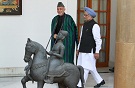
The implementation of India-Afghanistan Strategic Partnership, signed more than a year ago, is all set to gather momentum in coming months in the wake of a successful India visit by Afghanistan's President Hamid Karzai earlier this week.

While Karzai, who first flew to Mumbai before coming to New Delhi for more formal discussions with Government leaders, was more focussed on wooing Indian investors, the most concrete outcome of his four-day visit was the finalisation of a detailed training programme for Afghan security forces in Indian training institutions.

Under the pact, which was under discussion for almost a year, India has agreed to train upto 600 Afghan Army officers every year in India. Under the agreement, India, which has the world's third-largest army will train, equip and build the capacity of the Afghan forces.

Sources in the Indian security establishment familiar with the contours of the detailed schedule say Kabul and New Delhi have identified three areas to focus on - increasing the intake of officers in India's premier training institutes; providing specialized training to middle and higher level officers already operating in the Afghan National Army (ANA); and training soldiers in counter-insurgency and counter-terrorist operations.

Over 200 Afghan cadets will be training at the National Defence Academy, the Officers' Training Academies and the Indian Military Academy every year. This is over and above the 600 serving Afghan National Army (ANA) officers who will undergo a variety of courses.

In addition, company level (100-strong) contingents of ANA will be trained for four weeks at the Counter Insurgency and Jungle Warfare School (CIJWS)located at Vairangte in Mizoram.
India however has no plans to send or deploy its troops in Afghanistan as of now.

"India is a great destination for us, for the training of our military, for the training of our police and for the provision of equipment that India can provide, that is, within the means of India. We are certain that proximity that we have, the centuries of civilizational links that we have, makes it easy for Afghan young officers - man or woman - to come to India and get the best from here. That will be a great contribution in bringing the Afghan Army and police to an institutionalized order which is of the highest importance for us," Karzai told Amitabh Revi, my colleague at NDTV in an interview just before departing for Kabul on Tuesday.

New Delhi has also decided to supply vehicles, information technology and sports equipment, a move seen as a paradigm shift in India's approach to Afghanistan.

So far, India has concentrated on using "soft power" in the development sector, such as helping with the building of roads, hospitals and even the parliament building in Afghanistan. But by offering extensive training facilities for ANA, India has decided to ramp up its involvement, although it's currently stopping short of supplying any military hardware. New Delhi has also decided not to send training teams to Afghanistan in view of the two attacks on its embassy in Kabul.

The Indian security and strategic establishment has been wary of discussing the Indo-Afghan military-to-military relationship, not least because of Islamabad's sensitivities. Pakistan sees the growing relationship between New Delhi and Kabul as denying "strategic depth" to its army, and as an Indian attempt to encircle Pakistan.India has been central to Afghanistan’s quest to rebuild its economy. Since 2002, India has contributed over 2 billion dollars in aid.

In the last week of June this year, New Delhi had hosted an investors conference that focused on inviting companies and businessmen to invest in Afghanistan. It was a first for New Delhi.

At the investors conference those thoughts appeared far from everyone’s mind. Organized jointly by India’s External Affairs Ministry and the Confederation of Indian Industry (CII), the conference attracted private investors from over 40 countries. The Afghans were also present in strength. Five senior ministers handling mining, commerce and finance were in attendance. And they went out of their way to assure potential investors. As Anwar-ul-Haq Ahady, Afghanistan’s commerce minister said: “When you take into account the high level of risk, the return on investing in Afghanistan is much greater than most other parts of the world … Your investment will not only benefit you and your employees but also create conditions that will promote peace and stability in Afghanistan and the wider region.”

Although it’s early days yet to judge if the Delhi conference resulted in any substantial commitments from private companies, CII and Afghanistan officials are hoping that the companies would have gotten a fair idea about business opportunities that exist in the war-ravaged country.

That time Afghan officials listed several measures to woo investors. They said the government had adopted an investor-friendly foreign-exchange system and allowed banks to open foreign-exchange accounts. “We have also permitted 100 per cent foreign ownership of enterprises and easy repatriation of profits,” one official said.

India’s foreign minister S.M. Krishna pointed out what lies ahead. “We visualize Afghanistan's mineral resources, agricultural products and human resources as possible drivers of growth and regional economic development that together with the energy resources of Central Asia, Iran and the Gulf, the growing economic prowess and markets of China, Russia, Turkey and India, could knit the entire region between Turkey in the west, Russia in the north, China in the east, and the Arabian Sea and the Indian Ocean in the south, in a web of trade, transit and energy routes and economic cooperation. This vision requires international support in the form of institutional finance and foreign investment,” he told the conference participants.

This time too, Karzai's delegation was more forthcoming on allowing India and Indian companies to mine Afghanistan's vast natural resources. Indian companies are planning to invest over 11 bn dollars in the mining sector over the long term in Afghanistan.

The Afghan President however admitted that the security situation is still fragile and attacks by Taliban would continue post 2014, but there was no chance of the Taliban grabbing power again.

"I don't visualise that happening because Afghanistan has advanced... revolutionised massively. There are, as I said, thousands and thousands of Afghans youth who have returned from education abroad and there are tens of thousands who are educating themselves in south Afghanistan. These big cities of Afghanistan has transformed like never before. We have built more roads and more reconstruction and development has taken place in Afghanistan, in the past 10 years, in the whole of our history. So, an obscurantist mindset's return to Afghanistan to take power is absolutely a thing of the past and will not happen. Hence, a sense of insecurity will still continue. There will be bomb blasts, there will be incidents like that, that we have in our whole region. But that will not be a hindrance to the progress of Afghanistan or to the continuation of the democratic rule in Afghanistan," Karzai said.

Karzai also met Prime Minister Manmohan Singh. The two leaders also reviewed progress in the implementation of the Strategic Partnership Agreement during the past year.The Indian government also cleared another tranche of development aid to the tune of Rs. 540 crore to be given to the war-torn country where such help has earlier directly benefited the local communities.

Monday, July 23, 2012

Pox Indica


Kanwal Sibal
Member Advisory Board, VIF

A word of caution: Shashi Tharoor’s new book, “Pax Indica”, is not about India dominating the 21st century world; it is about the less imperial exercise of India helping to write the rules, defining the norms of the new networked world of tomorrow and having a voice in their application. But then rising India should attain such influence normally in time because of its large landmass, population, economy, technological base and armed forces.

The book covers India’s foreign policy widely: relations with Pakistan, other neighbours, China, the Arab world, various Asian countries, the US, Europe, Africa and Latin America. Given his UN passage, de rigueur chapters on Soft Power and Public Diplomacy and India and the UN find place.

The impressive breadth of coverage should enhance an ordinary reader’s understanding of India’s foreign policy, but not in any depth, as several aspects are skimpily treated. Tharoor says the book is a work of reflection, not scholarship. Many specialists will find several of his reflections jarring.

The author’s “extended analytical essay” leaves many vital issues unanalysed, whether the India-US nuclear deal, the nuclear liability law, the Maoist take-over in Nepal, the coup in the Maldives, China’s threat to India, the salience of the border issue in forging relations with China, the strategic aspects of maritime security in the Indian Ocean, etc.

While he does analyse with perspicacity the wellsprings of Pakistan’s endemic hostility towards India, he also endorses liberally the usual facile arguments in favour of engaging that country. Curiously, he scoffs at Track 2 diplomacy with Pakistan, but resorts to the same hope-inspired verbiage to advocate an approach of “accommodativeness, sensitivity and pragmatic generosity”. He seriously believes India has an effective option of dragging Pakistan to the UN to force compliance with Security Council resolutions on terrorism if bilateral dialogue fails!

As part of our neighbourhood policies, he recommends, despite ground realities, connecting China’s military infrastructure up to the Indian border with infrastructure on our side. He believes, in a surge of unwarranted optimism, that a single SAARC currency is no longer a completely unrealistic prospect.

Tharoor’s view that we have a genuine strategic partnership and economic complementarities with China is highly debatable. The assertion that both have a common interest in keeping sea lanes open overlooks our strategic concerns about China’s increased Indian Ocean presence as well as the South China Sea imbroglio. Contrary to the author’s belief, our presence at the Aini base in Tajikstan is not linked to China.

The importance of India’s relations with the Arab world cannot be overstated, but the claim that “our geopolitical aspirations are entirely compatible” overlooks the issues of Iran, the looming Shia-Sunni conflict and the role of some Gulf countries in Libya and Syria. That Iran has been a “kindred spirit of India” on Pakistan is as questionable as the author’s view that Turkey, a NATO member and lurching towards Islamism, should become a BRICS member is novel.

The book disproportionately emphasizes the importance of BIMSTEC (that groups Bangladesh, Bhutan, India, Myanmar, Nepal, Sri Lanka and Thailand), East-Timor and the lyrically described Indian Ocean Rim Association for regional Cooperation (IOR-ARC). In contrast, the author is dismissive of the EU, calling it irrelevant to India’s strategic interests. Russia gets less than three and a half pages of superficial treatment in the chapter on “Familiar Lands and Uncharted Territories”. The overview of Africa and Latin America is informative, but India’s sentiments towards Africa are expressed in needlessly grandiloquent terms.

An author who thinks that “Hollywood and MTV have done more to promote the idea of America as a desirable and admirable society than any US governmental endeavour” will evidently believe that India’s climb to world leadership will be through “soft power”, which he thinks India already has in plenty in its democracy, pluralism, Bollywood and the triumph of “Slumdog Millionaire”. How can India be the “land of the better story” with unresolved problems of abysmal poverty and poor governance? He quotes Nehru elsewhere to, unwittingly, disprove his own thesis: “So long as we have not solved most of our own problems, our voice cannot carry the weight that it normally will and should”.

The chapter on the US mixes sharp insights and questionable assumptions. To say there is no real clash between India and the US on “geopolitical fundamentals” exaggerates the degree of convergence. That India is going to be as important to American security as Europe once was is debatable. He seems to prefer US dominance to multi-polarity. He wants India to be in the US-led camp of liberal democracies besieged by Islamist terrorism and Chinese authoritarianism, forgetting the US role in propping up Islamism and China in the first place. His analysis of the issues involved in expanding the Security Council is excellent.

The author rightly lists MEA’s well known shortcomings in numbers, training, specialization etc, but calling it the “Ministry of Eternal Affairs” is an outdated jibe The issue of mid-level lateral entry to make up for deficiencies needs more informed debate, especially with Tharoor’s withering opinion of our intellectuals and international relations researchers. Why should successful specialists in areas where the Ministry is weak discard their own careers to enter government service at levels where their rise would be precarious because of age and other handicaps as outsiders?

In wanting India to “be true to its soul in the multilateral arena”, the author wants it to make common cause with the West on issues of democracy and human rights and discard its image as “the leading trade unionist of Third Worldism’. He obviously believes that western credentials on these issues are irreproachable enough to morally compel India to join ranks against specific countries.

With his marked distaste for nonalignment, Tharoor rues that our “old obsession with strategic autonomy remains”. He thinks partnerships with “major allies” (since when?) like the US should take precedence over our specific needs- for Iranian energy supplies, for example. India has “more in common with the countries of the North than the global South”, he says, contradicting his own panegyrics in his 428 page book to BIMST-EC, IOR-ARC, East Timor, Africa and others.

Tharoor presents in stylish prose the fashionable views of “globalized” Indians. To take the book seriously actually requires refutation of many of the author’s viewpoints.