Showing posts with label strategic autonomy. Show all posts

Wednesday, December 26, 2012

“Strategic” Relations Suit India


Kanwal Sibal 
(Member, VIF Advisory Board)

India has established strategic partnerships with several countries. What exactly “strategic partnership” means is not defined or explained officially. Foreign policy experts try to define the term, but there is no definitive version as the experts have their own views on what such partnerships actually signify.

There is agreement, however, on what a “strategic partnership” is not. It does not amount to an alliance, which is a relationship based on a formal document- a treaty- that carries legal obligations for the signatories. Some experts would prefer the word “entente”, but the term carries the historical odour of European balance of power politics and wars. “Entente” too is a kind of diplomatic understanding based on agreements, which a “strategic partnership” is not.

“Strategic partnership” is merely declaratory. No formal document has been signed by India that defines the term and obligations that India and its strategic partner are accepting in terms of their bilateral relations or external action in general.

Policy

India has established strategic partnerships with numerous countries, some with obvious strategic importance because of their potent international role, while others are important for India bilaterally. Given the number of strategic partners India now has, making a sense of such partnerships has practical pertinence and is no longer an academic question.

For India, to underline a commitment to build a longer-term relationship with another country by deepening bilateral ties and promoting convergence in external policies on issues of mutual interest, the concept of a “strategic partnership” is politically convenient, given our traditional perspective on international relations.

India has been historically nonaligned. Whether it was an ideology or a strategy or both can be debated. It did not suit India’s national interest to get embroiled in Cold War rivalries. Its interest was to maintain good relations with countries from both blocs and get benefits from both, which it did.
It is still in India’s interest to be on friendly terms with all countries and create beneficial partnerships wherever it can. Earlier, it was more difficult because of Cold War antagonisms that put pressure on countries to choose sides. Today it is easier as such distortions in international politics have disappeared.

Our “strategic partnerships” with countries in all the continents, some great powers and others not, some highly advanced economically and others developing or emerging economies, some established democracies and others with authoritarian regimes, is compatible with our philosophy of engaging with countries with a variety of political and economic profiles, without any desire to get caught in rivalries or threaten peace and stability.

In a sense, this is an extension of “nonalignment” in the context of the new world of globalization, interdependence, connectivity and multi-polarity. Some call this “multi-alignment”, but this is not an accurate description as India is not entering into multiple alliances. Others, more accurately, call this “strategic autonomy” as the concept conveys independence of decision making in a flexible mode.

In this perspective, it is logical for India to have strategic partnerships with US, France, UK, Germany, the European Union, Japan and Australia on the one hand, and Russia, Brazil, Nigeria, Vietnam, Kazakhstan, Afghanistan and Iran, on the other, spanning countries with radically different world views and international and regional roles, with some amongst them having serious differences with each other that could even lead to a military conflict.

Russia

India and Russia were the first to establish a strategic partnership in 2000, signalling their mutual desire to put the bilateral relationship back on track after it drifted during the westward lurch of the Yeltsin presidency. This concept suited both countries, as neither wanted any treaty based special relationship, but both wanted to preserve aspects of a special relationship inherited from the Soviet period.

For India, Russia is important for obtaining assured access to advanced defence equipment. It is important too for maintaining a balance in India’s foreign policy, especially when, with the vast improvement of India’s relations with the US, the growing perception in Russia is that India has become too west-leaning. To negate such a perception India and Russia had declared at the last summit that theirs was a “special and privileged” strategic relationship. Since then, with Russian expectations that on nuclear and defence issues and on protection of Russian investments they will get special consideration, and India finding it increasingly difficult to oblige because of legal constraints, the huge diversification of its international ties and mounting mutual stakes in relations with other countries, those misconceptions have not been effaced. It appears from President Putin’s just concluded 13th summit meeting in Delhi has helped to clear the air.

For India, a strong Russia is also important for maintaining a balance in the global system. Neither a unipolar world nor one in which China is the biggest beneficiary of Russia’s declining status suits India.

Test

France was the first western country with which India established a strategic partnership. The long-standing India-French defence ties and French willingness to engage us constructively after our nuclear tests provided the impetus for establishing such a partnership. Other major countries have followed suit so as not to be disadvantaged in relations with India, especially as the rise of India to global status is now widely accepted as a reality. The India-US strategic partnership attracts, of course, the greatest attention as it is expected to shape the strategic environment in Asia in the future, depending on how it develops.

The test of India’s “strategic partnerships” would be their contribution to India’s capacity to address its most difficult strategic challenges- those posed by China and Pakistan. Our other neighbouring countries are absent from our list of strategic partners, pointing to the concept’s deficiency in helping to secure our immediate strategic environment. 

Wednesday, November 21, 2012

India’s Role in the Current Century


Kanwal Sibal
(Advisory Board, VIF)


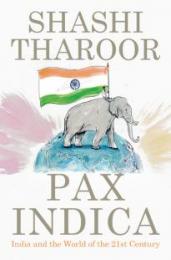
The title of Shashi Tharoor’s new book, Pax Indica: India and the World of the 21st Century, can mislead an unwary reader. The book does not offer a blueprint for India’s rise to imperial status in the current century. A more modest role is envisaged for India, that of helping to define the norms of tomorrow’s new networked world, write the rules and have a voice in their application. But the book is not really about this either. It is more an overview of India’s relations with its neighbours, South- East Asia, China, the US, the Arab countries, Africa, Europe, and Latin America, with separate chapters on India and the UN and Soft Power and Public Diplomacy, and a final chapter on Multi-Alignment as a “Grand Strategy” for India in the decades ahead.

The new norms and rules that India would work on, how they would be different from the ones that the West considers universal, and the means India will deploy to achieve success are not spelt out in the book. In actual fact, the author believes that the world having been made “safe of democracy”, India’s vocation should be the promotion of democracy and human rights worldwide along with “major allies” like the US. This suggests adjusting to Western norms more than redefining them, which is in fact what the West expects of others.

The reader would have greater than usual interest in Tharoor’s latest book because he would be writing from a double perspective – that of his long experience in international diplomacy as a UN civil servant and a brief exposure at the political level to India’s foreign-policymaking as a junior Minister in the Ministry of External Affairs (MEA). However, rather than this double experience combining to give more cohesion to his analysis of India’s foreign policy in the current century, it produces some inconsistencies.

An instance of this is the disproportionate attention given to groups such as BIMSTEC (Bay of Bengal Initiative for Multi-Sectoral Technical and Economic Cooperation) and the IOC-ARC (the Indian Ocean Rim Association for Regional Cooperation) and the exaggerated enthusiasm with which their potential is described. The eight pages devoted to BIMSTEC contrast with one paragraph each that Japan and South Korea merit, and the less than three pages of superficial treatment of Russia. While Europe gets the same space as BIMSTEC, the author considers the continent irrelevant to India’s strategic interests. He claims that “there’s nothing like the IOC-ARC in the annals of global diplomacy” and rhapsodizes thus in UN-speak:

When the IOC-ARC meets, new windows are opened between countries separated by distance as well as politics. Malaysians talk with Mauritians, Arabs with Australians, South Africans with Sri Lankans, Iranians with Indonesians. The India Ocean serves as both a sea separating them and a bridge binding them together.
Doesn’t the UN at New York do all this too?

Some other inconsistencies in the book probably derive from the author’s reluctance as a former Minister and Congress Member of Parliament to criticize the government’s policies. Tharoor’s analysis of the roots of Pakistan’s deep-seated hostility towards India is most perspicacious and hard-headed, but even as the reader is being convinced that Pakistan cannot be trusted and dialoguing with it would not be productive, the author dutifully purveys all the contestable arguments of the government to justify resuming the dialogue, adding some jejune ones of his own, such as “what we say when we talk that will make the difference” and that a dialogue allows India to make clear to Pakistan “its bottom lines and minimum standards of civilized conduct”. He is very dismissive about the India-Pakistan Track-2 dialogues, but slips into candlelight phraseology in advocating a show of “magnanimity and generosity of spirit that in itself stands an outside chance of persuading Pakistanis to rethink their attitude to us”. Homilies such as “To acknowledge that trust does not exist right now, however, is not to suggest that trust can never be built” and that “The time has come ... for the victims of geography to make history” cannot be the basis of serious policy. He does not explain how but wants “New Delhi to do its best to ensure that the Islamabad establishment abandons the conviction that terrorism is the only effective instrument that obliges India to sit up and pay attention to Pakistan and engage with its interests”. Rather surprisingly for a UN hand, he believes India can have sanctions imposed on Pakistan under UN Chapter VII resolutions on terrorism, overlooking that the US, despite serious Pakistani provocations, has not used this instrument against Pakistan and any action in the UN Security Council will need US and Chinese assent.

The author is right to affirm that India is no longer in the same league as China economically, but some of his other views on India-China relations are debatable. He seems to believe, without any apparent basis, that India has a genuine strategic partnership with China and that this relationship has broadened to include “the wider civil society in both nations”. His view that Chinese and Indian economies are complementary will be contested by those who argue that the relationship has become colonial-like in structure – export of raw materials versus import of manufactured goods. He visualizes India- China cooperation on nuclear disarmament when China refuses to hold nuclear parleys with India because it does not consider the latter a nuclear power. His repeated assertions that China and India have a common interest in keeping sea lanes open overlook India’s strategic concerns about China’s increased presence in the Indian Ocean and the South China Sea imbroglio. The author is absolutely right about enhancing relations between India and Taiwan.

The chapter on the US is a mixture of several sharp insights and questionable assumptions. At one point the author notes Obama’s “substantive assurance” of support for India’s permanent membership of the Security Council and at another he characterizes it as “largely symbolic” and a “rhetorical flourish”. (In the chapter on the UN and global commons he gives an excellent analysis of the issues involved in expanding the Security Council in both permanent and non-permanent categories.) How the two countries can cooperate to counter nuclear proliferation is not explained. To say that there is no real clash between India and the US on “geopolitical fundamentals” is exaggerating the degree of convergence. It is debatable whether the relationship with India is going to be as important to American security as that with Europe once was. India and the US, the author says, “share a responsibility for preserving a rule-based open and democratic order” and the global commons, without clarifying the nature of this responsibility and who would define it because India itself has not done it so far. His belief that India and the US as the two principal democracies have special interests and responsibilities exaggerates India’s willingness to assume such a global role and overlooks the United States’ historical and continuing courting of authoritarian states in its larger national interest.

Tharoor rightly underlines the importance of India’s relations with the Arab world because of critical energy, trade, human resources and remittance links. But to say that the centuries-old India-Arab links have given the peoples on the two sides “a similarity of perceptions and cultural mores” is an obvious exaggeration, as is the assertion that “our geopolitical aspirations are entirely compatible”. On Iran, the Shia-Sunni issue, and the role of Saudi Arabia and Qatar in Libya and Syria this is not true. That Iran has been a “kindred spirit of India” on Pakistan, that it is a “friend at Court” in the Islamic world and that it considers India a useful source of “high technology” is not supported by facts.

Africa and Latin America get the requisite attention in the book. While the overview is informative, India’s sentiments towards Africa are expressed in extraordinarily mushy language:

India and Africa have been close to each other for so many centuries that our relationship is not one of immediate give and take but has been that of a family where each one provides the best advice, the best support and the best sharing of experience, so that when we walk the same path, we learn from each other and do not make the same mistakes.

Tharoor exaggerates the impact of India’s soft power on the current century, using mellifluous prose to make his point. While India’s democracy and pluralism, its composite culture, management of diversity, Bollywood et al. earn it respect, how can India be the “land of the better story” globally with its dysfunctional democracy, poor governance, abysmal levels of poverty, low human welfare indices, urban decay, lack of sanitation, etc.? On page 410 he himself lists India’s dramatic underperformance in many areas. Tharoor ignores the hard-power foundation of soft power acknowledged by Robert Nye, the originator of the concept of “soft power”.

The author’s views on the MEA, which he mockingly calls the Ministry of Eternal Affairs, are unflattering. The well-known shortcomings of the Ministry which he lists – to which international attention has been drawn by a US researcher – cannot be denied. While the Ministry is manifestly understaffed, mid-level lateral entry on a large scale is not an answer. Where will competent mid-level recruits come from? A successful remodelling of the MEA has to be part of an overall administrative services reform. The author explains well the ineffectual role of Parliament in foreign affairs and he is right about the centralization of foreign policy decisions on important issues in the PMO.

Not surprisingly, Tharoor deplores the non-aligned phase of India’s foreign policy. In his view, Indian diplomacy is concerned more with principles than interests, privileging intellect over interest and process over outcome, but he does not give any example to sustain this sweeping generalization. He wants India to adopt a gentler and more accommodative tone on the multilateral high table, an advice that would not appeal to those who recall the hectoring of India during the CTBT negotiations and have heard the rantings of some Ambassadors in the Security Council on Libya, Iran and Syria.

Tharoor’s version of India’s “grand strategy” would see us in the US-led camp of liberal democracies besieged by Islamist terrorism and Chinese authoritarianism, forgetting that it is the US that has propped Islamism and China in the first place. He wants India to “be true to its soul in the multilateral arena” and espouse vigorously the “Community of Democracies”, though this would require reconciliation with the rationale of India’s adherence to political groups like RIC (Russia-India-China) and BRICS. Tharoor is wary of multipolarity; but multi-alignment, which he strongly recommends as the axis of India’s future foreign policy, presupposes a diffusion of power within the international system and recognition that in the absence of an international consensus on the promotion of the Western agenda of democracy and human rights, which many countries see as selective and geopolitically driven, India has to maintain a balance between different approaches to such fundamental issues as respect for sovereignty, non-interference in internal affairs, regime change policies and concepts like the right to intervene and protect.

Tharoor decries the fact that India’s “old obsession with strategic autonomy remains”. In his view, “strategic autonomy is all very well, but it cannot be the be-all and end-all of India’s attitude to the world”. While he cautions against antagonizing the US for maintaining energy supplies from Iran, he affirms somewhat inconsistently that “no power on earth can presume to dictate to India on any international issue”. India has “more in common with the countries of the North than the global South”, he says, contradicting his own paeans to BIMSTEC, IOR-ARC, IBSA and relations with Africa, the Arab world, Latin America, India’s neighbours, and, to boot, East Timor.

In virtually every chapter Tharoor quotes extensively David Malone (seventeen times), a former Canadian envoy to India, to buttress his views. His “internationalism” probably explains the need for such external endorsement of his thinking on key facets of India’s foreign policy.

Thursday, August 23, 2012

Right Choice of Friends


Kanwal Sibal
Member Advisory Board, VIF


A new debate has started on the nature of a redefined Indian foreign policy that takes into account the country’s transformed relations with the United States of America. The latter is openly seeking a close political, economic and security relationship with India. The rhetoric is at times high-flown, calling US ties with India indispensable for the 21st century and describing India as a lynchpin of America’s ‘re-balancing’ towards the Asia-Pacific region.


Some experts would prefer a ‘non-alignment 2.0’ policy for India to deal with the reconfiguration of geo-politics caused by the relative decline of the US and the West and the rise of China. While this nomenclature may arouse misgivings in some quarters because of its ideological overtones and, more so, its political irrelevance in a world no longer divided into rival alliances, in reality the authors of this concept propose issue-based collaboration with diverse partners depending on the confluence of interests. This seems pragmatic and non-ideological.

Many advocate a foreign policy of ‘strategic autonomy’ for India. This implies that India retain its independence in foreign policy making, and not be obliged to follow any powerful actor or a set of actors in any course of action that does not conform to its long term national interest. Rather than be caught in strategic rivalries between countries that are hurtful to its interests, it should have the freedom to engage with opposing sides if that is useful.


This debate would suggest that India’s foreign policy remains in a fluid state and is seeking to discover its moorings, with the implication that India has not yet come to terms with the radically altered global situation of today. It carries the nuance that India is under pressure to tilt towards one side (the US), which India should not succumb to.

In reality, there should be no need to define Indian foreign policy in core conceptual terms. Defining it thus does not give it a coherence, a sense of purpose and clarity that might be otherwise missing. The big powers do not seem to need to define their foreign policies for conceptual clarity. They just conduct their foreign affairs, based on certain broad principles and practical considerations. An analysis of their positions on a range of international issues would bring out the prominent features of the policies they pursue, but encapsulating them in one or two words would hardly be enlightening.

How would one, in any case, define US or Chinese foreign policies? No single-word definition is possible. US foreign policy, for instance, is full of contradictions. It is supposedly anchored in the promotion of democracy worldwide but it supports some of the most anti-democratic regimes in the world. Military intervention to support human rights in one country is contradicted by military protection to other countries that suppress the fundamental human rights of their population. Religious extremism is fought on the one hand and promoted on the other. Overdependence on China is coupled with hedging strategies against its rise that is seen as adversarial.

China claims that its rise is not a threat, that it wants a peaceful periphery, yet it is developing powerful military capabilities, asserting extensive land and maritime claims in the South China Sea, thriving on Japanese investments but has a visceral hatred of Japan, it is benefiting hugely from its partnership with the US even as in East Asia it is US power that it principally confronts. In other words, it, too, manages contradictions.

In this background, only confusion is caused by seeking to define in political shorthand India’s foreign policy as non-alignment 2.0 or strategic autonomy. India’s foreign policy can simply be loosely described as protecting its national interests as effectively as possible in a globalized world that demands cooperative solutions and a competitive world that demands management of conflicting interests without confrontation. This would eliminate the implicit intrusion of the US factor in explaining the core of our foreign policy objectives. In a situation where India can, by skilful handling, gain much from its improved relations with the US, it would be undesirable to frame its foreign policy objectives in terms of the strategic distance it wants to maintain from the US.

In actual fact, this debate about strategic autonomy is behind the times. India’s post Cold War policies testify to its desire to maintain ‘strategic autonomy’ in a situation of strategic shifts in global power equations. India, for example, has established strategic partnerships with several countries that include, besides the US, Russia, France, the United Kingdom, Germany, Afghanistan, Kazakhstan, Japan and so on. It has a strategic dialogue even with China, its principal geo-political adversary. By establishing such partnerships with countries with key differences and conflicting interests amongst themselves, India is, in fact, expanding its strategic room for manoeuvre.

India is member of the Russia-India-China or RIC dialogue, with member countries opposing regime change policies and interference in the internal affairs of sovereign countries, and supporting multipolarity. It is member of BRICS, which, by including Brazil and South Africa, extends strategic understandings on some basic norms of international conduct to key countries in South America and Africa. India supports the US led Community of Democracies, capitalizing on its democratic credentials, even if the sense of the grouping is directed against countries like China and even Russia. India has agreed to a trilateral US-India-Japan dialogue, including naval exercises, with its anti-Chinese thrust quite clear although officially denied. The intensive US-India naval exercises in the Indian Ocean have a China related strategic purpose, even as India is open to maritime cooperation with China in the Indian Ocean area. India cooperates with China in the climate change and World Trade Organization negotiations because it serves a common purpose of countering the US/European attempts to avoid equity in agreements.

India respects Russia’s special interests in Central Asia but is open to US strategic moves to promote strategic energy links between Central Asia and South Asia. It is willing to strengthen its role in the Shanghai Cooperation Organization even if the US sees it as an arrangement to limit US influence in Central Asia. India supports an extended US presence in Afghanistan even though Iran is opposed to it. India is avoiding getting caught in the Shia (Iran)-Sunni (Saudi Arabia) conflict building up in the Gulf. It successfully resisted Western pressures to reduce its engagement with Myanmar.

India’s independent posture explains why it has obtained support for its Security Council permanent membership from both the West and Russia. Russia’s position as India’s biggest partner for defence supplies has not prevented India from now expanding its defence ties with the US. The US seems reconciled that India will not be an ally and will want to retain its independence in foreign policy decisions. It will nevertheless seek to tie India closer to itself in a way that India’s pragmatic choices will pull India in that direction. If India continues to have a clear-sighted view of its longer term interests, it will be able to balance its relationship with all the major players in a constructive way. But without a domestic defence manufacturing base, high rates of economic growth and improvement in decision-making, our independent foreign policy will always have weak foundations.

Tuesday, August 14, 2012

Debate on MEA’s Ills is Skewed


Kanwal Sibal
Member Advisory Board, VIF 


The perceived inadequacies of the Ministry of External Affairs(MEA) to handle the ever diverse foreign policy challenges facing India are being publicly aired. Critics are wrong in suggesting that the Indian Foreign Service(IFS) has been ignoring its own deficiencies and resisting an overhaul in recruitment and training procedures, cadre expansion, skill-building in foreign languages, posting and promotion policies etc.

In actual fact, the Ministry has been conscious since long of its functional shortfalls. The N.R. Pillai Committee (1966), the Samar Sen Committee (1983) and the S.K.Lambah report (2002) have recommended structural, administrative and cadre reforms, but the complexity of the problems have resisted easy solutions.

Scenario

Those stirring up a public debate today on the IFS’s deficiencies have taken the cue from an American report which criticizes the service for being small, hobbled by its selection process and inadequate mid-career training, and shunning the use of outside experience. The report advises investment in US-India exchange programmes that build capacity for foreign policy research and proposes steps that both New Delhi and Washington should take to promote India’s rise as a great power.

Its recommendations are largely a rehash of what is already well known; the offer of US collaboration in equipping our diplomats with professional capacities needed to support India’s growing international stature is new. Some articulate Indians impatient with India’s desire to preserve its strategic autonomy endorse such ideas, without thought that training our diplomats in US institutions at formative stages would be undesirable.

Indian diplomats should develop a world view sharply focused on our own national interests, with the mental strength and conviction to defend it. This does not exclude mature diplomats solidly grounded in Indian geo-political perspectives benefitting from exposure to specific foreign programmes.

The ongoing public debate on the MEA’s shortcomings lacks perspective. If the total cadre strength of the IFS remains abnormally small, it is because the system has been against its expansion, relying on perennial financial arguments, the enduring ban on creation of new posts, as well as the unstated reluctance to increase a cadre already seen as a privileged one by other civil services.

A more nuanced view should be taken of the equation between India’s growing diplomatic burden and the IFS’s size. Large portions of India’s diplomatic activity abroad is not within MEA’s remit. The Rules of Business will not allow the Ministry to negotiate FTAs, lead WTO negotiations, deal with the IMF and World Bank, backstop G-20 negotiations, take charge of Climate Change negotiations, sign defence agreements or those in space and atomic energy, decide the country’s energy policies and negotiate energy deals etc.

The MEA can play a supportive role, but even this role is greatly circumscribed by limiting drastically deputations of IFS officers to other Ministries with large international dealings. Those in other Ministries involved in external dealings are part of the larger body of Indian “diplomats” dealing with “foreign policy”. So it is not 700 plus IFS members on whose shoulders all the burden of foreign affairs falls.

The Ministry is no doubt seriously understaffed at New Delhi and abroad in our missions. The ratio between officers at HQs and in missions abroad is highy skewed in Ministry’s disfavour. MEA’s territorial divisions lack sufficient manpower to give requisite attention to all the countries under their charge. Linguistic proficiency suffers because the smallness of the cadre leads to transfer of officers from one station to another irrespective of their language background as available posts have to be often filled by whosoever becomes due for a shift after 3 years of an assignment abroad.

Proposals

Apart from specialization requiring a much larger cadre, officers generally prefer more broad based experience. Specialization in UN work would be attractive as it ensures the New York-Geneva circuit for postings, but that in Africa etc would work against rotation between more comfortable and hardship postings in the interest of equity.

Mid-level lateral entry from think-tanks, universities, media and corporate sector is being proposed for widening MEA’s talent pool. Such entries are on a contractual basis for limited periods would pose no problem, but if absorption in the IFS cadre is intended, existing problems will worsen.

Stricter norms for promotion is an in-service demand also, but while the IAS has numerous parking slots outside the Ministries and at state level for underperformers, what does the MEA do with weeded-out de-motivated officers?

The idea of a separate IFS examination is not new; it has been resisted because of legitimate fears that the service would lose parity with the IAS. It would be desirable to make it compulsory for those wanting to enter the IFS to choose specific subjects for the UPSC examination which bear on diplomacy, including writing the examination in English. The interview marks can be increased as was the case in the past. The MEA would welcome such decisions, but they would have their anti-elitist detractors.

Performance

The IFS has performed well despite handicaps. Critics should point out specific instances where it has failed because of deficiencies in understanding and action. In toto, the Ministry is better run than others, its officers are more committed, largely insulated from political interference and corrupt practices and have a robust sense of India’s national interests.

The IFS is less vulnerable than sections of our political and bureaucratic class to external blandishments and cannot be as easily manipulated. Which is why it is criticized in some western circles for its negative diplomacy, for being wedded to an outdated world view which resists efforts to incorporate India into the West’s sphere of political and intellectual influence. Some who are attacking the MEA today want this resistance to end.