Showing posts with label India-China relations. Show all posts

Wednesday, November 22, 2017

Seminar on “India-China Relations and the Way Forward”

On 6 November 2017, the Vivekananda International Foundation and the Institute of Chinese Studies jointly held a joint seminar on the “India-China Relations and the Way Forward”. A delegation comprising of Prof. Zhao Bole, Prof. Lu Gang and Prof. Yu Xinli from Yunnan Minzu University, Kunming, and Prof Tan Chung participated in the Seminar. The Chinese Ambassador, Mr. Luo Zhaohui, delivered the keynote address. On the Indian side, Director VIF, Dr. Arvind Gupta, delivered the opening remarks. Director of Institute of Chinese Studies Amb. Ashok K Kantha and Amb. TCA Rangachari, Distinguish Fellow, VIF, also participated in the Seminar. The discussion was divided into two sessions: ‘India-China Relations and Cultural Ties’ and ‘Economy in India-China Relations’. The Seminar was attended by the members of the strategic community, scholars from the other think tanks, students and members of the Chinese embassy in India.
Salient points that emerged from the discussions were as follows:
The 19th National Congress of the Communist Party of China
Indian participants congratulated the delegation for the successful commencing the 19th Party Congress. Inclusion of “Xi Jinping’s Thought on Socialism with Chinese Characteristics for a New Era”, is a major outcome of the 19th National Congress. Evidently, China will enhance its national strength in military, economic and political realm. This will have an impact in the region, and the world.
The Chinese delegates expounded on the major diplomatic initiatives taken by Xi Jinping, pointing that in the past five years, Xi Jinping has travelled extensively around the world. They further poited out that Xi Jinping’s thought on major country diplomacy with Chinese characteristics entails two proposition: forge a new form of international relations and build a community with a shared future for mankind. This new diplomacy is against the zero-sum game and stands for peaceful coexistence.
The Border Dispute
The Chinese delegates emphasized that the linking of boundary issue with the bilateral relations is an “old mindset”; it will bring down the prospect of cooperation. The boundary issue must be resolved as soon as possible to mutual satisfaction, they opined. They considered the 1988 visit by Rajiv Gandhi’s visit as a historic visit as it helped to delink the boundary talks with the bilateral issue and that itt was only after his visit the cooperation in different areas of bilateral relations began.
The Indian side stated that the boundary question is outstanding for too long while there is a need for clarification of the Line of Actual Control (LAC) to show some progress on the issue. They added that in the new era of China’s progress, these issues should be resolved satisfactorily. It was clarified that this observation does not really imply ‘old mindset’ or going back to pre-1988 position. Guidelines for resolving the boundary issue was spelt out in 2005, and that the Agreement between the Government of the Republic of India and the Government of the People's Republic of China on the ‘Political Parameters and Guiding Principles for the Settlement of the India-China Boundary Question, 2005’ remains the basic framework for resolving the boundary question. They pointed out that the 2005 agreement has been eroded in a very significant manner and that putting it in the backburner is a disservice to ourselves. The unresolved boundary issue can generate mistrust between the two sides and can lead to a more serious situations than the Doklam stand-off.
The Doklam Issue
The Chinese delegates refered to Doklam as an “unfortunate story”. The Indian delegates said that Doklam issue was a setback to bilateral relations. They stated that many difficulties have arisen in the bilateral relations and Doklam was one such episode which fortunately has been resolved. Earlier, there had been the incidents at Chumar and Depsang. Such Incidents cause setbacks to bilateral relations. The two sides need to deepen mutual understanding so that such incidents do not recur and differences do not become disputes, they suggested.
The Belt and Road Initiative
The Indian delegates raised doubts about the motivation behind the Belt and Road Initiative (BRI), pointing out that the initiatives are unilateral and aimed at enhancing China’s geopolitical influence. China should also be sensitive to the sovereignty concerns of other countries.
The Chinese delegates called the BRI as the ‘new commandment for Asia’, as the initiative will promote peace and stability in the region. Continuing, they stated that it is a part of Xi Jinping’s concept of international relations in which the focus is on “shared future”. Although it can go forward without India’s participation it may not be as successful as it was conceived to be. The Indian delegates mentioned their concern vis-à-vis the BRI and stated that India is not ready to assume a subordinate role in the project. They also pointed out the ongoing competition between India and China in their periphery, both in land and water.
People to People Contact
The Chinese delegates emphasized that the government to government interactions are not sufficient, there is a need for more people to people interaction. Frequent interactions help in correcting the misperception on each side and public diplomacy can partly solve the problem between the two countries, they suggested, this being the most rational and healthy way to interact with each other. More Memoranda of Understanding between the Chinese University and the think tanks with their counterpart in India and more translation projects from both the side was suggested. They also recommended that both sides should invest in promoting student exchanges. This will help in connecting the two civilizations in a much better way. The Indian delegates welcomed the fact that as many as 50 students from China are participating in the 80th anniversary of the 'Cheena Bhavana', and called for more such people to people exchanges.
Different Perception of the Evolving World Order
The Chinese delegates expressed their concern over the India, US, Japan and Australia meeting. The Indian side emphasized that it is not directed against any country and that India maintains its ‘Strategic Autonomy’, this being one of the tenants of the India’s Foreign Policy. Further, the Indian side made it clear that there is a difference of perception from both the sides about the evolving geopolitics. India has welcomed the ‘Rise of China’ but there are apprehensions about China’s assertive behavior in certain areas. India is concerned that China is no longer interested in a multipolar world order. The term multi-polarity is mentioned in the 19th Party Congress work report but it no longer seems to be the preoccupation of China, they averred.
The Way Forward for the Bilateral Relations
The Indian participants observed that India-China relations is at an inflexion point. The consensus reached between the two leaders at the Xiamen should be the guiding principle for the bilateral relations. Seemingly, the bilateral difference has occupied higher profile. There is a need to take a fresh look at the modus vivendi. The existing ones do not really address the issue in a forthright way. We need to build on the positives of the relationship and take forward the agreements reached in 2014 during Xi Jinping’s visit to India and PM Modi’s visit to China in 2015. Today we have strong leaders on both sides who can take advantage of this positive situation. The investments made by the two leaders in the bilateral relations is immense. Both the countries should acknowledge the existing convergence of interests in the international sphere, for example in West Asia and Afghanistan.
The Chinese delegates responded by stating that India and China are the two civilizations created by the Himalayas. There is no fundamental difference between the two societies. Both the countries need to focus on long-term goals like Free Trade Area (FTA) arrangement, Treaty of Good Neighbourliness and Friendly Cooperation, early harvest on the border issue and alignment of the BRI with India’s development strategy. The forthcoming meetings of foreign ministers and State Councillor Yang Jiechi’s visit to attend the 20th round of border talks is a good opportunity to build on the positives of the relations.
Both sides acknowledged the prevailing distrust in India-China relations and the need to diminish it through a variety of measures. It was also felt that strengthening people–to- people contact would help in bridging the trust gap. In summary, the Indian delegates stressed on addressing the real issues of the bilateral relation while the Chinese sides were emphasizing more on people-to-people contact and issues of their own interest.

Event Date: 
November 6, 2017

Friday, August 22, 2014

Geopolitical Developments and India-China Relations

Jayadeva Ranade

The world is in a state of continuing flux. The economies of the major powers are still fragile and vulnerabilities exist in those of the bigger emerging powers in the Asia-Pacific like China and India. The balance of power is concurrently undergoing a shift with competing focal points of power surfacing in the East. The fragile nature has been accentuated in the past few years with Beijing’s accelerated push for recognition as the dominant power in the Asia-Pacific. This is resisted by the US, Japan and India and has made South East Asian countries nervous.

China’s sudden assertiveness since the end of 2007 was prompted by a combination of factors, but mainly by: the global economic downturn; China’s considerably enhanced economic and military strength; and Beijing’s perception that the US as a global power is on the decline and this is now the opportune moment for China to regain its self-perceived rightful position on the world stage and alter the status quo in Asia. The Chinese Communist Party (CCP) leadership is divided on the issue of whether to write off the US as the sole world power. One view is that the US is a power irreparably on the decline while the other, which seems to be gaining ground, argues that the intrinsic strength and resilience of the US will ensure its return on to the world stage as a stronger, more effective power. There is consensus, however, that the US ability to project power simultaneously in different theatres is presently constrained, thus offering China a window of opportunity that would last at most between 5-10 years.

China’s impetuousness and decision to ‘take on’ the US anticipatedly triggered a response signalling quite clearly that the US is not about to cede either power or influence in the Asia-Pacific. The US encouraged particularly Japan and the Philippines, to react to China’s aggressiveness. It additionally unveiled the seemingly short-lived ‘Asian Pivot’ with its definite military content. The US has now shifted emphasis though, to the Trans-Pacific Partnership (TPP) and Trans-Pacific Intellectual Property Rights (TPIP), which are economic equivalents of the ‘Asian Pivot’. China is now leaning towards joining the TPP/TPIP.

China, however, has not been deterred and continues to press ahead with achieving its global and regional ambitions. The continuing tense stand-off with US ally and East Asia’s strongest power, namely Japan, amidst steady escalation in tensions in the South China Sea, underlines Beijing’s willingness to push the envelope in the apparent confidence that the US will stop shy of confronting it and so will Japan and Vietnam. China reasserted the role it desires in the Asia-Pacific in a statement in Washington DC by its Ambassador to the US, Cui Tiankai, in February 2014. There is little doubt that US credibility as a reliable ally willing to back its partners in the region has been dented in the past 5-odd years.

In the South China Sea, after a series of confrontations with Vietnam and the Philippines where China seized some maritime territories, Beijing has begun to assert its claims over a larger area. It has revived its claims on St. James’ Shoal off Thailand and South Korea’s Ieodo Rock and recently began building airports on some islands and extending others. On May 24, 2014, China’s largest US $ 1 billion oil rig the ‘Haiyang Shi You 981’ sailed into Vietnamese-claimed waters escorted by 86 armed ships and Beijing has now sent four more rigs. Simultaneously, tension with Japan over the Senkaku Islands (called Diaoyu in Chinese) rose in recent weeks with the increased frequency of patrols by Chinese Navy ships and People’s Liberation Army Air Force (PLAAF) aircraft flying very close to Japanese Self Defence Force (SDF) aircraft and at times coming near collision range.

Meanwhile, modernisation of the 2.3 million-strong People’s Liberation Army (PLA), which coincides with China’s continuing assertiveness that has unsettled its neighbours, has entered the final stage of its current phase. The Chinese Communist Party (CCP)’s Third Plenum, which was held in November 2013, provided it a substantive push. On January 18, 2014, the Party Secretary of Liaoning province disclosed that the second domestically-produced aircraft carrier being built at Dalian would be ready in six years. China also allocated US$ 1.6 billion for the first phase of indigenous design, development and production of jet engines.

The Third Plenum approved organisational reforms in the PLA’s command structure and the PLA Navy (PLAN), PLAAF and China’s strategic missile strike force, namely the Second Artillery, have been allotted enhanced operational roles and will receive priority in allocation of budgets and manpower. The PLA is to be downsized by 800,000 personnel including a large number of non-combatants. Reports filtering out of Beijing disclose that plans have been finalised to merge the seven military regions into five “combat zones”. This reorganisation will give the PLA a definite “outward orientation” and implies that “recovery” of territories claimed by Beijing will be a central feature of China’s strategic agenda and the PLA will reinforce diplomacy aimed at realising “China’s Dream”.

All this is relevant to India-China relations as is Beijing’s stance on ‘core national issues’ in bilateral relations. Beijing has made it explicitly clear in two despatches of China’s official news agency ‘Xinhua’ in August 2011, addressed to Japan and the Philippines, that ‘burgeoning economic ties do not mean good bilateral relations’ which depend entirely on the recognition and acceptance of China’s ‘core national interests’. The despatches are important because ‘Xinhua’ is China’s authoritative official news agency and even the CCP Central Committee (CC)’s powerful Propaganda Department instructs all Chinese journalists reporting on sensitive topics to adhere strictly to the text of ‘Xinhua’ reports.

To digress slightly, Chinese Premier Li Keqiang’s 2-day visit (June 17-18, 2014) to UK is pertinent. Apart from the fact that Beijing was particular about the minutiae of protocol, the 30-Article Joint Statement issued after the visit revealed UK’s capitulation to China. Article 23 stated that Britain recognises Tibet as an integral part of China and does not recognise Tibetan independence. The English-language ‘Global Times’, a subsidiary of the CCP’s official newspaper ‘People’s Daily’, gloated that Britain was finding it difficult to accept that it was now a “poor power compared to China”. A major inducement were the over US$ 40 billion trade deals signed during the visit and establishment last year of a Yuan swap centre in London.

While assessing a country’s foreign and strategic policies, and particularly in the context of India- China relations where there are major stakes and we are directly affected, it is important to understand the nature of the State and its internal leadership dynamics.

There has been a major change in China’s politics and leadership style since 2011 and particularly with the ouster of former Politburo (PB) member Bo Xilai in 2012. That was a major event in China’s politics, perhaps the first major political upheaval since the Tiananmen Event of 1989, and has seen a visible ‘hardening’ of the Chinese State. Details revealed during the events leading to Bo Xilai’s ouster reinforced the conviction of the CCP’s nomenklatura that the US remains intent on its strategy of ‘peaceful evolution’ -- China’s short-hand for US efforts to dismantle the CCP; deprive the CCP of its monopoly rule and introduce multi-Party democracy; and replace the ‘socialist economy’ with a ‘free-market capitalist economy’. Factional differences were subordinated to protecting the Party Centre and ensuring the CCP’s monopoly on power. All senior veteran cadres backed Xi Jinping and supported him as ‘leader’ of the Politburo Standing Committee (PBSC). As a consequence, in addition to the three all important posts of CCP CC General Secretary, Chairman of the CMC and President of China, Xi Jinping now additionally heads seven of the Party’s Central Leading Small Groups, which are the most important and highest decision making bodies. The Party has, in effect, asserted itself and further tightened its grip over key levers of the State.

Doctrinaire policies have also gained ascendance in the Party in the past few years with renewed emphasis on Marxist and Maoist ideology and Party discipline. The Party’s guiding narrative is being enforced by the CCP CC’s powerful Propaganda Department which has been steadily tightening restrictions on the media, social media and journalists (including most recently last week), since Xi Jinping took over. The elevation of Liu Yunshan, former Director of the CCP CC Propaganda Department, as Member of the PBSC and the country’s Propaganda and Ideology Czar is demonstration that the ‘hardening’ of the State is the decision of the Party Centre.

Particularly relevant in this context is Xi Jinping’s ‘China Dream’ which envisages: making the Chinese people wealthy; making China a strong nation; and the rejuvenation of China. This muscular aspiration for China spelt out by Xi Jinping at the 18th Party Congress has been adopted by the entire Party and has already entered the lexicon of the CCP. It is particularly pertinent to India-China relations as ‘rejuvenation’ implies the restoration of China to its self-perceived rightful international status and recovery of all its territories. The new passports published by China depict its claimed territories, as do its actions in the South China Sea and East China Sea and the increased assertiveness and expanding claims over Arunachal Pradesh and Jammu and Kashmir.

The Party has concretised Xi Jinping’s status in the CCP hierarchy, thus legitimising his status in China. The Party theoretical fortnightly journal ‘Qiu Shi’ in its latest issue (June 2014) described Xi Jinping as “one of China’s greatest Communist leaders”. Xi Jinping is today China’s most powerful leader since Mao Zedong.

In India too, there has been a radical change with a new leader emerging after a resounding democratic electoral victory. New Prime Minister Narendra Modi has a reputation as a strong, decisive leader and the BJP as a ‘right wing’ Party and they have a majority in Parliament unprecedented for thirty years. Modi very quickly used his swearing-in ceremony as an opportunity to outline India’s view of its strategic neighbourhood and where Indian interest will focus. The visit to Bhutan and planned visit to Japan reinforces this. The current government can shape and implement medium to long-term policies. In other words, India and China both have strong leaders and this itself offers an opportunity for engagement on fresh and revised terms.

Chinese Foreign Minister Wang Yi’s visit was intended to show China’s eagerness in engaging with India’s new right-wing Government and is part of its strategy of ‘Peripheral Diplomacy’. It sought to project that China desires good relations with India and prevent India from moving close to Japan or towards a US-led anti-China grouping. A Chinese-language official ‘Xinhua’ despatch of May 29, 2014, is, however, pertinent. Its tone differed noticeably from that of other Chinese media reports which assessed that India’s policies towards China would not change and that economic relations would receive a boost. This Xinhua despatch asserted that Modi has no option other than economic cooperation with China as India perforce has to recognise China’s economic and military superiority in Asia. It stressed that Modi would have to accommodate China, not out of choice or inclination, but out of necessity. While this is arguable, but the Xinhua despatch exhibits China’s self-confidence and at the same time implies there is potential for cooperation.

China’s focus is on economic cooperation with India: Xi Jinping and PM Modi’s meeting on the sidelines of BRICS Summit also pointed towards the same though differences on some of the strategic issues remained. Chinese President Xi Jinping’s forthcoming visit to India has the economy as its focus and he is reportedly being accompanied by 350 Chinese Chief Executives (CEOs) amidst much talk of investing in India’s infrastructure, high-speed railways and the Bullet Train. Chinese diplomatic missions in India have already begun selecting locations for the ‘Special Industrial Parks’ and, at least in Maharashtra, Rajasthan and Bengal, have identified middle-men for ‘benami’ purchases of land. China is anxious to find a new market for its huge reserves of surplus cash and as another avenue for investment, and India is an attractive vast market. Undoubtedly it will benefit if China invests in India’s infrastructure, but India will need to carefully decide the direction in which to steer Chinese business as otherwise, in a democratic set up such as India’s, China will soon acquire a powerful business lobby capable of adversely influencing national strategic decisions. Roads, flyovers, railways, hydro-electric projects, multi-storey office and residential buildings, are sectors that can benefit from Chinese investment. In order to ensure strategic flexibility and increased investment, however, these must be balanced by offering similar competitive opportunities to other countries like Japan, Taiwan and Singapore. India can particularly benefit in the hi-tech, advanced electronics and defence sectors by encouraging investments from Japan and Taiwan on very preferential terms.

Nevertheless, two events are worthy of note in this context. First is the protracted 20-day incursion by Chinese troops in Apr/May 2013 in the Depsang Plains of Ladakh that cast a cloud over the bilateral relationship and Chinese Premier Li Keqiang’s visit. The intrusion was apparently planned and deliberate. It was proposed by the PLA and approved by the Politburo which, after discussions, assessed that India would not cancel Li Keqiang’s visit for fear of offending China. It was certainly not, as sought to be made out, a local action by a local PLA Commander. On May 14, 2013, the influential, official ‘Zhongguo Qingnian Bao’ (China Youth Daily) published an article implicitly laying claim to Ladakh and describing it as part of Tibet.

Second is the visit (June 8 -9, 2014) of Chinese Foreign Minister Wang Yi to New Delhi. In keeping with past practice, just two days before Wang Yi’s arrival China alluded to the outstanding border issue and the Dalai Lama’s presence by officially protesting the presence of Lobsang Sangay, head of the Central Tibetan Administration, at Prime Minister Modi’s swearing-in ceremony. Wang Yi too, at his press conference in New Delhi, asserted China’s territorial claims by brushing aside questions on border intrusions and made a carefully worded remark that the issue of stapled visas by China were a “unilateral” “flexible” “goodwill gesture” or, in other words, that the status of Arunachal Pradesh and Jammu and Kashmir remain disputed.

On the vexed border issue, little progress can be anticipated unless both leaders and, especially Xi Jinping, decide to use their strength and push for a mutually acceptable settlement. China’s recent utterances on issues of sovereignty and territorial integrity, however, make this a distant possibility. China can, in fact, be expected to be insistent and expand its claims on Arunachal Pradesh and J&K and may test the resolve of the BJP government on the territorial issue. The status quo in negotiations will not change till India acquires the capability, through asymmetrical power, to impose unacceptable costs on China’s ‘Han heartland’, including Beijing and Shanghai. This will take a couple of years as the Agni V series of missiles become operational and are deployed.

China will continue to deepen relations with Pakistan, Nepal and Sri Lanka and exert to establish a formal diplomatic presence in Thimpu, which is only a matter of time. A new and worrying feature is China’s focus on Lumbini in Nepal. Not only will construction of a modern airport in Lumbini built by the PLA pose a proximate military threat to India, but more insidious is Beijing’s effort to undermine the influence and the authority of the Dalai Lama amongst Tibetan Buddhist monks and lay the ground work for potentially triggering instability and secessionism across the vulnerable Indo-Tibetan Himalayan border belt. Plans of China’s so-called NGOs to build and operate a monastery-cum-seminary points to this.

Finally, it is pertinent to briefly mention China’s strategy of ‘Peripheral Diplomacy’ formulated in October last year. The ‘Peripheral Diplomacy’ strategy for the first time in the history of communist China designates neighbouring countries as ‘friend’ and ‘enemy’ and promises huge benefits and economic largesse for countries that accept and assist China’s regional ambitions. These three initiatives aim at obtaining new sources of natural resources and new markets for China and will be secured by China’s expanding military might and strategic reach including in the Indian Ocean.

(The author is Member of the National Security Advisory Board and President of the Centre for China Analysis and Strategy, New Delhi. He is a former Additional Secretary, Cabinet Secretariat, Government of India)

(The article is a revised version of the paper presented by the author at the seminar on ‘Engaging China: Opportunities and Challenges’ organised by Vivekananda International Foundation on June 26, 2014)

Published Date: 31st July 2014, Image source: http://www.icec-council.org
(Disclaimer: The views and opinions expressed in this article are those of the author and do not necessarily reflect the official policy or position of the Vivekananda International Foundation)

Wednesday, November 21, 2012

India’s Role in the Current Century


Kanwal Sibal
(Advisory Board, VIF)


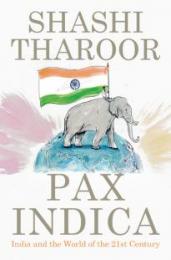
The title of Shashi Tharoor’s new book, Pax Indica: India and the World of the 21st Century, can mislead an unwary reader. The book does not offer a blueprint for India’s rise to imperial status in the current century. A more modest role is envisaged for India, that of helping to define the norms of tomorrow’s new networked world, write the rules and have a voice in their application. But the book is not really about this either. It is more an overview of India’s relations with its neighbours, South- East Asia, China, the US, the Arab countries, Africa, Europe, and Latin America, with separate chapters on India and the UN and Soft Power and Public Diplomacy, and a final chapter on Multi-Alignment as a “Grand Strategy” for India in the decades ahead.

The new norms and rules that India would work on, how they would be different from the ones that the West considers universal, and the means India will deploy to achieve success are not spelt out in the book. In actual fact, the author believes that the world having been made “safe of democracy”, India’s vocation should be the promotion of democracy and human rights worldwide along with “major allies” like the US. This suggests adjusting to Western norms more than redefining them, which is in fact what the West expects of others.

The reader would have greater than usual interest in Tharoor’s latest book because he would be writing from a double perspective – that of his long experience in international diplomacy as a UN civil servant and a brief exposure at the political level to India’s foreign-policymaking as a junior Minister in the Ministry of External Affairs (MEA). However, rather than this double experience combining to give more cohesion to his analysis of India’s foreign policy in the current century, it produces some inconsistencies.

An instance of this is the disproportionate attention given to groups such as BIMSTEC (Bay of Bengal Initiative for Multi-Sectoral Technical and Economic Cooperation) and the IOC-ARC (the Indian Ocean Rim Association for Regional Cooperation) and the exaggerated enthusiasm with which their potential is described. The eight pages devoted to BIMSTEC contrast with one paragraph each that Japan and South Korea merit, and the less than three pages of superficial treatment of Russia. While Europe gets the same space as BIMSTEC, the author considers the continent irrelevant to India’s strategic interests. He claims that “there’s nothing like the IOC-ARC in the annals of global diplomacy” and rhapsodizes thus in UN-speak:

When the IOC-ARC meets, new windows are opened between countries separated by distance as well as politics. Malaysians talk with Mauritians, Arabs with Australians, South Africans with Sri Lankans, Iranians with Indonesians. The India Ocean serves as both a sea separating them and a bridge binding them together.
Doesn’t the UN at New York do all this too?

Some other inconsistencies in the book probably derive from the author’s reluctance as a former Minister and Congress Member of Parliament to criticize the government’s policies. Tharoor’s analysis of the roots of Pakistan’s deep-seated hostility towards India is most perspicacious and hard-headed, but even as the reader is being convinced that Pakistan cannot be trusted and dialoguing with it would not be productive, the author dutifully purveys all the contestable arguments of the government to justify resuming the dialogue, adding some jejune ones of his own, such as “what we say when we talk that will make the difference” and that a dialogue allows India to make clear to Pakistan “its bottom lines and minimum standards of civilized conduct”. He is very dismissive about the India-Pakistan Track-2 dialogues, but slips into candlelight phraseology in advocating a show of “magnanimity and generosity of spirit that in itself stands an outside chance of persuading Pakistanis to rethink their attitude to us”. Homilies such as “To acknowledge that trust does not exist right now, however, is not to suggest that trust can never be built” and that “The time has come ... for the victims of geography to make history” cannot be the basis of serious policy. He does not explain how but wants “New Delhi to do its best to ensure that the Islamabad establishment abandons the conviction that terrorism is the only effective instrument that obliges India to sit up and pay attention to Pakistan and engage with its interests”. Rather surprisingly for a UN hand, he believes India can have sanctions imposed on Pakistan under UN Chapter VII resolutions on terrorism, overlooking that the US, despite serious Pakistani provocations, has not used this instrument against Pakistan and any action in the UN Security Council will need US and Chinese assent.

The author is right to affirm that India is no longer in the same league as China economically, but some of his other views on India-China relations are debatable. He seems to believe, without any apparent basis, that India has a genuine strategic partnership with China and that this relationship has broadened to include “the wider civil society in both nations”. His view that Chinese and Indian economies are complementary will be contested by those who argue that the relationship has become colonial-like in structure – export of raw materials versus import of manufactured goods. He visualizes India- China cooperation on nuclear disarmament when China refuses to hold nuclear parleys with India because it does not consider the latter a nuclear power. His repeated assertions that China and India have a common interest in keeping sea lanes open overlook India’s strategic concerns about China’s increased presence in the Indian Ocean and the South China Sea imbroglio. The author is absolutely right about enhancing relations between India and Taiwan.

The chapter on the US is a mixture of several sharp insights and questionable assumptions. At one point the author notes Obama’s “substantive assurance” of support for India’s permanent membership of the Security Council and at another he characterizes it as “largely symbolic” and a “rhetorical flourish”. (In the chapter on the UN and global commons he gives an excellent analysis of the issues involved in expanding the Security Council in both permanent and non-permanent categories.) How the two countries can cooperate to counter nuclear proliferation is not explained. To say that there is no real clash between India and the US on “geopolitical fundamentals” is exaggerating the degree of convergence. It is debatable whether the relationship with India is going to be as important to American security as that with Europe once was. India and the US, the author says, “share a responsibility for preserving a rule-based open and democratic order” and the global commons, without clarifying the nature of this responsibility and who would define it because India itself has not done it so far. His belief that India and the US as the two principal democracies have special interests and responsibilities exaggerates India’s willingness to assume such a global role and overlooks the United States’ historical and continuing courting of authoritarian states in its larger national interest.

Tharoor rightly underlines the importance of India’s relations with the Arab world because of critical energy, trade, human resources and remittance links. But to say that the centuries-old India-Arab links have given the peoples on the two sides “a similarity of perceptions and cultural mores” is an obvious exaggeration, as is the assertion that “our geopolitical aspirations are entirely compatible”. On Iran, the Shia-Sunni issue, and the role of Saudi Arabia and Qatar in Libya and Syria this is not true. That Iran has been a “kindred spirit of India” on Pakistan, that it is a “friend at Court” in the Islamic world and that it considers India a useful source of “high technology” is not supported by facts.

Africa and Latin America get the requisite attention in the book. While the overview is informative, India’s sentiments towards Africa are expressed in extraordinarily mushy language:

India and Africa have been close to each other for so many centuries that our relationship is not one of immediate give and take but has been that of a family where each one provides the best advice, the best support and the best sharing of experience, so that when we walk the same path, we learn from each other and do not make the same mistakes.

Tharoor exaggerates the impact of India’s soft power on the current century, using mellifluous prose to make his point. While India’s democracy and pluralism, its composite culture, management of diversity, Bollywood et al. earn it respect, how can India be the “land of the better story” globally with its dysfunctional democracy, poor governance, abysmal levels of poverty, low human welfare indices, urban decay, lack of sanitation, etc.? On page 410 he himself lists India’s dramatic underperformance in many areas. Tharoor ignores the hard-power foundation of soft power acknowledged by Robert Nye, the originator of the concept of “soft power”.

The author’s views on the MEA, which he mockingly calls the Ministry of Eternal Affairs, are unflattering. The well-known shortcomings of the Ministry which he lists – to which international attention has been drawn by a US researcher – cannot be denied. While the Ministry is manifestly understaffed, mid-level lateral entry on a large scale is not an answer. Where will competent mid-level recruits come from? A successful remodelling of the MEA has to be part of an overall administrative services reform. The author explains well the ineffectual role of Parliament in foreign affairs and he is right about the centralization of foreign policy decisions on important issues in the PMO.

Not surprisingly, Tharoor deplores the non-aligned phase of India’s foreign policy. In his view, Indian diplomacy is concerned more with principles than interests, privileging intellect over interest and process over outcome, but he does not give any example to sustain this sweeping generalization. He wants India to adopt a gentler and more accommodative tone on the multilateral high table, an advice that would not appeal to those who recall the hectoring of India during the CTBT negotiations and have heard the rantings of some Ambassadors in the Security Council on Libya, Iran and Syria.

Tharoor’s version of India’s “grand strategy” would see us in the US-led camp of liberal democracies besieged by Islamist terrorism and Chinese authoritarianism, forgetting that it is the US that has propped Islamism and China in the first place. He wants India to “be true to its soul in the multilateral arena” and espouse vigorously the “Community of Democracies”, though this would require reconciliation with the rationale of India’s adherence to political groups like RIC (Russia-India-China) and BRICS. Tharoor is wary of multipolarity; but multi-alignment, which he strongly recommends as the axis of India’s future foreign policy, presupposes a diffusion of power within the international system and recognition that in the absence of an international consensus on the promotion of the Western agenda of democracy and human rights, which many countries see as selective and geopolitically driven, India has to maintain a balance between different approaches to such fundamental issues as respect for sovereignty, non-interference in internal affairs, regime change policies and concepts like the right to intervene and protect.

Tharoor decries the fact that India’s “old obsession with strategic autonomy remains”. In his view, “strategic autonomy is all very well, but it cannot be the be-all and end-all of India’s attitude to the world”. While he cautions against antagonizing the US for maintaining energy supplies from Iran, he affirms somewhat inconsistently that “no power on earth can presume to dictate to India on any international issue”. India has “more in common with the countries of the North than the global South”, he says, contradicting his own paeans to BIMSTEC, IOR-ARC, IBSA and relations with Africa, the Arab world, Latin America, India’s neighbours, and, to boot, East Timor.

In virtually every chapter Tharoor quotes extensively David Malone (seventeen times), a former Canadian envoy to India, to buttress his views. His “internationalism” probably explains the need for such external endorsement of his thinking on key facets of India’s foreign policy.