Showing posts with label Strait of Hormuz. Show all posts

Monday, April 8, 2013

Joint VIF – GIMI, Seminar on Response to Terrorism and Situation in West Asia


On 28 March 2013, VIF welcomed a delegation from the Galilee International Management Institute (GIMI), Israel for a seminar on Response to Terrorism and Situation in West Asia. The seminar began with opening remarks given by Ambassador P. P. Shukla, Joint Director VIF and Maj. Gen (retd) Dr. Baruch Levy, GIMI. The Seminar was divided into four sessions with specific focus on “Global Terrorism: Response”, “Arab Spring: Implications and Ramifications”, “Af-Pak Post-2014 Scenario: Global and Regional Implications”, and “Geopolitics and Iran”.

Session I- Global Terrorism: Response

The Session was chaired by Ambassador Shukla and had Dr. Levy and Dr. Ajay Sahni as the key speakers. Dr. Levy spoke on the Israeli experience and concepts of global terrorism. Dr. Levy described Israel as an Island in the Middle East with inimical countries surrounding it and asserted that it, therefore, has a pro-active concept of national security where deterrence is achieved by early warning and military performance. Assessing the present situation in Israel and the entire region, Dr. Levy underlined the fact that the threat posed by religious extremism and the weakness of democracies in coping with terror are critical challenges. He asserted that intelligence and security agencies have to conduct both offensive and defensive operations to degrade terrorist organisations. Meanwhile, he also highlighted the need to prepare for handling energy, space and cyber terrorism, which will present new security challenges in the coming years.


Dr. Ajai Sahni focused on state-sponsored terrorism. He argued that all enduring terrorist movements in the world are state-sponsored or state-supported; everything else is tactical. The spectrum of state sponsorship of terror is wider and includes the provision of weapons, training, safe havens, ideological mobilisation, etc. Assessing the situation in India, Dr. Sahni mentioned that more than 62,000 people have lost their lives due to acts of terrorism sponsored by external support. He stressed on the need of open acknowledgement of state sponsorship of terrorism, while, at the same time, continuing to persist in other patterns of engagement with them. Dr. Sahni also stressed on the need to de-legitimise any cause behind an act of terrorism. This inflexible approach would force states away from tactical advantages that terrorism offers.

Session II – Arab Spring: Implications and Ramifications

The second session was chaired by Dr. Joseph Shevel, GIMI, and included Ambassador Kanwal Sibal and Admiral Shabtai Levy as the two key speakers. Amb Sibal spoke on India’s perspective on Arab Spring. He said that the term Arab Spring is a misnomer. It was basically the overthrowing of a regime whose sell-by date had expired. However, Amb Sibal argued that there can be no democracy unless there is a genuine break between religion and politics. He highlighted that there is an anti-thesis between Islam and secularism; they both are incompatible. Amb Sibal said that India is not comfortable with the overthrow of secular regimes and the coming to power of extremists like the Salafists and Muslim Brotherhood. The erstwhile regimes, despite their despotic nature, exercised control over the extremists. He reassured that an Arab style revolution cannot take place in India as the Muslims here are empowered and part of the democratic system.

Adm. Levy began his talk by assessing whether it was an Arab Spring or Winter? The domino effect of the fighting and instability in Syria can reach Israel’s borders. He argued that freedom of navigation is central to Israel’s economic and security interests. Israel has tremendous experience in countering terrorism due to continuous involvement for the past 40 years. Today, Adm. Levy argued, the terrorists are greatly deterred by Israel’s actions and they refrain from touching its aviation systems for hijackings because they know there would be repercussions. He also expressed his hope that the Israel’s peace agreements with Egypt and Jordan will remain intact. Israel has good relations with India, Turkey and Jordan which needs to be strengthened further. The developments in Iran and Afghanistan and the question whether they go into the Salafist/extremist/Al Qaeda fold needs to be observed closely.

Session III – AF–PAK 2014: Regional and Global Security Concerns

The session was chaired by Ambassador Satish Chandra and included Dr. Joseph Shevel and Lt. Gen. (retd) Ravi Sawhney as key speakers. Dr. Shevel began his talk by introducing the work which GIMI has been doing across the globe. Bridging gaps through education and capacity building programs has been the mission of GIMI. Dr. Shevel insisted that through cooperation in higher education and capacity building programs, Afghanistan’s growing instability can be cured. Also, on the Afghanistan’s security aspect, Dr. Shevel argued that a well educated and technically trained Afghan National Army (ANA) would be much more capable of ensuring Afghanistan’s safety post-2014.

Lt. Gen. Sawhney began his talk by describing a well captured image, depicting the ground realities as they were before 2001 and at present. The Afghanistan before 2001 was in rumbles, with no infrastructures like schools, hospitals, etc and no doctors and teachers. However, Lt. Gen Sawhney highlighted that Afghanistan has seen remarkable progress in many aspects of life. Assessing the sense of nationalism in Afghanistan, while Lt. Gen. Sawhney recognized the vast number of tribes and ethnic groups which constitute the nation, he, however, stressed that there is a sense of strong nationalism which holds them together.

On the prospects of Afghanistan post-2014, Lt. Gen. Sawhney addressed certain questions which would be central to the security of Afghanistan and the entire region. First was the question of the extent of forces of the US and NATO which would be left behind post 2014. The second question was on the process of reconciliation between the Afghan Government and the Taliban. Lt. Gen. Sawhney assessed the possibility of any successful reconciliation to be remote as Taliban insurgents do not seem to be willing for any reconciliation at all. The third question was of the Presidential elections which are to be held in April 2014. Lt. Gen. Sawhney argued that it would be absolutely necessary to see that the elections are held before the withdrawal and that the newly elected government gets sufficient time to establish firm control over the country.

SESSION IV – Geopolitics and Iran

The fourth session was chaired by Ambassador R. Rajagopalan and included Maj. Gen. (retd) Dr. Baruch Levy and Dr. Arvind Gupta as the key speakers. Dr. Levy, firstly, mentioned the long civilization history of Israel and Iran, describing how the two civilizations have, in fact, had periods of friendly relations. However, Iran, since 1979, has gone deep into fundamentalism and instead of becoming a liberated society, Iran has become an oppressed one. Iran has also taken up terrorism and has lead in sheltering, training and investing in terrorism and terrorist activities. Dr. Levy also expressed his concerns on Iranian nuclear program. Discussing the upcoming elections in Iran, Dr. Levy argued that a new President could bring about a policy change in Iran.

Dr. Arvind Gupta analyzed the much broader concept of geopolitics in context of Iran. It is an ancient civilization which gives its people tremendous depth and insight; it has an exceptional geographic location, dominating the Persian Gulf; it connects with Eurasia, South Asia, and controls an important Strait of Hormuz; it is the largest Shia country; and its ongoing nuclear program affects the security concerns of the West, GCC, etc. As far as the nuclear program is concerned, Dr. Gupta argued that Iran may survive the economic sanctions which have been put to stop Iran from pursuing the development of nuclear weapons. While affirming that the sanctions have hit the economy badly, there are doubts whether the sanctions will bring down the current regime. As Dr. Gupta rightly pointed out, Iran and its people have faced tough conditions in the past and they will readily cooperate with the regime, considering the fact that the nuclear project is a matter of national pride.


On the speculation of an attack on Iran, Dr. Gupta underlined the fact that Iran has a strong air defence system. He also highlighted that their nuclear projects and military establishments are underground and spread across vast lands, thus any ground military action will be too expensive. On Indian relations with Iran, Dr. Gupta asserted that it is highly speculative. Iran has not forgotten India’s vote against it in a resolution passed by the IAEA. Yet, considering the issues of energy security, India would need oil supplies from Iran, despite the tremendous amount of cut down which India has already introduced on Iranian-oil imports.

Ambassador Shukla concluded the seminar, thanking all the chairs and speakers. He thanked the delegation from GIMI and expressed his hope for more exchanges with specific focus on the agenda of Afghanistan post-2014 and Israel’s role in it.

Thursday, February 21, 2013

What Does the Chinese Take Over of Gwadar Imply?


Radhakrishna Rao 
(Research Fellow, VIF)

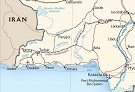
In a development that did not cause any surprise, Pakistan ha handed over the administrative control of the Gwadar Sea Port on Makrana coast in Balochistan province to China Overseas Ports Holding Company, a move that would provide China the much needed access to the warm waters of the Arabian sea, close to the strategically located Strait of Hormuz which happens to be a gateway for a third of the world’s traded oil. Considered Pakistan’s biggest infrastructure project, Gwadar port has failed to script a business success story on account of the volatile security situation in the socially turbulent Balochistan where secessionist tendencies and sectarian violence are on the ascendance. Commentators point out that it is the poor security scenario of Balochistan that has prevented China from committing on further investment for the development of the port and off- shore infrastructure. In addition, the reluctance of Pakistani navy to transfer 584 acres under its possession to Gwadar port has proved a stumbling block in the way of expanding the port project. When Port of Singapore Authority(PSA) had won the contract for operating Gwadar port for 40 years in 2007, the widely held perception was that former Pakistani President Pervez Musharraf awarded the contract to the Singapore entity to keep US in good humour.

By all means, for China, Gwadar provides an ideal springboard to further its interests in the Arabian Sea. Situated about 470-kilometres to the west of Karachi at the mouth of the Arabian Sea, Gwadar can be a key asset for China to advance its geostrategic interest in one of most vital sea-lanes of the world. There are meanwhile plans to boost the business prospects of Gwadar port through the creation of new rail and road links .

Indeed, for China, the control of Gwadar port would mean a shot in the arm for its long cherished plan to strengthen its dominance over the Indian ocean region. China’s new naval strategy of “far sea defence’ is aimed at giving Biejing the ability to project its power in the oceanic waters in which both US and India have stakes .But then as a section of defence analysts point out, given the geographical advantages that India enjoys in the Indian ocean, China will have difficult times upstaging India in the Indian ocean region. But China continues to stress the point that take over of Gwadar port was “conducive” to maintain regional stability and would enhance bilateral cooperation. ”The transfer of the managing rights is a business project that falls under trade and economic cooperation conducted between China and Pakistan,” said a spokesman of Chinese Foreign Ministry. But then Pakistani offer to develop a trade corridor linking Muslim dominated Chinese province of Xinjiang to the Middle East through Gwadar port presumably meant to enhance trade between China Pakistan could provide China tremendous strategic edge to nullify US interests in this part of the world.

On the seamier side, the plan to link Gwadar with Kashgar could be a potentially troublesome exercise for China. For Kashgar situated in Xinjiang, one of the sparsely populated regions of China, happens to be the hotbed of separatist jihadi activities under the banner of Eastern Turkestan Islamic Movement. Indeed, there have been media reports to suggest that Islamic separatists from this Chinese province had received training from one of the Islamic hard-line groups active in Pakistan. There is no denying the fact that Muslim dominated Xinjiang is China’s achilles heel against the backdrop that it is a breeding ground for the separatist jihadi forces.

To add to the discomfiture of China, the fierily independent Balochs, who are spearheading a violent separatist movement to free the province from the control of Islamabad, have vowed to defeat attempts at bringing in Chinese personnel under the ruse of speeding up the development of this largest and resources rich part of Pakistan. In particular, Baloch separatists have not taken kindly to the move of Islamabad to involve Chinese experts in the mining projects of the province. Biejing started its involvement with the Gwadar sea port about a decade ago with an investment of around US$250-million in the project. In 2004, three Chinese engineers helping to build Gwadar port were killed in a car bombing incident. The same year, two Chinese engineers working on a hydroelectric dam project in South Waziristan were kidnapped and one of them was found dead.

The Gwadar port, when fully operational, will help Pakistan do away with its near total dependence on Karachi ,which on account of its proximity to India could be a sitting duck to the strike force of the Indian navy in the event of a war. Indeed, during 1971 Indo-Pakistan war, Indian navy had inflicting massive damage on the Karachi port. Pakistan’s trade is 95% through the sea, most of which is facilitated through the Karachi port. Even today Pakistan is dependent on Karachi port for as much as 68% of its exports and imports are concerned.

On a larger canvas, the Chinese toehold on the vital Arabian sea coast of Pakistan could be a serious threat to the US Fifth Fleet in the Middle East. Obviously, the Chinese presence in Gwadar would embolden Beijing to mount an interception threat to the strategic oil trade to the Far East and Europe as Gwadar is very close to Hormuz Strait. As it is, the proposal for a pipeline from Gwadar to transport oil and gas to China, could help China avoid Malacca and Singapore Straits which can be closed during wartime or are vulnerable to piracy. In the ultimate analysis, Gwadar could be a trump card in China’s long term energy security plan. This pipeline could perhaps provide synergy to the proposed Iran-Pakistan pipeline.Currently,60% of China’s oil imports transit through the Strait of Hormuz, located just 180 nautical miles from Gwadar port.

However, from India’s perspective, the port could be used by the Chinese navy to jostle for geo-strategic power in the region. Indeed, Indian defence Minister during Feb.6 media interaction at the Aero India- 2013 show at Bangalore had stated that China’s role in operating Gwadar port was a matter of concern. Reacting to Antony’s concern, a spokesman of Pakistan’s Foreign Affairs Ministry had stated in Islamabad that “We think that this is not something that any other country have any reason to be concerned about.” Stretching this argument a bit further, Fazul-ul-Rehman, a former director of the China Studies Centre at the Institute of Strategic Studies at Islamabad, dismisses the possibility of China going to war in the Indian Ocean region and calls Indian concern a propaganda. According to Rehman, China is now more cautious about big investment projects in Pakistan due to security concerns what with Taliban activities, sectarian violence and separatist movement blighting turbulent Balochistan. As a result, Rehman says, there is a long way to go on China-Pakistan economic cooperation and emphasizes that Gwadar will be a long term project with Beijing looking for future alternatives to shipping routes for its oil and gas imports. However, western defence experts point out that Gwadar could serve China as a strategic listening pot to monitor maritime and naval activities in the region. On another front, the naval strike force of China’s People’s Liberation Army(PLA) could use Gwadar to deploy its ships and submarines to ensure the safety and security of China’s vital energy supplies.

It is widely perceived that Gwadar take over along with the Chinese built port at Hambantota in Sri Lanka and new terminals at Chittagong and Sonadiya in Bangladesh followed by China’s recent forays into Maldives completes the final links in the Chinese “string of pearls” strategy to safeguard its sea-lanes for energy imports and dominate the Indian ocean region. As things stand now, Gwadar would be the most westerly in a string of Chinese funded ports encircling its big regional rival India. The US$450-million deep sea port at Hambantota, close to the vital east-west route, used by around 300 ships a day, built with Chinese loans and construction expertise would provide China a platform for furthering its commercial and military interests in the vital Indian Ocean region. Although China has no equity stake in Hambantota, they have taken up to 85% slice of Colombo International Terminal Ltd, which is building a new container port adjacent to the existing Colombo harbour. According to Dean Cheng,a Research Fellow at the Asian Studies Centre for the Washington based think tank Heritage Foundation, China is actively pursuing the strategy of cultivating India’s neighbours as friendly states, both to protect its economic and security interests and counteract Indian influence. Not surprisingly, the concern in India continues to mount over China giving a practical shape to the ancient Chinese philosophy of “String of Pearls.” For the Chinese move to encircle is getting unfolded in a dramatic fashion with China forging extensive maritime links with countries in Asia and Africa.

Significantly, the widely debated “String of Pearls” theory which was originally conceived by a team of experts at the US based consultancy Booz Allen essentially underpins Chinese strategy of involvement with countries along its Sea Line of Communication(SLOC) extending from South China Sea to the Indian Ocean. A section of strategic analysts hold the view that “String of Pearls” provides China a robust platform to leverage its diplomatic and commercial ties to further its energy security and strategic interests on a long term basis.

What strategy India would adopt to counteract the aggressive Chinese move to encircle India through the “String of Pearls” approach, there is no clue as yet. But then the Indian defence strategists should not waste time to finger out the dimensions of the threat posed by Chinese “String of Pearls” strategy and formulate an appropriate Indian response to defeat the Chinese moves to dominate the Indian ocean region.

Friday, December 14, 2012

The Divided Oceans


The security challenges in the Asia-Pacific region, which American‘re-balancing’ towards Asia and Barack Obama’s tour of some Asian countries so early into his second presidency seek to address, are many and complex. Territorial disputes remain sharp in the region. China lays claim to Indian territory and so does Pakistan. Afghanistan and Pakistan have border differences. China has maritime territorial disputes with Japan, Vietnam, the Philippines, Malaysia, Brunei and Indonesia. Taiwan is also a party to these disputes, besides China itself having sovereignty claims over Taiwan. Japan and Russia have an outstanding dispute over the Kuril Islands.

The problem of terrorism is more acute in this region than anywhere else. Pakistan, along with the border areas of Afghanistan, is a breeding ground of terrorism targeting India and Afghanistan, and creating a sense of vulnerability in Central Asia. Sri Lanka and Bangladesh have seen terrorism on their soil. So has China in Xinjiang. Terrorism has afflicted Thailand and Indonesia. Nuclear proliferation is a problem in the two extremities of this region, in Iran and North Korea. At the western end, the threat of a military strike against Iran is real despite the position of Russia and China, while it is most unlikely against North Korea at the eastern end in deference to China’s opposition.

The presence of the United States of America in the region is substantial, with its Seventh Fleet as well as military bases in Japan, Australia, the Philippines, Singapore, South Korea, Thailand, Afghanistan, Uzbekistan, and Diego Garcia. With concerns about China’s rise in mind, the US is reinforcing its military assets in the region further. The US defence secretary has described India, a bit exaggeratedly no doubt, as a “lynchpin” of this new strategy. In any case, this shows the direction of American thinking in terms of partnering with India strategically in this region.

With its Fifth Fleet and bases in the Gulf countries, the US has now a presence in the western end of the Indian Ocean and the Strait of Hormuz. Apart from putting pressure on Iran, the US claims that this presence is intended to maintain stability in the region and ensure uninterrupted supplies of oil and gas to American friends and allies, more so now that the US imports only 10 per cent of its hydrocarbon needs, and even this figure will decline with huge discoveries of shale gas in the US.

The US navy has a sizable presence in the Indian Ocean for assuring the security of sea-lanes of communication. For this, it has been engaging the Indian Navy in a big way, with the two countries holding frequent naval exercises together. These exercises are now being held also in the trilateral India-US-Japan format.

It is argued that while the security architectures during the Cold War were based primarily on military alliances, the need today is to base these architectures on shared values, interests and challenges. This Euro-Atlantic-centric view is debatable, as China, India and scores of non-aligned countries were outside the Cold War alliance systems. Today, NATO not only exists, its membership has been expanded and its role has been geographically extended. NATO operated in Yugoslavia and Iraq. It is operating in Afghanistan; it acted in Libya. The US has declared its intention to strengthen its military alliances in the Asia-Pacific region. Russia is working to strengthen the Collective Security Treaty Organization in the erstwhile Soviet space. It is wrong to downplay too much the security role of military alliances today.

The idea of basing the new security architectures on “shared values” is also a Euro-Atlantic view. What are these “shared values”: those of democracy, pluralism, human rights and so on? But then, there are serious differences over these issues. Many countries are either not democratic or have their own concept of democracy. There is serious opposition to what is seen as the US crusade for democracy for geopolitical reasons, a tendency to impose it by force at great human cost, and double standards in the application of this principle.

Similarly, the human rights issue has been highly politicized by the West, there is selectivity in its application and the critics believe the issue has been used cynically for regime change, among other things. So, can the new security architectures be built on highly contested notions in their controversial practical application? Can the US, Russia and China be brought on a common platform on them, not to mention many others, including the Islamic countries?

The question arises whether the Indian and Pacific Oceans constitute a single strategic space? The answer would be “yes” from the US Navy’s point of view with its responsibilities extending across the two oceans. It could be true for India, which dominates the Indian Ocean geographically, only in the specific context of the expansion of the Chinese blue-water navy and its future ability to break through the first and second chain of islands and establish an increasing presence in the Pacific and eventually in the Indian Ocean, for which China is already creating the basis.

Our navy signals its ability to operate far from Indian shores by, for instance, periodically holding exercises with the Russian navy at Vladivostok. The Pacific is also the venue now of the trilateral India-US-Japan naval exercises. But the Pacific Ocean is too vast for India to have strategic interest in it. As regards the security of sea-lanes of communication, the problem pertains largely to the Indian Ocean area, from the Strait of Hormuz through the Malacca Strait to the Taiwan Strait and the South China Sea, not the Pacific as such.

The energy and trade flows across these waters are huge and vital for the economies of Japan, South Korea and China. In this vast stretch, there are problems of piracy in the Indian Ocean area off the coast of Somalia, but no issues of sovereignty that can threaten international navigation rights, except in the South China Sea. All concerned countries would not want these vital lanes to be interfered with in case of tensions or conflict, but how to ensure this?

For the moment, the two navies best placed to provide security in much of this area are the US and Indian navies, but countries like China may want an independent capacity to do so. This is where geo-political concerns come into play and can be a source of mistrust and problems. The challenge is for all to agree to certain rules of the road and norms of conduct. A wider Asia-Pacific security architecture will not be easy to build. Other continents have continental-scale organizations, but not Asia. There are too many players with conflicting interests and ambitions. Several disputes remain unresolved. The world-view as well as political, social and religious values of countries differ.

It would be more realistic to first build bilateral understandings between countries that have differences and then seek to widen the circle of these understandings to solidify them at the multilateral level in an incremental process. As bilateral relations between key countries markedly improve, existing organizations like SCO, SAARC, ECO, CSTO, ARF, IOC-ARC, BIMST-EC, and the East Asia Summit could become the building blocks of a larger Asia-Pacific security architecture. But that seems far away for now.