Showing posts with label People’s Liberation Army. Show all posts

Thursday, February 21, 2013

What Does the Chinese Take Over of Gwadar Imply?


Radhakrishna Rao 
(Research Fellow, VIF)

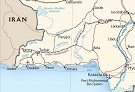
In a development that did not cause any surprise, Pakistan ha handed over the administrative control of the Gwadar Sea Port on Makrana coast in Balochistan province to China Overseas Ports Holding Company, a move that would provide China the much needed access to the warm waters of the Arabian sea, close to the strategically located Strait of Hormuz which happens to be a gateway for a third of the world’s traded oil. Considered Pakistan’s biggest infrastructure project, Gwadar port has failed to script a business success story on account of the volatile security situation in the socially turbulent Balochistan where secessionist tendencies and sectarian violence are on the ascendance. Commentators point out that it is the poor security scenario of Balochistan that has prevented China from committing on further investment for the development of the port and off- shore infrastructure. In addition, the reluctance of Pakistani navy to transfer 584 acres under its possession to Gwadar port has proved a stumbling block in the way of expanding the port project. When Port of Singapore Authority(PSA) had won the contract for operating Gwadar port for 40 years in 2007, the widely held perception was that former Pakistani President Pervez Musharraf awarded the contract to the Singapore entity to keep US in good humour.

By all means, for China, Gwadar provides an ideal springboard to further its interests in the Arabian Sea. Situated about 470-kilometres to the west of Karachi at the mouth of the Arabian Sea, Gwadar can be a key asset for China to advance its geostrategic interest in one of most vital sea-lanes of the world. There are meanwhile plans to boost the business prospects of Gwadar port through the creation of new rail and road links .

Indeed, for China, the control of Gwadar port would mean a shot in the arm for its long cherished plan to strengthen its dominance over the Indian ocean region. China’s new naval strategy of “far sea defence’ is aimed at giving Biejing the ability to project its power in the oceanic waters in which both US and India have stakes .But then as a section of defence analysts point out, given the geographical advantages that India enjoys in the Indian ocean, China will have difficult times upstaging India in the Indian ocean region. But China continues to stress the point that take over of Gwadar port was “conducive” to maintain regional stability and would enhance bilateral cooperation. ”The transfer of the managing rights is a business project that falls under trade and economic cooperation conducted between China and Pakistan,” said a spokesman of Chinese Foreign Ministry. But then Pakistani offer to develop a trade corridor linking Muslim dominated Chinese province of Xinjiang to the Middle East through Gwadar port presumably meant to enhance trade between China Pakistan could provide China tremendous strategic edge to nullify US interests in this part of the world.

On the seamier side, the plan to link Gwadar with Kashgar could be a potentially troublesome exercise for China. For Kashgar situated in Xinjiang, one of the sparsely populated regions of China, happens to be the hotbed of separatist jihadi activities under the banner of Eastern Turkestan Islamic Movement. Indeed, there have been media reports to suggest that Islamic separatists from this Chinese province had received training from one of the Islamic hard-line groups active in Pakistan. There is no denying the fact that Muslim dominated Xinjiang is China’s achilles heel against the backdrop that it is a breeding ground for the separatist jihadi forces.

To add to the discomfiture of China, the fierily independent Balochs, who are spearheading a violent separatist movement to free the province from the control of Islamabad, have vowed to defeat attempts at bringing in Chinese personnel under the ruse of speeding up the development of this largest and resources rich part of Pakistan. In particular, Baloch separatists have not taken kindly to the move of Islamabad to involve Chinese experts in the mining projects of the province. Biejing started its involvement with the Gwadar sea port about a decade ago with an investment of around US$250-million in the project. In 2004, three Chinese engineers helping to build Gwadar port were killed in a car bombing incident. The same year, two Chinese engineers working on a hydroelectric dam project in South Waziristan were kidnapped and one of them was found dead.

The Gwadar port, when fully operational, will help Pakistan do away with its near total dependence on Karachi ,which on account of its proximity to India could be a sitting duck to the strike force of the Indian navy in the event of a war. Indeed, during 1971 Indo-Pakistan war, Indian navy had inflicting massive damage on the Karachi port. Pakistan’s trade is 95% through the sea, most of which is facilitated through the Karachi port. Even today Pakistan is dependent on Karachi port for as much as 68% of its exports and imports are concerned.

On a larger canvas, the Chinese toehold on the vital Arabian sea coast of Pakistan could be a serious threat to the US Fifth Fleet in the Middle East. Obviously, the Chinese presence in Gwadar would embolden Beijing to mount an interception threat to the strategic oil trade to the Far East and Europe as Gwadar is very close to Hormuz Strait. As it is, the proposal for a pipeline from Gwadar to transport oil and gas to China, could help China avoid Malacca and Singapore Straits which can be closed during wartime or are vulnerable to piracy. In the ultimate analysis, Gwadar could be a trump card in China’s long term energy security plan. This pipeline could perhaps provide synergy to the proposed Iran-Pakistan pipeline.Currently,60% of China’s oil imports transit through the Strait of Hormuz, located just 180 nautical miles from Gwadar port.

However, from India’s perspective, the port could be used by the Chinese navy to jostle for geo-strategic power in the region. Indeed, Indian defence Minister during Feb.6 media interaction at the Aero India- 2013 show at Bangalore had stated that China’s role in operating Gwadar port was a matter of concern. Reacting to Antony’s concern, a spokesman of Pakistan’s Foreign Affairs Ministry had stated in Islamabad that “We think that this is not something that any other country have any reason to be concerned about.” Stretching this argument a bit further, Fazul-ul-Rehman, a former director of the China Studies Centre at the Institute of Strategic Studies at Islamabad, dismisses the possibility of China going to war in the Indian Ocean region and calls Indian concern a propaganda. According to Rehman, China is now more cautious about big investment projects in Pakistan due to security concerns what with Taliban activities, sectarian violence and separatist movement blighting turbulent Balochistan. As a result, Rehman says, there is a long way to go on China-Pakistan economic cooperation and emphasizes that Gwadar will be a long term project with Beijing looking for future alternatives to shipping routes for its oil and gas imports. However, western defence experts point out that Gwadar could serve China as a strategic listening pot to monitor maritime and naval activities in the region. On another front, the naval strike force of China’s People’s Liberation Army(PLA) could use Gwadar to deploy its ships and submarines to ensure the safety and security of China’s vital energy supplies.

It is widely perceived that Gwadar take over along with the Chinese built port at Hambantota in Sri Lanka and new terminals at Chittagong and Sonadiya in Bangladesh followed by China’s recent forays into Maldives completes the final links in the Chinese “string of pearls” strategy to safeguard its sea-lanes for energy imports and dominate the Indian ocean region. As things stand now, Gwadar would be the most westerly in a string of Chinese funded ports encircling its big regional rival India. The US$450-million deep sea port at Hambantota, close to the vital east-west route, used by around 300 ships a day, built with Chinese loans and construction expertise would provide China a platform for furthering its commercial and military interests in the vital Indian Ocean region. Although China has no equity stake in Hambantota, they have taken up to 85% slice of Colombo International Terminal Ltd, which is building a new container port adjacent to the existing Colombo harbour. According to Dean Cheng,a Research Fellow at the Asian Studies Centre for the Washington based think tank Heritage Foundation, China is actively pursuing the strategy of cultivating India’s neighbours as friendly states, both to protect its economic and security interests and counteract Indian influence. Not surprisingly, the concern in India continues to mount over China giving a practical shape to the ancient Chinese philosophy of “String of Pearls.” For the Chinese move to encircle is getting unfolded in a dramatic fashion with China forging extensive maritime links with countries in Asia and Africa.

Significantly, the widely debated “String of Pearls” theory which was originally conceived by a team of experts at the US based consultancy Booz Allen essentially underpins Chinese strategy of involvement with countries along its Sea Line of Communication(SLOC) extending from South China Sea to the Indian Ocean. A section of strategic analysts hold the view that “String of Pearls” provides China a robust platform to leverage its diplomatic and commercial ties to further its energy security and strategic interests on a long term basis.

What strategy India would adopt to counteract the aggressive Chinese move to encircle India through the “String of Pearls” approach, there is no clue as yet. But then the Indian defence strategists should not waste time to finger out the dimensions of the threat posed by Chinese “String of Pearls” strategy and formulate an appropriate Indian response to defeat the Chinese moves to dominate the Indian ocean region.

Tuesday, August 21, 2012

China’s Emerging War Concepts


Gurmeet Kanwal
Visiting Fellow, VIF

The doctrine of high-tech local wars under conditions of informationisation is still evolving. In the absence of active operational experience, the PLA may take another decade or so to fully implement all the ingredients of the new doctrine. According to Chinese scholars writing in the Science of Military Strategy, the switch to fighting high-tech local wars is a “historic leap in the development of current wars”; it is the “reflection of the historic logic of war development at (the) present time”; it is “an important linkage in the chain of war development”; and, it is the reflection of change from industrial-era production mode to information-era production mode in the military field.” Chinese scholars emhasise the high-tech feature of modern wars. In their view, “the aim, range, tools of war and time and space of engagements are all limited.”


Compared with China’s historically reactive stance of luring the enemy in deep and destroying him through strategic defence, the present doctrine is essentially pro-active and seeks to take the battle into enemy territory. It also strives to achieve surprise in a pro-active manner that is demonstrated by new “quick-strike” tactics. The aim is to catch the enemy unprepared in order to inflict substantial damage on strategic targets and disrupt logistics to gain psychological ascendancy. While the land frontier is expected to continue to generate some local tensions, the Central Military Commission (CMC) has identified space and the oceans as the new areas where future conflict might take place.


The People’s Liberation Army has launched a rapid modernisation drive to prepare for 21st century warfare and to enable China to project military power well away from its land borders and territorial waters. The new type of war that is now being envisaged by the PLA represents a revolutionary change from the traditional Chinese concept of People’s War against an invading enemy seeking to occupy and destroy the PRC. People’s War was expected to be an all-out or total war fought primarily by ground forces supported by a motivated population that was fully mobilised for a long-drawn struggle. The concept that was evolved by Mao was characterised by protracted, large-scale land warfare where the aim was to exploit China’s strategic depth by luring the enemy deep inside, extending his lines of communications and logistics and eventually destroying him through prolonged attrition.

Underpinning the new professionalism of the PLA is the basic doctrine of “active defence” (jiji fangyu) that seeks to conduct “people’s war under modern conditions” (better understood as “local wars under hi-tech conditions” – gaojishu tiaojian xia de jubu zhanzheng). The ‘active defence’ doctrine calls for integrated, deep strikes – a concentration of superior firepower that is to be utilised to destroy the opponent’s retaliatory capabilities through pre-emptive strikes employing long-range artillery, short-range ballistic missiles (SRBMs) and precision guided munitions. David Shambaugh, a well known China scholar has written: “Rather than conducting a ‘people’s war’ (a strategy to ‘lure the enemy in deep’ into one’s own territory), the PLA doctrine of ‘active defence’ calls for forward positioning, frontier defence, engagement of the enemy at or over the border and potential engagement in conflict beyond China’s immediate periphery… this doctrine is essentially pro-active and seeks to take the battle into enemy territory.” Beijing has defined the following five likely limited war scenarios: military conflict with neighbouring countries in a limited region; military conflict on territorial waters; undeclared air attack by enemy countries; territorial defence in a limited military operation; and, punitive offensive with a minor incursion into a neighbouring country.

The new doctrine and the strategy and tactics associated with it have been influenced by the lessons of Gulf War I in 1991 and the Iraq War of 2003, both of which have been extensively studied by Chinese scholars. The doctrine requires the creation of a capability to project force across China’s borders through rapid deployment, conventional SRBMs and cruise missiles, information warfare, electronic warfare, precision-guided munitions, night fighting capabilities and other advanced military technologies. The building of these capabilities, in turn, drives procurement and defence production policies, the command and control structures and training. According to a US DoD report to Congress, victory is to be achieved through ”strategic strikes” by gaining the initiative by striking first, achieving victory with one strike and concentrating China’s strength to attack the core of enemy defence.

Major General Shen Xuezai, former head of the Military Systems Department of the Academy of Military Sciences (AMS), has written: “Only by controlling the entire battlespace and striking at key points so as to paralyse the enemy’s entire operational system and immobilize its forces, will it be possible to win a war.” Commenting on the PLA’s evolving doctrine, Major Mark A. Stokes has stated: “This strategic attack doctrine, one aspect of the PLA’s ‘limited war under high-tech conditions’ (jubu zhanzheng zai gaojishu tiaojian xia)… continues to adhere to the traditional strategy of ‘pitting the inferior against the superior’ (yilie shengyou), which recognises technological inferiority for an indefinite period of time.” Much the same point was made in the Pentagon’s 2007 annual report on the Military Power of China: “Once hostilities have begun, according to the PLA text, Science of Campaigns (Zhanyixue) (2000), ‘the essence of (active defence) is to take the initiative and annihilate the enemy… While strategically the guideline is active defence, (in military campaigns) the emphasis is placed on taking the initiative in active offence. Only in this way can the strategic objective of active defence be realised” (emphasis added).

China also follows ‘anti-access’ strategies to deny access to the adversary to his planned launch pads in an endeavour to prevent build-up of forces for a war against China. Planning for anti-access strategies flows from the apprehension that if superior, well-equipped forces (read the US and its allies) are allowed to arrive in the war zone with the force levels and in the time frame planned by them, they are bound to prevail. According to a RAND paper of 2007, the Chinese calculate that “by mounting a credible threat to do so, they will be able to deter the United States from intervening in the first place, or at least limit the scale and scope of that intervention.” The PLA’s aim is clearly to deter a conflict or at least delay the opponent’s preparation till the PLA is better prepared to react. The PLA seeks to achieve this aim through attacks against air bases and ports and other elements of the logistics chain and against information systems so as to disrupt command and control during build-up. While anti-access strategies are unlikely to succeed in preventing conflict completely, these could impose considerable delay and caution during build-up.

The PLA’s new doctrine is also more assertive than previously thought and is not bound by any restrictions to confine and limit future conflict to within China’s national boundaries. China claims that it has only peaceful intentions and does not believe in launching aggression and that it fights wars only to defend its sovereignty and territorial integrity. According to China’s White Papers on national defence, active defence is a defensive military strategy. However, it is clear from Chinese writings that the major characteristics of active defence are distinctly offensive in nature. The PLA publication The Study of Campaigns (Zhanyixue) (2000) highlights this offensive approach: “While strategically the guideline is active defence, in military campaigns, though, the emphasis is placed on taking the initiative in ‘active offense’. Only in this way the strategic objectives of “active defence” can be realised.”

Monday, July 2, 2012

China’s Cyberwar Doctrine: Implications for India

Gurmeet Kanwal
Visiting Fellow, VIF

In alarming front page news reports published by several Indian newspapers in 2009 and 2010, Chinese cyber spies were reported to have hacked into computers and stolen documents from hundreds of government and private offices around the world, including those of the National Security Adviser and the Indian embassy in the US. Earlier it had been reported that the Chinese army uses more than 10,000 cyber warriors with degrees in information technology to maintain an e-vigil over China’s borders. “Chinese soldiers now swipe cards and work on laptops as they monitor the border with great efficiency… electronic sentinels functioning 24 hours a day.” This number will soon go up to one million laptop warriors.

While information about the People’s Liberation Army’s (PLA) cyber warriors has begun to appear in the public domain only recently, PLA watchers across the world have known for long about China’s well conceived doctrine on information operations and cyberwar. China’s cyberwar doctrine is designed to level the playing field in a future war with better equipped Western armed forces that rely on Revolution in Military Affairs (RMA) technologies and enjoy immense superiority in terms of weapons platforms and intelligence, surveillance and reconnaissance (ISR) and command and control networks.
Early in the first decade of the new century, China’s Central Military Commission (CMC) had called for a detailed study of the concept of “people’s war under conditions of informationisation”, implying increasing attention to the application of information technology to the conduct of conventional conflict. Since then the scope of the cyber war doctrine has been expanded to develop the capabilities necessary to take control of all the major networks that drive the world’s economic engines such as banking, stock exchanges and telecommunications if it becomes necessary.

Analysts of the People’s Liberation Army (PLA) have called the ongoing Revolution in Military Affairs (RMA) an informationised military revolution with Chinese characteristics. Informationisation relates to the PLA’s ability to adopt information technologies to command, intelligence, training and weapon systems. The PLA is seeking to contest the information battle space with its space-based, airborne, naval and ground-based surveillance and intelligence gathering systems and its new anti-satellite, anti-radar, electronic warfare and information warfare systems. According to China’s White Paper on National Defence issued in 2004, “In its modernisation drive, the PLA takes informationalisation as its orientation and strategic focus.”

The denial of information, strategic deception and the achievement of psychological surprise have for long been an integral part of Chinese military doctrine. The Chinese find information warfare (IW) extremely attractive as they view it as an asymmetric tool that will enable them to overcome their relative backwardness in military hardware. The Chinese are devoting considerable time and energy to perfecting the techniques of IW to target the rapidly modernizing Western armed forces that are becoming increasingly more dependent on the software that runs computer networks and modern communications. In Chinese thinking, IW presents a level playing field for projecting power and prevailing upon the adversary in future wars.

Information warfare includes intelligence operations; command and control operations to disrupt enemy information flow; electronic warfare by seizing the electromagnetic initiative through electronic attack, electronic protection and electronic warfare support; targeting enemy computer systems and networks to damage and destroy critical machines and networks and the data stored on them; and, the physical destruction of enemy information infrastructure through the application of kinetic firepower. The Chinese call their pursuit of information warfare and other hi-tech means to counter the overwhelmingly superior conventional military capabilities of the Western Alliance “acupuncture warfare”. Acupuncture warfare (also called “paralysis warfare”) is described as “Paralysing the enemy by attacking the weak link of his command, control, communications and information as if hitting his acupuncture point in kung fu combat.”
In another five to 10 years China will develop much greater depth and sophistication in its understanding and handling of information warfare techniques and information operations. With Indian society becoming increasingly dependent on automated data processing and vast computer networks, India will also become extremely vulnerable to such information warfare techniques. The fact that it can be practiced from virtually any place on the earth even during peacetime makes acupuncture or paralysis warfare even more diabolical. India can ill-afford to ignore this new challenge to its security.

India should adopt a comprehensive inter-ministerial, inter-departmental, inter-Services, multi-agency approach to dealing with emerging cyber warfare threats and must develop appropriate responses. No single agency in India is charged with ensuring cyber and IT security. A nodal agency must be created to spearhead India’s cyberwar efforts under a national cyber security advisor who should report directly to the NSA. The armed forces must be part of the overall national effort from the very beginning so that emerging tactics, techniques and procedures can be incorporated into doctrine and training.

On June 23, 2009, Robert Gates, then US Secretary of Defence, authorised the creation of a new military command that will develop offensive cyber-weapons and defend command and control networks against computer attacks. India too needs a Cyber Command to lead efforts within the military to safeguard computer networks from hackers and cyber attacks.

India’s strategy must be defensive to guard the country’s vulnerable assets, such as military command and control networks and civilian infrastructure dependent on the use of cyber space, as well as offensive to disrupt the adversary’s C4I2SR systems and develop leverages that can be exploited at the appropriate time. With some of the finest software brains in the world available to India, it should not prove to be an insurmountable challenge.

This is too important a field to allow the traditional Indian approach – digging heads into the sand while waiting for the threat to go away – to hold sway and react only when the enemy has reached Panipat and is knocking on the gates of Delhi. In this case, the nothingness of cyberspace connects China’s one million laptop warriors directly with Delhi, Mumbai, Kolkata, Chennai, Bangalore and Hyderabad and other Indian cities, as also India’s strategic establishments.

Friday, May 25, 2012

Maoists’ ‘Look East Policy’

 
Dr. N. Manoharan
Senior Fellow, VIF

The problem of the Left-wing Extremism (LWE) has been like a shifting pain that moved from West Bengal to Bihar in 1970s, and then to Andhra Pradesh in 1980s. 

After nearly two decades, when there was pressure in Andhra Pradesh, the Naxals found suitable sanctuary in the central Indian areas comprising parts of Jharkhand, Chhattisgarh, Orissa, Maharashtra, Karnataka, Bihar and West Bengal. This constitutes the so-called “Red Corridor”, which they found conducive for insurgency and an ideal base to set up “Revolutionary Zones”. The movement of Maoists to tribal-dominated central India is in fact a perfect matching of the aggrieved and the “Robin Hoods”. Now there are reports that the Maoists are spreading to the northeast and the southwest of India. Why? Are they moving in search of new ‘safe zones’ because of military action in the central India? Or, are they spreading because they have found new breeding grounds for left-wing extremism? Or, is the shift to a ‘new theatre’ for some other reason? 

It is known that the Indian Maoists have good network with several key militant groups of the northeast India that commenced roughly since the mid-1990s. In fact, with some groups like People’s Liberation Army of Manipur, the exact modalities of working – formal, semi-formal and informal – are spelled out through “memoranda of understanding”.1 The linkage ranges from getting arms, ammunitions, communication devices to training from the northeast militant groups like National Socialist Council of Nagaland (NSCN-IM), anti-talk faction of the United Liberation Front of Assam (ULFA) led by Paresh Barua, People’s Liberation Army (PLA), People’s Revolutionary Party of Kangleipak (Prepak), Revolutionary People’s Front (RPF), Kamtapur Liberation Organisation (KLO), Gorkha Liberation Tiger Force (GLTF), Gurkha Liberation Organisation (GLO), Adibasi National Liberation Army, Adivasi People’s Army (APA), and National Democratic Front of Bodoland (NDFB). Maoists, in turn, are said to be providing explosives (ammonium nitrate) and funds to the northeast groups. Chinese small arms find their way to the ‘Red Corridor’ mainly through these groups. It is through the northeast groups the Maoists have good access to militant groups of Myanmar. The mutual support between Naxals and northeast militant groups is not just restricted to material, but extends to moral aspects as well. While Naxals have strongly supported “people’s movements” of the northeast, the northeast militant groups have stood by “revolutionaries”. “Enemy’s enemy is a friend” is the guiding maxim in this case as well. ULFA leader Paresh Baruah once remarked, “The Indian colonial government is also viewed as an enemy by the Maoists. Our enemy is also the same and so there is an understanding with them.”2

But, what is more disconcerting is attempts being made by the Maoists to push the boundaries of the ‘Red Corridor’ and set up support bases in upper Assam and some of the tribal areas in the hilly interiors. The presence of Maoists is felt in pockets of Tinsukia, Dibrugarh, Lakhimpur, Dhemaji, Sivasagar, Golaghat and Karbi Anglong districts of Assam and Lohit district of Arunachal Pradesh (adjoining Tinsukia). The hub of Maoists activities is said to be in Sadiya area, situated in Assam-Arunachal Pradesh border. Governments of Assam and India have recently admitted to this.3 How deep is the penetration? This is where the ULFA chief Paresh Barua went partly wrong when he observed: “We have a definite strategy and we do not think Maoism will be able to strike deep roots in Assam”. 4 Maoists have clear-cut objective: capture of power, as against ULFA’s secession from India. The northeast India has now become a new “strategic area” by the Maoists. To Maoists, 

The “strategic areas” are hilly regions with dense forest cover, have sufficient economic resources, a vast population, and a vast forest area spreading over thousands of square kilometers. In such areas the enemy is weak, and these areas are very favourable for the manoeuvers of the people’s army. In these strategic areas we can defeat the enemy completely by fulfilling the tasks of building and consolidating a strong proletarian party and a strong people’s army; procuring the people’s support and economic resources, while developing the guerrilla war aiming at the building of liberated/base areas in these areas.5

Therefore, apart from military utility of training, arms procurement and sanctuary, the Maoists also found parts of the northeast of India as a new zone of “revolution” to establish what they call as “base areas”. In this regard, two major causes are being exploited: deprivation among the tea workers of Assam and anti-dam sentiments in Arunachal Pradesh. Since there is political vacuum in both cases, Maoists are more than willing to fill them. Interestingly, adivasis in tea gardens are descendants of migrants from present-day Jharkhand, Bihar, Odisha, Chhatisgarh and Madhya Pradesh from the days of the British times. The Maoists have already set up local committees in these areas. From there it will become easy for them to link up to southern parts of Bhutan, where Nepali refugees are populated. Indian Maoists already have well-established links with the Bhutanese Maoists at both bilateral and global levels. They are members of umbrella organisations like Coordination Committee of Maoist Parties and Organisations of South Asia (CCOMPOSA), Revolutionary International Movement (RIM), World People’s Resistance Movement (WPRM) and International Communist Movement (ICM). 

As it looks, Maoists are just making a foray in the region. It is, therefore, important to nip it in the bud. The idea of the government of Assam to form a special task force on the lines of Andhra Pradesh’s ‘Greyhounds’ and coordinated operation with neighbouring states like Arunachal Pradesh are fine. But what is more crucial is a comprehensive development approach. All Maoists want is a cause to exploit. And they spread their tentacles wherever grievances exist. Addressing the root causes, therefore, is important; breeding grounds should be busted. Basic development issues like water, healthcare, education and employment should be taken care of. Granting Scheduled Tribe status to the adivasis, carving out a separate Development Council, and reservations in local administration like Zilla Parishads are some of the measures that are worth considering at policy level and they need to be implemented without much time lag.

Wednesday, April 11, 2012

Need for An Indian Aerospace Command; Now and Here


Radhakrishna Rao

Deteriorating security environment in South Asia region along with a massive beef up in defence preparedness by the People’s Liberation Army(PLA) of China, have underpinned the need, as never before for India, to bolster its military might in all its manifestations to blunt the edge of the emerging multi-dimensional security threat.

Moreover, in the context of India’s declared national policy of no first use of nuclear weapons, the country should be extra vigilant in guarding against any threat to its territorial integrity. And looking beyond the possibility of the security threat, India in keeping with its status as an emerging technological power, should showcase its military muscle encasing the technological prowess that is immune to the threats of technology denial regime. Clearly and apparently, India cannot afford to lose the opportunity of positioning itself as a military power of global standing.

Indeed, in the context of the growing need to take care of Indian interests across the world, the need for a heightened situational awareness and quick mobility has become all the more pronounced. Only a well - equipped aerospace command supported by a range of advanced technology satellites could help India meet its emerging strategic challenges and security threats with courage and confidence. Of course, to begin with, India has the expertise, infrastructure and technology to create the nucleus for the proposed tri service aerospace command .But the only stumbling block is the green signal from the ruling dispensation in New Delhi. There is no denying the fact that an Indian tri service aerospace command would be a big morale booster for the Indian defence forces. As such, Government of India should seriously work towards giving a final go ahead for the proposed tri service aerospace command. For the creation of an aerospace command is a dynamic and continuously evolving process focussed on absorbing technological developments as it mainfests.

Indian Air Force (IAF), which has been vigorously advocating the need for an aerospace command for well over five years now, has already made a detailed study of the issues related to the structure and functions of aerospace commands in other countries. But then the type of the aerospace command India would need to set up—of course after getting clearance from the political leadership of the country—would reflect the needs specific to the Indian situation, extent of funds available as well as technology and expertise that could be pressed into service for the purpose. The objectives, however, of the proposed Indian tri service aerospace command, would be similar to aerospace commands in other countries: enhancing situational awareness in all its manifestations, a homogeneous platform for seamless integration of the capabilities of all the three wings of the services and ensuring free access to space while denying the adversary the opportunity to use space platforms in the event of a war. Other well identified objectives of the Indian aerospace command would include setting up a system to give out missile launch warnings and monitoring the launch of enemy satellites. The missile defence shield being put in place by the Defence Research and Development Organisation (DRDO) could very well become an important component of the aerospace command. And so are the unmanned drones for surveillance and reconnaissance, Unmanned Combat Air Vehicles (UCAVs), AWACS(Advanced Warning and Control System) aircraft, a range of missiles meant for a variety of end uses and a constellation of satellites high up in space. Indeed, the whole exercise of creating a multi layered aerospace command should ultimately be aimed at ensuring that in a fast changing battlefield scenario, all the available tools should be harnessed to stay at the winning edge of the war.

Perhaps the biggest trump card in the endeavour to set up an Indian aerospace command lies in the expertise that ISRO has built up in the area of designing and developing state of the art satellites for wide ranging applications. Incidentally, ISRO has so far built and launched more than fifty satellites for uses such as scientific research, earth observation, weather watch as well as communications, broadcasting and navigation. As things stand now, India does not yet have a dedicated defence satellite even as all the three wings of services have been clamouring for exclusive satellite capability to boost their preparedness and fighting fitness. Not long back, DRDO chief V.K. Saraswat had pointed out to the well-conceived plan to build and launch a series of home grown defence spacecraft systems with surveillance, imaging and navigation capabilities that would not only help keep an eye on “hostile developments in the neighbourhood” but also help guide the cruise missiles and high precision weapons to hit targets with a high degree of accuracy.

“There will be a series of defence satellites. Each year, you will find one or two satellites going up. I cannot reveal you the numbers because they are classified,” noted Saraswat. However, he made it clear that each of these satellites would be equipped for a specific mission and would carry payloads for a variety of end uses including surveillance and reconnaissance, imaging, navigation and communications. Going ahead, Saraswat stated that “the army, the navy and IAF each have their own requirements and it would not be appropriate to say how many each of them would need.” According to Saraswat, with these satellites in orbit, Indian defence forces would be in a position to get a holistic picture of the movement of troops and such other things in the immediate neighbourhood. Saraswat also made a point that satellite systems hold the key to the successful operationalization of India’s ballistic missile defence shield.

Saraswat also revealed that the road map of the series of satellites required by the Indian defence forces has been handed over to the Indian Space Research Organisation(ISRO).But then with its current infrastructure and support level, ISRO is having tough time meeting its own requirements. With a single operational launch vehicle in the form of the four stage Polar Satellite Launch Vehicle (PSLV) and a single launch complex spread across Sriharikota island on India’s eastern coast, ISRO is not in a position to accomplish more than 3-4 orbital missions a year. There is no denying the fact that India would need to build a second launch pad which is very critical to boosting the launch missions by a substantial extent. In the context of India’s plan to offer its launch services to international customers, ISRO would need to boost its launch frequencies to at least six a year. China, which has three landlocked launch complexes, is now building an ultra-modern costal orbital complex at Wenchang in Hainan Island which happens to be the epicentre of a massive Chinese naval build up.On its part, ISRO has hinted at a plan for a second launch complex. But whether it would assume a practical shape within a foreseeable future no one is sure as yet.

Similarly, the glaring failure of the Indian space agency to qualify the home grown cryogenic engine stage required to operationalize the three stage Geosynchronous Satellite Launch Vehicle (GSLV) well on time could jeopardise many of the high profile projects lined up by ISRO in the near future. To meet the growing needs of Indian defence forces, ISRO would need to not only build multiple launch centres and a variety of launch vehicles equipped for varying orbital missions but also involve the Indian industry in a big way in the task of building and delivering satellites and launch vehicles in a ready to use condition. Clearly and apparently, India lacks the “industrial culture “ fine-tuned for building spacecraft and space vehicles on a turnkey basis.

Perhaps a major hindrance in the way of setting up the Indian aerospace command is involving ISRO, a civilian space agency committed to the “peaceful use of space,” in the entire exercise. As such, the ruling dispensation in New Delhi should factor the possibility of such a step attracting international censure including the US technology embargo and trade sanction. In fact, in early 1990s, USA had prevented Russia from transferring the cryogenic engine technology to India, by citing the potential for the diversion of such a technology for military build up. In late 1990s, USA had pressurized India into dropping its Agni surface to surface missile programme with the observation that the Agni series of missiles developed under India’s Integrated Guided Missile Development Programme(IGMDP had drawn from the solid fuel technology developed for India’s first civilian basic launcher SLV-3 which had its successful debut flight in 1980.As it is,SLV-3 was developed under the leadership of the former Indian President Dr.A.P.J.Abdul Kalam during his stint with ISRO. Incidentally, Dr.Kalam who subsequently moved to DRDO, spearheaded the IGMDP which served as a launching pad for developing a range of Indian missiles.

Indeed, satellites serve as the “ears and eyes” of a well equipped aerospace command. The stunning success with which US led allied forces were able to pull off their intervention in Afghanistan and Iraq has highlighted the vital importance of the space based assets in realizing the strategic goals in a cost effective and timely manner. Meteorological satellites forecasting weather for facilitating bombing raids and missile launches, navigation satellites guiding lethal weapons to designated locations, reconnaissance satellites locating the exact geographic position of military targets, electronic ferret satellites gathering data on radar frequencies, communications satellites providing real time secure links between defence forces scattered over a vast geographical stretch for a coordinated strategy and ocean watch satellites snooping on the naval movement of adversaries which have all become a puppet in the string of the modern day warfare. Not surprisingly then, the massive intelligence failure suffered by the Indian army before and during the short lived Kargil skirmish of 1999 has been attributed to the lack of access to satellite resources.

On its part IAF is confident that a full fledged tri service aerospace command would go a long way towards ensuring the safety of Indian space assets and guarding the Indian air space with heightened vigil. The IAF’s defence “space vision 2020” outlines the need to evolve a strategy for the optimum utilization of space assets for sharpening its combat preparedness. By all means, for IAF uninterrupted access to dedicated constellation of military satellites is critically important to sustain its strategic superiority through the concept of “see, reach, hit and protect”. Satellites hold the key for the coordinated and synchronized functioning of the aerospace command by seamlessly integrating weapons systems, missiles, radars and sensor suites, unmanned aerial vehicles, weaponzied drones, electronics and communications network , fighter jets, transport aircraft, logistics and support systems, defence forces spread across a vast geographical swath for sustaining “strategic superiority” from the word go.

The clamour for setting up an Indian tri service aerospace command assumed strident dimensions following the early 2007 anti satellite test carried out by China. This exercise meant to refine Chinese space warfare techniques involved the destruction of an aging weather watch satellite positioned at an altitude of 537 kms above the earth by firing a ground based medium range ballistic missile. And while addressing the United Commanders Conference in New Delhi in mid-2008, Antony did not mince his words while underscoring Indian angst over the “emergence of anti satellite weaponry, a new class of heavy lift off boosters and improved array of military space devices in our neighbourhood.”

Of course, Saraswat has been stressing on the need to develop technological elements of anti satellite systems to prevent the rogue satellite systems from immobilizing the Indian space assets. He has also hinted at developing space laser sensor to monitor and track space based killer devices. To support the Indian aerospace command, DRDO has also a plan up its sleeve to develop and launch electronics intelligence and communications intelligence satellites as exclusive defence space platforms.

Space capability also constitutes a key element of the network centric system to integrate the resources of all the three wings of the services. Air Force Network (AFNET), inducted into IAF in 2010, on which an integrated air control and command is being built, will be allotted a slew of transponders on-board Indian satellites in INSAT constellation being operated by ISRO. The fibre optic technology based AFNET grid which will help link IAF’s command bases, radars, missiles, batteries and airborne fighters would ultimately pave the way for the complete situational awareness of the area that IAF wants to secure and dominate. In the ultimate analysis, the success of the aerospace command depends on the smartness with which the information super highways and communications channels are exploited for real time coordination of the “strategic moves” of the defence forces spread across a vast geographical swath.

Equally critical to the successful operation of an aerospace command is a versatile and well endowed C4ISR system. While the C 4 components of the system—computers, command , communications and control—constitute the backend, ISR(intelligence, surveillance and reconnaissance) make up for the front end. The ISR made up of orbital, airborne, maritime and fixed or mobile, ground based sensor systems help find, fix and track hostile targets and evaluate the damage to enemy targets. On the other hand, with an increasing number of smart weapons including missiles rapidly becoming autonomous, they would need to be controlled and manipulated through a network enabled command and control structure supported by a constellation of satellites.

Meanwhile, with the Indian Space Research Organisation(ISRO) preparing for the launch of India’s fully home-grown microwave earth observation satellite RISAT-1 sometime towards the end of April, Indian defence forces will have the reason to cheer. For they can look forward to fall back on a “smart eye in the sky” to enhance their situational awareness and surveillance capability along India’s borders with China and Pakistan.

Significantly, it is the all weather and day and night imaging capability of RISAT-1 that is particularly relevant to Indian defence forces from the point of view of strategic planning. For the high performance Synthetic Aperture Radar (SAR) payload of RISAT-1 is capable of functioning even under conditions of cloud, dust and haze. Right now, Indian defence forces have limited access to the IRS constellation of earth observation spacecraft being operated by ISRO. But then these satellites being passive systems can function only under the conditions of brightness.

In April 2009, India’s four stage PSLV had orbited RISAT-II microwave imaging spacecraft that ISRO (Indian Space Research Organisation) had realized in tie up with Israel Aerospace Industries (IAI) on a fast track mode. The launch of 300-kg.RISAT-II featuring an X-band SAR payload was widely perceived as a response to the insecurity complex generated by the 26/11 Mumbai terror attack. The all weather RISAT-II has been described by strategic analysts as a high tech space platform meant to keep a tab on terrorist movements along India’s international borders with Pakistan.


Clearly and apparently, Indian defence forces can easily exploit the potentials of RISAT-II to boost the intelligence gathering capability of Indian armed forces in big way. For earth observation and surveillance are considered the two faces of the same coin. RISAT-II’s revisit capability of four to five days is considered advantageous factor in the dynamic monitoring of the developments of strategic importance. Added to that the highly agile RISAT-II can be manoeuvred to change its viewing angle as per the requirements of the users.

At the moment, Indian defence forces don’t have a dedicated satellite systems meant for surveillance, reconnaissance and intelligence gathering .Of course, the ISRO built GSAT-7 satellite which is expected to be launched during 2012-13 will serve as Indian navy’s exclusive space platform for reliable , robust and fool proof communications.


While India has a robust level of technological infrastructure and human expertise required to create a tri service aerospace command in a phased manner, the political leadership of the country should shed its “complacency and indifference” to give a go ahead to the setting up of the tri service aerospace command. For in the context of growing, multi-dimensional threat to India’s national security and taking into account the need to position India as a military power of global standing, the setting up of a tri service Indian aerospace command cannot be delayed under any circumstance. For the Indian defence forces, an aerospace command could very well be a force multiplier and game changer. And for India, it would be a hedge against the forces bent upon challenging the territorial integrity of the country.

Author is Research Fellow in Vivekananda International Foundation