Showing posts with label Muslim Brotherhood. Show all posts

Tuesday, July 16, 2013

Morsi’s Ouster: Failure of Political Islam

Kanwal Sibal, 
Dean, Centre for International Relations and Diplomacy, VIF

If the overthrow of President Hosni Mubarak by the mass of protestors in Tahrir Square in 2011 was a surprise, the ouster of President Mohamed Morsi by even larger protests in Tahrir Square and across Egypt in recent days is equally dramatic.

Mubarak was in power for 30 years. The people, tired of his repressive and corrupt rule, wanted change. Morsi, in power for only a year, has alienated the people extraordinarily quickly, forcing a regime change.

Morsi, elected as President through a tortuous but reasonably credible democratic process, differed from the manner in which Mubarak assumed and retained power. Those young, social media activists who sought regime change in 2011 may not have intended power to be transferred to the Muslim Brotherhood (MB), with the Salafists in tow. But the MB being far more organized and embedded at the grass root level than the more liberal and secular forces responsible for expelling the Mubarak regime, won the election and acquired political legitimacy. Now they have been ousted by what is effectively a military coup.

Brotherhood

This unforeseen development in a country that is the political and cultural heartland of the Arab world cautions against interpreting the nature of forces at play in the Arab world from narrow, self-serving political perspectives.

When political change occurred in Tunisia and Egypt through street protests against dictatorial regimes, it was pre-maturely hailed as the Arab Spring by the West. The Arab world, it was claimed, was moving towards democracy, refuting a widely-held view that Islam and democracy cannot cohabit.

The entry of MB into electoral politics was welcomed as a sign of maturing democratic impulses sweeping the Arab populace. Fine tuned analysis to disarm fears about the implications of this long-banned organization joining politics and aspiring for state power were offered. The MB comprised of various political currents, it was said, with moderates in the ascendant. “Political Islam”, which the MB represented, was seen as the only way that democracy could be ushered into the Arab world. Seen as a hostile force after the Iranian revolution, “political Islam” became a viable and acceptable instrument to promote America’s vocational attachment to the international spread of western style democracy.

Reservations about Morsi were held in abeyance, believing that he could successfully make the transition from military rule to democracy in Egypt. Morsi, in fact, made a fairly positive impression after assuming power, at least externally. He seemed intent on restoring Egypt’s political role in the region, reaching out to Iran, reducing the heavy weight of America on Egypt’s foreign policy, courting China, renewing relations with nonaligned friends of the past like India.

India received him in March this year, signalling our positive view of the political change in Egypt and acceptance of the moderate credentials of the MB. Surprisingly, we found common language on Syria as well as on terrorism in our joint declaration with him.

Revolt

However, perceived inadequately in their acuteness by the outside world because of tailored international media coverage, serious tensions have apparently been brewing in Egypt because of Morsi government’s policies to islamicize Egyptian institutions and society through appointments and educational and cultural initiatives. With the failure to improve economic conditions, with poverty and unemployment rampant and sectarian strife targeting the Coptic community, public grievance against the Morsi government has been escalating.

It did not seem, however, that matters had reached such a dangerous tipping point. Could such truly massive demonstrations that require huge resources, remarkable coordination skills and identifiable leadership occur spontaneously or erupt primarily through the use of social media, especially in an inadequately wired society? Individuals like El Baradei and Amr Moussa, with limited public following, have emerged as the political face of the popular revolt, which leaves many questions unanswered.

Coup

The US seems to have been egging Morsi to bridge growing domestic political differences, with its Secretary of State John Kerry, during his March visit to Cairo, while pledging additional aid, calling for restoration of “unity, political stability and economic health to Egypt”. Kerry spoke about the “deep concern about the political course of their country, the need to strengthen human rights protections, justice and the rule of law, and their fundamental anxiety about the economic future of Egypt" that political and business leaders conveyed to him. The US Congress reacted sharply in June to the repression of NGO workers- Egyptian and American- assisting Egypt “as it moves down the path towards democracy, democratic training, the building of civil society, and the establishment of the rule of law”.

The Arab Spring has withered at its roots. The political judgment that MB had evolved into a moderate force has proved faulty. That “political Islam” could usher in democracy in the Islamic world has proved to be wrong. Ironically, opening the doors for more democracy in Egypt allowed conservative Islam to walk in and thwart the wishes of a large section of the population.

If the revolt against MB rule in Egypt will reverse the rising tide of conservative Islam in the Arab world on the strength of Gulf wealth and Turkish ambiguities, it would be a welcome development. The immediate prospects in Egypt are, however, bleak as a legitimately elected government has been ousted by the military and the erstwhile President confined. The West is refraining from describing this as a coup, which it is as the Constitution does not empower the Egyptian armed forces to be political arbiters in a crisis, howsoever serious.


The Egyptian military, supposedly trusted by society, is now being castigated by MB activists, as is the US. So much for the Arab Spring and Egypt’s much-lauded experiment with democracy with Islamists in charge. The last word to be said may well be a bloody one!

Thursday, June 27, 2013

New Iranian President: West, India Need to Wait and Watch

Kanwal Sibal, Dean, Centre for International Relations and Diplomacy, VIF

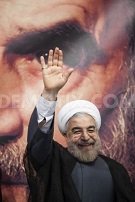
Hassan Rowhani’s election as President of Iran on June 14 is unlikely to materially change the dynamics of the conflict between Iran and the western powers. The “reformists” in Iran who have backed Rowhani want improved handling of Iran’s diplomacy though not at the cost of yielding on principles.

On the nuclear issue and relations with the US, the Iranian positions have become entrenched over a period of fruitless negotiations and cumulation of mutual suspicions, with robust sanctions imposed by the US and Europe and military threats against the country, including by Israel, making the resolution of issues more complicated politically and procedurally.

Situation

The situation has become more tangled because of social and military convulsions in the Arab world leading to the emergence of conservative Muslim Brotherhood regimes in the north African littoral with extremist Salafist groups in tow. This has sharpened the confrontation between Iran and Saudi Arabia, anchored into a widening Shia-Sunni divide in this region as a whole, with Iran being accused of actively feeding Shia turbulence across the Arab world. Possibly even more than the West, the Gulf countries would wish to see the growing Iranian power curbed.

The Syrian issue has added to Iran-related anxieties. Iran is seen as Syria’s strongest regional supporter, with Syria also serving as its link to the Hezbollah in Lebanon. If the Sunni Arab world led by Qatar and Saudi Arabia would want the Alawite regime of President Assad to collapse so that Iranian influence in the region is diminished, Iran would want to retain its influence in the arc consisting of Iraq, Syria and Lebanon and thus remain a vital factor in regional politics.

Barring Turkey, which today seeks an Arab role as an Islamic country, contrary to its historical tilt towards Europe as a secular country, Iran sees itself as the region’s largest country demographically and geographically, with massive energy resources, a well educated and technologically skilled population and potentially the region’s biggest market, and therefore impossible to ignore.

With Shias now ruling in Iraq and Iran’s role in Afghanistan set to expand after the US withdrawal and India’s search for connectivity to Afghanistan through Chabahar for retaining its own influence there, and with Saudi Arabia and Qatar feeling threatened by Iranian power, the Iranians can well conclude that the overall situation is playing in their favour despite western attempts to squeeze their country economically through sanctions.

The Israeli factor is a huge obstacle in the way of any “balanced” resolution of the Iran-West conflict- one that cedes some strategic ground to Iran. Israel would want Iran’s nuclear capability- seen as an existential threat- to be completely eliminated. If concerns that Iran may use its nuclear weapons against Israel in some future scenario seem highly exaggerated, its fears that with its nuclear capability giving it immunity against any retaliation, Iran may provide more potent support to Hezbollah to stage attacks against Israel are less imaginary, as our own experience with Pakistan tell us. This explains why Israel backs the elimination of the secular Assad regime even if it is replaced by Sunni extremist groups, because for it the breaking of the Iran-Hezbollah link through the Alawite Assad regime would be paramount. Significantly, Israel and Qatar are together in this game.

Obama

The pro-Israel lobby in the US is working to ensure that President Obama maintains a coercive line towards Iran. In part to forestall any precipitate Israeli military action, Obama has imposed severe energy and financial sanctions on Iran- the latest on June 3 targeting the already heavily depreciated Rial and Iran’s automotive industry.

For reasons of domestic politics too, the White House seems currently unreceptive to any constructive move to begin untying the Iranian nuclear knot. Obama’s primary focus is on his domestic agenda for carrying through which he needs every vote that he can possibly muster in the House of Representatives. With the Israeli lobby in the Congress already contributing to systematically blocking his initiatives, Obama will not apparently take the risk to alienate it further by any overture towards Iran. John McCain’s hawkish position on Iran has made his position even more difficult.

Rowhani

Rowhani, who was the chief nuclear negotiator when Iran suspended uranium enrichment in 2003, is considered a moderate. His operational style being very different from that of his predecessor, he will avoid antagonizing the US unnecessarily. His election in the first round itself, without accusations of vote-rigging, gives him credibility. However, it is well understood that on key political and security issues, including the nuclear one, it is Ali Khamenei who has the last word. How much can Rowhani’s supposed moderation orient Iranian policies on various contentious issues in a positive direction remains questionable. He will also have to deal with the nuclear hardliners in the Revolutionary Guards Corps and the Qods Force.

During his electoral campaign, Rowhani had called for President Assad to remain in power till the scheduled 2014 elections. At his first press conference on June 17, he ruled out any suspension of uranium enrichment but mentioned his desire to make Iran’s nuclear activities more transparent in order to build international confidence. He reiterated that Iran would welcome direct negotiations with the US if the latter stopped attempting to meddle in Iran’s internal affairs and abandoned its “bullying attitude”. If the West was looking for “new thinking”, that is not discernible yet.

Rowhani, who has dealt with India before, should be a friendly interlocutor. Our relationship with Iran has suffered because of stringent western sanctions against Iran. Although we have handled fairly deftly our difficulties so far, the natural expansion of India-Iran ties will have to await a resolution of the Iran-West conflict.

Monday, April 8, 2013

Joint VIF – GIMI, Seminar on Response to Terrorism and Situation in West Asia


On 28 March 2013, VIF welcomed a delegation from the Galilee International Management Institute (GIMI), Israel for a seminar on Response to Terrorism and Situation in West Asia. The seminar began with opening remarks given by Ambassador P. P. Shukla, Joint Director VIF and Maj. Gen (retd) Dr. Baruch Levy, GIMI. The Seminar was divided into four sessions with specific focus on “Global Terrorism: Response”, “Arab Spring: Implications and Ramifications”, “Af-Pak Post-2014 Scenario: Global and Regional Implications”, and “Geopolitics and Iran”.

Session I- Global Terrorism: Response

The Session was chaired by Ambassador Shukla and had Dr. Levy and Dr. Ajay Sahni as the key speakers. Dr. Levy spoke on the Israeli experience and concepts of global terrorism. Dr. Levy described Israel as an Island in the Middle East with inimical countries surrounding it and asserted that it, therefore, has a pro-active concept of national security where deterrence is achieved by early warning and military performance. Assessing the present situation in Israel and the entire region, Dr. Levy underlined the fact that the threat posed by religious extremism and the weakness of democracies in coping with terror are critical challenges. He asserted that intelligence and security agencies have to conduct both offensive and defensive operations to degrade terrorist organisations. Meanwhile, he also highlighted the need to prepare for handling energy, space and cyber terrorism, which will present new security challenges in the coming years.


Dr. Ajai Sahni focused on state-sponsored terrorism. He argued that all enduring terrorist movements in the world are state-sponsored or state-supported; everything else is tactical. The spectrum of state sponsorship of terror is wider and includes the provision of weapons, training, safe havens, ideological mobilisation, etc. Assessing the situation in India, Dr. Sahni mentioned that more than 62,000 people have lost their lives due to acts of terrorism sponsored by external support. He stressed on the need of open acknowledgement of state sponsorship of terrorism, while, at the same time, continuing to persist in other patterns of engagement with them. Dr. Sahni also stressed on the need to de-legitimise any cause behind an act of terrorism. This inflexible approach would force states away from tactical advantages that terrorism offers.

Session II – Arab Spring: Implications and Ramifications

The second session was chaired by Dr. Joseph Shevel, GIMI, and included Ambassador Kanwal Sibal and Admiral Shabtai Levy as the two key speakers. Amb Sibal spoke on India’s perspective on Arab Spring. He said that the term Arab Spring is a misnomer. It was basically the overthrowing of a regime whose sell-by date had expired. However, Amb Sibal argued that there can be no democracy unless there is a genuine break between religion and politics. He highlighted that there is an anti-thesis between Islam and secularism; they both are incompatible. Amb Sibal said that India is not comfortable with the overthrow of secular regimes and the coming to power of extremists like the Salafists and Muslim Brotherhood. The erstwhile regimes, despite their despotic nature, exercised control over the extremists. He reassured that an Arab style revolution cannot take place in India as the Muslims here are empowered and part of the democratic system.

Adm. Levy began his talk by assessing whether it was an Arab Spring or Winter? The domino effect of the fighting and instability in Syria can reach Israel’s borders. He argued that freedom of navigation is central to Israel’s economic and security interests. Israel has tremendous experience in countering terrorism due to continuous involvement for the past 40 years. Today, Adm. Levy argued, the terrorists are greatly deterred by Israel’s actions and they refrain from touching its aviation systems for hijackings because they know there would be repercussions. He also expressed his hope that the Israel’s peace agreements with Egypt and Jordan will remain intact. Israel has good relations with India, Turkey and Jordan which needs to be strengthened further. The developments in Iran and Afghanistan and the question whether they go into the Salafist/extremist/Al Qaeda fold needs to be observed closely.

Session III – AF–PAK 2014: Regional and Global Security Concerns

The session was chaired by Ambassador Satish Chandra and included Dr. Joseph Shevel and Lt. Gen. (retd) Ravi Sawhney as key speakers. Dr. Shevel began his talk by introducing the work which GIMI has been doing across the globe. Bridging gaps through education and capacity building programs has been the mission of GIMI. Dr. Shevel insisted that through cooperation in higher education and capacity building programs, Afghanistan’s growing instability can be cured. Also, on the Afghanistan’s security aspect, Dr. Shevel argued that a well educated and technically trained Afghan National Army (ANA) would be much more capable of ensuring Afghanistan’s safety post-2014.

Lt. Gen. Sawhney began his talk by describing a well captured image, depicting the ground realities as they were before 2001 and at present. The Afghanistan before 2001 was in rumbles, with no infrastructures like schools, hospitals, etc and no doctors and teachers. However, Lt. Gen Sawhney highlighted that Afghanistan has seen remarkable progress in many aspects of life. Assessing the sense of nationalism in Afghanistan, while Lt. Gen. Sawhney recognized the vast number of tribes and ethnic groups which constitute the nation, he, however, stressed that there is a sense of strong nationalism which holds them together.

On the prospects of Afghanistan post-2014, Lt. Gen. Sawhney addressed certain questions which would be central to the security of Afghanistan and the entire region. First was the question of the extent of forces of the US and NATO which would be left behind post 2014. The second question was on the process of reconciliation between the Afghan Government and the Taliban. Lt. Gen. Sawhney assessed the possibility of any successful reconciliation to be remote as Taliban insurgents do not seem to be willing for any reconciliation at all. The third question was of the Presidential elections which are to be held in April 2014. Lt. Gen. Sawhney argued that it would be absolutely necessary to see that the elections are held before the withdrawal and that the newly elected government gets sufficient time to establish firm control over the country.

SESSION IV – Geopolitics and Iran

The fourth session was chaired by Ambassador R. Rajagopalan and included Maj. Gen. (retd) Dr. Baruch Levy and Dr. Arvind Gupta as the key speakers. Dr. Levy, firstly, mentioned the long civilization history of Israel and Iran, describing how the two civilizations have, in fact, had periods of friendly relations. However, Iran, since 1979, has gone deep into fundamentalism and instead of becoming a liberated society, Iran has become an oppressed one. Iran has also taken up terrorism and has lead in sheltering, training and investing in terrorism and terrorist activities. Dr. Levy also expressed his concerns on Iranian nuclear program. Discussing the upcoming elections in Iran, Dr. Levy argued that a new President could bring about a policy change in Iran.

Dr. Arvind Gupta analyzed the much broader concept of geopolitics in context of Iran. It is an ancient civilization which gives its people tremendous depth and insight; it has an exceptional geographic location, dominating the Persian Gulf; it connects with Eurasia, South Asia, and controls an important Strait of Hormuz; it is the largest Shia country; and its ongoing nuclear program affects the security concerns of the West, GCC, etc. As far as the nuclear program is concerned, Dr. Gupta argued that Iran may survive the economic sanctions which have been put to stop Iran from pursuing the development of nuclear weapons. While affirming that the sanctions have hit the economy badly, there are doubts whether the sanctions will bring down the current regime. As Dr. Gupta rightly pointed out, Iran and its people have faced tough conditions in the past and they will readily cooperate with the regime, considering the fact that the nuclear project is a matter of national pride.


On the speculation of an attack on Iran, Dr. Gupta underlined the fact that Iran has a strong air defence system. He also highlighted that their nuclear projects and military establishments are underground and spread across vast lands, thus any ground military action will be too expensive. On Indian relations with Iran, Dr. Gupta asserted that it is highly speculative. Iran has not forgotten India’s vote against it in a resolution passed by the IAEA. Yet, considering the issues of energy security, India would need oil supplies from Iran, despite the tremendous amount of cut down which India has already introduced on Iranian-oil imports.

Ambassador Shukla concluded the seminar, thanking all the chairs and speakers. He thanked the delegation from GIMI and expressed his hope for more exchanges with specific focus on the agenda of Afghanistan post-2014 and Israel’s role in it.

Monday, March 4, 2013

Peace in Afghanistan: Decoding The London Trilateral


Monish Gulati

Introduction

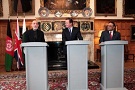
Afghan President Hamid Karzai and Pakistani President Asif Ali Zardari were in London on 03 February 2013 for a trilateral summit meeting with the British Prime Minister David Cameron. The current talks in London were the third in the series with the first two having been held in 2012. The inaugural meeting was in Kabul in July, which was then followed by a meeting at the sidelines of the UN General Assembly in September. In the London talks, the Pakistani and Afghan army and intelligence chiefs took part for the first time. It was reported that the Afghan and Pakistani military and intelligence officials also met informally on 03 February ahead of the summit.1

The Afghan peace process, primed by the release of Taliban detainees by Pakistan, had not been progressing as hoped by all stakeholders. On the other hand, Pakistan in return for the Taliban detainees it had released, expected further cooperation from Afghanistan including a role in training of Afghan National Security Forces (ANSF). Some analyst also felt UK was best placed to resolve the issue of the Durand Line which has never been officially recognized by Kabul, and has been a major cause of tension between the two countries. 2

Issues

Leading up to the London trilateral, there were two events of significance after the Paris peace talks in December 2012. First was the visit by Karzai to Washington where he and President Obama announced on 11January that a negotiating office for the Taliban would be opened in Qatar. However Karzai, on return to Kabul, said there will be no deal until Qatar meets his earlier stated conditions in writing. Second was the core group meeting in Dubai where the Pakistan‘s foreign secretary had said that Pakistan plans to release all Afghan Taliban prisoners still in its custody.

The Afghan President in his imitable manner set the tone for the trilateral meet with an interview to the Guardian and ITV released late on 03 February. He suggested that Pakistan was preventing the Taliban from entering into peace talks with his government. Karzai also said that the biggest threat to peace in Afghanistan was not the Taliban, but meddling from foreign powers. He took a swipe at the British when he remarked that Helmand situation and security was better before British troops were deployed there in 2006.Hinting at the Taliban safe havens in Pakistan he added that the drawdown of Western troops appeared to have been because they had realised that “they were fighting in the wrong place.”

Taliban for Talks

The US has tried to accelerate the peace process by working with Britain, Norway and Germany to reach out to the Taliban. 3 All these efforts were to work around the Taliban demands for changing the Afghan constitution, withdrawal of all foreign troops from Afghanistan and the most uncomfortable of their entire refusal to recognize the Afghan government while being more amenable to negotiating directly with US.

Taliban Office

The heart of the disagreement regarding opening of Taliban office in Doha is Karzai's demand that Qatar produce a written memorandum of understanding agreeing to his preconditions. These demands include assurances that the office would not be used for any “political purpose” other than direct negotiations with Afghanistan, that it have a fixed time frame and be closed if talks do not take place, and that all Taliban negotiators provide “documentation” proving they are legitimate representatives.4 Qatar has not agreed on the demands of Karzai Administration that the office should be closed down within six months if Taliban do not start direct talks with HPC.

Release of Detainees

Pakistan’s lack of monitoring the whereabouts and activities of Taliban prisoners it released in recent months as frustrated Afghanistan. Pakistan says doesn't have the resources to keep track of the freed detainees. The HPC had handed Pakistan the list of prisoners, including Turabi, that it wanted freed. They have also asked for the release of the Taliban’s former second in command, Mullah Abdul Ghani Baradar, but Washington has urged Pakistan not to release him.5 There are indications that at least more than half might have rejoined the ranks of the insurgency.6 In some cases, the released Taliban resorted to suicide attacks. Further Pakistan had released more detainees than Afghanistan had asked for. There has been at least one report of tension between Taliban leadership as a released Taliban leader asked to be reinstated to his former post. The US Embassy in Kabul has called for “responsible release” of Taliban prisoners and that it was up to Afghanistan and Pakistan to reach to a solution.7

US Interests

Top on the US agenda is jump-starting the peace and reconciliation process which is not in-step with its drawdown plans and its exit strategy. Without a meaningful outcome of the political planned in Afghanistan, the US fears will again be accused of abandoning the region, just as it was at the end of the Soviet Union's Afghan occupation in the early 1990s. Worse, if a civil war breaks out, it may do an ‘Iraq’ in South Asia. In addition, U.S. hopes of positioning a post-withdrawal counterterrorism force in Afghanistan while in the near term negotiations are critical to secure the release of Sgt. Bowe Bergdahl, the only U.S. service member known to be a Taliban captive.
Pakistani Demands
Pakistanis want a secure Afghan border, an end to the Balochistan insurgency, coordinated action against anti-Pakistan guerrillas in both countries and reduction of Indian role in Afghanistan. According BBC News, Pakistan does not want a repeat of the 1989 pullout by Soviet forces, which left Kabul in the hands of what it regarded as "unfriendly" forces. It fears this may extend Indian influence to its western border.

Trilateral Summit

Following talks the joint statement issued from Downing Street said, "All sides agreed on the urgency of this work and committed themselves to take all necessary measures to achieve the goal of a peace settlement over the next six months." They urged the Taliban to join the reconciliation process in Afghanistan. Cameron said both Karzai and Zardari had agreed at the summit to initiate 'an unprecedented level of co-operation' between their nations and they hoped to sign an agreement strengthening ties on economic and security issues, including trade and border management, later in the year. He added that discussions at the summit had focused on ways of advancing the Afghan-led peace process as well as strengthening relations between Pakistan and Afghanistan.8

Outcome

All sides affirmed support for the opening of a Taliban office in Doha for the purpose of negotiations with the HPC. They called on the Taliban to take steps necessary to open an office and to enter into dialogue. However there were reports that Pakistan viewed the Afghan conditions as detrimental to further progress on the peace talks.9 Another significant commitment was to “strengthen co-ordination of Taliban detainee releases from Pakistani custody.” In future Islamabad will send the list of the Taliban inmates to the HPC that would be released from Pakistani prisons. It had been speculated that the Afghan Government will indirectly recognize the Durand Line in a pact “titled Border Management and Strategic Agreement”, and in turn Pakistan shall push the Taliban for peace. As per Afghan media when the US pressurized Pakistan for supporting insurgents, General Kayani justified Pakistani action in a 100-page report claiming that NATO, India and Afghanistan wanted to divide Pakistan.10 The Afghan presidential spokesman, on 10 Feb clarified that the issue of the Durand Line had not been discussed at the trilateral.11

Transitional Government

It has also been reported that the Pakistan’s delegation during the London talks demanded that negotiations be carried out between Afghan political groups and Taliban to establish a new legitimate administration in Kabul. It is said that Pakistani delegation had told President Karzai that they were not able to get the Taliban to accept the Afghan Constitution and the Afghan Government, therefore, there is a need to establish a ‘new political system’.12 According to sources, Pakistan held a meeting between warlords, Hezb-e-Islami and the Taliban commanders in the Shamshatoo Refugee Camp in Pakistan where the establishment of a transitional Government in Afghanistan was discussed.13

An Afghan Taliban spokesman on Wednesday dismissed the outcome of a conference in London and said that the conference and other “horse trading” were “the real obstacles of effective and fruitful negotiations between the factual sides”.14 The US on its part said that it supports the Pak-Afghan deadline for finalising a peace deal with the Taliban and urges insurgents to open a reconciliation post in Qatar. Such a process was “the surest way to end the violence and ensure lasting stability in Afghanistan and in the region”. “Our goal here has been to support the creation of a process to make it possible … for willing Taliban participants to talk directly to the Afghan High Peace Council”.15

The trilateral was followed by two visits. First was a two-day visit by the British Defense Secretary Philip Hammond to southern Afghanistan to visit U.K. troops on 05 Feb 13. He also met with new Afghan Defense Minister Bismillah Mohammadi in Kabul. 16 The second visit was by Pakistani Prime Minister Ashraf to meet David Cameron on February 12, 2013. During the meeting, the two leaders discussed matters of bilateral interest including the aftermath in Afghanistan following the withdrawal of NATO troops. Prime Minister Ashraf also put in a bid for military hardware for Pakistan. The meeting also covered Indo-Pakistan relations apart from discussions on matters of bilateral and international importance. Cameron, hailing the recently concluded trilateral meeting, said that Pakistan’s role was constructive and he would be visiting Pakistan this summer to carry the process forward.17

Assessment

The trilateral summit meets are organised taking in consideration certain ground realities. For one it is not possible to discuss Afghanistan with India and Pakistan in the same forum. Therefore, US conducts a trilateral involving India while the UK manages one with Pakistan. Second, UK has been more active in dealing with the Taliban representatives and involving them in the power sharing mechanism in Kabul( since the Saudi organised peace talks in 2009) and the same time it mitigates the turbulent relationship Pakistan shares with US particularly for the political constituency in Pakistan. The present meet involved the military and intelligence chiefs giving due recognition to the various power centres in Pakistan, and possibly signaling a more direct and on the table approach to speed up the process.

Although the Taliban appear more ready to talk than ever before, peace talks remain tenuous on account of a rising number of interlocutors on either side — all trying to get some kind of negotiations started with various combinations of stakeholders. Reportedly, members of the Taliban are in contact with representatives from 30 to 40 different countries. Recent informal talks in Doha had the intervention of a Pakistani politician Mullah Fazlur Rahman and Yusuf al-Qaradawi who has contacts with the Muslim Brotherhood in Egypt. The timeline of six months set by the trilateral summit, deemed overly optimistic by most experts, is most probably derived from the imperative to get the Taliban to participate in the upcoming provincial and Presidential elections in Afghanistan and the filing of nominations for the same. There is also this need to settle the border issue and Pakistani requirements at the earliest to get on with the peace process in right earnest.

Second, the idea of the transitional government being introduced into the peace process aims at finding a way around the Taliban’s refusal to deal directly with the Karzai government. The idea of transitional government also puts pressure on the Afghan government to dilute its demands concerning the Taliban office in Qatar.
Another issue of note is the Pakistani demand of weapons from UK. The armaments in question would most likely be those being moved out of Afghanistan by the British troops as a part of their drawdown. Pakistan has made a similar demand to the US coinciding with the move of the first lot of containers from Afghanistan through Pakistan. Third is the Pakistani desperation to get the SPA through comes from the fact that NATO/ISAF countries are basing their training mission in Afghanistan post- 2014 on their respective SPAs signed with Afghanistan. India, unlike Pakistan, having signed an SPA with Afghanistan is better placed to ramp up its training role post- 2014. India has viewed with unease the British efforts to push through the SPA between Afghanistan and Pakistan.

It is widely believed that British interlocutors had a leading role in the drafting of the five-point peace process roadmap for Afghanistan which mainly addresses Pakistan and Taliban interests in the region. There is a sense that the elements of the erstwhile Northern Alliance, more favourable aligned to India, are being sidelined in the peace process. India is also uncomfortable with the distinction US has made between Al-Qaeda and other militant groups operating in the region for pushing through the peace process. Taliban, TTP, IMU etc may not pose any threat to the US but they definitely have security implications for India.
Indian apprehensions also stem from the fact that it believes the entire peace process is Pakistan-centric and does not address the regional concerns. To that end India is contemplating talks with Russia and China to give the peace process a more regional outlook. India is also of the opinion that due consideration must be given to the interests of countries which are investing, particularly in the infrastructure sector, in Afghanistan. India feels that British intervention through a hastily-cobbled deal between Afghanistan and Pakistan including bringing the Taliban into the power structure in Kabul, aims to give the NATO and the US an honourable exit from Afghanistan.

Conclusion

When viewed favourably it can be said that the London trilateral represented a convergence of three of the most important players in Afghanistan on the urgency of resolving issues and making efforts towards peace through a political settlement. The big question however remains whether Karzai has accepted the need to have a Taliban office in Doha sans conditions and in turn his demand to be the sole Afghan interlocutor with the Taliban has been accepted by the other concerned parties.

Endnotes
  1. Michael Lipin. ‘Britain's Cameron Hosts 3rd Summit With Afghan, Pakistani Leaders’, February03, 2013. http://www.globalsecurity.org/military/library/news/2013/02/mil-130203-v...
  2. Trilateral Summit in London, Outlook Afghanistan, February 03, 2013. http://outlookafghanistan.net/editorialdetail.php?post_id=6545
  3. Taliban hint at sharing power, yet Afghan peace effort fraught with mistrust, confusion, Washington Post, February 04, 2013. http://www.washingtonpost.com/world/asia_pacific/taliban-hint-at-sharing...
  4. Mariya Karimjee. ‘UK PM Cameron to host peace talks between Afghanistan and Pakistan‘,Globalpost, February 03, 2013
  5. Taliban hint at sharing power, yet Afghan peace effort fraught with mistrust, confusion, February 4 http://www.washingtonpost.com/world/asia_pacific/taliban-hint-at-sharing...
  6. ‘Freed Taliban fighters return to insurgency, frustrating peace efforts in Afghanistan,, Fox News, February 21, 2013. http://www.foxnews.com/world/2013/02/21/freed-taliban-fighters-return-to...
  7. Tolo TV Headlines, February 10, 2013.
  8. Pak, Afghan Leaders To Seek Peace Settlement Within Six Months, February 05,2013. http://www.finanznachrichten.de/nachrichten-2013-02/25886260-pak-afghan-...
  9. Kamran Yousaf, ‘The Qatar initiative: JUI-F chief features in Doha talks’, The Express Tribune, February 11, 2013. http://tribune.com.pk/story/505597/the-qatar-initiative-jui-f-chief-feat...
  10. Cheragh Daily, February 11, 2013.
  11. Pajhwok Afghan News, February 11, 2013.
  12. Hasht-e-Subh Daily, February 10, 13
  13. Sarnavesht Daily, February 10, 2013.
  14. Taliban dismiss outcome of Pak-Afghan-UK conference, Dawn, February 06,2013.
  15. US supports Pak-Afghan deadline for Taliban deal, Dawn, February 06, 2013
  16. UK Defense Secretary Visits Afghanistan, ABC News, February 7, 2013.
  17. Pakistan seeks military hardware from Britain, The Nation, February 13, 2013 http://www.nation.com.pk/pakistan-news-newspaper-daily-english-online/na...

Wednesday, February 20, 2013

As US goes Retrograde in Afghanistan Pakistan gets an Upgrade


Monish Gulati

Introduction

Kicking-off the first phase of the US pull-out from Afghanistan, two convoys of 25 containers each crossed the Torkham and Chaman border check-posts in Pakistan on 10 Feb 2013. The containers, “part of the US redeployment of equipment from Afghanistan”, were on way to Karachi to be shipped back to the US. The move oddly signifies the start to what president Obama termed in his SOTUS to the American nation on 12 February 2013, the “end of our war in Afghanistan”. At the same time in sharp contrast yet within the same process, Maulana Fazlur Rahman, the leader of Pakistan’s Jamiat Ulema-e-Islam Fazl (JUI-F) faction with tacit approval of the Pakistan federal government, met with the Afghan Taliban representatives in Doha, Qatar. A move that sees Pakistan ‘upgrade’ itself into the lead role in the ‘Afghan-owned’ peace process after the London trilateral summit meeting held on 3-4 February 2013.

Mawlana Fazlur Rahman, the leader (amir) of the JUI-F left for Qatar on 09 February to hold talks with Taliban. 1 According to a report, it was on the invitation of the Taliban. The Maulana was accompanied by a member of the Pakistan National Assembly from the tribal areas, Haji Munir Khan Orakzai. They met a group of Taliban representatives led by Tayyab Agha and assisted by Shahabuddin Delawar on 10 February 2013 at a farmhouse in the suburbs of Doha in a first such direct meeting between representatives from Pakistan and the Afghan Taliban. 2 Tayeb Agha is a close aide and former secretary to Mullah Omar, and Shahabuddin Delawar was the Taliban envoy to Riyadh during the Taliban rule in Afghanistan.

Though Mawlana Fazlur Rahman is currently in the political opposition, the influential politician is believed to have been holding talks with the Taliban on behalf of Pakistan. There is no official confirmation from either Pakistan or Afghanistan about the nature and the exact purpose of the talks in Doha. However, as reported by the Pakistani media the JUI-F leader went to Doha as part of the Pakistani efforts to persuade the Taliban to come to the negotiating table. 3 In an interview on 09 February 2013, the central leader of JUI-F, Hafiz Hussain Ahmed stated that JUI-F chief had been invited to participate in the reconciliatory process between the US and Taliban. 4 He added that negotiations were also aimed at exploring ways of how Pakistan could become part of the Qatar initiative (Doha process). 5


Afghan Position

Commenting on the trip of Maulana Fazal-Ur-Rahman to Qatar, the Afghan Foreign Minister Zalmai Rassoul said that no talks had started with the Taliban officials in Qatar as yet and no office had been opened for the Taliban in Qatar as yet. 6 There were also reports that the Mawlana’s trip to Qatar has neither been welcomed by the High Peace Council (HPC) nor by the Afghan Government. 7 However, according to some reports in the Afghan media the HPC welcomed the recent of visit of Pakistan’s JUI-F leader, but said the Council had no prior information about the trip. The HPC added that despite being unaware of the nature of negotiations in Qatar the talks will have a positive impact on the peace process. 8

Pakistani Position

Pakistani Interior Minister Rehman Malik in his remarks on 10 February 2013 distanced the government from the JUI-F chief’s participation in the Afghan peace talks in Doha. Malik said the JUI-F chief was no longer an ally of the Pakistan People’s Party (PPP) led government and was taking part in the Doha talks ‘in his personal capacity’. He added that “Fazlur Rehman is the head of an independent party… the government does not have any business in his negotiations with the [Afghan] Taliban or any other stakeholder.” 9 Reports in Pakistani television channels suggested the visit was part of the Pakistani government’s efforts to reach out to members of Afghan Taliban, representatives of which are already in Doha to hold preliminary talks about opening their political office. 10

JUI-F Position

The special spokesman accompanying Maulana Fazlaur Rehman on his visit to Qatar told the media that the Maulana is in Qatar on four-day party tour and he is holding consultations with the party workers in Qatar. 11 “We are here and going to meet the Pakistani community and some Qatari officials in the next couple of days, it is a trip on the invitation of the Pakistani community. Nothing else, this is a private tour”. 12

While the exact details of the outcome of the meeting in Doha have not been disclosed, it has been reported by the Afghan media that that during the meeting the Taliban said that they will only negotiate with the Kabul administration if it agrees for the establishment of transitional Government. A member of the HPC said that “peace is an Afghan-led and Afghan-owned process, if it’s ignored by any country, we will not accept it.” 13

Analysis

In a joint statement issued after the London summit, Karzai, Zardari and David Cameron had supported the opening of an office in Doha for the purpose of negotiations between the Afghan Taliban and the HPC. It was reported that Pakistan had certain reservations over the proposed initiative particularly regarding the preconditions that the Karzai administration consistently attaches to the Doha process. Karzai’s government wants that Doha office should only be used for negotiations between the Afghan Taliban and the Afghan HPC. Pakistan felt that such preconditions were more of a hindrance to a “broad based all-inclusive reconciliation process”. 14 The Pakistani viewpoint could have come from its need to involve the Maulana as its representative, to take lead role in the initiative and speed up the peace process.

Maulana Fazal-ur-Rahman is one of the few the political leaders of Pakistan, who, wields considerable influence across the Pakistan border in Afghanistan. The Afghan Taliban has received support from the madrassas run by Maulana's faction of the Jamiat-i-Ulema-i-Islam (JUI). Fazl ur-Rahman built his public image by supporting Zulfaqir Ali Bhutto's daughter Benazir Bhutto during her second term as the prime minister. His cooperation with the PPP to some extent diminished temporarily his party's image. He had charges leveled against him regarding supply permits for exporting diesel from Pakistan to Afghanistan, which earned him the nick name ‘Maulana Diesel’. Maulana Fazal is from the dominant Deobandi school of thought, the same ideology as that of the Pakistan and the Afghan Taliban. It is said that the Maulana also played a role in the last year’s secret talks between the US, Taliban and Germany in Qatar. President Karzai is also supposed to have sent a letter to the Maulana to encourage the Taliban to join peace talks.

JUI-F and TTP


Maulana Fazal-ur-Rahman is among three mainstream Pakistani political leaders whom the TTP has chosen to be a guarantor in its latest offer for peace talks with the country’s military. The JUI-F leader has indicated that he is ready to play the role of a mediator between the Pakistani authorities and the TTP. 17

Maulana Fazlaur Rehman’s brother and member of the National Assembly, Maulana Attaur Rehman also confirmed that JUI-F is seriously reviewing the offer of becoming a guarantor on behalf of the TTP in government-TTP peace talks. He said that the JUI-F supports dialogue with the TTP. 18


A leader of Egypt’s Muslim Brotherhood party, Yusuf al-Qaradawi, also went to Qatar to hold talks with the Taliban. 19 It’s said that Dr al-Qaradwai has contacts with the Taliban’s office in Qatar and that he played a role to spur the negotiations. Al-Qaradawi has a prominent role within the intellectual leadership of the Muslim Brotherhood and a professional relationship with the Seerah and Sunnah Center at Qatar University.

Implications for India

Maulana Fazl-Ur-Rahman, is also the Chairman of the special committee of the Pakistan National Assembly on Kashmir. The present special committee was constituted on 19th August, 2008. The maulana with his string of madrassas has today emerged as the ‘thread’ that links the Afghan Taliban, the TTP and Kashmir. He has the ear of the Pakistani and Afghan governments and he will have the US support once he secures the release of Sgt Bowe Bergdahl form the Taliban; and that of the NATO once he gets the Taliban to the negotiating table. This ‘thread’ winds down to Dar-ul-uloom in India. The Maulana’s position on India is well known. The involvement of the Maulana in the peace process raises the possibility of the Afghan Taliban and the TTP being on to a common platform, greater focus on Kashmir and reduction in India’s role in Afghanistan’s future. Irony of the situation is that the man who has provided the Afghan Taliban foot soldiers and religious legitimacy is negotiating peace for US/NATO while representing Pakistani interests.

End Notes
  1. ‘Fazl off to Qatar for Taliban talks’, The Nation, February 10, 2013.
    http://www.nation.com.pk/pakistan-news-newspaper-daily-english-online/na...
  2. Kamran Yousaf, ‘The Qatar initiative: JUI-F chief features in Doha talks’, The Express Tribune, February 11, 2013. http://tribune.com.pk/story/505597/the-qatar-initiative-jui-f-chief-feat...
  3. ibid

  4. JUI-F joins US-Taliban reconciliatory process for bringing peace in Afghanistan’, South Asian News Agency ,February 9, 2013 http://www.uruknet.de/?p=m95089&hd=&size=1&l=e
  5. Ser 2.
  6. Shamshad TV Headlines, February11, 2013.
  7. Hewad Daily, February 11, 2013.
  8. Hasht-e-Subh Daily, February13, 2013).


  9. Afghan peace talks: Govt distances itself from Fazl’s move’, The Express Tribune, February 11, 2013.
    http://tribune.com.pk/story/505580/afghan-peace-talks-govt-distances-its...
  10. Zia Khan. ‘Leading Pakistani cleric in Doha as Afghan Taliban get ready to open office’, Gulf Times, February 10, 2013. http://www.gulf-times.com/qatar/178/details/341638/leading-pakistani-cle...
  11. ‘JUI-F joins US-Taliban reconciliatory process for bringing peace in Afghanistan’, South Asian News Agency, February 9, 2013 http://www.uruknet.de/?p=m95089&hd=&size=1&l=e
  12. Ser 10.
  13. Tolo TV, February 12, 2013.
  14. Ser 2.
  15. http://www.abdallahshah.com/JHI-F.html
  16. Hasht-e-Subh Daily, Editorial, February 13, 2013.
  17. Ser10.
  18. Ser11.
  19. Ser8.