Kanwal Sibal
(Member, VIF Advisory Board)
The back-to-back visits of the president of France, Francois
Hollande, and the Prime Minister of Britain, David Cameron, last month
have put the spotlight on India’s relationship with Europe. Some
belittle the importance of this relationship as Europe is seen as
economically crisis-ridden, lacking in dynamism, to be declining
militarily and too prone to act as a super NGO in propagating its
values. The belief that economic, political and even military power is
shifting towards Asia underlies this depreciation of our partnership
with Europe. While the relative decline of the United States of America
is recognized, its recovery is considered more certain than that of
Europe. The high growth rates in India in recent years, the projection
that India will become the third largest economic power by 2030 and the
bracketing of India with China has also inflated our sense of
self-importance vis-à-vis Europe.
Some pundits have the gumption to say, without being too
self-conscious of India’s own glaring governance failures that allow
abysmal levels of poverty to persist, that if France is to become a
partner more in sync with a new post-liberalization India, the key would
be to make itself meaner and leaner at home. This refers to the hard
decisions France needs to take on welfare costs and government-spending.
The United Kingdom, which is financial-services reliant, is scoffed at
as a serious economic partner in view of its eviscerated manufacturing
sector and the economic crisis afflicting it, a reality seen to limit
the scope of any substantial UK investment in India’s infrastructure.
The non-committal language of the India-UK joint statement on British
participation in a possible Mumbai-Bangalore industrial corridor
reflects this.
Yet, the European Union is India’s biggest trade and investment
partner. India weathered well the US financial crisis, but the Eurozone
turmoil has affected it appreciably. India and the EU are negotiating a
free trade agreement in which both France and Britain have an important
say. France and the UK, as the fifth and sixth largest economies in the
world respectively, are all-important partners for a rising India.
France has great strengths in the nuclear, space and defence sectors,
and these, along with urban development and infrastructure areas got
highlighted during Hollande’s visit. The UK too has several advanced
defence technologies to offer and its strengths — healthcare, education
and other services — came under focus during Cameron’s visit. Both, as
permanent members of the United Nations Security Council, weigh
critically on international security issues. Both engage with India
within the G-20. In the World Trade Organization and climate change
negotiations, India has to contend with European positions determined
with French and British participation.
Some argue that France is not as much a diplomatic and strategic
asset for India as before because the US is setting the pace for global
accommodation of India, and Paris and London now follow in Washington’s
wake. But this argument exaggerates both the degree of strategic
convergence between India and the US and the degree of US hegemony over
Europe. Such thinking implies that we should simply adjust ourselves to
US’s strategic priorities and the vagaries of its political processes
and moods. Such strategic over-reliance on any one country is hardly
compatible with India’s global ambitions. Partnership with a country
like France, still attached to its independence in decision-making,
helps India to maintain its strategic autonomy.
Despite a remarkable improvement in India-US ties, our respective
views differ on, for instance, handling Pakistan, its role in terrorism
and its nuclear activity supported by China, the end-game in Afghanistan
and overtures to the Taliban. Views are also different on the sanctions
on Iran and military threats against it that have squeezed India’s oil
trade and potentially imperil its interests in the Gulf, the bombing of
Libya, the regime-change being promoted in Syria and the willingness to
accommodate extremist religious forces in the Arab world. On some of
these issues, as for example, seeking accommodation with the Taliban and
the responsiveness to Pakistani ambitions in Afghanistan, Britain is
ahead of the Americans and India needs to press it to be more
transparent with it on British diplomacy in the region. France is with
the US on Iran and Syria, but it has ceased supplying advanced or new
military platforms to Pakistan in deference to India’s sensitivities,
which the US disregards. With both countries, strengthened
counter-terrorism cooperation is an asset for combating a threat to
which India is especially vulnerable because its epicentre lies in
Pakistan next door.
Britain and France are allies of the US and therefore on political
and security issues, though not on economic issues, their policies have
considerable convergence. But the edgy competitiveness between France
and the Anglo-Saxon world for political space should not be
underestimated either, not to mention their clashing versions of
capitalism, with the French welfare model with strong unions and labour
laws inviting relentless American and British broadsides. All three
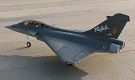
compete quite ferociously with each other in India, as the 126 fighter
aircraft contract demonstrated. The US felt mortified at the loss of the
contract to the Europeans, and the British continue to question India’s
wisdom in choosing the Rafale over the Eurofighter and still hope the
deal to get somehow unravelled to their advantage. Hollande’s visit,
however, saw both sides noting the progress of ongoing negotiations on
the medium multi-role combat aircraft programme and looking forward to
their conclusion. This was, no doubt, much to the discomfiture of the
British. As compared to the highly legalistic, intellectual property
rights ridden US approach to technology transfers, the French are much
easier partners in this regard. All in all, France is way ahead of the
US in meeting India’s defence needs in terms of aircraft, submarines,
missiles and so on. France is negotiating a major project of joint
development and manufacturing of a short range surface-to-air missile
with India’s Defence Research and Development Organization, which, until
President Barack Obama’s India visit, was under US sanctions. Cameron
supports greater cooperation between DRDO and the UK Defence Science and
Technology Laboratory. French and British supplies of defence equipment
are, furthermore, not accompanied by intrusive end-use monitoring
requirements, as is the case with US supplies.
France has much more advanced nuclear reactors to offer India than
the US. Its civilian nuclear deal with India excludes many controversial
provisions of the India-US deal and provides for “full civilian nuclear
cooperation”— a code word for the transfer of enrichment and
reprocessing technologies, which the US has excluded from the purview of
its cooperation with India. France is ready to work with India within
the framework of the rules of our Nuclear Liability Act, which the US
companies refuse to do. As agreed during Cameron’s visit, India and the
UK will now begin negotiations on a civil nuclear cooperation agreement.
Indo-French cooperation in space has been intensive, with Arianespace
launching India’s INSAT satellites, the launching of jointly-developed
satellites on Indian launchers — the SARAL being the second — and France
using the PSLV to launch its SPOT 6 satellite in September last year.
The two countries are drawing up a long-term plan of cooperation in
satellite technology, an area that remains outside the scope of India-US
cooperation. The UK is not India’s partner in space.
Both Hollande and Cameron manifestly want deeper ties with India. We have an opening to build stronger partnerships with both.