Showing posts with label Rafale. Show all posts

Friday, April 17, 2015

A Bold Political Decision for a Crucial Defence Need

Nitin A Gokhale, 
Editor & Senior Fellow, VIF

The saga for procurement of 126 Medium Multi-Role Combat Aircraft (M-MRCA) for the Indian Air Force (IAF) actually began in 2001, gathered steam in 2007 and was stuck in price negotiations for the past three years. Meanwhile, the IAF's combat fighter jet strength was depleting fast. Over the past couple of years, the Air Force top brass was alarmed enough to tell the government that its conventional combat edge even against Pakistan was in danger of being lost.

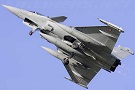
So last week, hours before Prime Minister Narendra Modi embarked on his three-nation tour, a political decision was taken to explore the option of buying Rafale jets through a government-to-government (G-to-G) contract with France. The breakthrough will now allow the IAF to induct Rafale fighter jets in a two year time frame and at least partially make up for its depleting combat jet strength.

However, it is the next step in aircraft procurement that will be watched intently. Will this decision of going for G-to-G mean that all future purchases of this magnitude will be handled in this manner? If so, what happens to the much-touted Make in India programme? The roadmap is not clear but Defence Minister Manohar Parrikar gave enough hints about what the government is thinking in an interview that this writer co-hosted on Monday for Doordarshan (https://t.co/jktB9j7EYI).

Not surprisingly, skeptics have hit out at the decision. The criticism has ranged from "it's too little too late," to "it goes against the Make in India concept." But both Modi and Parrikar were clear that they had to put the interest of the IAF above everything else and which what they have done. Mind you, procuring 36 Rafales is just a stop-gap arrangement to arrest the rapidly falling numbers in IAF's combat fleet.

Lauding the Prime Minister for taking a bold decision in breaking the Rafale deadlock, Parrikar said future large procurements for the IAF and indeed for the armed forces at large, will have to be G-2-G but Make in India will also get a look in for other projects. For instance, IF more Rafales, were to be bought--over and above 36 decided now--Dassault could be asked to manufacture them in India. Even if any other lighter aircraft was to be selected, the pre-condition will be a tie-up with an Indian company or consortium.

It is to Parrikar's credit that he decided to think differently on a knotty issue and suggested a way out to the Prime Minister. In fact, in less than six months after taking over, Parrikar has studied various complex issues dogging the defence ministry and has come to his own conclusions on what needs to be done. By his own admission, Parrikar spent the first four months as defence minister in taking inputs from a range of experts both within and outside the MoD before making up his mind.

In his review, Parrikar also found that the bureaucracy in the ministry—both civil and military--was sitting on some 400-odd big and small projects that are critical to the three armed forces. Without getting into details, he said: “The first thing I did was to look at projects that are stuck at various stages of clearances since the most common complaint across the board was ‘nothing moves’ in the MoD.” A thorough review revealed that nearly one-third of the 400-odd projects were now irrelevant. So they were discarded. About 50 projects were accelerated since they were of critical importance.

A decade-long impasse in defence acquisitions has been broken with the decision on Rafale, raising renewed hope in the sector. Parrikar has brought in a sense of purpose in the notoriously obdurate MoD bureaucracy. “There was no control over the system. There were no reviews, no feedback and there was no fear of punishment for non-performance. An important ministry like Defence cannot run like this,” Parrikar said in an interview. So he has now instututed a time-bound performance review system aimed at speedy clearances and implementation of projects.

Hopefully, the new measures will revitalise the functioning of the crucial arm of the government in coming months.

Published Date: 17th April 2015, Image Source: http://www.worldwide-military.com

Thursday, March 7, 2013

Friends with Benefits


Kanwal Sibal 
(Member, VIF Advisory Board)

The back-to-back visits of the president of France, Francois Hollande, and the Prime Minister of Britain, David Cameron, last month have put the spotlight on India’s relationship with Europe. Some belittle the importance of this relationship as Europe is seen as economically crisis-ridden, lacking in dynamism, to be declining militarily and too prone to act as a super NGO in propagating its values. The belief that economic, political and even military power is shifting towards Asia underlies this depreciation of our partnership with Europe. While the relative decline of the United States of America is recognized, its recovery is considered more certain than that of Europe. The high growth rates in India in recent years, the projection that India will become the third largest economic power by 2030 and the bracketing of India with China has also inflated our sense of self-importance vis-à-vis Europe.

Some pundits have the gumption to say, without being too self-conscious of India’s own glaring governance failures that allow abysmal levels of poverty to persist, that if France is to become a partner more in sync with a new post-liberalization India, the key would be to make itself meaner and leaner at home. This refers to the hard decisions France needs to take on welfare costs and government-spending. The United Kingdom, which is financial-services reliant, is scoffed at as a serious economic partner in view of its eviscerated manufacturing sector and the economic crisis afflicting it, a reality seen to limit the scope of any substantial UK investment in India’s infrastructure. The non-committal language of the India-UK joint statement on British participation in a possible Mumbai-Bangalore industrial corridor reflects this.
Yet, the European Union is India’s biggest trade and investment partner. India weathered well the US financial crisis, but the Eurozone turmoil has affected it appreciably. India and the EU are negotiating a free trade agreement in which both France and Britain have an important say. France and the UK, as the fifth and sixth largest economies in the world respectively, are all-important partners for a rising India. France has great strengths in the nuclear, space and defence sectors, and these, along with urban development and infrastructure areas got highlighted during Hollande’s visit. The UK too has several advanced defence technologies to offer and its strengths — healthcare, education and other services — came under focus during Cameron’s visit. Both, as permanent members of the United Nations Security Council, weigh critically on international security issues. Both engage with India within the G-20. In the World Trade Organization and climate change negotiations, India has to contend with European positions determined with French and British participation.

Some argue that France is not as much a diplomatic and strategic asset for India as before because the US is setting the pace for global accommodation of India, and Paris and London now follow in Washington’s wake. But this argument exaggerates both the degree of strategic convergence between India and the US and the degree of US hegemony over Europe. Such thinking implies that we should simply adjust ourselves to US’s strategic priorities and the vagaries of its political processes and moods. Such strategic over-reliance on any one country is hardly compatible with India’s global ambitions. Partnership with a country like France, still attached to its independence in decision-making, helps India to maintain its strategic autonomy.

Despite a remarkable improvement in India-US ties, our respective views differ on, for instance, handling Pakistan, its role in terrorism and its nuclear activity supported by China, the end-game in Afghanistan and overtures to the Taliban. Views are also different on the sanctions on Iran and military threats against it that have squeezed India’s oil trade and potentially imperil its interests in the Gulf, the bombing of Libya, the regime-change being promoted in Syria and the willingness to accommodate extremist religious forces in the Arab world. On some of these issues, as for example, seeking accommodation with the Taliban and the responsiveness to Pakistani ambitions in Afghanistan, Britain is ahead of the Americans and India needs to press it to be more transparent with it on British diplomacy in the region. France is with the US on Iran and Syria, but it has ceased supplying advanced or new military platforms to Pakistan in deference to India’s sensitivities, which the US disregards. With both countries, strengthened counter-terrorism cooperation is an asset for combating a threat to which India is especially vulnerable because its epicentre lies in Pakistan next door.

Britain and France are allies of the US and therefore on political and security issues, though not on economic issues, their policies have considerable convergence. But the edgy competitiveness between France and the Anglo-Saxon world for political space should not be underestimated either, not to mention their clashing versions of capitalism, with the French welfare model with strong unions and labour laws inviting relentless American and British broadsides. All three compete quite ferociously with each other in India, as the 126 fighter aircraft contract demonstrated. The US felt mortified at the loss of the contract to the Europeans, and the British continue to question India’s wisdom in choosing the Rafale over the Eurofighter and still hope the deal to get somehow unravelled to their advantage. Hollande’s visit, however, saw both sides noting the progress of ongoing negotiations on the medium multi-role combat aircraft programme and looking forward to their conclusion. This was, no doubt, much to the discomfiture of the British. As compared to the highly legalistic, intellectual property rights ridden US approach to technology transfers, the French are much easier partners in this regard. All in all, France is way ahead of the US in meeting India’s defence needs in terms of aircraft, submarines, missiles and so on. France is negotiating a major project of joint development and manufacturing of a short range surface-to-air missile with India’s Defence Research and Development Organization, which, until President Barack Obama’s India visit, was under US sanctions. Cameron supports greater cooperation between DRDO and the UK Defence Science and Technology Laboratory. French and British supplies of defence equipment are, furthermore, not accompanied by intrusive end-use monitoring requirements, as is the case with US supplies.

France has much more advanced nuclear reactors to offer India than the US. Its civilian nuclear deal with India excludes many controversial provisions of the India-US deal and provides for “full civilian nuclear cooperation”— a code word for the transfer of enrichment and reprocessing technologies, which the US has excluded from the purview of its cooperation with India. France is ready to work with India within the framework of the rules of our Nuclear Liability Act, which the US companies refuse to do. As agreed during Cameron’s visit, India and the UK will now begin negotiations on a civil nuclear cooperation agreement. Indo-French cooperation in space has been intensive, with Arianespace launching India’s INSAT satellites, the launching of jointly-developed satellites on Indian launchers — the SARAL being the second — and France using the PSLV to launch its SPOT 6 satellite in September last year. The two countries are drawing up a long-term plan of cooperation in satellite technology, an area that remains outside the scope of India-US cooperation. The UK is not India’s partner in space.

Both Hollande and Cameron manifestly want deeper ties with India. We have an opening to build stronger partnerships with both.

Wednesday, February 20, 2013

Giving Delhi Some Parisian Delight


Kanwal Sibal 
(Member, VIF Advisory Board)

France was first to offer a strategic dialogue after our 1998 nuclear tests, forswear sanctions and announce a “business as usual” policy towards India. This remarkably pragmatic position, surpassing the acute international anxieties of the moment, demonstrated its longer term strategic view of India’s role in the world. It is this solid investment in a strategic relationship with India that gives particular value to president Hollande’s visit that begins today.

India is the first Asian country that he is visiting and he wishes to maintain the momentum imparted to bilateral ties by his predecessors from a different political camp, more so as global economic and political power is steadily shifting towards Asia. India, despite the current slump in its growth, remains a choice partner because of the size of its economy, future growth projections, entrepreneurial talent and opportunities materializing from external capital, technology and flow of know-how.

Indo-French bilateral trade at almost Euros 8 billion remains considerably short of the targeted figure of Euros 12 billion by 2012, but the overall economic relationship appears larger than what official statistics indicate. If the total investments of French companies from all sources are calculated, the figure jumps from $3.5 billion to an impressive $ 17 billion. French companies employ 250,000 Indians, with several doing extensive R&D in India, a fact insufficiently known. Infrastructure, energy, food-processing, urban development, hi-tech and green technologies provide untapped business opportunities, as do cooperative ventures with French companies that are global private public partnership leaders in the field of highways, water and waste water, ports, airports and power, which are areas of focus for the Indo-French CEOs Forum.

All such high level visits raise expectations about “deliverables”- in this case the finalization of the contracts for 126 Rafale aircraft and for French-supplied nuclear power reactors at Jaitapur. Commercial negotiations in both cases will take time, but not inordinately, so the president would hope. The Rafale contract tops 60 years of a prolific bilateral defence relationship, with supplies of aircraft, tanks, helicopters and missiles in the past, a current submarine project, and joint development and manufacture of the surface to air missile Maitri in the offing, all proving that France is considered a reliable partner.

France’s willingness to work within the rules framed under our nuclear liability act is important as an inducement to other suppliers. France has confirmed publicly its readiness to transfer enrichment and reprocessing technologies, underlining that amongst western countries France is the least restrictive in terms of transfer of sensitive technologies. In space, an area in which we have benefited from French cooperation, an agreement has been reached to launch another jointly developed satellite, “Saral”.

India values its friction free relationship with France that raises no concerns about being dominated or clapped into unequal obligations. Remarkably, India’s relations with France have higher comfort levels than those with other western powers despite its strong support for the controversial doctrines of humanitarian intervention that was demonstrated by its activism in Libya and now Syria. On these countries and Iran, India’s views and interests differ, but without any contentiousness. A strategic partnership does not, of course, mean a commonality of views and interests across the board, more so between a developing country like India and a highly developed, industrialized country like France which has enjoyed great power status for long and is a permanent member of the UN Security Council, a Nato member and a pillar of the European Union. On climate change and WTO issues Indian and French positions, understandably, differ.

Watching Islamic extremism in Libya, with spill-over into Mali, and polarization in Egypt caused by the Muslim Brotherhood, India doubts the wisdom of encouraging extremist religious forces to overthrow Syria’s secular regime. The strategic vision of India and France in this regard has developed a gap which needs closing as the epicenter of such forces, backed by nuclear capability, is still in our region, and the gravity of the threat can escalate all round with efforts to accommodate the Taliban in Afghanistan, an enterprise that France too is discreetly encouraging. All these issues, along with the implications of China’s rise and the situation in Pakistan, would undoubtedly get discussed usefully during the president’s timely visit.


Monday, August 13, 2012

Indo-European Relations: Strategic Alliances


Kanwal Sibal
Member Advisory Board, VIF

To appreciate better the subject of India’s defence relations with Europe some reflections of a general nature would be pertinent. The point needs to be made right at the start that India does not have defence relations with Europe as such; it has them with individual European countries. Europe has forged a strong economic personality in the form of the European Union, but it has failed to develop a common foreign and defense policy in the true sense. When it comes to economic issues India, like other countries, has to deal with Brussels.

In foreign affairs Europe has acquired some role as an interlocutor through the High Representative of the Union for Foreign Affairs and Security Policy, with India holding a regular dialogue with the EU as a dialogue partner. But in defence relations India deals, not with Brussels, but with individual capitals.

It also needs to be pointed out that even though the EU exists as a shared economic space protected by common external tariffs, individual European countries commercially compete with each other intensely in foreign markets. In the defence area such competition is even more spirited as the overall cake is much smaller, the opportunity to win sizable contracts is not many, the contracts are generally high-valued and the margins are considerable. Also, the contracts create a long term relationship, with provision of spare parts, training, overhauling, periodic upgrades, modernization etc. providing plentiful returns.

Defence ties, besides, have a political element that comercial exchanges do not have. Countries with serious political differences, including the potential of conflict, can have flourishing economic ties, as is the case between US and China or Japan and China, not to mention political differences between Russia and Europe not standing in the way of their close energy ties. In such cases defence ties are excluded because that pre-supposes a degree of geo-political understanding beforehand.

Such ties also give the country that sells arms a degree of political leverage over the recipient country because the latter becomes dependent on the former for its defence preparedness. The danger is always there that at a critical moment spare parts may not be released or needed ordnance may not be available because of imposition of sanctions or the existence of a conflict situation. All these aspects are very relevant to India’s defence ties with European and other countries.

India’s defence relations with European countries have reflected, over the years, India’s foreign policy choices, its adherence to the policy of non-alignment during the Cold War and the impact of the Cold war on our region with Pakistan deciding to join western military pacts and receiving military aid from the West. The position taken by European countries and others on India-Pakistan differences, especially on J&K, that taken by individual European countries on sanctions imposed on India because of India-Pakistan hostilities or the degree of reticence in selling arms in order to avoid sharpening tensions in a region seen as unstable. India’s nuclear and missile programmes have also had a bearing on the policies of European countries with regard to transfer of sensitive or dual use technologies barred under the technology denial regimes set up by the West.

Not many countries, even in Europe, manufacture advanced defence systems that can be sold in the international market. Defence manufacturing is a high-cost enterprise as very advanced technologies are involved, which, in turn, require huge outlays on R&D for development. The need to export in order has some economies of scale and amortizes development costs is therefore a pressing one. All the more so because in the absence of any real external threat European countries have had to reduce their defence budgets and the size of their standing armed forces, with the consequence that domestic orders for defence equipment are not sufficient to achieve the wanted economies of scale.

Conflict-Free Space

Europe’s great success is, in fact, the creation of a genuinely conflict free geographical space in a continent that has witnessed the most inhumane and destructive wars in the past. No European country is threatened with aggression by a neighbour. This should have argued in favour of a massive contraction of the European defence sector. Ironically, outside the US which maintains a gargantuan defence sector and Russia which inherited an oversized defence manufacturing base from the Soviet Union but which has declined considerably, individual European countries still retain impressive defence manufacturing capabilities. There is little relationship between the external threat European countries face and the wherewithal they maintain to defend themselves.

For the bigger European powers which have wielded power internationally for a very long period and are habituated to it, and which have fought with each other and with others in order to advance or preserve their interests or impose their will, the possession of a sizable defence industry is an expression of their continued big power status. It gives credibility to their role in maintaining international peace and security whether institutionalized in the Security Council, within the ambit of NATO, a “coalition of the willing” or self-assumed in the light of their national interests. Their military capabilties give them the means to project their power outside. Besides this, the civilian off-shoots of defence technologies are also very important as they have a bearing on the efforts of these countries to remain in the forefront of global-level technological innovation.

For Europe, rivalry with the US, which is both an ally and a competitor, is a powerful reason to maintain a sizable, independent defence manufacturing base. If, on the one hand, the trans-Atlantic alliance in the form of NATO provides Europe with the US defence umbrella and allows it to reduce its defence expenditure, fears of loss of independence in foreign policy making and subservience to the US makes the major European countries retain sizable defence capabilities.

With the lessons from the conflict in Yugoslavia in mind, these countries also want to be able to maintain peace at least on the periphery of Europe largely on their own rather than relying entirely on the US for this. The French, for example, have long pushed for a common European defence policy, but without much success because of the NATO factor and the opposition of many European countries, especially those from the erstwhile Soviet block, not to mention the UK, to any dilution of the US role in European defence.

One needs to keep also in mind that while India and others deal with individual European countries for defence cooperation and purchases, in actual fact Europe’s defence manufacturing has become mostly “multinational”. Much of this sector has either been privatized in Europe or enterprises are jointly owned by governments and private capital.

The economies of scale are sought to be obtained within Europe itself by various countries pooling requirements and jointly funding defence production programmes. Work is shared between countries often in proportion to the size of the procurement orders placed by them. Equipment manufactured by one country has in it components manufactured in other countries, such is the nature of collaboration in defence manufacturing today.

In view of all the acquisitions and mergers that have taken place as part of a consolidation process the industry has undergone in the face of high costs, competition and declining orders. Hardly any product is now purely “national”. Even when a European product is being bought it is likely to have US made components in it. At the level of tie-ups in capital, the trans-national nature of major European defence manufacturing companies is even more of a reality.
The European Aeronautics, Defence and Space company (EADS), for example, was created in 2000 by merging French (Aerospatiale-Matra), German (DASA) and Spanish (CASA) companies. Its missile branch was merged with BAE systems of the UK and Finmeccanica of Italy to form the MBDA. The Eurofighter, the other contender for our MMRCA contract, is jointly produced by Germany (DASA), Britain (BAE), Italy (Aeritalia) and Spain (CASA). Dassault, whose Rafale has been selected for negotiations for the acquisition of 126 combat aircraft by India, is owned by Dassault Group (50.55%) and EADS(46.33%), which means that even if the Eurofighter has been excluded from the 126 aircraft competition, EADS, the manufacturer of the Eurofighter, will financially benefit from the Rafale deal.

Augusta Westland, which has signed a joint venture agreement with Tata Sons to assemble its AW 119 helicopters is an Anglo-Italian company. Turbomeca, the French aircraft engine maker is tied up with Rolls Royce. Thales, another French company, which is involved in India defence programmes, is tied up with Raytheon from the US and BAE from the UK. BAE, the manufacturer of the Hawk trainer aircraft sold to India, the Ultra Light Howitzers that India has decided to acquire through the US FMS route and a parther in the Eurofighter, has made several acquisitions in the US.

For historical reasons India had close defence ties with the UK for some years after 1947, to the extent that India’s Naval Chief was a Britisher till April 1958, with Britishers also the Air Chief till April 1954 and Army Chief till January 1949. India’s Centurion tanks, Vampires, Canberra, Hunter and Gnat aircraft, and Leander class frigates were of British origin. But Cold war politics, British support for Pakistan and interference in the Kashmir issue in Pakistan’s favour, a reluctance to strengthen India miltarily against Pakistan, inevitably led to a dilution of the defence relationship.

Within Europe, France, whose commitment to Pakistan was not of the same order and which was not mentally hostage to any colonial era responsibilities towards Pakistan or the sub-continent, was an alternative source. India acquired from France, in the 1950s itself, Ouragan, Mystere and Alize aircraft, AMX tanks and air to surface and anti-tank missiles. In the 1960s India went in for licensed production of French Alouette helicopters, to which were added Lama helicopters for high-altitude operations in the 1970s.

The biggest consequence of Cold War politics was India’s turn towards the Soviet Union beginning in the 1960s for defence supplies and licensed production of equipment, to the point that Russia accounts today for almost 70% of India’s military hardware.

France, amongst all the European countries, has been seen as the most reliable partner. It has studiously avoided imposing sanctions on India whether because of India-Pakistan tensions or even in the wake of India’s nuclear tests in 1998, besides being the first to establish a strategic partnership with India, indicating clearly how it perceived India’s role in a developing multipolar world. In the 1980s India signed the agreement to procure Mirage aircraft from France. A $2.4 billion deal was inked in July 2011 with Dassault Aviation and Thales to upgrade 51 of these Mirage aircraft.

The selection of Rafale for final negotiations for the MMRCA contract, even if done strictly on the basis of technical and commercial parameters, testifies to the underlying confidence in the stability and security of defence ties with France.

In December 2005 India and France signed the $3 billion Scorpene deal, opening up cooperation in an area the French were especially keen on, in part to obtain orders for their state-owned naval shipyard, the DCN, and, in part, to attenuate negative feelings in India about their considerable naval cooperation with Pakistan.

The element of competition with Germany, which had supplied 4 type 209 submarines to India between 1986 and 1994, was strong. Two of these German submarines were built in Germany and two assembled in Mazagaon docks. In 1991, however, HDW, the manufacturers of the submarines, was blacklisted by India, which opened up space for France to enter the Indian submarine market.

The bagging of the Scorpene contract was a political success for France, given that Germany had greater experience and a more established reputation in submarine building and technology. This success was not unconnected with the goodwill France had earned by its accommodative position on India’s 1998 nuclear tests. The delay in implementing the Scorpene project did cause some bickering about where the responsibility lay, but this has been overcome.

Other projects with France include development of engines for the ALH, the Kaveri engine for the LCA and the Shakti engine for Dhruv. A major project involving substantial technology transfer that has been negotiated with MBDA and awaits governmental approval is joint development and manufacture of the SR-SAM, the short range surface to air missile. A successful implementation of this project can open up more cooperation in the missile field, including, potentially, ballistic missile defence.

During the Indian Prime Minister’s visit to France in July 2009, President Sarkozy had reportedly promised to open all doors for Indo-French defence cooperation. The Indian decision in favour of Rafale creates a favourable ground for India to press for implementation of that promise. For the time being, French attention is focussed on finalizing the Rafale contract and other major steps in defence cooperation, especially in restricted technologies, will probably have to wait till then.

In 1979, with India ordering around 130 aircraft Anglo-French Jaguar aircraft, with licence production and transfer of technology as part of the package, the British made a sizable come-back into the Indian market. In February 2003 India ordered 66 Hawk trainer jets from Britain worth $1.7 billion. India insisted these planes carry no US parts because of the experience with its Harrier aircraft detained in Britain after the imposition on nuclear sanctions on India in 1998.

In July 2010, during Prime Minister Cameron’s visit India India placed an order for an additional 57 Hawk aircraft worth $1.1 billion to be built by HAL, with Indian complaints about delays in transfer of technology for the earlier contract apparently resolved. Apart from defence sales, India and Britain have held air and naval exercises.

In the area of R&D, the tie-up between DRDO and the British DSTL (Defence Science and Technology Lab) is of potential interest. Britain is offering participation to India in the Global Combat Ship (GCS), a flexible role frigate. Britain, as we know, has a very large defence manufacturing base, the largest in Europe, with almost 2600 defence companies. BAE systems, which have contracted to sell 140 Ultra Light Howitzers to India, is looking at a role in artillery modernization in India, for which it has tied up with the Mahindra Group to create a Centre for Excellence for artillery projects.

The German Connection

Germany’s Kurt tank was involved in the manufacture of HAL’s Marut jet fighter in the 1950s. Since 1999 Germany, which is the fifth largest exporter of defence items to India, has been providing parts for construction of ships and submarines, such as fire control systems, sonar and navigation systems, parts for planes, helicopters and tanks. Apart from supplying 4 Type 209 submarines, it has supplied a large number of Dornier 228 aircraft. India and Germany signed a new Defence and Security agreement in 2006; an Indo-German High Defence Committee has been formed; visits of service chiefs have been exchanged. In 2008, the first joint naval exercise was held off Kochi.

Of course the Germans have had their set-backs in defence deals, having lost the submarine contract to the French and failing to win the MMRCA contract for which they were the lead country for negotiations. Earlier, in December 2007, they saw the cancellation of the $ 500 million 197 helicopter deal that had been won by Eurocopter. The result of the re-tender remains uncertain because of competition from the Russia’s Kamov helicopter. Similarly, in the first tender for 6 Refuelling Aircraft, EADS’s Airbus 330 (military version), for which the lead country is Spain (but Germany is a big shareholder of EADS), came out lowest in price but this tender too was cancelled in 2009 and has been re-tendered. The competition is again with a Russian aircraft, the IL76 with new engines, with uncertain result.

India’s defence relations with Italy are relatively limited. Italy’s Alenia Aeronautica has 21% share in the Eurofighter, but this plane lost out in the MMRCA race, as we know. Italy is providing consultancy to our Navy for our indigenous aircraft carrier. Finmeccanica of Italy is providing its propulsion system. India is obtaining heavy weight torpedoes for its submarines and frigates from Italy. Finmeccanica’s subsidiary Augusta Westland won the tender for supply of 12 AW101 helicopters to serve as executive transport helicopters for the Indian VIPs. Augusta Westland has established a joint venture with Tata Sons to assemble the 8 seat AW 119 Ke light helicopter in India. In 2003 India and Italy renewed their 1994 MOU on defence cooperation. The India-Italy Joint defence Committee has met once, in January 2010.

India has the dubious distinction of being the world’s largest importer of arms. This reflects extremely poorly on the state of indigenous defence manufacturing. That a large country like ours, with such huge security challenges from China and Pakistan combined aggravated by US and western arming of Pakistan and subjecting India to technology regimes, should have been impelled to build domestic capability on an accelerated basis. No country can follow a truly independent policy without an independent defence base of its own. There can be no strategic autonomy without an independent self-defence capacity. We have not been able to leverage our large scale imports for obtaining the level of transfers of technology needed by us. Fortunately, the allure of the Indian market has persuaded countries like France and Germany not to enter into any new major defence contracts with Pakistan.

Changing Attitudes

Today the situation has improved for us. India has been liberated from nuclear sanctions and our western partners are, in principle, supportive of our membership of the various technology regimes set up by them. This changed attitude towards India should progressively make it easier for us to insist and obtain meaningful technology transfers. The policy on offsets will contribute to building a larger defence manufacturing base, but it would be on a sub-contractual basis and is not likely to lead to the kind of transfers we want. For this a change in our rules on FDI in the defence sector is required. The present 26% ceiling needs to be increased to 49% as a first step. The private sector should be given all encouragement to enter the defence sector.

The entry of the US in the Indian defence market and its success in bagging contracts worth $ 9 billion in the last 5 to 6 years is impressive. This shows that India does not think that the use of sanctions against India is a serious threat anymore. Meanwhile, Pakistan’s relations with the US and the West in general have seriously deteriorated.

US has now begun to focus on the Asia-Pacific region to potentially counter a threat from rising China. These developments are in our favour in terms of building up our defence potential. The technology transfer problems will not be easy to deal with as the defence sector in western countries has been largely privatized and private companies cannot be compelled to part with proprietary technologies. Where governments are standing in the way through export controls that is where India needs to exert pressure.

European countries have to contend with Russia’s entrenched position in our defence sector, the impressive share Israel has carved out for itself- the second largest-in this sector and the advances the US is making. India is caught between the need to limit the inventory of equipment it has for operational and maintenance reasons, and the need to diversify so as not to create over-dependence on any one country.

We are expected to import $200 billion worth of arms in the next 12 years. European countries will certainly have a share of this. They should, as European cooperation comes with much less intrusive demands and fewer chances of disruption of supplies for extraneous reasons. And we have tested our cooperation with European countries for long years now.

Monday, July 30, 2012

Arms and The Country


Kanwal Sibal
Member Advisory Board, VIF

European nations compete for defence ties with India

When listing India’s defence partners Europe is mentioned, but it would be more accurate to speak of individual European countries as partners. Europe is unified economically but not in the defence domain. Unlike on economic issues, on defence issues India deals with individual capitals and not Brussels.

Some points are pertinent to our defence ties with European countries. One, these countries compete even more intensely with one another for defence contracts abroad than they do for commercial ones, as the former are fewer in number, the margins are bigger and the supply of spare parts and periodic upgrades provide large long-term returns. European countries compete with one another as zealously in India as they do with Russia, Israel or the United States of America, our other major defence partners.

Two, defence ties have a much more pronounced political element than commercial exchanges. Countries with serious political differences can have extensive economic ties, as is the case of the US and Japan with China. However, for defence ties, some geo-political understanding has to exist. The country supplying arms acquires a degree of political leverage over the recipient country. At critical moments, spare parts or ordnance could be denied because of sanctions. These considerations are important for India because of our past experience and potential concerns for the future. In this respect, France is considered more reliable than other European countries because it has eschewed sanctions on India, even for our 1998 decision to go nuclear. The United Kingdom’s record is tainted while Germany has been squeamish about defence trade for humanitarian or conflict-prevention reasons. The sanctions issue has, however, lost its previous edge because of the lifting of nuclear sanctions on India by the US and the Nuclear Suppliers Group, the deterioration of US/Nato-Pakistan relations and the receding of the Kashmir issue from the forefront of Western concerns.

Ultra Light Howitzers

Three, defence manufacturing is a high-cost industry as very advanced technologies and huge outlays on research and development are required. Exports help to achieve economies of scale and amortize development costs. European countries are maintaining large defence industries in spite of the absence of any real external military threat and dwindling domestic orders because of reduced defence budgets. Exports therefore become vital. We have so far failed to extract the maximum advantage for ourselves from this compulsion they have by way of obtaining genuine transfers of technology. This is in large part because all European countries adhere rather strictly to technology denial regimes individually, and some intra-European coordination exists on this score. In general, on issues of technology transfer, all of them are restrictive, with the latest generation technologies made almost impossible of access. We have also not used our bargaining power effectively enough because of systemic deficiencies which prevent us from integrating the opportunities we provide to European countries in diverse domains with a view to wresting concessions through cross-bargaining.

Four, the bigger European entities are habituated to wielding power internationally — such has been their domination of world affairs in previous centuries. Their big power status is intimately linked to the possession of a large defence industry. Its existence enables them to discharge their dominant role in maintaining international peace and security, whether through the Security Council, the North Atlantic Treaty Organization or a “coalition of the willing”. In the race for technological innovation, the civilian off-shoots of defence technologies are an important factor too, for retaining a large defence manufacturing base. This may not be a material factor in bilateral defence ties, but is relevant in the larger context of global power equations.

Five, rivalry with the US, which is both an ally and a competitor, is a powerful reason for major European countries to maintain a sizable, independent defence manufacturing base. This allows a degree of independence in foreign policy making and avoids complete subservience to the US. This rivalry with the US is being sharpened in relation to India because of improving India-US defence ties and the US success in bagging major defence contracts. In fact, the foreign military sales route is giving the US an edge as it excludes middlemen and, consequently, the problem of allegations of corruption that hobble acquisition decisions is avoided.

Six, it is important to note the increasingly ‘multinational’ nature of the European defence industry resulting from its consolidation through mergers and acquisitions on account of high costs of production, reduced domestic orders, the need for economies of scale and international competition. Various European countries have been forced to pool defence requirements and jointly fund production programmes. It is not only that complex defence products are now seldom purely ‘national’, but also that European products are likely to contain even US-made components.

Of European companies active in India, the European Aeronautics, Defence and Space company, for instance, combines some leading French, German and Spanish companies. Its missile branch was merged with the UK’s BAE systems and Italy’s Finmeccanica to form the MBDA. The Eurofighter is jointly produced by Germany, Britain, Italy and Spain. Dassault, whose Rafale has been selected in preference to the Eurofighter, is owned by the Dassault Group (50.55 per cent) and the EADS (46.33 per cent), the manufacturer of the Eurofighter. Thales, another French company involved in major Indian defence programmes, is tied up with the US’s Raytheon and the UK’s BAE which, in turn, is the manufacturer of the Hawk trainer aircraft sold to India and will supply Ultra Light Howitzers to India through the FMS route on account of its several American acquisitions. In view of these links between European defence companies — and this sector has been largely privatized — the reality of dealing with ‘individual’ European countries gets diluted, although at the political level the commitment of individual governments to forging defence ties with India in depth can be differentiated.

That India should be the world’s largest importer of arms is a serious indictment of the state of indigenous defence manufacturing. India should have built domestic capability on an accelerated basis in view of the enduring combined threat from China and Pakistan and Western technology denial regimes applied to us. India cannot have genuine strategic autonomy without possessing an independent defence production base. We have, unfortunately, not been able to leverage our large-scale imports for obtaining the level of transfers of technology needed by us. Fortunately, the size of the Indian market has persuaded countries like France and Germany to reduce their defence supplies to Pakistan.

With the lifting of the nuclear sanctions on us and Western support for our membership of key technology denial regimes, meaningful technology transfers to us are now more possible in principle. The offsets policy can enlarge our domestic manufacturing base with participation by European companies, but unless the present 26 per cent ceiling on foreign direct investment is increased to at least 49 per cent, it would be on a sub-contractual basis, with serious technology transfers remaining elusive.