Showing posts with label MMRCA. Show all posts

Wednesday, March 13, 2013

Importance of India


Kanwal Sibal 
(Member, VIF Advisory Board)

The back to back visits of French President Francois Hollande and British Prime Minister David Cameron to India in February call attention to the European dimension of our foreign policy. many in our establishment have a tendency to dismiss the importance of Europe.

It is argued that Europe is trapped in low growth structurally, its population is ageing, its welfare syatem is becoming unsustainable, its products are not sufficiently competitive, it has reached a alevel of comfort that makes reforms difficult, it has lost its edge in innovation, its defence capacities have got eroded with the decline in defence budgets and peace in the continent. The Eurozone crisis has strengthened the already negative perceptions.

Such thinking is fed by the conviction that global economic power is shifting from the West to Asia, and along with that political and military equations are also changing. Sooner or later, it is believed, the US/European hold over international political and economic institutions will be loosened. On the issue of “values”- those of democracy, pluralism, human rights and the like- both the aggressive manner in which US/Europe propagate them and the double standards adopted in this exercise has eroded their appeal, not to mention that China’s economic success in moving hundred of millions out of poverty under an authoritarian regime offers a competing model for numerous countries that have no tradition of democracy and no attachment to it.

India’s own high growth rates in the last few years, the transformation of its image from a poverty stricken country to an engine of growth for the global economy hit by recession, the bracketing of India with China in economic discussions in the perspective of these two countries steadily recovering their share of the global economy which was lost to Europe after the 16th century, the projections that India will become the third largest economy in the world by 2030, has led to the development of a certain world view in which Europe no longer looms as large as before. The US still retains its hold on the mind of those looking at India’s future.

Despite its current financial and economic troubles, it is believed that the US is still capable of innovation and that its recovery will be quicker than that of Europe. US military strength and its presence in all regions of the world also gives assurance that through good understanding with it many of the challenges India faces can be met or alleviated, whether that of terrorism or the threats posed by the rise of China. Europe, militarily dependent on the US, is not considered as a potent enough partner in this and hence a certain amount of disdain for the value of the strategic relationship with it.

Some commentators are presumptuous in arguing that for France, for instance, “to become a partner more in synch with a new post-liberalisation India, the key would be to make itself meaner and leaner at home”, a reference to hard decisions it needs to take on welfare costs and government spending. It is not clear whether with some 300 millions below the poverty line, urban decay, inadequate sanitation and the anguish in the country about poor governance we can smugly refer to the “new post-liberalisation India”.

Our declining growth rates, large fiscal deficit, expanding current account deficit, the fall in the value of the rupee, are problems we need to address urgently before we are in a position to give lessons on economic management to Europe. Sniping at the French economic model that is ceaselessly attacked by the Anglo-Saxons who believe in less government, less regulation and weak trade unions hardly clarifies the debate on the Indian situation and the economic and social policies we should pursue. It is not clear where calls for “inclusive growth” in India figure in the thinking of those who find continental Europe’s welfare model incompatible with the new Indian economy.

Europe, in which France and the UK are key countries, is our biggest trade and investment partner as a whole. It is for this reason that the crisis in the Eurozone has affected us, whereas we were able to weather better the impact of the 2008 financial crisis in the US. France and the UK are the world’s fifth and sixth largest economies. To believe that our economic ties with them can be neglected is being myopic. Both countries have much to offer us by way of high and advanced technologies, both civil and military; they provide markets for our products; two-way investment flows are important for our growth and for Indian companies to acquire assets that would strengthen their international profile and make them more competitive globally. In the WTO negotiations and those on Climate Change and the linked issue of green and carbon technologies, both countries are undeniably important. In the India-EU negotiations on a Free Trade Agreement, the role of these countries cannot be under-estimated, which is why during both visits India has called for a broad-based and balanced agreement in 2013.

French President Hollande chose India as his first destination in Asia and arranged to come early into his tenure. He wanted to signal that France attached high importance to its relations with India, more so the upsurge in the relations at the strategic level occurred during the presidency of his two predecessors belonging to the Gaullist tradition. As a Socialist president he wished to signal continuity in the relationship. There is good reason for France to focus on India as opportunities are immense for French equipment and products in an emerging market like India, with a growing middle class avid for consumer goods, with an industry in need of modernization and technological upgradation and an infrastructure desperately requiring improvement for which the government plans 1 trillion $ of investment in the next five years.

French economic presence in India is already considerable. The level of two-way trade at Euros 8 billion is not high. The target set in 2008 to double the trade then to Euros 12 billion by 2012 has not been met. French economic troubles and lower growth in India will not make it easy to increase trade volumes dramatically. On the investment side, while official figures show $3.5 billion French investments in India and $300 million Indian investments in France, the real figure of French investment, if investment from all sources by its global compnaies- from Mauritius, Singapore etc- is taken into account and not only mainland France, the figure is an impressive 17 billion.

A similar study of Indian investments in France would show a different figure, though it can be said that French regulatory requirements and labour laws discourage Indian investments in France as compared to the UK, for instance. The problems faced by Laxmi Mittal’s steel business in France could not but have dampened enthusiasm, though the fall-out from the issue seems to have been contained. Some 750 French companies are impanted in India, employing around 240,000 skilled workers. Much R&D work is being done by companies like Lafarge, Alsthom, L’Oreal, Cap Gemini, STMicroelectronics etc. France has strengths in the areas of urban development including infrastructure, water and waste management, transport and urban planning, apart from railways, and the president’s visit focused on them.

The civil nuclear dimension in Indo-French relations is of particular importance. The Jaitapur Nuclear Power Project, when finalized, will crown the constructive policy France has pursued on the nuclear issue involving India within the constraints imposed by the western policy of sanctioning India for non-adherence to the NPT, cultivating the ground for the eventual NSG exception for which the US palyed the most critical role. The new 1650 French EPR reactors, six of which will be located at Jaitapur, have undergone an intensive safety review after Fukushima, to India’s satisfaction. The issue of cost remains and so far there is no closure. Ways to reduce costs by manufacturing some components in India have been explored. Our effort is to bring the tariff figure as close as possible to the Kudankulam 3 and 4 tariff; there is also the issue of periodic escalation of cost of French supplies whereas the Russian deal is on a fixed price basis.

Hollande would have ideally wanted some demonstrable progress in negotiations in the context of his visit. The positive language of the joint statement would have given some satisfaction to the French, as it states that the status in regard to the first two EPR units was reviewed and the hope expressed for an expeditious conclusion of the negotiations. The Prime Minister in his joint press briefing stated reassuringly that “both leaders reviewed progress on the Jaitapur Nuclear Power Project and reiterated their commitment to its early implementation as soon as the commercial and technical negotiations, which have made good progress, are completed”.

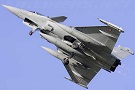
Indo-French defence cooperation has been long-standing, with France supplying over the last almost 60 years a whole range of defence equipment. Our relationship with France in this sensitive domain has been time-tested, with France proving a reliable defence partner. France nevertheless has to contend with strong competition, not only from fellow Europeans, but also the Israelis and the Americans. Winning the 126 fighter aircraft contract against the Eurofighter has been a remarkable French success. Resistance from the British has not ended though, as they still look for an opportunity for re-entry should neogiations with Dassault falter.

It is believed that Cameron had intended to flag Eurofighter’s case to the Prime Minister, but statements during Hollande’s visit that contract negotiations were proceeding smoothly may have deterred him. The French had been told in advance of Hollande’s visit though that the Rafale contract would not be ready for signature. The French president would have wanted some statement from our side during the visit that would give him assurance of progress towards finalization, which he got in the joint statement that mentions that “both sides noted the progress of ongoing negotiations on the MMRCA programme and look forward to their conclusion”. PM’s statement to the effect that “discussions on the MMRCA contract are progressing well” would have added to the satisfaction.

The French could have legitimately hoped that at least the finalization of the much delayed SR-SAM project would be announced during Hollande’s visit. Here too the French had to live with disappointment, though the positive language in the joint statement- “steps are being taken for early finalization of the SRSAM Project”- would have been re-assuring, as would have been PM’s statement that “we have also concluded negotiations on the Short Range Surface to Air Missile, which, once approved by the Government, will be co-developed and co-produced in India”. The PM noted addditionally that “there is a welcome shift from defence trade to co-development and co-production of advanced defence items in India, which will help expand our domestic production base and strengthen the India-France strategic partnership”.

In the domain of space, another significant area of Indo-French cooperation, the next step after the successful launch of the SARAL satellite is the ambitious follow-on space cooperation proposals drawn up the respective space agencies in early February, which the Indian side expects should open up prospects for exchanges in satellite technology. Hollande’s visit focused considerably on education and scientific and technology cooperation. About 16 agreements were signed in these areas. France will be the partner country for the 2013 Global Technology Summit to be held in New Delhi. The French are keen to increase the number of Indian students in France and vice versa as the economical/commercial advantages of this is recognized, by Hollande himself in his public remarks.

Cameron’s visit followed closely on the heels of that of Hollande and therefore invited comparison. The UK possesses a wide range of defence technologies and cooperation in this area is considerable. However, unlike France which is building submarines in India and huge aircraft and missile programes are under discussion, besides being a contendor for a major helicopter contract, the UK is not involved in such big ticket programmes. It does not have nuclear reactors to offer, nor is it involved in space cooperation with India.

The “strategic” content of its ties with India is therefore less substantial. During Cameron’s visit it was decided to begin negotiations on a civil nuclear agreement. It was also agreed to step up cooperation between DRDO and the UK Defence Science and Technology Organisation, already agreed in september 2011, but it would seem visas have been denied to DRDO scientists because of the work DRDO does on strategic programmes.

Unlike France, which is relatively more liberal in technology transfers, the UK has been restrictive and this has to change to boost technological coopertion. Cameron committed the UK to make available to India the cutting edge British technology, civil and military, that the UK currently shares with its top international partners, but it remains to be seen how much this gets translated into reality.

On a more positive side, the co-investment made by both countries in supporting joint research activities has risen from £1m in 2009 to over £100m today with advanced manufacturing, bio-energy, smart grids, energy storage, next generation wireless systems and applied mathematics as areas of collaboration. The energy sector including oil and gas, renewable energy, energy efficiency, the power sector, low carbon technologies are areas identified for fruitful exchanges, with India welcoming the substantial British investment in its energy sector.

On the economic side, while preparing for Cameron’s visit, it was thought that a signature project such as the Mumbai-Bangalore industrial corridor for British investment was needed for creating a real impact. India has been interested in British investment in its infrastructure, for which a joint Infrastructure Committee set up in 2011 has not produced much result so far.

Sceptics in India have felt that the economic crisis in the UK hardly gave hope of any major UK investment. Cameron actually spoke of British architects, planners and designers for the project, not the kind of financing made by the Japanese in the DMIC. In the event this signature project was treated in highly non-committal language in the joint statement as well as our PM’s statement, which said, repectively, that both leaders “noted the UK’s interest in cooperating with India for the development of a new Bengaluru-Mumbai Economic Corridor (BMEC). The leaders agreed to examine and evolve the modalities and content of a feasibility study of this project concept through mutual discussions and to work out a roadmap for a possible partnership in this area” and that “ we have asked our officials to explore British participation in India’s National Manufacturing and Investment Zones and in a possible industrial corridor in the Mumbai-Bangalore sector”. This is verbiage indeed.

The UK has strength in services and Cameron’s accent was on them as a driver for enhancing India-UK exchanges. While he promised to further reduce barriers for Indian investment in the UK, he wanted India to reduce barriers for British architecural, legal, accountancy, financial and banking services. He emphasized UK’s interest in the education and health sectors ( an over-arching MOU at the government-to-government level was concluded to strengthen cooperation in this sector), noting that India’s 500 million people under the age of 25 had to be educated and British educational institutions were open to them.

To set at rest concerns about UK’s immigration and visa policies, he emphasized that there was no limit to the number of Indian students going to Britain and doing graduate jobs. He also promised same day visa services for Indian businessmen to attract more Indian investment in the UK, noting that 50% of Indian investment in Europe was in Britain. In the field of investment, UK is India’s 3rd largest FDI investor country with over $ 8 billion of investment in the last six years. India is the 5th largest investor in the UK, with Cameron pushing them to invest more and signalling that the British did not believe in “economic nationalism”. About 700 Indian companies are operating in the UK, with the Tata group being the largest employer. The UK is the largest market in Europe for Indian IT services.

On political and security issues there was considerable parrallelism in the documents issued at the end of the two visits. Both leaders reiterated support for India’s candidature for permanent membership of the UN Security Council as well membership of the NSG, the MTCR, the Australia Group and the Wassenar Arrangement, the four export control bodies. With both countries enhanced cooperation in cybersecurity and counter-terrorism was underlined. Terrorism was deplored strongly and Pakistan asked to expeditiously try those guilty of the Mumbai terrorist attacks. The constitutional principles on which the inter-Afghan dialogue should be conducted was stressed during both visits. This was important for India in the case of the British who are seen as pushing for accommodating the Taliban in the power structure in Kabul and being insufficiently transparent with the Indian side. It is in this context that with the UK it was agreed to established a new Joint Working Group for a regular bilateral dialogue on peace, security and development in Afghanistan.
Where there wasn’t parallelism was in India and the UK expressing their commitment to working towards a world free of nuclear weapons and holding regular consultations on disarmament and non-proliferation issues. The French haven’t joined the bandwagon of Global Zero and hence this subject did not figure in the documents issued during Hollande’s visit. Surprisingly, the joint document with France did not speak of Syria and Iran, whereas in the case of the one with the UK, called, significantly, for a peaceful resolution of the Iranian nuclear issue.

In the case of Mali, India supported action against terrorists there, earning Hollande’s public appreciation of this support for French military action. It is not surprising that India and France reaffirmed their independence and strategic autonomy, a language understandably missing in the joint India-UK statement given UK’s strong commitment to Nato and its trans-Atlantic ties. India and France agreed to establish an annual bilateral dialogue between the two Finance Ministries on economic and financial issues, but no such dialogue was instituted with the UK. Finally, our PM conveyed his very serious concern to Cameron regarding allegations about unethical means used in securing the 2010 contract for Agusta Westland helicopters. The eruption of this scandal was untimely for the Cameron visit.

All said and done, both visits were successful. No major agreements were announced during these visits and to that extent they lacked dramatic outcomes. The visits were more an expression by both leaders of a their desire to invest in the India relationship in a longer term perspective. Cameron exuded a lot of goodwill for India, rather earnestly, and so did Hollande in his own style. France has no history to live down in India, unlike the UK, which makes the relationship with France easier to handle psychologically. India has been offered political and economic space by both countries to capitalize on. We should play our hand intelligently and derive the maximum benefit from these important bilateral relationships with two of the world’s leading powers. However important the US may be, the importance of Europe should not be minimized, especially at a time when India is in transition and needs as many partners as possible for securing a bright future.

Monday, August 13, 2012

Indo-European Relations: Strategic Alliances


Kanwal Sibal
Member Advisory Board, VIF

To appreciate better the subject of India’s defence relations with Europe some reflections of a general nature would be pertinent. The point needs to be made right at the start that India does not have defence relations with Europe as such; it has them with individual European countries. Europe has forged a strong economic personality in the form of the European Union, but it has failed to develop a common foreign and defense policy in the true sense. When it comes to economic issues India, like other countries, has to deal with Brussels.

In foreign affairs Europe has acquired some role as an interlocutor through the High Representative of the Union for Foreign Affairs and Security Policy, with India holding a regular dialogue with the EU as a dialogue partner. But in defence relations India deals, not with Brussels, but with individual capitals.

It also needs to be pointed out that even though the EU exists as a shared economic space protected by common external tariffs, individual European countries commercially compete with each other intensely in foreign markets. In the defence area such competition is even more spirited as the overall cake is much smaller, the opportunity to win sizable contracts is not many, the contracts are generally high-valued and the margins are considerable. Also, the contracts create a long term relationship, with provision of spare parts, training, overhauling, periodic upgrades, modernization etc. providing plentiful returns.

Defence ties, besides, have a political element that comercial exchanges do not have. Countries with serious political differences, including the potential of conflict, can have flourishing economic ties, as is the case between US and China or Japan and China, not to mention political differences between Russia and Europe not standing in the way of their close energy ties. In such cases defence ties are excluded because that pre-supposes a degree of geo-political understanding beforehand.

Such ties also give the country that sells arms a degree of political leverage over the recipient country because the latter becomes dependent on the former for its defence preparedness. The danger is always there that at a critical moment spare parts may not be released or needed ordnance may not be available because of imposition of sanctions or the existence of a conflict situation. All these aspects are very relevant to India’s defence ties with European and other countries.

India’s defence relations with European countries have reflected, over the years, India’s foreign policy choices, its adherence to the policy of non-alignment during the Cold War and the impact of the Cold war on our region with Pakistan deciding to join western military pacts and receiving military aid from the West. The position taken by European countries and others on India-Pakistan differences, especially on J&K, that taken by individual European countries on sanctions imposed on India because of India-Pakistan hostilities or the degree of reticence in selling arms in order to avoid sharpening tensions in a region seen as unstable. India’s nuclear and missile programmes have also had a bearing on the policies of European countries with regard to transfer of sensitive or dual use technologies barred under the technology denial regimes set up by the West.

Not many countries, even in Europe, manufacture advanced defence systems that can be sold in the international market. Defence manufacturing is a high-cost enterprise as very advanced technologies are involved, which, in turn, require huge outlays on R&D for development. The need to export in order has some economies of scale and amortizes development costs is therefore a pressing one. All the more so because in the absence of any real external threat European countries have had to reduce their defence budgets and the size of their standing armed forces, with the consequence that domestic orders for defence equipment are not sufficient to achieve the wanted economies of scale.

Conflict-Free Space

Europe’s great success is, in fact, the creation of a genuinely conflict free geographical space in a continent that has witnessed the most inhumane and destructive wars in the past. No European country is threatened with aggression by a neighbour. This should have argued in favour of a massive contraction of the European defence sector. Ironically, outside the US which maintains a gargantuan defence sector and Russia which inherited an oversized defence manufacturing base from the Soviet Union but which has declined considerably, individual European countries still retain impressive defence manufacturing capabilities. There is little relationship between the external threat European countries face and the wherewithal they maintain to defend themselves.

For the bigger European powers which have wielded power internationally for a very long period and are habituated to it, and which have fought with each other and with others in order to advance or preserve their interests or impose their will, the possession of a sizable defence industry is an expression of their continued big power status. It gives credibility to their role in maintaining international peace and security whether institutionalized in the Security Council, within the ambit of NATO, a “coalition of the willing” or self-assumed in the light of their national interests. Their military capabilties give them the means to project their power outside. Besides this, the civilian off-shoots of defence technologies are also very important as they have a bearing on the efforts of these countries to remain in the forefront of global-level technological innovation.

For Europe, rivalry with the US, which is both an ally and a competitor, is a powerful reason to maintain a sizable, independent defence manufacturing base. If, on the one hand, the trans-Atlantic alliance in the form of NATO provides Europe with the US defence umbrella and allows it to reduce its defence expenditure, fears of loss of independence in foreign policy making and subservience to the US makes the major European countries retain sizable defence capabilities.

With the lessons from the conflict in Yugoslavia in mind, these countries also want to be able to maintain peace at least on the periphery of Europe largely on their own rather than relying entirely on the US for this. The French, for example, have long pushed for a common European defence policy, but without much success because of the NATO factor and the opposition of many European countries, especially those from the erstwhile Soviet block, not to mention the UK, to any dilution of the US role in European defence.

One needs to keep also in mind that while India and others deal with individual European countries for defence cooperation and purchases, in actual fact Europe’s defence manufacturing has become mostly “multinational”. Much of this sector has either been privatized in Europe or enterprises are jointly owned by governments and private capital.

The economies of scale are sought to be obtained within Europe itself by various countries pooling requirements and jointly funding defence production programmes. Work is shared between countries often in proportion to the size of the procurement orders placed by them. Equipment manufactured by one country has in it components manufactured in other countries, such is the nature of collaboration in defence manufacturing today.

In view of all the acquisitions and mergers that have taken place as part of a consolidation process the industry has undergone in the face of high costs, competition and declining orders. Hardly any product is now purely “national”. Even when a European product is being bought it is likely to have US made components in it. At the level of tie-ups in capital, the trans-national nature of major European defence manufacturing companies is even more of a reality.
The European Aeronautics, Defence and Space company (EADS), for example, was created in 2000 by merging French (Aerospatiale-Matra), German (DASA) and Spanish (CASA) companies. Its missile branch was merged with BAE systems of the UK and Finmeccanica of Italy to form the MBDA. The Eurofighter, the other contender for our MMRCA contract, is jointly produced by Germany (DASA), Britain (BAE), Italy (Aeritalia) and Spain (CASA). Dassault, whose Rafale has been selected for negotiations for the acquisition of 126 combat aircraft by India, is owned by Dassault Group (50.55%) and EADS(46.33%), which means that even if the Eurofighter has been excluded from the 126 aircraft competition, EADS, the manufacturer of the Eurofighter, will financially benefit from the Rafale deal.

Augusta Westland, which has signed a joint venture agreement with Tata Sons to assemble its AW 119 helicopters is an Anglo-Italian company. Turbomeca, the French aircraft engine maker is tied up with Rolls Royce. Thales, another French company, which is involved in India defence programmes, is tied up with Raytheon from the US and BAE from the UK. BAE, the manufacturer of the Hawk trainer aircraft sold to India, the Ultra Light Howitzers that India has decided to acquire through the US FMS route and a parther in the Eurofighter, has made several acquisitions in the US.

For historical reasons India had close defence ties with the UK for some years after 1947, to the extent that India’s Naval Chief was a Britisher till April 1958, with Britishers also the Air Chief till April 1954 and Army Chief till January 1949. India’s Centurion tanks, Vampires, Canberra, Hunter and Gnat aircraft, and Leander class frigates were of British origin. But Cold war politics, British support for Pakistan and interference in the Kashmir issue in Pakistan’s favour, a reluctance to strengthen India miltarily against Pakistan, inevitably led to a dilution of the defence relationship.

Within Europe, France, whose commitment to Pakistan was not of the same order and which was not mentally hostage to any colonial era responsibilities towards Pakistan or the sub-continent, was an alternative source. India acquired from France, in the 1950s itself, Ouragan, Mystere and Alize aircraft, AMX tanks and air to surface and anti-tank missiles. In the 1960s India went in for licensed production of French Alouette helicopters, to which were added Lama helicopters for high-altitude operations in the 1970s.

The biggest consequence of Cold War politics was India’s turn towards the Soviet Union beginning in the 1960s for defence supplies and licensed production of equipment, to the point that Russia accounts today for almost 70% of India’s military hardware.

France, amongst all the European countries, has been seen as the most reliable partner. It has studiously avoided imposing sanctions on India whether because of India-Pakistan tensions or even in the wake of India’s nuclear tests in 1998, besides being the first to establish a strategic partnership with India, indicating clearly how it perceived India’s role in a developing multipolar world. In the 1980s India signed the agreement to procure Mirage aircraft from France. A $2.4 billion deal was inked in July 2011 with Dassault Aviation and Thales to upgrade 51 of these Mirage aircraft.

The selection of Rafale for final negotiations for the MMRCA contract, even if done strictly on the basis of technical and commercial parameters, testifies to the underlying confidence in the stability and security of defence ties with France.

In December 2005 India and France signed the $3 billion Scorpene deal, opening up cooperation in an area the French were especially keen on, in part to obtain orders for their state-owned naval shipyard, the DCN, and, in part, to attenuate negative feelings in India about their considerable naval cooperation with Pakistan.

The element of competition with Germany, which had supplied 4 type 209 submarines to India between 1986 and 1994, was strong. Two of these German submarines were built in Germany and two assembled in Mazagaon docks. In 1991, however, HDW, the manufacturers of the submarines, was blacklisted by India, which opened up space for France to enter the Indian submarine market.

The bagging of the Scorpene contract was a political success for France, given that Germany had greater experience and a more established reputation in submarine building and technology. This success was not unconnected with the goodwill France had earned by its accommodative position on India’s 1998 nuclear tests. The delay in implementing the Scorpene project did cause some bickering about where the responsibility lay, but this has been overcome.

Other projects with France include development of engines for the ALH, the Kaveri engine for the LCA and the Shakti engine for Dhruv. A major project involving substantial technology transfer that has been negotiated with MBDA and awaits governmental approval is joint development and manufacture of the SR-SAM, the short range surface to air missile. A successful implementation of this project can open up more cooperation in the missile field, including, potentially, ballistic missile defence.

During the Indian Prime Minister’s visit to France in July 2009, President Sarkozy had reportedly promised to open all doors for Indo-French defence cooperation. The Indian decision in favour of Rafale creates a favourable ground for India to press for implementation of that promise. For the time being, French attention is focussed on finalizing the Rafale contract and other major steps in defence cooperation, especially in restricted technologies, will probably have to wait till then.

In 1979, with India ordering around 130 aircraft Anglo-French Jaguar aircraft, with licence production and transfer of technology as part of the package, the British made a sizable come-back into the Indian market. In February 2003 India ordered 66 Hawk trainer jets from Britain worth $1.7 billion. India insisted these planes carry no US parts because of the experience with its Harrier aircraft detained in Britain after the imposition on nuclear sanctions on India in 1998.

In July 2010, during Prime Minister Cameron’s visit India India placed an order for an additional 57 Hawk aircraft worth $1.1 billion to be built by HAL, with Indian complaints about delays in transfer of technology for the earlier contract apparently resolved. Apart from defence sales, India and Britain have held air and naval exercises.

In the area of R&D, the tie-up between DRDO and the British DSTL (Defence Science and Technology Lab) is of potential interest. Britain is offering participation to India in the Global Combat Ship (GCS), a flexible role frigate. Britain, as we know, has a very large defence manufacturing base, the largest in Europe, with almost 2600 defence companies. BAE systems, which have contracted to sell 140 Ultra Light Howitzers to India, is looking at a role in artillery modernization in India, for which it has tied up with the Mahindra Group to create a Centre for Excellence for artillery projects.

The German Connection

Germany’s Kurt tank was involved in the manufacture of HAL’s Marut jet fighter in the 1950s. Since 1999 Germany, which is the fifth largest exporter of defence items to India, has been providing parts for construction of ships and submarines, such as fire control systems, sonar and navigation systems, parts for planes, helicopters and tanks. Apart from supplying 4 Type 209 submarines, it has supplied a large number of Dornier 228 aircraft. India and Germany signed a new Defence and Security agreement in 2006; an Indo-German High Defence Committee has been formed; visits of service chiefs have been exchanged. In 2008, the first joint naval exercise was held off Kochi.

Of course the Germans have had their set-backs in defence deals, having lost the submarine contract to the French and failing to win the MMRCA contract for which they were the lead country for negotiations. Earlier, in December 2007, they saw the cancellation of the $ 500 million 197 helicopter deal that had been won by Eurocopter. The result of the re-tender remains uncertain because of competition from the Russia’s Kamov helicopter. Similarly, in the first tender for 6 Refuelling Aircraft, EADS’s Airbus 330 (military version), for which the lead country is Spain (but Germany is a big shareholder of EADS), came out lowest in price but this tender too was cancelled in 2009 and has been re-tendered. The competition is again with a Russian aircraft, the IL76 with new engines, with uncertain result.

India’s defence relations with Italy are relatively limited. Italy’s Alenia Aeronautica has 21% share in the Eurofighter, but this plane lost out in the MMRCA race, as we know. Italy is providing consultancy to our Navy for our indigenous aircraft carrier. Finmeccanica of Italy is providing its propulsion system. India is obtaining heavy weight torpedoes for its submarines and frigates from Italy. Finmeccanica’s subsidiary Augusta Westland won the tender for supply of 12 AW101 helicopters to serve as executive transport helicopters for the Indian VIPs. Augusta Westland has established a joint venture with Tata Sons to assemble the 8 seat AW 119 Ke light helicopter in India. In 2003 India and Italy renewed their 1994 MOU on defence cooperation. The India-Italy Joint defence Committee has met once, in January 2010.

India has the dubious distinction of being the world’s largest importer of arms. This reflects extremely poorly on the state of indigenous defence manufacturing. That a large country like ours, with such huge security challenges from China and Pakistan combined aggravated by US and western arming of Pakistan and subjecting India to technology regimes, should have been impelled to build domestic capability on an accelerated basis. No country can follow a truly independent policy without an independent defence base of its own. There can be no strategic autonomy without an independent self-defence capacity. We have not been able to leverage our large scale imports for obtaining the level of transfers of technology needed by us. Fortunately, the allure of the Indian market has persuaded countries like France and Germany not to enter into any new major defence contracts with Pakistan.

Changing Attitudes

Today the situation has improved for us. India has been liberated from nuclear sanctions and our western partners are, in principle, supportive of our membership of the various technology regimes set up by them. This changed attitude towards India should progressively make it easier for us to insist and obtain meaningful technology transfers. The policy on offsets will contribute to building a larger defence manufacturing base, but it would be on a sub-contractual basis and is not likely to lead to the kind of transfers we want. For this a change in our rules on FDI in the defence sector is required. The present 26% ceiling needs to be increased to 49% as a first step. The private sector should be given all encouragement to enter the defence sector.

The entry of the US in the Indian defence market and its success in bagging contracts worth $ 9 billion in the last 5 to 6 years is impressive. This shows that India does not think that the use of sanctions against India is a serious threat anymore. Meanwhile, Pakistan’s relations with the US and the West in general have seriously deteriorated.

US has now begun to focus on the Asia-Pacific region to potentially counter a threat from rising China. These developments are in our favour in terms of building up our defence potential. The technology transfer problems will not be easy to deal with as the defence sector in western countries has been largely privatized and private companies cannot be compelled to part with proprietary technologies. Where governments are standing in the way through export controls that is where India needs to exert pressure.

European countries have to contend with Russia’s entrenched position in our defence sector, the impressive share Israel has carved out for itself- the second largest-in this sector and the advances the US is making. India is caught between the need to limit the inventory of equipment it has for operational and maintenance reasons, and the need to diversify so as not to create over-dependence on any one country.

We are expected to import $200 billion worth of arms in the next 12 years. European countries will certainly have a share of this. They should, as European cooperation comes with much less intrusive demands and fewer chances of disruption of supplies for extraneous reasons. And we have tested our cooperation with European countries for long years now.