Showing posts with label Eurocopter. Show all posts

Tuesday, February 26, 2013

Defence Procurement: Would You Do Business With India?


Dr M N Buch 
(Visiting Fellow, VIF)

Ever since we became independent we seem to be lurching from one crisis to another in any matter which concerns a deal or a transaction in which we make purchases or where decisions are taken regarding business. One harks back to the scandal attributed to the purchase of jeeps when Krishna Menon was High Commissioner in London. The most celebrated scandal in this behalf was the purchase of 155 mm guns from Bofors, a Swedish arms manufacturer renowned internationally for the quality of the product produced by the company. The Bofors anti aircraft gun of 40 mm, the Bofors quick firing gun version mounted on small naval vessels were the mainstays of most of the Allied Forces and even today the Bofors anti aircraft guns are widely used. The 155 mm gun is of such a superb quality that it could virtually dominate the Kargil battlefields and was a major factor in our being able to dislodge the Pakistanis. However, the purchase agreement was befouled by allegations of bribes being given by the suppliers through an Italian agent, in which the name of Rajiv Gandhi was also mentioned by V.P. Singh. The amount of bribe was Rs. 64 crores. Rajiv Gandhi denied any wrongdoing, V.P. Singh never produced any evidence which could have clinched the matter, CBI utterly failed to unearth irrefutable evidence and Quattrochi, the Italian agent, could never be brought to book. What resulted was that we virtually black-listed Bofors and every effort to purchase more guns to strengthen the artillery has been aborted by allegations of corruption, leading to blacklisting of almost all the manufacturers of a gun of this calibre and quality. The tragedy is that Bofors, despite all the mud slung at them, completed its part of the transfer of technology by making available very detailed drawings of the gun. These lay gathering dust in the Defence Ministry, despite the fact that the Ordnance Factory Board kept telling government that it could manufacture the gun on the basis of these drawings. Manufacture could have started at least eight years ago and by now the indigenous gun could have been in service with the Army. One allegation of corruption, which never led to any viable action against the persons named as the culprits, has left the Indian Army in the unenviable position of not having added a single worthwhile gun in over twenty years.

The acquisition by purchase or indigenous manufacture of warships upto the destroyer class by the Navy has had a relatively better record than weapon acquisition by the Army or the Air Force, but in terms of under water capacity the Navy has not advanced at all, whether it be the French Scorpene submarine or the German HDW. The Navy has been able to make very little progress because we just do not take any decisions in order to avoid complaints. Despite this there are serious allegations of financial irregularities. By now we should have had at least fifty submarines, including at least four or five nuclear submarines, but all we have managed is one nuclear submarine on lease from Russia and one indigenously manufactured nuclear submarine whose sea trials have yet to be conducted. Our lone aircraft carrier is now obsolete and its replacement, INS Vikramaditya (formerly Admiral Gorshkov), has had a 250 percent increase in cost and will not be delivered till the end of 2013, five years behind schedule. The keel of the indigenous aircraft has been laid but it is unlikely to be in service till 2017. Meanwhile China has acquired and put into service one aircraft carrier bought from Ukraine and is in the process of manufacturing one more carrier. Without a strong submarine fleet equipped to fire nuclear tipped missiles we cannot really boast of having a sea-land-air based nuclear deterrent in place. Those who are responsible for decision making must realise that in an environment in which our two chief opponents, Pakistan and China, have nuclear weapons and some delivery systems to target Indian cities, our delaying of decisions of purchasing or manufacturing necessary defence equipment has left the nation precariously vulnerable.

The cause celebre is a relatively minor acquisition of twelve helicopters for carriage of VVIPs. The proposal has been mooted by the Air Force about fifteen years ago because the MI8 helicopters on VIP duty are now totally obsolete, difficult to keep airborne and really not in a position to safely carry dignitaries such as the President and the Prime Minister. It was initially mandated that the new VIP helicopters would have an operational ceiling of 18,000 feet and the specifications were drawn up accordingly. Only one helicopter, the Eurocopter 200, could attain this height and this narrowed down the purchase to a single vendor. The then National Security Adviser, Brajesh Mishra, pointed out the unacceptability of a single vendor. The SPG, which guards the Prime Minister, also objected to the cabin size and said that it would not be in a position to protect the VIP unless the cabin specifications were changed. Therefore, the NSA recommended that the matter be re-examined. The file was shunted back and forth for at least five more years. Ultimately the Air Force recommended new specifications, lowering the ceiling to 15,000 feet and also stating the size and the layout of the main cabin. Now four firms give their tenders. Had the specifications not been changed the order was not large enough for any firm to change the aircraft design and also restructure the production line as this would be uneconomical. Therefore, there was no alternative but to change the specifications. It is now alleged that bribes were paid to the cousins of the Chief of Air Staff and, therefore, there was the suspicion that the specifications were altered to suit one company only, Finmeccanica, which manufacturers the Agusta Westland helicopter. The amount of bribe is stated to be in excess of Rs. 360 crores.

The above allegation is based on the statement said to have been made by two officials of Finmeccanica who were arrested in Italy on a complaint alleging corruption in the Indian transaction. No one has said that the process whereby the Agusta Westland helicopter was finally selected was in any way wrong. It is not alleged that technically and financially the best bid was not that of Finmeccanica and Russian and American (Sikorski) bids were wrongly rejected. The adherence to prescribed norms of the Agusta Westland helicopter has not been questioned, nor has its performance. It has also not been alleged that had the bribe not been paid the helicopter would be cheaper to that extent. Had this been stated then it would have meant that we were being overcharged in order to pay a bribe.

What has been the Indian reaction? The media, print and electronic, have virtually gone berserk in sniffing out and unearthing wrongdoing in the instant case. Television anchors wave papers on the screen and state that these give proof positive of wrongdoing in the helicopter deal. From this these anchors deduce that other deals not connected with this particular purchase also are suspect, that bribes have been given and that either because the same agent figured in more than one case, or because the supplying company was the same, every defence deal is based on corruption. What is written in those papers is never shown, nor is it categorically stated that they constitute the totality of documentation, nor is their any real attempt to prove that the so-called papers, which form part of a larger whole, are being read in context. Selective display of documents or use of words can be very dangerous. One recalls the story of the Giant Panda who walked into a restaurant in New York finished his meal, took out a revolver, shot dead the restaurant owner and left without paying for the food. When arrested he said, “Have you not read what we Pandas do? A Panda eats, shoots, and leaves”. Delete the commas and this would read “A Panda eats shoots and leaves”. Our Indian scribes, unfortunately, believe in retaining the commas in the above sentence, which not only changes the meaning of the context but also leads to very dangerous conclusions. There is no need to be judgemental about an issue because some television anchor waves papers in the air, pontificates holily about the evidence of wrongdoing that he has and then tries to browbeat people into saying ‘mea culpa’. If there is wrongdoing let it be investigated and the accused brought to trial. That trial will be in a court of law, not in a court of journalism.

To return to the helicopter purchase case, the need for new helicopters is amply proven and requires no clarification or elaboration. Changing of specifications, which would be universal and not confined to benefiting a particular manufacturer, is not only permitted but is normal. If the tender procedure is transparent, if bids are duly received and are examined impartially, if the product is what we need, if the price is acceptable, then the deal is complete and must be given effect to. If there are allegations that despite precautions bribes have been given, let the complaint be investigated and if a prima facie case is made out, then the accused persons must be brought to trial. However, the acquisition should be completed because it does not make sense to foreclose on a deal which is beneficial to India.

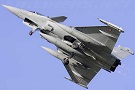
The Indian Air Force has been trying desperately to find a multi-role combat aircraft. The process of specifying norms, performance parameters, etc., has been long drawn out and the Air Force has virtually tested every alternative almost to destruction. Optimising the performance index of the aircraft, its lift and delivery capacity in the matter of weapons, the transfer of technology and the possibility of future total indigenisation, the maintenance schedule and cost, as also the operational life of the aircraft, the Air Force found the Dassault Rafale aircraft to be best suited to our needs. The American F16 and F18, The Anglo German Eurofighter and the Russian MIG-35 did not come up to the mark and were rejected. The technical and financial bids were taken into consideration when making a final selection. Over a year has passed and we have still not signed the final agreement. Meanwhile our television channels have tried to find a connection between a person who sued the Dassault Corporation over some deal for Mirage 2000 aircraft dating back to about eight to ten year. That gentleman sued the Dassault Corporation because he said he had not been paid an amount which had been promised to him by way of commission. My information is that he lost the case. Now an effort is being made to try and show that he is involved in the Rafale deal also so that even this acquisition is aborted. Are only television channels honest in this country and every one else is rotten to the core?

The process by which we arrive at conclusions is bizarre. There is a perception which we can ignore only at peril that Indian officialdom is corrupt. Let me narrate an incident dating back to 1968, when I was Director, Tribal and Harijan Welfare in Madhya Pradesh. One day my minister summoned me to the Secretariat, about ten kilometers from my office. When I entered his room I found a gentleman sitting there. The minister said that he had some problem and could I sort it out? I took the gentleman to my office where I would attend his case. I had not brought my driver and was driving the official vehicle myself. When we reached the Hamidia Hospital gate the gentleman asked me to stop. I asked him why and he said that we should have a cup of tea and some snacks before proceeding further. I told him that I would give him a cup of tea in my office but I found him still a little uneasy. Suddenly it stuck me what the man must be thinking. I was a sahib because the minister had offered me a chair. At the same time I was driving my own car and there was no attendant with me. This meant that I could not be the bada sahib who naturally would have travelled in style with paraphernalia. Therefore, unless the applicant entertained me I would not give him a proper hearing. This is what people felt about the bureaucracy even in 1968, when actually the bureaucracy was by and large honest and efficient. Today the position is that every single person is convinced that government and its minions are corrupt, despite the fact that there is a substantial number of people who are honest. The tragedy is that this perception of dishonesty is what our media is exploiting to blow things out of proportion.
Let us take the helicopter purchase case. If the aircraft is good let us buy it, but if bribes have been given let us deduct that amount from the payment to be made to Finmeccanica and also impose an equivalent fine. The aircraft acquisition, however, should go on and government out of panic should not negate the entire effort by cancelling the order. Let us have a similar attitude towards all defence requirements, which must be finalised unless there is incontrovertible proof of corruption. Waving sheets of paper before a television audience does not constitute such proof.

General N.C. Vij, former Chief of Army Staff, once told me that the process of weapon acquisition is so tortuous in India that by the time the weapon is received its half life is over. The following time frame for weapon purchase is suggested:-
  1. The Service Headquarters submits a proposal to government for acquisition of a certain weapon system, together with full justification, the cost estimate and tentative specification parameters. The process of preparing this proposal should not exceed one year.
  2. Examination of the proposal by government and a decision on the acquisition in principle, with a provisional budgetary allocation. The period for this should not exceed six months.
  3. Detailed specifications to be finalised by the Service Headquarters, acquisition of prototypes and the testing to destruction under different physical and weather conditions. This process should be completed within two years
  4. Stage two technical and administrative estimates and proposals to be submitted by the Service Headquarters to government. The process of decision making in this behalf must be completed within six months.
  5. Preparation of tender documents, issue of notice inviting tenders, receipt of tenders and the preparation of a comparative chart by the Service Headquarters, assisted by the Defence Ministry, together with short-listing of providers. This process should not take more six months.
  6. Examination of the scrutinised bids and the comparative statement, the short-listed providers of the systems and a final decision on acceptance of the bid by government. This should not take more than six months.
  7. Finalisation of whatever documentation is needed for the contract and issue of the work order. This should not exceed six months.
If the above scheduled is followed, then within six years from the proposal having been mooted the inflow of equipment concerned should begin and the whole process should be completed within seven to eight years from start to finish. If this happens our acquisition process would be within the given time frame, there would be no delays and because the process is continuous, the need or the possibility of giving bribes would be substantially reduced. Then people would be encouraged do business with India.

Let us take this whole issue very seriously because if the present trend continues we might as well disarm and disband the armed forces, deploy village kotwals or chowkidars armed with lathis to guard us and practise how to behave like slaves before the new conquerors who would inevitably make us captive. To obviate such an eventuality we need a government which is firm in its resolve and which refuses to be swayed merely because some complaints have been made, we need a machinery for quick investigation of complaints, but we also need a media which is responsible in its behaviour, exercises restraint where it is necessary in our national interest and which at least in defence matters puts the interests of the nation before its own hunger for attention.

Monday, August 13, 2012

Indo-European Relations: Strategic Alliances


Kanwal Sibal
Member Advisory Board, VIF

To appreciate better the subject of India’s defence relations with Europe some reflections of a general nature would be pertinent. The point needs to be made right at the start that India does not have defence relations with Europe as such; it has them with individual European countries. Europe has forged a strong economic personality in the form of the European Union, but it has failed to develop a common foreign and defense policy in the true sense. When it comes to economic issues India, like other countries, has to deal with Brussels.

In foreign affairs Europe has acquired some role as an interlocutor through the High Representative of the Union for Foreign Affairs and Security Policy, with India holding a regular dialogue with the EU as a dialogue partner. But in defence relations India deals, not with Brussels, but with individual capitals.

It also needs to be pointed out that even though the EU exists as a shared economic space protected by common external tariffs, individual European countries commercially compete with each other intensely in foreign markets. In the defence area such competition is even more spirited as the overall cake is much smaller, the opportunity to win sizable contracts is not many, the contracts are generally high-valued and the margins are considerable. Also, the contracts create a long term relationship, with provision of spare parts, training, overhauling, periodic upgrades, modernization etc. providing plentiful returns.

Defence ties, besides, have a political element that comercial exchanges do not have. Countries with serious political differences, including the potential of conflict, can have flourishing economic ties, as is the case between US and China or Japan and China, not to mention political differences between Russia and Europe not standing in the way of their close energy ties. In such cases defence ties are excluded because that pre-supposes a degree of geo-political understanding beforehand.

Such ties also give the country that sells arms a degree of political leverage over the recipient country because the latter becomes dependent on the former for its defence preparedness. The danger is always there that at a critical moment spare parts may not be released or needed ordnance may not be available because of imposition of sanctions or the existence of a conflict situation. All these aspects are very relevant to India’s defence ties with European and other countries.

India’s defence relations with European countries have reflected, over the years, India’s foreign policy choices, its adherence to the policy of non-alignment during the Cold War and the impact of the Cold war on our region with Pakistan deciding to join western military pacts and receiving military aid from the West. The position taken by European countries and others on India-Pakistan differences, especially on J&K, that taken by individual European countries on sanctions imposed on India because of India-Pakistan hostilities or the degree of reticence in selling arms in order to avoid sharpening tensions in a region seen as unstable. India’s nuclear and missile programmes have also had a bearing on the policies of European countries with regard to transfer of sensitive or dual use technologies barred under the technology denial regimes set up by the West.

Not many countries, even in Europe, manufacture advanced defence systems that can be sold in the international market. Defence manufacturing is a high-cost enterprise as very advanced technologies are involved, which, in turn, require huge outlays on R&D for development. The need to export in order has some economies of scale and amortizes development costs is therefore a pressing one. All the more so because in the absence of any real external threat European countries have had to reduce their defence budgets and the size of their standing armed forces, with the consequence that domestic orders for defence equipment are not sufficient to achieve the wanted economies of scale.

Conflict-Free Space

Europe’s great success is, in fact, the creation of a genuinely conflict free geographical space in a continent that has witnessed the most inhumane and destructive wars in the past. No European country is threatened with aggression by a neighbour. This should have argued in favour of a massive contraction of the European defence sector. Ironically, outside the US which maintains a gargantuan defence sector and Russia which inherited an oversized defence manufacturing base from the Soviet Union but which has declined considerably, individual European countries still retain impressive defence manufacturing capabilities. There is little relationship between the external threat European countries face and the wherewithal they maintain to defend themselves.

For the bigger European powers which have wielded power internationally for a very long period and are habituated to it, and which have fought with each other and with others in order to advance or preserve their interests or impose their will, the possession of a sizable defence industry is an expression of their continued big power status. It gives credibility to their role in maintaining international peace and security whether institutionalized in the Security Council, within the ambit of NATO, a “coalition of the willing” or self-assumed in the light of their national interests. Their military capabilties give them the means to project their power outside. Besides this, the civilian off-shoots of defence technologies are also very important as they have a bearing on the efforts of these countries to remain in the forefront of global-level technological innovation.

For Europe, rivalry with the US, which is both an ally and a competitor, is a powerful reason to maintain a sizable, independent defence manufacturing base. If, on the one hand, the trans-Atlantic alliance in the form of NATO provides Europe with the US defence umbrella and allows it to reduce its defence expenditure, fears of loss of independence in foreign policy making and subservience to the US makes the major European countries retain sizable defence capabilities.

With the lessons from the conflict in Yugoslavia in mind, these countries also want to be able to maintain peace at least on the periphery of Europe largely on their own rather than relying entirely on the US for this. The French, for example, have long pushed for a common European defence policy, but without much success because of the NATO factor and the opposition of many European countries, especially those from the erstwhile Soviet block, not to mention the UK, to any dilution of the US role in European defence.

One needs to keep also in mind that while India and others deal with individual European countries for defence cooperation and purchases, in actual fact Europe’s defence manufacturing has become mostly “multinational”. Much of this sector has either been privatized in Europe or enterprises are jointly owned by governments and private capital.

The economies of scale are sought to be obtained within Europe itself by various countries pooling requirements and jointly funding defence production programmes. Work is shared between countries often in proportion to the size of the procurement orders placed by them. Equipment manufactured by one country has in it components manufactured in other countries, such is the nature of collaboration in defence manufacturing today.

In view of all the acquisitions and mergers that have taken place as part of a consolidation process the industry has undergone in the face of high costs, competition and declining orders. Hardly any product is now purely “national”. Even when a European product is being bought it is likely to have US made components in it. At the level of tie-ups in capital, the trans-national nature of major European defence manufacturing companies is even more of a reality.
The European Aeronautics, Defence and Space company (EADS), for example, was created in 2000 by merging French (Aerospatiale-Matra), German (DASA) and Spanish (CASA) companies. Its missile branch was merged with BAE systems of the UK and Finmeccanica of Italy to form the MBDA. The Eurofighter, the other contender for our MMRCA contract, is jointly produced by Germany (DASA), Britain (BAE), Italy (Aeritalia) and Spain (CASA). Dassault, whose Rafale has been selected for negotiations for the acquisition of 126 combat aircraft by India, is owned by Dassault Group (50.55%) and EADS(46.33%), which means that even if the Eurofighter has been excluded from the 126 aircraft competition, EADS, the manufacturer of the Eurofighter, will financially benefit from the Rafale deal.

Augusta Westland, which has signed a joint venture agreement with Tata Sons to assemble its AW 119 helicopters is an Anglo-Italian company. Turbomeca, the French aircraft engine maker is tied up with Rolls Royce. Thales, another French company, which is involved in India defence programmes, is tied up with Raytheon from the US and BAE from the UK. BAE, the manufacturer of the Hawk trainer aircraft sold to India, the Ultra Light Howitzers that India has decided to acquire through the US FMS route and a parther in the Eurofighter, has made several acquisitions in the US.

For historical reasons India had close defence ties with the UK for some years after 1947, to the extent that India’s Naval Chief was a Britisher till April 1958, with Britishers also the Air Chief till April 1954 and Army Chief till January 1949. India’s Centurion tanks, Vampires, Canberra, Hunter and Gnat aircraft, and Leander class frigates were of British origin. But Cold war politics, British support for Pakistan and interference in the Kashmir issue in Pakistan’s favour, a reluctance to strengthen India miltarily against Pakistan, inevitably led to a dilution of the defence relationship.

Within Europe, France, whose commitment to Pakistan was not of the same order and which was not mentally hostage to any colonial era responsibilities towards Pakistan or the sub-continent, was an alternative source. India acquired from France, in the 1950s itself, Ouragan, Mystere and Alize aircraft, AMX tanks and air to surface and anti-tank missiles. In the 1960s India went in for licensed production of French Alouette helicopters, to which were added Lama helicopters for high-altitude operations in the 1970s.

The biggest consequence of Cold War politics was India’s turn towards the Soviet Union beginning in the 1960s for defence supplies and licensed production of equipment, to the point that Russia accounts today for almost 70% of India’s military hardware.

France, amongst all the European countries, has been seen as the most reliable partner. It has studiously avoided imposing sanctions on India whether because of India-Pakistan tensions or even in the wake of India’s nuclear tests in 1998, besides being the first to establish a strategic partnership with India, indicating clearly how it perceived India’s role in a developing multipolar world. In the 1980s India signed the agreement to procure Mirage aircraft from France. A $2.4 billion deal was inked in July 2011 with Dassault Aviation and Thales to upgrade 51 of these Mirage aircraft.

The selection of Rafale for final negotiations for the MMRCA contract, even if done strictly on the basis of technical and commercial parameters, testifies to the underlying confidence in the stability and security of defence ties with France.

In December 2005 India and France signed the $3 billion Scorpene deal, opening up cooperation in an area the French were especially keen on, in part to obtain orders for their state-owned naval shipyard, the DCN, and, in part, to attenuate negative feelings in India about their considerable naval cooperation with Pakistan.

The element of competition with Germany, which had supplied 4 type 209 submarines to India between 1986 and 1994, was strong. Two of these German submarines were built in Germany and two assembled in Mazagaon docks. In 1991, however, HDW, the manufacturers of the submarines, was blacklisted by India, which opened up space for France to enter the Indian submarine market.

The bagging of the Scorpene contract was a political success for France, given that Germany had greater experience and a more established reputation in submarine building and technology. This success was not unconnected with the goodwill France had earned by its accommodative position on India’s 1998 nuclear tests. The delay in implementing the Scorpene project did cause some bickering about where the responsibility lay, but this has been overcome.

Other projects with France include development of engines for the ALH, the Kaveri engine for the LCA and the Shakti engine for Dhruv. A major project involving substantial technology transfer that has been negotiated with MBDA and awaits governmental approval is joint development and manufacture of the SR-SAM, the short range surface to air missile. A successful implementation of this project can open up more cooperation in the missile field, including, potentially, ballistic missile defence.

During the Indian Prime Minister’s visit to France in July 2009, President Sarkozy had reportedly promised to open all doors for Indo-French defence cooperation. The Indian decision in favour of Rafale creates a favourable ground for India to press for implementation of that promise. For the time being, French attention is focussed on finalizing the Rafale contract and other major steps in defence cooperation, especially in restricted technologies, will probably have to wait till then.

In 1979, with India ordering around 130 aircraft Anglo-French Jaguar aircraft, with licence production and transfer of technology as part of the package, the British made a sizable come-back into the Indian market. In February 2003 India ordered 66 Hawk trainer jets from Britain worth $1.7 billion. India insisted these planes carry no US parts because of the experience with its Harrier aircraft detained in Britain after the imposition on nuclear sanctions on India in 1998.

In July 2010, during Prime Minister Cameron’s visit India India placed an order for an additional 57 Hawk aircraft worth $1.1 billion to be built by HAL, with Indian complaints about delays in transfer of technology for the earlier contract apparently resolved. Apart from defence sales, India and Britain have held air and naval exercises.

In the area of R&D, the tie-up between DRDO and the British DSTL (Defence Science and Technology Lab) is of potential interest. Britain is offering participation to India in the Global Combat Ship (GCS), a flexible role frigate. Britain, as we know, has a very large defence manufacturing base, the largest in Europe, with almost 2600 defence companies. BAE systems, which have contracted to sell 140 Ultra Light Howitzers to India, is looking at a role in artillery modernization in India, for which it has tied up with the Mahindra Group to create a Centre for Excellence for artillery projects.

The German Connection

Germany’s Kurt tank was involved in the manufacture of HAL’s Marut jet fighter in the 1950s. Since 1999 Germany, which is the fifth largest exporter of defence items to India, has been providing parts for construction of ships and submarines, such as fire control systems, sonar and navigation systems, parts for planes, helicopters and tanks. Apart from supplying 4 Type 209 submarines, it has supplied a large number of Dornier 228 aircraft. India and Germany signed a new Defence and Security agreement in 2006; an Indo-German High Defence Committee has been formed; visits of service chiefs have been exchanged. In 2008, the first joint naval exercise was held off Kochi.

Of course the Germans have had their set-backs in defence deals, having lost the submarine contract to the French and failing to win the MMRCA contract for which they were the lead country for negotiations. Earlier, in December 2007, they saw the cancellation of the $ 500 million 197 helicopter deal that had been won by Eurocopter. The result of the re-tender remains uncertain because of competition from the Russia’s Kamov helicopter. Similarly, in the first tender for 6 Refuelling Aircraft, EADS’s Airbus 330 (military version), for which the lead country is Spain (but Germany is a big shareholder of EADS), came out lowest in price but this tender too was cancelled in 2009 and has been re-tendered. The competition is again with a Russian aircraft, the IL76 with new engines, with uncertain result.

India’s defence relations with Italy are relatively limited. Italy’s Alenia Aeronautica has 21% share in the Eurofighter, but this plane lost out in the MMRCA race, as we know. Italy is providing consultancy to our Navy for our indigenous aircraft carrier. Finmeccanica of Italy is providing its propulsion system. India is obtaining heavy weight torpedoes for its submarines and frigates from Italy. Finmeccanica’s subsidiary Augusta Westland won the tender for supply of 12 AW101 helicopters to serve as executive transport helicopters for the Indian VIPs. Augusta Westland has established a joint venture with Tata Sons to assemble the 8 seat AW 119 Ke light helicopter in India. In 2003 India and Italy renewed their 1994 MOU on defence cooperation. The India-Italy Joint defence Committee has met once, in January 2010.

India has the dubious distinction of being the world’s largest importer of arms. This reflects extremely poorly on the state of indigenous defence manufacturing. That a large country like ours, with such huge security challenges from China and Pakistan combined aggravated by US and western arming of Pakistan and subjecting India to technology regimes, should have been impelled to build domestic capability on an accelerated basis. No country can follow a truly independent policy without an independent defence base of its own. There can be no strategic autonomy without an independent self-defence capacity. We have not been able to leverage our large scale imports for obtaining the level of transfers of technology needed by us. Fortunately, the allure of the Indian market has persuaded countries like France and Germany not to enter into any new major defence contracts with Pakistan.

Changing Attitudes

Today the situation has improved for us. India has been liberated from nuclear sanctions and our western partners are, in principle, supportive of our membership of the various technology regimes set up by them. This changed attitude towards India should progressively make it easier for us to insist and obtain meaningful technology transfers. The policy on offsets will contribute to building a larger defence manufacturing base, but it would be on a sub-contractual basis and is not likely to lead to the kind of transfers we want. For this a change in our rules on FDI in the defence sector is required. The present 26% ceiling needs to be increased to 49% as a first step. The private sector should be given all encouragement to enter the defence sector.

The entry of the US in the Indian defence market and its success in bagging contracts worth $ 9 billion in the last 5 to 6 years is impressive. This shows that India does not think that the use of sanctions against India is a serious threat anymore. Meanwhile, Pakistan’s relations with the US and the West in general have seriously deteriorated.

US has now begun to focus on the Asia-Pacific region to potentially counter a threat from rising China. These developments are in our favour in terms of building up our defence potential. The technology transfer problems will not be easy to deal with as the defence sector in western countries has been largely privatized and private companies cannot be compelled to part with proprietary technologies. Where governments are standing in the way through export controls that is where India needs to exert pressure.

European countries have to contend with Russia’s entrenched position in our defence sector, the impressive share Israel has carved out for itself- the second largest-in this sector and the advances the US is making. India is caught between the need to limit the inventory of equipment it has for operational and maintenance reasons, and the need to diversify so as not to create over-dependence on any one country.

We are expected to import $200 billion worth of arms in the next 12 years. European countries will certainly have a share of this. They should, as European cooperation comes with much less intrusive demands and fewer chances of disruption of supplies for extraneous reasons. And we have tested our cooperation with European countries for long years now.