Showing posts with label South Asia. Show all posts

Friday, July 4, 2014

Modi's Visit to Bhutan: Emphasis on a Friendly Neighbourhood

Prof Hari Bansh Jha

Prime Minister Narendra Modi recently concluded his first foreign visit to Bhutan. During this visit, India focused on "B2B" or "Bharat to Bhutan" diplomacy, which is important not for Bhutan alone, but for all of India's neighbours. Through this visit, India has tried to give a message that the neighbours are overwhelmingly important in its foreign policy and that it wants to rise as a global power along with all of them. It was for this reason that Modi invited all the heads of government/state of SAARC region to his swearing in ceremony as Prime Minister of India.

During his two-day visit to Thimpu, Modi observed that Bhutan was able to focus on Gross National Happiness (GNP) as an alternative to Gross Domestic Product (GDP) because it had a neighbor like India. In his emotional outburst, he also added that India and Bhutan were made for each other – Bharat for Bhutan and Bhutan for Bharat (B for B).

It was in conformity with the amicable relations with Bhutan that Modi laid the foundation stone of the 600 MW Kholongchu hydroelectric power station, a joint venture between the two countries. This project is a part of an energy cooperation plan to feed the demand for power in Bhutan and also in India. Apart from this, Modi inaugurated a Supreme Court building constructed by India. He also doubled the amount of scholarships to the advantage of Bhutanese students. In addition, he made commitment to construct a digital library, which is intended to provide access to Bhutanese youth to two million books and periodicals.

As a time trusted friend, India has been supporting Bhutan's development initiatives since 1970s. India alone accounts for 20 per cent for Bhutan's five-year planning budget. Over the years, India helped Bhutan to develop Chukha Hydropower Project (336 MW), which is the main source of power supply for West Bengal, Bihar, Jharkhand, Orissa and Sikkim states of India. In 2005-2006, Chukha Project alone contributed to over 30 per cent of Bhutan's revenue. In addition, India supported Bhutan to develop Tala Hydropower Project (1020 MW) and Kurichhu hydro project (60 MW). Most importantly, India and Bhutan have reiterated their commitment to produce 10,000 MW of hydropower in joint venture by 2020 for which India is likely to commit on the implementation for 12 new hydro-power projects in Bhutan.

Bhutan is almost the size of Switzerland. Surrounded by India in the south, east and west and by China in the north, Bhutan's population is 750,000. The country shares 470 kilometers of border with China; while with India it has 605 kilometers of border. The country has successfully balanced modernity with traditions and it replaced absolute monarchy with parliamentary democracy in 2008.

However, Modi's visit to Bhutan is not solely guided by economic interests. Bhutan counts heavily in India's strategic calculation. Therefore, India might not be very happy to see that countries outside the region have influence over there. In this context, India and Bhutan reiterated that their territories would not be used in the interest of the countries inimical to each other. Such a commitment is important in view of Chinese efforts to woo Thimpu in recent years. It is not a secret that China has been trying to reduce India's influence in Bhutan by establishing full-fledged diplomatic relations, which is worrying India.

But more than this India is concerned over the manner in which China wants to resolve its border dispute with Bhutan. Bhutan has dispute on 4,500 square kilometers of land with China in its northern and western parts. If the country does not handle China properly, it is likely to lose that part which is almost 10 per cent of the total area of the country.

To the surprise of India, in 2012 Bhutan is reported to have even agreed to China's offer to exchange 495 square kilometers of area of Pasamlung and Jakarlung valleys in Bhutan's north for Sinchulumpa Dramana and Shakhtoe with a total area of 269 kilometers in west. This deal could have proved detrimental to India's strategic interest as China was likely to have access to the most sensitive chicken neck belt of India. Such an outcome was the result of meeting between Bhutan's first elected Prime Minister Jigmi Y Thinley and Chinese Premier Wen Jiabo on June 21, 2012 in Rio de Janeiro. However, this deal was aborted following the humiliating defeat of Thinley and his party in the 2013 general elections in Bhutan.

Obviously, Prime Minister Modi's visit to Bhutan seems to be guided by different considerations. Firstly, India wants still stronger ties with Bhutan for which it wants to extend further support for the development of hydro-power to the mutual advantage of the two countries. Secondly, India wants to check the growing Chinese influence in Bhutan. India might like to see that the Chinese claim over Bhutanese territory is thwarted. Without India's support, it might not be possible for Bhutan to deal with China on a proper footing. Thirdly, India also wants to give a message that it is capable enough to protect the interests of its neighbours in every possible way.

Indian Prime Minister Modi chose Bhutan rather than Nepal as first destination in foreign visit despite the fact that India has far more closer relations with Nepal on several fronts. Even in the hydropower sector, there is greater prospect for cooperation between the two countries. But the fact is that Indian projects have operational difficulties in Nepal. Work on all such important projects as Mahakali (6,000 MW), Upper Karnali (900 MW), Marsyangdi II (600 MW), Arun III (900 MW) and Tamakoshi III (650 MW) have been stalled for a long time. No government in Nepal in the past could make any breakthrough in implementing hydropower projects in cooperation with India despite the fact that Nepal has the potentiality to harness 83 thousand MW of hydropower.

It is a shame that until today Nepal has not been able to produce more than 600 MW of hydropower, though it has over a hundred-year old history in this sector. Even a tiny country like Bhutan produces quite a huge amount of power and outsmarts Nepal in power deal with India. Bhutan is prospering mainly due to the revenue generated from hydropower, while Nepal's economy is paralyzed mainly due to the lack of adequate supply of power.

Learning lesson from Bhutan's development efforts, Nepal should not remain behind in hydropower production as it is the key to its economic growth. Never ever could Nepal emerge as an economic power without the development of this sector. But the irony is that Nepal's hydropower cannot be harnessed on a large scale without India's cooperation and when the matter of cooperation between the two countries comes into the picture, there is a distrust on the part of a few politically-biased people in Nepal towards India. It is up to Nepal to choose if it wants to remain in dark and miss the bus of development or emerge as the economic power house in the South Asian region by harnessing its water resources. Possibility is that Modi would make his visit to Nepal in early August and given his clout he could help resolve the hurdles in water deal between the two countries. In the meantime, Nepal should make sufficient exercise to see that it benefits from cooperation with India in hydropower, tourism and other potential sectors. As a development man, Modi gives a ray of hope to Nepal too as in the case of Bhutan in matters related to the development of the Himalayan state.

(Professor Jha is Executive Director of Centre for Economic and Technical Studies in Nepal)

Published Date: 30th June 2014, Image source: http://timesofindia.indiatimes.com

Wednesday, October 3, 2012

Enter The Dragon


Kanwal Sibal
Member Advisory Board, VIF

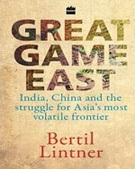
In the background of a perceived shift in global power from the West to the East, future relations between a rising China and India are a fit subject for analysis and speculation. The title of Bertil Lintner’ book - “Great Game East: India, China and the Struggle for Asia’s Most Volatile Frontier” whets even more the reader’s appetite as it conjures up chess-board strategic moves and countermoves by China and India to promote their respective geopolitical interests in the insurgency-ridden region spanning India’s North-east and Burma.

Associated with the Far Eastern Economic Review for 20 years, with expertise on ethnic minorities and insurgencies in South East Asia and South Asia, and personal knowledge of ground conditions and contact with key rebel leaders, Lintner’s credentials for writing this book are impressive. In 1985 he travelled with his Shan wife 2275 kilometers overland from north-east India- which he entered illegally- through rebel held Burmese territory to China, for which he was blacklisted by the Indian government until the early 2000s.
The author acquaints the reader with the historical roots of the insurgencies in India’s north-east, their evolution, the role played by China, Bangladesh and Pakistan in providing arms, training, shelter and travel assistance to the insurgents, and India’s political astuteness in containing the revolts. Lintner credits India with masterly use of Kautilya’s four principles of sham (political reconciliation), dan ( monetary inducement), danda (force) and bhed (split) to control if not end the insurgencies, and admires R&AW’s human intelligence capabilities that combined with Kautilya’s maxims on statecraft makes it, according to him, a formidable force- a view hardly supported by the organization’s current reputation.

China’s direct support ended with Deng Xiao Ping’s ascendancy but Indian insurgents apparently continue to have access to the grey arms market in Yunnan run as private businesses by former officers of the PLA. Under Sheikh Hasina, Bangladesh’s support to ULFA and Manipuri rebels has ceased, which makes Pakistan’s mischief-making more difficult.

Lintner tries to fit the seemingly localized conflicts in the region into its geopolitics defined by the rising Indian challenge to Chinese supremacy in Asia, the differences between the two over Tibet and Arunachal Pradesh, Chinese arms supply links with ethnic rebel movements in India’s north-east, with continuing turmoil in Burma providing the vital geographical link for such activity. But Lintner also says, somewhat contradictorily with the book’s title, that while the Himalayas will remain important strategically, the main conflict of interest between India and China will play out in the Indian Ocean.

This book should caution those in India who are enticed by the idea of linking Yunnan to India’s north-east to end its isolation and enable its development in a regional context. It also underscores the necessity of a lasting solution to insurgencies in the north-east for the connectivity through Burma and Thailand to Singapore that our Look East policy seeks to establish.

This is a book by a journalist, not an international relations scholar, and relies a great deal on anecdotes and personal accounts. There is much detail that displays the author’s rich knowledge of personalities and events in the separate chapters on the Nagas, Mizos, Manipur, Assam and Bangladesh as well as Burma, but it is the introductory chapter and that on the Indian Ocean that provides some geopolitical perspective.
The book does not quite live up to its dramatic title. On closing it the reader is not left with the feeling of having experienced the strategic thrills of a new Great Game East being played out inexorably by the elephant and the dragon.

Thursday, June 14, 2012

Why Non-alignment 2.0 does us a Disservice

Satish Chandra
Distinguished Fellow,VIF


The document, prepared by an eminent 8-member group, has attracted both criticism and praise. The latter is mainly for drawing attention to India's innumerable foreign policy challenges and for generating debate thereon. On the negative side, a major shortcoming in the document is the failure to clearly spell out a vision for what India should aspire to be and how precisely should these aspirations be realised, says Satish Chandra.

Non-alignment 2.0 -- unveiled in January -- is a 60-page document which purportedly outlines the principles that should guide India's foreign and domestic policy over the next decade.

Over a year in the making the document is the handiwork of an eight-member group comprising some well known Indian intellectuals like Shyam Saran, Sunil Khilnani, Nandan Nilekani, and Pratap Bhanu Mehta. 

The authors are at pains to claim that the document represents only their views and that it is, therefore, an independent product. This is open to question because Shyam Saran, a former foreign secretary, heads a government-funded think tank and another author, General Prakash Menon is military advisor with the rank of secretary in the National Security Council Secretariat. Moreover, the National Security Advisor and his deputy actively participated in some of the deliberations of the group to which administrative support was provided inter alia by the National Defence College. 

Nonalignment 2.0 has attracted both criticism and praise. The latter is mainly for drawing attention to India's innumerable foreign policy challenges and for generating debate thereon. The document is, of course, also studded with several nuggets of wisdom some of which may be enumerated as follows:

India must retain maximum strategic autonomy in order to enable it to pursue its developmental goals;

Since its economic growth requires deepened economic engagement with the world, India must strive to maintain an open global order;
It is unlikely that there will be enduring coalitions: these would require artful management;

India's great advantage is that, barring in its immediate neighbourhood, it is not seen as a threatening power;

Engaging with the Asian theatre will be a key concern for India with South Asia being the most vital; 

India must put in place operational concepts and capabilities to deter China since the latter will be a significant foreign policy and security challenge for it;

Progress in India-Pakistan ties can only be incremental;

While seriously pursuing the complete elimination of nuclear weapons on a non discriminatory basis, India must beef up its nuclear weapon capability in particular the maritime leg.

On the negative side, a major shortcoming in the document is the failure to clearly spell out a vision for what India should aspire to be and how precisely should these aspirations be realised. In the absence of such on overarching unity of purpose Nonalignment 2.0 flounders and lacks coherency.

Many have also found fault with the title of the document on the grounds that it is backward looking rather than forward looking. The argument that the title was selected as 'strategic autonomy' was a core element of non-alignment as earlier practiced by India, cuts no ice as such autonomy is something which any self respecting country would like to exercise and as the non-alignment of yester year had many shortcomings.

Given the standing of the authors, one would have expected a much more tautly conceived and constructed document. It, however, disappoints. It is flabby, marred by inaccuracies, and on occasion displays a disquieting naivete. In this context, consider the following propositions contained in it:

India's internal development will depend on how well we manage our global opportunities. Comment: is not the converse truer? In the ultimate analysis progress is dependent more on management of internals than of foreign policy;

The fundamental source of India's power is its example. Comment: comprehensive national power rather than example is what counts for in the real world;

The main thing that can hold India back is India itself. Comment: This is a cliché applicable to all countries;

South Asia is holding India back at many levels and places fetters on its ambitions. Comment: While a fractious neighbourhood is a cause of concern it cannot subvert Indian ambitions as long as India is strong;

India has been granted Most Favoured Nation treatment by Pakistan. Comment: This is incorrect. Pakistan has only moved from a positive to a negative list in respect of its imports from India.

India should engage in cooperation with Pakistan on energy and water, leverage its economic relationship with China for political concessions and persuade the latter to seek reconciliation with the Dalai Lama. Comment: Even a nodding acquaintance with the dynamics of the polity of Pakistan and of China and their relationship with India would indicate that these propositions are non-starters. 

Finally, perhaps the most serious flaw in Nonalignment 2.0 is that it reeks of pusillanimity. For instance, it suggests that India should continue to remain engaged with Pakistan even if there are further Mumbai like attacks. All that it contemplates in such eventualities is stand-off punitive operations and goes so far as to argue against deep thrusts into Pakistani territory for fear of nuclear attack missing the point that we have a nuclear deterrent. 

Similarly, while suggesting that there can be no proportionate response to a Chinese attack on India it makes a case for an asymmetric response inter alia based upon the creation of insurgencies in areas occupied by China thereby acknowledging defeat even before battle has been joined. It also argues that India should focus more on accretion of its military capability at sea rather than on land. Indeed, the paragraphs relating to China are permeated by an unseemly fear and the thought that India should do nothing which may increase its anxieties, to the extent that we maintain equidistance between China and the US. 

Even in respect of our South Asian neighbours the document would have India make unilateral concessions to them. The learned authors appear to have learnt no lessons from the fact that the countless unilateral concessions made by India to China, Pakistan and even Sri Lanka, have not earned it any positive results in terms of improved ties with those countries and only encouraged recalcitrant behaviour. 
Ironically, while the document is mindful to a fault of Chinese sensitivities all such caution is thrown to the winds when addressing India. Indeed, it goes so far as to suggest that we need to build a credible state, promote inclusive governance and a political culture attuned to defusing conflict. 

These homilies are not only quite out of place in a foreign policy related document but much more applicable to China and Pakistan than to India. Indeed our record on this count is better than that of many countries. The fact that they have found place in such a document is, therefore, not only unwarranted but also a singular disservice to the nation. 

Monday, June 11, 2012

Implications of US Defence Secretary’s Visit to New Delhi


Arun Sahgal & Vinod Anand
The two days visit of US Secretary of Defence Leon Panetta to India generated considerable interest both among the political circles and strategic community. Major interest was in the new American defence strategy the chief element of which was re balancing towards Asia – Pacific Region.

The visiting Defence Secretary outlined three broad perspectives in his interaction with Indian political leadership, these included, shared challenges of ensuring an open access to maritime, air space and cyber space domains as also challenges posed by radical ideologies, piracy and proliferation of weapons of mass destruction.

The fundamental thrust of the Secretary’s discourse was that in addition to upgraded US military presence in the region, US was keen to encourage and assist regional states in developing capabilities to deal with shared challenges. India was sought to be projected as the lynch pin of this strategy being the biggest and most dynamic. Towards this a commitment of sorts was made to upgrade the current buyer and seller relationship to a more substantial one in which US will share important cutting edge technologies, enter into substantial co-production relationship which would eventually transgress to high technology joint research and development.

An interesting point was the underplaying of outstanding agreements sought by the U.S such as CISOMA, BECA and the LSA, outlining that these will not be allowed to be a dampener in building strong positive defence relationship with India. The message was clear, US is ready to do business on terms that India may find both politically and economically comfortable. In an interesting initiative Mr. Panetta mentioned that he has asked his Deputy Secretary to engage with Indian counterparts to streamline bureaucratic procedures on both sides to make them simple, responsive and effective.
It is apparent that US is keen in drawing India into a much stronger defence partnership and provide technologies and capacities that will enhance India’s defence capabilities and preparedness. The fundamental challenge for India is how to respond to these overtures. We have a drawn out acquisition process, which is based on global Request For Proposals from which sound technological products at best possible costs are sought to be acquired. That this procedure is cumbersome and does not provide top of the line technologies is given, however government ridden by corruption charges cannot hope to give up apparent transparent procedures only to build relationship with the US. Mere induction of cutting edge technological inputs cannot help India build indigenous defence industrial base. Although not spelt out, US assertions of best technological products are based on Foreign Military Sales route, with at best limited technology transfer. In evaluating US offer India will need to carefully calibrate this cooperation to its advantage, most importantly in terms of technology transfer and even more importantly after weighing the capacity for industrial absorption.

On strategic and geo political plane the visiting Defence Secretary shared his views on Afghanistan making two critical points. One, the US was on top in the war on terror and Taliban has been pushed onto the defensive. Second, US is on course in its disengagement schedule and handing over security control to the Afghan Security Forces, who going by the Secretary’s calculations will be in control, of nearly seventy five percent of their territory by the end of 2012. He also outlined US commitment to ensure stable and secure Afghanistan, which could over time make its own democratic choices.

Subsumed in the remarks was a clear nuance of India assuming the role of an important stake holder in security and development of Afghanistan by both upgrading its training commitments and development efforts. The key to Indian greater engagement was hinted in improved bilateral relationship with Pakistan, in terms of resolving differences (Siachen?) and economic cooperation to help in Pakistani economic recovery. A sort of grand bargain appeared to be nuanced as part of greater Indo – US defence relationship, in which India would help the US in providing regional stability through greater economic and military engagement (training of Afghan Security Forces) in Afghanistan and helping Pakistan through economic and political gestures. The basic issue for Indian security concerns is that will it bring lasting peace and stability or will this be one more unilateral concession? There is a need for India to critically evaluate its policy options, vis a vis both Afghanistan and Pakistan, time for which appear to be running out.

There was also an exchange of views on tensions in South China Sea, North Korean nuclear weapons proliferation among concerns that it was close to testing fission – fusion device at the behest of Pakistan on Chinese insistence. Discussions also centred on new asymmetric challenge of nuanced cyber attacks against both strategic and economic entities in both the countries.

On China a somewhat cautious approach was adopted highlighting the need to strengthening of bilateral relationship by both countries while welcoming China’s rise. Hope was expressed of a strong China playing by the international norms as its regional and global roles expand in particular not do anything that could upset the six decades of peace and stability in the region. Nuance of the Secretary’s remarks were clearly towards, at one level to draw the Chinese in as a responsible stake holder in maintaining peace and stability by not resorting to coercion and assertive behaviour, on the other to drive home the credibility of US power and its attempt to build regional security capabilities to deal with Chinese aggressiveness.

Is there any wonder that Chinese have reacted sharply to the American attempts to tilt regional balance in its favour, by what they claim attempting to create a semi circle of alliances against China from the South (Global Times, June 8, 2012). Chinese statement also carried a nuanced message for India; warning it not to get entrapped in a US led anti Chinese alliance. The analyst from Chinese Institute of International Studies a government sponsored foreign policy think tank highlighted that ‘India was unlikely to get involved in any such containment policy on somebody else’s behalf, as it has “its own agenda in the region," noting that India wants to be independent in making its own foreign policies while maximising its national interests. As an example it outlined how India has refrained from becoming deeply involved in the South China Sea rows because it viewed any friction with China as being against its fundamental national interests, underscoring that India's interests lie in wider economic and cultural cooperation with China. In a veiled attempt to woo India it added that “this is China's opportunity to break up the US intention to contain China”.

India is unlikely to fully countenance the America’s ‘re- balancing strategy’ given its likely impact on balance of power in Asia. there is no doubt that there are concerns in New Delhi about China’s rise, its military modernization, infrastructural developments in Tibet and growing foot prints in South Asia and SE Asia and even more importantly forays into the Indian Ocean. However despite these overt Chinese moves there is, growing realization that given the prevailing power differential it is imperative to engage China, lower tensions and build a win-win transactional relationship that underscores cooperation and downplays competition. A senior Indian policy maker put it succinctly when he declared that India is absolutely committed to a pragmatic approach in dealing with sensitive bilateral issues. India doesn’t want any fights with China. We want to develop a relationship further and faster, but we want to assure that our pride is not hurt in the process because China has risen and India is, still, rising. The unequal space of development, he adds should not cast a shadow on mutual treatment which has to be based on the spirit of equality and respect. Both India and China will have to find ways to preserve mutual pride and move ahead on the journey of development and growth. The Indian dilemma therefore is how to play its politico – military cards in the evolving strategic order in Asia.

Given the aforementioned perspective, the nature of Indian engagement will be dictated by how Indian policy elites perceive their role in the region and above all its impact on the overall India’s China policy. The issue that will drive India’s policy options will essentially the nature of engagement with China and the US as also broader Asia – Pacific region. Will India act as a swing state, i.e. balancing Chinese assertions with close political and military relations with United States? Alternatively with China enjoying increasing influence in SE and South Asia, bandwagon with, Southeast and East Asian states like Japan and South Korea (littorals along the Asian Rimland) to balance, Chinese power.

Different pathways for India could be:

a) India’s geo-political, energy, economic and maritime interests force it to get into a security understanding with US allies and partners like Vietnam, Japan, South Korea and Australia. There is a marked enhancement in her defence self reliance capabilities which is boosted by US technology transfers and military hardware support. It develops strong maritime capability and nuclear triad backed by significant space and cyber capacities with large C4ISR foot print over its region of strategic interest. Andaman and Nicobar transform in to a strong ‘iron choke’ to counter Chinese ‘string of pearls’. India puts in place an effective anti access and area denial strategy in the Indian Ocean as also along its land borders.

b) India attempts to balance Chinese assertion and US interests. Towards this, on one hand, it boosts its economic relationship with China, while simultaneously developing close political and economic linkages with the US but without any overt security understanding. To foster its regional economic interests boosts trade and economic relationships with ASEAN. It buttresses these initiatives through; close strategic relationship with Russia, Central Asia while taking effective steps to enhance its bilateral relations in South Asia and moves toward resolution of India -Pak differences. It simultaneously uses this period to build up its comprehensive national power while ensuring economic progress.

c) Third pathway could be sustained economic development and military modernization to build credible dissuasive capability. To foster regional peace and stability, it could reach political and economic understanding with China through conciliatory gestures e.g. South China Sea, membership of SCO, undertaking joint development and infrastructure projects in South and SE Asia. Opens up dialogue to address Chinese fears in IOR. In short attempt to upgrade its bilateral arrangements with China, prevent falling into China containment trap. Thus there is an attempt to build peaceful periphery without being a so called ‘swing ‘state.

Conclusion

Indian strategic options in forging a grand strategy vis a vis China are restrained by a new euphuism of maintaining strategic autonomy. As a result there is talk of unexceptionable strategic risks in proximate relationship with the US, which could mortgage India’s strategic options.

Notwithstanding above India needs a strategy that helps it balance military challenge posed by China’s military modernization, persistent adversarial stances and increasing forays at India’s doorsteps in the North East, Western and North Western peripheries and in the Indian Ocean. Given the aforementioned perspective is there a case for closer strategic understanding with the US on terms which both find comfortable? What this essentially entails is a strong and purposeful hand shake and not a bear hug.