Showing posts with label Sheikh Hasina. Show all posts

Thursday, March 20, 2014

US’ India Policy Reflects Strategic Miscalculations Printer-friendly version

Kanwal Sibal, 
Dean, Centre for International Relations and Diplomacy, VIF

The United States of America is, once again, not managing its relations with India well. Gains made during George W. Bush’s presidency in building strategic trust between the two countries are being steadily frittered away by wrong steps taken by the Obama Administration, which seems to have taken its eyes off the India ball. Blame for this is being laid at India’s door, with the argument that India has not lived up to American expectations, that we have been sitting on the fence, unwilling to grasp firmly the hand extended by the US because of our non-aligned obsessions resurfacing as “strategic autonomy”.

Such talk assumes that India has to meet certain benchmarks set by the US in order to be a valuable partner — that is, to earn favour by behaving according to the US script. In this equation, the US is not required to live up to India’s expectations. In reality, if the two countries have to build a meaningful strategic partnership, it cannot be a one-sided affair, with one side under pressure to give and the other expecting to take.

Indian and American critics of India’s lack of strategic initiative believe that the US’s role in lifting nuclear sanctions on India obliges us to continually offer rewards to the Americans in our defence and nuclear sectors, carry out economic reforms in accordance with US wishes and priorities, and make our foreign and security policies increasingly congruent with those of the US. Such thinking misses the important point that, apart from extracting major Indian concessions with regard to India’s nuclear autonomy, the larger US objective was to win India to its side in the face of the new strategic challenges facing US power in Asia with the rise of China, the need for burden-sharing in upholding the post-1945 international system because of the depletion of its military and economic strength caused by wars and financial mismanagement.

Has the US, as part of an equitable strategic bargain, adjusted its options in dealing with issues that are sensitive for India? It has not entirely given up balancing its relationships with India and Pakistan, even though India does not support ideologies and actors that oppose US values and interests and take the lives of its citizens. The US continues to provide military support to Pakistan. It is reaching out to the Taliban with the assistance of the Pakistani military, whose only instrument of political influence in Afghanistan is the former. Legitimizing the Taliban’s political role in Afghanistan, even as the Pakistani Taliban are threatening Pakistan’s internal peace, is to leave behind acute problems for India, already the victim of jihadi terrorism.

A positive feature of India-US ties in recent years is the better alignment of their policies towards South Asian countries (barring Pakistan). However, the US, in furtherance of its democracy and human rights agenda, has lately taken a divergent course. Any strategic partnership has to show particular sensitivity to the regional interests of partner countries. The US has targeted Sri Lanka in the United Nations Human Rights Council at Geneva, leaving India little choice but to go along as the US initiative opened the doors to pressures by regional lobbies within India on the Central government to support international moves to condemn Sri Lanka.

More recently, the US criticism of the election process in Bangladesh — which gives comfort to Begum Khaleda Zia and her extremist allies and undermines politically the secular-minded Sheikh Hasina — is not in tune with India’s interests. That the US should be politically protective of forces in Bangladesh that are unfriendly towards India betrays a failure of strategic understanding on developments in Bangladesh that are in the interest of the region. The US has, surprisingly, lauded Begum Zia and her Jamaat allies in the past as representing “moderate Islam”. Now that Sheikh Hasina is seeking to exorcise Islamist elements and build a truly moderate polity in the country, the US is disapproving of her politics, faulty though it may be in some respects.

The US ignores China’s strategic links with Pakistan, including their nuclear cooperation, even as it expects India to be the lynchpin of its re-balancing towards Asia. This essentially means that the western Pacific region, where American power is being challenged by China. We have come under enormous pressure from the US to dilute our already limited relationship with Iran in a bid to further isolate that country, disregarding our genuine strategic interests in that country, both in terms of long-term energy security and transit routes to Afghanistan and Central Asia.

Another instance of the US assaulting India’s dignity, without control mechanisms being triggered from the top, has been the Devyani Khobragade case. The US is unwilling to bring a closure to this issue even now, despite the huge set-back administered to bilateral ties. On the economic side, from a political position that the several India-US economic dialogues were strategic in nature as building Indian capacities in various fields was intended, we have now the US corporate lobby targeting India on patents and compulsory licensing issues related to Intellectual Property Rights as well as those of market access. The US Chamber of Commerce is demanding that the US trade representative classify India as a “priority foreign country”, a status reserved for the worst IPR offenders, which can lead potentially to trade sanctions. The US International Trade Commission is undertaking a year-long investigation into the effect on the US economy and IPR protection of India’s trade, investment and industrial policies — an unjustifiable case of arm-twisting from the Indian point of view, given that Indian decisions are compliant with the agreement on trade-related aspects of IPR, and the US remains unresponsive to many Indian complaints on trade and services issues. On patent and compulsory licensing, the US that swears by due process is questioning the legitimacy of our Supreme Court’s judgments.

The treatment of Narendra Modi by the US also shows the ineptitude of American diplomacy on a domestic Indian political issue it could have stayed away from. Rather than dealing pragmatically with the visa issue, the US has taken a doggedly ideological position; even intensive investigative and legal processes have failed to incriminate Modi. The belated good sense shown by the Europeans in ending their ostracism of Modi has been emulated by the Americans with diplomatic clumsiness. Even as the US Ambassador to India met Modi, the state department announced that there was no change in the US position on the visa question. The statement from the US embassy, that the Ambassador also discussed human-rights issues with Modi, was intended to signal that this subject continues to weigh with the US while dealing with Modi — an unnecessary befuddlement if the idea is to make up with him. It seems that the US wants to hedge its bets on Modi, making the gesture of reaching out to him in case he might win, but keeping the visa-denial issue alive in case he loses. This is hardly serious diplomacy.


If the US had judged the importance of India in its strategic calculus during Bush Junior’s presidency, and if President Obama’s rhetoric about the relationship with India being a defining one for the 21st century was meant, then the current inattention towards India shows the strategic fitfulness of the Americans, who emphasize quick gains over patience in obtaining returns from a key investment in a longer-term perspective.

Tuesday, April 9, 2013

Indo Bangladesh Relations


Maj Gen (Retd.) P K Chakravorty

Introduction

Pakistan Army surrendered to the Indian Army in Dacca on 16 December 1971. It was a victory which resulted in the creation of a new nation Bangladesh which found its rightful place in the committee of nations. India withdrew its Army and returned 93,000 Pakistani Prisoners of War back to Pakistan in accordance with the Simla agreement. The new nation was shaping up when a group of Army officers on 15 August 1975 assassinated the President Sheikh Mujibur Rehaman and his entire family. The only survivors were two daughters of the President, Sheikh Hasina and Sheikh Rehana who were in Germany. The assassination caused consternation and the Bangladesh Army called the shots. Sheikh Hasina returned to Bangladesh after six years of exile on 17 may 1981. In the mean time Bangladesh witnessed the rise of another lady Begum Khaleda Zia, the widow of late General Zia ur Rehaman who was assassinated in 1981. She heads the Bangladesh Nationalist Party (BNP). She ensured the fall of Ershad in 1990 and was elected Prime Minister for three sessions. Sheikh Hasina was first elected Prime Minister in 1996 and thereafter in 2008. Currently she is the Prime Minister making all out efforts to focus on economic development and improved international relations. Her current term ends on 29 December 2013 and elections could be held possibly in January 2014. Her main opponent would be Begum Khaleda Zia of BNP which currently has 30 seats in the Bangladesh Parliament Vis a Vis 230 of the Awami league.

Current situation

Bangladesh is economically becoming stronger with each passing day. The GDP of Bangladesh as per Purchasing Power Parity (PPP) is US $ 306 billion. Despite global economic recession the country has been maintaining a steady growth rate for the last decade at about 6% and this financial year the growth rate is about 6.4%. The country has doubled her revenue collection in the past four years. Further the foreign exchange reserves have risen to $ 12.3 billion as compared to $ 5.78 billion in 2009. The per capita income has risen to $ 848 from $676 four years ago. Currently, Bangladesh produces the best textiles in the world. The biggest achievement is that poverty is down to 31.5% from 40.4% in 2005. Education is being given tremendous importance. Schooling is free in the primary sections but figures of actual attendance vary as a large number of children are not able to attend school due to multiple reasons. Overall there is a gradual stabilisation which is reducing the illegal immigration from Bangladesh into India. Though it is estimated that there are about 10 million illegal immigrants of Bangladesh in India, improvement in socio economic conditions would lead to control over this issue.

The security forces of Bangladesh have stopped interfering with political activities and are contented undertaking military tasks. The Bangladesh Army with seven divisions and a strength of 300,000 would be receiving Russian armoured vehicles, Air defence systems from Russia on account of $1.2 billion deal signed by Prime Minister Sheikh Hasina in Jan 2013. The Navy has strength of 22.000 personnel and their primary task is coastal patrolling. They have five frigates, two submarines and numerous small surface ships. The Air Force has a strength of about 22000 and has four fighter squadrons based on F 7 and four helicopter squadrons. Bangladesh is likely to get about eight Mig 29 shortly. The Armed Forces no longer are involved in politics as was observed post 1975 till about 1990. Currently they are very keen on undertaking UN peace keeping operations which fetches them a lot of goodwill and monetarily benefit their personnel. It is reported that the UN has stated that peace keeping operations will be curtailed if the Army interferes in domestic politics. It is pertinent to note that Bangladesh would be commencing two nuclear plants with Russian assistance.

Recently the youth of the country are involved in the Shahbag protests which are being undertaken in the Shahbag portion of Dacca since 05 February 2013. The movement commenced demanding capital punishment for Abdul Quader Mollah and others convicted of crimes prior and during the liberation War in 1971. The International Crimes Tribunal had sentenced him to life imprisonment and this did not satisfy the nation. The current demand is to ban the Bangladesh Jamaat-e-Islami party as its leaders have been convicted of genocide and war crimes. The movement is apolitical and comprises the younger generation who would like the completion of the trial of the Father of the Nation Bangabandhu Sheikh Mujibur Rehaman along with his family members. The Jamaat-e-Islami has opposed the Shahbag movement and is stated to have killed Ahmed Rajib Hyder a blogger who had been posting anti Islamic posts. The BNP initially supported Jamaat but have now taken a neutral position. There has been a hartal by 23 liberal groups against the Jamaat who have been perpetrating sporadic violence.

Relations with India

India has on her part left no stone unturned to assist Bangladesh. Possibly after about 41 years Bangladesh is responding positively to India’s policies of cooperation. India and Bangladesh have excellent trade relations and exports of Bangladesh to India have crossed $500 million mark and may reach the one billion mark in future. Further to revive traditional community trading that used to exist prior to 1947, Border Haats have been started between the two countries. India’s concerns pertain primarily to Security, border boundaries, water and connectivity.

As regards security India’s main concern was use of Bangladesh by militant groups as a launch pad for executing operations against India. The present Bangladesh Government has extensively cooperated with India on this subject resulting in reducing the insurgency in the North Eastern regions of our country. The two Home Ministers have also signed an Extradition treaty on the subject.

India shares a border of 4096 km with Bangladesh. The Radcliffe line has created enclaves which need to be rationalised. India has 111 enclaves in Bangladesh and Bangladesh has 55 enclaves in India. Further there are Adversely Possessed Lands habitually used for cultivation by people of a community who suddenly found a fence hindering their activities. Both the Governments have come to an understanding and this would lead to signing of an agreement which would need ratification by Parliament. For Bangladesh it would be a simple task, but for India which would need a Constitutional amendment, it would be difficult as the Bharatiya Janta Party (BJP) has declared it opposes the settlement. It is a matter of time as people in these enclaves are keen to resolve the issue and have faith in both countries. The agreement on the border would also lead to transit rights enabling better connectivity between Bengal and Assam. This would allow people and goods to travel easily between the two countries by rail, road and some places by river.

The two countries share 54 rivers and so far only problems relating to the River Ganga have been resolved by a 30 years agreement on 12 December 1996. Hydro electric dams are being built in Meghalay and Tripura. Further, it is reported that Bangladesh is going to buy 500 mw of electricity from India. Both countries have worked out a draft agreement for Teesta River which was to be signed in September 2012 during the visit of Prime Minister Manmohan Singh to Bangladesh has been delayed due to last minute change of stand by West Bengal Chief Minister Ms Mamta Bannerjee. The issues raised by the state are being renegotiated and it is expected that the concern of West Bengal would be suitably addressed.

It is of utmost importance that the land and the Water Agreements are signed between India and the Bangladesh. This will put relations between us on a firm pedestal. Recently our President Shri Pranab Mukherjee visited Bangladesh in March 2013 and the BNP leader Begum Khaleda Zia cancelled her meeting with him stating flimsy reasons. It is necessary we make conditions congenial for re election of Awami League in 2014.

Conclusion

Sheikh Hasina Wajed has taken a strong stand against anti India terror activities on its soil. She is slated to visit India in September 2013. The agreements must be signed to facilitate her return to power in 2014.

Monday, April 8, 2013

Supporting War Criminals - Is Bengal’s Liberal Space Shrinking?

Dr. Anirban Ganguly 
(Research Fellow, VIF)

Something unprecedented happened over the last week end (30th March) in Kolkata. Sixteen Islamic organizations came together at the Maidan, the second largest public ground in the city, in protest against the ongoing War Crimes Trial in Bangladesh, against the Shahbag sit in and in support of the Vice-President of the Jamaat-e-Islami Bangladesh, Delowar Hossein Sayeedi one of the prime accused in the 1971 genocide in Bangladesh.

It was astounding to see a huge and belligerent crowd gather from all over the state to support one of the best known razakars and collaborators with the Pakistan army in its genocide against Muslims and Hindus in East Pakistan. Speakers addressing the gathering attempted to whip up hysterical support for the Jamaat and its leaders and pledged that just as West Bengal’s Muslims prevented Salman Rushdie from the entering the state and hounded out Taslima Nasreen in 2007 they would generate a movement against the pro-War Crime trial bloggers in Bangladesh and would take on their supporters with the same zeal. They even threatened to block any future visit of Sheikh Hasina’s to India.

But most shocking was their brazen support for Sayeedi, a known vocal anti-India preacher, a rabid anti-Hindu who has been active in organizing pogroms against minorities in Bangladesh over the years and one of the most avid collaborators in Pakistan’s genocide against fellow Muslims.

They openly declared their support for Sayeedi saying that a death sentence for Sayeedi in effect meant a death sentence for the Koran and Islam. These speakers chose to ignore the fact that Sayeedi was being tried for killing in cold blood their fellow religionists. It was for the first time that such a mobilization took place in Kolkata and it simply reinforced an emerging mindset which has begun trying to consolidate a pan-Bengal Islamic identity. Incidentally, it was from the Maidan in August 1946 that the call for ‘Direct Action’ was given by the Muslim League. The result of that call on the history of both parts of Bengal is too well known to even require a passing reiteration. But our politicians have deliberately chosen to ignore that past.

Not a single political party, and in them especially those who at the first opportunity, jump to dissect delusional dimensions of Hindu fascism and habitually get into describing various conjured Hindutva theatres of genocidal experiments or pontificate on the need to maintain the secular and syncretic texture of our nationhood, came forward to condemn the positions taken in the meeting. Not one political party even recalled the genocidal role that Sayeedi and his ilk played in the past and of how they helped to sustain Pakistani resistance to Indian soldiers. The Shahbag protesters have been calling for the establishment of a truly secular and constitutional Bangladesh where religious bigots would be reined in and their anti-national tendencies curbed and yet they find no support from our political secularists.

Both the Left and the Trinamool Congress (TMC) have maintained a studied silence having mortgaged over the years their politics to Islamic fundamentalist elements in the state. Comrades who jump at every opportunity to display their secular credentials in order to keep communal forces at bay through organizing rallies, sit-ins, and seminars have not issued even as much as a statement. In fact Sayeedi himself had a very clear benchmark for Communists, “Leftists are not Muslims. They don’t believe in prayers”, he had declared. It has always been an axiomatic truth for him that no non-Muslim could be allowed to live in Bangladesh. He assiduously worked for it ever since the War of Liberation in 1971. No wonder comrades in Bangladesh find it difficult to survive on their own and have prudently sided with Sheikh Hasina.

The Congress believing that it shall gain space with the electorates’ gradual disillusionment with the TMC has obviously kept quiet. Its studied silence is part of its larger grand design of mobilizing country wide minority support. Nor has the Indian media come forward to debate the phenomenon; it is still incapable of visualizing its status once congregations such as these begin spawning Sayeedi clones all over India. For the media and journalists Sayeedi had a simple equation, “Journalists write lies. They are the enemies of Islam”, it is well documented as to what Sayeedi did to those whom he considered as enemies of Islam. It is this stoic silence in face of a rising vocal Islamic fundamentalism which is worrisome and condemnable. The liberal space in Bengal is fast shrinking and we have paid a heavy price for such a constriction in the past.

Those in whose support the Maidan congregation was organized were at their vicious best when it came to treating minorities in their own country. Sayeedi himself, as head of the local Al Badr and Al Shams, has been convicted of killing Hindus, burning their homes and businesses and of forceful conversion. Sydney Schanberg, then correspondent of the New York Times, noted the selective approach in targeting Hindus, ‘the [Pakistani] army is now concentrating on Hindus, the killing is more selective, [and] has not stopped.’ Schanberg also recorded how the Pak army had ‘painted big yellow H’s on the Hindu shops to identify the property of the minority, eighth of the population that it has made it special targets.’

Archer Blood, the ‘dissenting diplomat’, then American Consul General in Dhaka cabled on 29th March 1971 on how the ‘Hindus [were] particular focus of [the] campaign and how the army was ‘going after Hindus with vengeance.’
Veteran Pakistani journalist Anthony Mascarenhas, who fled to London in order to tell the truth about the Pak army wrote in exasperation in his columns in the Sunday Times that the Pakistani military operation had two distinctive features: ‘ One, the cleansing process’, the other ‘rehabilitation effort’ – i.e. ‘turning East Bengal into a ‘docile colony of West Pakistan.’ Sayeedi and his political colleagues had wholeheartedly facilitated all of these; the Maidan congregators were silent on that.

It was Sayeedi who had once said of the Hindus of Bangladesh, ‘Why should we feel sad when the Hindu brothers choose to leave our country? Do we mourn when we have indigestion and materials leave our bodies?’

Do we then assume that those in West Bengal who have organized the Maidan rally in Sayeede’s support and those who have, through their silence given consent to their demands, really support that line? Aren’t they complicit in composing the final requiem for Bengal’s, once famed, liberal space?

Monday, April 1, 2013

War Crime Trials: Bangladesh on the Edge


Neha Mehta 
(Research Associate, VIF)

The 1971 Liberation War in Bangladesh has been the worst chapter in Bangladesh’s history that witnessed genocide, rape and murder at the hands of the army of West Pakistan and their collaborators in East Pakistan (present day Bangladesh). This resulted in the 1971 civil war between Mukti Bahni (Liberation army) supported by India against the Pakistani forces which had the full support of Jamaat-e-Islami. It had formed paramilitary forces like Razakars, Al-Badr and Al-Shams that were against the independence of East Pakistan. During the nine months that the war continued the Pakistani army and their collaborators killed millions of people, mainly targeting Bangladeshi intelligentsia, minority groups, women and pro-independence forces that left a permanent scar in Bangladesh’s psyche. An estimated 3 million people lost their lives through various acts of genocide, in addition to 200,000 women who were raped. Such atrocities were instrumental in the migration of over 10 million people to India.

A politically divided nation that still retains the essential ideological divide is presently facing deep crisis and uncertainty owing to the verdicts of the International Crimes Tribunal. Setting up the International Crimes Tribunal was part of PM Sheikh Hasina’s election manifesto of the 2008 elections, taking into consideration the long held demand of the people to get justice for the crimes committed more than 40 years ago. Hence, in 2010 an International Crimes Tribunal (Bangladesh) was set up to try cases against the collaborators of the Pakistan army. This included a total of nine Jamaat-e-Islami leaders and two from Bangladesh Nationalist Party (BNP)1, covering almost the whole of Jamaat-e-Islami leadership including Jamaat’s current leader, Motiur Rahman Nizami and also the party’s head in 1971, Ghulam Azam.

The current political environment in the country has become extremely volatile with a clear division over the verdicts given by the International Crimes Tribunal. On the one hand, the Jamaat-e-Islami has out rightly rejected the verdict, going on a rampage instead to have their demands met. They have demanded the dissolution of the tribunals and freedom for the accused. To that effect, they have tried all means possible to put pressure on the government, domestically as well as internationally. The government however, has refused to relent and is not bowing to any kind of pressure employed by Jamaat. Rather, the nationalist fervour in the country has gained ascendancy and there is a clamour for awarding the maximum punishment as seen in the Shahbag square movement. The Bangladesh Nationalist Party (BNP), the main opposition party, an ally of Jamaat-e-Islami has not been openly supportive of them lest they be deemed anti nationalist and anti liberation war. In addition, with elections around the corner it would be detrimental to their image.

The present upheaval has plummeted the country into a state of anarchy as a consequence of the verdict given on the three Jamaat-e-Islami leaders in the International War Crimes Tribunals. The first verdict that came out on January 21, 2013 awarded death sentence to Abdul Kalam Azad alias Bachchu Razakar in absentia (supposed to be in Pakistan) for genocide and crimes against humanity. It was after the second verdict that announced life sentence to Jamaat-e-Islami’s assistant secretary-general, Abdul Quader Mollah on February 5, 2013 which resulted in student protests at the Shahbag square. It led to huge uproar amongst the people who strongly reacted against the verdict and wanted nothing less than the death sentence for the accused. In addition, the largely peaceful student demonstrators demanded a ban on fundamentalist political parties in Bangladesh. The demonstrators and the government, however, were on the same side in the case which led the government to amend the International Crimes Tribunal Act (1973) with a provision that allows the state to file an appeal with the Supreme Court against inadequate award of sentence by the Tribunal.

However, it was the death sentence given to Maulana Delawar Hussain Sayedee who is Jamaat-e-Islami Nayab-e-Ameer which became the tipping point leading the student wing of Jamaat-e-Islami in unleashing a reign of terror and take law into their own hands. They vandalised public properties and engaged in street fighting resulting in many deaths. In addition, numerous attacks on the places of worship of minorities especially the Hindus as well as their houses were carried out by the activists of the Jamaat-e-Islami and its student wing Islami Chhatra Shibir.

Political parties like the Jamaat-e-Islami identified as the collaborators and perpetrators of the war crimes in 1971 have always been known to damage the secular fabric of Bangladesh with their extremist activities and right wing leanings. It was seen in abundance in the last government of Khaleda Zia, in which Jamaat-e-Islami was part of the four party alliance forming the government. The period of their rule, (2001-2007) saw a corresponding rise in terrorist activities that wreaked havoc in the country and led to a very unstable political environment. The 2005 bombing in which around 500 bomb explosions occurred at 300 locations in 63 out of the 64 districts of Bangladesh as well as the attack on the political rally of Awami League in 2004 in which the present PM Sheikh Hasina almost lost her life are some of the examples. It was a time during which terrorism increased to unprecedented levels with attacks being planned against secular minded opposition parties as well as against India. Their aim essentially was to establish an Islamic state.

The efforts to derail the War Crimes trial since it started to function in 2010 have continued since then with a spate of controversies and pressure being put to stop the trials Earlier also, there were attempts to destabilise the current government in order to thwart the war crimes trial as was seen in the Feb 2009 mutiny by the Bangladesh Rifles. It was suspected to have been orchestrated by the Jamaat-e-Islami so that the Awami League could not keep their election promise.

In addition, in December last year the presiding Judge of Bangladesh’s International Crimes Tribunal Mohammed Nizamul Huq’s email and skype conversations with a Brussels based lawyer were hacked. This led to his resignation and he was accused of being biased as it was alleged that he discussed the working of the tribunal with an outsider. However, the timing of the controversy that had erupted was particularly crucial as it was around this time that the verdict of Maulana Delawar Hussain Sayedee was awaited. It was aimed to bring into question the credibility of the judges and increase the pressure on the government. Owing to the controversy, calls were made for a retrial of this case, which were rejected. This was done essentially to stall the war crimes trial and project it as being one sided and biased in order to generate opinion against it internationally and domestically.

Additionally, diplomatic pressure was put on Bangladesh by the Turkish President Abdullah Gul’s letter to President Zillur Rahman that called for “clemency” to the accused on trial in the International Crimes Tribunal for the “sake of peace in the society”.2 This move, however, surprised the government, that otherwise has excellent relations with the country and it was perceived as meddling in the internal affairs of Bangladesh leading to tensions between the two.

It is anticipated that verdict would be given to all the accused this year itself due to the amendment brought about to the war crimes law that made the appeal process to be completed within 90 days timeframe.3 Going by the recent spate of violence by the activists from the Jamaat-Shibir, gives a clear idea how volatile Bangladesh is going to be in the coming months.

The war crimes trials started after more than 40 years in 2010. This was not done earlier in order to restore the unity of the nation and to establish a politically stable democracy, so as to not divide the country ideologically at its birth. Therefore, the war criminals were granted amnesty by Sheikh Mujib-ur-Rahman, the father of the nation to essentially assimilate the group into the new nation. Nonetheless, such an action did not lead to its desired results, as is quite apparent historically with the spate of military coups, assassinations, political instability and steady rise of religious fanatics and extremism in the country. The desire to change the secular credentials of Bangladesh and turn it into an Islamic State has been a constant aim of the right wing parties in Bangladesh.

A backlash from the Jamaat after the verdicts was something that was expected but the youth movement at Shahbag showed the resolve of the Bangladeshi youth who led the way to make sure that the extremists get the severest punishment. The coming few months leading up to the elections to be held later this year or early next year would be crucial with a range of issues between the incumbent government and the opposition parties that could lead to a deadlock. The law and order situation particularly would be volatile owing to the verdicts that are awaited in the International Crimes Tribunal that might again bring the country to a standstill. However, the people of Bangladesh have waited long enough for justice to be done. Therefore it is imperative for the Awami League government to see that justice is done against the people who committed such heinous crimes against millions of Bangladeshi’s during the Liberation War.

Endnotes
  1. Ethirajan, Anbarasan (Dec 2012), “Bangladesh war crimes judge Nizamul Huq resigns”,Accessed on: 15 March 2013, URL: http://www.bbc.co.uk/news/world-asia-20677752
  2. The Daily Star (Dec28, 2012), “Tension with Turkey”, Accessed on: 28 March 2013, URL:http://www.thedailystar.net/newDesign/news-details.php?nid=262861
  3. The Economist (March 2013), “Bangladesh's war-crimes trials: Bloodletting after the fact”, Accessed : 6 March 2013, URL: http://www.economist.com/blogs/banyan/2013/03/bangladeshs-war-crimes-trials

Tuesday, December 4, 2012

Politics of Corruption in Bangladesh


Neha Mehta 
(Research Assistant, VIF)

Corruption is rampant in Bangladesh in almost every sphere of life. However, a series of high profile corruption scandals, such as in the Padma Bridge project, the Railway Scandal, the Hall Mark Group scam, Destiny Group and last year’s share market scam under the current Sheikh Hasina government, that involved high ranking ministers and officials has brought the credibility of the government under the scanner. In a situation of continuous political strife and with elections fast approaching, a series of corruption scams of such magnitude has led the general public to question the motives of the government that came to power on the pretext of taking firm action against corruption. Adding to this, the dismissive and defensive stance of the government has only worsened its position.

In Bangladesh, with politics getting intertwined with corruption, the cycle of blame game starts with the tenure of each party forming the government alternatively, to take political advantage, in their pursuit for power. The continuous political bickering over corruption issues in Bangladesh has been a constant over the years, with each party in power probing scandals that involved party leaders of the opposition and in turn getting rid of their own cases that were being pursued by the last government.

Institutionally the Anti-Corruption Commission (ACC) was established in 2004 to have a neutral, independent institution to enact preventative and retributive policies to fight corruption in a variety of entities, both governmental and non-governmental. 1 However in the latest report on Bangladesh brought out by the International Crisis Group2, the ACC was termed as a “toothless tiger” by the chairman of ACC Ghulam Rahman, who said that it is now required to obtain the governments permission before investigating officers, which in turn increases the chances of the corrupt suspects to put pressure on its subordinates to not give information or cooperating with ACC. In addition, the old cases against senior party leaders have been wiped out by finding loop holes in the judicial process with the help of the National Committee on Withdrawl of Politically-Motivated Cases that recommended the dismissal of 315 corruption cases through Feb 2012.3

However, there is no mistaking the fact that Awami League government has had credible success on many fronts like in destroying terrorist networks functioning in the country, jailing extremists and stopping foreign funding of terrorist organistaions operating from its soil. From the verge of being declared as a state sponsor of terrorism during the last BNP led government, it has come a long way. In the domain of foreign policy, it has taken constructive strides, especially in improving relations with India, mainly by addressing its security concerns and making efforts to find solutions to long standing issues between the two countries. Additionally, the economy has grown at an impressive rate of around 6 percent4 as well as strides made in education, healthcare and women upliftment under Sheikh Hasina’s leadership has been much appreciated. However, inspite of all the positive steps taken by the government, there is a rising discontentment and disillusionment against a government that is considered the secular face of Bangladeshi politics and which came to power with a thumping majority in the elections of 2008. A series of corruption allegations involving government functionaries among others has tainted its image.

Corruption allegations in various domains especially in the Padma Multipurpose Bridge Project led multilateral lending agency like World Bank cancelling the pledged $1.2 billion credit for the $2.9 billion Padma bridge project on June 29 2012, stating that it found 'credible evidence' of corruption in the project. This in turn, gave a huge setback to the image of Bangladesh abroad and embarrassed the Awami League government. A country that is highly dependent on development aid from external agencies, it becomes all the more crucial to keep a clean image. World Bank is an important credit provider for development projects in Bangladesh and it pulling back due to the issue of corruption, in turn brought the Padma Bridge project to a standstill, as the other donors (Asian Development Bank (ADB), Japan International Cooperation Agency (JICA) and Islamic Development Bank (IDB) could not move forward without it. The Padma Bridge Project which was conceptualized with the aim to overhaul the transportation infrastructure that intended to connect the South-Western region of the country, “in order to stimulate economic growth by facilitating inter-regional, cross-river transport of passengers and freight, and transmission of natural gas, telecommunication and electricity in a cost effective manner”5, is particularly crucial to Awami League as it formed part of its election manifesto. Therefore, fulfilling its promises becomes imperative as it would definitely have a bearing on the elections due next year.

Initially, the stance of the Bangladeshi government to the corruption allegations in the Padma Bridge Project was defensive and defiant, maintaining that a lack of evidence in the case was the reason behind their inaction. However, the need to get the project started, along with the dire need to get the finances, they had to albeit reluctantly comply to the conditionality that was put forth by the World Bank officials with a promise to have a credible investigation and transparent implementation of Padma bridge project.

Further, allegations against the Railway Minister of the Sheikh Hasina government, Suranjit Sengupta over the issue of taking cash bribes from applicants seeking jobs in the state run railway led to his resignation and brought a barrage of criticism against the government. Although, he denied taking money from the applicants and subsequently even resigned, but was made a minister without portfolio after he submitted his resignation, which caused great disappointment to the public who expected stern action against the accused.

In addition, cases of corruption in the financial sector like the illegal disbursement of a loan of Tk 3,547 crore to Hallmark Group and five other companies between 2010 and May this year6 by Sonali Bank, in which the alleged involvement of the Prime Minister's Health and Family Welfare advisor, Syed Modasser Ali in the scam, brings into focus the connection of a high level government functionary in the scandal. Besides, the off-hand remark of the Finance Minister AMA Muhith's on this issue that “Tk 4,000 crore loan scandal out of the Tk 40,000 crore loan in the country’s banking sector is not a big deal”, showed the casual manner in which such a issue was being addressed. In addition, the share market scam in which about Tk 20,000 crore were swindled and the Destiny group scam, have all affected the popularity of the government severely especially for people who viewed their coming to power as a welcome change as against the corrupt and radical policies of the last BNP led government.

Transparency International’s latest report on “Positive and Negative Roles of the Members of the 9thParliament: A Review” that put forth its findings, raked up a political storm with strong reactions from the Awami League. The report stated that around 97 percent of the MPs are involved in “negative activities and 70 percent were involved in criminal activities 7. Ministers from the Awami League, however, questioned the motive as well as the timing of the report saying it is ‘ill motivated” and considered it as a conspiracy to bring non-elected people to power as well as to damage the image of the elected MPs. The issue was extensively politicized and they even contemplated action against the international watchdog, which shows little tolerance for criticism, rather it should make efforts to improve its image than to take action against independent agencies.

Criticism against Sheikh Hasina has mounted over the months domestically as well as internationally, especially by various international agencies that have been critical in their assessment of her policies. The scrapping of the provision of a caretaker government to oversee elections by adopting the fifteenth amendment to the constitution, has led to a political stalemate over the issue. In addition, actions against the Grameen bank and other issues have been viewed negatively. Adding to it, the cases of corruption against the government has deteriorated its standing.

However, Bangladesh is not new to corruption rather it has struggled to keep a clean image. The state of governance and corruption during the BNP led government had reached at its lowest ebb. Bangladesh was at the bottom for five years (2001-2005) in the annual corruption perception index (CPI) by the Transparency International (TI) during the tenure of the BNP led government.8 However in the following six years it improved slightly. From 2006-2011, it ranked third, seventh, tenth, thirteenth, twelfth and thirteenth respectively.9
The need for a progressive Bangladesh demands secular credentials and a corruption free image. A series of scandals of such magnitude and frequency has gone against the incumbent government, that came to power as an alternative to a government, that was viewed as being radical, corrupt and extreme in its approach. The opposition parties especially the BNP, on the other hand are trying to use the discontentment of the people to their advantage, by projecting themselves as the alternative proposing radical policies. The need of the hour, however, is stern action against the accused and less politics over the issue to turn around the battered image of the Awami League. The future of Bangladesh would suffer due to the mistake of a few corrupt people which might result in bringing a radical government to power, governed by Islamists that would only take the country backward and would not benefit anyone.

Endnotes
  1. Berkley Center for Religion, Peace and World Affairs, “ Anti-Corruption Commission Bangladesh”, [Online: web] Accessed: 2 Nov 2012: URL: http://berkleycenter.georgetown.edu/resources/organizations/anti-corruption-commission-bangladesh
  2. International Crisis Group (13 June 2012) “Bangladesh Back to the Future: Asia Report No. 226” [Online: web] Accessed: 2 Nov 2012: URL: http://www.crisisgroup.org/~/media/Files/asia/south-asia/bangladesh/226-bangladesh-back-to-the-future.pdf
  3. Ibid
  4. Central Intelligence Agency, “World Fact Book” [Online: web] Accessed: 14 Nov 2012:URL:https://www.cia.gov/library/publications/the-world-factbook/fields/2003.html
  5. World Bank (2012) Bangladesh Padma Multipurpose Bridge Project [Online: web]Accessed 2 Nov 2012 URL:http://www.worldbank.org/projects/P111017/bangladesh-padma-multipurpose-bridge-project?lang=en
  6. The Daily Star (2 Sept 2012), “Hallmark MD 'ready to return money'”, [Online: web]
    Accessed 2 Nov 2012: URL: http://www.thedailystar.net/newDesign/latest_news.php?nid=40480
  7. The Daily Star (20 Nov 2012), “Study on MPs: TIB flayed at Sangsad” , [Online: web]
    Accessed 20 Nov 2012: URL: http://www.thedailystar.net/newDesign/news-details.php?nid=258186
  8. The Daily Star (2 Dec 2011), “TI's Graft Index Bangladesh betters a bit”, [Online: web]
    Accessed 12 Nov 2012: URL: http://www.thedailystar.net/newDesign/news-details.php?nid=212570
  9. Ibid

Wednesday, October 3, 2012

Enter The Dragon


Kanwal Sibal
Member Advisory Board, VIF

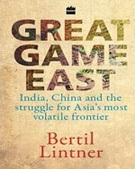
In the background of a perceived shift in global power from the West to the East, future relations between a rising China and India are a fit subject for analysis and speculation. The title of Bertil Lintner’ book - “Great Game East: India, China and the Struggle for Asia’s Most Volatile Frontier” whets even more the reader’s appetite as it conjures up chess-board strategic moves and countermoves by China and India to promote their respective geopolitical interests in the insurgency-ridden region spanning India’s North-east and Burma.

Associated with the Far Eastern Economic Review for 20 years, with expertise on ethnic minorities and insurgencies in South East Asia and South Asia, and personal knowledge of ground conditions and contact with key rebel leaders, Lintner’s credentials for writing this book are impressive. In 1985 he travelled with his Shan wife 2275 kilometers overland from north-east India- which he entered illegally- through rebel held Burmese territory to China, for which he was blacklisted by the Indian government until the early 2000s.
The author acquaints the reader with the historical roots of the insurgencies in India’s north-east, their evolution, the role played by China, Bangladesh and Pakistan in providing arms, training, shelter and travel assistance to the insurgents, and India’s political astuteness in containing the revolts. Lintner credits India with masterly use of Kautilya’s four principles of sham (political reconciliation), dan ( monetary inducement), danda (force) and bhed (split) to control if not end the insurgencies, and admires R&AW’s human intelligence capabilities that combined with Kautilya’s maxims on statecraft makes it, according to him, a formidable force- a view hardly supported by the organization’s current reputation.

China’s direct support ended with Deng Xiao Ping’s ascendancy but Indian insurgents apparently continue to have access to the grey arms market in Yunnan run as private businesses by former officers of the PLA. Under Sheikh Hasina, Bangladesh’s support to ULFA and Manipuri rebels has ceased, which makes Pakistan’s mischief-making more difficult.

Lintner tries to fit the seemingly localized conflicts in the region into its geopolitics defined by the rising Indian challenge to Chinese supremacy in Asia, the differences between the two over Tibet and Arunachal Pradesh, Chinese arms supply links with ethnic rebel movements in India’s north-east, with continuing turmoil in Burma providing the vital geographical link for such activity. But Lintner also says, somewhat contradictorily with the book’s title, that while the Himalayas will remain important strategically, the main conflict of interest between India and China will play out in the Indian Ocean.

This book should caution those in India who are enticed by the idea of linking Yunnan to India’s north-east to end its isolation and enable its development in a regional context. It also underscores the necessity of a lasting solution to insurgencies in the north-east for the connectivity through Burma and Thailand to Singapore that our Look East policy seeks to establish.

This is a book by a journalist, not an international relations scholar, and relies a great deal on anecdotes and personal accounts. There is much detail that displays the author’s rich knowledge of personalities and events in the separate chapters on the Nagas, Mizos, Manipur, Assam and Bangladesh as well as Burma, but it is the introductory chapter and that on the Indian Ocean that provides some geopolitical perspective.
The book does not quite live up to its dramatic title. On closing it the reader is not left with the feeling of having experienced the strategic thrills of a new Great Game East being played out inexorably by the elephant and the dragon.

Friday, August 10, 2012

Seize the Chance with Dhaka

Satish Chandra
Distinguished Fellow, VIF


The first India-Bangladesh Joint Consultative Commission meeting held at the minister level on May 7 and at the foreign secretary level on July 24 are a convenient inflexion point to assess the trend of ties between both countries. Regrettably, neither received the attention they deserved from the media that remains fixated on the sterile and unproductive India-Pakistan relationship.

With Sheikh Hasina’s assumption of power in January 2009, her path-breaking visit to India in February 2010, and Manmohan Singh’s visit to Bangladesh in September 2011, India-Bangladesh relations have been on an upturn. This qualitative improvement in ties is largely been due to the Awami League government’s readiness to meet India’s security concerns without seeking any quid pro quo, its secular outlook, and an openness to explore wide ranging cooperation with India. The latter deeply appreciative of Bangladesh’s positivity has reciprocated with several moves such as the accord of a $1billion credit, grant of duty free entry of Bangladeshi goods to India barring a small negative list of 25 items, provision of transit to Nepal and Bhutan, etc.

Clearly India-Bangladesh relations are in a transformative phase, the template for which is reflected in the Framework Agreement on Cooperation for Development signed by the prime ministers of the two countries in September 2011. The cooperative activities specified in this agreement extend to virtually every conceivable area ranging from economic and commercial field to security, from connectivity to management of water resources and from energy to cultural exchanges.

In order to ensure the actualisation of the aforesaid cooperative activities a Joint Consultative Commission has been set up at foreign minister level to oversee their progression. This mechanism is backed by annual consultations at the foreign secretary level and biannual consultations at the joint secretary level.

In concrete terms the following are some of the positive developments in the last several months: conclusion of the protocol on the land boundary which by creating a clearly demarcated and undisputed 4,096-km border will facilitate its policing and thereby vastly enhance national security; grant of 24-hour access to Bangladeshi nationals to Dahagram and Angarpota enclaves through Tin Bigha; opening of border haats on Bangladesh’s borders with Tripura and Meghalaya; implementation of a Coordinated Border Management Plan to control cross-border illegal activities and crimes and maintenance of peace and harmony; under the $1 billion line of credit offered to Bangladesh by India, the latter has already cleared contracts/ projects worth about $800 million. It has reduced the interest rate from 1.75 per cent to 1 per cent and converted 20 per cent of the credit into a grant; India’s trade liberalisation measures for Bangladeshi goods have already resulted in a 60 per cent increase in Bangladesh exports to India in the period July-June 2010-11 as compared to the level a year ago; an agreement has been concluded for purchase of 250 MW of power by Bangladesh from India and purchase of another 250 MW is likely. Intergrid connectivity is expected to be established between the two countries by 2013. A joint venture for setting up a 1,350 MW thermal plant in Bangladesh has also been established, and; India has assured Bangladesh that it would not take any unilateral decision on the Himalayan segment of its river linking project that may affect Bangladesh, and that a sub-group of the India-Bangladesh Joint Rivers Commission would visit Tipaimukh to go into all aspects of the hydroelectric project being set up there.

India can be faulted for having failed to deliver on two issues on which Bangladesh sets great store, due to Mamata Banerjee’s opposition, namely sharing of Teesta waters and implementation of the protocol for settlement of the land boundary. On Teesta, the agreement negotiated with Bangladesh is eminently reasonable and, in fact, had only been finalised after keeping West Bengal in the loop. It envisages an equitable sharing of the Teesta waters at the point of entry into Bangladesh after providing for about 500 cusecs of water to inter alia maintain the flow of the river. The agreement set to be signed during Manmohan Singh’s visit to Bangladesh in September 2011was postponed due to Mamata’s last minute objections. Since water is a highly emotive issue in Bangladesh our reneging in this matter took the sheen of Manmohan Singh’s visit and exposed Sheikh Hasina to severe criticism at home. As the Bangladesh foreign minister pointed out whilst recently in India, relations between the two countries “will take a huge hit” if India does not deliver on Teesta. In practical terms, this has induced Bangladesh to go slow on several connectivity-related issues that are of great importance to us.

The Protocol on the Land Boundary Agreement so meticulously negotiated, after taking into account the wishes of the affected peoples, will result in a fixed demarcated boundary, entail the exchange of 111 Indian enclaves in Bangladesh with an area of 17,160 acres and 51 Bangladeshi enclaves in India with an area of 7,110 acres, and retention by each country of the areas held by it in adverse possession. (2,777 acres by India and 2,267 by Bangladesh). Implementation of the protocol apart from being in the mutual security interest and helping promote a harmonious environment on the borders, will enable the local residents for the first time to enjoy full legal rights as citizens of India or Bangladesh with proper civic facilities. It is no surprise, therefore, that these people are pressing for urgent implementation of the protocol. Arguments to the effect that as a result of the protocol India would lose more land or that it would cause a major influx of people into the country are untenable. For one thing, the amount of land and people involved is paltry, particularly as compared to the benefits accruing from the proposed settlement. Moreover, transfer of land is only notional as neither country exercised effective control on its enclaves in the other country. Movement of people will also be negligible as most will stay where they are and assume the nationality of the country where they reside.

In order to fast track the improvement in India-Bangladesh ties and, indeed, make it irreversible, the government must urgently override Mamata’s irrational objections to the settlement of the Teesta and boundary issues. Speedy delivery by us on these two issues will also help in consolidating the Awami League’s position that would obviously be in our interest, particularly given the inimical bias of the BNP and Jamaat against India.