China is not a democracy and there is the one party rule of the Communist Party of China (CPC). From time to time the Party holds party meetings at which matters of policy are discussed in detail. The 16th CPC Central Committee meeting was held in Beijing from 16th to 19th September 2012 and at the Fourth Plenum the party adopted a document enshrining the policy of the Party, entitled “On the enhancement of the Party’s governance capability”. The Party felt that, “CPC’s ruling status is by no means a natural result of the Party’s founding and will not remain for ever if the Party does nothing to safeguard it”. In other words, CPC has envisaged a day when in China the Party may lose its sole ruling status.
My good friend, Dr. Surjit Mansingh, has sent me a brief note on the CPC deliberations and certain decisions taken by the Party. I am quoting from the note: “We must develop a stronger sense of crisis, draw experience and lessons from the success and failure of other ruling parties in the world and enhance our governance capability in a more earnest and conscientious” manner. The Party said,
“ CPC stresses importance, urgency to enhance governance capability,
CPC summarizes ruling experience
CPC document puts development as top priority of Party's governance
CPC document urges promotion of socialist democracy
CPC pledges to focus on Party building for advancement of ruling capacity
CPC pledges to build up harmonious society of socialism
CPC vows to uphold Marxism as guiding ideology
CPC to adhere to independent foreign policy of peace.”
It might be noticed that enhancement of governance capability is the top priority of CPC and this includes a review of the ruling experience of the Party. This indicates a degree of administrative maturity in which the Party is prepared to do introspection on and review of how China has been governed in the recent past. The enhancement and advancement of ruling capacity is repeatedly emphasised in the resolution passed by CPC.
There are two other items which call for special mention. One is that development as the top priority of the Party’s governance. This means that China’s economy and its growth are both matters of great concern to CPC. The second point is a pledge to build up a harmonious society of socialism. Harmony requires that various sections of society should have a mutual understanding and there should be no social conflict. Socialism in the Indian context would mean social, economic and political justice, equality of status and of opportunity, both of which find place in the Preamble of the Constitution and the establishment of a social order for the promotion of welfare of the people as stated in Article 38. In all social and economic relationships, therefore, equity becomes a key factor. One presumes that CPC, when talking of a harmonious society of socialism, is also thinking along these terms, though the evidence is that China is today a country in which capitalism is rampant. Whatever the meaning that CPC may give to words, the fact remains that there is someone in the Party who is thinking along the right lines.
I have made a somewhat lengthy reference to the 16th CPC Central Committee meeting because I think there is a lesson in this for political parties in India. My limited knowledge of the subject suggests to me that no party, ranging from extreme left to extreme right, has ever done the kind of thinking or introspection as has been done by the Communist Party of China. How serious CPC is, is evidenced by the fact that there has to be a change of guard in Beijing, with the President and Prime Minister of the Republic being due for replacement. This seems to be a practice in China since Mao Tse Tung died and though initially there were elements of a palace coup in the manner in which the leadership changed, with the coming of Deng Xiao Ping there seems to be a more settled manner in which the leadership changes, generally with younger persons being brought to the fore. Another change is that from the older generation of persons who were experts in guerilla warfare and led the revolution, we are now getting more technocracy, science and administration oriented leaders who are in the vanguard of China’s modernisation. At the same time China seems to have developed a level of corruption which might even be greater than that in India, with this difference that in China corruption does not stop development whereas in India it has now become an enemy of development.
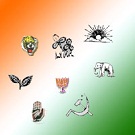
India is a democracy in which there are a number of political parties. The two main parties are the Congress, which can be described as a middle of the road party and BJP, which is considered to be right of centre and also, because of its RSS link, a party with a distinctly Hindu tilt. On the left we have a conglomerate of which CPI (M) is the most prominent member. CPI, the Revolutionary Socialist Party (RSP) and the Forward Bloc are the other main components of the Left. Standing to the extreme of the Left are parties such as CPI-M-L, the Peoples War Group (PWG) and other Naxalite groups which do not subscribe to democracy and are wedded to a philosophy of violence aimed at overthrowing the Indian State. Somewhere between the Left and the Congress are the various shades of the Socialist Party, the two most prominent groups of which are led by the Mulayam Singh Yadav in Uttar Pradesh and Lalu Prasad Yadav in Bihar. The more moderate section of the Socialists, the PSP, seems to have been submerged in the present groupings, which give little evidence of following a socialist agenda but are more interested in caste equations, especially of the intermediate castes, which give them power in localised areas such as Uttar Pradesh and Bihar. Socialism here has been totally overtaken by caste and, therefore, both Mulayam and Lalu can be accused of exacerbating the caste divide. To call these parties Socialists would be a travesty of the truth. Into this kind of vortex of divisiveness have jumped a number of regional parties such as DMK, AIDMK, AGP, Telugu Desham Party, Trinamool Congres, the Party fighting for a separate Telangana, etc., which have a narrowly regional outlook which prevents them from taking a larger view of the nation. Many of these regional parties have corroded the body politic and this has caused very substantial erosion of values in politics. Then we have the Bahujan Samaj Party (BSP) led by Mayawati, a party of the Dalits which seemed to reach out to all castes and classes. Unfortunately, because the party revolved only around Mayawati, who seems to be whimsical, BSP has not lived upto its promise. One hopes the party will introspect and improve itself.
Whether it is UPA at the Centre or the National Conference – Congress combination in Jammu & Kashmir, BJP in Karnataka, Trinamool Congress in West Bengal, one sees an erosion of the ability, desire and political will to govern and all around one sees the deleterious effect of failure of government. Large swathes of the country are victims of Naxalite insurgency, which government seems unable or unwilling to contain and eliminate. Prices are out of control and every measure that government seems to take to strengthen the economy only results in furthering the miseries of average citizens. Healthcare in the public sector has definitely deteriorated throughout the country. Corruption is not only rampant it is almost universalised to the extent where nothing happens in this country even at the level of ordinary routine without money being demanded. In the matter of legislation Parliament stands substantially weakened, if not paralysed and almost everything is now either decided in the streets or defeated there. One of the disturbing factors is the growing intolerance, bigotry and narrow mindedness which seems to afflict us in so many ways. Some American author writes some comments about Shivaji in one of his books and this causes Maharashtra to burn. One of the most respected centres of learning in Pune and its library was burnt down because this particular author’s book was on the shelves of the library. This was done at the instance of the Shiv Sena. Is Shivaji of such little intrinsic consequence that what some foreign author writes in some obscure book completely debunk this icon of resistance against tyranny? Does burning down a library enhance the status of Shivaji? Salman Rushdie writes “Satanic Verses” and India bans the book. Not only that, but several years later when Rushdie was to attend a literary get-together at Jaipur some Muslims threatened to demonstrate against him and government virtually prevented him from attending the conference. Have we become so intolerant that we cannot permit an author to attend a literary meet? Is Islam so fragile that, even assuming that Rushdie committed blasphemy, this magnificent edifice of a great religion would collapse if Rushdie comes to India? Is Allah liable to demolition by one of his own creations? Christianity gave up the doctrine of blasphemy long ago. The Christian church is as firmly founded today, in fact more so than in the days of Inquisition when heretics were burnt at the stake. Not building a temple of Ram at Ayodhya will not destroy Hinduism just as building it will not strengthen the religion. When the symbol becomes more important than the substance we are in grave danger.
All this background leads upto my main argument, which is that the time has come for Indian political parties to sit down and introspect on what they have been doing in the past and where the future lies for them and for the country. If somebody were to ask me what any of the political parties stand for I would not be able to give any worthwhile answer. For example, what is the Congress? When we were fighting for our independence the Congress was the party into which Mahatma Gandhi breathed life, bringing together various disparate elements so that, from a single platform, they could fight against the British and demand independence. The single aim of the party was to free India from British rule, but the strategy and the tactics by which this goal could be achieved were determined by the party under the leadership of the Mahatma. At the same time certain very clear-cut principles were prescribed. The movement would be asatyagrah, or a campaign based on truth. It would be conducted under the banner of ahimsa, or proactive non-violence. It would be inclusive, which meant that all religions, all castes and all classes would work together in harmony to achieve our goal. There would be no hatred for anyone, including the British and there would be tolerance in the best sense of the word. Another weapon would be swadeshi. This means that we would be dependent only on what we could grow or what we could produce and this was an economic weapon aimed directly at the industrial and commercial hegemony of Britain. It was certainly a weapon of which the British were afraid. Under these circumstances it was possible to define the Congress because a Congress man was fearless, honest, austere, nonviolent and wedded to truth.
Today how do we describe the Congress? What is the core policy of the Congress and what is its ruling political philosophy? I have been shown various election manifestoes of the Party, but I consider them works of fiction written to meet the immediate expediency of a forthcoming election, whose objective is to fool the people into voting for the party. No election manifesto of any party really contains the ideology, the philosophy and the programme of that party. I cannot think of a single document prepared by the Congress Party which tells me what its political philosophy is, what ideological moorings it has, what is its long term agenda and what are the programmes and projects it has in mind which would help it to give shape to the vision it has set itself. It is not even particularly democratic because when a party has a leadership which is almost entirely confined to one family, which militates against the setting up of grass-root units which elect the entire hierarchy, the party cannot be said to be democratic.
Let us come to BJP. RSS is the progenitor of the Jan Sangh and of its successor, BJP. RSS claims not to be involved in politics. In 1925 Dr. K.S. Hedgewar, the founder of RSS, told Mahatma Gandhi, with whom he was then associated, that he wanted volunteers to come together and work for the nation selflessly and, therefore, he was setting up a separate organisation divorced from politics and political parties. Despite this the fact remains that RSS is the mother who has given birth to BJP. The party cannot adhere totally to a RSS agenda both because the Constitution mandates that it should work in a secular environment and because a narrowly communal agenda is not acceptable to most Indians and, therefore, they will not vote BJP to power. Therefore, whilst promoting Hindutva BJP is forced to interpret this in a secular context. Is BJP a Hindu party or does it wholeheartedly accept secular India which does not discriminate between religions? What is its core ideology, what is its vision of India, what are its programmes by which India will become the country it dreams of? In other words, is BJP a clone of the Congress with a sharp Hindu tilt or does it have a political image of its own which distinguishes it from the Congress? We have no document which really tells us what BJP is. Perhaps the party should openly accept that it is there to protect majority interests, but because the Sanatan Dharma firmly holds that no one is “the other” the Party is secular and that the Muslim not also, but specially, is a partner as an equal. This would define the party clearly as being inclusive and not narrowly confined to a Hindu role.
The Left is equally in shambles. Dogmatic Marxism does not hold sway anywhere in the world and in fact the most powerful Communist ruled country, China, is now wedded to capitalism. Where, therefore, are the ideological moorings of the Left? What is the Left’s vision of India, what future does it chart for the country, what will be its strategy and the programmes by which its objectives will be achieved? In Kerala, for example, where the United Democratic Front (UDF) and the Left Democratic Front (LDF) alternate in power, the only ideological mooring of both groups is in capture of power and not necessarily in what will be done after power is captured. We need a very strong ideological statement and vision document from the Left so that we can see where the Left stands and how the Left will conduct itself in the future.
I do not intend to extend this discussion to the numerous other parties which exist on the fringe because my own view is that ultimately they must determine which of the larger parties suits them and, hopefully, the smaller regional groupings can then decide to merge with larger parties. This will cleanse our politics and reduce the corruption which seems to go hand in hand with the virtual blackmailing role of the smaller parties in an era of coalitions. I would, however, commend to the major parties the manner in which the Communist Party of China discusses major matters of national importance and issues relating to how the Party will conduct itself in the future. If, like the Communist Party of China, our major parties are able to produce one or more documents which enable the average citizen to understand the party and its philosophy and then decide which party to support, Indian politics will be become serious, purposeful and sharply focused.