Showing posts with label Lashkar-e-Toiba. Show all posts

Monday, February 10, 2014

Kashmir – Dilution Is No Answer


It is time for the army to consolidate
Its gains, rather than thin out


Gen (Retd) NC Vij, 
Dean, Centre for Defence Studies

The motivation for this piece comes from Editor-in-Chief Shekhar Gupta’s recent article in Indian Express, ‘Disarming Kashmir’ of December 7. In his inimitable style, he has built up a case that with peace and normalcy returning on the ground, there is scope for a partial thinning out of the Army presence in the Valley and some symbolic dilution of the Armed Forces Special Powers Act (AFSPA). In the process, he has also made certain observations; like presence of half a million Indian soldiers with most illiberal of laws fighting in the Valley; a new factor having originated in the Indian policy making by way of a veto power for the Army. All these merit serious analysis to reach right conclusions.

The issue of Kashmir provides a wicket, which in cricketers’ parlance, is called a spinner’s delight. It is so very easy to give twists and turns to these issues, however fickle the supporting facts. To get the right answers it is essential to get the basic facts right. The myth about the presence of half a million Army boots in the State is woefully off the mark. The Army has for quite some time now adopted a posture of more emphasis towards maintaining the sanctity of the Line of Control and Counter Infiltration grid and is already very thin in the hinterland. Only reserve brigades of the three Corps in J&K are deployed in the hinterland on the counter-insurgency grid with a strength of 10,000 and operational availability of 5000-6000 troops. The main counter-insurgency force in the hinterland are 62 Battalions of the Rashtriya Rifles; with approximately 50-60,000 troops available for operations. Thus, optimally only 55,000 - 60,000 army troops are operating in the in the hinterland at the very maximum, which is a far cry from the often quoted figure of half a million plus force, a difference of nearly 1 to 10. CRPF and J&K police provide the additional effort. By quoting erroneous figures, we only end up providing a handle to our adversaries.

Yes, the proxy war situation has improved considerably; the majority of leadership of Lashkar-e-Toiba, Hizbul Mujahideen and Jaish-e-Mohammed and the terrorists training camps in the hinterland have been vanquished but there are still a large number of them in the staging areas across the Line of Control, awaiting their turn to infiltrate. Even more importantly and, at the strategic level, the overall security matrix in Afghanistan is likely to have direct implications for us. As the American-NATO forces prepare to withdraw in 2014, a lot of uncertainty will prevail. If Pakistan has her way and the Taliban can get even partial control of Afghanistan, then it is quite on the cards that with her support, hordes of these Jehadis in their hundreds/thousands may be directed against India in Kashmir. With this uncertainty we would be better advised to keep our security posture intact and all the contingency plans worked out. This scenario may look far-fetched to some self-proclaimed strategists in our country but not to trained professional minds.

This brings me to the next factor of the alleged “Veto power having been acquired by the Army”. Nothing could be more preposterous and farther from the truth. The problem is that, as George Tanham, a world renowned military thinker has stated, “India lacks strategic culture”. We have virtually no institutionalized process of long term thinking and planning by a balanced group of experts. With the odd exceptions of the 1971 and Kargil wars, the decision making process has kept the Armed Forces out of the loop and they are left only with the onerous responsibility of executing what the Government, with the advice of the civil bureaucracy, decides from time to time. To illustrate, has the Government articulated its political aim and strategic objectives anywhere in the insurgency belt starting from the North East to J&K? The Army is thus left with no choice but to evolve its own approach and, they have done it very well! The lack of a regular dialogue between the Government and the Commanders has been a major shortcoming ever since our Independence. As a matter of fact, the entire Higher Defence Management apparatus has been crying for major changes for quite some time now, and it was so recommended by the Group of Ministers after the Kargil War. It is the bounden and sacred duty of the Armed Forces to offer honest and frank professional advice to the Government on national security matters. If a difference of opinion and professional judgment is to be construed as assumption of ‘veto power’ by the Army, it is most unfortunate. Because of the trust deficit with Pakistan, the Army has always been against finalizing any such arrangement in Siachen, wherein we can easily be surprised and left in a hopeless operational situation. This has been our consistent stance, for over a decade plus now and similarly in Kashmir it is time for us to consolidate our gains rather than thin out. It is difficult to fathom as to why anybody in this country would want the Army to shy away from its duty to tender its best professional judgement to the Government. It is for the Government to accept or reject this advice. Rather than blaming the Army unfairly we should work for structural improvements in our security apparatus.
Now coming to the sensitive and emotive issue that the AFSPA is anti-people and provides them the license to act with impunity and without accountability. The key issue is that the AFSPA comes into effect only after the Government declares a State, or parts of it, disturbed, meaning thereby, that the normal functioning of the Government has broken down and there is no choice but to induct the Army to restore normalcy.

The Army must be deployed judiciously and strictly for only limited periods and not indefinitely. Unfortunately, it is just the opposite in practice and the States continue to be classified as disturbed, even when the situation has improved considerably/hostilities suspended. This is only because of the lack of confidence in their governance and ineptitude that they insist on retaining the Army to cover their weaknesses. The Army has always resisted this and advised against it. Nagaland is a case in point and so are parts of Assam. That would be a rational approach and the Army has always promoted this. The fact that the Army themselves have strongly resisted the clamour for their induction into the Naxal areas amply proves their sensitivity and respect for this principle of civil governance.

But on the other hand, if the operational situation in a State is delicately poised, it is time to stand firm. The answer at such junctures does not lie in, what is being touted as ‘symbolic dilution’ of the Act, because that will subject the security forces to thin legal protection. If the situation was absolutely normal, then as a starter, some areas even in J&K along the International Border could be considered for removal of AFSPA. But would it be wise to risk it even after blatant terrorist attacks in areas like Kaluchak, Kathua and Samba across the IB sector? So under the existing strategic scenario, the answer is a categorical – NO.

I will herein like to emphasise that the Army always tries to set strict standards of discipline for themselves and leaves no genuine case without being thoroughly investigated. The decision of the Army to start Court Martial proceedings against six personnel accused in Machil area is a case in point. They would be the last to deny that there have been the odd mistake and thus there is a constant effort to improve. This is obvious from a marked decline in allegations from as many as 1170 between 1990-99 to 226 between 2000-04, to 54 during 2005-06, 9 in 2009, 6 in 2010 and only 4 in 2011. Strategically post 2014-15, if the security situation further improves, then the AFSPSA could be selectively removed from some areas along the international border, but not try to dilute it.


In the end, the last and the most important question is, at what stage can we consider that peace has genuinely been restored in J&K? Will it be when there is maximum tourism, say over 6-8 million tourists per year, or when the valley is free of violence to a degree wherein the Kashmiri Pandits will feel confident enough to return to their homes? To my mind, the return of Kashmiri Pandits should be the real objective that we must aspire for!

Wednesday, September 4, 2013

INS Sindhurakshak Tragedy: Navy should Strengthen and Safeguard its Submarine Fleet

Radhakrishna Rao, 
Visiting Fellow, VIF

Even as the Indian Navy, the youngest of the three services, had every reason to rejoice over India’s home-grown nuclear powered submarine INS Arihant attaining criticality and the launch of the indigenous aircraft carrier INS Vikrant in the first fortnight of August, a massive blow in the form of the wrecking of the INS Sindurakshak submarine in a devastative explosion on August. 14, turned the” mood of celebration” into a “moment of sorrow and introspection”.
The death of eighteen Indian Navy personnel on-board the ill fated Sindhurakshak, considered the key, frontline conventional submarine in service with the Indian Navy, made the tragedy all the more painful and shocking. Evidently, Sindhurarkshak was a sort of prized possession for the Indian Navy as it had come back from Russia after an extensive refurbishment. Incidentally, Sindhurakshak was deployed at the Mumbai dockyard following a US alert about the possible LeT(Lashkar-e-Toiba) attack along India’s coastline.The 2,300-tonne Sindhurakshak was, by all means, the operationally best submarine at the command of the Indian Navy since it got new sensors and underwent structural modifications which extended its lifespan by almost a decade .Following its midlife refit programme at Russia’s Zvezdochka shipyard at an estimated cost of US$80-million, Sindhurakshak, originally built in 1997, was equipped with the tube launched Club-5 cruise missile effective against the surface vessels and submarines at a range of about 200-kms. Sindhurakshak is one of the ten kilo class submarines that India bought from Russia between 1986 and 2000.

In the aftermath of this tragedy, Defence Minister A K Antony informed the Indian Parliament that “The navy has ordered a Board of Inquiry (BoI) and it has started with all the seriousness. Its terms of reference are to look into all aspects of causes of this incident. Nothing is ruled out. All likely aspects would be examined by BoI” said Antony. In a way, Antony’s statement implies that sabotage angle could not be ruled out.

Antony also revealed that the entire operational submarine fleet of the Indian Navy is currently undergoing extensive checks on the weapons related safety system and an audit of the current standards operational procedure has also been ordered. But then a serious question that begs answer is as to why the political dispensation in New Delhi slept over for more than a decade over a proposal for the acquisition of the submarine rescue system. Naval warfare experts point out that the timely deployment of the state of the art Deep Submergence Rescue Vessel (DSRV) could easily save the lives of the sailors on-board the submarine under disintegration. Naval forces of Russia, USA, China, UK and Singapore all have deep sea rescue systems in place. It may be recalled that in August 2000, more than 100 Russian sailors on-board the nuclear powered submarine Kursk, which sank in the Barents Sea, had to pay with their lives on account of the failure to deploy DSRV on time. The moral of the story is that by deploying a submarine rescue system, India could have easily managed to save the lives of the sailors on-board Sindhurakshak.

And in what seems to be the case of bolting the stable after horses have left, just a week before the Sindhurakshak tragedy, an RFI (Request for Information) was issued for a “Submarine Rescue Bell System with LARS”(Launch and Recovery System). Whether it is the procurement of the much needed artillery systems for the Indian armed forces or the acquisition of submarines for the Indian Navy, dithering and delay reinforced by a “deadly indifference” seems to have become the order of the day. And the country and its defence forces ultimately pay a very high price for the painfully slow decision making process of the poorly motivated bureaucracy associated with the defence acquisition programme.

On the other hand, India as a country has not exactly covered itself with glory in so far as ensuring safety in all its manifestations is concerned. It is high time that the Indian Navy took steps to decongest its facilities at Mumbai and Vishakhapatnam. To begin with, quickening impetus should be given to the completion of the phase two of the “Sea Bird” project at INS Kadamba at Karwar in Karnataka to help relocate some of the ships and submarines from Mumbai. It is in the fitness of things that it has been decided to berth the retrofitted aircraft carrier INS Vikramaditya at Karwar naval base. In Vishakhapatnam, where the nuclear submarines are stationed, a refinery and a fertilizer plant are in close proximity to the naval facilities. What’s more, the harbour here with its narrow entrance can easily be blocked by sinking trawlers. As such, there is a need for a new green-field naval yard somewhere on the eastern coast. The principle that one cannot put all the eggs in one basket should be the guiding force of the Indian Navy.

Becoming wiser after the event seems to have become a norm rather than an exception for the Indian ruling elite. Antony has now directed for according a top most priority for sustaining the “operational efficiency” of the thirteen conventional diesel electric submarines left with the Indian Navy after the Sindhurakshak tragedy. Of course, an overwhelming majority of them are already into the evening of their lives .And only half of them will be available for deployment at a given time since the ageing submarine fleet is being forced to spend much of their time for repairs and maintenance. Further, Antony had made it clear that there should be no more delays in the construction of the six Scorpene submarines with the technology to be provided by the French firm DCNS. Antony has also asked for expediting the thirty year submarine building project which was approved by the Cabinet Committee on Security (CCS) way back in July 1999.

By all means, submarines constitute the sinew of under-sea warfare strategy for they play a key role in neutralizing hostile naval vessels and blockading enemy harbours by laying mine fields. And now it looks as if India’s under sea combat arm stands compromised. Indeed, a fact filled CAG (Comptroller and Auditor General) report tabled in the Indian Parliament in 2008 had raised the alarm bells by stating that due to “ageing fleet and prolonged refit schedules, the average operational availability of the Indian Navy submarine was as low as 45%”. The report had also pointed out that the “the availability of the submarines with the Indian Navy is much below the envisaged force level and a large number of submarines in the existing fleet have become due for decommissioning in the immediate future.” Indeed, the grim ground reality is that Indian Navy has not been in a position to boost its sub-sea patrol by acquiring new submarines after the year 2000.

To make the matter worse, Indian Navy is yet to acquire air independent propulsion (AIP) system driven submarines which can stay under-sea for longer periods in comparison to the conventional diesel electric submarines which are required to surface once in a few days for recharging their batteries. In the context of the expanding responsibilities being thrust upon it, the Indian Navy would need a minimum of 24 submarines to take care of the security on both the eastern and western coasts of the country. In comparison, China has about 60 submarines of which ten are nuclear powered. China is also into building ten more nuclear powered submarines.

Indeed, India’s ambitious plan for building six new generation conventional submarines under Project 75I stands behind schedule by three years due to the delay in decision making and finalizing the purchase of equipment to be fitted into the submarine including sensors and propulsion. As things stand now, the first of the six Scorpene submarines will be delivered only by 2015 with 2022 as the deadline for the delivery of the entire lot. Under Project 75I, two of the six submarines will be delivered in ready to use condition by the French firm DCNS. The DCNS will transfer the technology to India for building the remaining four submarines. The Indian part of the project will be executed by Mazagon Docks Ltd (MDL) in Mumbai and Hindustan Shipyard at Vishakhapatnam. These submarines will come equipped with the advanced AIP system. This project forms a part of the thirty year plan to boost the under- sea capability of the Indian Navy and strengthen the indigenous base for the design, development and production of the submarines. As part of the thirty year plan, it is envisaged that 24 new submarines will join the Indian naval fleet.

Currently, the only operational nuclear powered submarine at the command of the Indian Navy is INS Chakra which was launched in 2012. It was acquired on lease for a period of ten years from Russia. This Akula-II class “Nerpa” submarine has a maximum speed of 30 knots and can go to a depth of 600-metres.Chakra armed with four 533-mm and four 650-mm torpedo tubes is, by all means, a formidable undersea combat system .Of course, under the lease terms, Chakra cannot be equipped with nuclear weapons. But then Chakra would substantially strengthen the Indian Navy’s capability for power projection in the Indian Ocean region and beyond.

Indeed, India’s home grown nuclear powered submarine Arihant going critical on August 10 as a first step towards its extensive sea trials was a landmark event for the Indian Navy. Unlike the conventional diesel driven submarines, the 6,000-tonne Arihant will remain submerged in water for months on end, thus making its detection a really difficult task. Powered by a compact, indigenous Pressurised Water Reactor (PWR) capable of generating 83-MW of power, Arihant has catapulted India into the elite league of a handful of countries which have mastered the technological complexities involved in building a nuclear powered submarine. Incidentally, India happens to be the only nation in the IOR (Indian Ocean Region) to possess a nuclear powered submarine.

On its part, the Defence Research and Development Organisation (DRDO) is planning to induct BO-5 medium range nuclear missile into Arihant. It is also planned to equip Arihant with K-15 nuclear tipped missile which has a range of 700-km.Further into the future, Arihant can serve as a formidable platform for launching the under sea version of the Indo- Russian supersonic cruise missile BrahMos. Three more nuclear propelled submarines would be constructed under Indian Navy’ high profile Advanced Technology Vessel (ATV) programme.
Clearly and apparently, Arihant and its follow on submarines including Aridhaman will substantially strengthen India’s nuclear strike capability. In the context of India’s national policy of “no first use of nuclear weapons”, the submarine arm of the nuclear triad will provide India a “credible second strike capability” to inflict “unacceptable damage” on the adversary. By all means, the submarine based ballistic missiles are considered the most effective and difficult to detect nuclear weapons delivery system.

But then it would be sometime before India’s fully home grown nuclear powered submarines go operational and become a part of the under sea arm of the Indian Navy. As such, with a view to beef up the rapidly dwindling submarine capability of the Indian Navy in the immediate future, India is now negotiating with Russia for the lease of the another nuclear powered submarine. All said and done, ensuring the safety of submarines is as critical as acquiring and maintaining them. For not long back, a US navy lieutenant who chose to remain anonymous through his blogs had expressed his unhappiness over the poor empowerment of Indian Navy personnel in terms of enforcing safety measures at all levels in a professional manner. Evidently, the US Navy blogger is known to have spent a few days with an Indian Navy ship in the Arabian Sea under the exchange programme.

Because the entire submarine fleet with the Indian Navy is both old and obsolete, the problems associated with ensuring their safety are too many and complex. For example, the fighting equipments past their designed life span are prone to mishaps and accidents. And the delay in procurement of new systems to replace the older ones only adds to the problem of ensuring safety. As is the case with the proposals for the procurement of battlefield hardware for the Indian Army and the Indian Air Force (IAF), the plan for the acquisition of submarines for the Indian Navy has been hanging fire for many years now. Unless our defence bureaucracy develops a vision and motivation for fast tracking the battlefield hardware in a time bound, transparent and cost effective manner, accidents like the Sindhurakshak tragedy is bound to repeat time and again. It may be recalled that the diesel electric driven submarine INS Sindhughosh had run into collision with a fishing boat in 2006 followed by a merchant vessel in 2007.

India should also probe thoroughly the observation of the Russian side that the violations of safety regulations could be the most likely cause of the explosion that wrecked Sindhurakshak. But here again, it would also be appropriate for the Indian Navy to evaluate the quality of Russian workmanship as well as the integrity of the systems and weapons forming part of the submarine. Of course, Indian Navy has in place well formulated and time tested procedures for ensuring the safety of submarines. But then to what extent they are implemented with all the seriousness they deserve, no one is sure as yet. And in particular this angle should be probed in depth.

For the navy personnel, living and operating in an undersea environment of the submarine, makes for a demanding and unforgiving task, for they lead a check by jowl existence with a bank of chemical batteries requiring periodic charging, inflammatory and dangerous gases as well as highly explosive warheads. This implies that even a small “mistake or lapse” could be dangerous and could cause a huge explosion leading to a certain catastrophe. Especially, while working in a submarine acquired from overseas source, the Indian Navy sailors should display a greater level of circumspection and caution as there are many “grey areas” in the safety measures and principles devised for them. There is no denying the fact that only a home grown system could ensure a greater level of safety and security in comparison to imported hardware. For here Indian naval personnel could have access to the entire range of data—starting from design phase to the level of integration and final assembly. In case of doubt, they can always go back to the original source. And this advantage would not be available with an imported system. This is one more major argument that goes to boost the case of indigenization from the word go.


Coming to the Sindhurakshak tragedy, greater stress should be placed on the safety of the propulsion system of a submarine. For it is speculated that the failure of the safety system related to the propulsion module of Sindhurakshak was responsible for the explosion. Because the diesel electric powered submarines are run on chemical batteries requiring occasional charging, the chances of their being subjected to explosion cannot be ruled out. By going in for the air independent propulsion system, the chances of submarine accidents could be minimized. All said and done, the argument of Uday Bhaskar, former Director of the National Maritime Foundation that “the zero error safety tenet will have to be reemphasized and internalized” should be the guiding principle of the safety procedures being implemented for the Indian submarine fleet. In the ultimate analysis, the security aspects of the mechanism of man machine interface should receive utmost priority to obviate the Sindhurakshak type tragedy. Under no circumstance should the safety principles be compromised. And the Indian Navy should lose no time in insulating its submarine fleet from “mishaps and accidents” by implementing safety rules and regulations at every stage of the operation.

Thursday, August 23, 2012

The ISI’s Psychological Operations


Dr. Prem Mahadevan,
Senior Research Associate, VIF


The government has stated that recent distress migrations of northeastern Indians were triggered by electronic messages originating from Pakistan. Investigators have found that the first hints of pogrom-style killings appeared on Pakistani internet forums, and rapidly spread to India as part of a coordinated psyops offensive. The modus operandi was vaguely familiar: doctored images and vitriolic texts flooded telecommunications networks, gaining credibility before law enforcement agencies could react. The apparent purpose was to stir up public anger in an already polarized setting and prepare the political mood for an outbreak of communal violence. During 1989, Pakistan had adopted similar methods when it broadcast television footage of anti-communist revolts in Eastern Europe and urged Kashmiri Muslims to likewise rise up against New Delhi.

What intelligence agencies now need to assess is whether their Pakistani counterparts were merely out to embarrass India, or if the scare campaign had a deeper purpose. It is possible that the Inter Services Intelligence, if it was involved, has no strategic end-game regarding present tensions between Bangladeshi immigrants and Bodo tribesmen. The agency’s covert operations cells might just be taking opportunistic advantage of the situation in Assam. Provided Indian authorities maintain public order, the matter might rest there. However, past experience of ISI psyops suggests that the agency rarely desists from coordinating its propaganda offensives with paramilitary action. Its favourite tactic is to combine persistent low-visibility subversion with sporadic high-visibility attacks, conducted on a deniable basis using local assets or expendable mercenaries.

A Suggestive Pattern

On at least three occasions, the ISI is thought to have used psychological and paramilitary operations in a synergistic role. The first was in late 1983, when masked turban-wearing gunmen hijacked buses in Punjab and selectively killed Hindu passengers. Since the attacks occurred amidst worsening Hindu-Sikh relations, most commentators assumed that they were carried out by Sikh separatist militants. However, eyewitness accounts cast doubt on this theory: the killers’ language and demeanour had indicated a military background. Furthermore, local intelligence was unable to identify them, suggesting that they were not based in Punjab itself. As such attacks continued into early 1984, arguments were advanced that the masked gunmen could have been Pakistani Punjabi mercenaries, working as agent provocateurs in a ‘false-flag’ campaign.
Irrespective of whether the hijackers were Indian or Pakistani, what is unquestionable was that their actions were intended to deepen Hindu-Sikh tensions. Furthermore, it is now generally acknowledged that Islamabad did intervene covertly in Indian Punjab. Throughout the 1980s and ‘90s, radio broadcasts expressed support for Sikh separatism. Pakistani scholars wrote about a possible second partition of India along Hindu-Sikh lines. ISI officials posted in Western capitals funded Sikh separatist publications and organized publicity events. These propaganda initiatives were matched operationally by linking terrorist attack cells to ISI networks. One occasion in 1992 saw two ISI operatives being killed in the company of a Sikh terrorist leader. Although Islamabad initially tried to deny their Pakistani nationality, it relented after protests from their families.

The second case of (suspected) ISI subversion being used to camouflage (largely proven) paramilitary action occurred in Mumbai in 1993. A spate of rioting plunged Hindu-Muslim relations in the city into a downward spiral. With innocent Muslims having suffered disproportionately, some of their co-religionists within the criminal underworld plotted retaliation. Led by Dawood Ibrahim, they organized eleven synchronized blasts across the city in March 1993, targeting Hindu-majority areas. The explosive material used was military-grade, suggesting a state supplier. A detonator recovered by Indian investigators from one of the blast sites was traced to Pakistan army ordnance stores.

What is interesting is that the pre-blast riots had occurred in two distinct waves. The first, in December 1992, was spontaneous; a symptom of country-wide religious polarization following the Babri Masjid demolition. The second wave, in January 1993, appeared to have been planned: it began with knife fights in the Mumbai docks, which expanded into pitched battles across the city. Investigators noted that the docks were a stronghold of Dawood Ibrahim, whose smuggling operations were based there. Although a causal relationship was difficult to prove, circumstantial evidence indicated that Ibrahim’s men had deliberately triggered the second round of rioting. If true, this hypothesis would suggest that the January 1993 riots were a classic intelligence provocation operation.

Ibrahim himself is believed by this time, to have come under ISI influence. Defectors from his group later revealed that the Pakistani government had impounded his shipping fleet, thus gaining leverage over him. The men who actually planted the bombs were trained in explosive-handling in Pakistan, but their passports contained no stamps by Pakistani immigration authorities. Surmising on this, one reputed American commentator has noted that such free movement could only have been facilitated by powerful elements within Pakistani state institutions. 1 The ISI is the logical suspect.

The third case is Mumbai 2008. It is now known that the ISI was aware of Lashkar-e-Toiba’s plan to attack Mumbai. Testimony from Zabiuddin Ansari, one of the planners, even states that the agency provided the weapons and ammunition used in the attack and that two ISI officers personally supervised its implementation from a control room in


Karachi. The Indian prime minister and national security advisor have long asserted that the Mumbai 26/11 attacks bore signs of state support. Even if the Pakistani government as a whole was not involved, highly influential elements within it appear to have been.


This brings the context of the attacks into sharp focus. During the fall of 2008, alarm had been growing in India about a possible terrorist threat from Hindu extremists. These concerns were exploited by members of the political class, to deflect attention from the government’s failure in preventing jihadist attacks. The Mumbai gunmen played to this discourse, forging identity cards under Hindu names and wearing saffron wristbands. The attack planners had calculated that once the gunmen were killed by Indian police, these ‘clues’ would mislead the subsequent investigation and media commentary.

In this regard, it is important to note that the initial reaction from Islamabad was to reject any possibility of Pakistani involvement. The killings in Mumbai were projected as an outcome of domestic instability within India. Seen from hindsight, such discourse (later discredited by theconfession of AjmalKasab, one of the gunmen) seems to fit the thesis that the ISI masks its paramilitary activities with calibrated propaganda offensives.

The Logic of Pakistani Psyops

Reacting to claims made over the Assam crisis, Pakistani officials have accused Indian authorities of evading responsibility. They insist that India address its own domestic problems rather than attribute culpability to Pakistan. Such demands would be credible, if they were not preceded by episodes such as Kargil ’99 and Mumbai ‘08. On both occasions, Pakistani diplomats had initially ridiculed charges of cross-border involvement and accused India of spoiling bilateral relations. However, once the immediate crisis had subsided and international attention had drifted elsewhere, Islamabad found it expedient to quietly admit to such involvement. It did so in order to claim ownership over a spoiling action that had disrupted bilateral relations and driven up the price of further engagement.

Therein lies the real ‘core’ issue that bedevils India-Pakistan relations. It makes sense for the Pakistani security establishment to occasionally bring bilateral rapprochement to a shuddering halt. There are three reasons for this obstructionist stance:
  1. Spoiler actions derail grassroots-level peace initiatives and stop them from assuming an independent forward momentum, which Islamabad might later not be able to regulate. Civil activism for friendly bilateral ties is thereby held in check.
  2. These actions also drive a political wedge between India and its main security partners. They compel countries such as the US and UK to abandon New Delhi and instead assume a neutral refereeing posture on Indo-Pak tensions – one which invariably glosses over past jihadist transgressions against India.
  3. Lastly, spoiler actions cement the Pakistan army’s domestic image as protector of the people against a vengeful Indian government and public. Certain actions such as Mumbai ‘08 are also meant to serve narrower objectives, such as deflecting domestic Islamist militancy onto a foreign (and thus ‘legitimate’) target.
In each of the cases outlined above, Pakistani officials loudly proclaimed that terrorist attacks in India resulted from domestic tensions. This consistency in emphasizing India’s internal fissures is revealing: it implies that at the governmental level, Pakistan views India as an artificial state, riddled by identity-based conflicts. Such views, if they actually do dominate official Pakistani thinking, would represent a colonial inheritance from the British Raj. During the 1940s, Raj officials had derided secular Indian nationalism as a doomed experiment. They predicted that, post-independence, India would fragment under the centrifugal influence of its own diversity. Building a common polity from a multi-ethnic, multi-lingual and multi-religious population was thought to lie beyond the capabilities of the country’s native leaders. So far, this prediction has been proven wrong, but continuing societal rifts provide hope to some ISI officers that it might yet come true.

Thus, while Pakistani writers claim that Indian elites have never accepted the logic of Partition, the same can be said of Pakistani elites. If India refuses to endorse the principle of religious exclusion that underwrote Pakistan’s formation, Pakistan has also refused to recognize the legitimacy of the secular nationalism that keeps India together. The ISI, if it orchestrated the hate campaign that prompted thousands of northeastern Indians to flee to their home states, was merely acting in conformity with Pakistani ideological dogma.
What Indian security forces now have to prepare for is the more serious possibility that this might not be the end of it. As might have occurred previously in Punjab, there is a chance that ISI operatives shall create a communal flashpoint through agent provocateurs. Reports suggest that the Pakistani agency is keen to erase international memories of the Mumbai ’08 attack. It hopes to achieve this by facilitating a major act of domestic terrorism in India, using only local assets. Islamabad could then argue, with all apparent reasonableness, that even if the Mumbai attack had featured Pakistani involvement, India still needs to put its own affairs in order. Towards this, ISI officials have already met with leaders of the Communist Party of India (Maoist) in Dubai, to discuss possible collaboration. The Maoists have allegedly asked for military-grade explosive, and the ISI is believed to have asked in turn that the Maoists use these explosives to attack economic targets, such as oil refineries, so as to attain maximum strategic impact.

Even if the ISI were to support the Maoists however, the main focus of its psyops would still be on identity-based conflicts rather than ideology-based ones. The agency has plenty of experience in exploiting ethnic and linguistic fault lines to its own advantage. One example would be the East Pakistan civil war (1971), when the ISI organized Bihari Muslims into vigilante groups to fight Bengali separatists. Another would be its covert support for Mohajir militancy in Karachi during the 1980s – a tactic intended to contain Sindhi and Pashtun nationalism. However, the agency has little insight into ultra-leftist discourse, having never confronted a communist insurgency. Its ability to relate to the peasant and tribal revolution in central India is likely to be quite limited. Moreover, class struggle is not an issue that ISI strategists would want to publicize, as it might backfire on Pakistan, given the country’s own quasi-feudal social structure. For these reasons, it would make sense if the agency focused on Hindu-Muslim/Bodo-Bengali tensions.

Further ‘Rogue’ Operations Likely

Following the Mumbai ’08 attack, the then ISI chief told US officials that rogue officers from the agency might have been involved. This same argument had previously served Pakistan well in 1993, when ISI involvement with Dawood Ibrahim had attracted American queries. Basically, the ‘rogue operative’ thesis capitalizes on the tendency of Western listeners to equate such operatives with ‘enemies of the state’. Western analysts assume that if individuals within the ISI support terrorist attacks, Pakistani authorities would seek to identify and pursue them. Instead, India’s experience has so far belied this paradigm – although some ISI paramilitary activities might have been carried out without express sanction from above, these have not resulted in punitive measures against the officials involved. Rather, the immediate consequence tends to be a reshuffling of agency postings, to throw off Indian and Western counterintelligence efforts against the ‘rogues’.

There is a strong possibility that ‘rogues’ within the ISI will plan and assist a major act of terrorism in India, using local proxies as the triggermen. Such a scenario may not occur in the short term (i.e. the next three months), since the renewed India-Pakistan dialogue has not yet made much progress. A major improvement in atmospherics however, such as a summit between civilian politicians of the two countries, would likely set attack preparations afoot. By a spoiler action, the Pakistan army and ISI would want to emphasize their veto rights over any political process that bypasses them. Given the ongoing instability in India, caused by poor governance and communal polarization, they are likely to have many opportunities for combining psychological and paramilitary operations. The Bodo-Bangladeshi conflict shall probably be just one among these.

Dr. Prem Mahadevan is working with Centre for Security Studies, Zurich

Endnotes
  1. Jessica Stern, ‘Pakistan's Jihad Culture’, Foreign Affairs, November/December 2000, accessed online at http://www.hks.harvard.edu/fs/jstern/pakistan.htm, on 20 August 2012. 

Friday, July 6, 2012

Abu Jundal’s Arrest and India-Saudi Arabia Counter-terrorism Cooperation


Dr. N. Manoharan
Senior Fellow, VIF

The arrest and deportation of Abu Jundal alias Abu Hamza alias Sayed Zabiuddin Ansari, a Lashkar-e-Toiba (LeT) handler, involved in several terror attacks in various parts of India, by Saudi Arabia is a classic case of good counter-terrorism cooperation between the two countries. The case prompts several questions: Who is Abu Jundal? How did he get involved in Lashkar-e-Toiba (LeT)? Why did he go to Saudi Arabia? What factors were responsible for Riyad’s acceptance to deport Jundal despite Pakistan’s opposition? What is the way ahead in the bilateral counter-terrorism cooperation between India and Saudi Arabia?

Abu Jundal

Belonging to Gevrai area of Beed district in Maharashtra, Sayed Zabiuddin Ansari, was initially impressed by tenets of Ahle Hadees or Salafis, who “adhere to the pristine teachings of Islam as enshrined in the Holy Quran and Sunnah.”1 He gradually gravitated towards Students Islamic Movement of India (SIMI) and took care of its operations in the states of Uttar Pradesh and Maharashtra for sometime before shifting to Indian Mujahideen. It was at this point he got contacts with the LeT and went on to become its handler in India. As police net was closing in, he fled to Pakistan after 2006 through Nepal or Bangladesh. He was considered a “good find” by the LeT and, therefore, was roped-in in various anti-India operations.

Apart from the famous Aurangabad arms haul case (May 2006), Hamza has been involved in or connected with a number of terror attacks in India: IISc attack in Bengaluru (December 2005), Mumbai train bombings (July 2006), 26/11 Mumbai attacks (November 2008), German Bakery blast in Pune (February 2010), Chinnaswamy Stadium attack in Bengaluru (April 2010) and Jamma Masjid attack in Delhi (September 2010). After this point, the timeline of Ansari’s involvement is blank. The plausible explanation he shifted his base to Saudi Arabia in 2010, at around the same time when his name was spilled by one of the accused in the German Bakery case. Until then he was believed to have been involved only in the Aurangabad arms haul. The Indian investigators soon realised that an Indian Hindi voice in the recordings of conversations between 26/11 attackers and their controllers in Pakistan was that of Abu Hamza. His name was, therefore listed, in the dossier of 50 most wanted criminals sheltered in Pakistan released by India on 21 May 2011

By then he had already been sent to Saudi Arabia by the LeT to mobilize funds and recruits from Indian Muslims working there. The plan was to launch a big attack in India at an appropriate time. The LeT already has a good network in Saudi Arabia. Bearing a Pakistani passport in the name of Riyasat Ali, Jundal started working on his assignment even by using internet, especially the social networking site Facebook. It was this overconfidence that gave the whereabouts of Jundal in the form of electronic trails. He was put on surveillance for some time with the help of Saudi intelligence agencies.
After the arrest, Saudis were initially reluctant to handover Jundal to India because of Pakistan. Saudi Arabia did not want to upset Pakistan, its staunch ally. Islamabad knew the significance of the arrest and Jundal’s value to Indian authorities and the damage it could cause to Pakistan’s image if Ansari confesses whatever he knows. He was the only Indian present at the “control room” in Karachi that guided the entire course of 26/11 Mumbai attack; he not only knows who else were present, but also their exact role and motivations. Ajmal Kasab, lone terrorist caught alive among the 10 terrorists who carried out Mumbai attacks, was just an operative. But, Ansari had been involved right from the planning of the attacks to its execution and also its post-mortem. His first-hand testimony is important for India to connect various unconnected dots in the case.

Thus far, testimonies of Kasab and David Headley are available to India; only Ansari should be in a position to confirm whether they spoke the truth or not. Zabiuddin Ansari should also be able to explain the extent of Pakistan’s, its intelligence agencies to be more precise, involvement in various terror attacks against India. As Pakistan claims, is it really not in a position to control anti-Indian militant groups based in its soil? Or, is it controlling everything, from planning to execution of terror attacks against India? Whether Jundal fled to Saudi Arabia with the help of Pakistani establishment or with the help of LeT or both? How did he manage to survive in Saudi Arabia for nearly two years with a “fake passport”? Ansari is also expected to know a lot about the Pakistan-based LeT: its leadership, motivations, funding, recruitment, training, bases (both political and military), logistical support, its linkage with state and non-state actors of Pakistan, other internal and external networks, its modules and ‘sleeper cells’ in India, selection of targets, plans for future attacks, and its extent of connections with Indian jihadist groups like SIMI and IM.

India-Saudi Arabia CT Cooperation

Indeed, intense pressure from the US worked. However, it was the realisation on the part of the Saudis on the need to cooperate with India on counter-terrorism that prompted them to deport Jundal, but on the condition that only if he is an Indian national. They finally came around to hand him over when they got convinced by DNA profile of Jundal and other proofs submitted by India unambiguously establishing his Indian nationality. On the other hand, Pakistan had no credible proof to show to the Saudis to ascertain that he was a Pakistani citizen. In the recent years, Riyadh has been increasingly feeling concerned over collaboration between Al Qaeda in Arabian Peninsula (AQAP) and LeT and its possible implications in the long run. US’ determination of LeT as one of the most dangerous terror outfits, first by listing it as a ‘Foreign Terrorist Organization’ and later by announcing $10 million on the LeT chief Hafiz Saeed, sent strong signals to Saudi authorities: that they should not let Al Qaeda enter into the Kingdom through LeT.

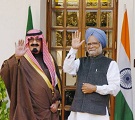
The counter-terrorism cooperation between India and Saudi Arabia has to be looked at also from the point of improving bilateral ties. The relations have been on the upward trend ever since January 2006 when King Abdullah visited India (a visit by a Saudi head of the state after 50 years) as a chief guest of India’s Republic Day celebrations. The ‘Delhi Declaration’ that was signed during the visit termed that the “visit heralds a new era in India-Saudi Arabia relations and constitutes a landmark in the development of increased understanding and cooperation between the two countries and creation of a mutually beneficial partnership.”2 Apart from other areas like economy, trade, science & technology, health and culture, the two countries recognised the “need to intensify and coordinate bilateral, regional and global cooperation to combat and eradicate the menace of terrorism.”3 However, there was no concrete agreement on counter-terrorism cooperation except for signing a ‘MoU on Combating Crime’. Although the MoU provided for cooperation between the security agencies of the two countries for combating organised crime, illicit trafficking of narcotics, weapons, and historical artifacts, and counterfeiting of currency and travel documents, in practice there were hitches.

The obstacles came in the form of perception of what constituted “crime” and priorities in addressing them. Yet, when the overall bilateral relations improved to the level of ‘strategic partnership’ in 20104, and when Saudi Arabia found that the importance of India as a major power has been gaining resonance, there have been meeting grounds. This was reflected in the signing of Extradition Treaty between the two countries in the same year. Defence Minister AK Antony’s visit to the Kingdom in February 2012, the first by a Defence Minister of India, tremendously boosted defence ties between the two countries, including in counter-terrorism.

The counter-terrorism cooperation between India and Saudi Arabia does not stop with the deportation of Abu Jundal. It has a vast potential to be realised so that the two countries, as Prime Minister Manmohan Singh has pointed out, are “strong allies against the scourge of extremism and terrorism that affects global peace and security.” 5 Since Abu Jundal was assigned to work also among Indian Muslims in radicalizing them, it is important that the cooperation between the two countries goes further in identifying the network of those already radicalised and in safeguarding Indians (about two million) from any radicalising attempts by jihadi groups based in the Kingdom. It is appreciable that the Saudi authorities have apprehended another Indian terrorist, Fasih Mohammed, who was involved in Chinnaswamy cricket stadium bomb blast in Bengaluru and shooting incident at Delhi's Jama Masjid. His immediate deportation would help the ongoing investigations in these cases.

Further, Saudi Arabia should arrest and deport all Indian fugitives hiding in that country and in future should discourage such elements from entering into the Kingdom. Much attention is also required in blocking funds to Indian terror groups from non-state actors based in Saudi Arabia. The two countries stand to gain not only on economic complementarities, but also on security and defence complementarities. A Joint Committee on Security similar to the one on Defence should be set up to make the security cooperation comprehensive: intelligence sharing, monitoring and surveillance, joint exercises, high-level visits, exchange programmes, and so on. Using the present momentum, India should make best use of its diplomatic energies to prevail on violent non-state actors based in Pakistan, like the LeT, through Saudi Arabia. Riyadh’s help is vital for New Delhi to counter jihadist terrorism in the country, which King Abdullah called as his “second home”.