Showing posts with label Line of Control. Show all posts

Monday, February 10, 2014

Kashmir – Dilution Is No Answer


It is time for the army to consolidate
Its gains, rather than thin out


Gen (Retd) NC Vij, 
Dean, Centre for Defence Studies

The motivation for this piece comes from Editor-in-Chief Shekhar Gupta’s recent article in Indian Express, ‘Disarming Kashmir’ of December 7. In his inimitable style, he has built up a case that with peace and normalcy returning on the ground, there is scope for a partial thinning out of the Army presence in the Valley and some symbolic dilution of the Armed Forces Special Powers Act (AFSPA). In the process, he has also made certain observations; like presence of half a million Indian soldiers with most illiberal of laws fighting in the Valley; a new factor having originated in the Indian policy making by way of a veto power for the Army. All these merit serious analysis to reach right conclusions.

The issue of Kashmir provides a wicket, which in cricketers’ parlance, is called a spinner’s delight. It is so very easy to give twists and turns to these issues, however fickle the supporting facts. To get the right answers it is essential to get the basic facts right. The myth about the presence of half a million Army boots in the State is woefully off the mark. The Army has for quite some time now adopted a posture of more emphasis towards maintaining the sanctity of the Line of Control and Counter Infiltration grid and is already very thin in the hinterland. Only reserve brigades of the three Corps in J&K are deployed in the hinterland on the counter-insurgency grid with a strength of 10,000 and operational availability of 5000-6000 troops. The main counter-insurgency force in the hinterland are 62 Battalions of the Rashtriya Rifles; with approximately 50-60,000 troops available for operations. Thus, optimally only 55,000 - 60,000 army troops are operating in the in the hinterland at the very maximum, which is a far cry from the often quoted figure of half a million plus force, a difference of nearly 1 to 10. CRPF and J&K police provide the additional effort. By quoting erroneous figures, we only end up providing a handle to our adversaries.

Yes, the proxy war situation has improved considerably; the majority of leadership of Lashkar-e-Toiba, Hizbul Mujahideen and Jaish-e-Mohammed and the terrorists training camps in the hinterland have been vanquished but there are still a large number of them in the staging areas across the Line of Control, awaiting their turn to infiltrate. Even more importantly and, at the strategic level, the overall security matrix in Afghanistan is likely to have direct implications for us. As the American-NATO forces prepare to withdraw in 2014, a lot of uncertainty will prevail. If Pakistan has her way and the Taliban can get even partial control of Afghanistan, then it is quite on the cards that with her support, hordes of these Jehadis in their hundreds/thousands may be directed against India in Kashmir. With this uncertainty we would be better advised to keep our security posture intact and all the contingency plans worked out. This scenario may look far-fetched to some self-proclaimed strategists in our country but not to trained professional minds.

This brings me to the next factor of the alleged “Veto power having been acquired by the Army”. Nothing could be more preposterous and farther from the truth. The problem is that, as George Tanham, a world renowned military thinker has stated, “India lacks strategic culture”. We have virtually no institutionalized process of long term thinking and planning by a balanced group of experts. With the odd exceptions of the 1971 and Kargil wars, the decision making process has kept the Armed Forces out of the loop and they are left only with the onerous responsibility of executing what the Government, with the advice of the civil bureaucracy, decides from time to time. To illustrate, has the Government articulated its political aim and strategic objectives anywhere in the insurgency belt starting from the North East to J&K? The Army is thus left with no choice but to evolve its own approach and, they have done it very well! The lack of a regular dialogue between the Government and the Commanders has been a major shortcoming ever since our Independence. As a matter of fact, the entire Higher Defence Management apparatus has been crying for major changes for quite some time now, and it was so recommended by the Group of Ministers after the Kargil War. It is the bounden and sacred duty of the Armed Forces to offer honest and frank professional advice to the Government on national security matters. If a difference of opinion and professional judgment is to be construed as assumption of ‘veto power’ by the Army, it is most unfortunate. Because of the trust deficit with Pakistan, the Army has always been against finalizing any such arrangement in Siachen, wherein we can easily be surprised and left in a hopeless operational situation. This has been our consistent stance, for over a decade plus now and similarly in Kashmir it is time for us to consolidate our gains rather than thin out. It is difficult to fathom as to why anybody in this country would want the Army to shy away from its duty to tender its best professional judgement to the Government. It is for the Government to accept or reject this advice. Rather than blaming the Army unfairly we should work for structural improvements in our security apparatus.
Now coming to the sensitive and emotive issue that the AFSPA is anti-people and provides them the license to act with impunity and without accountability. The key issue is that the AFSPA comes into effect only after the Government declares a State, or parts of it, disturbed, meaning thereby, that the normal functioning of the Government has broken down and there is no choice but to induct the Army to restore normalcy.

The Army must be deployed judiciously and strictly for only limited periods and not indefinitely. Unfortunately, it is just the opposite in practice and the States continue to be classified as disturbed, even when the situation has improved considerably/hostilities suspended. This is only because of the lack of confidence in their governance and ineptitude that they insist on retaining the Army to cover their weaknesses. The Army has always resisted this and advised against it. Nagaland is a case in point and so are parts of Assam. That would be a rational approach and the Army has always promoted this. The fact that the Army themselves have strongly resisted the clamour for their induction into the Naxal areas amply proves their sensitivity and respect for this principle of civil governance.

But on the other hand, if the operational situation in a State is delicately poised, it is time to stand firm. The answer at such junctures does not lie in, what is being touted as ‘symbolic dilution’ of the Act, because that will subject the security forces to thin legal protection. If the situation was absolutely normal, then as a starter, some areas even in J&K along the International Border could be considered for removal of AFSPA. But would it be wise to risk it even after blatant terrorist attacks in areas like Kaluchak, Kathua and Samba across the IB sector? So under the existing strategic scenario, the answer is a categorical – NO.

I will herein like to emphasise that the Army always tries to set strict standards of discipline for themselves and leaves no genuine case without being thoroughly investigated. The decision of the Army to start Court Martial proceedings against six personnel accused in Machil area is a case in point. They would be the last to deny that there have been the odd mistake and thus there is a constant effort to improve. This is obvious from a marked decline in allegations from as many as 1170 between 1990-99 to 226 between 2000-04, to 54 during 2005-06, 9 in 2009, 6 in 2010 and only 4 in 2011. Strategically post 2014-15, if the security situation further improves, then the AFSPSA could be selectively removed from some areas along the international border, but not try to dilute it.


In the end, the last and the most important question is, at what stage can we consider that peace has genuinely been restored in J&K? Will it be when there is maximum tourism, say over 6-8 million tourists per year, or when the valley is free of violence to a degree wherein the Kashmiri Pandits will feel confident enough to return to their homes? To my mind, the return of Kashmiri Pandits should be the real objective that we must aspire for!

Saturday, October 5, 2013

The Neighbour from Hell - India-Pakistan Summit – Yesterday Once More

Prabhat P Shukla, 
Joint Director, VIF

The run-up to the summit between the Indian and Pakistani Prime Ministers had seen a serious debate on the wisdom or otherwise of such high-level contact. The way events have unfolded, it is clear that the sceptics had it right. But this is too serious a matter for any “I told you so” kind of gloating. Instead, it is time to take stock and see where developments are heading. This essay is one contribution to such an effort.

First, we need to be clear about what we are dealing with. For quite long now, we have accepted it as fact that Mian Nawaz wants peace with us – this is an image he has fostered with care, and has distanced himself from the hostile actions that have emanated from Pakistan. This applies principally to the Kargil adventure, where India gave him a free pass, even though the evidence did not warrant any such generosity. In point of fact, it is questionable whether he is indeed the man of peace he is portrayed as being.

Ever since Mian sahib came to power in June this year, we have seen a number of negative developments on the political and diplomatic side, which are directly traceable to him. The first is the National Assembly resolution on Kashmir. This was piloted by the PML-N, and not only called for a settlement on the basis of the UN Resolutions, but declared that Pakistan would continue to extend political, moral and diplomatic support to the Kashmiris. Nothing unusual for Pakistan, but this Prime Minister has repeatedly said that he wishes to pick up where he left off in 1999, when he was overthrown by Gen Musharraf. The 1999 Lahore Declaration that he signed did not mention the UN Resolutions – and that was one of the major breakthroughs of the Lahore meeting.

Secondly, it is Mian sahib’s Government that has finally put paid to all hopes that Pakistan will give MFN treatment to Indian exports. This, from a man who is sold to us as a business-minded leader – even the previous Government was more forthcoming on the issue. The issue has now been linked to the state of political relations between the two countries. In short, it is not on the agenda any longer. It is worth repeating that, in and of itself, this is not an issue that will affect our trade, piffling as it is. No, the issue is Pakistani refusal to honour its solemn international undertakings. Under WTO, it is obliged to extend MFN treatment to Indian exports – no conditions attach to this. But it is disregarding this obligation, secure in the knowledge that no Government till now has troubled itself on this account.

Third, at the UNGA session this year, Prime Minister Nawaz Sharif again raked up the Kashmir issue, and once again linked it to the UN Resolutions, forcing the Indian Prime Minister to take a firm stand on the issue and emphasising the centrality of the Simla Agreement. It is worth stressing that Musharraf had ended the practice of referring to the UN Resolutions, and this had been continued by President Zardari in his initial years in power. However, he had re-started making reference to the UN Resolutions, so Nawaz Sharif genuinely had the choice of not raking up the Resolutions, but elected to do so.

All of this is to be seen against the backdrop of the continuing freedom of operation given to Hafiz Saeed to incite hatred and violence towards India. The PML-N Government in Punjab continues to provide funding for his tanzeem, the Jamaat-ud-Dawa. Our Prime Minister did raise this issue in the New York meeting, according to press reports, but was fobbed off with the usual – and unconvincing – response that the JuD was a charitable organisation. For good measure, Nawaz also raised the issues of Baluchistan and water-sharing – comparatively newer issues that will keep relations from improving even if, by some miracle, there is some forward movement on Kashmir.

All of this suggests that we need to re-assess the attitude and role of Nawaz Sharif. It has been almost axiomatic that he seeks friendly relations with India. True, there is evidence for this in the statements he has made, but the public pronouncements of former President Zardari were also of a similar tenor. The problem is not in saying that he, or some other leader, wants friendly relations; the challenge is to match their deeds with their words. And as we have seen, on issues like Kashmir, or even MFN, let alone curbing terrorism, there is no difference between the different leaders.

This is also the right time to address another mistake the Indian side frequently makes. This is the suggestion that the civilian leaders want good relations but the Army and the ISI block them. Historically, this is certainly false. We know that Zulfiqar Ali Bhutto was far more hawkish towards India than was Ayub. In the late 1980’s, and especially after the Kashmir troubles began in late 1989, Benazir was as hostile towards India as any military leader was. It is Mian Nawaz who has played Artful Dodger, and managed to insinuate that the Army in Pakistan was creating all the trouble – and we have eagerly seized upon this version. This is not meant to absolve the Pakistan Army – not at all; but the reality is that all segments of Pakistani society, the military and civil bureaucracy, the politicians and the tanzeems are committed in equal measure to two issues: Kashmir, and revenge for the humiliation of 1971.

The failure of the New York meeting has become apparent more quickly than one would have expected. It now turns out that even as the talks were taking place, armed intrusions by the special forces of the Pakistan Army were taking place across the Line of Control. This only provides confirmation, if any were needed, that talks are not the answer to the challenge we face from Pakistan. And certainly we do not need talks at the political level, until there is some reasonable ground for believing that there is a genuine change of policy on the part of Islamabad and Rawalpindi.

More important, we need to determine what the Pakistani strategy is for the coming months and years. The stepped-up pattern of military action comes alongside growing and open incitement from the likes of Hafiz Saeed. There are well-documented intelligence reports suggesting that there will be more active encouragement inside Kashmir of terror groups sponsored by Pakistan in the future. The aim is to keep Indian forces occupied in Kashmir, giving the Pakistanis and their Taliban proxies a free hand in Afghanistan as the western forces begin their draw-down. What is more, there is no longer any attempt on the part of the Pakistani establishment at concealing their intent; the terrorist groups are openly proclaiming their plans, presumably secure in the knowledge that the Government in Delhi will do nothing about the threats brewing in Kashmir and in the neighbourhood.

What we need therefore, even at this late stage, is to come to a common understanding that talks alone will never deliver the goods. Surely, by now, we may conclude definitively, that all the justifications given in advance of the New York meeting that talks were the only way to find a solution were wrong.

What is more, the country was kept in the dark about the military activity on the LoC and indeed across the border, so as not to raise questions once again about the unwisdom of the meeting itself. It raises the legitimate query – what is the Government thinking? It is quite remarkable that there is no explanation whatsoever from the Government for all the blunders it has committed, from the Joint Anti-terror Mechanism to the Sharm el-Sheikh statement to its own broken promises to the Indian people that talks and terror cannot go together. We never hear anything from the Government as to why it is behaving the way it does, what results we may expect from these policies, and when.


It is not yet too late to face the facts, abandon the current appeasement, and recognise that some hard decisions have to be taken. The security situation in the neighbourhood is worsening from our standpoint, and we need to be prepared for all contingencies.

Tuesday, September 10, 2013

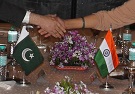
Should the Indian and Pak PMs meet in New York?

Kanwal Sibal, 
Dean, Centre for International Relations and Diplomacy, VIF

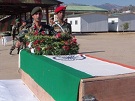
Whether the Prime Minister, Dr Manmohan Singh, should meet his Pakistani counterpart, Nawaz Sharif, in New York in September has become a politically controversial issue. The government is being cautious in not ruling in or out such a meeting at this stage, hoping that between now and late September, the surrounding circumstances may change for the better, making the meeting politically less risky in the background of the public agitation over the killing of five Indian soldiers on the Line of Control, and the government’s shaky handling of the Defence Minister’s statement on the incident in the Lok Sabha.

Clearly, the minister’s first statement, casting doubts on whether the regular troops from Pakistan were involved in the killing, was intended to keep open the doors not only for the New York meeting but also the resumption of the composite dialogue prior to that, for which suitable dates were being considered. The second statement accusing Pakistan’s military of direct involvement, followed by giving the Indian military a free hand in responding to Pakistan’s cease-fire violations, has, naturally, complicated the political choreography of dialogue resumption, with the postponement of some envisaged secretary level-meetings as the first casualty.

It is apparent that Nawaz Sharif’s election raised hopes of better relations with Pakistan, especially as improvement of ties with India figured in his party’s election manifesto and his post-election statements on expanding economic cooperation and expediting the trial of those involved in the 2008 Mumbai terrorist attacks struck the right chords. These positive perspectives evidently prompted our Prime Minister to send his special envoy to meet Nawaz Sharif even before he formally took office, a gesture reciprocated by the latter through sending his special envoy to Delhi with the message that all stake-holders in Pakistan — meaning the military — were on board on improving ties with India.

The positive momentum of these early moves has, however, been reversed by subsequent developments. They have raised the question of whether the early optimism on our side was justified in the light of our frustrating experience of decades in dealing with Pakistan, the structural impediments that exist there in normalizing ties, and the long-standing links of Nawaz Sharif and his party with jihadi organizations. To this must be added the region’s changing geo-political scenario with American overtures to the Taliban and its renewed recognition of the Pakistan military’s crucial role in facilitating an orderly American withdrawal from Afghanistan.

Already, under Nawaz Sharif’s very brief watch, many negative events have occurred, raising questions of whether we can count on him to control sufficiently the various elements in the body-politic of Pakistan in disagreement with his perceived positive agenda towards India: his political support base, extremist religious organisations, the military and the bureaucracy. For over a decade, Pakistan has been accusing our consulate in Jalalabad of supporting the insurgency in Balochistan. The Pakistani foreign office’s reaction to the Ramban incident in Kashmir was deliberately couched in religiously provocative terms in demanding an Indian inquiry into reports of desecration of the Quran.

Nawaz Sharif has been saying repeatedly that he intends to focus on resolving the Kashmir problem, describing Kashmir as Pakistan’s “jugular vein” in his first address to the nation and equating it with the economy as the two priority issues. Such rhetoric cannot but fire up popular anti-Indian sentiments and demands of “progress” on Kashmir to Pakistan’s satisfaction. In June, the numbers for infiltration across the LoC and of terrorists killed went up considerably. The political atmosphere has been worsened by Pakistan’s parliament passing two anti-Indian resolutions in the last few days on cease-fire violations, countered by an Indian parliamentary resolution declaring that the whole of the state of Jammu and Kashmir is an integral part of India, with Pakistan illegally occupying a part of it.

On top of it, Pakistan’s finance minister has announced that the grant of ‘Most Favoured Nation’ (MFN) status to India is not under consideration. Pakistan was supposed to grant it last December, but decided to delay formalizing the decision till after the elections. Nawaz Sharif’s declared commitment to expand economic ties with India would have gained credibility if he had quickly closed the MFN chapter. That the Urdu translation of MFN makes the issue politically sensitive is a dishonest excuse. The latest Pakistani strategem to gain time is to leave business bodies on both sides to discuss the issue and allay the concerns of sectors in Pakistan that fear competition from India, following which the way would have been paved for the grant of MFN status. The issue could well get tagged to the resumption of the dialogue process, which means that it will get further complicated politically.

To cap it all, the Jamaat-ud-Dawa has received sizable funding from the Punjab government headed by Nawaz Sharif’s brother for charitable works, even though it and its leader, Hafiz Saeed, are on the United Nations list of terrorist organizations. Showing disdain for Indian sensitivities about his persona, his anti-India tirades and his involvement in the Mumbai attacks, Hafiz Saeed was allowed to lead the Eid prayers in Lahore in the Gaddafi stadium. Nawaz Sharif has also failed to initiate any new step to bring to justice those responsible for the Mumbai attacks.

When these facts are mentioned by a group of experts to advise the government not to show undue anxiety for a meeting at the prime-ministerial level in New York and for resuming the composite dialogue, as we would be playing into Nawaz Sharif’s hands and giving him in advance what he wants without any positive action on his part to set the stage for a renewed engagement, a former media adviser to the Prime Minister, representing the most puerile position of professional peaceniks in India, descends to a new low in making personal attacks against what he calls the “Punish Pakistan” school, questioning their professional integrity instead of refuting their arguments.


The fact is that Nawaz Sharif has presided over several negative developments, which, if overlooked, would signal that India is once again willing to tolerate Pakistan’s provocations without any dissuasive diplomatic or other response. If such indulgence has not produced any significant result so far, why persist in failed policies? When this is said, the ideological peaceniks distort the debate with imaginary accusations that those advocating a tougher approach to Pakistan are advocating war and that the call for thrashing Pakistan as an errant schoolboy will make India just like Pakistan — home to jingoism, xenophobia and rough patriotism.


This kind of intellectual chicanery is deplorable, as postponing the proposed meeting of the prime ministers at New York, delaying the resumption of the composite dialogue, seeking an end to state-sponsored terrorism and legal action against the perpetrators of the Mumbai attacks, restoring the link between dialogue and terrorism, pressing for curbs on Hafiz Saeed, insisting on MFN status as a gauge of Pakistan’s readiness to normalize trade ties, retaliating locally against Pakistan’s ceasefire violations are the many steps in our panoply that can be taken. These are not acts of war against Pakistan, and only those with no grounding in diplomacy can be so obtuse to think that they are.

Wednesday, August 21, 2013

India’s Dialogue with Pakistan a Trap

Kanwal Sibal, 
Dean, Centre for International Relations and Diplomacy, VIF

Our response to the killing of five Indian soldiers last week by the Pakistanis inside our Line of Control has again shown our inability to deal effectively with the dual issue of dialoguing with Pakistan and scotching the terrorist threat from it.

The issues are closely inter-linked as using the arm of terrorism against a neighbour is not how a normal state conducts itself. To believe that such a state can be persuaded through political talks to give up a lever that it uses to further its strategic goals is not realistic. It will change its conduct either if the cost of use becomes too high or if it achieves its objectives.

Pakistan will, therefore, not cease supporting terrorism unless we impose costs on it or offer it concessions. If we conclude that we cannot force Pakistan to stop terrorist activity against us and that we have no choice but to talk to it, hoping that it will control the jihadi groups in the country’s own longer-term interest, then we play into Pakistan’s hands, leaving it to decide how and when it will deal with the issue based on its internal and external calculus.

The composite dialogue is therefore a political trap for us, as Pakistan views it as a platform to constantly press us for concessions without needing to make any of its own, particularly as we appear unduly anxious politically to keep the dialogue going.

Our appeals to Pakistan to cease support to terrorism for the dialogue process to succeed lack logic. Pakistan actually believes that because we cannot handle terrorist pressure externally as well as internally because of our divided polity, we cling to the dialogue option and seek accommodation with it.

We are in confusion when we say that we can make progress in settling our differences only in an atmosphere free from violence. Are we implying that we are holding up progress in some areas because Pakistan is not suppressing terrorism as we want?

What “progress” will we offer on Kashmir to satisfy Pakistan? Will we withdraw from Siachen if Pakistan controls jihad against us? Will we accept the Pakistani position on Sir Creek? Will we accept its case on the Wullar Barrage and our hydroelectric projects on the western rivers allowed by the Indus Waters Treaty (IWT)? What progress can we offer on nuclear matters?

Contradictions

In reality, if no progress is being made on our differences it is because Pakistan is fixated on obtaining concessions from India rather than making any of its own. On Siachen, they want us to basically accept that we are occupying territory that is rightfully theirs and vacate it. Apart from lack of strategic equivalence in the scope of the withdrawals, the reality is that even what Pakistan is currently holding is strictly illegal because we consider the whole of the erstwhile state as legally ours. Pakistan should in the first instance end its cartographic aggression by showing the cease-fire line correctly as ending at NJ9842 and not extended to the Karakoram Pass. Pakistan should also be required to remove the presence of China as an intruding third party in POK, consistent with its claim that J&K is “disputed” territory.

On Sir Creek, Pakistan should accept the median line as the border in accordance with international law rather than insisting on a one-sided solution. On water related issues, it should cease to further vitiate the atmosphere by accusing India of diverting water in violation of the IWT which is in fact is exceptionally generous to it. In the nuclear field, apart from increasing its holdings at a break-neck pace, it is introducing tactical nuclear weapons in the sub-continent and dangerously lowering the threshold of their use.

On trade, Pakistan has yet not moved to grant India MFN status stalled since December last year, even though it is obliged to grant it under international trading rules. If it does so eventually, it will be because of its economic woes rather than as a goodwill political gesture. On our side, were Pakistan to cease violent activity against us, an area in which we could contribute to “progress” would be people to people contacts.

Straitjacket

It is time that we released ourselves from the diplomatic straitjacket of the composite dialogue. On all the agenda items, barring terrorism, Pakistan seeks concessions from India. We are exposing ourselves to blame for being rigid if no progress is made, with some of our own commentators joining Pakistanis in faulting us for not culling the so-called low hanging fruit such as Siachen and Sir Creek. On terrorism and trial of those responsible for the Mumbai attacks, our demands have become ritualistic through fruitless repetition and Pakistan ignores them. Worse, we have allowed

Pakistan to put us on the defensive on the issue by tagging the Samjhauta Express incident to the issue of terrorism.

Need

We had a confused response to the recent border incident because of concern that holding the Pakistan army directly responsible would have jeopardized the resumption of the composite dialogue and the meeting of our Prime Minister with his Pakistani counterpart in New York next month. We have lost our margin of manoeuvre by investing too heavily in the policy of holding a broad-based dialogue with Pakistan despite its truck with terrorism. The Pakistani premier is pressing for the composite dialogue as it serves Pakistan’s interests well, the onus of making progress having been heaped on India’s shoulders. We should reverse the burden and ask Pakistan to deliver concretely on terrorism before we resume a process that has produced virtually nothing for years.


Prime Minister Sharif should put his money where his mouth is to inspire confidence.

Tuesday, February 5, 2013

Dealing with the Neighbour from Hell – Slandering the Indian Army


PP Shukla 
(Joint Director, VIF)

Since the recent episodes on our side of the Line of Control in January 2013, there has been a spate of articles seeking to justify and somehow explain the Pakistani actions, even if many are prefaced with the pro-forma demurral that the beheadings – this time and in the past - were condemnable. Many of the spurious arguments used by the appeasers of Pakistan have been disposed of in earlier writings; one of the newer ones has been that the Indian Army has done similar things. Happily, Raksha Mantri Antony has denied these allegations, and so has the former Army Chief, Gen Malik. But this has not settled matters. Proof of the culpability of the Indian Army, as adduced in some sections of our media, is that Pakistan has lodged several such accusations against the Indian Army with the UN Military Observers Group for India and Pakistan [UNMOGIP] over the last decades. This latter body has, in turn, taken this up with India, but has received no reply.

There is a history to all this, and it would be important for the unbiased reader to be aware of this and draw the correct conclusion regarding these kinds of arguments. There was a time when UNMOGIP played an active role along the Cease-Fire Line, as it was called before the 1972 Simla Agreement, and India was dealing with this body on a continuing basis. The last time that it played a substantive role was in 1965, especially in the run-up to the war that broke out in the autumn of that year. The events that led to war were, as usual, precipitated by Pakistani action in sending infiltrators across the LOC, while denying any role in this. By now, this is Standard Operating Procedure, but then it was relatively new, having been done only once before, in September-October 1947.

Accordingly, both sides complained to UNMOGIP in August 1965. That body was then headed by an Australian, Lt Gen Robert Nimmo, who had been its head since 1950. He enquired into the charges made by both sides and submitted his report to the UN Secretary General, U Thant. The latter made a report to the full Security Council on 3 September 1965, and reported as follows.

“UNMOGIP received an Indian complaint of Pakistani shelling, on 1 September, of pickets and a battalion Headquarters in the Chamb area of the Jammu-Bhimber sector of the Cease-Fire Line. The complaint stated that at 0230 hours on that date one and a half Pakistani tank squadrons crossed the Cease-Fire Line in this area supported by artillery. Pakistani artillery was also said to have fired on a battalion Headquarters in the Punch area from 1630 on 1 September and on an Indian battalion Headquarters in the Jangar area. The substance of these complaints was subsequently confirmed by United Nations Military Observers. A Pakistani complaint reported that Indian soldiers had crossed the CFL in strength in the Kargil, Tithwal, and Uri-Punch sectors as reported above. Pakistan, in this complaint also affirmed the crossing of the CFL by Pakistan troops in the Bhimber area on 1 September as a defensive measure to forestall Indian action, asserting also that in this sector the Indian Air Force had taken offensive action against Pakistan troops. Also on 1 September armed infiltrators ambushed an Indian convoy at Gund north-east of Srinagar on the Leh road and both sides sustained casualties. On 2 September the Jammu team of UNMOGIP received an Indian complaint that Pakistan aircraft had attacked the road between Chamb and Jaurian during the morning of 2 September and that Jaurian village was in flames. The air attack on Jaurian village was confirmed by UN Military Observers.” [Emphasis added].

The purpose of this long quote and the added emphasis is to demonstrate that the Indian complaints were confirmed by Gen Nimmo, while the Pakistani complaints were not. This is important, because, as mentioned above, the charges against the Indian Army in recent years rest on the record of Pakistani charges against it, and lodged with the UNMOGIP. It is another of Pakistani SOP’s to make such false charges, and the events of 1965, which were subjected to comprehensive scrutiny by UNMOGIP and the UN Security Council, testify to this.

Gen Nimmo died in January 1966 in Islamabad, apparently of a heart attack, this being the very day that the Tashkent Conference began. Prime Minister Shastri died at the end of the Conference.

There is more: this may be seen in the statement made by Secretary General U Thant, which again deserves to be quoted at length.

“In mid-June of this year [1965] for example, Gen Nimmo reported that during the five months, a total of 2231 complaints from both sides charging violation of the Cease Fire had been submitted to UNMOGIP. Most of these involved firing across the CFL [Cease Fire Line], although some concerned crossings of the Line by armed men. As of that date, 377 violations in all categories had been confirmed by the Observers…”.

The point to note is that there was a gross exaggeration in the number of incidents alleged to have taken place. This was at a time when India used to maintain contact with UNMOGIP, and there was the danger that charges would be proved false, as did indeed happen regularly. Today, when India no longer deals with that body’s complaints, it would be tempting for Pakistan to make even more charges than in 1965. It is safe therefore to conclude that the charges being purveyed in the media today are wild exaggerations.

The Nimmo Report itself was never made public. The records show that Prime Minister Shastri wanted it made public, but found no support among the principal actors – USSR, USA and the UK. He acknowledged that the Report had some negative things to say about the conduct of India too, but its conclusions were unequivocal and placed the blame on Pakistan. It is probably not too late even now for our Ministries of Defence and External Affairs to upload these on their websites, and fulfil Shastri’s wishes.

To sum up, what the record shows is that Pakistan has been habitually misrepresenting the facts to the international community, and it should not surprise anyone that this continues today. Both in terms of the number of charges, and, more importantly, in terms of the veracity of the allegations, the historical record shows that reports made by Pakistan to UNMOGIP were just not true. The dishonesty was taking place right from the start, of course, but they were being made even at a time when there was the serious risk of their being challenged and proven false. Today, India no longer has any truck with UNMOGIP, and it is therefore much safer to trump up charges against it. For Pakistan, it is a safe bet: India will not answer, and so the appeasers in India can repeat and endorse the allegation. Alternatively, India is forced to answer, and thereby brings UNMOGIP – and by extension, the UN – back into play on the Kashmir issue.

There is an important tail-piece to the 1965 episode described above. The Security Council meeting of 3 September was followed by a debate on 6 September at which the Indian Foreign Secretary, CS Jha, [and a representative of Pakistan] was also present. The speech of the Indian representative contains the following passage. He was responding to the Pakistani charge that India was in Kashmir as a colonial power.

“If there is colonialism, it exists in Pakistan. The Pashtuns, the Baluch, and the East Pakistanis, are being ruled without any regard to their civil rights, to their fundamental human rights and freedoms. This is colonialism as the world understands it.”

Events since then, with the emergence of an independent Bangladesh and the on-going resistance in Baluchistan, certainly provide a ringing endorsement of the Indian Foreign Secretary’s judgement.

As to UNMOGIP itself, the fact is that Shastri wanted its numbers to be increased in 1965, so that it could do a more thorough job of monitoring. This did not happen, unfortunately, and after 1972, India stopped all dealings with UNMOGIP. The important thing is to see this to completion, and wind up the operations of the body on the Indian side, even if Pakistan will not agree to this on its side.

There remains the question of why the appeasers and pro-Pakistan elements are so gullible as to buy into any allegation against the Indian Army. The motive behind such reports requires to be examined and understood, so that the public at least is not misled.

Monday, January 28, 2013

Nettlesome Neighbour


Kanwal Sibal 
(Member, VIF Advisory Board) 

We need to take proper stock of our policy towards Pakistan after the recent incidents on the Line of Control (LoC) in Jammu and Kashmir and the manner in which the government of Pakistan has reacted to them. A re-examination of some of the assumptions underlying our policy is needed. We believe that the principal problem in our relations with Pakistan is lack of trust. 

This implies that our differences are not of a fundamental nature and can be overcome by dialogue and correcting misperceptions on both sides that have been allowed to endure for decades. 

Have we made real progress in reducing the trust deficit between the two countries? The latest incident of mutilating the bodies of two of our soldiers and beheading of one of them by Pakistani troops reveals the undercurrents of hate that exist. 

Even if we were to treat it as an isolated incident, the reaction of the Pakistani government to the incident is perturbing. The right thing would have been for the Pakistani government to take note of our accusation, promise proper investigation and appropriate action against those responsible if the charges proved to be factually correct. 

Instead, it conveyed the deplorable message that Pakistan is dismissive of India’s anguish, to the point of even imputing that we have contrived the incident. 

Pakistan’s foreign minister Hina Rabbani Khar, has excelled herself in cocking a snook at India. She is appalled at what she terms as absolutely unacceptable Indian charges. She has accused India of war mongering, adding contemptuously that if a billion Indians ask questions Pakistan is not obliged to answer them. 

If the exercise of the last eight years and more was for building trust between the two countries, then the kind of tongue-lashing that Ms Khar has given India hardly demonstrates that it has been successful. She represents the civilian government of Pakistan, which is supposed to be more committed to improve ties with India. 

People of goodwill in Pakistan and India never fail to exhort the government of India to strengthen the civilian set-up in Pakistan against the security establishment. Well, it is the civilian government that is deriding our concerns and sentiments. If the civilian foreign minister of Pakistan is such a servile tool of the Pakistani military that she cannot even choose diplomatic vocabulary befitting her responsibilities, then the civil-military distinction we are asked to make is of limited consequence. 

We have tried to build trust with Pakistan by agreeing to a composite dialogue even without satisfaction on the terrorism issue. Despite our pleas Pakistan has not brought to justice those responsible for the 2008 Mumbai terrorist attacks. We protest about Hafiz Saeed but live with the reality of his uncurbed venomous rantings against us. We have not resisted Pakistan’s strategy to wrong-foot us on terrorism by bringing the Samjhauta Express issue into discussions. 

Visa restrictions

The Pakistani interior minister Rahman Malik, comes to India and equates the Mumbai attacks and Babri Masjid, besides suggesting Indian complicity in the former, and we let it pass to avoid clouding the atmosphere. We have agreed to ease visa restrictions, permit sporting ties and increase cultural ones, besides welcoming the expansion of trade ties without Pakistan granting us MFN treatment, so as to enlarge the orbit of trust between the two sides. 

As against all this, what has Pakistan done to build trust? Pakistan has persisted with provocations on Kashmir. In early 2012, Pakistan’s parliament passed a resolution calling for resolving the Kashmir issue in accordance with UN resolutions, a position that president Zardari reiterated in his UNGA speech in September. 

After the recent LoC incidents Pakistan’s foreign minister has taunted us with an investigation by the UN Military Observers Group whose role India does not recognize since 1971. Pakistan insists on Indian withdrawal from Siachen which it never controlled. On Sir Creek, Pakistan is unwilling to accept a compromise solution consistent with established international principles. 

On water related issues Pakistan has deliberately distorted public perceptions by resorting to malevolent propaganda against India’s imagined high-handed actions. 

Pakistan has used its nuclear capability to promote terrorism against India, as it feels protected against any strong Indian conventional response. Pakistan distorts the content and intent of the India-US nuclear deal and under cover of that is expanding its nuclear arsenal and is preparing to introduce tactical weapons as a step to lower the threshold of use of nuclear weapons against India. 

As a victim of terror itself, Pakistan claims that it can hardly be accused of abetting terrorism against India. This is a specious argument because its military still considers jihadi groups targetting India as strategic assets. Kashmiri insurgents have safe-havens in Pakistan; infiltration across the LoC continues. The latest act of beheading an Indian soldier reflects a jihadi mind-set even in the armed forces in whose motto ‘jihad’ figures prominently. 

Our prime minister’s statement that it cannot be business as usual with Pakistan after this barbaric act and that Pakistan should mend its ways; if it wants friendship with India adequately captures the public mood. 

This does not mean no dialogue in the future. It means Pakistan has to act like a civilised country and do serious introspection about its destructive attitudes and policies before we can resume efforts to build mutual trust. 

Those criticising the suspension of sporting and cultural ties should not equate their political and moral duty as citizens to share public anguish at the treatment given to Indian soldiers by the Pakistani military with their right to be entertainment by Pakistani sportspersons and musicians. We must get our priorities right as a society.

Friday, January 18, 2013

Time to end Unilateral Concessions


Kanwal Sibal 
(Member, VIF Advisory Board) 

Prime Minister Shri Manmohan Singh’s remark that there can be no business as usual with Pakistan after its troops mutilated the bodies of two Indian soldiers they killed, and that those responsible for this crime will have to be brought to book, is unexceptionable in so far as it goes. But to interpret this as indicating a radical reversal of our policy towards Pakistan would be a mistake. 

The prime minister has made tough sounding statements before on Pakistan’s linkage with terror threatening the peace process and the imperative need to bring to justice those responsible for the Mumbai carnage, without this affecting the fundamental decision to engage Pakistan despite provocations. The beheading incident is not more intolerable than the killing of a large number people in cold blood in the Mumbai attack, and yet after a pause we resumed the dialogue with Pakistan, the justification being that we have to live with it as a neighbour and closing the doors to a dialogue is not an option. We say that we need peace with Pakistan to realise our goals of high economic growth and poverty alleviation. The argument that as the bigger and stronger country we should be more generous with Pakistan entices us. The fluidity of our convictions and general reluctance to take hard decisions makes us choose soft options, which we wrap in the cloak of moral superiority, statesmanship and our vocation for peace.

If we could disregard the intense provocation of the macabre dance of death in the Mumbai attacks and engage in hope-filled diplomacy with Pakistan subsequently on the assumption that its propensity to bleed us through terrorism could be contained by goodwill gestures on our part and that relations with it could be normalized as between two civilized and rational countries, then to believe that all our earlier arguments in favour of a sustained dialogue have now lost all relevance would be wrong.

Defence minister Antony has called the recent events a “turning point”, which is strong phraseology but doesn’t necessarily mean a change of direction in our policy towards Pakistan. The Air and Army Chiefs have spoken of options India will use at the time of its own choosing, but these seem aimed more at boosting the morale of our forces rather than any concrete plan of action for the future. The Army Chief has in fact clarified intentions by speaking of tactical action, not any strategic change of course. The anxiety to salvage the dialogue even as accountability is demanded of Pakistan comes out in the External Affairs Minister’s statements. The seeming robustness of our statements sits ill with our proposal for a flag meeting with the Pakistani military, as if we are more nervous than Pakistan about escalation. This request appeared all the more anaemic as it was made despite the obnoxious Pakistani reaction to national outrage in India.

Pakistan is unbothered by the statements coming out from New Delhi. Its Foreign Minister , Hina Rabbani Khar, is conspicuously defiant in her tone, “appalled” as she is at the “absolutely unacceptable” Indian charges. She has added insult to injury by suggesting UN involvement, knowing our allergy to any such proposal. Assuming an ill-fitting mantle of peace, she has accused India of war-mongering. She has clearly signalled that Pakistan has no intention to “bring to book” those responsible for an incident which its own enquiry shows did not occur in the first place. Pakistan has not brought to book even after four years those responsible for the Mumbai attacks, whose occurrence at least Pakistan could not claim to be contrived by India. 

For the moment we have curtailed sporting and cultural exchanges with Pakistan. If, as the Prime Minister says, it can’t be business as usual with Pakistan after its outrageous conduct, we should act on the business front and postpone the visit of the Pakistani Commerce Minister due this month. The operationalizing of the visa agreement can be delayed too. In response to Pakistan seeking to involve the UN, we should state that the only issue for discussion is Pakistan’s withdrawal from the territory occupied by it illegally. We should bite the bullet on UNMOGIP and expel it from Indian territory as a signal to Pakistan and the separatists in Kashmir. We should avail of this incident and Pakistan’s truculence to cease equating ourselves with Pakistan as victims of terrorism and expressing our helplessness by affirming that we have no other option but to talk to it come what may.

The government’s decision to curtail sporting and cultural exchanges for the time being is appropriate, but it is being contested by some who want to sing and play with Pakistanis even as their army brutalizes inhumanly our soldiers defending our frontiers. It is true that invidual Pakistani artists and sportsmen are not involved in this barbarism, but their country is. Our people to people relations with Pakistan, good or bad, are mediated by the state and are not autonomously established at individual level. The army is defending our territory not because of a personal compact but because they discharge a function enjoined upon the state. If, as individuals, we must share the grief of the families of our soldiers mutilated on the Line of Control, indivdual Pakistanis must bear the burden of their army’s heinous conduct.

Unfortunately, it is Pakistan’s habit not to accept responsibility for violating agreements and codes of civilized conduct. In its eyes, the other party is always wrong or manipulative and Pakistan is the victim of the conspiracies of others. It is very difficult to deal with such a mind-set. We continue to nurture the false hope that Pakistan will see it in its own interest to behave differently, to discard its policies to promoting jihadi terrorism that is recoiling on the country itself, to accept that it has to live in peace with its larger and more powerful neighbour for the sake of the welfare of its own people and not cling to notions of parity and revenge fired by religious fervour. While we should not underestimate the difficulties of the government in dealing with such a recalcitrant country, we should not exaggerate the possibility of winning Pakistan’s trust by well-meaning unilateral concessions.

Wednesday, November 14, 2012

Tracking Talks - India Continues to Fumble in its Engagement with Pakistan


Kanwal Sibal 
(Advisory Board, VIF)

We are constantly reviewing the state of our relations with Pakistan in think tank discussions and in the media even when progress in the relationship is inordinately slow. Many think that as a society we pay exaggerated attention to Pakistan, almost to the point of being obsessed with our neighbour. Critics would argue that the more we show anxiety about improving relations with Pakistan, the more room we give to it to persist with its negative policies. Many of our other neighbours- who by no means make any special effort to earn our goodwill- do not comprehend the relative neglect with which they feel we treat them compared to our excessive reaching out to Pakistan even when it is the country most hostile to us.

While one could legitimately criticize our handling of Pakistan and the one-sided concessions we are prone to make in the hope that our adversary would eventually be convinced of our good faith and reciprocate our gestures, there are several reasons that compel us to pay seemingly inflated attention to it.

Pakistan’s geographic and demographic size is considerable; geopolitically, it is strategically located; it is a nuclear power. As a country ravaged by Islamic radicalism and terrorism, it is a source of great instability in the region and beyond. Rather than being ostracized for its destabilizing role, it has been cultivated for decades by the U.S. and China, with its hostility towards India being leveraged by them for their own geopolitical ends. Beyond the U.S. and China, Pakistan has been a negative factor in our relations with Europe, other allies of the U.S. and Islamic countries in general, not to mention the role it has played in undercutting us in the UN.

It is for these reasons, which have also included pressure on us on human rights and non-proliferation issues, we have been unable to ignore Pakistan or treat it with benign neglect. We are compelled to attach importance to our highly problematic relationship with it. If the levels of our tolerance and even generosity towards it would appear quite misplaced, our pretending that Pakistan is too small to matter would be denying reality.

It is this broad context that one could make an attempt to assess our dialogue strategy with Pakistan and its results at the official and Track 2 levels, as well as through the back-channel.

As regards our strategy, it is based on some a priori notions. However, translating them into effective policy that produces wanted results is not an assured exercise. We have worked on the assumption that while we can change friends, we cannot change neighbours, meaning that we have no option but to engage Pakistan, whatever the challenges it confronts us with. We also think that as the bigger country we need to be forthcoming and go the extra mile to reassure Pakistan that we are not a threat to its security. There is also the belief that we are the same people with a shared history and culture, and that differences between us can be surmounted if the requisite effort is made in good faith. Even if Pakistan is recalcitrant, common interests, we feel, will at some moment drive it towards resolving problems with India. The hospitality with which individual Pakistanis treat Indians who go their country and their friendly discourse reinforces the proclivity amongst a section of our population to politically and emotionally invest in hopes of peace with Pakistan. All this is accompanied by an unwillingness to look objectively at the hard facts of Pakistan’s policies and actions against us, because acknowledging them squarely will make it difficult for the votaries of friendship with Pakistan to advocate their soft line.

A complicating factor is the notion of “secularism” that inhibits a section of our society from frontally identifying and decrying the element of Islam that plays a noxious role in determining Pakistani thinking and attitudes towards us. This section seems to believe that a robust discourse against Pakistan and, in particular, condemning its use of religion to breed hostility against us, would be construed as being anti-Muslim. At the political level, it is believed that reaching out towards Pakistan and advocating friendship with it would be welcomed by India’s Muslim community and would yield electoral dividends. This is not being speculative as several political leaders, even belonging to the BJP, have expressed such a calculation. In addition, at the domestic level, the perennial problem of handling Kashmiri sentiments and containing unrest there induces us to positively engage with Pakistan.
The history of government-to-government dialogue between India and Pakistan is long and chequered and need not be recounted. An assessment of the Indo-Pak Composite Dialogue Process, which began in 1997, would be more pertinent for our purpose. This dialogue was interrupted by Pakistan’s incursion into Kargil in 1999 and India’s military mobilization in 2002 following the attack on the Indian parliament by Pakistani terrorists. It was resumed in 2004, but was interrupted again after the November 2008 attacks in Mumbai by Pakistani based terrorists with clear official connivance. It resumed again in March 2011 and has continued since, though our side has been reluctant to call it “composite” anymore, preferring to characterize it as “comprehensive” instead, in order to signal on our part a reconfiguration of our priorities with emphasis on trust-building, step-by-step progress and terrorism. It is instructive that the cause of the periodic disruption of the dialogue has been either Pakistan’s direct attacks against us as in Kargil or indirect ones through its terrorist proxies. This reveals the rather shallow commitment of Pakistan to the dialogue process, which it sees as a tactical option to pressure India to yield to its demands rather than a genuine desire to resolve India-Pakistan issues by abandoning the idea of territorial or sovereignty gains.

The official dialogue process has as agenda items Peace and Security, including CBMs, Jammu and Kashmir, Siachen, Wullar Barrage project/Tulbul Navigation Project, Terrorism and Drug Trafficking, Economic and Commercial Cooperation and Promotion of Friendly Exchanges in various fields. As regards Peace and Security, the cease-fire declared between the two countries in November 2003 is holding, though with periodic violations by Pakistan. The cease-fire has certainly helped to reduce tensions on the Line of Control (LOC) and between the two countries in general. The Pakistani side would argue that with this cease-fire a major Indian complaint that Pakistan was sending in infiltrators under cover of fire has been addressed. Without the cease-fire some CBMs at people-to-people level in the two parts of Kashmir would not have been possible, such as trade and bus services across the LOC. It is difficult to say to what extent this has contributed to softening negative sentiments in the Valley towards the rest of the nation, as movement of goods and people is limited and will remain so short of full normalization of India-Pakistan relations, because there is little organic ethnic connection between J&K and POK and no trade barriers between the Valley and the rest of India that results in production surpluses in the Valley not finding adequate markets.

If these steps are intended to appease the anti-Indian and pro-Pakistan elements in the Valley, then they will be seen as concessions extracted from India as a first step towards greater integration between the two parts of Kashmir that will, in their minds as well as in Pakistani calculations, inevitably lead to dilution of India’s full sovereignty over J&K. If, as official sources suggest, India is more keen on such exchanges and Pakistan more reticent, then the logic of India’s steps is not clear because we do not have the upper hand in the Kashmir problem. Our discourse that we want to make the border in J&K “soft”, when there is only a cease-fire line there at present and Pakistan has not given up its territorial claim, and the sense of alienation prevailing in the Valley expressed in slogans of “azadi” makes our own control of the state difficult, seems somewhat disconnected from reality.

The first nuclear CBM on Non-Attack on Nuclear Installations and Facilities was signed by India and Pakistan in December 1988, much before the framework of the “composite dialogue” was established. We continue to exchange up-dated documents of these sites. As an addendum to the 1999 Lahore Declaration it was agreed that the two countries will consult bilaterally on security concepts and nuclear doctrines to develop CBMs in the nuclear and conventional fields, besides notifying each other in advance of ballistic missile tests. In the technical talks that followed, it was agreed, inter alia, to set up a hotline between the two Foreign Secretaries, with each side also affirming its unilateral moratorium on nuclear test explosions unless extraordinary events jeopardizing the supreme interests of the two intervened.

These limited gains aside, Pakistan persists in its nuclear and missile competition with India. It has objected to the India-US nuclear deal, deliberately distorting its implications for India’s nuclear capability and gratuitously making it appear that it constitutes a threat to its own security by changing the strategic balance in the region- a point made in the joint resolution passed unanimously by the Pakistani parliament in April this year. Pakistan has sought a similar deal for itself, failing which it has held up FMCT discussions at Geneva on the ground that it needs to stock adequate fissile material to counter India’s ability to increase its stocks because of the NSG exception it has obtained. In the meantime, it has obtained two additional nuclear power plants from China in a joint response of the two countries to the India-US nuclear deal. According to international reports Pakistan is rapidly increasing its nuclear weapon holdings, including developmental work on a nuclear capable cruise missile. It is taking steps to introduce tactical nuclear weapons in the region as a response to India’s Cold Start doctrine, which it has hyped up to serve this purpose. Pakistan refuses to adhere to a no-first-use (NFU) declaration, which would an important nuclear CBM, on the ground of being weaker conventionally. It has, through a variety of statements, set out redlines which, if crossed, would trigger a nuclear response. India’s objective in nuclear CBMs would be to nudge Pakistan to adhere to a NFU declaration in order to raise its low threshold of nuclear weapon use. This is unlikely to happen, more so as Pakistan refuses to take into account India’s larger nuclear-related needs to counter China.

On Jammu and Kashmir, while levels of infiltration from Pakistan have gone down and terrorism has receded, it is as yet unclear whether this is essentially a tactical response because Pakistan is now facing a terrorist challenge from within, its armed forces are preoccupied with the situation on the western frontier, the end-game in Afghanistan is drawing nearer, tensions in US-Pakistan relations are rising and the depredations of the Pakistani Taliban continue. In this situation when the hands of the Pakistani military are already full, it would not make sense for them to activate the border with India, more so when they would not be able to count on US benevolence as before. A strategic turning of the page on J&K and the use of terrorism to advance political goals does not seem to have occurred as Pakistani authorities have not put the requisite curbs on jihadi groups, training camps in POK have not been wound up and some attempts at infiltration continue as stated by our Home Minister lately.

After some tactical adjustment of its position on J&K during President Musharraf’s time when he agreed to explore a solution to the issue outside the UN resolutions and self-determination- which in any case are politically defunct at the international level- Pakistan has reverted to its traditional position of seeking a resolution in accordance with UN resolutions, as reiterated by President Zardari in the UNGA in September this year. This provoked a sharp response from India and a counter reply from Pakistan, replaying the contentiousness of the past. These polemics have occurred inspite of the dialogue process. Earlier in April, Pakistan parliament’s joint resolution on Pakistan-US ties called, in a throwback to the past, for resolving the Kashmir issue in accordance with UN resolutions. The Pakistani leadership regurgitates time and again the worn out formula that Pakistan will continue to give moral, material and diplomatic support to the Kashmiris in their fight for freedom. Pakistan’s attachment to outdated resolutions is hardly in conformity with any new thinking on how to narrow outstanding differences.

Despite 13 rounds of talks between India and Pakistan, both before and after the establishment of the composite dialogue process, no progress on resolving the Siachen issue has been registered. Pakistan claims that the basis of an agreement was reached in 1989, which India denies. In any case, Pakistan embarked on the Kargil adventure to avenge Siachen, as admitted by General Musharraf. Following that Pakistan stepped up its terrorist onslaught against India, culminating in the unspeakable attack on Mumbai. Other factors have intervened such as China’s stepped-up presence in POK, not to mention China’s questioning of India’s sovereignty over J&K. All this should make India doubly chary about yielding its sovereignty over Siachen in any way in order to appease Pakistan. The 1949 ceasefire line, supplanted by the LOC in 1972, ends at Point NJ9842 on the map, after which it supposed to move north to the glaciers. This is not the place to discuss the details of the issue, except to say that by virtue of the accession to India of entire state of J&K, any part of J&K that was not in control of Pakistan in 1949 or 1972 remained Indian whether India occupied it physically or not. It is Pakistan that tried after 1984 to extend itself into Siachen. It was helped in its physical aggrandizement by the cartographic aggression against India in the 1960s and early 70s by the U.S. Defense Mapping Agency which arbitrarily extended the ceasefire line from NJ9842 eastwards to the Karakoram Pass, with other cartographers and atlases following suit. One can reasonably suspect some form of US-Pakistan-China complicity for geopolitical reasons in the context of the Cold war depicting the line thus. Unfortunately, the U.S. has made no attempt to rectify the maps.

India’s current position is that Pakistan must first agree to authentication of the Actual Ground Position Line along the Saltoro ridge, then delineation on the map and finally demarcation of the agreed border, before any demilitarization of Siachen by both sides is considered. General Kayani has characterized this as hardening of India’s position on Siachen. The clarification of our position by the Raksha Mantri in parliament would seem to set at rest fears that under pressure to produce some substantive results to enable the Prime Minster to visit Pakistan, India may make some concession on Siachen.

On Sir Creek the technical discussions have been completed. Pakistan is still not agreeing to the mid-channel boundary and insists on the right bank of the creek as the border. Prime Minister believes that an agreement on this dispute is “doable”, but Pakistan may like to link this to Siachen. The Wullar Barrage/Tulbul navigation Project is lying moribund since 1987 when Pakistan objected to it. The composite dialogue has made no progress on the issue. On the contrary, while this dialogue has been pursued to create more trust and understanding, Pakistan has widened differences on water issues by earlier objecting to the Baghlihar project and now to the Kishenganga project on which it has sought international arbitration. Pakistan has whipped up domestic passions on the water issue, raising the bogey that planned run of the river Indian projects on the western rivers permitted by the Indus Waters Treaty are violative of it and will divert waters belonging to Pakistan in a situation of reduced glacier flows and climate change concerns.

On the trade front forward movement has undoubtedly taken place. Whether this is on account of the dire economic situation Pakistan finds itself in or is a product of greater bilateral engagement can be debated. It would seem the Pakistani establishment believes that it can move economically with India because it can show greater gains for itself than in moving on the political front. Even if Pakistan’s readiness to trade more with India is a result of its economic stress, progress on this score is to be welcomed. Pakistan has moved from a positive list to a negative one, and is committed to reducing it progressively till December this year when it is committed to accord India MFN status. In the meantime, a new Integrated Check Post has been set up at Wagah, India has changed its legislation to allow Pakistani investment in India and is contemplating permitting Indian investments in Pakistan. It is addressing Pakistan’s non-tariff barrier concerns. Pakistan is, however, permitting only a limited number of goods to be traded across the land frontier, which means that trading by sea reduces the competitiveness of Indian products. Pakistan is not yet ready to allow transit facilities through its territory for Indian commerce with Afghanistan and Central Asia. It should be borne in mind though that large trade exchanges are no guarantee against political tensions as the case of US-China and China-Japan show. People to people exchanges between India and Pakistan is another area in which progress has occurred, as the latest agreement on liberalizing the visa regime shows, though Pakistan has not yet formalized it.

One has to distinguish the utility of Track 2 discussions in the case of countries that either have no diplomatic relations, and hence no Track 1 contacts, or are unable to engage with each other because of serious tensions and growing danger of conflict, and those where the governments are engaged in a regular dialogue with each other at various political and official levels. In the case of India and Pakistan, despite Kargil and terrorism- even on Mumbai’s scale- official channels of communication between the two governments have remained functional. To that extent the role and utility of Track 2 discussions in our case is limited. Pakistan has, of course, always wanted third parties to get involved in India-Pakistan issues on the assumption that its case would be supported by them, based on the conduct of these parties over decades. The West and its allies have always harboured fears about a conflict between India and Pakistan, more so after the two countries became nuclear. Many western governments have therefore encouraged think-tanks and foundations to bring together Indians and Pakistanis at Track 2 level to discuss their differences and recommend some solutions to vexed issues. The attempt is to influence government thinking and move parties away from established positions. The U.S., UK, Germany, Canada, the European Union, and Singapore are amongst the most active in financing such meetings. Retired senior diplomats, intelligence chiefs, former military chiefs, academicians and journalists are brought together in various capitals for discussions on terrorism, Jammu and Kashmir, Siachen, nuclear stability, economic ties, water -related issues, people to people contacts and Afghanistan etc. The agenda at its core is not very different from the Track 1 agenda, though the Tack 2 format allows a broader discussion on mutual threat perceptions, the internal dynamics in both countries and perspectives for the future etc. The involvement of former military officers is a way to fill the gap that exists in India-Pakistan relations created by the absence of a military to military dialogue at the official level.

The impact of these Track 2 contacts on official policies is not easy to determine. A priori, it should not be much as no breakthrough has been achieved on any of the core issues under discussion. In any case, in these Track 2 discussions, the Pakistani side tries to underplay the issue of terrorism, replaying the same arguments that the government uses, to the effect that Pakistan itself is a huge victim of terrorism. Hafiz Saeed is dismissed as of little consequence, or equivalence is made with Bal Thackeray. The problem of growing religious radicalism is underplayed, the water issue is raised strongly and appeals are made to the Indian side to resolve Siachen in order to boost the efforts of the peace lobby. Naturally, there is a strong pitch in favour of more people to people contacts and a liberalized visa regime. In sum, the Pakistani agenda is pushed while Indian concerns are side-stepped. The Indian interlocutors are generally more conciliatory and more ready to concede Pakistani viewpoints, partly because the participants chosen are so inclined in the first place, and partly because it is felt that the purpose of Track 2 is lost if they merely followed the official line. We have an obsession with out-of-the-box thinking. Our capacity for self-criticism and assumption of guilt is of course well known. We think our credibility improves if we take positions against the country’s official stance on important issues.

Beyond this, there is the larger question of the influence of Track 2 personalities within their own countries. In Pakistan, given the structure of power there, the grip of the armed forces on core foreign policy issues, the weakness of its democracy and the street power of radical religious groups, the more outspoken Track 2 persons cannot be credited with too much influence. The Indian participants may have good individual standing and access to real policy makers, but here too the culture of interaction between Track 1 and 2 is weak. It can be said that Track 1 in India does not feel that it is dependent on Track 2 for vital inputs for policy making. All in aIl, the contribution of Track 2 to policy making is limited, which does not mean that powerful foreign governments do not try to shape discourse and media projections through Track 2 efforts to advance their own agendas. A case in point is the US State Department supported blueprint for a solution to the Kashmir issue drafted by the New York based Kashmir Study Group led by Farooq Kathwari, which, with General Musharraf’s endorsement became the basis of back-channel talks between India and Pakistan.

This brings us to the contribution of the back-channel to India-Pakistan relations. Such channels might be useful in exchanging highly confidential messages at the topmost political levels with a view to exploring possibilities of new understandings or remove existing misunderstandings. One should make a difference between using back-channels for communicating messages and undertaking negotiations. The latter is a more risky proposition because bureaucratic processing of positions to be taken is not generally involved, which means that the system is kept out of the loop and individual thinking or that involving a very restricted circle gains ascendancy. While back-channels may give extra room for manouevre to politicians, the danger of committing errors also increases. One has also to address the question whether in a democracy it is right to use back-channels for negotiations on sensitive, complex issues affecting the nation.
In the case of India and Pakistan, the back-channel was used in Prime Minister Vajpayee’s time involving individuals of confidence, but outside the system, as it were. Under Prime Minister Manmohan Singh the back-channel involved National Security Adviser J.N.Dixit on our side and President Musharraf’s aide Tariq Aziz. After Mr Dixit’s demise in 2005, Special Envoy Satindar Lambah took over, holding reportedly 15 rounds of discussions with his counterpart between 2005 and 2007 on resolving the Kashmir issue. President Musharraf’s proposals for J&K are known and so is Prime Minister Manmohan Singh’s vision of a framework for a solution. Broadly the discussions centred on a division of the state into various regions, demilitarization of sensitive locations, self-governance, and free movement across the LOC and some forms of joint management, if not sovereignty. Former Pakistani Foreign Minister Khurshid Kasuri claims that an agreement was virtually reached but because President Musharraf got embroiled in domestic problems, our Prime Minister could not travel to Pakistan and the opportunity to seal a deal was lost. It would appear that a substantive and detailed agreement might indeed have been reached but did not fructify because of political developments in Pakistan. Since then Pakistan’s civilian government has categorically disavowed the progress made in Musharraf’s time, clarifying that proposals then made by Pakistan are no longer on the table. Although the then Prime Minister Gilani had appointed former Foreign Secretary Riaz Mohammed Khan as Tariq Aziz’s successor, the actual back-channel talks remain suspended. Pakistan has officially reverted to its traditional position of seeking a solution on the basis of UN resolutions. The Indian government too has also distanced itself from the backchannel. Just as well because we have eroded our own diplomatic hand in negotiations with Pakistan on key issues in our anxiety to engage Pakistan in a dialogue on the “front-channel”. The public could be legitimately worried at the possibility of India making controversial concessions to Pakistan on the back-channel. Prime Minister’s anxiety to visit Pakistan is not assuring in this regard.