Showing posts with label SIMI. Show all posts

Thursday, September 27, 2012

India - Maldives Cooperation on Counter-Terrorism: Why and How


Dr. N. Manoharan & Nidhi Narain Bhatnagar

In a recently concluded three-day visit of the Indian Defence Minister, A. K. Antony to Malé, India and Maldives have agreed to work together to ensure that “the stability in the region is maintained; and above all… threats, particularly from terrorist groups and other non-state actors, are eliminated”. What “terrorist groups and other non-state actors” were they talking about? Are the threats grave enough to merit structured bilateral counter-terrorism cooperation between the two countries?

Maldives, although a 100 percent Sunni nation, was considered to be not much affected by the rise of Islamic radicalism. However, in the recent years, Maldivians in increasing numbers have been drawn towards the Pakistan-based madrasas and jihadist groups. The Lashkar-e-Taiba (LeT), through its charitable front organisation in the atoll – Idara Khidmat-e-Khalq – has established a foothold in the southern parts of Maldives. This was achieved under the guise of providing relief operations after the 2004 tsunami. At any given point in time, there are over 50 Maldivian nationals studying in Pakistani madrasas which are controlled by various jihadist groups. There are several enrolled in Saudi Arabian madrasas as well, who, on their return, bring back not only the virus of radical ideas, but they also have increased opportunities to become part of jihadist networks. These madrasa-educated Maldivian nationals are encouraged to fight the jihad in places like Afghanistan, Iraq and Chechnya. They also help in the direct recruitment of Maldivian citizens for jihad. It is worth noting that the terrorist, Ali Jaleel, who was involved in 27 May 2009 suicide attack on the ISI headquarters in Lahore, was a Maldivian national.

It is not surprising therefore that the events in West Asia, Afghanistan and Pakistan have influenced the youth towards the process of radicalisation that emanated from inadequate educational and employment opportunities. The current rate of unemployment of Maldives stands at over 14 percent. The violent manifestation of radicalisation in the form of first-ever terror attack in September 2007 at Sultan Park of its capital Malé, left 12 injured and came as a jolt to the generally peace-loving Maldivians. Investigations of the attack indicated that the Jamaat-ul-Muslimeen, a new Maldives-based terror group, having links with the LeT was the mastermind. This incident worried the government as the economy heavily depends on tourism and terrorist attacks would curtail the earnings from this sector and cripple the economy. What is more worrying for India is the infiltration of Indian terror group Students Islamic Movement of India (SIMI) to Maldives, especially after its crackdown in India.

The Maldivian government under Mohammed Nasheed resorted to some stern measures to tone down the radicalisation through regulating local madrasas and seminaries. All mosques were required to register with the Ministry of Islamic Affairs and those which were unregistered were declared to be “Illegal” and even dismantled. The raid on Dhar-ul-Khair mosque in Himandhoo Island in October 2007 was a case in point. The government also tightened the visa regime to help prevent foreign Islamic clerics from teaching in the local madrasas. But, these measures did not go down well with the radicals. One of the principal reasons for Nasheed’s eventual ouster was his anti-radicalisation stance.

The crucial question then is why is Maldives considered suitable by terror groups like the LeT? There are several reasons for this; Maldives is a 100 percent Sunni Muslim country with a population of about 380,000. It is made up of 1192 small islands (grouped into 26 natural atolls), most of them uninhabited, spread across over 860 kilometers in a north-south axis; anonymity, therefore, is not an issue. The island-state is also not too far from India’s southern coast making it an ideal launch pad for attacks through sea. Pakistan-based terror groups know very well that launching the next attack on India from Pakistan would be difficult due to tightened security on the land and maritime boundaries. The LeT has plans to use the deserted Maldivian islands as storehouses for weapons and explosives and move them to India when required. These islands are also ideal for establishing training facilities, especially on the maritime front. The Maldivians’ superior knowledge of the sea is an asset to any terror group planning to carry out maritime terrorist attacks.

It is in this context counter-terrorism cooperation between India and Maldives gains significance. The existence of any terror bases or breeding grounds for terrorism in the Indian neighbourhood threatens Indian security. India cannot remain a mute spectator. Though, India and Maldives have been conducting joint counter-terrorism exercises on regular basis, it is not enough. There is an urgent need for structured counter-terrorism cooperation between the two maritime neighbours. The structure could include counter-terrorism training and capacity building, handing over of fugitives, sharing of intelligence, investigative assistance, joint-patrolling and maritime security. On its part, the Maldives, which is now under a new government, should deal with the issue of radicalisation more seriously. India can consider helping Maldives by creating more educational and vocational institutions so as to provide a viable alternative to Maldivian students over the madrasa option. India can also attract a sizeable number of the Maldivian students to its educational institutions through the liberal dispensation of scholarships. Apart from investing in Maldives, New Delhi can also encourage its businessmen and industry to set up joint ventures in the islands. The setting up of anti-terror measures and sharing of information with the Maldives are critical to India’s safety and internal security.  

Friday, July 6, 2012

Abu Jundal’s Arrest and India-Saudi Arabia Counter-terrorism Cooperation


Dr. N. Manoharan
Senior Fellow, VIF

The arrest and deportation of Abu Jundal alias Abu Hamza alias Sayed Zabiuddin Ansari, a Lashkar-e-Toiba (LeT) handler, involved in several terror attacks in various parts of India, by Saudi Arabia is a classic case of good counter-terrorism cooperation between the two countries. The case prompts several questions: Who is Abu Jundal? How did he get involved in Lashkar-e-Toiba (LeT)? Why did he go to Saudi Arabia? What factors were responsible for Riyad’s acceptance to deport Jundal despite Pakistan’s opposition? What is the way ahead in the bilateral counter-terrorism cooperation between India and Saudi Arabia?

Abu Jundal

Belonging to Gevrai area of Beed district in Maharashtra, Sayed Zabiuddin Ansari, was initially impressed by tenets of Ahle Hadees or Salafis, who “adhere to the pristine teachings of Islam as enshrined in the Holy Quran and Sunnah.”1 He gradually gravitated towards Students Islamic Movement of India (SIMI) and took care of its operations in the states of Uttar Pradesh and Maharashtra for sometime before shifting to Indian Mujahideen. It was at this point he got contacts with the LeT and went on to become its handler in India. As police net was closing in, he fled to Pakistan after 2006 through Nepal or Bangladesh. He was considered a “good find” by the LeT and, therefore, was roped-in in various anti-India operations.

Apart from the famous Aurangabad arms haul case (May 2006), Hamza has been involved in or connected with a number of terror attacks in India: IISc attack in Bengaluru (December 2005), Mumbai train bombings (July 2006), 26/11 Mumbai attacks (November 2008), German Bakery blast in Pune (February 2010), Chinnaswamy Stadium attack in Bengaluru (April 2010) and Jamma Masjid attack in Delhi (September 2010). After this point, the timeline of Ansari’s involvement is blank. The plausible explanation he shifted his base to Saudi Arabia in 2010, at around the same time when his name was spilled by one of the accused in the German Bakery case. Until then he was believed to have been involved only in the Aurangabad arms haul. The Indian investigators soon realised that an Indian Hindi voice in the recordings of conversations between 26/11 attackers and their controllers in Pakistan was that of Abu Hamza. His name was, therefore listed, in the dossier of 50 most wanted criminals sheltered in Pakistan released by India on 21 May 2011

By then he had already been sent to Saudi Arabia by the LeT to mobilize funds and recruits from Indian Muslims working there. The plan was to launch a big attack in India at an appropriate time. The LeT already has a good network in Saudi Arabia. Bearing a Pakistani passport in the name of Riyasat Ali, Jundal started working on his assignment even by using internet, especially the social networking site Facebook. It was this overconfidence that gave the whereabouts of Jundal in the form of electronic trails. He was put on surveillance for some time with the help of Saudi intelligence agencies.
After the arrest, Saudis were initially reluctant to handover Jundal to India because of Pakistan. Saudi Arabia did not want to upset Pakistan, its staunch ally. Islamabad knew the significance of the arrest and Jundal’s value to Indian authorities and the damage it could cause to Pakistan’s image if Ansari confesses whatever he knows. He was the only Indian present at the “control room” in Karachi that guided the entire course of 26/11 Mumbai attack; he not only knows who else were present, but also their exact role and motivations. Ajmal Kasab, lone terrorist caught alive among the 10 terrorists who carried out Mumbai attacks, was just an operative. But, Ansari had been involved right from the planning of the attacks to its execution and also its post-mortem. His first-hand testimony is important for India to connect various unconnected dots in the case.

Thus far, testimonies of Kasab and David Headley are available to India; only Ansari should be in a position to confirm whether they spoke the truth or not. Zabiuddin Ansari should also be able to explain the extent of Pakistan’s, its intelligence agencies to be more precise, involvement in various terror attacks against India. As Pakistan claims, is it really not in a position to control anti-Indian militant groups based in its soil? Or, is it controlling everything, from planning to execution of terror attacks against India? Whether Jundal fled to Saudi Arabia with the help of Pakistani establishment or with the help of LeT or both? How did he manage to survive in Saudi Arabia for nearly two years with a “fake passport”? Ansari is also expected to know a lot about the Pakistan-based LeT: its leadership, motivations, funding, recruitment, training, bases (both political and military), logistical support, its linkage with state and non-state actors of Pakistan, other internal and external networks, its modules and ‘sleeper cells’ in India, selection of targets, plans for future attacks, and its extent of connections with Indian jihadist groups like SIMI and IM.

India-Saudi Arabia CT Cooperation

Indeed, intense pressure from the US worked. However, it was the realisation on the part of the Saudis on the need to cooperate with India on counter-terrorism that prompted them to deport Jundal, but on the condition that only if he is an Indian national. They finally came around to hand him over when they got convinced by DNA profile of Jundal and other proofs submitted by India unambiguously establishing his Indian nationality. On the other hand, Pakistan had no credible proof to show to the Saudis to ascertain that he was a Pakistani citizen. In the recent years, Riyadh has been increasingly feeling concerned over collaboration between Al Qaeda in Arabian Peninsula (AQAP) and LeT and its possible implications in the long run. US’ determination of LeT as one of the most dangerous terror outfits, first by listing it as a ‘Foreign Terrorist Organization’ and later by announcing $10 million on the LeT chief Hafiz Saeed, sent strong signals to Saudi authorities: that they should not let Al Qaeda enter into the Kingdom through LeT.

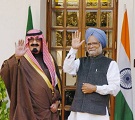
The counter-terrorism cooperation between India and Saudi Arabia has to be looked at also from the point of improving bilateral ties. The relations have been on the upward trend ever since January 2006 when King Abdullah visited India (a visit by a Saudi head of the state after 50 years) as a chief guest of India’s Republic Day celebrations. The ‘Delhi Declaration’ that was signed during the visit termed that the “visit heralds a new era in India-Saudi Arabia relations and constitutes a landmark in the development of increased understanding and cooperation between the two countries and creation of a mutually beneficial partnership.”2 Apart from other areas like economy, trade, science & technology, health and culture, the two countries recognised the “need to intensify and coordinate bilateral, regional and global cooperation to combat and eradicate the menace of terrorism.”3 However, there was no concrete agreement on counter-terrorism cooperation except for signing a ‘MoU on Combating Crime’. Although the MoU provided for cooperation between the security agencies of the two countries for combating organised crime, illicit trafficking of narcotics, weapons, and historical artifacts, and counterfeiting of currency and travel documents, in practice there were hitches.

The obstacles came in the form of perception of what constituted “crime” and priorities in addressing them. Yet, when the overall bilateral relations improved to the level of ‘strategic partnership’ in 20104, and when Saudi Arabia found that the importance of India as a major power has been gaining resonance, there have been meeting grounds. This was reflected in the signing of Extradition Treaty between the two countries in the same year. Defence Minister AK Antony’s visit to the Kingdom in February 2012, the first by a Defence Minister of India, tremendously boosted defence ties between the two countries, including in counter-terrorism.

The counter-terrorism cooperation between India and Saudi Arabia does not stop with the deportation of Abu Jundal. It has a vast potential to be realised so that the two countries, as Prime Minister Manmohan Singh has pointed out, are “strong allies against the scourge of extremism and terrorism that affects global peace and security.” 5 Since Abu Jundal was assigned to work also among Indian Muslims in radicalizing them, it is important that the cooperation between the two countries goes further in identifying the network of those already radicalised and in safeguarding Indians (about two million) from any radicalising attempts by jihadi groups based in the Kingdom. It is appreciable that the Saudi authorities have apprehended another Indian terrorist, Fasih Mohammed, who was involved in Chinnaswamy cricket stadium bomb blast in Bengaluru and shooting incident at Delhi's Jama Masjid. His immediate deportation would help the ongoing investigations in these cases.

Further, Saudi Arabia should arrest and deport all Indian fugitives hiding in that country and in future should discourage such elements from entering into the Kingdom. Much attention is also required in blocking funds to Indian terror groups from non-state actors based in Saudi Arabia. The two countries stand to gain not only on economic complementarities, but also on security and defence complementarities. A Joint Committee on Security similar to the one on Defence should be set up to make the security cooperation comprehensive: intelligence sharing, monitoring and surveillance, joint exercises, high-level visits, exchange programmes, and so on. Using the present momentum, India should make best use of its diplomatic energies to prevail on violent non-state actors based in Pakistan, like the LeT, through Saudi Arabia. Riyadh’s help is vital for New Delhi to counter jihadist terrorism in the country, which King Abdullah called as his “second home”.