Showing posts with label Indian Mujahideen. Show all posts

Friday, November 22, 2013

Patna Blasts – Implications Under Assessed

Ajit Doval, KC - Director, VIF

The serial blasts that took place in Patna’s Gandhi Maidan on October 27, 2013 during BJP’s Hunkar rally was an event whose seriousness and implications have not been fully fathomed. In a setting consumed by ruthless electoral rivalries, the powers that be, have failed to assess the incident in its correct perspective and respond adequately. The event heralds a new genre of terrorist threat, where the objective was not so much to cause depredations as to prevent the people and the leaders from pursuing their lawful right of assembly and speech. The trend, if unchecked, could derail democratic process, undermine constitutional freedoms and seriously destabilise the country. If the terrorists even marginally improve upon their Patna performance, democracy in the country will get a body blow with no political party or political leader remaining safe enough to carry out their legitimate political activities.

Further, if the terrorists succeed in doing it to one – and their capacities are not degraded – they will do it to all; those in power becoming especially vulnerable. Long term implications would be still more dreadful and one would like to restrain oneself from alluding to them. This calls for a careful analysis of the event, re-assessing terrorist intentions and capabilities, evaluating efficacy of our response strategies and plugging the gaps in our level of security preparedness.

The first reality that the event brings forth is that the Indian Mujahideen (IM), though incubated by the Pakistan’s ISI and a satellite of the Lashkar-e-Taiba (LeT), has amassed significant domestic content that we cannot wish away for political expediency. No responses can be strategised or meaningful policies executed by remaining in a denial mode. Since its inception in 2005, in last eight years, the IM has acquired menacing proportions both in its geographical spread and cadre strength. Its activities and existence of local cells have been reported from the states of Delhi, UP, Karnataka, Maharashtra, Bihar, Jhrakhand, Kerala, West Bengal, Madhya Pradesh etc. Patna blasts when analysed along with the stunning disclosures made by Abdul Kareem Tunda, Riyaz Bhatkal and Abu Jundal, the indigenisation of Jihadi terror in India presents a disturbing spectre. If the menace continues to grow unabated at the pace of last eight years it may soon become unmanageable. The tendency of its getting intertwined with domestic politics will make things worse. Contrary to what their apologists would like us to believe, their Jihad does not spring due to the lack of economic or social upliftment but their plain and simple aim of degrading the Indian state and establishing Sharia rule. This aim mirrors that of global Jihadist groups like the Al Qaeda and LeT. It is true that their goal is neither achievable nor enjoys support of Indian Muslims, but that does not reduce their capacity to destabilise the country. Attack on the Patna rally is an early indication of that.

The second reality that the blasts demonstrate is that the Bihar policy of let sleeping dogs lie does not pay. The Bihar government has been pursuing the policy of conflict avoidance against all extremist groups, particularly the Jihadis, hoping that the soft policy will insulate them from the threat. Bihar has been an important hub of IM activities right from its inception and a good number of its front ranking activists like Tehseen Akhtar and Haider Ali, who are presently driving IM’s activities in India hail from the state. Proximity to Nepal made it a favoured transit route for the IM members but no interceptions were attempted. Many IM activists considered Bihar as a safe haven and sought refuge there when under pressure from other police forces. In the last two years alone, nearly 15 IM suspects belonging to Bihar were either arrested outside Bihar or the police forces of other states nabbed them from Bihar. Bihar Police often resented their forays. The political argument of Muslim sensitivity is completely unfounded as no Muslim leader of the country supports Jihadis though they want innocents to be spared.

Another reality that the blasts brings forth is the failure of the Bihar Police to anticipate and take counter measures to defeat any terrorist or extremist threat. For a rally of this magnitude and considering high security vulnerability of the leaders attending it, they did not follow even rudimentary principles of security. Had proper area sanitization or access control measures taken, the terrorists would not have succeeded in placing 15 IEDs at the venue. An indifferent style of policing over the years had impaired the required verve and resoluteness of the force. Bihar Police refusing to cooperate with the IB in seeking remand of Yasin Bhatkal, despite his links with the infamous Darbhanga module, is illustrative of their indifference. The state police refusing to join the Advance Security Liaison (ASL) exercise with the IB and Gujarat Police before the rally and later even refusing to accept and sign it for taking follow up action is unpardonable. In this environment, October 27 blasts were just waiting to happen.


When the Home Minister in March this year announced a judicial probe into suicide in jail by the prime accused in the gruesome Nirbhaya gang rape case, many who preferred to see him dead than alive, grudgingly accepted it. It is, however, intriguing that in a country where inquiry commissions are appointed at the drop of a hat, Patna blasts which presented an imminent and real threat to some of the top political leaders of the country and led to the death of six persons, with over 80 injured, was not considered fit enough even for a low grade magisterial inquiry. Both the central and state governments, more by design than default, preferred to ignore it. The assertion of the Bihar Chief Minister that there was no security lapse implies that little improvement can be expected in future. Although Narendra Modi’s security has been beefed up following the blasts, it is ad hoc and not co-related to a proper threat assessment. The bigger issue is with how much seriousness do we tackle the challenge thrown by the IM and the measures that we take to deny them both their means and the ends. A high level judicial probe focusing on these issues will help. 

Thursday, July 25, 2013

Social Media: Freedom Yes, License No

K G Suresh, 
Senior Fellow & Editor, VIF

The recent expose about Rajasthan Chief Minister Ashok Gehlot allegedly buying ‘Likes’ for his official Facebook page in Istanbul, the ‘Twitter’ war between the ruling Congress and the main Opposition BJP and an outrageous tweet by Congress leader Shakeel Ahmed virtually defending the terrorist outfit ‘Indian Mujahideen’ have once again brought the spotlight back on the role of social media.

The events also saw the social media directly or indirectly setting the agenda for the mainstream media and thereby reviving the debate on the relationship between the two, particularly in a developing country like India.

According to a joint study by market research firm IMRB International and the Internet and Mobile Association of India, India currently has nearly 20 million Twitter users. Facebook has also reported that its Monthly Active Users in the country doubled to 78 million in Q1 2013.

With a burgeoning number of users joining the online community world wide, the importance of social media is significant - not only for the purpose of connecting with the people we know and befriending strangers but also for the purpose of disseminating information thereby informing, influencing, moulding and building mass opinions.

The Anna Movement against corruption in India exemplified the power of social media. While critics claim that the anti-graft crusade was a television generated movement, the fact remains that a large number of youth who joined the campaign across the country were deeply influenced by the social media, although aided and abetted by the visual media.

We have witnessed the use of social media technology during the widespread unrest in the Middle East – Libya, Syria, Egypt and Bahrain.

In fact, the experiences in Egypt and Tunisia have prompted the Syrian Government to maintain a strong surveillance on the use of new media technologies. The Chinese and Pakistanis have often restricted access to social media on political and cultural grounds.

In India too, the Central Government has made futile attempts to censor social media but have backtracked following huge hue and cry.

In neighbouring Nepal, the importance of these informal channels was recognised after the February 2005 takeover by the then King Gyanendra, when almost all the formal channels of information were blocked and only a few online media and blogs remained to share information with the public.

It is not only during unrest and rebellions that the social media has come handy. They have proved to be immensely invaluable during natural catastrophes and even emergency situations like the 26/11 terror attacks in Mumbai.

However, what’s more interesting is the emergence of social media not only as a crucial source of information for the mainstream media but also as a key competitor in the race for breaking news.

It is said that Twitter users posted the message about the death of singer Whitney Houston twenty-seven minutes before the mainstream media broke the news.

According to the Telegraph, tweets were posted at a rate of around 70 tweets every five seconds during the Mumbai terror attacks. Blogs and social networking sites were abuzz with news, photo, audio-visual and eyewitness accounts as the events unfolded.

Back home, in India, we have had former UN Under Secretary General and Minister of State for External Affairs, Shashi Tharoor, who lost his first job in the council of Ministers following a series of tweets revealing juicy information about the goings on in the highly lucrative Indian Premier League. The young, media savvy author and columnist was not the only loser in the episode. His friend and now wife Sunanda Pushkar lost her stakes (sweat equity) in the Kochi team, IPL wizard Lalit Modi lost his job and Kerala lost its only IPL team.

The episode provided lot of masala to the mainstream media. So did the tweets of actor director Farah Khan on the SRK-Sirish Kunder spat. The tweets of film stars and starlets often grab media headlines.

Instead of calling the media to air their enlightened views, on subjects ranging from tooth aches to child births, the celebrities, including the Big B and SRK, have taken to the social media to reach out to their fans, hit out at their rivals and remain in news.

The politicos have also joined the bandwagon, with the BJP leaders taking the lead. If Gujarat Chief Minister and Leader of BJP’s Poll Campaign Committee Narendra Modi is among the celebs with huge twitter following, Leader of Opposition Sushma Swaraj’s tweets keep the party beat correspondents updated with the latest in the party and parliament while veteran leader L K Advani has shocked and surprised many within and outside the party with his blogs on issues ranging from media to Modi and films to foreign policy. Digvijay Singh and ManishTiwari lead the Congress offensive on the social media.

Lauding the role of social media, particularly in cornering senior journalists Barkha Dutt and Vir Sanghvi in the wake of the Nira Radia tapes, even as mainstream media remained a mute spectator, columnist Sachin Kalbag wrote in the Mail Today, “ Online media in India rarely, if ever, gets its due. But it is social media, with its ability to become, as a senior journalist put it, a lynch mob that is something that media professionals would do well to remember. It is debatable whether a "lynch mob" or a "mass movement" would describe the phenomenon. It does not matter, really, because social media has well and truly arrived in India.

A series of projects funded by the Australian Research Council, UNESCO, UNDP and other international non-government organisations have been undertaken to enlist new media to help poverty alleviation in India, Nepal, Sri Lanka and Indonesia.

Although each initiative is adapted to local circumstances, the common objective is to give local communities the skills to set up their own independent and community-based media resources to address issues that are important to these communities. Such issues might include health, education or politics, and the media used range from local radio stations to new media forms such as websites.

Finding a Voice: Making technological change socially effective and culturally empowering is one of the leading projects in the programme.. Taking a participatory approach to research, aiming to empower people through finding their own voice, the project looks at using old and new media technologies to reduce poverty in poor communities in terms of people's participation. This is achieved by assessing people's capacity to participate in various activities such as self expression and freedom of speech.
Of late, Government departments in India too have taken to the social media to reach out to the new generations. One of the success stories in this regard has been Census 2011.

According to Zee Research Group (ZRG), Census 2011, a service from the Census Commission of India under the Union Home Ministry, has been one of the best offering of the Government on the social networking media. Census 2011 was logged on 24x7 on Facebook with live updates, comments and responses from the department.

The office of the Registrar General and Census Commissioner of India thought of the Facebook idea soon after it released the momentous Census 2011 findings. The result has been more than satisfying.

According to Registrar General and Commissioner of Census 2011, Dr C Chandramouli, “This initiative really helped to connect with the people. The responses of the people have been overwhelming. People have been very inquisitive and thoughtful throughout and have been actively participating and commenting on our regular updates.” He is not averse to criticism and looks forward to some constructive suggestions to engage the public better.

Several other Ministries and departments including the Ministry of External Affairs too have joined the bandwagon.

With India emerging as a leading Facebook market, the anxiety of the Government to reach out to GenX is understandable. A Tata Consultancy ‘GenY Survey 2011-2012’ of nearly 12,300 high school students across 12 Indian cities found that 85 percent of the students use Facebook.

Interestingly, Socialogue, a survey on social media trends and behaviour, revealed that 56 percent of Indians would prefer giving up television than giving up social networking sites. It revealed that nearly 37 per cent of people prefer a large network of friends as compared to close friends.

A study earlier this year by Mumbai's Iris Knowledge Foundation and the Internet and Mobile Association of India claimed that 78 million Facebook users will "wield a tremendous influence" over 160 Lok Sabha seats in the upcoming general elections. In these so-called "high impact" constituencies, Facebook users constitute either 10% of the total vote, or command greater numbers than the margin of victory in the 2009 election.

However, there are also equally significant statistics that do not support such findings and are also worrisome as far as social media is concerned. Although India ranked third this year in the number of active users next only to China and US, yet the overall Internet penetration in the country is a mere 11 per cent.

India on last count had 120 million active Internet users, up from 81 million users in 2010. Of the 10 top countries on active number of users, India is at the bottom in regard to levels of penetration achieved as against China with a penetration rate of 40 per cent and an active user base of 511 Million. China is followed by United States with 240 million users.

The social media has also become a platform for propagating separatism, communal hatred and vulgarity. Morphed photos of the Muslim-Buddhist violence in Myanmar were extensively used to force hundreds of people belonging to the North East to flee the southern metropolis of Bangalore.

Unsubstantiated reports and gossip are often passed on as genuine information and unlike mainstream media, which has stringent filtration mechanisms in place, many of these fly by the night websites post fiction as facts, throwing to winds journalistic norms such as accuracy and objectivity. Blackmailing has become a norm in the absence of any monitoring or regulatory system. Sensationalism is the only criterion and page hits the only yardstick.

Kashmiri and Sikh separatists are aggressively exploiting the platform to provoke and lure the youth to their ranks whereas the so-called Internet Hindus are hitting back with vengeance. The depth to which the discourse have fallen is appalling. Nicknames such as ‘feku’ and ‘pappu’ have been given to leaders of national political parties by their ideological opponents taking the political debate to an all time low.

The negative impact of the growing influence of social media is also causing concern to sociologists and educationists.

According to ‘Global Youth Online Behaviour Survey’ conducted by Microsoft, India ranked third in the list of 25 countries where 53 percent of the surveyed children aged between eight and 17 admitted that they were victims of cyber bullying.

Even as they are increasingly coming to terms with social media or citizen journalism as a major source of information, leading mainstream media journalists feel that the impact of social media has been overestimated.

Asserting that mere information is not journalism, Richard Sambrook, the former director of the BBC Global News Division, says one gets a lot of things, when one opens up Twitter in the morning, but not journalism.

“Journalism needs discipline, analysis, explanation and context. It is still a profession”, says Sambrook. According to him, the value that gets added with journalism is judgment, analysis and explanation - and that makes the difference.

While the impact of social media should not be underestimated and rather harnessed effectively for nation building, it is important to ensure that anti-social and anti-national elements don’t get away scot-free under the garb of freedom of speech and expression.


Social media will have to be made accountable to the society and the nation at large. It is too powerful a tool to be allowed to flourish and demolish societal and national interests in splendid isolation.

Terror Attacks in Bodh Gaya: Prevention is Better than Cure Printer-friendly version

Dr. N Manoharan, 
Senior Fellow, VIF

When serial blasts rocked Mahabodhi temple at Bodh Gaya on 07 July 2013, it was for the first time that a Buddhist holy spot was targeted in India. Ten of the 13 bombs planted at the temple were indeed of low intensity, but their psychological impact was huge. Though no group or individual has claimed responsibility so far, fingers are being pointed at four different directions as possible perpetrators.

Was there a political motive? Congress General Secretary Digvijaya Singh tried to connect the timing of the blasts with Gujarat Chief Minister and BJP leader Narendra Modi’s advice to the party workers to teach Bihar Chief Minister Nitish Kumar “a lesson”. What Digvijay Singh was trying to suggest was that the BJP would be interested in projecting Bihar’s law and order situation in a poor light, especially after JDU-BJP split in the state. The speculation has no value other than to gain cheap publicity.

There were also conjectures on the possible involvement of Tamil extremist groups to express their resentment against Sinhala Buddhists for the latter’s treatment towards their ethnic brethren in Sri Lanka. Two Buddhist monks were attacked in Tamil Nadu in March this year; and, in January 2011, the Mahabodhi Society Temple in Chennai was attacked. But, the Tamil groups involved in those attacks clearly lack the capability of carrying out terror attacks, that too using bombs. They have no wherewithal to strike a target more than 2000 kilometers away.

Were Maoists behind the attacks? Gaya is indeed a hotbed of the Maoists, but when it comes to a possible motive, it is difficult to establish their involvement. Mahabodhi temple was neither a state symbol nor a camp for security/police forces. Maoists would not bother otherwise. There were doubts whether they did the attack on behalf of any jihadist organisation. There are opportunistic linkages between Maoists and jihadist terror groups like Lashkar-e-Toiba (LeT). However, such linkages have so far not been so deep as to extend to the outsourcing of terror attacks.

The final possibility is the involvement of the Indian Mujahideen (IM). There have been alerts from the Intelligence Bureau over Mahabodi Temple as one of the prime targets of terror groups like the Indian Mujahideen. The Delhi Police had also sounded out Bodhgaya Temple as one of the targets based on interrogation of IM militants in its custody. The National Investigation Agency (NIA) that has been investigating the case has established IM hands in the blasts. What does the IM have against a Buddhist target? Two broad motives can be established.

The primary aim was to avenge “atrocities” against Muslims in Myanmar by the Buddhist majority. For quite some time, Pakistan-based terror groups like the LeT and Jaish-e-Mohammed (JeM) and Bangladesh-based Harkat-ul-Jihad al-Islami (HuJI) and Jamaat-e-Mujahideen of Bangladesh (JMB) have been trying to establish a firm foothold in Mayanmar, especially in the Muslim-inhabited Arakan area. They have links with local radical groups like Rohingya Solidarity Organization (RSO), Jammat-ul-Arakan, Harkat-ul-Jihad al-Islami Arakan and Difa-e-Musalman Arakan. These Myanmarese groups have training camps in neighbouring Bangladesh. Bodh Gaya is one of the popular pilgrimage destinations for the Burmese Buddhists.

The second motivation was obviously anti-India. The Indian Mujahideen is part of ISI’s grand strategy of destabilisation by taking subversion and terrorism to the heartland of India using violent non-state actors. Thus, IM’s hand is evident in most of the terror attacks in India’s hinterland since the mid-2000s.

The serial blasts clearly established a serious security lapse at various levels. It is not clear why the IB alerts were not taken seriously. It is also beyond comprehension why such a high-profile target was not guarded properly. The outer ring was manned by the state police, but with scant presence. Ironically, the security inside the temple premises was entrusted to private security personnel. The fact that 13 bombs were placed at diverse places to go off serially in a span of half-an-hour shows the level of incompetence of the security net around the Mahabodhi temple. This lacuna should be addressed on a priority basis.

An old adage “an ounce of prevention is worth a pound of cure” applies to internal security management. Two important preventive measures, among others, are suggested:

  1. There should be adequate ‘target-hardening’ around the temple. It includes a professional security cover that should be in a position to deter prospective attackers. Given the importance of the place (a UNESCO heritage site and one of the holiest Buddhist shrines in the world), the idea of deploying a central security force at the outer ring should be explored. The other measures that require attention under ‘target-hardening’ include functional metal detectors, proper frisking, situational awareness, effective surveillance cameras, and check points at all approach roads. The objective is to make the environment as unfriendly and as difficult as possible for the terrorists to commit any subversive act.
  2. Also, the key to success in fighting terrorism effectively lies in obtaining accurate and reliable intelligence about impending attacks and neutralisation of terrorist modules well in advance. Intelligence gathering in India, especially preventive aspects of intelligence, needs substantial improvement. Terrorist attacks occur either due to absence of precise/actionable intelligence or, more often, lack of follow-up action even when such intelligence is available. Specific intelligence should reach the concerned agency in real time. Cohesion amongst intelligence agencies and sharing of intelligence in a far more integrated manner is an operational necessity. What is required is ‘intelligence convergence’ more than ‘intelligence coordination’, of both men and material

Friday, July 6, 2012

Abu Jundal’s Arrest and India-Saudi Arabia Counter-terrorism Cooperation


Dr. N. Manoharan
Senior Fellow, VIF

The arrest and deportation of Abu Jundal alias Abu Hamza alias Sayed Zabiuddin Ansari, a Lashkar-e-Toiba (LeT) handler, involved in several terror attacks in various parts of India, by Saudi Arabia is a classic case of good counter-terrorism cooperation between the two countries. The case prompts several questions: Who is Abu Jundal? How did he get involved in Lashkar-e-Toiba (LeT)? Why did he go to Saudi Arabia? What factors were responsible for Riyad’s acceptance to deport Jundal despite Pakistan’s opposition? What is the way ahead in the bilateral counter-terrorism cooperation between India and Saudi Arabia?

Abu Jundal

Belonging to Gevrai area of Beed district in Maharashtra, Sayed Zabiuddin Ansari, was initially impressed by tenets of Ahle Hadees or Salafis, who “adhere to the pristine teachings of Islam as enshrined in the Holy Quran and Sunnah.”1 He gradually gravitated towards Students Islamic Movement of India (SIMI) and took care of its operations in the states of Uttar Pradesh and Maharashtra for sometime before shifting to Indian Mujahideen. It was at this point he got contacts with the LeT and went on to become its handler in India. As police net was closing in, he fled to Pakistan after 2006 through Nepal or Bangladesh. He was considered a “good find” by the LeT and, therefore, was roped-in in various anti-India operations.

Apart from the famous Aurangabad arms haul case (May 2006), Hamza has been involved in or connected with a number of terror attacks in India: IISc attack in Bengaluru (December 2005), Mumbai train bombings (July 2006), 26/11 Mumbai attacks (November 2008), German Bakery blast in Pune (February 2010), Chinnaswamy Stadium attack in Bengaluru (April 2010) and Jamma Masjid attack in Delhi (September 2010). After this point, the timeline of Ansari’s involvement is blank. The plausible explanation he shifted his base to Saudi Arabia in 2010, at around the same time when his name was spilled by one of the accused in the German Bakery case. Until then he was believed to have been involved only in the Aurangabad arms haul. The Indian investigators soon realised that an Indian Hindi voice in the recordings of conversations between 26/11 attackers and their controllers in Pakistan was that of Abu Hamza. His name was, therefore listed, in the dossier of 50 most wanted criminals sheltered in Pakistan released by India on 21 May 2011

By then he had already been sent to Saudi Arabia by the LeT to mobilize funds and recruits from Indian Muslims working there. The plan was to launch a big attack in India at an appropriate time. The LeT already has a good network in Saudi Arabia. Bearing a Pakistani passport in the name of Riyasat Ali, Jundal started working on his assignment even by using internet, especially the social networking site Facebook. It was this overconfidence that gave the whereabouts of Jundal in the form of electronic trails. He was put on surveillance for some time with the help of Saudi intelligence agencies.
After the arrest, Saudis were initially reluctant to handover Jundal to India because of Pakistan. Saudi Arabia did not want to upset Pakistan, its staunch ally. Islamabad knew the significance of the arrest and Jundal’s value to Indian authorities and the damage it could cause to Pakistan’s image if Ansari confesses whatever he knows. He was the only Indian present at the “control room” in Karachi that guided the entire course of 26/11 Mumbai attack; he not only knows who else were present, but also their exact role and motivations. Ajmal Kasab, lone terrorist caught alive among the 10 terrorists who carried out Mumbai attacks, was just an operative. But, Ansari had been involved right from the planning of the attacks to its execution and also its post-mortem. His first-hand testimony is important for India to connect various unconnected dots in the case.

Thus far, testimonies of Kasab and David Headley are available to India; only Ansari should be in a position to confirm whether they spoke the truth or not. Zabiuddin Ansari should also be able to explain the extent of Pakistan’s, its intelligence agencies to be more precise, involvement in various terror attacks against India. As Pakistan claims, is it really not in a position to control anti-Indian militant groups based in its soil? Or, is it controlling everything, from planning to execution of terror attacks against India? Whether Jundal fled to Saudi Arabia with the help of Pakistani establishment or with the help of LeT or both? How did he manage to survive in Saudi Arabia for nearly two years with a “fake passport”? Ansari is also expected to know a lot about the Pakistan-based LeT: its leadership, motivations, funding, recruitment, training, bases (both political and military), logistical support, its linkage with state and non-state actors of Pakistan, other internal and external networks, its modules and ‘sleeper cells’ in India, selection of targets, plans for future attacks, and its extent of connections with Indian jihadist groups like SIMI and IM.

India-Saudi Arabia CT Cooperation

Indeed, intense pressure from the US worked. However, it was the realisation on the part of the Saudis on the need to cooperate with India on counter-terrorism that prompted them to deport Jundal, but on the condition that only if he is an Indian national. They finally came around to hand him over when they got convinced by DNA profile of Jundal and other proofs submitted by India unambiguously establishing his Indian nationality. On the other hand, Pakistan had no credible proof to show to the Saudis to ascertain that he was a Pakistani citizen. In the recent years, Riyadh has been increasingly feeling concerned over collaboration between Al Qaeda in Arabian Peninsula (AQAP) and LeT and its possible implications in the long run. US’ determination of LeT as one of the most dangerous terror outfits, first by listing it as a ‘Foreign Terrorist Organization’ and later by announcing $10 million on the LeT chief Hafiz Saeed, sent strong signals to Saudi authorities: that they should not let Al Qaeda enter into the Kingdom through LeT.

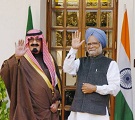
The counter-terrorism cooperation between India and Saudi Arabia has to be looked at also from the point of improving bilateral ties. The relations have been on the upward trend ever since January 2006 when King Abdullah visited India (a visit by a Saudi head of the state after 50 years) as a chief guest of India’s Republic Day celebrations. The ‘Delhi Declaration’ that was signed during the visit termed that the “visit heralds a new era in India-Saudi Arabia relations and constitutes a landmark in the development of increased understanding and cooperation between the two countries and creation of a mutually beneficial partnership.”2 Apart from other areas like economy, trade, science & technology, health and culture, the two countries recognised the “need to intensify and coordinate bilateral, regional and global cooperation to combat and eradicate the menace of terrorism.”3 However, there was no concrete agreement on counter-terrorism cooperation except for signing a ‘MoU on Combating Crime’. Although the MoU provided for cooperation between the security agencies of the two countries for combating organised crime, illicit trafficking of narcotics, weapons, and historical artifacts, and counterfeiting of currency and travel documents, in practice there were hitches.

The obstacles came in the form of perception of what constituted “crime” and priorities in addressing them. Yet, when the overall bilateral relations improved to the level of ‘strategic partnership’ in 20104, and when Saudi Arabia found that the importance of India as a major power has been gaining resonance, there have been meeting grounds. This was reflected in the signing of Extradition Treaty between the two countries in the same year. Defence Minister AK Antony’s visit to the Kingdom in February 2012, the first by a Defence Minister of India, tremendously boosted defence ties between the two countries, including in counter-terrorism.

The counter-terrorism cooperation between India and Saudi Arabia does not stop with the deportation of Abu Jundal. It has a vast potential to be realised so that the two countries, as Prime Minister Manmohan Singh has pointed out, are “strong allies against the scourge of extremism and terrorism that affects global peace and security.” 5 Since Abu Jundal was assigned to work also among Indian Muslims in radicalizing them, it is important that the cooperation between the two countries goes further in identifying the network of those already radicalised and in safeguarding Indians (about two million) from any radicalising attempts by jihadi groups based in the Kingdom. It is appreciable that the Saudi authorities have apprehended another Indian terrorist, Fasih Mohammed, who was involved in Chinnaswamy cricket stadium bomb blast in Bengaluru and shooting incident at Delhi's Jama Masjid. His immediate deportation would help the ongoing investigations in these cases.

Further, Saudi Arabia should arrest and deport all Indian fugitives hiding in that country and in future should discourage such elements from entering into the Kingdom. Much attention is also required in blocking funds to Indian terror groups from non-state actors based in Saudi Arabia. The two countries stand to gain not only on economic complementarities, but also on security and defence complementarities. A Joint Committee on Security similar to the one on Defence should be set up to make the security cooperation comprehensive: intelligence sharing, monitoring and surveillance, joint exercises, high-level visits, exchange programmes, and so on. Using the present momentum, India should make best use of its diplomatic energies to prevail on violent non-state actors based in Pakistan, like the LeT, through Saudi Arabia. Riyadh’s help is vital for New Delhi to counter jihadist terrorism in the country, which King Abdullah called as his “second home”.