Showing posts with label NIA. Show all posts

Thursday, July 25, 2013

Terror Attacks in Bodh Gaya: Prevention is Better than Cure Printer-friendly version

Dr. N Manoharan, 
Senior Fellow, VIF

When serial blasts rocked Mahabodhi temple at Bodh Gaya on 07 July 2013, it was for the first time that a Buddhist holy spot was targeted in India. Ten of the 13 bombs planted at the temple were indeed of low intensity, but their psychological impact was huge. Though no group or individual has claimed responsibility so far, fingers are being pointed at four different directions as possible perpetrators.

Was there a political motive? Congress General Secretary Digvijaya Singh tried to connect the timing of the blasts with Gujarat Chief Minister and BJP leader Narendra Modi’s advice to the party workers to teach Bihar Chief Minister Nitish Kumar “a lesson”. What Digvijay Singh was trying to suggest was that the BJP would be interested in projecting Bihar’s law and order situation in a poor light, especially after JDU-BJP split in the state. The speculation has no value other than to gain cheap publicity.

There were also conjectures on the possible involvement of Tamil extremist groups to express their resentment against Sinhala Buddhists for the latter’s treatment towards their ethnic brethren in Sri Lanka. Two Buddhist monks were attacked in Tamil Nadu in March this year; and, in January 2011, the Mahabodhi Society Temple in Chennai was attacked. But, the Tamil groups involved in those attacks clearly lack the capability of carrying out terror attacks, that too using bombs. They have no wherewithal to strike a target more than 2000 kilometers away.

Were Maoists behind the attacks? Gaya is indeed a hotbed of the Maoists, but when it comes to a possible motive, it is difficult to establish their involvement. Mahabodhi temple was neither a state symbol nor a camp for security/police forces. Maoists would not bother otherwise. There were doubts whether they did the attack on behalf of any jihadist organisation. There are opportunistic linkages between Maoists and jihadist terror groups like Lashkar-e-Toiba (LeT). However, such linkages have so far not been so deep as to extend to the outsourcing of terror attacks.

The final possibility is the involvement of the Indian Mujahideen (IM). There have been alerts from the Intelligence Bureau over Mahabodi Temple as one of the prime targets of terror groups like the Indian Mujahideen. The Delhi Police had also sounded out Bodhgaya Temple as one of the targets based on interrogation of IM militants in its custody. The National Investigation Agency (NIA) that has been investigating the case has established IM hands in the blasts. What does the IM have against a Buddhist target? Two broad motives can be established.

The primary aim was to avenge “atrocities” against Muslims in Myanmar by the Buddhist majority. For quite some time, Pakistan-based terror groups like the LeT and Jaish-e-Mohammed (JeM) and Bangladesh-based Harkat-ul-Jihad al-Islami (HuJI) and Jamaat-e-Mujahideen of Bangladesh (JMB) have been trying to establish a firm foothold in Mayanmar, especially in the Muslim-inhabited Arakan area. They have links with local radical groups like Rohingya Solidarity Organization (RSO), Jammat-ul-Arakan, Harkat-ul-Jihad al-Islami Arakan and Difa-e-Musalman Arakan. These Myanmarese groups have training camps in neighbouring Bangladesh. Bodh Gaya is one of the popular pilgrimage destinations for the Burmese Buddhists.

The second motivation was obviously anti-India. The Indian Mujahideen is part of ISI’s grand strategy of destabilisation by taking subversion and terrorism to the heartland of India using violent non-state actors. Thus, IM’s hand is evident in most of the terror attacks in India’s hinterland since the mid-2000s.

The serial blasts clearly established a serious security lapse at various levels. It is not clear why the IB alerts were not taken seriously. It is also beyond comprehension why such a high-profile target was not guarded properly. The outer ring was manned by the state police, but with scant presence. Ironically, the security inside the temple premises was entrusted to private security personnel. The fact that 13 bombs were placed at diverse places to go off serially in a span of half-an-hour shows the level of incompetence of the security net around the Mahabodhi temple. This lacuna should be addressed on a priority basis.

An old adage “an ounce of prevention is worth a pound of cure” applies to internal security management. Two important preventive measures, among others, are suggested:

  1. There should be adequate ‘target-hardening’ around the temple. It includes a professional security cover that should be in a position to deter prospective attackers. Given the importance of the place (a UNESCO heritage site and one of the holiest Buddhist shrines in the world), the idea of deploying a central security force at the outer ring should be explored. The other measures that require attention under ‘target-hardening’ include functional metal detectors, proper frisking, situational awareness, effective surveillance cameras, and check points at all approach roads. The objective is to make the environment as unfriendly and as difficult as possible for the terrorists to commit any subversive act.
  2. Also, the key to success in fighting terrorism effectively lies in obtaining accurate and reliable intelligence about impending attacks and neutralisation of terrorist modules well in advance. Intelligence gathering in India, especially preventive aspects of intelligence, needs substantial improvement. Terrorist attacks occur either due to absence of precise/actionable intelligence or, more often, lack of follow-up action even when such intelligence is available. Specific intelligence should reach the concerned agency in real time. Cohesion amongst intelligence agencies and sharing of intelligence in a far more integrated manner is an operational necessity. What is required is ‘intelligence convergence’ more than ‘intelligence coordination’, of both men and material

Wednesday, June 5, 2013

Maoists Attack in Chhattisgarh: Points to Ponder

Dr. N Manoharan, 
Senior Fellow, VIF

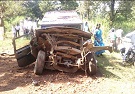
The ruthless attack by Maoists on a convoy of Congress leaders and workers at Jeeram Ghati in Jagdalpur district of Chhattisgarh on 25 May 2013 claimed 28 lives and injured scores of others. Those killed included Mahendra Karma, a former Minister of Chhattisgarh and a former Lok Sabha member, Nand Kumar Patel, the state’s Congress chief, his son Dinesh Patel, and former MLA Uday Mudliyar; former Union minister Vidya Charan Shukla and Konta MLA Kawasi Lakhma were critically injured in the barbaric assault. The convoy was an ideal target for the Maoists, who have been looking for chances to attack. It was a perfect target because of the presence of many high-profile leaders in one place, and that too with less security cover, passing through a most vulnerable area. Assessing the incident, some key issues are worth examining.
It is surprising why so many top leaders decided to travel together in one convoy on a route that traverses through areas dominated by Maoists. The convoy was huge, comprising about 25 vehicles, thus limiting their mobility and get-away in case of an ambush or even on a slight disruption. The Standard Operating Procedures (SOPs) were simply ignored. The route was indeed sanitised, but only cosmetically. There was no area domination exercise, neither were there attempts to use Unmanned Aerial Vehicles (UAVs) to monitor the convoy route. As the State goes to polls by this year end, both Congress and the ruling BJP had begun their electoral campaigns. While the Congress named its campaign ‘Parivartan (Change) Yatra’, the BJP termed its electoral drive ‘Vikas (Development) Yatra’. The State Congress, however, has been desperate to win this time. Accordingly, it did not want to be deterred by Maoists’ threats and wished to canvass in almost all areas of the State, including in the so-called “liberated zones”. Perhaps, it is for this reason that the State’s Congress chief, N. K. Patel, had not been critical of Maoists of late. Out of 26 seats in the tribal belt of the State, the Congress has only three in the current Assembly. The party wanted to improve on this tally. Seen in this context, one can understand the State Congress leadership’s overt attempt to keep a distance from the ongoing anti-Naxal operations and security forces. This also partly explains the presence of less number of uniformed security personnel during the campaign in general, and in the convoy in particular. The State Congress leaders might have believed that even Maoists wanted the present BJP government in Chhattisgarh to be replaced by the Congress. They have sadly mistaken the Maoists’ ideology, which wants to overthrow all democratically elected governments. By this attack, the Maoists have also sent a clear message: keep off tribal areas.

Were there enough intelligence inputs on the attacks? There were, indeed, intelligence alerts, but most generic in nature. But, one wonders how even a general build-up before the attack of this magnitude has gone unnoticed. Most importantly, attacks from Maoists are anticipated during this part of the year when trees shed maximum part of their green before monsoon sets in. Moreover, due to upcoming elections in the State, Maoists are out to deter and disrupt election campaigns to undermine any democratic process. Maoists also had their own reasons to attack each of the Congress leaders who were part of the convoy. In a four page note sent to the media houses, a spokesperson of Dandkaranya Vishesh Zonal Committee, Gudsa Usendi, noted that Nand Kumar Patel was targeted because he approved ‘Operation Green Hunt’ when he was Chhattisgarh’s Home Minister; and Mahendra Karma was “punished” for his “misdeeds” as the founder of the Salwa Judum. In fact, Mahendra Karma, who was under ‘Z-plus’ security cover, was high on the Maoists’ hit list having escaped their attack five times earlier. This time he was not lucky. Going by the Maoists’ note, they would target any political leadership in the State and beyond “for their anti-people policies” in the coming days. The Maoists also were talking of extracting revenge for the collateral damages to the tribals and direct Maoist casualties in the ongoing anti-Naxal operation. Many more attacks are expected, especially to deter electoral campaigns. The recent trends of Maoists’ tactical counter offensive campaigns clearly show that they are looking at soft targets as well.

Despite the presence of so many leaders in the convoy, the number of security personnel, including personal security officers (PSOs) was less. Even ‘Z-plus’ security cover was not optimum – just 16 out of 28 were present for Mahendra Karma. There were a total of about 50 security personnel as against about 200 Maoists – an unmanageable ratio of 1:4. The way the ambush was handled clearly shows that fitness and fighting ability of even those 50 security personnel were not up-to-the-mark. There was no single commander to direct the security personnel to fight against the ambushers. It was a free for all. The quality and amount of weapons and ammunition available with the security personnel were also not adequate. Some weapons reportedly got jammed due to poor maintenance. Therefore, the convoy was both outnumbered and outgunned. It took several hours for the reinforcements to reach the place for various reasons: lack of spare forces; fear of landmines on all the approach roads; and absence of a system to rush troops through helicopters.

The incident also highlighted poor coordination between the State and Central forces. The routine security review meeting that takes place before any major convoy movement did not take place. The Central forces were informed of the movement of the Congress leaders by the local police only the previous evening. The requisite synergy was missing. Well planned and coordinated approach between the State and Central forces could have avoided the bloody tragedy.

All these points should come out clearly in the ongoing National Intelligence Agency (NIA) probe on the incident. The ensuing report, instead of gathering dust in due course as is the case with most such documents, must be acted upon. It should fix responsibility, cover gaps and disseminate lessons learnt so that no such incident occurs in the future.