Showing posts with label Chief of Defence Staff. Show all posts

Monday, March 4, 2013

National Counter Terrorism Centre


Dr M N Buch 
(Visiting Fellow, VIF)

When we were caught unawares by the Pakistani intrusion into Kargil a high powered committee was set up under Shri K.S. Subramaniam, who had been Defence Secretary of India, to suggest measures whereby we could avoid intelligence failures, provide for a quick response to a Kargil like situation and take such counter insurgency measures as would make India secure. Like all reports of this nature the Subramaniam Committee report also was never meaningfully implemented. We even failed to set up a coordinating agency within the armed forces under a Chief of Defence Staff, not so much because the civil service component of the Defence Ministry opposed this but because there was inter-service rivalry between the armed forces and no Chief was prepared to accept a higher authority for the purpose of coordination. Since Kargil, just as it was before Kargil, India has continued to be a target of terrorism, largely sponsored by our neighbour, Pakistan, but also terrorism which has been born within the country. I am including insurgency and militancy which use violence as a major weapon within the definition of terrorism and, therefore, Naxalite violence or the type of violence one sees in Jammu & Kashmir would also come within the overall ambit of terrorism.

In the United States of America on 11th September 2001 aircraft were used by terrorists as living bombs and crashed into the World Trade Centre Twin Towers in New York and the Pentagon in Washington D.C. Several thousand lives were lost and even more injured in these horrible examples of extreme terrorism in which aircraft were used as suicide bombs. Now it is a fact that the United States of America is a federation in which all residuary powers vest in the States, which means that what is not specifically reserved for the Federal Government is available to the State Governments. In India the reverse is true because under the Seventh Schedule of the Constitution, apart from the Union List which gives the exclusive powers of Parliament and the State List, which gives the exclusive power of the State Legislatures, there is the Concurrent List in which both law making bodies have the power to legislate, with the rider that a law of Parliament overrides a State law on the same subject. Residuary powers are vested in the Centre and there are circumstances under which the Centre can give directions to the States, can legislate on behalf of the States under certain circumstances even on matters in the State List and can go to the extent of dismissing a State Government and assuming direct federal control under Article 356 of the Constitution. In other words, India is a very centripetal federation, heavily weighted in favour of the Centre. Despite this, after 11th September 2001 incident the United States government decided to take really effective measures to prevent a similar attack in future. Agencies like FBI and CIA were strengthened and their powers enhanced and a national counter insurgency centre was set up which had the authority to intercept mails, telephones and various electronic means of information and communications technology and to take effective action to arrest and neutralise would be terrorists.

None of the State Government raised any objection to the new arrangement, despite the fact that the counter terrorism organisation was armed with police powers which lay within the domain of the State and local governments. No one distrusted the new arrangement or considered it politicised and the States had full confidence that the agency would use its authority against terrorists and would not harass ordinary citizens or destablise State Governments. What is more, the police at all levels, city, county, State and federal, all work in tandem. Their single objective is the maintenance of law and order and ensuring the safety and security of citizens and they do not eye each other with suspicion. The culture there is that in performing its police functions the Force is allowed to work according to law and the kind of political and other interference which takes place in India is virtually unknown. In Madhya Pradesh recently the Home Minister insisted on the suspension or at least the transfer of an Inspector of the Traffic Police because he dared to pull up a twenty-year old boy for not wearing a helmet when riding a two wheeler. The boy was the son of a party worker. Moving out the Inspector in this manner naturally demoralizes the entire Force and to expect it thereafter to maintain order and counter terrorism would be virtually impossible of achievement. Defying a traffic policeman in Britain or United States is totally unthinkable. This example is being given because if in the minor matter of a traffic violation the Home Minister intervenes and prevents the police from performing its function how can anyone trust the police to be able to deal with a major threat of terrorism.

The Government of India has been trying to create agencies within the government structure which could collect and collate intelligence, pass on actionable information to the field authorities and then ensure that the terrorist organisations are hit hard enough to hurt. If we go back to the beginning of the twentieth century, especially at about the time of the Partition of Bengal by Lord Curzon, a terrorist organisation called the Anusheelan Party came into being. Its organisation was cellular and, therefore, very secretive. The bomb and the bullet were their favourite weapons. The British used some young Bengali officers of the Bengal Police to penetrate this organisation, collect information on different cells, which were largely unconnected and when the intelligence input became adequate they suddenly struck and virtually destroyed the Anusheelan Party. This was one of the most successful counter terrorism campaigns ever conducted in India. The Bengal Police was totally trusted by the British, just as the Punjab Police was trusted in dealing with the Ghadar Movement. In the Punjab it is only after Julio Rebeiro and K.P.S. Gill revitalised the Punjab Police and it came to the forefront in dealing with Khalistani terrorism that the situation began to normalise. The day the J&K Police becomes operationally capable of taking on militancy in the State we shall control this phenomenon. The Special Operations Group of the J&K Police has already begun to show signs of promise. In the Naxalite areas the model force would be the Andhra Pradesh Police which has targeted the top leaders and eliminated them and has the situation firmly in control in the Telangana area. This is the capability of our police, provided it is given good leadership and this is the Force which must be co-opted into countering nationwide terrorism. We have to ensure that NCTC does not become a surrogate of the State Police. Its role has to be of a mentor, a provider of credible information and, where necessary, a strike force that will complement the State Police.

As originally envisaged NCTC was to operate within the framework of the Intelligence Bureau. Under Entry 9 of List 1 of the Seventh Schedule of the Constitution Parliament has the power to legislate both on the Intelligence Bureau and on the Central Bureau of Investigation (IB) and (CBI). Unfortunately even today there is no law governing both these organisations and such police powers that CBI has are enjoyed as the Delhi Special Police Establishment created by the DSPE Act. Naturally the States were extremely wary of a wing of IB, not accountable to Parliament because it is a purely executive branch of government, with NCTC being empowered to enjoy police powers in the matter of striking at terrorists, taking armed action and arresting people, apart from intercepting telephone calls, and means of electronic communication in the realm of information technology and information communication technology that non-Congress States opposed the move because they were convinced that the new organisation would be used to spy on political opponents and to arrest and harass political leaders opposed to the ruling party. Many Congress Chief Ministers also have reservations. Therefore, NCTC could not be constituted, intelligence is both scattered and random and there is no fully legally empowered coordinating agency which can not only obtain and analyse intelligence but also strike against terrorists without any delay. IB is not and does not have a strike force, NIA looks at cases at the stage when an incident has occurred and has to be investigated ex post facto. Who will make preemptive strikes? The States have raised the bogey of a conspiracy by the Centre to curtail State autonomy and intervene in matters within List 2 of the Seventh Schedule. Incidents like Hyderabad, therefore, continue to happen. The mutual distrust of Central agencies and State Police Forces continues. This environment is not conducive to cooperative effort or coordinated action.
Coordination apart, it must also be realised that the State Police has to function under strong political constraint. Many terrorist groups have local political connections and if the police tries to deal with them impartially, then these terrorists can use their political strength to negate police action, thus enhancing terrorism. The importance of a federal agency is that it is not under local influence and, therefore, can afford to be more objective and impartial. A local goonda or terrorist may have a limited sphere of influence within which he feels safe, but if national level agencies come into action then that local influence disappears and the law will take its course. My submission is that a central organisation does not weaken the State Police but instead helps in creating an environment in which the State Police can act. This is a matter worth consideration.

There is the fear that the State Police will be superseded by NCTC , which will then arrest opposition Chief Ministers, thus creating a political path along which the ruling party at the Centre can walk to power in that State. Apparently, these fears are grossly exaggerated because NCTC will not replace the State Police, it will have to hand over the accused persons to the local police station after they have been caught and the entire legal procedure will have to be followed by the investigating agency. Apart from the new agency being under political watch it will also be subject to the scrutiny of courts. After the Keshwanand Bharti case no one in India can possibly weaken the courts or remove executive agencies from the scrutiny of the court. If NCTC acts arbitrarily, under political influence or unprofessionally then the courts will intervene and restore the balance. At the same time if NCTC becomes not only an instrument for sourcing of information but also a coordinator of action against terrorists and conspirators of terror we can certainly become more secure.
The United States is fortunate that it has a friendly neighbour, Canada, on the northern border and an equally friendly neighbour, Mexico, on the southern border. The eastern and western borders of the country face two huge oceans which are very much under the control of the United States’ Navy and Coast Guard. Infiltration of terrorists from abroad, therefore, is very difficult. Home grown terrorism based on religion, caste, or region is almost unknown. India has a porous northern, western and eastern land frontier, facing as we do Pakistan and, close by, Afghanistan and China, a not always friendly Bangladesh and Myanmar which, till very recently till our relations with the country improved, was not averse to sheltering militants from our north eastern States. Our sea frontiers are liable to infiltration from Pakistan, from the Arab littoral and from various insurgent groups or pirates which might crop up from time to time towards our east. Terrorism is exported to India and, therefore, is difficult to control. Besides this we have our own internal problems of terrorism, militancy, separatism and violence emanating from religion, caste and region. To the extent the Naxalites use violence as a major weapon, Naxalism is a form of terrorism. A communal riot takes place, it further divides communities and this encourages the growth of terrorism. Every time we allow people to bring the law into contempt because no one obeys the law we encourage terrorism. Apart from NCTC, therefore, it is absolutely essential that we put an end to sectarian and regional strife, control separatist movements which are home grown and ensure that communal riots do not take place. In all this a central authority for the control of terrorism becomes of vital importance and it is about time our political parties started to think nationally and eschewed narrow parochial interests. It is in this context that a legally constituted Intelligence Bureau, properly empowered and made accountable, is vital. Its mandate already includes counter espionage, which would cover insurgency, militancy and terrorism. Once the IB is made accountable by law, NCTC should be located within it. One can then assume that the States will accept NCTC as a friend and hostility to it will cease.

Thursday, November 8, 2012

India’s Nuclear Deterrence Must be Professionally Managed

Brig (retd) Gurmeet Kanwal 
(Visiting Fellow, VIF)

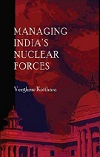
Forces by Verghese Koithara
(New Delhi: Routledge, 2012), 294 p, Rs. 795.
Review of Managing India’s Nuclear

India declared itself a state armed with nuclear weapons in May 1998 after the Pokhran tests. Despite the fact that almost 15 years have passed since then, the number of good books on the subject of managing India’s nuclear deterrence can be counted on the finger tips of one hand. This is partly because academics and strategic analysts find deterrence theory and the complexities of nuclear command and control too esoteric and partly because the Government of India has made no attempt to encourage such research. None of the government funded think tanks have thought it fit to conduct research on this issue. It is to the credit of Vice Admiral Verghese Koithara (Retd) that he has dared to enter what may be loosely termed as forbidden territory. In his book Managing India’s Nuclear Forces Admiral Koithara takes stock of the system in place for managing nuclear deterrence, carefully evaluates its efficacy and makes substantive recommendations to enhance its functionality.

India’s nuclear doctrine is built around a ‘no first use’ policy with ‘credible minimum deterrence’. In the interest of strategic stability, India is willing to absorb a ‘first strike’ and will launching punitive nuclear strikes in retaliation to cause unacceptable damage to the adversary if it is attacked with nuclear weapons. India’s nuclear weapons are political weapons meant only to deter the use and threat of use of nuclear weapons against India. It is clearly accepted in India that nuclear weapons are not weapons of warfighting. Hence, India has firmly rejected the use of tactical or theatre nuclear weapons – despite provocation from across its western border. However, India has not publicly demonstrated that it has done what it takes to ‘operationalise’ its nuclear deterrence. This is the essence of Admiral Koithara’s excellent book. In fact, he goes one step further to state that by keeping the armed forces out of the nuclear decision making loop, the authorities have actually undermined the credibility of India’s nuclear deterrence.

Both the NDA and UPA governments have tended to play down discussion of nuclear issues in the public domain. According to the strategic community grapevine, the late Brajesh Mishra, India’s first National Security Advisor (NSA), had issued an informal whip to the effect that no one in government will speak to the media about nuclear deterrence. No discussions or seminars have been held by the three Services to study issues like ‘targeting’ and deterrence breakdown that are in the military domain. Through various acts of commission and omission, successive governments have created the perception that acquiring nuclear weapons was an end in itself for power and prestige and that since nuclear weapons are political weapons and not weapons of warfighting, the barest minimum needs to be done to create nuclear forces that are robust and usable.

India’s nuclear signalling has been marked primarily by the routine flaunting of various models of Agni and Prithvi missiles at the Republic Day parade. No nuclear drills are known to have been held to ensure that the missile groups can deploy in a realistic time frame and that the warheads can be mated with the launchers in real time for early retaliation in the eventuality of a nuclear strike, even though some of these measures may have been practised in secret. Nuclear signalling is an extremely sophisticated art and India appears to have ignored this aspect completely. In view of these major shortcomings, India’s nuclear deterrence tends to lack credibility and is not taken seriously by either military adversaries or by the international community. India must demonstrate its resolve to use nuclear weapons if it ever becomes necessary through a carefully formulated process of signalling and must enhance the quality of its warhead and missile technology. The steps necessary to fully operationalise India’s nuclear deterrence must not only be taken early, but must also be publicly seen to have been taken – within the bounds of security of information and materials.

The author identifies and challenges the four tacit assumptions behind the lack of seriousness in operationalising India’s nuclear forces: that deterrence credibility can be established through technological demonstration; that nuclear force operations are largely a technical matter; that transition from general to immediate deterrence through alerting is not a very demanding exercise; and that force survivability is not a critical issue. He also mentions a fifth one: in a crunch situation the US will be there to call upon. He goes on to successfully demolish all of them through the force of logic.

Admiral Koithara focuses a sharp lens on the systemic weaknesses plaguing the management of India’s nuclear deterrence. He has stated that inadequacies in the management of nuclear forces have degraded India’s deterrence, “Not just by the inability to conduct operations in a safe and reliable manner, but also by revealing a lack of seriousness of purpose.” He bemoans the fact that the armed forces have been kept away from functional involvement in managing deterrence and asserts that, “Nuclear forces of every NWS are... closely controlled by the national leadership. But in every one of those countries, except India, these forces are managed by the armed forces under the supervision of the political leadership.” He points out that the command and control structure is patently flawed where even the Defence Minister is a peripheral figure in nuclear decision making. He recommends a return to the erstwhile Defence Committee of the Cabinet with the three Chiefs as permanent invitees.

India still does not have a Chief of Defence Staff to provide ‘single point military advice’ to the Prime Minister. The three Services Chiefs are members of the Executive Council of the Nuclear Command Authority (NCA) headed by the NSA and not of the Political Council of the NCA headed by the Prime Minister. As such, their inputs would reach the PM only indirectly in a moment of crisis. This system of isolation of the three Chiefs is unsuitable for long term nuclear planning. Though India has a Strategic Forces Command (SFC) for managing its nuclear forces, the C-in-C SFC reports directly to the NSA in practice and keeps the Chairman CoSC informed. Also, India does not have full fledged nuclear planning staff like Pakistan’s Strategic Plans Division and nuclear planning is not seamlessly integrated across the ministries and the departments. The author writes, “Using inadequately prepared nuclear forces to generate deterrence will be similar to the inadequately-supported forward policy that India had adopted along the Tibet border in 1959.

This remarkable book would have been much richer if the author had taken stock of Pakistan’s unbridled for additional fissile material beyond its legitimate needs and its quest to acquire tactical nuclear weapons like the 60-kilometres range Hatf 9 (Nasr) missile, which is inherently destabilising, and its efforts to tip its cruise missile Babur with nuclear warheads. The lack of serious confidence building and risk reduction measures between the two countries has also not been covered, nor has India’s long standing support for total disarmament been addressed. However, no book can cover the entire nuclear landscape.

This book must be read by all personnel of the armed forces, particularly the senior officers. It must be prescribed reading for the Higher Command courses of the three Services. It must also be read by the political leaders, scientists and bureaucrats or technocrats who are involved in national security decision making and managing India’s nuclear forces.

Wednesday, July 25, 2012

The Indian Administrative Service – How Good, How Relevant?

Dr. M.N. Buch
Visiting Fellow, VIF

The East India Company which came to trade in India soon found that its role of trading transformed into one of governing. Governance itself began with the settlement of revenue which a district was required to yield and for this purpose there had to be a survey. The revenue had to be collected and for this there had to be officials who could administer land and the peasants who tilled it. This was the beginning of district administration in India. It was part of the philosophy of government as expounded by the Marquis of Wellesley in the following words, “I can declare my conscientious conviction that no greater blessings can be conferred on the native inhabitants of India than the extension of British authority, influence and power”. The entire social reform movement which restored order by suppressing the Pindaris, abolishing sati, eliminating Thugi, all culminated in the extension of settled administration to the whole of India.

A regular administration and the rule of law began to be established. There was need to create a regular civil service which could perform this function. Instead of ad hoc appointment to posts under the government of the East India Company, in 1800 A.D. Lord Wellesley established the College of Fort William at which newly appointed persons to the Company’s service were to be trained for three years. This move was scuttled by the Board of the East India Company which, in 1806, founded the East India College, transforming it in 1809 to Haileybury College. It is here that the cadets of the East India Company Civil Service were trained. Being a cross between an English Public School and a college at Cambridge or Oxford Hailebury inculcated a certain spirit of camaraderie which reflected itself in the ‘biradari’ which the Haileybury boys established in India. Haileybury fostered a close family spirit, but it failed to inculcate professionalism in the Civil Service which was increasingly required to exclusively dedicate itself to the complex business of governing a country the size of India. It was also clear that the East India Company could not last and that the servants of the East India Company for all intent and purpose were now the servants of the Queen. Therefore, in 1853 a competitive examination was introduced for selection of civil servants who would rule India. In 1857 took place the Great Indian Mutiny, or the First War of Independence and in1858 the Government of India passed from the East India Company both de facto and de jure to the British Crown. The Indian Civil Service became fully established, to be followed shortly thereafter by the Indian Police. These two Services became the backbone of empire in India. To the credit of the British it must be said that they did gradually introduce Indianisation of the Services as also the Indian Armed Forces so that in 1947 when India became independent there was no civil service vacuum as happened in a great deal of British ruled East and West Africa.

The Indian district officer started as the ruler who extended to the native population of India what Wellesley called the blessings of the extension of British authority, influence and power. The strength of the district officer at this stage in our history was that he brought order where chaos reigned in the past, he replaced the arbitrariness of local chieftains by the certainty of justice under a system of laws and he established peace in districts where turbulence was the normal state of affairs. The people looked on such an officer as an improvement on what existed in the past and, therefore, British rule established itself in the districts because the people accepted British officers as distinctly better. There was as yet no concept of or demand for either independence from foreign rule or participatory government at local levels. These demands rose only when the local boundaries within India were abolished and the British established themselves as rulers of the entire sub-continent. The Princely States were less than vassals and existed because the British tolerated them. The paramount power was the British Crown.
Paradoxically as India consolidated and coalesced as a single nation under British rule the awareness of Indian nationality and nationhood also began to assert itself and with it the desire of Indians to participate in their own governance increased. Now the role of the district officer began to change because it brought him into conflict with the very forces which were demanding what had been for years an established right in Britain, that is, the democratic right to be self-governing.

Under the changed circumstances the British district officer found himself in a dual role. The first was to ensure that order was maintained and that there was no threat to British rule. The second was that of facilitating greater participation of Indians in government, initially through the beginnings of local self-government and, from 1919 onwards, as civil servants of a government which at Provincial level was becoming increasingly Indianised and democratised. It would be wrong to think of the Indian Civil Service in British days as being entirely dedicated to the maintenance of empire. It was slowly settling into the role of a Civil Service which still had a great deal of power and in the area of law and order almost unlimited power which, at the same time was required to take orders from a newly emerging political class which was beginning to realise that India could move towards not only self-governance but even independence. The greatest tribute to the ICS would be that its officers performed this dual role without slipping into schizophrenia, because the very ministers whom they had to obey in 1937 were also the ministers whom they had to jail in 1942.

The Indian Administrative Service is the seamless successor to the Indian Civil Service, whose entire Indian component became the premier Civil Service of India on 15th August, 1947. Government chose to retain the identity of the old imperial services, the ICS and IP, while simultaneously creating the Indian Administrative Service and the Indian Police Service to fulfill the very role that the ICS and IP did. The difference between the two is that the creator of the ICS and IP was an imperial power and the creator of the IAS and IPS was the first government of independent India. Why did India retain the civil services in the form that the British created? The British, by increasing Indianisation of the civil services and the Army left behind a substantial number of civil servants, technologists and professionals who were used to organising and running a system. India had a wise leadership which decided to absorb and continue what the British had left behind. In sharp contrast when the Americans when they took over Iraq in 2003 Paul Bremer, who was head of the US administration in Iraq, disbanded the Iraqi Army and Police and dismantled the entire administrative structure down to the last village. This left Iraq leaderless, officer-less, completely devoid of administrative structures and, therefore, in a totally helpless state in which there was no one to enforce the law, manage the administration or even run such basic services as water supply, sewerage and electricity. The nation descended into chaos. In India we took over the entire administrative system and the transfer of power was seamless.

The question, however, arose whether this country should continue civil servants who had served an imperial power. On 10th October 1949, Sardar Vallabhbhai Patel made an extremely powerful speech in Parliament in defence of the Civil Services, portions of which are worth reproducing. He said, “For the purpose of record of this Assembly I would like to state that if in the last two and three years the majority of the officers of the Civil Services had not worked with a sense of patriotism and honesty the Union would have been destroyed. You may ask the Premiers of all the Provinces, is any Premier prepared to work without these Civil Service officers? … The police, which was left a divided service, has been brought back to a reasonable level and has been working with great competence. The heads of the Provincial police forces come under guarantee; do you want to change the system? Do you want the Congress Swayam Sevaks to appoint the heads of the district police forces? … It would be wrong to quarrel with those with whom you want to work together. You should take work from them. Every person wants some incentive. If you continuously criticise a person in public and mock him he would not like to work. Like this no one will do your work. That is why once and for all please decide whether you need these Services or not. If you have made up your minds that despite my promises to them you want to abolish these Services, then I will take the Services with me and go, thinking that the nation has changed its mind … This Constitution will be implemented by such a Service Group which will preserve the unity and integrity of this country”. After that the Constituent Assembly had nothing further to do except adopt Article 312 which establishes the All India Services. There are three of them today, the IAS, the IPS and the Indian Foreign Service. There is the option of constituting an Indian Judicial Service.

The competitive examination through which the Services are recruited formerly consisted of three parts, three compulsory papers, three lower papers and two advanced papers for the Indian Administrative Service and the Indian Foreign Service, three compulsory and two lower papers for the Indian Police Service and the class-1 Central Services and three compulsory and three lower papers for the Indian Audit and Accounts Services. The distinction between the IAS and the Indian Foreign Service and other Services was maintained at the examination level itself. This has now changed and there is a single examination for all the Services. Generally the top ranking candidates select the IAS and the Indian Foreign Service and the thereafter, in descending order, other Services are opted for. However, this has given rise to a feeling amongst officers of other Services that it is the luck of the draw which has ranked them below the IAS and that actually all the Services are equal. This has increased inter-service rivalry and bitterness. I think government and UPSC should do some fresh thinking in this behalf and consider whether selection to the IAS and the Indian Foreign Service should not be done on the basis of a more rigorous examination than for the other Services. There is merit in this suggestion. There is also need to do considerable rethinking on the format of the examination. When I joined the Service, apart from the compulsory papers, of the three lower and two higher papers I could take only two which could be from a subject I had studied in college because that is how the grouping of papers was done. With a limited range of age for recruitment between 21 years and 24 years one could not really take more than one discipline at the undergraduate and postgraduate stage of study. My discipline was Economics and only two out of five papers could be in my area of study. I chose General Economics for the lower and Advanced Economic Theory for the higher paper. I was forced to take World History and International Law as my other two lower papers and Advanced Political Thought for my second higher paper. These three subjects I had to study on my own. The questions basically tested my ability to understand the problem and analyse it rather than my ability to learn by rote a huge number of issues relating to my subject. People from the science stream were equally handicapped in that they had to select at least three papers from Humanities and Social Sciences. Entrance to the Service came from a wider range of educational experience. The present system which is largely based on multiple choice questions and objective tests is highly skewed in favour of students of Technology or Applied Sciences and, therefore, the area from which recruitment is done to the IAS has become relatively narrow. Medical doctors and technology graduates have now come to predominate. My own experience is that a person whose educational background has a wide spectrum can be taught to focus, but a person from a narrow technology background with a narrow focus finds much more difficulty in widening his horizon. This is stated as a matter of fact and is not by any means judgemental.

In 1951 India opted for a new model of rural development called Community Development. This was S.K. Dey’s idea and it co-opted the entire population of a village as a community. Rural planning was turned upside down, a new administrative unit called the Community Development Block was established and planning became a participative exercise involving both people and officials. The development model was that development would be community demand driven and implemented through the community which would have to contribute a share of the cost in cash, materials or labour. People who contribute also keep a watch on how their money is spent and the works taken up in the fifties and sixties of the last century still survive. The new development administration, distinct from the Tehsil, separated the development from the regulatory functions of government and a new cadre of Block Development Officers and Extension Officers was created. This was the precursor to the Panchayt Raj established by the 73rd Amendment of the Constitution. The IAS also found itself in a dual role. In the district the D.C. and D.M. was the head of the district administration, but he also had the role, directly or through the District Development Officer, of administering the C.D. Programme. To the credit of the IAS its officers adjusted, through an evolutionary process, to the new administrative arrangement.

As India settled down to an increasingly democratised polity whose mantra was devolution and decentralisation the paternalistic role of the Civil Services underwent change. Policy formulation and decision making increasingly passed to elected representatives, though the Civil Service’s function of advising fearlessly, being politically neutral and administratively impartial in implementation of policy and ensuring the welfare and safety of people become strengthened. New equations between civil servants and politicians had to be forged and up to 1967 this did happen. In 1967 everything changed because unscrupulous, power hungry politicians suddenly found that they could buy power by bribing legislators and causing them to defect from the ruling party. To find the money to bribe legislators and to keep them from again changing their minds the State had to be subverted so that the leverage of the State could be used to make money illegally. To do this the Civil Service had to be tamed, its integrity jeoparadised and its impartiality and independence had to be destroyed. By threat of arbitrary action, transfer, denial of advancement and other unfair means the politicians broke the morale of the IAS and IPS, whose subordinates meekly followed suit.

At the very moment that we needed the IAS to stand firm a substantial number of its members broke. The Service split between those who did their duty and those whom Indira Gandhi called “committed”. The politicians distinguished between convenient and difficult officers, with the latter being sidelined. I fell in the latter group and quit the Service at the peak of my career eight years before my date of retirement. The convenient officers were co-¬opted into multi-faceted, multidimensional wrong doing. Having tasted the wages of sin these officers soon became partners in and sometimes even instigators of unlimited sin. Lest IPS officers feel that my remarks permit them to adopt a smirkingly patronising attitude towards their IAS colleagues, let me tell them that they are no better and are equal sinners.

Where does that leave the IAS today? The Service in 2012 is not the Service of 1957, when I joined it. It is more heterogeneous, four times larger and commands immensely larger funds than we did. Its entrants are perhaps more intelligent than my peers and I, but its motivation is entirely different. We joined the Service because Nehru’s dream of building a new India inspired us and we wanted to participate in this venture. As in all else in an increasingly material world, in the Service, too, idealism is dead and youngsters join the Service because it is a job which promises power and what that power can give. There is no particular desire to serve the people. When motivation changes the attitudes also change. Impartiality and fairness may bring a clash with politicians, which is career-unfriendly. An ability to bend brings advancement and, depending on how lax are one’s morals, even unearned wealth. One notes with satisfaction that there are still some officers who are true to their salt, but one is also alarmed by the growing cases of corruption in the IAS. A Service which was a byword for integrity cannot hold up its head today.

The IAS must realize that on its shoulders rests the burden of not only being India’s premier Civil Service, but also that it mans practically every important post in India. The Cabinet Secretary, the Head of Civil Service, is an IAS officer, as are the Chief Secretaries of States. In the district the senior-most officer is the District Collector, who is the Chief Coordinating Officer in the district. The officers of this Service are the ones who have maximum access to the Prime Minister and Chief Ministers. In every matter of policy an IAS officer has a very important role. For example, under the Rules of Business of the Executive Government framed under Article 77 of the Constitution for the Union and Article 166 for the States it is the duty of the Secretary of the Ministry or Department to ensure compliance with the rules and even if the Minister concerned passes an order contrary to rules, the Secretary is duty bound to point this out to the Minister and if the Minister insists on his order being complied with, then to submit the file through the Minister to the Prime Minister or Chief Minister as the case may be. If the Union Secretary for Communications had insisted on a Council order in the Spectrum allocation case and refused to comply with the Minister’s orders in the absence of such Council order, he might have faced personal discomfort and even humiliation, but there would have been no 2 G scam. That is expected of an IAS officer and that is the price he has to be prepared to pay.

At the other end of the spectrum is the massive corruption in our programmes to benefit the poor, especially in rural areas. If the D.Cs and CEOs of Zila Panchayats were to carefully monitor the programmes, tour extensively, listen to the grievance of the citizens and act sternly against erring officials and panchayat functionaries the corruption in project implementation would drastically reduce. If there is corruption at this level it can only mean one of two things, or both. The officer is lazy and is not doing his supervisory duties, or is himself corrupt, or is both corrupt and lazy. Part XIV of the Constitution gives the Civil Services a unique protection from arbitrary action not available to any other civil service in the world, or even to our own Armed Forces. Article 312 gives enhanced protection to the All India Services. In return the nation expects from them pea-green incorruptibility, the courage to give free and fair advice to the elected representatives, a commitment to do their duty diligently and impartially, the cultivation of professional competence (the coat of arms of the IAS bears the words, “Yogaha Karmasu Kaushalam”) and the service of the people of India as an article of faith. I have doubts whether we inculcate these qualities in our officers during training and I am certain that very few officers remind themselves about what the people expect of them. Many of them are far too busy looking after their own interests to care for the people whom they are required to serve.

Sardar Patel had in mind the basic fissiparous tendencies of the Indian polity and, therefore, built into the Constitution many centripetal forces which gave the Union strength and cohesion. The All India Services were meant to perform a centripetal role. In his address to the Constituent Assembly on 10th October, 1949 he said, “This Constitution will be implemented by such a Service Group which will preserve the unity and integrity of this country”. Unfortunately stratified state cadres have diluted the all India nature of the Services and this has reduced the efficacy of the three All India Services to play a unifying role. Inter cadre transfers, regional grouping of States for cadre management and exposure of every single All India Service officer to a Central posting would probably help in restoring a nation-wide perspective to the Services.

One main criticism of the IAS is that a generalist service sits in judgement over specialists and this has severely affected the development of professionalism in India. Partially this has happened because IAS officers have thrust themselves on departments and posts where they have no business to be. An IAS Commissioner of Health Services or Director of Agriculture is a ridiculous proposition. Similarly, why should a public sector business or industrial undertaking have an IAS or IPS officer as its Managing Director? This is the job of a business manager. What, then, is the role of the generalist? There is fundamental difference between management and administration. In management the variables are predictable within a given range and, therefore, with exceptions and a flexibility which permits change, one can build a linear model. In administration every citizen is a variable in himself and the variables are unpredictable and themselves subject to irrational deviation depending on many factors, including political will and decision making. An administrator, working within the framework of laws, the ideology and programmes of the party in power, even building political whimsy or even waywardness into the process, has to deal with a non linear model where decisions have to be instantly crafted to deal with an emerging situation. This only a generalist trained in administration can do. A professionally trained managerial mind would probably be unable to cope and this can have unfortunate consequences. Therefore, we need administrators to govern and they will be generalists having a wide range of experience.

Another criticism is that the frequent transfer of IAS officers prevents them from acquiring any expertise in any field. Actually the exposure of an IAS officer to a wide range of subjects, posts and issues is the strength of the Service, not its weakness. When at an early age an officer is made to face different situations ranging from law and order to human relations, man management to crisis management, societal issues to economics, he learns situational analysis on the job and his mind becomes attuned to quick and firm decision making. An administrator has to process the inputs from various sources, look at available resources and predetermined plan priorities and then decide on or advise on the optimal course of action. In Army parlance the Chief of every Service presents his case, but the Chief of Defence Staff than decides on priorities, inter service responsibilities and prescribes the bounds of action. That, incidentally, is the job of the IAS Secretary of a Ministry or Department. That makes the Service relevant in today’s context --- not as a superior but as a consensual coordinator. Within this certainly there has to be earmarking of IAS officers sector wise so that an officer with the correct aptitude and attitude becomes increasingly assigned to that sector. Unfortunately many IAS officers just neglect the acquisition of such professional skills and, therefore, the Service is the biggest provider of square pegs in round holes.

To sum up, though relevant the IAS fails to make the grade on counts of a willingness to learn, integrity, courage and, unfortunately, hard, slogging work. Not all, of course, but many and that is a cause for worry. The Service as a whole has also forgotten that it is a servant of the law, not of individual politicians. Wake up IAS or perish!!

Monday, July 16, 2012

Naresh Chandra Task Force’s Report on National Security: An Appraisal


Nitin Gokhale
Visiting Fellow, VIF

The high-powered Naresh Chandra Task Force, appointed by the government last year, submitted its detailed report to the Prime Minister a couple of months ago but so far there is no indication that the report will be made public soon. We do not even know if within the government deliberations have begun on the recommendations given by the Task Force.

All that is available in public domain so far is a glimpse of some key recommendations made by the task force that too through media reports obviously based on conversations with some members of the task force. For instance, the task force has apparently recommended:

  1. Appointment of a Permanent Chairman, Chiefs of Staff Committee (CoSC)
  2. Integration of Service HQ and Ministry of Defence by allowing more cross-postings
  3. Shifting focus of India's national security strategy from Pakistan to China
  4. Better Intelligence Coordination between all agencies
  5. Creation of dedicated financial Institution for access to energy, rare earths and raw materials from across the world


From some of the occasional interaction that this author has had with a few members of the Task Force, before and after the submission of the report, one aspect is very clear: There was no consensus on the creation of the post of the Chief of Defence Staff (CDS), leading to, what one believes, a half-hearted recommendation to appoint another four-star officer as permanent chairman of the Chiefs of Staff Committee (CoSC).

According to the Task Force, this officer will be in charge of the two existing tri-services commands-the Strategic Command Force (SFC) and the Andaman Nicobar Command (ANC)-- while the three service Chiefs will continue command and lead their respective services, the Task Force said.

The Permanent Chairman CoSC, according to the recommendation of the Naresh Chandra Task Force, will have a fixed tenure of two years and will be rotated among the three services. This officer will be assisted by the existing Integrated Defence Staff (IDS), headed by a three star officer from any of the three services.

Over the past decade, the IDS has evolved in a barely workable tri-services structure with over 300 officers drawn from the three services trying to function as a cohesive unit tasked with evolving "jointness." On ground however, jointness or inter-operability has remained at best patchy.

The new recommendation seeks to overcome these differences. The Naresh Chandra Task Force has also recommended the creation of a separate Special Operations Command on the lines of the US structure since asymmetric threats are seen as the main challenge to India's national security in coming decades.

The new post, the Task Force is hoping, will also bring in synergy in major acquisitions for all the three forces. Often, the three services have worked independently in procuring same set of equipment, duplicating work and creating separate infrastructure when synergy would have saved hundreds of crores of rupees.

However, critics of the new system say the recommendation to appoint Chairman CoSC is nothing but old wine in new bottle. It is a 'no go' because the Chairman will remain ever dependent on each of the services Army, Navy & IAF for its personnel requirements. Personnel of each service will be 'lobbyists' of respective Chiefs. Yet another opportunity, they say, to reform has been lost. National Security System does not have to depend on seeking Least Common Multiple (LCM)-solutions. It does not have to seek to appease lobbies and turfs.

The solution, some in service officers say, lies in divesting the three Chiefs of operational command of forces. Let them be Chiefs of respective Staff - 'resource providers to joint operational/ strategic commands' - content with recruiting, training of personnel; holding and maintaining equipment; and executing related administrative functions.

Appointment of CDS is however the prerogative of the apex political authority, namely the Cabinet Committee on Security (CCS). It can choose from panel of names forwarded by the three Services. There should be no rotation to appease services. Choice of apex political authority has to be final.

In absence of a common meeting ground on deciding to appoint a CDS, the Naresh Chandra Task Force recommendation can however be utilised in the interim in creating more cohesion among the services. For instance, the Chairman Chiefs of Staff Committee, who will have a fixed two year tenure can be made in charge of making net assessment about the strengths and weaknesses of India’s adversaries—China and Pakistan—in a holistic manner, taking into consideration inputs from all the three services and cross-referencing those inputs with other agencies like the Defence Intelligence Agency (DIA) and RAW. Currently, the three services send their individual assessments just to complete formalities to the IDS where it remains buried in files that never see the light of the day.

Moreover, if the Chairman Chiefs of Staff Committee is going to lead the proposed Special Operations Command why not create two more tri-services commands and give him some more work?

Given the frequency of cyber-attacks on India's IT infrastructure, creation of a cyber-command is only a matter of time. An aerospace command is inevitable sooner than later. Along with the creation of the proposed Special Operations Command, why not create these two additional tri-service commands? And let the Army, Air Force and Navy be the lead service for a particular command? And let the Army, Air Force and Navy be the lead service for a particular command?

The proposed Chairman Chiefs of Staff Committee can remain the head of these three commands with each of them being led by an Army Commander level officer. Given the experience and expertise available with the Army, it can take charge of the Special Operations Command, the IAF, with its domain knowledge, can take over the aerospace command and the Navy can lead the cyber command. The heads of these commands can have their second rung manned by two-star officers from each of the services so that they continue to have the benefit of expert advice from across the services but the overall responsibility must remain with the designated service.

Given that the existing tri-services commands go through painful changes each time their Commanders-in-Chief get rotated, making each of the service responsible for the proposed new commands will make their the working smoother and more efficient.

Over a decade after a CDS was recommended by the Group of Ministers (GoM) in the wake of the Kargil conflict, there is no unanimity on that issue yet. Given the strong differences within the services as well as in the political class, could this be the best arrangement for now? Or is it too impractical?

To find the right answers the government perhaps owes it to the people of India to make the Naresh Chandra Task Force report public and let a healthy debate ensue.

Monday, May 14, 2012

A Response Deficient both in Strategy and Tactics


Dr. M.N. Buch
Visiting Fellow, VIF

Naxalites, Maoists, Left Wing extremists call them what you will, (for convenience I shall call them Naxalite) have virtually taken over about 160 districts of India. That covers more than a quarter of the whole country.

All of these are located in the heart of India ---Chhattisgarh, Jharkhand, Eastern Bihar, parts of West Bengal, South Eastern Maharashtra, South Western M.P, Orissa and North Western Andhra Pradesh. In Andhra Pradesh in the Telangana Region the administration and the police, by forceful action, have been able to regain control and the Naxalites are on the run from there. In Chhattisgarh, Orissa and South Eastern Mahrashtra, however, the Naxalites reign supreme.

As is well known the extreme Left Wing armed movement originated in Naxalbari of Darjeeling District of West Bengal as a revolutionary attempt to overthrow the legally constituted government. Violence was the creed of this movement and murder of innocent people, including government servants and policemen, was the weapon used to try and overawe the administrative structure of the State. Siddharth Shankar Ray, as Chief Minister of West Bengal initiated the campaign against Naxalism, but it was the Left Front Government led by Jyoti Basu which effectively uprooted Naxalism from the place of origin. Even though there are areas in West Bengal which have Left Wing extremism even today, for example the Lalgarh area, by and large in West Bengal the situation is manageable.

In the Telangana area of old Hyderabad State there was strong Left Wing armed resistance to zamindari in the Nizam’s dominion, but after the Police Action when Hyderabad State was taken over, the newly appointed Commissioner of that region, V. Nanjappa, very effectively curbed militancy. The cause of that militancy was the iniquitous exploitation of the zamindari regime of the Nizam’s government, just as in West Bengal it was the Cornwallis Permanent Settlement and the misdeeds of the zamidars which gave rise to peasant unrest. One reason why Naxalism was controlled in West Bengal was that the Jyoti Basu Government introduced genuine land reforms which created a climate of hope in rural Bengal and weaned away people from Left Wing extremism. The second reason, of course, is that the parties of the Left Front voluntarily accepted our democratic system and electoral politics drove away the Naxalites. Fortunately in Andhra Pradesh right from the time when N.T. Rama Rao became Chief Minister the administration took a firm decision to counter Naxalism and this took the following form:-

  1. The police force was reorganised, strengthened, properly trained and equipped and a strike force called the Greyhounds was constituted. More police stations were opened and every police station was strengthened so that it became impregnable to Naxalite attacks. These police stations were then used as centres from which anti Naxalaite operations could be launched.
  1. The Intelligence set up was strengthened and gradually information about Naxalite activities began to reach the police, which launched immediate strikes if the information was reliable and could be acted upon. This resulted in a number of successful encounters in which the police had the upper hand.
  1. The police adopted a proactive policy of area domination and there was penetration of security forces into erstwhile Naxalite strongholds.
  1. Simultaneously the district administration was also strengthened and made proactive. Police measures were paralleled by a thrust for development and this began to eat into the Naxalite base. Today the position is that government has recaptured most of the Naxalite affected area of Telangana and the Naxalites have been driven out to find shelter in Chhattisgarh, Maharashtra and Orissa. There are lessons to be learnt from the successful operations of the Andhra Pradesh Government.
  1. In all hostage-taking incidents we should refuse to negotiate and make it clear that if need be we are prepared to lose the hostage. However, the retaliatory strikes will be swift, deadly, if necessary brutal and they will be effective.
  1. The Andhra Pradesh tactics of converting all police stations into strongholds and then using them for mounting anti Naxalite operations must be adopted and immediately implemented.
  1. The police force of the Naxalite hit States must be strengthened, equipped, armed, trained and led by officers who inspire confidence so that the State Police becomes the main strike force. It is only when KPS Gill re-energised and re-organised the Punjab Police that with the help of central police forces and the army he was able to restore order in the Punjab. In the Naxalite hit districts of Chhattisgarh our evaluation study found that even today the people of Bastar are not inimical to the Chhattisgarh Police and if that force is strengthened it can take on the Naxalites.
  1. Surveillance from the air is not enough. A sufficiency of transport helicopters to quickly move forces to where they are needed and armed helicopters which can be used to strafe Naxalites who have laid an ambush or are moving around in large numbers is the need of the hour and there should be no hesitation in this behalf.
  1. The armoury of the police must include heavy weapons so that a police party which is ambushed can retaliate with high explosives fired from mortars, rocket launchers, etc. Armoured fighting vehicles of the BMP type should also be provided to the police. The objective is that every ambush must be successfully countered and heavy casualties inflicted on the attackers.
  1. There should be aggressive patrolling, the objective of which is to bring the Naxalite dalams to encounter. With proper planning it should be possible to knock out a whole dalam in a single encounter. If heavy causalities are suffered by the Naxalites police morale will rise and the Naxalites will find it difficult to gain recruits as their morale plummets.
  1. At present the situation is so serious that in target areas we need Corps and Division level exercises in jungle warfare. On paper these would be training exercises, but the objective would be to flush out the Naxalites and drive them into the arms of security forces, mainly police and central armed police forces which could then liquidate them. It is very doubtful that the Naxalites would attack the army, but if they are stupid enough to do so they would be given short shrift. As an area is cleared normal district administration must be restored very quickly and area normalised.
  1. There is a theory, to which obviously Chidambaram and Montek Singh Ahluwalia subscribe, that development will end the Naxalite problem. Development is possible only in an environment of peace and security and as things stand today the Naxalites do not permit development. Therefore, restoration of peace is the number one priority of the government. Initially the steps taken would be harsh and even brutal and the liberal brigade would raise a howl. Let them. Ignore them if possible, suppress them if necessary, but do not lose sight of the objective of bringing India back to normal rule in which a democratic administration is re-established. Once that happens bring everyone back on board so that development programmes and programmes of assimilation to which the tribals can relate can be launched and tribal grievances removed.

What are the Naxalites? What is their objective? How do they operate? Who supports them? What is government’s reaction to Naxalite activities? How seriously does government view the Naxalite problem? The first fact to be remembered is that in the so-called Red Corridor, or Liberated Areas as they are called, the writ of government does not run. The situation here is much worse than it ever was in Nagaland or Mizoram at the height of insurgency. In the North East government decided very early that it would prove to the insurgents that they cannot defeat the Indian State by force of arms. A large number of units of the armed police were inducted into the insurgent hit areas, but overall operational command was given to the army, which took control of anti-insurgency operations. There was never a time when the police or the army withdrew from Nagaland and Mizoram or left space which the insurgents could take over. These areas have always been treated as frontier areas even by the British and the civil administration only had a presence there through political agents or deputy commissioners reporting directly to the Governor of Assam. The policing was provided by the Assam Rifles and, therefore, when insurgency endangered the integrity of India the army took over this policing and administrative role. At the same time a regular administrative structure was slowly created, first in the Union Territories carved out of Assam by way of Nagaland and Mizoram, with appointment of district officers and superintendents of police, setting up of police stations and creation of development blocks. As the insurgents learnt the hard way that they cannot defeat the Indian Army many of them began to come into the mainstream and over time it was possible to democratise the administration and to convert the Union Territories into States of the Union. Today Mizoram is peaceful and insurgency in Nagaland is confined only to some pockets and is very much under control. This is not the picture in the Naxalite dominated districts of India.

The National Centre for Human Settlements and Environment (NCHSE) did an evaluation of five Naxalite dominated districts of Chhattisgarh on behalf of the Planning Commission to see how various development projects are progressing. The findings of the NCHSE team were that the normal district administration is only a façade and operates at the mercy of the Naxalites. The Naxalites do not allow school buildings to be constructed because they suspect they can be used by security forces and, therefore, school buildings are blown up. Education, therefore, has suffered in these areas. No development project can be undertaken unless the Naxalites want it. In one case of Dantewada District, the details of which are available but are not being revealed for security reasons, a contractor from Nagpur was permitted to undertake the construction of a road, for which he had to pay the local dalam or armed group of Naxalites a sum of rupees twenty lakhs. He paid this, but another dalam then demanded a similar amount, which he could not pay. He was shot dead. His widow, obviously a woman of great courage, came down from Nagpur and upbraided the Naxalites for breach of promise. One dalam apologized, but she still remains a widow because her husband’s life could not be restored. The road, incidentally, was not built.
In the Naxalite area government’s primary health care system hardly functions. The revenue courts do not function, land records are where they were prior to the Naxalite movement, civil litigation stands informally transferred to so-called Naxalite courts, where there is no real justice, the forest department exists at the mercy of the Naxalites and criminal justice itself has become a function of kangaroo courts. The only system which functions is the excellent Public Distribution System (PDS) of Chhattisgarh but there, too, the Naxalites insist that lorries carrying PDS goods will be handled by them and they will do the actual distribution because that gains them credit.
The Naxalites operate at two levels. One is the normal organisation of villagers through which contact is maintained with the administration. The other is armed dalams where large groups of insurgents armed with modern weapons freely roam the area. The villagers are terrified and dare not inform the security forces about Naxalite movement. The security forces, too, send out patrols and pressurise the villagers, but ultimately the police can only beat up people whereas the Naxalites kill them. Whether it is a beating at the hands of security forces or death at the hands of Naxalites, the poor tribals of the Naxalite infested zone are today the most miserable people on earth. That is what the Naxalites have done to them.

Who are these Naxalites? How do I know about them? I would restrict my comments to the Bastar Division of Chhattisgarh only. From the time when it was a part of Madhya Pradesh, Bastar was the largest district in India and was a part of Raipur Division. One area called Abuj Marh was the only Inner Line area located within the heartland of India in that entry into the Marh was by permission of the D.C. of Bastar, there was no revenue survey or settlement, there was jhoom cultivation, there was neither a revenue or police presence and it is only the Tribal Welfare Department which ran schools and had a presence in the Marh. The region was tiger infested and in one village man-eaters ate the entire population of thirty-eight people, including the village school teacher. The Forest Department eventually launched a campaign to eliminate the man-eaters and two of them were shot dead. The whole of Bastar was beautiful, unspoiled and totally peaceful. The Maria, Muria, Dandami Maria, Hill Maria, etc., are all Gond tribes which inhabit Bastar. Bastar was originally a princely state in which the much smaller princely state of Kanker was merged. Outside intervention came through two major projects, the Dandakaranya Project centred at Pakhanjore for rehabilitation of East Bengal refugees and the Bailadilla Project for mining iron ore. Bastar is a mineral rich region in which there is some of the purest iron ore in the world called blue dust, zinc, tin, precious stones like corundum, coal - name it you will find it in Bastar. It also has beautiful forests with the teak zone located on dike merging with schist and gneiss of the sal zone, moving towards semi moist deciduous forests of Bailadilla and South Bastar. There is poverty, but no starvation because nature is bountiful in the district. Unfortunately exploitation by outsiders in the Dandakaranya Project and the Bailadilla iron ore mines did lead to displacement, inequality, loss of livelihood, deforestation and pollution of rivers. This is a major cause of discontent in Bastar.

As for my credentials, I had been Director, Tribal and Harijan Welfare of Madhya Pradesh and have very extensively toured Bastar, then the most important tribal district in India. Thereafter as Secretary of the Environmental Group of Departments, which included forests, I had a great deal to do with Bastar. One signal contribution I made was to abandon tropical pine plantation in Bastar. Under the sponsorship of the World Bank the Government of India and the Government of Madhya Pradesh, in Machkot - Tiria on 400 acres cut down the beautiful mixed forests and introduced monoculture of Pinus Carribia for development of pulp wood plantation to feed the paper factories of Sweden. The idea was to grow this species in 40, 000 acres, thus virtually destroying the beautiful forests of Machkot Tiria. Despite immense pressure from the Government of India to take up the project because it would give that government foreign exchange I stoutly resisted it and contributed to saving the indigenous forests of Bastar. Today the tropical pine is in decline and indigenous species have made a come back.

In the end of 1983 when I was still in service Arjun Singh, the then Chief Minister of Madhya Pradesh, asked me to tour South Bastar where the beginnings of Naxalism were being felt. I toured extensively and what I found was that Andhraite Naxalites under some pressure in that State had penetrated into Bastar. Despite the poverty of the region, despite displacement by Dandakaranya and Bailadilla, there was no home grown militancy. Bastar was a ryotwari district and land ownership of the tribals was protected by the Madhya Pradesh Land Revenue Code. I told Arjun Singh that we could accelerate the pace of development, but through projects which tribals could assimilate. We could post officers and staff of known efficiency and integrity and we could take police action. However, nowhere did I find even one worker of any political party, including the Congress, BJP and the Left who mingled with the people and educated them on the dangers of Naxalism and militancy. I told him that this task could not be performed by civil servants. It is this political vacuum which has been invaded and taken over by the Naxalites. Even here, when Digvijay Singh was Chief Minister, a very fine IPS officer called A.N. Pathak, as IG anti Naxalite operations, camped in the deep jungles of South Bastar and virtually drove out the Naxalites. However, under pressure from the so-called liberal activists the Digvijay Government stopped these operations and ordered Pathak to withdraw from Bastar with a major part of his force. The police lost the initiative, the Naxalite flooded in and that was the beginning of the present sorry state in Chhattisgarh.

My third link with Bastar is that Kamal Nath, as Union Minister for Forests and Environment, appointed me Chairman of a committee to look into the environmental impact of the proposed Indravati Project in Bastar. This was largely a hydel project, with some irrigation. I shot down the project in flames because it would have caused immense environmental damage both to the river and to the forests through which it flowed. My report was accepted in toto and the project shelved. I have given this background because today the picture is very different and Bastar is the least safe place in India. Neither in Kashmir nor in the North East have the security forces ever given up their role of dominating the area. In Bastar the exact reverse is true and it is the Naxalites who dominate.

This brings me to the questions I asked about the Naxalites. The so-called activists, B.D. Sharma, Binayak Sen, Arundhati Roy, Swami Agnivesh, Dr. Hargopal and large numbers of JNU brand liberals all look on the Naxalites as people leading a revolution against the heartless, capitalist, anti people and anti tribal State. To them Naxalite terror is a war of liberation. If it is a war then surely the Geneva Convention should apply. Just a few days ago Naxalites entered a village in Gadhchiroli District of Maharashtra and decapitated two villagers and abducted ten others. In Jharkhand a police inspector was abducted and beheaded. In Bastar in a single ambush seventy-seven jawans of CRP were killed. The Naxalites target the elected representatives, as witnessed by abduction of a Member of the Orissa Legislature. They have destroyed the panchayat raj institutions and when Alex Paul Menon, Collector of Sukma was addressing a panchayat sammelan the Naxalites brutally murdered two of his security officers and abducted him. The Naxalites have destroyed education by blowing up schools, they have disrupted the health care system, they do not allow development works to be undertaken so that the problems of poverty cannot be tackled, they blackmail people and at the point of a gun extort money from them, so much so that even the poorest villagers who go to market have to pay their tithe to the Naxalites. A bus operator can run his bus only on routes permitted by the Naxalites and the timings scheduled by them. The murder of policemen is considered an act of merit, including by their pseudo intellectual supporters. Abduction is now a major weapon for forcing government to surrender to all their demands. This government seems to be doing so quite willingly. This is a total negation of government and it is high time that government went on the offensive and recaptured the Naxalite dominated areas in order to establish democratic civilian government there. Unfortunately neither Chidambaram nor the Home Ministry have realised the seriousness of the problem, which is why our responses to Naxalite terror are ad hoc, sporadic and based on expediency. We need to sweep the Naxalite hit areas clean of terrorists. For this purpose we need to do the following:-

One thing does pain me. Our intelligence agencies, central and state, seem to be quite good at the surveillance of political rivals of government. When it comes to intelligence about the movement of large bodies of armed people who in broad day light could abduct a District Collector, there seems to be a total intelligence silence. Nehchal Singh Sandhu is a first class intelligence officer, who is Director of the Intelligence Bureau. His operational record is outstanding. My prayer to him would be that he organises our intelligence services in such a way that whereas their overseeing of terrorism imported from Pakistan or encouraged to grow in India by that country remains strong, an equally strong intelligence network is built up about Left Wing extremism. At the present moment at an operational level that networks seems to be weak. The Pakistan- China orientation of the Intelligence Bureau would have to include a highly effective division whose sole concern is Left Wing extremism. Nehchal would do a great service to the nation if under his leadership the Intelligence Bureau becomes that organ of the State which the Naxalites fear the most