Showing posts with label Pokhran. Show all posts

Friday, September 19, 2014

India Must Choose the Right Strategic Partner

Mohan Kumar S

Current Scenario

It has been rightly stated that, as a nation we can change our friends, but not our neighbours. We have been destined to live in the most dangerous part of the world with two nuclear armed countries, China and Pakistan in our immediate neighborhood. India also faces the problem of state sponsored terrorism or proxy war from Pakistan. China after annexing so much of our land during the 1962 war, still lays claim over large Indian territory. They also support Pakistan in building their defence, nuclear weapon and missile programmes, which are wholly India centric. China is also involved in building up the so called string of pearls strategy by bringing into their fold, countries like Bangladesh, Burma, Nepal, Pakistan, Sri Lanka, Maldives in our neighbourhood, to encircle and choke our country. The recent emergence of ISIS in Syria and Iraq and the threat it may pose to us also in the not too distant future is another cause of worry. The situation in Afghanistan is also not appearing promising in the long run, after the pull out of US forces.

Pakistan has created terrorist groups as a tool for its geostrategic agenda. Pakistan had long been accused by India, and now understood by western nations like the United States and the United Kingdom for its involvement in terrorist activities in India and Afghanistan. Pakistan's tribal region along the border of Afghanistan has been claimed to be a "haven for terrorists" by western media also. According to an analysis published by the Saban Center for Middle East Policy at Brookings Institution in 2008, Pakistan was, perhaps the world’s most active sponsor of terrorist groups. Many nonpartisan sources believe that officials within Pakistan’s military and the Inter-Services Intelligence (ISI) sympathise with, and aid Islamic terrorists, saying that the ISI has provided covert but well-documented support to terrorist groups active in Kashmir, including the al-Qaeda affiliate Jaish-e-Mohammed and Lashkar. US intelligence officials claim that Pakistan's ISI sponsored the 2008 Indian embassy bombing in Kabul. The attack was carried out by Jalaluddin Haqqani group, which runs a network that Western intelligence services say are responsible for a campaign of violence throughout Afghanistan, including the Indian Embassy bombing. Pakistan has been playing both sides in the fight against terror, on the one hand, pretending to help curtail terrorist activities and availing grants worth billions of dollar from America while on the other hand, covertly promoting it. The ISI is also accused of supporting Taliban forces, recruiting and training Mujahideen to fight in Afghanistan and Kashmir.
In the above scenario, we have to be extremely cautious and strengthen our defence forces by keeping their morale high and providing them with the best, state of the art weapons which can be made available. It has also to be supplemented with well planned infrastructure like all weather roads, rail links, air fields, communication net works stretching to our borders, so that we can quickly mobilize adequate troops and equipments to the required areas, at short notice. Till the beginning of the last decade, we were having very good relationship with Russia from whom we met most of our weapon requirements. This was mainly due to the extremely warm relation and mutual trust we enjoyed with them. With the breaking down of the old Soviet Union, their defence sector also was not able to cope up with the challenges posed due to financial crunch and lack of strategic support from their government. There was also a lag in meeting deadlines and quality. Compelled by the situation, we started looking for alternate sources for meeting our strategic needs to countries like Israel, France, Sweden and USA. From our point of view, it was justifiable also to have diversified sources for procuring our legitimate defence requirements for reducing risk and to have better flexibility.

Indo-Russian Ties

Despite being one of the pioneers and founding members of the Non-Aligned Movement, India developed a closer relationship with the Soviet Union during the Cold War. During that period, India's relatively cooperative strategic and military relations with Moscow and strong socialist policies had a distinctly adverse impact on its relations with the United States. After the dissolution of the Soviet Union in 1991, India began to review its foreign policy in a unipolar world, and took steps to develop closer ties with the European Union and the United States. During the Cold War, India and the Soviet Union (USSR) enjoyed a strong strategic, military, economic and diplomatic relationship. After the collapse of the USSR, Russia inherited the close relationship with India, even as India improved its relations with the West after the end of the Cold War. India is the second largest market for the Russian defence industry. In 2004, more than 70% of the Indian Military's hardware came from Russia, making Russia the chief supplier of defence equipment. The relationship began with a visit by Indian Prime Minister Jawaharlal Nehru to the Soviet Union in June 1955 and Khrushchev's return trip to India in the fall of 1955. While in India, Khrushchev announced that the Soviet Union supported Indian sovereignty over Kashmir. The Soviet Union declared its neutrality during the 1959 border dispute and the Sino-Indian war of October 1962, although the Chinese strongly objected. The Soviet Union gave India substantial economic and military assistance during the Khrushchev period, and by 1960 India had received more Soviet assistance than China had. This disparity became another point of contention in Sino-Soviet relations. In 1962, the Soviet Union agreed to transfer technology to co-produce the Mikoyan MiG-21 jet fighter in India, which they had earlier denied to China.

Defence relations between India and the Russian Federation have a historical perspective. The Soviet Union was an important supplier of defence equipment for several decades, and that relationship was inherited by Russia after the break-up of the Soviet Union. In 1997, Russia and India signed a ten-year agreement to further military-technical cooperation. Today, the co-operation is not limited to a buyer-seller relationship but includes joint research and development, training, service to service contacts, including joint exercises. Energy sector is an important area in Indo-Russian bilateral relations. In 2001, ONGC-Videsh acquired 20% stake in the Sakhalin-I oil and gas project in the Russian Federation, and has invested about US $1.7 billion in the project. The Russian company Gasprom and Gas Authority of India have collaborated in joint development of a block in the Bay of Bengal. Kudankulam Nuclear Power Project with two units of 1000 MW each is a good example of Indo-Russian nuclear energy co-operation.

Indo US Relations

Our relation with US after the assassination of Kennedy in 1963 deteriorated gradually and hit an all time low under the Nixon administration in the early 1970s. Richard Nixon established a very close relationship with Pakistan, aiding it militarily and economically, as India, under the leadership of Indira Gandhi, was seen as leaning towards the Soviet Union. He considered Pakistan as a very important ally to counter Soviet influence in the Indian subcontinent and establish ties with China, with whom Pakistan was very close. The frosty relationship between Nixon and Indira Gandhi worsened the relations further. During the 1971 Indo-Pak War, the US openly supported Pakistan and even deployed its aircraft carrier USS Enterprise towards the Bay of Bengal, which was seen as a show of force by the US in support of the West Pakistani forces. Later, India conducted its first nuclear test, Smiling Buddha in 1974, which was opposed by the US, In the late 1970s, with the anti-Soviet Janata Party leader Morarji Desai becoming the Prime Minister, India improved its relations with the US, led by Jimmy Carter, despite the latter signing an order in 1978 barring nuclear material from being exported to India due to the latter's non-proliferation record. But with Indira Gandhi returning to power in 1980 and India supporting the Soviet invasion and occupation of Afghanistan, the relations between the two countries weakened again in the 1980s. Until 1997 there was any significant effort by both countries to improve relations with each other.

Soon after Atal Bihari Vajpayee became Indian Prime Minister, he authorised nuclear weapons testing at Pokhran. The United States strongly condemned this testing, and initiated sanctions, and voted in favour of a United Nations Security Council Resolution condemning the tests. President Bill Clinton imposed economic sanctions on India, including cutting off all military and economic aid, freezing loans by American banks to state-owned Indian companies, prohibiting loans to the Indian government for all except food purchases, prohibiting American aerospace technology and uranium exports to India, and requiring the US to oppose all loan requests by India to international lending agencies. However, these sanctions proved ineffective - India was experiencing a strong economic rise, and its trade with the US constituted a small portion of its GDP only. Japan joined the US in imposing direct sanctions, while most other nations continued to trade with India. The sanctions were soon lifted. India emerged in the 21st century as increasingly vital to core US foreign policy interests. India, a dominant actor in its region, and the home of more than one billion citizens, is now often characterised as a nascent great power and an "indispensable partner" of the US, one that many analysts view as a potential counterweight to the growing clout of China.

Since 2004, Washington and New Delhi have been pursuing a "strategic partnership" that is based on shared values and generally convergent geopolitical interests. Numerous economic, security, and global initiatives - including plans for civilian nuclear cooperation - are underway. Also in 2005, the United States and India signed a ten-year defence framework agreement, with the goal of expanding bilateral security cooperation. The two countries now engage in numerous and unprecedented combined military exercises, and major US arms sales to India are under way. The value of all bilateral trade tripled from 2004 to 2008 and continues to grow, while significant two-way investment also grows and flourishes. During the tenure of the George W. Bush administration, relations between India and the United States were seen to have blossomed, primarily over common concerns regarding growing Islamic extremism, energy security, and climate change. On 8 November, Obama also became the second US President to ever address a joint session of the Parliament of India. In a major policy shift, Obama declared US support for India's permanent membership on the UN Security Council. Calling the India-US relationship "a defining partnership of the 21st century", he also announced the removal of export control restrictions on several Indian companies, and concluded trade deals worth $10 billion, which are expected to create and/or support 50,000 jobs in the US.

In March 2009, the Obama Administration cleared the US$2.1 billion sale of eight P-8 Poseidons to India. This deal, and the $5 billion agreement to provide Boeing C-17 military transport aircraft and General Electric F414 engines for our Light Combat Aircraft (LCA) project announced during Obama's November 2010 visit, makes the US one of the top three military suppliers to India (after Israel and Russia). Indian has raised concerns about contract clauses forbidding the offensive deployment of these systems. India is trying to resolve performance-related issues on the Boeing P-8I that have already been delivered to India. The India–United States Civil Nuclear Agreement also referred to as the "123 Agreement", signed on 10 October 2008 is a bilateral agreement for peaceful nuclear cooperation which governs civil nuclear trade between American and Indian firms to participate in each other's civil nuclear energy sector. For the agreement to be operational, nuclear vendors and operators must comply with India’s 2010 Nuclear Liability Act which stipulates that nuclear suppliers, contractors and operators must bear financial responsibility in case of an accident. The US is one of India's largest trading partners. In 2011, the US exported $21.50 billion worth of goods to India, and imported $36.15 billion worth of Indian goods.

The United States is also India's largest investment partner, with a direct investment of $9 billion. Americans have made notable foreign investments in power generation, telecommunications, ports, roads, petroleum exploration and processing, and mining industries. Key recent developments include the rapid growth of India's economy and bilateral trade, the close links between the Indian and American computer and Internet industries, a geopolitical coalition to balance the rise of an increasingly assertive China, the weakening of U.S.-Pakistan relations over various ongoing disputes, and the 2008 reversal of long-standing American opposition to India's nuclear program. Today, India and the US share an extensive cultural, strategic, military, and economic relationship.

Indo-US Ties- Recent Irritants

India, in July and November 2013, demanded that the US respond to revelations that the Indian UN mission in New York City and the Indian Embassy in Washington had been targeted for spying. In December 2013, the arrest, strip-search and temporary detention of an Indian diplomat in New York following a domestic labour dispute caused uproar in India. Deputy Consul General Devyani Khobragade was arrested by US State Department Police on allegations of visa-fraud and handed over to US Marshals for detention.

The female consular official was subjected to repeated handcuffing, stripping and cavity searches, DNA swabbing, and placement in a hold-up alongside common criminals and drug offenders. Another issue was the 2010 document leaked by Edward Snowden and published by the Washington post revealed that US intelligence agencies had been authorised to spy on the Bharatiya Janata Party (BJP). In July 2014, U.S. diplomats were summoned by the Indian Ministry of External Affairs to discuss allegations that the National Security Agency had spied upon private individuals and political entities within India.

Prior to Narendra Modi becoming the Prime Minister of India, the US Government had made it known that Modi as Chief Minister of Gujarat would not be permitted to travel to the US. Sectarian violence during the 2002 Gujarat riots damaged relations between the US Government and Narendra Modi, the then Chief Minister of Gujarat. American based human rights activists accused Modi of fostering anti-Muslim violence. The Obama administration maintained the 2005 decision taken by the George W. Bush administration to deny Narendra Modi entry into America. In 2012, a Special Investigation Team (SIT) appointed by the Indian Supreme Court found no “prosecutable evidence” against Modi. The Supreme Court of India absolved Narendra Modi of any criminal wrongdoing during the 2002 Gujarat riots. The US Government completely failed to anticipate the political rise of Narendra Modi to the office of Prime Minister of India. Now the US Government is of the view that Modi can circumvent the USCIRF sanctions regime by visiting Washington as heads of government on A1-visa as long as he is the Prime Minister of India.

India’s Defence Ties with Russia vis a vis US: An Analysis

Neglecting our time tested friend Russia, and before making a strategic shift in our defence procurements from US, we have to evaluate our long term security risks and issues like availability of spare parts, technology transfer etc. Russia was more than willing to supply India their latest weapons as per our wish list in the earlier decades and even now. However, we cannot conclude the same about America. For example, Russia was willing to agree for joint development of 4plus generation fighter Su30 MKI, 5th generation fighter Sukhoi/HAL FGFA, Ilyushin/HAL tactical transport aircraft, lease of TU22 M3 bombers. We cannot expect America to sell us their best fighter F22 Raptor. Although we had recently acquired C - 130 J Super Hercules and Boeing C-17 Globemaster III strategic lift aircrafts, Boeing P-8i Poseidon multi mission maritime aircraft etc from US, we have to consider factors like their prohibitive cost, future supply of spare parts, technology transfer possibility etc:.
It may be noted that we are reconsidering our plan to procure ultra light weight M777 Howitzer artillery gun from US because of their prohibitive cost. Factors like denial of technology, spare parts/information during hostile situation like what we faced during Kargil incursion by denying the satellite data required by us has strengthened our decision to go for our own IRNASS (satellite navigation system). Moreover, India had always taken a principled stand on non interference in other countries’ internal affairs, respecting the sovereignty of other nations. America cannot be judged to have followed these principles when they had interfered in countries like Iraq, Syria, Egypt, and Libya in recent times. The result of such military interference had caused internal turmoil and chaos in those countries and instability in that region. The acts of our strategic partner should also be such that it is fair, justifiable and based on sound principles acceptable to us and the world community, since we may also have to support its acts in world forums like United Nations.

There are still areas or defence equipments which Russia have an edge or upper hand like S - 500 long range aircraft and anti ballistic missile defence system, new state-of-the-art Novorossiysk submarine etc, which show that they are still a force to reckon with. Joint development of Brahmos supersonic cruise missile which is under induction with our tri services, leasing of their powerful Akula II class nuclear submarine, sale to India of their Aircraft carrier (our INS Vikramaditya), their long time association with us in nuclear technology, space, developments in the cryogenic engine technology, cooperation in our development of Arihant class nuclear submarines etc, we owe much to Russia. Of course, there has been long delays and cost overrun in the aircraft carrier deal. However, during their difficult times, if we reciprocate by supporting them with offers to coproduce and in research for developing next generation weapons, which will in turn help them also to tide over their present crisis, set a new vigor to their industries, our strategic interest is also protected in the long term. It will also ensure that Russian made weapons do not go to countries which are inimical to us. A stronger Russia will ensure a multipolar world which will be in Indian interest also and for promoting world peace.
Meanwhile, let us hope that our DRDO, HAL, our shipyards and our other indigenous industry take up this challenge and make us self sufficient to meet the requirements of our defence forces by absorbing the latest technology available and providing us with next generation weapon systems so that we can reduce our dependence on foreign sources. Policies and recent statements made by our new government to substantially increase our domestic defence research activities, to cut delays in executing the ongoing projects and to evolve new technology and weapons instead of trying to emulate what other countries had already developed, are rightly in this direction. Till such substantial changes are visible on the ground, we will have to judiciously balance our external defence procurements in a way which will promote our strategic interest. Indian foreign policy should be based on maintaining strategic autonomy to promote and safeguard our long term national interest.

(The author is a Dubai-based observer of Strategic Affairs)

Published Date: 19th September 2014, Image source: http://ibsindia.org

Tuesday, January 8, 2013

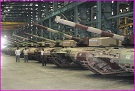
Developing India’s Indigenous Defence Technologies: The Case for Inducting Arjun Tanks


Radhakrishna Rao 
(Research Fellow, VIF)

A well–entrenched and powerful import lobby operating under the shadow of the political establishment in New Delhi has been silently but vigorously pursuing the strategy of nullifying every Indian effort aimed at developing new and innovative technologies for building state of the art defence hardware and fighting machines required by the Indian defence forces and in the process end Indian dependence on imported military devices. The campaign against the ambitious project for developing the fourth generation fighter jet Light Combat Aircraft(LCA)Tejas, which is now winging its way towards the final operational clearance(FOC), is a striking example of the “behind the scene manipulations” of the import lobby keen on defeating self-reliance in the critical areas of defence development and production. Despite delays and cost overruns, the Tejas which not long back was almost written off, has helped India master many of the frontier technological elements going into the advanced fighter aircraft. Moreover, Tejas has been testified to as one of the “superb and smoothest” fighting machines comparable to the best of the combat aircraft in its class.

Perhaps the most significant achievement of the Bangalore based Aeronautical Development Agency(ADA), which took up the task of designing and developed Tejas virtually from scratch under the illustrious leadership of Kota Harinarayana is that there was not a single “mishap or accident” during the qualification flights of the fighter jet under development. Fighting against heavy odds including fund crunch, poor industrial support and US sanctions that came in the wake of the 1998 Pokhran nuclear blasts, the Tejas development project assumed wings with many of the home grown critical technologies that could not be imported on account of the restrictions imposed on by Missile Technology Control Regime(MTCR). It is not for nothing that Defence Minister A.K.Antony described Harinarayana as the “Bhishmapithamaha of Tejas”. The infrastructure, expertise and vital technological systems developed for Tejas have become an invaluable national asset which could be exploited for building more advanced fighter aircraft with a greater degree of confidence. Similarly, spin offs of the technologies developed for Tejas have benefited the civilian sectors including health care by a substantial extent.

As such, one should look beyond just cost the factor while evaluating home-grown defence projects of national and strategic importance. The expertise acquired during the development of Tejas has proved vital for pushing ahead with the Medium Combat Aircraft(MCA) project taken up by Defence Research and Development Organisation(DRDO).The strategic importance of home grown defence systems lie in the fact that India would not have to worry about the threat of sanctions associated with the US origin fighting equipment and cost escalation, poor performance and delay in the supply of spares associated with the defence hardware imported from Russia. Moreover, the cost of the imported defence hardware could be shockingly phenomenal in comparison to the similar fighting equipment developed indigenously.

Indeed, Antony has been making use of every platform to express his dismay and anguish over the fact that a country like India with the fourth largest pool of scientific manpower in the world continues to depend on imports to meet 70% of its defence requirements. The gloomy ground reality is that even after sixty five years of independence, India could barely produce 30% of its defence needs indigenously”. The country is far, far away from Nehru’s dream of achieving self- reliance in the defence sector,” rues Antony. Antony wonders why India which has made spectacular strides in space exploration and positioned itself as a “software and information technology powerhouse,” cannot repeat the success stories scripted in these two crucial areas in the defence production sector. This is indeed a question that needs to be answered with all the seriousness it deserves.

For long, DRDO had remained a whipping boy for all that had gone wrong with India’s defence development and production sector. But then DRDO, which has come out in flying colours in designing, developing and qualifying a range of state of the art missiles of varying categories cannot be solely held responsible for the abysmal failure of the country to attain self- reliance in defence production. For one, DRDO is subject to pulls and pressures from a variety of sources including the Indian defence establishment. Clearly, there has been a glaring lack of coordination and cooperation between DRDO and the end users (read defence forces). For instance, DRDO blames the Indian defence set up for suggesting changes and improvements in a system half way through its developmental course. While DRDO says this causes delays and cost escalation in the development of the system, defence establishment insists that fighting systems should be capable of periodic technology insertions. Of course, there is a merit in both these arguments. As such the best way out would be to bring in the Indian defence establishment as a stake holder and partner in the DRDO projects focussing on the development of systems and machines meant for the Indian defence forces. In order to boost self-reliance in defence production, the armed forces need to commit themselves to buying the home grown products and help improve upon their performance after field trials.

Indeed, the saga of India’s Arjun battle tank, designed and developed by the Combat Vehicles Research and Development Establishment (CVRDE) of DRDO and produced by the Heavy Vehicles Factory(HVF) at Avadi near Chennai reflects poor coordination and cooperation between the producer and the user. In the field trials, Arjun tank has proved to be a much better performer than Russian T-27s and T-90s. In particular, high speed, quick mobility and the firing power of the Arjun tank have been proven beyond the shadow of doubt. On the other hand, the fire control system of T-90, especially while operating in the sandy stretches of Rajasthan, failed to perform as per specifications. According to CVRDE, the firing accuracy of Arjun is far superior to that of Russian T-90. But then the argument of the Indian army is that the weight of Arjun at 60-tonne is too much to help it move around in the soft soil and riverine terrain of Punjab and Jammu and Kashmir. As such, the Indian army wants to confine Arjun to the arid stretches of Rajasthan. Surprisingly, the Indian army came to this conclusion without subjecting Arjun tank to field trials in the plains of Punjab.

Meanwhile, media reports suggest that there is a move to block the field trials of Arjun in the plains of Punjab as part of the stratagem to clear the path for the import of more T-90s from Russia. Rightly, DRDO on its part has driven home the point that “the time, effort and money spent on developing indigenous fighting equipment including Arjun should not be squandered away in pursuit of glitzy imported hardware.” Right now, there are 128 Arjun tanks in operational service with the Indian defence forces with an order for another 118 in the pipeline. On the other hand Indian army has under its service 1657 Russian T-90s and 2414 T-27Ms. A section of the Indian army is rooting for the latest variant of Russian T-90s on the ground that they are well suited for deployment in the cold environs along India’s international borders with China. As such, the proposal to buy 354 new T-90Ms at an enormous cost could deal not only a severe blow to the Arjun tank project but also impose a severe strain on the public exchequer already reeling under deficit.

DRDO has made it clear that there is no basis to the claim that Arjun cannot operate flawlessly in the plains of Punjab. For the argument of DRDO is that weight of Arjun is distributed evenly over a larger area on account of its larger track and as such its ground pressure is much lower than that of the Russian tanks. Therefore, the idea to do away with the proposed trials of Arjun tank in the plains of Punjab is considered a conspiracy to edge out the home-grown Arjun and smoothen the way for the import of Russian tank. By all means this conspiracy should be defeated and the future of the home-grown Arjun tank ensured now and here.

As it is, after field trials of Arjun in Pokhran range, DRDO did introduce a host of new and innovative technologies to improve the performance of Arjun. Rightly, defence experts points out that Arjun is no way inferior to T-90 and allege that the Indian army is simply enamoured of Russian battle tanks. Indeed, in late 1990s, Indian Defence Ministry had floated the idea of exporting Arjun tank to the friendly countries. Of course, delays and technological flaws did mar Arjun development project. But this was natural in that it was India’s first foray into building a main battle tank. As it is the world over, the tanks introduced for the first time face many handicaps under actual field conditions. This implies that the performance of the newly designed and developed tanks needs to be improved in a gradual and phased manner through the feed-back from the users. As pointed out by an Israeli defence expert the tank design is basically evolutionary. The mobility, firepower and survivability of tanks are the features that are improved upon over a period of time with the feed- back coming from the field trials. And the Indian army should adopt the same approach with regard to Arjun.

Arjun-MKII--an improved version of Arjun tank-- that will enter operational service by 2016 will have an improved missile firing capability. DRDO has incorporated a total of 93 upgrades including13 major improvements in the Mark II version of Arjun. As envisaged now, Arjun-MKI will feature explosive reactive armour panels, panoramic sight with night vision, advanced weapon remote firing, track width mine plough and missile firing through the main gun. Surprisingly, while insisting that the 60-tonne Arjun is too heavy to move freely in the terrains of Punjab, Indian army has asked for features in Arjun-II that would take its weight to 65-tonne. Another contradictory demand of the Indian army is that the weight of the proposed Future Main Battle Tank (FMBT) be limited to 50-tonne while bettering the features of the Arjun tank. And CRDE has already pointed out that it is well neigh impossible to build FMBT with less than 65 -tonne while incorporating many novel features demanded by the army. The army wants the FMBT to feature improved crew protection, a more powerful gun that can slam projectiles and a vastly enhanced mobility. The moral of the story is that Indian defence set up should avoid coming out with contradictory observations while formulating nationally important projects. Moreover, the Indian army should be realistic while specifying too many features in a light weight tank. Balance should be struck between the weight and operational features.

If the work on FBMT is taken up without any loss of time, the first tank will roll out for operational service by 2025. The FMBT project should be taken up on a priority basis as a national project much the same way as the Tejas project was accomplished. But then with Indian army preferring phased improvements of the Arjun tank, the possibility of FMBT project getting shelved is very much on the cards. However, to sustain knowhow and expertise that India has built up for designing, developing and producing state of the art battle tanks, Indian army should acquire Arjun tank variants in large numbers. Otherwise, there is a danger of all the resources deployed for tank projects getting frittered away. The Indian army and DRDO should work closely with each other to continuously improve upon the features of the home grown Arjun tank and help develop categories of Arjun tank suited specifically for varying environmental and topographical conditions. Of course, this is a “complex and challenging” project. But then it is worth its while in so far as building a robust home-grown technological base for building a range of battle tanks is concerned. And eventually such an approach could effectively defeat the strategem of the import lobby working overtime to defeat Indian self reliance in defence development and production.

Thursday, November 8, 2012

India’s Nuclear Deterrence Must be Professionally Managed

Brig (retd) Gurmeet Kanwal 
(Visiting Fellow, VIF)

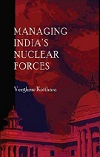
Forces by Verghese Koithara
(New Delhi: Routledge, 2012), 294 p, Rs. 795.
Review of Managing India’s Nuclear

India declared itself a state armed with nuclear weapons in May 1998 after the Pokhran tests. Despite the fact that almost 15 years have passed since then, the number of good books on the subject of managing India’s nuclear deterrence can be counted on the finger tips of one hand. This is partly because academics and strategic analysts find deterrence theory and the complexities of nuclear command and control too esoteric and partly because the Government of India has made no attempt to encourage such research. None of the government funded think tanks have thought it fit to conduct research on this issue. It is to the credit of Vice Admiral Verghese Koithara (Retd) that he has dared to enter what may be loosely termed as forbidden territory. In his book Managing India’s Nuclear Forces Admiral Koithara takes stock of the system in place for managing nuclear deterrence, carefully evaluates its efficacy and makes substantive recommendations to enhance its functionality.

India’s nuclear doctrine is built around a ‘no first use’ policy with ‘credible minimum deterrence’. In the interest of strategic stability, India is willing to absorb a ‘first strike’ and will launching punitive nuclear strikes in retaliation to cause unacceptable damage to the adversary if it is attacked with nuclear weapons. India’s nuclear weapons are political weapons meant only to deter the use and threat of use of nuclear weapons against India. It is clearly accepted in India that nuclear weapons are not weapons of warfighting. Hence, India has firmly rejected the use of tactical or theatre nuclear weapons – despite provocation from across its western border. However, India has not publicly demonstrated that it has done what it takes to ‘operationalise’ its nuclear deterrence. This is the essence of Admiral Koithara’s excellent book. In fact, he goes one step further to state that by keeping the armed forces out of the nuclear decision making loop, the authorities have actually undermined the credibility of India’s nuclear deterrence.

Both the NDA and UPA governments have tended to play down discussion of nuclear issues in the public domain. According to the strategic community grapevine, the late Brajesh Mishra, India’s first National Security Advisor (NSA), had issued an informal whip to the effect that no one in government will speak to the media about nuclear deterrence. No discussions or seminars have been held by the three Services to study issues like ‘targeting’ and deterrence breakdown that are in the military domain. Through various acts of commission and omission, successive governments have created the perception that acquiring nuclear weapons was an end in itself for power and prestige and that since nuclear weapons are political weapons and not weapons of warfighting, the barest minimum needs to be done to create nuclear forces that are robust and usable.

India’s nuclear signalling has been marked primarily by the routine flaunting of various models of Agni and Prithvi missiles at the Republic Day parade. No nuclear drills are known to have been held to ensure that the missile groups can deploy in a realistic time frame and that the warheads can be mated with the launchers in real time for early retaliation in the eventuality of a nuclear strike, even though some of these measures may have been practised in secret. Nuclear signalling is an extremely sophisticated art and India appears to have ignored this aspect completely. In view of these major shortcomings, India’s nuclear deterrence tends to lack credibility and is not taken seriously by either military adversaries or by the international community. India must demonstrate its resolve to use nuclear weapons if it ever becomes necessary through a carefully formulated process of signalling and must enhance the quality of its warhead and missile technology. The steps necessary to fully operationalise India’s nuclear deterrence must not only be taken early, but must also be publicly seen to have been taken – within the bounds of security of information and materials.

The author identifies and challenges the four tacit assumptions behind the lack of seriousness in operationalising India’s nuclear forces: that deterrence credibility can be established through technological demonstration; that nuclear force operations are largely a technical matter; that transition from general to immediate deterrence through alerting is not a very demanding exercise; and that force survivability is not a critical issue. He also mentions a fifth one: in a crunch situation the US will be there to call upon. He goes on to successfully demolish all of them through the force of logic.

Admiral Koithara focuses a sharp lens on the systemic weaknesses plaguing the management of India’s nuclear deterrence. He has stated that inadequacies in the management of nuclear forces have degraded India’s deterrence, “Not just by the inability to conduct operations in a safe and reliable manner, but also by revealing a lack of seriousness of purpose.” He bemoans the fact that the armed forces have been kept away from functional involvement in managing deterrence and asserts that, “Nuclear forces of every NWS are... closely controlled by the national leadership. But in every one of those countries, except India, these forces are managed by the armed forces under the supervision of the political leadership.” He points out that the command and control structure is patently flawed where even the Defence Minister is a peripheral figure in nuclear decision making. He recommends a return to the erstwhile Defence Committee of the Cabinet with the three Chiefs as permanent invitees.

India still does not have a Chief of Defence Staff to provide ‘single point military advice’ to the Prime Minister. The three Services Chiefs are members of the Executive Council of the Nuclear Command Authority (NCA) headed by the NSA and not of the Political Council of the NCA headed by the Prime Minister. As such, their inputs would reach the PM only indirectly in a moment of crisis. This system of isolation of the three Chiefs is unsuitable for long term nuclear planning. Though India has a Strategic Forces Command (SFC) for managing its nuclear forces, the C-in-C SFC reports directly to the NSA in practice and keeps the Chairman CoSC informed. Also, India does not have full fledged nuclear planning staff like Pakistan’s Strategic Plans Division and nuclear planning is not seamlessly integrated across the ministries and the departments. The author writes, “Using inadequately prepared nuclear forces to generate deterrence will be similar to the inadequately-supported forward policy that India had adopted along the Tibet border in 1959.

This remarkable book would have been much richer if the author had taken stock of Pakistan’s unbridled for additional fissile material beyond its legitimate needs and its quest to acquire tactical nuclear weapons like the 60-kilometres range Hatf 9 (Nasr) missile, which is inherently destabilising, and its efforts to tip its cruise missile Babur with nuclear warheads. The lack of serious confidence building and risk reduction measures between the two countries has also not been covered, nor has India’s long standing support for total disarmament been addressed. However, no book can cover the entire nuclear landscape.

This book must be read by all personnel of the armed forces, particularly the senior officers. It must be prescribed reading for the Higher Command courses of the three Services. It must also be read by the political leaders, scientists and bureaucrats or technocrats who are involved in national security decision making and managing India’s nuclear forces.