Showing posts with label Jawaharlal Nehru. Show all posts

Thursday, November 27, 2014

Key to Building New Temples of Modern, Progressive India

Dr M N Buch, 
Dean, Centre for Governance and Political Studies, VIF

When India became independent, the government led by Prime Minister Jawaharlal Nehru took a deliberate decision to launch a massive programme of building infrastructure in India and for this purpose opted for a planned economy. The state of the then infrastructure can be best illustrated by the fact that of the more than five and a half lakh rural settlements and about 4000 urban settlements in India, only 5000 had any electricity and this included our very large cities such as Bombay, Madras and Calcutta. Today the whole of India is electrified. Apart from Tata Steel, there was virtually no capital goods industry in India. We manufactured no aircraft, no ships, no motor vehicles, we did not produce aluminium or copper, our roads system was rudimentary and there was very little telecommunication connectivity. In 1960, I was Sub Divisional Officer in Kannod Sub Division of Dewas District (Madhya Pradesh), covering an area of approximately 1500 square miles, or 3750 square kilometres. The sub-division consisted of three tehsils and there was no telephone in the whole subdivision. Today, India has the fastest growing mobile telephony market in the world.

When one looks at what was achieved in the first fifteen years of independence, one is really amazed at the scale, the width and the speed of our achievements. Great hydroelectric cum irrigation projects like Bhakra-Nangal, Hirakud and Tungabhadra were built, huge thermal power stations such as at Sarni in Madhya Pradesh and Bokaro in Bihar (now Jharkhand) were constructed, copper and bauxite mines were brought under production, mining for iron ore and coal was brought to a new height and huge steel plants such as those at Bhilai, Rourkela and Durgapur were constructed in record time. Chandigarh was built from scratch as the new capital of the Indian part of Punjab as a replacement for Lahore. In all this frenzy of creation, there was no delay, no complaint of corruption, no lack of trust in the persons entrusted with the job and absolutely no complaints about quality. Le Corbusier was selected as the architect of Chandigarh by P.N. Thapar of the ICS, Harvey Slocum, the great dam builder of the United States was brought in to design and build the Bhakra Dam, S.N. Mehta of the ICS was given charge of Bhilai and whether it was the Locomotive Works at Chittaranjan or the fertilizer plant at Sindri, officers were chosen with care and given full freedom to deliver. The very Indians who are today being accused of being inefficient and corrupt were the people who built the temples of new India, which stand proud even today and continue to produce as efficiently as on the day they were inaugurated. The Nehruvian era also saw a massive upsurge in education, especially in the field of technology, medicine and agriculture. The Indian Institutes of Technology and Indian Institutes of Management, the Indian School of Mines at Dhanbad, the School of Planning and Architecture at Delhi the All India Institute of Medical Sciences at Delhi and the Postgraduate Institute of Medical Education and Research at Chandigarh and Pondicherry, the magnificent Agriculture Universities at Ludhiana and Pant Nagar are some examples of world class educational institutions which were created either during this era or immediately after it as a part of the continuing legacy in which India sought excellence. In the Indian Institute of Science in Bangalore we had an institution which gave the world a Nobel laureate like C.V. Raman. It is in the year 1957 that I joined the Indian Administrative Service and it personally gave pride to all of us to be participants in this magnificent race for development on which India had embarked.

From 1967 onwards, that is, twenty years after independence and in the immediate post Nehru era, this country seemed to lose the head of steam built up in the previous twenty years. This was the period of political uncertainty, of intrigue for power in which members of the legislature were suborned, subdued or purchased and governments were changed not on the basis of the ballot but through the means of the market, that is, buying and selling in a system which for twenty years had enjoyed an enviable reputation of political and civil service rectitude and professional competence of its technical personnel. Suddenly there crept in an element of political corruption which, in turn, corrupted the Civil Service, whose professional competence was eroded because of lack of political will and decision making and the increasing preponderance of political manipulators, corrupt businessmen, abandonment of planning and its substitution by populism, inordinate delays and cost overruns in project implementation, accompanied by shoddy workmanship. What is more, audit and vigilance functions suddenly became more important than project planning, technical design, systematic financing, adherence to schedule, maintenance of quality and delivery of the finished product. Together with this grew a lack of trust between ministers and officers, between political parties, between officers themselves, between civil servants and technology professionals and between project authorities, businessmen and contractors. Now everything was for sale, even human character. Whereas the real accountability of the past in which one trusted people who, in turn, justified that trust by doing their job faithfully, honestly and efficiently was replaced by a formalised but proforma accountability, no one was prepared to take any decisions without, in the case of the corrupt, a price being extracted and by the honest because they know that a decision could create trouble for them on petty account and, therefore, it was better to play safe. Is it surprising that the implementation of major projects or, for that matter even minor projects, has slowed down, complaints of corruption have reached their zenith and whereas we have not become honest as a result of that, we have certainly become a nation of prevaricators, we have become inefficient, we shirk responsibility and we try and hide behind a rampart of files to protect ourselves from the consequences of wrongdoing?

The whole aim of governance is to take decisions. Decision making is at various levels and in its own domain every decision is vitally important. At the level of national government, there has to be a long term perspective about where the country should be heading, there should be a clear-cut vision of our priorities and selection of priorities taking into account financial and human resources available to us. There has also to be a vision and model of how plans prepared in accordance with these priorities will be implemented. The personnel to implement them have to be carefully selected, they have to be suitably empowered and then given a freehand to deliver results. There has to be a system of monitoring, evaluation and superintendence, but within given parameters audit and vigilance functions have to be rational, aimed at correcting the errors, but certainly not designed to keep officials on tenterhooks, thus hamstringing them in decision making and implementation. Had S.N. Mehta who built the Bhilai steel project been subjected to the kind of harassment which officers have to put up with now, the Bhilai Steel Plant would never have been built. He would have protected his back rather than take the momentous decisions he did in the full knowledge and confidence that every bona fide act of his will be supported.

An essay like this should not be an excuse for personal anecdotes but I think the above point needs elaboration. In March 1964, the government suddenly told me that 25,000 refugees from East Pakistan would reach my district, Betul, of which I was D.C, in exactly one week. I was required to receive them, accommodate them in camps, look after them, feed them, put them to gainful employment and arrange for their permanent rehabilitation. The orders of the Chief Secretary were brief, concise and accompanied by a threat that even if one refugee deserted I would answer with my head. The rest was left to my discretion. It is to the great credit of my officers, my revenue staff, engineers, Electricity Board officials, forest officials, the medical staff and the police that we built three camps within a week, electrified them, arranged drinking water, rations, etc., so that when the first train load of refugees arrived they went straight into designated quarters, with officials to guide them. After an initial period of settling down, the refugees were put to work to clear 30,000 acres of poor quality forest and we built thirty-two villages where the refugees were settled and put to work on agriculture. I had no time to call for tenders or to follow any formal procedures. When I told the Chief Secretary this he made me write on one page a summary of what I had done and he obtained the Chief Minister’s orders ratifying all my actions. No one asked me any questions, no one upbraided me for not following the rules and instead the Chief Minister praised my performance during a debate in the Vidhan Sabha. Today I would have had to face audit objections as long as my arm, would have been harassed by the CBI, would probably have been suspended and sent to jail. That is why in today’s age, I would have permitted the refugees to run away or die. I would have prepared beautiful files but I would certainly not have taken the decisions I did which ensured that the Bengali refugees are thriving today in these newly established villages.

One makes this point because the question arises whether Indians were more honest in the past and are now suddenly dishonest collectively. There was some difference in that Nehru and his compatriots had come through the fire of the freedom movement, they were deeply nationalistic, they were sure of themselves and they enjoyed the complete trust of the Indian people, who were confident that whatever was decided by the leaders would be for the greater good of India. Because of these leaders, there was stability in government, there was no hesitation to take even unpleasant decisions and the leaders trusted the civil servants, engineers, doctors, etc., because there was a commonality of purpose between them. P.N. Thapar, M.S, Randhawa and P.L. Verma built Chandigarh. Kunwar Sen and A.N. Khosla built Hirakud and Slocum built Bhakra-Nangal. There was no hesitation to engage foreign experts or to assign steel plants such as Durgapur to a British consortium, Rourkela to the Germans and Bhilai to the Russians. We did not feel slighted because we borrowed talent from abroad because the objective was to build these new temples and not to sit on petty issues of prestige. All this was possible only because we had a climate of political certainty. When the first uneasy coalitions were formed in the States by breaking political parties through purchase, uncertainty crept in at political levels and corruption became a political imperative because money was needed to buy political power. Unfortunately even the single party governments of Indira Gandhi, Narasimha Rao and Rajiv Gandhi were unable to stem the rot and in the new climate of political uncertainty, indecisiveness and corruption became necessary concomitants of government. This has been followed by thirty years of coalition rule at the Centre and this has further vitiated the environment. Manmohan Singh is personally pea green incorruptible and one had expected of him that he would be able to bring rectitude back into government. The political realities of his coalition made it almost impossible for him to bring about any improvement and almost all the wrongdoing of his period was the result of the manner in which the coalition functioned. One could even go the extent of saying that when there is a coalition of opportunism, then it is almost axiomatic that each coalition partner will push its own agenda, the objective of which is personal enrichment and self advancement. Such a coalition cannot frame policy, it can only seek opportunities for promoting its own benefits. This automatically creates a miasmic atmosphere in which there is deep suspicion about the motives of everyone and there is a complete lack of trust.

The present government is not a coalition because it enjoys an absolute majority of a single party in the Lok Sabha. Whereas any democratic government is required to carry all parties, especially those which are politically opposed to the ruling party, along with government in all matters of national interest, it is not required to pander to the baser instincts and demands of a coalition partner who is opportunistic. Such a government is free to take decisions, including those which may be temporarily unpopular, and give clear-cut directives to its officials and to create an environment of trust in which officials feel personally accountable for completion of given tasks. In such an environment, the policy is well defined and their directions for the implementation are also specific and unambiguous. An official can now proceed with implementation in the full confidence that provided he follows policy directions, he will be fully protected. One does not know whether the climate in which people implicitly trusted each other in the fifties and sixties of the last century will ever return, but the present government can certainly ensure the following:
  1. Clarity in policy and firmness in the political will to implement it.
  2. The careful choosing of implementation teams
  3. Unambiguous policy directions on how a particular policy is to be translated into reality
  4. A clear statement to the team leaders and officers that government will support them to the hilt in their work.
  5. Interlocking accountability in which superintendence, supervision and monitoring are paramount, but in which the superior officer is held accountable for the deeds of his subordinates.
  6. Suitable empowerment of the official machinery so that it can perform its task.
  7. Sensible audit whose function is not only to find fault but to help the implementing authorities to perform the task better and maintain their accounts in a rational manner.
  8. Answerability for one’s actions only to one’s administrative superior and not to an outside agency like a vigilance organisation, CBI, etc., unless there is an allegation of criminality and an FIR is duly registered in this behalf. In other words, an officer implementing a policy decision will acknowledge only one superior, his administrative head and will not be answerable to other persons or authority.
Let us not underestimate our government machinery because it is still capable of doing amazing work. What it needs is clarity in policy, directions which are unambiguous and full support for all bona fide actions. Having served in India’s premier Civil Service, one can state with confidence that our government machinery, despite years of abuse, can still deliver the moon on a platter. If government governs, there will be real governance and we shall build hundreds of new temples of a modern, progressive India.

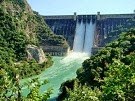
Published Date: 19th November 2014, Image source: http://bhakranangaldam.com

Friday, December 14, 2012

We, the Living! Need to Revise Land Use Policies


In Delhi along the Yamuna River a stretch of 371 hectares, that is, approximately 927 acres, has come under cremation ground, samadhi, etc., of people perceived as the leaders of the nation. These include Mahatma Gandhi, Jawaharlal Nehru, Lal Bahadur Shastri, Indira Gandhi, Rajiv Gandhi and now IK Gujral. All these seemed to merit cremation at new sites, reserved individually for each, instead of at Nigambodh Ghat, also on the Yamuna River but meant for ordinary mortals whom Yamaraj has taken away from the world. Over 900 acres of land, therefore, now stands assigned to people who are no longer living and who do not have any use for the land. A samadhi for Mahatma Gandhi one can understand because he was truly unique as not only the person who launched our movement for independence but also as one who united this nation as has never been done before. The whole of India is his, whether or not we commemorate his memory through brick and mortar, by assignment of land or by any other means that this nation chooses. No one else, not even Jawaharlal Nehru, comes anywhere near the stature of Mahatma Gandhi. The irony, of course, is that this ascetic, this man who genuinely lived and died for India and who had no desire for anything material, is still honoured not by our practicing what he has taught us but rather by creating monuments in his memory. He who did not own a square inch of land when he was alive now virtually finds himself the owner of a huge chunk of land in Delhi.

Morarji Desai, Rajendra Prasad, Vallabhbhai Patel and Gulzarilal Nanda fortunately decided to die otherwise than in Delhi and it is to the credit of these leaders, their followers and the cities in which they cast aside their mortal coil that they have not transferred land to them in death which they did not aspire for in life. Of course we have a contrast in Tamil Nadu where first the Annadorai Memorial swallowed up a substantial portion of the Marina Beach in Madras, to be followed by the M.G. Ramachandran Memorial and no doubt with advance reservation for the present leaders in that State. The only parallel one can think of is the Pharaohs of ancient Egypt who, when they died, were buried in what are virtual underground cities in which the dead symbolically still live. These cities of the dead, these necropolises, are covered by pyramids, themselves built by slave labour, many of whom died in building monuments to the dead. Of course no one honoured them with a pyramid. Are we in modern India trying to emulate the ancient Egyptians in assigning large areas of land to the dead, not because they may come alive but because we cannot think of any other, more sensible method of perpetuating their memory?

In India we have two methods of disposing of the dead. The vast majority of the population being Hindu, cremation is the preferred method. Normally the funeral pyre is used, though besides the pyre we also see the emergence of electric crematoria which provide an advanced, scientific and technological method of quickly reducing the body to ashes, with minimum pollution. Whether it is the funeral pyre or the electric crematorium, cremation does not call for much space and the same platform on which the pyre is lit can be re-used after the remains are removed. In terms of use of land there is nothing more economic than cremation. The second method is burial, because both Christians and Muslims bury their dead. I suppose this is because the followers of both religions believe in the Day of Judgment for which purpose the body is resurrected, which would not be possible if it had been cremated and reduced to ash. Even here there is an anomaly because whilst the Christian invocation at burial is “ashes to ashes and dust to dust”, meaning that the body will go back to its constituent elements, in Islam the invocation is “Supurd-e-khak”. This means that you are consigned to the earth, to the dust from which you have been created. If you are reduced to dust, or to ash by burial do you have a better chance of resurrection than if you are reduced to ashes through cremation? If the Almighty can reconstitute a person’s body from dust, why not from the ashes of cremation? In Islam a burial ground as such has no sanctity and, for example, in Saudi Arabia it is considered legitimate after a certain period, say twenty years, to recycle the burial ground. Christians, however, consider a cemetery to be hallowed ground, which means that burial is final and the land cannot be recycled. Christian cemeteries are well maintained but they are by no means a necropolis of the Pharaonic variety.

Hindus seem to revel in perpetuating the memory of departed powerful politicians by monuments which are no less than the samadhis of saints. This seems to be a complete waste of time and money because it takes a Prince Siddhartha to live on as the Buddha, or the Enlightened One. No monument can enhance his glory, nor lack of monument retract from it. Our politicians are like the thousands of princes and kings whose memory is obliterated by time. None of them will be a Siddhartha and, therefore, the necropolis built for them on the Yamuna River front will not delay by a moment the day of forgetting. What we need, therefore, is to celebrate not the memory but the forgetting of the person in question because that is the reality of the “kaal chakra”.

We do not stop at building a city of the dead at the spot of cremation. We go much further and we reserve the houses once occupied by these celebrities as monuments to be preserved, but not used by those who are living and are entitled to a house of this category. The house at Tees January Marg, known as Birla House, is where the Mahatma was assassinated. He never wanted a monument to himself but we have converted Birla House into a monument in memory of the Mahatma’s martyrdom. I have already said that Mahatma Gandhi is unique and, therefore, a monument to him does not really call for any comment. Teen Murti House, once the residence of the British Commander-in-Chief of India, the second most powerful person in British India, was rightly taken over as the residence of the Prime Minister, the most powerful man in India, by Jawaharlal Nehru. After his death his successor did not occupy the house, in sharp contrast with the practice in Britain where 10, Downing Street is the official residence of the Prime Minister. The incumbent Prime Minister vacates the house prior to the new Prime Minister being sworn in so that his successor comes straight from Buckingham Palace to 10, Downing Street and begins his tenancy. Teen Murti House became the Nehru Memorial, a library and a major centre for academic studies and, therefore, one can perhaps overlook its no longer being the official residence of the Prime Minister. But look at what has followed. Indira Gandhi was shot at the boundary between 1, Safdarjang Road and 1, Akbar Road and both houses have now been pulled out of the official pool and have become a monument to the memory of Indira Gandhi. This has happened to the house on Janpath occupied by Lal Bahadur Shastri as Prime Minister. Babu Jagjivan Ram’s official residence is also reserved in his memory. 7, Race Course Road is the Prime Minister’s residence and I am amazed that on the death of Rajiv Gandhi at Sriperumbudur that whole complex of houses has not been converted into his memorial. Perhaps this is because he was not in power when he died, nor was the Congress Party. All these houses have been built with exchequer funds, duly voted upon as part of a grant of the Central Public Works Department. When the grants are discussed government has to give justification for every item included in the budget and I am absolutely certain that when these bungalows were built in British days the construction must have been justified as being necessary for housing senior officers and Members of the Council, the British equivalents of our ministers. Therefore, when these bungalows are converted to monuments the purpose for which they were erected is defeated, which means that in a way the approval of Parliament for their construction is bypassed and perverted. This is a clear misuse of public funds and the legitimacy of their conversion becomes highly suspect and open to objection.
Why do we indulge in such futile exercises? If the answer were to be in only one word, it would be “sycophancy”. Because those close to the departed person or related to him are in power or are likely to come to power, flatterers and sycophants hasten to gain favour by commemorating the memory of the departed in such a way that the heirs and successors feel pleased and, in this state of being pleased, they might throw a crumb or two to the flatterers. The Sanatan Dharma in its purest form is not idolatrous or polytheistic and there is belief in one God, by whatever name He is known. The ultimate goal of every human being of the Sanatan faith is to achieve a state in which one can be absorbed permanently into the God-head or Brahmatma. However, because the Sanatan Dharam gives the freedom of choice to select one’s own path to salvation, this has manifested itself in sects in which the Lord is worshipped in many forms, including devis and devtas, who are symbolised by idols. In the course of practice the basic tenet of there being only one God is forgotten, the symbolism of different forms of God is lost sight of and ritual becomes all important and, therefore, the artificial discipline imposed by ritual ultimately replaces the divinity of God by the artificial sanctity of idols. When the idol achieves an identity of its own we become idol worshippers and, therefore, slaves of empty ritual, which overtakes that which is sacred. This calamity seems to have overtaken us as a people. The true worth of our leaders is forgotten, invoking their name has become a ritual, being sycophantic to them has become worship and the balance that should exist in society is disturbed. If ritual becomes more important than religion, then we shall certainly believe that the idol of Ganesh drinks milk and, therefore, we insist on feeding milk to an idol. Our cupidity is fed by unscrupulous priests who convince us that the idol is actually drinking the milk. That piece of stone then become more important than Ganesh himself. That is precisely what is happening to us as a people when we build cities of the dead for departed leaders, a few of whom have been nation builders but the rest of whom have only been powerful politicians, a few being good in government and the rest being no better than Pindaris. Regardless of this we still build monuments, reserve huge stretches of land for their remains and convert houses for the living into mausoleums for the dead. I find this absolutely sickening.

Let us come to the living. About forty percent of the population of every city in India consists of the very poor who have come in search of a job and who cannot find shelter for themselves. These are the squatters or encroachers who, on the failure of administrators and planners to accommodate them, have used their native intelligence to build some sort of shelter on unoccupied pieces of land. In Bombay and Calcutta they have converted whole pavements into shanty towns and the self built homes of the poor have gifted to Bombay what it touts to be the largest slum in Asia at Dharavi. Anything between thirty to forty percent of every major town is either squatter colonies or unauthorised colonies. These people are looked upon as criminals because they have encroached on government land, dirty as they live in slums which have no services, intriguers because they try every tactic under the sun to retain the foothold that they have established in the city and potential crooks because every theft in the city is attributed to slum dwellers. The authorities, the middle class, the affluent all look upon squatters as people who have no right to shelter and for whose eviction the bulldozer was created.

These squatters are the very people who provide the city almost its entire unskilled work force, its construction workers, maintenance personnel who keep the buildings and services in good repair, most of its craftsmen, almost all the domestic servants and without whom the city would simply not function. These are living people who keep the city functioning and yet they are denied the very thing that we lavish on the dead, that is, a right to living space and shelter. This is a completely skewed approach to city planning and development. The dead who have no need become masters of acres of land and the living, who need it most, do not have access even to that much piece of land on which we can put the point of a needle. The Constitution mandates justice and equality, equal protection of laws and a social order which promotes welfare. Under Article 39 the State is directed to secure that the ownership and control of the material resources of the community are so distributed as best to sub-serve the common good. It also mandates that operation of the economic system must not result in the concentration of wealth and means of production to the common detriment. A system which concentrates land and housing in the dead to the detriment of the living can hardly promote welfare. The very act of setting aside in perpetuity large parcels of land for memorials for a few people hits both at the principle of equality and promotion of welfare.

The reservation of 927 acres of land along the Yamuna River front, including Rajghat, is an affront to the Constitution and directly aimed at the common man. Shivaji Park at Dadar in Bombay is meant for the citizens of Dadar, Matunga and perhaps a part of Mahim. This is a place for recreation, for future Sachin Tendulkars to fine hone their cricket skills, for the elderly to walk morning and evening and for the citizens of the area to give their lungs a chance to breathe in this open space. Not an inch of it is meant for memorials. If the Shiv Sena is so concerned about Maharashtrians and Bombay, it should come forward and remove whatever has been erected there in the name of Bal Thackeray and gift the park back to the citizens of Bombay, free of all encumbrances. But then we should remember that our priority is monuments to the dead and not land for the citizens. It has been argued that the Yamuna River front has been saved by reserving 927 acres as a monument to the dead, but it is not a monument to all the dead. It is a monument to certain leaders only and though it is claimed that the Yamuna River front has been beautified thereby, the fact remains that this is not a public park open to every citizen of Delhi. It is very much a closed and regulated monument to the dead, a new necropolis with restricted access. The lawns of the Central Vista along Rajpath are meant for the living because people congregate there in the evening and during holidays. Rajghat and its surroundings is not a place for normal public access and, therefore, it can only be defined as a necropolis. Therefore, the title of this paper,’ We, the Living!’ Do we not have some rights? I am not for a minute suggesting that we build housing along the Yamuna River front but just to give you an idea of the scale of this stretch of land, we could have accommodated approximately 50,000 houses on this much land and accommodated a population of about two and a half people. In the scales justice we have half a dozen leaders who have now deceased, occupying this much of land, on the other side would be two and a half lakh people, none of whom is given legal access to even one inch of land. In whose favour is the balance tilted? That is our real tragedy!!

Monday, November 26, 2012

CAG and The Indian Constitution


Prof. Makkhan Lal 
(Senior Fellow, VIF)

In India, it has become customary to abuse the Constitution and/or Constitutional Authority whenever a political party or a political leader is in trouble for its or his misdeeds. Let us not forget that this began with Jawaharlal Nehru himself and also that the very first constitutional amendment bill was introduced in the Parliament on 12thMay 1951(six months after the death of Sardar Patel) when the Part III of the Constitution, dealing with the Fundamental Rights, came in the way of certain ill-conceived and ill-timed actions of the then Government. The ultimate abuse of the Constitutional provisions was reflected in the imposition of Emergency on 26th June 1975. Even the most diehard supporters and part of the then regime had this to say:

B.K. Nehru (then High Commissioner to London and Mrs. Indira Gandhi’s cousin): “Jawaharlal Nehru and Shastri ‘knew what a constitution was… [its] checks and balances.’ But Indira Gandhi ‘in the effort to have a populist image…went on the concept of committed democracy, committed judiciary’.1
Romesh Thapar (for long, along with his wife Raj Thapar, a member of Mrs. Gandhi’s Kitchen Cabinet): “The suspension of democracy ‘was the culmination of a process of manipulative politics set in motion many years earlier, and very often the handiwork of supposedly democratic men.”2

We need not go on discussing the reasons for imposing the emergency and converting the country into a Middle Ages European fiefdom. But we need to remember what politicians do when they are in trouble on account of their misdeeds, corruptions, and so on.

What we have witnessed in the last three years (more precisely in the regime of UPA-II) is a large number of scams committed not by a Harshad Mehta or a Natwar Lal. But by the very same people who have been appointed to be its custodians. Commonwealth Games loot, 2G Scam, Coal Mines allotments, and Gas fields’ allotments are just the tip of iceberg. Let us remember that these scams have not been brought out by the investigative journalist like in the 1970s and 1980s but by the Government’s own watch-dog – the Comptroller and Auditor General – having been given the constitutional mandate to keep an eye on the Government’s function concerning the financial matters.

Once the Government was on the mat, its minions started the cacophony – CAG is an agent of opposition, it has not right to question the Government, it has no jurisdiction over the matter and indeed the CAG is incompetent and unqualified. These minions forget that the present CAG, Mr. Vinod Rai, is one of the most outstanding and upright officers of this country. The CAG’s expertise is globally recognized. It has been appointed as external auditor for the International Atomic Energy Agency, World Health Organisation, World Intellectual Property Organisation and several more such institutions based on open bids against competition from Sweden, Germany, France and the UK. We must appreciate that the CAG of India did not win solely on cost but also on technical considerations. Many of its bids were not the lowest.

Worst still for the critics, Mr. Vinod Rai, the CAG, was chosen and appointed by the very same Government which is in power today. But the insinuations and allegations have taken a serious turn and need to be taken note of especially when they emanate from the Cabinet and State Ministers of the Government.
Having being exposed the scam of several Lakhs Crores (it may not be possible even for a highly educated person to write these figures in digits) they have started propagating that one member CAG is no good enough and it needs to be made into multi-member body. For this, they cite the example of the Election Commission.

First, the Election Commission. In order to confuse and convince the laity it is being argued that like the Election Commission the CAG must also be made multi-member body. It appears very fine, attractive and convincing, but let us reflect on as to what are the Constitutional provisions? The provisions of Election Commission are dealt with in the Constitution in the Article 324. The Articles 324(2) and 324(3) say:

(2) The Election Commission shall consist of the Chief Election Commissioner and such number of other Election Commissioners, if any, as the President may from time to time fix and the appointment of the Chief Election Commissioner and other Election Commissioners shall, subject to the provisions of any law made in that behalf by Parliament, be made by the President.
(3) When any other Election Commissioner is so appointed the Chief Election Commissioner shall act as the Chairman of the Election Commission.

It can be seen that our Constitution Makers had provided with the single member or Multi-member Election Commission and indeed who shall be head of this body in case it is multi-member. Thus, the Government was within its Constitutional rights when on 16th October 1989 it appointed two additional Election Commissioners thinking that it will clip the wings of the then Chief Election Commissioner, Mr. T.N. Seshan. It is another matter that today politicians have come to fear it as Damocles sword – be it only for a brief period.

However, the Constitution has dealt with the Comptroller and Auditor General on a very different plane. It must be mentioned here that independent Auditor General has been there even before the independence and it was given independent status even in the Government of India Act 1935. The CAG is dealt with in the Article 148 (Chapter V) of the Constitution of India. Some of its provisions are:

Article 148 (Comptroller and Auditor-General of India)

(1) There shall be a Comptroller and Auditor-General of India who shall be appointed by the President by warrant under his hand and seal and shall only be removed from office in like manner and on the like grounds as a Judge of the Supreme Court.
(4) The Comptroller and Auditor-General shall not be eligible for further office either under the Government of India or under the Government of any State after he has ceased to hold his office.
(6) The administrative expenses of the office of the Comptroller and Auditor-General, including all salaries, allowances and pensions payable to or in respect of persons serving in that office, shall be charged upon the Consolidated Fund of India.

Article 149 (Duties and powers of the Comptroller and Auditor-General)

The Comptroller and Auditor-General shall perform such duties and exercise such powers in relation to the accounts of the Union and of the States and of any other authority or body as may be prescribed by or under any law made by Parliament and, until provision in that behalf is so made, shall perform such duties and exercise such powers in relation to the accounts of the Union and of the States as were conferred on or exercisable by the Auditor-General of India immediately before the commencement of this Constitution in relation to the accounts of the Dominion of India and of the Provinces respectively.

Article 151 (Audit reports)

1. The reports of the Comptroller and Auditor-General of India relating to the accounts of the Union Shall be submitted to the President, who shall cause them to be laid before each House of Parliament.

2. The report of the Comptroller and Auditor-General of India relating to the accounts of a State shall be submitted to the Governor of the State, who shall cause them to be laid before the Legislature of the State.

From the above following points are crystal clear from the Constitution point of view:3
  1. The use of expression that “There shall be a Comptroller and Auditor-General of India” clearly shows that the founding father of our Constitution had envisaged CAG as a single person Constitutional Authority and not a Commission – be it of one member or multi-member.
  2. CAG is not appointed by the Government but by the President of India as per the provisions of the Constitution of India and he can be removed only in the manner and on the like grounds as a Supreme Court Judge.
  3. CAG is not an employee/officer of the Government of India. It is a Constitutional Authority and is answerable to the Parliament and the President of India.
  4. It is the duty of the CAG to Audit the Government accounts (including the accounts of the state governments) in India to audit all expenditure from the revenues of the union or state governments, whether incurred within India or outside. Specifically, audits include transactions relating to debt, deposits, remittances, trading, and manufacturing, profit and loss accounts, and balance sheets kept under the order of the President of India or the Governors of States. These were the exactly the duties and powers defined also in Government of India Act 1935.
  5. In order to save CAG from any pressure from any quarter the CAG is not allowed to hold any office after retirement and also all its expenses are met from the consolidated funds of India.

The Article(s) dealing with the Comptroller and Auditor General in the Constitution were debated and discussed threadbare.4 T.T. Krishnamachari, Biswanath Das, K.T. Shah, H.N. Kunzru, and P.S. Deshmukh were among those who participated in debate and moved amendments. Replying to the debate and amendments moved by the members of the Constituent Assembly Dr. B.R. Ambedkar, Chairman of the Drafting Committee, said:

“… (this) dignitary or officer is probably the most important officer in the Constitution of India. He is the man who is going to see that expenses voted by Parliament are not exceeded, or varied from what has been laid down by Parliament in what is called Appropriation Act. If this functionary is to carry out the duties – and his duties, I submit, are far more important than the duties of even of the judiciary – he should have been certainly as independent as the Judiciary. But, comparing the article about Supreme Court and the article relating to the Auditor-General, I cannot help saying that we have not been giving the same independence which we have given to the judiciary, although, I personally feel that he ought to have far greater independence than the judiciary itself.”5

It was unthinkable in the olden days to criticize CAG what to say of attributing motives and hurling invectives. While speaking about CAG Jawaharlal Nehru said in the Parliament:

“For the CAG to be criticized on the floor of the House would tend to undermine his special position under the Constitution and would make it difficult for him to discharge his duties without fear or favour”.

It is not for no reason that Supreme Court recently expressed its anguish in the following words:

"CAG is not a munimji or an accountant or something like that... He is a constitutional authority who can examine the revenue allocation and matters relating to the economy. CAG is the principal auditor whose function is to go into the economy, effectiveness and efficiency of the use of resources by the government. If the CAG will not do, then who else will do it"

It is now time that people in general take note of such utterances against the Constitutional Authorities and take appropriate measures to safeguard the Constitution.

Notes and References
  1. B.K. Nehru in Sunday Mail, 5 April, 1992; Quoted in Austin Granvuille, 1999, Working of Democratic Constitution: A History of Indian Experience, Oxford, p. 298.
  2. Romesh Thapar, 1977, The Rear Meat of Emergency, Economic and Political Weekly, April 2, 1997.
  3. See The Constitution of India, Articles 148-151.
  4. For details see Constituent Assembly Debate, Vol. VIII, pp. 403-415; Dr. S.C. Kashyap, 2004 (Second Revised Edition), The Framing of India’s Constitution: A Study, New Delhi. Pp. 412-17.
  5. Constituent Assembly Debate, Vol. III, pp. 407-8.
  6. Observation of a bench of Supreme Court of India while dismissing a petition challenging CAG reports on 2G spectrum, Coalgate, etc.

Thursday, July 26, 2012

Religion Based Reservation is Anti-Constitution - II


Prof. Makkhan Lal
Senior Fellow, VIF

Among the political parties, who treat Muslims as a vote-bank, the clamour for the reservations for Muslims is increasing every day. Every time elections, be it of a State Assembly or the Parliament, approach the pitch for reservation for Muslims increases. Recently held Assembly election in Uttar Pradesh which has sizable presence of Muslims population, is an example. Various political parties promised from 9% reservations 18% reservations for the Muslims in Government jobs and educational institutions. It is ironical that Prime Minister of India should declare from the Rampart of the Lal Qila on 15th August 2007 that “Muslims have the first right on the resources of the country.” This is the mental makeup of the Prime Minister and the largest political party which claims the legacy of the Freedom movement, then what can be said about smaller leaders and the parties. The Congress leaders, freedom fighters, the Constituent Assembly and Jawaharlal Nehru had given enough thought on the issue and felt that reservation of any kind will be detrimental for the development of the nation and a cohesive society.

These leaders often quote Justice Ranganath Mishra Commission and Justice Sachar Committee Reports for such reservations for Muslims. This is despite the fact that Muslims are enjoying the benefits of reservation having been included in various states lists for the OBC/BC/SC and ST; despite the fact that Islam or Christianity denies existence of caste system within its fold.

Several times in the past separate reservations enacted in the name of religious denominations have been struck down by courts and the latest is the judgement delivered by Andhra Pradesh High Court declaring 4.5% sub-quota for the Muslims within 27% quota for the OBCs as unconstitutional. Predictably, the Central Government appealed for a stay of Andhra Pradesh High Court’s judgement. After hearing the matter argued by the Attorney General of India the Hon’ble Supreme Court declined to stay Andhra Pradesh High Court’s judgement and indeed made indicting comments on the Government that there is no rationale and justification for 4.5% sub-reservation for the Muslims within the 27% quota for the OBCs. . The Supreme Court criticized the government for the way it had handled the "complex" and "sensitive" issue. The apex court had also expressed its "unhappiness" that the Centre was blaming the High Court when it had itself failed to produce documents to support its case.

Justice Ranganath Mishra Commission

A ‘National Commission for Religious and Linguistic Minorities’ was set up by the Government of India in October 2004 under the Chairmanship of Justice Ranganath Mishra t. Other members were Prof. Tahir Mahmood (Muslim), Dr. Anil Wilson (Christian), Dr. Mohinder Singh (Sikh) and Mrs. Asha Das (SC and a former IAS officer) as Member Secretary. The Commission submitted its report in May 2007.

The terms of reference of the Commission were:

1. To suggest criteria for identification of socially and economically backward sections among religious and linguistic minorities;

2. To recommend measures for welfare of socially and economically backward sections and among religious and linguistic minorities, including reservation in education and government employment; and

3.  To suggest necessary constitutional, legal and administrative modalities required for the implementation of its recommendations.
However, subsequently following point was also added to the above terms of reference:

“To give its recommendations on the issues raised in writ petitions 189/04 and 94/05 filed in Supreme Court and in certain High Courts, relating to para 3 of the Constitution (Scheduled Castes) Order 1950 in the context of ceiling of 50 per cent on reservations as also the modalities of inclusion in the list of scheduled Castes.”

The Commission lists following communities as recognized minorities: Muslims, Christians, Sikhs, Buddhists, Jains and Parsi. Accepting the Hon’ble Supreme Court Judgement in TMA Pai Foundations and others Vs State of Karnataka and others the Commission says that “for the purpose of Article 30 a minority, whether linguistic or religious, is determinable with reference to a state and not by taking into consideration the population of the country as a whole.”

The Commission took the trouble of going through the economic, education and employment opportunities for all the people of India on the basis of religious denominations and to its dismay it found that by-and-large no substantial gaps exists among the various communities/religious groups – be it Hindus, Muslims or Christians. They are all suffering same level of disadvantages or having almost the same level of opportunities. In fact, in many aspects minorities and especially Muslims and Christians are doing much better. After discussing various issues like education, poverty, employment opportunities, caste and social status, and the various measures undertaken for the upliftment of disadvantaged groups, the Commission expresses it complete disillusionment with the existing system of reservation. It concluded as follows:

1. The inclusion of an entire caste, tribe or class in the list, is contrary to the principle of social justice. No 'caste’, or class or tribe suffer from social, economic and educational deprivations as a whole. Class or caste or tribe as a criterion identifying the socio-economic backward has become totally irrelevant. The only option is to identify families that are socially and economically backward and devise criteria that are implementable. (Chapter 6, para 40),

2.  The lack of a system to regularly assess the impact on castes, tribes or classes enlisted of schemes and programme under implementation, to exclude categories either wrongly included in the list or no longer being eligible, has further complicated the situation. Non-exclusion of the ineligible has marginalised the poorest and most backward amongst various categories including the minorities. (Chapter 6, Para 41)

3. Religion or castes do not determine 'socio-economic backwardness. Poverty is not religion or caste based and the socially, economically backward should be identified on uniformity applicable criterion throughout the country irrespective of caste, creed / religion affirmatives’. (Chapter 6, Para 42)

4. The poorest of the poor families should get opportunities for advancement. Those falling in the creamy layer category should be excluded from the lists of backwards. Family-wise data should be collected and treated as valid for at least ten years and renewed periodically. Benefits of reservations should be made time-bound and for one generation only. (Chapter 6, Para 45 to 49)

5. All lists (SC/ST/OBC) have been prepared without any scientific basis (no data base as no surveys were undertaken). (Chapter 6, para 65)

6. Since BPL (below poverty line) lists are prepared on the basis of social/educational and economic criteria, they are more scientific. They are also revised periodically. BPL lists should, therefore, be made eligible for grant of reservation without distinction on caste, class, groups or religion basis.” (Chapter 10, Para13)

However, all good intension end here. When it came for suggesting concrete steps for a fair reservation system Commission not only failed in recommending any such measure but also to make the matter worse it jumped into the same rotten system, for the inclusion of Minorities also in the categories of OBC/BC/SC/ST. The recommendations read like a charter of demands on behalf of Muslims rather than a Commission’s report on all religious and linguistic minorities of India which also include Christians, Buddhists, Sikhs, and Zoroastrians and so on. It says:

“We recommend that in the matter of criteria for identifying backward classes there should be absolutely no discrimination whatsoever between the majority community and the minorities; and, therefore, the criteria now applied for this purpose to the majority community whatever that criteria may be - must be unreservedly applied also to all the minorities…. “To be more specific we recommend that all those social and vocational groups among the minorities who but for their religious identity would have been covered by the present net of Scheduled Castes should be unquestionably treated as socially backward, irrespective of whether the religion of those other communities recognises the caste system or not…. that the caste system should be recognised as a general social characteristic of the Indian society as a whole, without questioning whether the philosophy and teachings of any particular religion recognise it or not… (Chapter 10, Paras 5-16)

Unbelievable, as it may sound, the Commission Members totally forgot that reservations for SC/ST come into force because of the peculiar social-system and religious practices of Hindu society. They forget that it is this cast system for which Hindu society is constantly berated at political, intellectual, social, religious and academic platforms. Can the Islam and Christianity accept that in their social and religious practices they are same as their fellow Hindus? Are they willing to accept that caste system exists in the Islam and Christianity as a part of religious and social tenets?

The Member-Secretary very rightly questioned the wisdom of the Commission regarding the existence of caste system in the Islam and Christianity and submitted a 13 pages Note of Dissent. The Commission had no cogent reply to this note of dissent.

Sachar Committee Report

Justice Ranganath Mishra Commission report perhaps fell short of Government’s expectations, at least from the point of view of enhancing Muslims’ tilt toward the Congress. The Government of the day started looking for some other avenues for catering to the Muslims alone. Justice Rajinder Sachar Committee, appointed on 9th March 2005, filled this space. What was missing in the report of Mishra Commision, Sachar Committee compensated that in ample – reservation in the legislature and elected/political bodies.

Sachar Committee was ostensibly appointed by the UPA Government to look into the matters concerning “Social, Economic and Educational Status of the Muslim Community”. The subject matter itself shows as if the social, economic and educational problems in the other communities and among the followers of other religions in India do not exist. If that is not the case, then it can be safely said that even if the social, economic and educational problems do exist in other communities and amongst the followers of other religions in India, they do not merit any attention because they do not form a vote-bank or they do not form a “very strong, well knit and well-organized minority… that could force the partition of the country.”1 Be it as it may.

However, while going through Sachar Committee report, one can see that it is not only full of inaccurate data but also in many areas it dwells in the realm of fantasy. A large number of problems and deprivations that are being faced by most of the Indians, irrespective of caste, creed and religion, have been presented as those of Muslims’ alone. Many of the problems discussed in the report have nothing to do with the polity, government and the economic condition. They emanate directly from the social customs and the religious beliefs. It is impossible to believe that Justice Sachar and his learned colleagues are unaware of this aspect of the problem. They have simply ignored it. The entire report reads like compilation of reasonable and unreasonable complaints, grievances and demands of Muslims since independence.

One can reasonably expect that many people will continue to discuss various aspects of this report for sometimes to come. Our purpose is limited; only to discuss the insinuating statement concerning the ‘political participation of the Muslims’ and the recommendations that the report has made in the matter. The notification of the Government of India certainly had not mandated the Committee to go into political matters. But it still has gone into it. What is most shocking is that it has suggested the very same remedy which was based on two-nation theory that finally led to the unprecedented human miseries, both for the Hindus and Muslims, and partition of the country. The Committee has recommended reservations in the legislature and in the other elected bodies besides having reservations in the services, educational institutions and public and private sectors.

These recommendations though discussed and contained in just two paragraphs of the report, become significant in the light of explanations given by Abusaleh Shariff, Member Secretary in the Sachar Committee. Mr. Shariff writes:

“It is a cruel irony that the development process by passed in particular Muslims who stayed back in India after the partition – those from Uttar Pradesh, Bihar and West Bengal.

The root cause of this neglect is lack of political empowerment. While the Constitution and the democratic framework allowed Muslims to maintain their identity and profess their faith, their representation in political system has suffered. This impacted their participation in governance.”

After this the Mr. Shariff talks about the population ratio in terms of Muslims belonging to the OBC, SC and ST categories. This is nothing less than a revelation that among the Muslims there exists caste system which discriminated them socially within the realm of Islam. Mr. Shariff now gives the solution of the problem:

“However, problems of Muslim deprivation cannot be addressed adequately through extension and implementation of reservations alone. OBC reservations apply only to public employment and now at higher levels of education. With the report detailing the nature of discrimination against Muslim, the challenge before Government, political class, private sector and civil society is to create institutional mechanism t ensure the delivery of essential public goods.

“To begin with, Muslims should be represented in political bodies, policy-making agencies, administration and law-enforcement agencies in relation to their share in the population.”

Reservation and the Constituent Assembly

The question of reservation in the services and in the elected bodies for the religious minorities was considered and discussed in detail by the Constituent Assembly. It constituted an Advisory Committee of 43 eminent political and religious leaders and social workers. The Committee was headed by was Shri S.C. Mookerjee, a Christian. Some of the Members were Maulana Abul Kalam Azad, Khan Abdul Samad Khan, Hifzur Rehman, Syed Ali Zaheer, Abdul Quiyum Ansari, Chaudhari Khaliquzzam, Saiyid Jafar Imam, Haji Abdul Sathar, Haji Isaq Seth. Jawaharlal Nehru, and Sardar Patel, Rajendra Prasad and B.R. Ambedakar (for the speeches of some of the leaders see earlier article on reservation on VIF web site - Reservation Based on Religion is Anti-Constitution).

However, the recommendations of the Advisory Committee were taken up for the discussion in the Constituent Assembly on 27 and 28 August 1948 and then again for two days, 25 and 26 May 1949. While submitting its recommendations to the Constituent Assembly the Committee reported:

“The Committee considering the whole situation came to the conclusion that the time has come, when the vast majority of the minority communities have themselves realised after great reflection the evil effects in the past of such reservation on the minorities themselves, that the reservations should be dropped.”

The recommendations as adopted by the Assembly were included in the Draft Constitution. In nutshell the committee recommended that:

“It was no longer appropriate in the context of free India and of present conditions that there should be reservation of seats for Muslims, Christians, Sikhs or any other religious minority. Although the abolition of separate electorates had removed much of the poison from the body politic, the reservation of seats for religious communities, it was felt, did lead to a certain degree of separatism and was to that extent contrary to the conception of secular democratic State."

On the issue of reservation in public services it was recommended that there shall be no reservation in the public services and competitive services except for the Scheduled Castes and Scheduled Tribes.

The Constituent Assembly debates (Vol. V) on the issue of religion based reservation is an eye opener. Most of the Muslim leaders like Z.H. Lari, Naziruddin Ahmad, Begum Aizaz Rasul, Muhammad Ismail Khan, Tajmul Hussain, Maulan Hasrat Mohani, and Col. B.H. Zaidi, who spoke on the occasion said in one voice that reservation on the basis of religion has been responsible for the division of country and is certainly an evil. They opposed any kind of reservation for Muslims just because they happen to be Muslims and have been enjoying reservation since 1906.

Jawaharlal Nehru speaking on 26th May 1949 in the Constituent Assembly on the issue of reservation based on religion said:

“Where you are up against a full- blooded democracy, if you seek to give safeguards to minority, and a relatively small minority, you isolate it. May be you protect it to a slight extent, but at what cost? At the cost of isolating it and keeping it away from the main current in which the majority is going, – I am talking on the political plane of course – at the cost of forfeiting that inner sympathy and fellow-feeling with the majority. … It is a bad thing for any small group or minority to make it appear to the world and to the majority that "we wish to keep apart from you, that we do not trust you, that we look to ourselves and that therefore we want safeguards and other things". The result is that they may get one anna in the rupee of protection at the cost of the remaining fifteen annas.”

Later, on the issue of any kind of reservations in general Jawaharlal Nehru wrote to all the Chief Ministers on 27 June 1961:

“I have referred above to efficiency and to our getting out of our traditional ruts. This necessitates our getting out of the old habits of reservations and particular privileges being given to this caste or that group. The recent meeting we held here, at which the Chief Ministers were present, to consider national integration, laid down that help should be given on economic considerations and not on caste. It is true that we are tied up with certain rules and conventions about helping the scheduled castes and tribes. They deserve help but, even so I dislike any kind of reservation, more particularly in Services. I react strongly against anything which leads to inefficiency and second-rate standards. I want my country to be a first class country in everything. The moment we encourage the second-rate, we are lost.

“The only real way to help a backward group is to give opportunities of good education; this includes technical education which is becoming more and more important. Everything else is provision of some kind of crutches which do not add to the strength or health of the body. We have made recently two decisions which are very important: one is, universal free elementary education, that is the base; and the second is scholarships on a very wide scale at every grade of education to the bright boys and girls, and this applies not merely to the literary education, but, much more so, to technical, scientific and medical training. I lay stress on the bright and able boys and girls because it is only they who will raise our standards. I have no doubt that there is a vast reservoir of potential talent in this country if only we can give it opportunity.

“But if we go in for reservations on communal and caste basis, we swamp the bright and able people and remain second-rate or third-rate. I am grieved to learn how far this business of reservation has gone based on communal considerations. It has amazed me to learn that even promotions are based some times on communal or caste considerations. This way lays not only folly, but disaster. Let us help the backward groups by all means, but never at the cost of efficiency. How are we going to build the public sector or indeed any sector with second rate-people?”