Showing posts with label RAW. Show all posts

Wednesday, July 18, 2012

Military Threat from China: R&AW Report sets Alarm Bells Ringing


Gurmeet Kanwal
Visiting Fellow, VIF

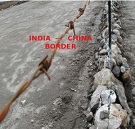
A recent intelligence report, purportedly issued by the Research and Analysis Wing (R&AW), India’s external intelligence agency, has warned of the clear and present danger of a conflict being initiated by China along its border with India ostensibly to divert attention from mounting domestic problems, including political dissent, economic challenges and social discord.

The report points to increased activity by units of the People’s Liberation Army (PLA) in the areas across the Line of Actual Control (LAC) by way of enhanced surveillance and military training exercises which could be tantamount to full dress rehearsals. Recent exercises have included one on the rapid induction of airborne divisions into Tibet in 36 to 48 hours from bases in adjacent military regions. J-10 air-to-ground strike fighters have been battle tested to hit targets in the high-altitude terrain. SU-30 MKK and SU-27 UBK fighter-bombers have also been practising landings in Tibet and have been deployed during summer months.

It has been known for some time that the PLA has been steadily engaged in developing military infrastructure in Tibet in every field of consequence. The railway line from Gormo to Lhasa, which is to be extended further to Shigatse and on to Kathmandu, has made it possible for the PLA to quickly induct and then sustain much larger forces in Tibet than had been the case before it was commissioned. All-weather roads totalling 58,000 km have been constructed so far. Five fully operational airbases have been built at Gongar, Pangta, Linchi, Hoping and Gar Gunsa. New helipads, missile bases, storage sites for ammunition and for fuel, oil and lubricants are being constructed rapidly. Modern military encampments with multi-storey buildings are coming up close to the border with India. This will considerably reduce mobilisation time for deployment on the border. Both land-line (optical fibre cable-based) and radio communications are being improved. Microwave towers now dot the countryside. Several new command and control nodes have come up.

By no stretch of the imagination can it be presumed that these developments are for the welfare of the sparse population. Nor are these designed to support tourism as China claims. Some years ago the conventional wisdom was that the PLA would need one summer season for stocking and inducting troops and would be able to launch military operations against India only over the next summer season. With substantive improvements having been made to improve the PLA’s military posture in Tibet, it will now be possible for the PLA to induct troops and wage war in a single campaign season. Some analysts have estimated the number of fighting formations that could be inducted in a high-level threat scenario in one month as 30 infantry divisions (12,000 soldiers each).

In stark contrast with developments across the border in Tibet, India’s own efforts to improve its defensive posture and military infrastructure along the LAC have been lagging behind. Most of India’s forward infantry divisions are dependent on a single road axis that is mostly one-way throughout its length and sharp bends do not permit the smooth induction of heavy guns and rocket launchers. Even the most conservatively drawn up plans for infrastructure development have failed to achieve targets for one reason or another. It has been reported that only 50 per cent of the work has been completed on 73 road projects sanctioned so far – Arunachal (27), Uttarakhand (18), J&K (14), Himachal Pradesh (7) and Sikkim (7). Additional plans have been made to construct 277 roads with a total length of 13,100 km in all.

However, the issue that needs to be analysed is whether Chinese efforts in Tibet are aimed at bringing about routine improvements in the habitat of the troops in some of the harshest weather conditions in the world, or if there is a clearly an offensive aim in upgrading the military infrastructure. In military parlance, a threat equals capability into intention. While there is absolutely no doubt or ambiguity about the PLA’s concerted efforts to enhance military capabilities in both Lanzhou and Chengdu military regions so as to be able to launch and sustain operations from the LAC along Tibet’s border with India, it is difficult to discern a clear intention to do so in the short term. The formulation that China might do so to divert attention from domestic discord does not appear to be realistic and is therefore unconvincing.

The strategic stakes would be very high and the Chinese leadership will not risk sanctions and international opprobrium as well as the multi-billion dollar mutual trade relationship with India simply to divert the attention of people on the mainland. However, as long as the territorial and boundary dispute between India and China is not resolved to mutual satisfaction, while the probability of conflict remains low in the short term, its possibility cannot be ruled out. This is so because even 15 rounds of border talks between the politically appointed interlocutors have failed to lead to the demarcation of the LAC – the first essential step to ensure that a major patrol clash does not lead to an ugly incident.

Patrol face-offs are common as both sides patrol up to their perception of the LAC and this often results in the transgression of the LAC from the other’s perspective. Though both sides have been adhering to the laid down procedure of warning the opposing patrol through large banners that it has transgressed across the LAC and must immediately go back, a face-off can quickly turn into a shooting match if there is a hot-headed patrol leader on either side. A small incident of this nature can lead to a border conflagration if the situation is not handled with maturity and calmness by the military and political leadership on either side.

What India needs to do is to upgrade its military strategy from dissuasion to deterrence. Genuine deterrence comes only from the ability to launch and sustain major offensive operations into the territory of one’s military adversary. Towards this end, the early raising of at least one strike corps for the mountains is an inescapable operational necessity. As manoeuvre is extremely restricted in the mountains, simultaneous efforts must be made to upgrade the firepower potential of the army and the air force by an order of magnitude. Also, the development of military infrastructure along the border with Tibet must be taken as up a key priority by the MoD.

Monday, July 16, 2012

Naresh Chandra Task Force’s Report on National Security: An Appraisal


Nitin Gokhale
Visiting Fellow, VIF

The high-powered Naresh Chandra Task Force, appointed by the government last year, submitted its detailed report to the Prime Minister a couple of months ago but so far there is no indication that the report will be made public soon. We do not even know if within the government deliberations have begun on the recommendations given by the Task Force.

All that is available in public domain so far is a glimpse of some key recommendations made by the task force that too through media reports obviously based on conversations with some members of the task force. For instance, the task force has apparently recommended:

  1. Appointment of a Permanent Chairman, Chiefs of Staff Committee (CoSC)
  2. Integration of Service HQ and Ministry of Defence by allowing more cross-postings
  3. Shifting focus of India's national security strategy from Pakistan to China
  4. Better Intelligence Coordination between all agencies
  5. Creation of dedicated financial Institution for access to energy, rare earths and raw materials from across the world


From some of the occasional interaction that this author has had with a few members of the Task Force, before and after the submission of the report, one aspect is very clear: There was no consensus on the creation of the post of the Chief of Defence Staff (CDS), leading to, what one believes, a half-hearted recommendation to appoint another four-star officer as permanent chairman of the Chiefs of Staff Committee (CoSC).

According to the Task Force, this officer will be in charge of the two existing tri-services commands-the Strategic Command Force (SFC) and the Andaman Nicobar Command (ANC)-- while the three service Chiefs will continue command and lead their respective services, the Task Force said.

The Permanent Chairman CoSC, according to the recommendation of the Naresh Chandra Task Force, will have a fixed tenure of two years and will be rotated among the three services. This officer will be assisted by the existing Integrated Defence Staff (IDS), headed by a three star officer from any of the three services.

Over the past decade, the IDS has evolved in a barely workable tri-services structure with over 300 officers drawn from the three services trying to function as a cohesive unit tasked with evolving "jointness." On ground however, jointness or inter-operability has remained at best patchy.

The new recommendation seeks to overcome these differences. The Naresh Chandra Task Force has also recommended the creation of a separate Special Operations Command on the lines of the US structure since asymmetric threats are seen as the main challenge to India's national security in coming decades.

The new post, the Task Force is hoping, will also bring in synergy in major acquisitions for all the three forces. Often, the three services have worked independently in procuring same set of equipment, duplicating work and creating separate infrastructure when synergy would have saved hundreds of crores of rupees.

However, critics of the new system say the recommendation to appoint Chairman CoSC is nothing but old wine in new bottle. It is a 'no go' because the Chairman will remain ever dependent on each of the services Army, Navy & IAF for its personnel requirements. Personnel of each service will be 'lobbyists' of respective Chiefs. Yet another opportunity, they say, to reform has been lost. National Security System does not have to depend on seeking Least Common Multiple (LCM)-solutions. It does not have to seek to appease lobbies and turfs.

The solution, some in service officers say, lies in divesting the three Chiefs of operational command of forces. Let them be Chiefs of respective Staff - 'resource providers to joint operational/ strategic commands' - content with recruiting, training of personnel; holding and maintaining equipment; and executing related administrative functions.

Appointment of CDS is however the prerogative of the apex political authority, namely the Cabinet Committee on Security (CCS). It can choose from panel of names forwarded by the three Services. There should be no rotation to appease services. Choice of apex political authority has to be final.

In absence of a common meeting ground on deciding to appoint a CDS, the Naresh Chandra Task Force recommendation can however be utilised in the interim in creating more cohesion among the services. For instance, the Chairman Chiefs of Staff Committee, who will have a fixed two year tenure can be made in charge of making net assessment about the strengths and weaknesses of India’s adversaries—China and Pakistan—in a holistic manner, taking into consideration inputs from all the three services and cross-referencing those inputs with other agencies like the Defence Intelligence Agency (DIA) and RAW. Currently, the three services send their individual assessments just to complete formalities to the IDS where it remains buried in files that never see the light of the day.

Moreover, if the Chairman Chiefs of Staff Committee is going to lead the proposed Special Operations Command why not create two more tri-services commands and give him some more work?

Given the frequency of cyber-attacks on India's IT infrastructure, creation of a cyber-command is only a matter of time. An aerospace command is inevitable sooner than later. Along with the creation of the proposed Special Operations Command, why not create these two additional tri-service commands? And let the Army, Air Force and Navy be the lead service for a particular command? And let the Army, Air Force and Navy be the lead service for a particular command?

The proposed Chairman Chiefs of Staff Committee can remain the head of these three commands with each of them being led by an Army Commander level officer. Given the experience and expertise available with the Army, it can take charge of the Special Operations Command, the IAF, with its domain knowledge, can take over the aerospace command and the Navy can lead the cyber command. The heads of these commands can have their second rung manned by two-star officers from each of the services so that they continue to have the benefit of expert advice from across the services but the overall responsibility must remain with the designated service.

Given that the existing tri-services commands go through painful changes each time their Commanders-in-Chief get rotated, making each of the service responsible for the proposed new commands will make their the working smoother and more efficient.

Over a decade after a CDS was recommended by the Group of Ministers (GoM) in the wake of the Kargil conflict, there is no unanimity on that issue yet. Given the strong differences within the services as well as in the political class, could this be the best arrangement for now? Or is it too impractical?

To find the right answers the government perhaps owes it to the people of India to make the Naresh Chandra Task Force report public and let a healthy debate ensue.