Showing posts with label North Korea. Show all posts

Friday, January 12, 2018

Commentary: North Korea Takes Advantage of Flags of Convenience Regime

12 Jan, 2018  | Dr Vijay Sakhuja
Amid high decibel ‘verbal exchanges’ between US President Donald Trump and North Korean leader Kim Jong Un over latter’s nuclear ambition, the United Nations Security Council announced on 22 December 2017 new economic sanctions against Democratic People’s Republic of Korea (DPRK). The current sanctions, the ninth in the series since 2006, were pursuant to the recent intercontinental ballistic missile tests conducted by Pyongyang. These include limiting DPRK access to energy resources with ‘ban on condensates and natural gas liquids, a cap of 2 million barrels a year on refined petroleum products and a cap on crude oil exports to North Korea at current levels’.
The international shipping has in the past scrupulously adhered to UN sanctions and refrained from transporting embargoed goods to DPRK, barring a few vessels that were suspected of defying the sanctions. The US had also sought blacklisting of at least 10 vessels that are involved in illegally transferring oil at sea to be delivered to North Korean. These suspected vessels are flagged in Panama, Hong Kong and other registries including DPRK’s own register. Russian oil tankers were also suspected of providing ‘lifeline to the regime’ by engaging in ship-to-ship transfer at sea. The US put out satellite images of a North Korean ship trying to conduct a ship-to-ship transfer in October 2017, and President Donald Trump accused China ‘being caught red-handed selling oil to North Korea’.
The Panama Maritime Authority announced cancellation of registration of ship Koti operating under its flag (detained at a port in South Korea), and suspected of breaching the UN sanctions against North Korea. Another vessel, the Hong Kong flagged Lighthouse Winmore, also suspected of transferring refined petroleum products to the North Korean ship, the Sam Jong-2 in October 2017, was seized and remains in South Korea. Meanwhile, Taiwanese authorities brought before court a man ‘prosecutors allege to have made false declarations in the case of a Hong Kong-flagged tanker suspected of transferring oil to North Korea in violation of international sanctions’, but was later released on bail.
In the past, a number of North Korean vessels have been detained for carrying embargoed cargo. In fact, the country has a rich history of transporting illegally a variety of commodities ranging from drugs, small arms and weapons, oil and gas, missiles and even weapons of mass destruction. For instance, in 1999 the Indian authorities detained in the port of Kandla MV Ku Wol San, a North Korean vessel carrying Weapons of Mass Destruction (WMD) accessories bound for Pakistan/Libya. On August 6, 2009, the Indian Navy undertook VBSS (visit, board seize and search) operations in the Andaman Sea against a North Korean vessel in support of UN Security Council Resolution No. 1874 that ‘strengthens arms embargo, calls for inspection of cargo vessels if states have ‘reasonable grounds’ to believe contain prohibited items’.
The ongoing imbroglio over the ship-to-ship transfer at sea in breach of the UN sanctions against DPRK has brought to fore the weaknesses in the Flag of Convenience (FoC) regime, which has been under scrutiny by the law enforcement agencies and international community. Linking ‘a State’, ‘a ship’ and ‘a flag’ is an age old practice and documented in antiquity. It helps to determine who owns the vessel, or has jurisdiction over it, and therefore empowered to prosecute it in case it is engaged in any illegal activity, or defend its operations in case national interests are in jeopardy.
As with any commercial enterprise, international shipping is market driven and therefore competitive. The primary aim of any shipping company is to enhance fiscal advantage, maximise revenue, and minimise costs. Ship owners’ carefully choose register for their ships and hence fly that country’s flag. In essence, economics is the decisive factor that will determine the flag a ship flies. Likewise, it is a win-win situation for the FoC registries. This practice generates revenue for the flag state in the form of fees, transactions and services provided to the ships seeking registration. These funds are critical for the flag state and bring in significant income. This widespread phenomenon has resulted in larger percentage of the world fleet under the FoC when compared with the traditional maritime countries themselves.
Since the last century, the practice of ‘closed registers’ witnessed changes due to stringent domestic manning regulations, restrictive taxation regime, and other commercial considerations in home countries. Panama was the first to set up an ‘open register’ in 1916, and by 1950 there were more open registers and accounted for nearly 4 per cent of the world’s fleet. In the mid-1980s, the share of FoC in international shipping registration increased to over 30 per cent and by 2009, nearly 73 per cent of the global merchant fleet was under open registers. According to 2017 UN Conference on Trade and Development (UNCTAD) report, today more than 70 per cent of the commercial international fleet is flagged out and registered under a different flag from the country of ownership.
Interestingly, there are agencies which specialize in helping shipping companies to obtain FoC registries, For them it is a business model, and according to ‘ship solutions’, an agency which specializes in such a venture since 2010, they help shipping companies and owners to register or reflag ships. The agency enables ‘ship managers to streamline their operations during peak times and leave the registration of the vessels to us … to keep overheads to a minimum and thus … offer a very competitive price and can perform jobs of any size within a tight timescale’.
It is a fact that States operate FoC registry to ‘earn a great deal of money, usually from registration and maintenance fees and taxes, from the ships in its registries, but expend very little money to ensure that such ships meet international standards’. Further, FoC offers numerous opportunities to devious ship owners to “hide so long as they pay the requisite registration fees and tonnage taxes, leading to dangerous consequences, such as the funding of terrorist activities and lack of liability for substandard ships sailing the high seas”.
In the case of DPRK, it has skillfully used the FoC regime and engaged in maritime commerce violating various UN sanctions. Of particular interest is Ocean Maritime Management (OMM) Limited, a shipping company with operations in at least 10 countries, has a dubious record of engaging in illegal activities at sea. The company has taken advantage of the FoC regime and been renaming its vessels. For instance, it has not only renamed as many as 13 of its 14 vessel , but also transferred the ownership to shell companies. This is perhaps a clever way to, reflag the vessels and thus ‘effectively erase’ these vessels from the ‘blacklist’, ‘a strategy to evade assets freezes’ by the international community. For instance, the U.N. Security Council’s Panel of Experts on North Korea, that monitors implementation of sanctions on Pyongyang, blacklisted OMM for ‘arranging an illegal shipment on the Chong Chon Gang ship, which was seized in Panama and found to be carrying arms, including two MiG-21 jet fighters, hidden under thousands of tons of Cuban sugar’. However, the company was not deterred and OMM evaded ‘sanctions by changing the registration and ownership of vessels’ to a shell company.
Some DPRK flagged vessels have been intercepted while carrying military cargo bound other States. For instance, in December 2002, So San, a North Korean vessel carrying fifteen Scud missiles hidden under cement bags and bound was Yemen intercepted by a Spanish frigate and a support vessel Patino in the Indian Ocean. The vessel was allowed to proceed to its destination after the Yemen government announced that the consignment was bound for it and it has been argued that ‘there was no provision under international law prohibiting Yemen from accepting delivery of missiles from North Korea’. Similarly, in 2016, one of the OMM ships was apprehended for carrying imported weapons from Cuba, but authorities ‘in Havana admitted being behind the stash, saying they were Soviet-era arms from Cuba headed for repair in North Korea’.
Given the complexity of the political economy of merchant shipping and its close relationship with global economy, the FoC system has the potential of being a major challenge for the safety of ships, national security in general, and maritime security in particular. International law (1982 United Nations Convention on the Law of the Seas, Articles 90, 91, 92, 94 and 110; United Nations Convention on Conditions for Registration of Ships; Convention on the International Maritime Organization) and national legislations stipulate the mandatory requirement of a genuine link between ship and flag state. This is so due to the need for ‘an absolute minimum entity’ which can be made responsible for the ‘actions of the ship owner and on which penalties of adequate severity can be levied so as to discourage violations of applicable international minimum standards’ wherever they occur.
While that may be necessary, North Korea has blatantly yet cleverly, contravened international law and successfully defied UN sanctions. In the future too, it can continue to marshal its national shipping fleet as also other FoC vessels to conduct illegal commerce and clandestinely obtain embargoed goods from the international market. It is fair to state that North Korean leader Kim Jong Un is not perturbed by UN sanctions and DPRK will continue flagrant violation of sanctions.
(Dr Vijay Sakhuja is former Director National Maritime Foundation, New Delhi)
(Views expressed are of the author and do not necessarily reflect the views of the VIF)


Tuesday, February 26, 2013

Failing on Terror Yet Again


Kanwal Sibal 
(Member, VIF Advisory Board)

Hyderabad is bloodied again by terrorism, exposing once more our failure to marshal the political will, the legal instruments, the organizational structure and the required technical skills and manpower resources to combat this grave threat to the nation.
Admittedly, combating terrorism is extraordinarily difficult because a few individuals armed with rage, rudimentary bomb making techniques and the most ordinary means of “delivery” like tiffin boxes and bicycles can cause mayhem in crowded localities in our overpopulated and disorganized cities when they choose.
More importantly, terrorism has a vast international dimension outside not only India’s control but also of countries more powerful, resourceful and determined to fight terrorism than us. At its centre is the sense of grievance nourished in Islamic circles against the enemies of Islam and the moral legitimacy accorded by religious texts as interpreted by them to the act of killing innocent people haphazardly as redressal.

Contrast

While it would be unrealistic to expect the government to provide total protection to the public against any possible terrorist attack, the people can legitimately expect credible and comprehensive steps to secure their lives against such deadly violence, without being necessarily able to emulate the US success in this regard. The US is oceans away from the epicenter of terror; its neighbours cooperate fully to shield North America from terrorism; by drawing its frontline against terrorism thousands of miles away from its shores the US has given itself vast protective geographical depth.

India has no such cushions. Our neighbour has used terrorism as a weapon against us for almost 30 years now. Having long judged our weak response, Pakistan can fine tune the timing, periodicity and degree of its provocations to suit its political needs. It knows that deniability is important to create space for doubt about its culpability so that an immediate Indian riposte is deflected and the risk of being declared a terrorist state is avoided. For that it has raised jihadi groups to attack India, whose violence is then politically justified as being driven by the unresolved Kashmir question. As international scrutiny of its terrorist links grows, Pakistan has also outsourced terrorism to extremist groups in India by mobilizing them through pan-Islamist ideologies on the back of local grievances.

Pakistan also has a class of politicians, diplomats and members of civil society that come across as educated, modern, articulate and rational and they counter with finesse accusations that it is promoting terrorism. The rise of domestic terrorism, although an offshoot of the complicity of state organizations with jihadi groups, gives them an added argument to deny Pakistan’s terrorist affiliations.

Additionally, the rampant belief in conspiracy theories in Pakistan about the West, Israel and India conniving at slandering Islam creates a sense of victimhood, precluding self-introspection about its own failings as a society. In this narrative, Islam is the embodiment of peace and justice and terrorism is alien to it. If Islamic groups commit acts of terrorism, it is because of manipulation by hidden hands. The other defence is that either those guilty are not true Muslims, or that the entire community should not be tarnished because of the misdeeds of a few with no proper understanding of Islamic tenets. This explains the widespread belief that the 9/11 attacks against America was a Jewish conspiracy. The remarks in Delhi by Pakistan’s interior minister alleging an external hand behind the 2008 Mumbai attacks is part of this syndrome.

Pakistan

Iran and North Korea are castigated for terrorism, as was Libya earlier, even if what is attributed to them has no parallel in scale and scope to Pakistan’s involvement with such activity. Pakistan is spared the same ignominy because its relationship with the West is not one of unalloyed hostility. Its attitude to western demands, even on terrorism, is both compliant and defiant. In any case, a non-Nato US ally, receiving substantial American arms and economic assistance and geopolitically vital for extricating the US from Afghanistan, can hardly be declared a terrorist state. This western ambivalence towards Pakistan severely limits the extent to which India can bilaterally and multilaterally make Pakistan more accountable for its terrorist misdeeds. A nuclearized Pakistan makes the problem even more complex to handle.
India’s democratic system, its openness, its internal watchdogs such as the independent judiciary and the press, the accountability of the instruments of force in the hands of the executive in a constitutional system, do not allow India to use the instrument of terrorism against Pakistan as a deterrent.

Mistakes

While all these difficulties and handicaps are understandable, what is not is the absence of a coherent national strategy to combat terrorism despite repeated assaults. We have made matters worse for ourselves by diluting the centrality of terrorism in our dialogue with Pakistan; we have accorded Pakistan the status of a terrorism stricken state just like us; we have lowered the heat on Pakistan by conceding the amplitude of our problem of home grown terrorism; we have weakened our position by equating a few isolated terrorist attacks by Hindus with scores of such attacks over two decades by jihadi groups; further harm has been done by the Home Minister accusing the main opposition party of training Hindu terrorists; we have politicized the terrorism issue for electoral reasons so much that any corrective action will be interpreted with political bias; the disproportionate sympathy in sections of our intelligentsia for Afzal Guru shows the soft belly of any potential resolve to combat terrorism without quarter.

No wonder that all we can do when a terrorist attack occurs is to call it “dastardly” and vow that the “perpetrators” will not go unpunished, and repeat the same clichés when innocent Indian citizens are bloodied again by jihadi groups. 

Thursday, September 27, 2012

A Visit that can Wait


Kanwal SibalMember Advisory Board, VIF


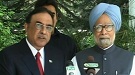
The prime minister, Manmohan Singh, while publicly expressing his keenness to visit Pakistan, has also voiced his expectation several times that the outcome would be substantial. It was earlier speculated that by something “substantial” he had agreements on Siachen and Sir Creek in mind. While he still thinks Sir Creek is doable, the hope for an early resolution of the Siachen issue has receded. Although some progress was made in past talks, the issue has become complicated because of Kargil and the increased presence of China in Pakistan occupied Kashmir. Now “substantial” means some credible progress by Pakistan in bringing to justice those responsible for the Mumbai terror attack. From the facts of the prime minister making his wishes known and Pakistan ignoring them even as it continues to press for his visit, one can infer that Singh is more keen on making the visit than Pakistan is in facilitating it by giving him a minimum face-saving reason to do so.

At one level, there is nothing exceptional in heads of State and government visiting one another. This is happening all the time in international diplomacy. So why so much fuss about the opportuneness of prime minister’s visit? In the case of India and Pakistan, though, the decision whether to make a visit or not has an exceptional context.

India has long suffered from terrorism at Pakistan’s hands, without this deterring it in the past to reach out to Pakistan at the prime minister’s level as Atal Bihari Vajpayee did in 1999. Kargil followed. In 2001, Vajpayee invited General Pervez Musharraf to Agra but the initiative failed because Pakistan did not offer a clear-cut commitment on terrorism. In 2004, Vajpayee went to Pakistan for the South Asian Association for Regional Cooperation summit and obtained a carefully worded commitment from Musharraf to prevent terrorism born on Pakistan’s soil from being directed against India. A spate of terrorist attacks nevertheless followed, but India did not interrupt the ongoing dialogue in the hope that Pakistan would at some stage abjure such acts in its own interest.

The dialogue collapsed, however, with the enormity of the 2008 terrorist attacks in Mumbai orchestrated by the Inter-Services Intelligence-jihadi groups nexus. Again, after a gap, India persuaded itself that the no-dialogue option was not sustainable and that the compulsions of geography — which Pakistan disregards — dictated that India begin talking to Pakistan again.

Four years have elapsed since the Mumbai attacks and two rounds of dialogue have been held, but without any tangible move by Pakistan to try those guilty of the Mumbai attack. Pakistan has used the excuse of complex legal procedures and an independent judiciary to explain the inordinate delay in doing so. 
Meanwhile, to drive home to India the futility of its demand, it allows Hafiz Saeed, the purported mastermind of the Mumbai massacre, to engage freely in his anti-India jihadi tirades. That it is unwilling to be put on the defensive on Mumbai is indicated by its insistence on drawing a parallel between a meticulously planned terrorist action by Pakistani nationals on Indian soil with official Pakistani complicity and an isolated action by local Indian terrorists on Indian soil without any official connivance.

Worse, Pakistan’s foreign minister insults reality and decency by pretending that terrorism is no longer an issue between India and Pakistan and advising us to be realistic and not emotional about the Mumbai trial. Now, if the prime minister of India says that he will go to Pakistan only if Pakistan demonstrates its sincerity by trying those responsible for Mumbai and the foreign minister of Pakistan is “appalled” that we raise the terrorism “mantra of the past”, this “old time” stuff, as she calls it, where is the meeting ground between the ways in which he and the Pakistani leadership see the issue? Our concessions to Pakistan on terrorism, so that the bilateral dialogue can continue, have unfortunately led to these scornful remarks by its foreign minister. If the prime minister were still to go, Pakistan would have diplomatically humiliated India finally on the terrorism issue.

To put the matter of the visit in perspective, our prime minister has been meeting Pakistan’s president and prime minister quite regularly in India or in third countries during international meetings, whether at Ekaterinaberg, Sharm el-Sheikh, Thimphu, New York and, most recently, Tehran. So, contact at the highest political levels is being maintained. Our expectation has been that this willingness to engage with Pakistan would encourage it to bring the pernicious and dangerous issue of terrorism to a political closure bilaterally, as terrorism has the potential to wreck the dialogue process if a Mumbai-like attack is repeated. As it happens, Pakistan has succeeded in blunting India’s case on terrorism even as the United States of America, ironically, has increasingly exposed Pakistan’s duplicity on the issue. If the prime minister were to go to Pakistan under these circumstances, we would have allowed the latter to deny us the only deliverable we seek from it.
Apart from bilateral dimensions of the terrorism issue, there is the international dimension. With religious extremism spreading in the Arab world and organizations with a violent political past acceding to power in hitherto “moderate Islamic states”, not to mention the current street frenzy against the US unleashed by a film, India has to remain vigilant about the impact of such developments on the popular spirit in the region, linked transnationally through religion and ideology with happenings beyond.

As a sign of the maturing of democracy in Pakistan and its polity outgrowing its India obsession, Pakistani commentators had noted that India had not figured as an electoral issue in the last general elections there. If so, why should the prime minister’s visit at this juncture play electorally in favour of the civilian government, especially President Asif Ali Zardari’s, in any significant way? India, in fact, has never been in a position to influence internal developments in Pakistan to suit its interests. We should discard any illusions in this regard.
While Zardari, no doubt, has relatively congenial views on India, they do not get reflected sufficiently in policymaking. Pakistan’s president, highly embattled politically, is hardly in a position to deliver on substantive issues. In any case, the civilian government cannot escape responsibility for the lack of progress on various issues that bedevil our relations, apart from trade where different dynamics are at play. Let us also not forget that it is not the military that created Pakistan but civilian politicians. Civilian politicians were fully complicit in Pakistan’s Afghanistan adventure, the unleashing of terrorism in Kashmir, the country’s clandestine nuclear and missile exchanges with North Korea and the anti-Indian thrust of the China relationship. We should not entrap ourselves into the civilian good guys versus the military bad guys equation.
Elections are due in Pakistan latest by February 2013. Before that, a caretaker government will take over. For practical reasons, the timing of a prime ministerial visit at this juncture would therefore be ill-advised. For those who advocate that he visit Nankana Sahib on November 28 and his village at Gah should remember that Guru Nanak’s jayanti will be celebrated next year too and Gah will not be effaced from the map in the years to come. So, let’s wait for Pakistan to deliver on terrorism first.