Showing posts with label Vajpayee. Show all posts

Monday, October 8, 2012

Brajesh Mishra: India's First Intelligence Tsar


Satish Chandra
Distinguished Fellow, VIF

Many before him have exercised great influence on an Indian prime minister but no one's influence has been so extensive particularly in foreign policy and security related areas. This was, perhaps, an inevitability given his close personal friendship with Vajpayee dating back to the latter's days in the opposition, his simultaneous occupation of the key offices of principal secretary to PM and the National Security Advisor, his foreign policy expertise, and, of course, his aforementioned qualities of head and heart.

Mishra was no ideologue but was rather the supreme pragmatist. Accordingly, he could easily accommodate the imperative for a better relationship with the United States with the requirement of a modus vivendi with China. That India under the Vajpayee regime was able to make much progress in revamping our relationship with both the USA and China, and that too after our nuclear tests which were distasteful to both, is testimony to Mishra's diplomatic skill.

Not being a rigid ideologue Mishra had the propensity to zero in on the best possible outcome on any issue that the political leadership could collectively live with and to manoeovre a decision in that direction.

This may not have been the ideal solution or even his own preferred choice but was one which carrying near consensus was the most practicable under the prevailing circumstances.

The three areas in which Mishra left an indelible imprint were India's nuclear policy, its security systems and its foreign policy.

Given the fact that as the Bharatiya Janata Party's foreign policy spokesman, Mishra had unequivocally made known that if elected to power the BJP would make the bomb, it is no surprise that he presided over the nuclearisation of India. It is tribute to him that he ensured that India's nuclear tests were successfully conducted within weeks of the NDA government's assumption of office and that the veil of secrecy so necessary to facilitate their conduct was duly maintained and not lifted till completion of the tests.

Having tested, it was Mishra who oversaw the country's nuclear weaponisation and put in place viable systems and structures not only to manage this process but also to ensure the effective use of these weapons, should the need arise, in accordance with prescribed policies and directives. Indeed, India's nuclear doctrine, its nuclear command and control system and its increasingly more effective deterrent are to no small extent due to Mishra's exertions.
Being the prime minister's pointman on security, in his capacity as the NSA, Mishra was inevitably involved in all security related issues both internal and external. One of his most important contributions in his role as NSA was to build a host of new security related institutions and structures. It was thus under his direction that the National Security Council system (comprising the National Security Council, the National Security Council Secretariat, the Strategic Policy Group, the National Security Advisory Group, and the office of the National Security Advisor) was set up designed to cope with both existing and emerging security challenges as well as to fuse and coordinate intelligence.

In addition, an Intelligence Coordination Group was created to task the intelligence agencies and ensure their accountability, a National Information Board was established for national level policy formulation on information warfare and information security and an apex techint agency was set up.

All these newly created entities and structures were assiduously nurtured by Mishra and had begun to find their feet by the time he demitted office. He, however, candidly admitted that while the NDA government had embedded these entities in the Indian security firmament they would take years to fully establish themselves and accordingly their future would depend upon whether or not succeeding governments would continue to similarly support them.
It may be mentioned that by virtue of his position as the NSA and his heading the Intelligence Coordination Board, Mishra in effect became India's first intelligence tsar who regularly interacted with all the intelligence agencies and sought to exercise effective oversight over them and to ensure proper intelligence sharing.

In the realm of foreign policy, Mishra's role, given his background as a professional diplomat, was considerable. It is, therefore, not surprising that after having gotten over the downturn in our ties with the USA and China following our nuclear tests India generally had good ties with countries all across the globe during the NDA regime.

As mentioned earlier improved ties with the USA coincided with better relations with China, relations with countries like Russia and France were refurbished, and we had robust links with both Iran and Israel at the same time.

Both Mishra and Vajpayee showed little hawkishness on either Pakistan or China and presumably there was no perceptible difference of approach between the two. Nevertheless it is significant that former Pakistan President Musharraf declared a ceasefire across the LoC and in the India-Pakistan joint statement of January 2004 negotiated by Mishra provided an assurance that he would "not permit any territory under Pakistan's control to be used to support terrorism in any manner." It is also significant that it was during the NDA regime that the Chinese authorities shared maps pertaining to their claims in the middle sector.

Mishra also deserves unqualified credit for the upturn in India-US ties. After the damage done to the relationship as a result of the US reaction to our tests had been arrested, Mishra made it plain to his US interlocutors that ties between the two countries would never be able to achieve their full potential unless there was cooperation on the trinity issues notably high technology commerce, civilian nuclear energy cooperation and civilian space collaboration. To its credit the US in turn recognized the substance of this argument and sought to rectify the situation which led to the blossoming of ties between the two countries.

All those privileged to work closely with Mishra would testify to the fact that he was an ideal boss. Always accessible his decisions were quick and instructions precise and clear cut. While not one to suffer fools easily he was quite willing to permit one to take a position not in consonance with his own. He was big enough to take an honest difference of opinion in his stride and not allow it to come in the way of a productive professional relationship geared to promoting the national interest.

All this taken together with the complete backing and support provided by him to those who worked with him in fulfillment of their mandate explains the unflinching loyalty and trust that he inspired from them and helped him in achieving as much as he did.

Thursday, September 27, 2012

A Visit that can Wait


Kanwal SibalMember Advisory Board, VIF


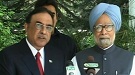
The prime minister, Manmohan Singh, while publicly expressing his keenness to visit Pakistan, has also voiced his expectation several times that the outcome would be substantial. It was earlier speculated that by something “substantial” he had agreements on Siachen and Sir Creek in mind. While he still thinks Sir Creek is doable, the hope for an early resolution of the Siachen issue has receded. Although some progress was made in past talks, the issue has become complicated because of Kargil and the increased presence of China in Pakistan occupied Kashmir. Now “substantial” means some credible progress by Pakistan in bringing to justice those responsible for the Mumbai terror attack. From the facts of the prime minister making his wishes known and Pakistan ignoring them even as it continues to press for his visit, one can infer that Singh is more keen on making the visit than Pakistan is in facilitating it by giving him a minimum face-saving reason to do so.

At one level, there is nothing exceptional in heads of State and government visiting one another. This is happening all the time in international diplomacy. So why so much fuss about the opportuneness of prime minister’s visit? In the case of India and Pakistan, though, the decision whether to make a visit or not has an exceptional context.

India has long suffered from terrorism at Pakistan’s hands, without this deterring it in the past to reach out to Pakistan at the prime minister’s level as Atal Bihari Vajpayee did in 1999. Kargil followed. In 2001, Vajpayee invited General Pervez Musharraf to Agra but the initiative failed because Pakistan did not offer a clear-cut commitment on terrorism. In 2004, Vajpayee went to Pakistan for the South Asian Association for Regional Cooperation summit and obtained a carefully worded commitment from Musharraf to prevent terrorism born on Pakistan’s soil from being directed against India. A spate of terrorist attacks nevertheless followed, but India did not interrupt the ongoing dialogue in the hope that Pakistan would at some stage abjure such acts in its own interest.

The dialogue collapsed, however, with the enormity of the 2008 terrorist attacks in Mumbai orchestrated by the Inter-Services Intelligence-jihadi groups nexus. Again, after a gap, India persuaded itself that the no-dialogue option was not sustainable and that the compulsions of geography — which Pakistan disregards — dictated that India begin talking to Pakistan again.

Four years have elapsed since the Mumbai attacks and two rounds of dialogue have been held, but without any tangible move by Pakistan to try those guilty of the Mumbai attack. Pakistan has used the excuse of complex legal procedures and an independent judiciary to explain the inordinate delay in doing so. 
Meanwhile, to drive home to India the futility of its demand, it allows Hafiz Saeed, the purported mastermind of the Mumbai massacre, to engage freely in his anti-India jihadi tirades. That it is unwilling to be put on the defensive on Mumbai is indicated by its insistence on drawing a parallel between a meticulously planned terrorist action by Pakistani nationals on Indian soil with official Pakistani complicity and an isolated action by local Indian terrorists on Indian soil without any official connivance.

Worse, Pakistan’s foreign minister insults reality and decency by pretending that terrorism is no longer an issue between India and Pakistan and advising us to be realistic and not emotional about the Mumbai trial. Now, if the prime minister of India says that he will go to Pakistan only if Pakistan demonstrates its sincerity by trying those responsible for Mumbai and the foreign minister of Pakistan is “appalled” that we raise the terrorism “mantra of the past”, this “old time” stuff, as she calls it, where is the meeting ground between the ways in which he and the Pakistani leadership see the issue? Our concessions to Pakistan on terrorism, so that the bilateral dialogue can continue, have unfortunately led to these scornful remarks by its foreign minister. If the prime minister were still to go, Pakistan would have diplomatically humiliated India finally on the terrorism issue.

To put the matter of the visit in perspective, our prime minister has been meeting Pakistan’s president and prime minister quite regularly in India or in third countries during international meetings, whether at Ekaterinaberg, Sharm el-Sheikh, Thimphu, New York and, most recently, Tehran. So, contact at the highest political levels is being maintained. Our expectation has been that this willingness to engage with Pakistan would encourage it to bring the pernicious and dangerous issue of terrorism to a political closure bilaterally, as terrorism has the potential to wreck the dialogue process if a Mumbai-like attack is repeated. As it happens, Pakistan has succeeded in blunting India’s case on terrorism even as the United States of America, ironically, has increasingly exposed Pakistan’s duplicity on the issue. If the prime minister were to go to Pakistan under these circumstances, we would have allowed the latter to deny us the only deliverable we seek from it.
Apart from bilateral dimensions of the terrorism issue, there is the international dimension. With religious extremism spreading in the Arab world and organizations with a violent political past acceding to power in hitherto “moderate Islamic states”, not to mention the current street frenzy against the US unleashed by a film, India has to remain vigilant about the impact of such developments on the popular spirit in the region, linked transnationally through religion and ideology with happenings beyond.

As a sign of the maturing of democracy in Pakistan and its polity outgrowing its India obsession, Pakistani commentators had noted that India had not figured as an electoral issue in the last general elections there. If so, why should the prime minister’s visit at this juncture play electorally in favour of the civilian government, especially President Asif Ali Zardari’s, in any significant way? India, in fact, has never been in a position to influence internal developments in Pakistan to suit its interests. We should discard any illusions in this regard.
While Zardari, no doubt, has relatively congenial views on India, they do not get reflected sufficiently in policymaking. Pakistan’s president, highly embattled politically, is hardly in a position to deliver on substantive issues. In any case, the civilian government cannot escape responsibility for the lack of progress on various issues that bedevil our relations, apart from trade where different dynamics are at play. Let us also not forget that it is not the military that created Pakistan but civilian politicians. Civilian politicians were fully complicit in Pakistan’s Afghanistan adventure, the unleashing of terrorism in Kashmir, the country’s clandestine nuclear and missile exchanges with North Korea and the anti-Indian thrust of the China relationship. We should not entrap ourselves into the civilian good guys versus the military bad guys equation.
Elections are due in Pakistan latest by February 2013. Before that, a caretaker government will take over. For practical reasons, the timing of a prime ministerial visit at this juncture would therefore be ill-advised. For those who advocate that he visit Nankana Sahib on November 28 and his village at Gah should remember that Guru Nanak’s jayanti will be celebrated next year too and Gah will not be effaced from the map in the years to come. So, let’s wait for Pakistan to deliver on terrorism first.