Showing posts with label ISAF. Show all posts

Tuesday, September 3, 2013

Moderate and Balanced Afghanistan: Imperative for Regional Security

Ajit Doval, KC
Director, VIF

A moderate and balanced Afghanistan is not only an absolute necessity for regional security but is equally imperative for rest of the world. A radicalised and unstable Afghanistan, imbued with an intolerant jehadi fervour, has implications for US or Europe as much as for South Asia. Any resurgence of violent Islamic terrorism will have a cascading effect that will define the future trajectory and intensity of global terrorism, endangering the people here as much as in the region. Al-Qaeda is down but not out. Its structures and cadres have been degraded but in its new incarnation as an ideological hub driving and uniting violent form of political Islam poses a threat that is real, more complex and extensive. We are seeing some early trailers in the Gulf, North Africa and Western Eurasia etc.

The debate is not about agreeing upon the end objectives but examining emerging ground realities, re-validating assumptions on which our policies rest, and evaluating new initiatives to see to what extent they enhance or reduce the possibility of achieving the end objectives. Are the critical players and stake holders involved in this complex imbroglio pursuing the policies that will lead to a stable and moderate Afghanistan? Are there gaps and anomalies in their stated positions and real intentions? Good intentions are important but not sufficient to achieve intended objectives.

US and other members of ISAF have invested heavily in last 12 years to bring peace and stability in Afghanistan. US alone has suffered over 2,000 military casualties and spent over $600 billion in this fight. The results though commendable, have not been proportionate to the cost. The outcome might have been different if assumptions about Pakistan, the non-NATO ally with front line responsibilities, had proven to be correct. Moral of the story- When assumptions are wrong, the strategies fail to deliver.

The security environment in Afghanistan is far from optimal for smooth transition to a stable and moderate Afghanistan post 2014. The Taliban and their allies are better organised and resourced, have deepened their coercive influence in new areas and exude a sense of triumphalism. Islamist hardliners world over are looking at them with awe and respect. Within Afghanistan, their political engagement on the asking, if not cajoling, by their erstwhile adversaries has given them a sense of legitimacy as victors on one hand and generated a fear of uncertainty and insecurity among those who stood on the side of religious moderation, human rights and democracy.

The recent developments indicate that there is lack of synergy and coherence among major stakeholders responsible for a stable post 2014 Afghanistan. The ruckus over Afghan President Hamid Karzai objecting to blatant display of the Taliban flag and a plaque with the inscription ‘Islamic Emirate of Afghanistan’ at its Doha office and US talking about a zero option in post 2014 Afghanistan underlines that the two players critical for stability in Afghanistan are not on the same page. The left over elements of Al-Qaeda and undented Haqqani group being allowed by Pakistan to consolidate their positions along the Af-Pak border are ominous. Pakistan ISI’s duplicitous deals with various factions of Taliban and other armed groups in Afghanistan in furtherance of its unknown post 2014 agenda has compounded the situation further. Pakistan’s advocacies of including sections of Taliban close to it but known to be soft on Al Qaeda in the peace process have serious long term implications. The cost of promised co-operation in future by Pakistan may prove more costly for the world than estimated.

The problems of governance, internal security and weak economics both in Pakistan and Afghanistan may only give a fillip to further radicalisation in these two countries. While the world is closing in to the 2014 drawdown, the insurgency and law and order situation, both in Afghanistan and Pakistan, is under serious drift. In the first six months of this year, over 800 Afghan army and police personnel, 365 civilians and 63 ISAF soldiers have lost their lives. The situation in Pakistan where Islamic terrorists are in control of large tracts in tribal regions is no better. In the last six years alone, more than 2000 Pakistanis including 400 security personnel have been killed in terrorist related violence in the country. All these straws in the wind raise serious doubts about emergence of a moderate and stable Afghanistan after draw down unless basic correctives are applied at this stage.

I have great respect for the optimists, not because they are always right but because they keep the hopes alive, at least till the things go wrong. On Afghanistan, the hopes of optimists are premised on following assumptions:
  • Taliban will change. They will severe their links with the Al-Qaeda and its affiliates with Pan-Islamic global agenda. People in last twelve years have developed vested interest in democracy, development, and respect for human rights. Taliban will not get their support if they revert to their old ways. Democracy will stay and ethnic rivalries will be subsumed by a resurgent Afghan nationalism.
  • The nearly 3,35,000 strong Afghan National Army and police will remain a cohesive force, will be adequately resourced and remain committed to its fight against terror; irrespective of political complexion of the people who assume power.
  • Most importantly, Pakistan will change and will not pursue its three decade old policy of furthering its strategic and political objectives by using Jihadi terror as an instrument to keep Afghanistan under its control to the exclusion of others. It will no more follow a duplicitous policy in dealing with terrorism and terrorist groups.
If these assumptions hold good, even to a reasonable degree, we can hope for a moderate and stable Afghanistan. I am not a scientist but a great admirer of Einstein. He defined insanity; as doing the same thing over and over again and expecting that the results will be different next time. Pakistan will change is a possibility but not a probability.

It is true policies and strategies cannot always be made on the basis of totally proven facts and crystal gazer’s ability to peep into the future. But it is necessary that we do not deny the existence of facts because they are unpalatable and do not deliberately work in a direction that negates the assumptions on which our policies rest. The right approach at this time should be to put in collective efforts to ensure that the above assumptions on which the end objectives are premised are reinforced, resourced and refined. There are plenty that we can do at this stage but the window of opportunity may not remain open indefinitely.

Affirmative and coercive actions in three important domains from now till 2014 will be necessary to ensure that the post-2014 Afghanistan is reasonably stable and minimizes security threat to the region and the world at large. First, no agreement or assurances to Taliban or other radical groups contravening the constitution, as it exists or is amended through due process, should be made. It is also important that no covert arrangement is arrived at by extraneous forces without taking into confidence the constitutionally elected government in Afghanistan. Whatever its shortcomings and failings may be, which indeed are plenty, undermining constitutional or moral authority of a democratically elected government will weaken constitutionalism and rule of law in Afghanistan that has been one of the major achievements of last 12 years. This is, however, still feeble and needs to carefully nurtured.

Second, the continuation of foreign financial assistance for maintaining the ANSF would be necessary. The security apparatus should also remain apolitical and selection of military commanders should not be influenced by ethnic considerations or political proximities. Large private armies and armed groups working under varying influences, ranging from drug syndicates to radical Islamic groups and to political parties, under a well calibrated plan of action should be de-legitimized, disarmed and demobilized. Any external force trying to control or influence them to sub-serve their agenda in post 2014 setting should be shunned.

Third, Pakistan’s role is going to be critical in defining the future. It has a past that is not very re-assuring. Measures have to be taken and compulsions created that makes it unaffordable for Pakistan to pursue a course that undermines stability in Afghanistan, boost terrorism in the region and most importantly endanger Pakistan’s own safety and long term security. Let us look at some expert views about Pakistan in the last few weeks:
  • Barely two week back in Washington DC, Ambassador Robert Blackwill speaking at the Ambassador’s Round Table said, “there is no evidence that Pakistan military has changed its view- its primary role is to prevent the rise of India. It continues to look at Taliban as a strategic asset that can be leveraged to further its strategic objectives, particularly vis a vis India.”
  • Brig AR Siddiqi writing in The News, Pakistan’s leading daily, on July 11 quoted Gen Pervez Musharraf when he was the President and Army Chief, as saying “Taliban are my strategic reserve and I can unleash them in tens of thousands against India when I want...” Gen Kayani was probably the ISI Chief at that time. He indicated that there was no shift in this mindset.
  • On July 3, Afghan Army Chief Gen Sher Mohammed Karimi told the BBC that “The Taliban are under Pakistan’s control – The leadership is in Pakistan.”
  • Bruce Riedel – on July 3, said “By 2004 under the leadership of its then spy chief and today top general, Ashfaq Kayani, Pakistan’s intelligence service, the ISI, was deeply engaged in helping the Taliban again. It still is. The senior Taliban leadership including Mullah Omar are protected by the ISI in Quetta and Karachi.”
All this and many more such inputs indicate that Pakistan continues to pursue a plan that may not be in consonance with what the world wants – a stable and moderate Afghanistan. It estimates that with American provocation gone and political space apportioned by its surrogates like Mullah Omar and Sirajuddin Haqqani, it will be able to play the Islamic card and regain lost ground with militant Islamic groups on both sides of the border. The recalcitrant few could be neutralised with their support. On one hand, it will help it to mount over its precarious internal security predicament and on the other make available “strategic assets” for pursuing its agenda in the region like India, Central Asia etc. Pakistan’s assumption may prove to be its nemesis but many others may have to pay a heavy price.

More than anyone else, it is the US which exercises the leverage and influence to make Pakistan follow the right course and force it to abandon its policy of using terrorists as instruments of its state policy. It should be unequivocally made clear to the new regime in Pakistan that support to any form of terrorism irrespective of its cause, target or ideological persuasion would be unacceptable and involve costs. All financial assistance and aid to Pakistan should be made conditional to its deliverance on the terrorist front.

An assumption which must be dumped is that the threat emanating from Afghanistan would only affect the region. It won’t. It will engulf the regions far beyond. From Al Qaeda down to the lone wolves, the developments are being seen by the Jihadists as their victory against the sole superpower and rest of the world that stood by it in their fight against terror. They also are hopeful that the new dispensation in Afghanistan will provide them a foothold for pursuing their global agenda. The challenge is what we can do to prove them wrong. And, if despite our best efforts, desired results do not come forth, start preparing for the worst- an unstable Af Pak region - right from today, jointly and more resolutely. You often don’t have to fight the wars you had prepared for in advance.


(Based on the talk delivered on July 23, 2013 at Cannon Hall, Capitol Hill in a function organised by US-India Political Action Committee, American Foreign Policy Council and Foundation for India and Indian Diaspora Studies)

Thursday, July 4, 2013

Afghanistan: Is US on A Misplaced Exit Course?

Sushant Sareen, 
Senior Fellow, VIF 

With the 2014 deadline for withdrawal from Afghanistan fast approaching and the ISAF military effort unable to break the back of the Taliban insurgency, the US appears to have concluded (one daresay wrongly) that it has run out of options for effecting a responsible and honourable exit from the Afghan quagmire. The desperate quest for any sort of a face-saving political solution which will also allow its troops to pull out safely from Afghanistan is, at least for the foreseeable future, the only real policy objective that the Americans are likely to pursue in the Afpak region. But imperial hubris and the embarrassment of a hyper-power losing to a rag-tag militia armed with nothing more than fanaticism, small arms, IEDs and suicide bombers, is forcing the Americans to proclaim certain principles, or if you will red-lines, that will determine the course of its dialogue with the Taliban. 

It is of course an entirely different matter that the manner in which the ‘political office’ of the ‘Islamic Emirate of Afghanistan’ in Doha was opened and which the US has touted as a major breakthrough, has blurred, if not entirely erased, some of the red-lines that the US had declared so solemnly time and time again. The new formulation is that the red-lines – breaking the alliance with Al Qaeda, respecting the Afghan constitution and taking part in elections and ensuring rights of women and minorities – will now be the outcome of, and not a pre-condition for, a dialogue. Worse, the US has effectively accorded the Taliban legitimacy and the status of a government-in-exile, thereby undermining the legitimate government of Afghanistan. 

Showing remarkable spine and spunk, President Hamid Karzai has raised the red flag over the US-Pakistan-Taliban-Qatari-Saudi-British (the last being the real villains as is their wont; as a sample, read William Dalrymple’s latest self-serving ‘pulp strategic fiction’ essay written for Brookings Institution painting the conflict in Afghanistan as being more an India-Pakistan proxy war rather than a part of the Global War on Terror) shenanigans against the Afghan people. By suspending talks with the US, not only has President Karzai refused to be a pushover, he has also let it be known that he has the ability to put a spoke in the wheel of any peace process that either keeps the Afghan government out of the loop or leaves it in the lurch.

No one in any case was really getting fooled by all the resolute American talk of inviolable red-lines, certainly not the Taliban or their patrons, Pakistan. Convinced that the US is all set to throw in the towel, the Taliban (with a nudge and push from their sponsors in Rawalpindi) have agreed to enter into a dialogue to pave the way for the US to cut and run from Afghanistan. The way the Pakistan-Taliban duo see it, even if the US spin is accepted that the Taliban have become amenable to a dialogue because they are exhausted by war and are uncertain of complete victory over their enemies after the withdrawal of the foreign troops, it makes eminent sense for the Taliban to enter into a dialogue that holds the promise of giving to them on a platter that which they will not be able get through force of arms. Leave aside the fact that the hate filled fanaticism that functions as the real force driving the Taliban/Al Qaeda fighters is far from exhausted and has only strengthened with the ever-weakening resolve of the effete European armies and flagging spirits of the US military, it suits Taliban to gain a modicum of international acceptability by entering into negotiations with the Americans, precisely the argument forwarded by the Pakistanis to their clients to bring them to the talks table. 

Unlike the Americans and other Western countries who seem to have bought into the nonsense about ‘reconcilable’ Taliban, the anti-Taliban forces suffer from no such false illusion. They know that the Taliban wouldn’t be Taliban if they were ‘reconcilable’. The world-view of the Taliban makes them incapable of living in peace with anyone who doesn’t accept or subscribe to their medieval and barbaric mindset. The Afghans know that any assurances or agreements that the Taliban enter into on the political future of their country will be observed only in their violation. After all, how can a self-declared Amir-ul-Momineen (leader of the faithful) agree to fight an election, especially one in which he may lose. The concept of Democracy is an anti-thesis of the concept of Amir-ul-Momineen, what with the former revelling in allowing dissent, which is anathema for the latter because his word is law. What is more, the Taliban have given absolutely no indication of any sort of a change in their attitude towards women, minorities (especially Shias) and on other social and political issues that made then Pariahs in the eyes of the international community when they were in power in the 1990s. 

Equally worrying, and galling, for the anti-Taliban forces is the virtual outsourcing of Afghanistan to Pakistan by the Americans. The Pakistanis have been working overtime on not just the Americans but also on wooing various players inside Afghanistan, including elements of the erstwhile Northern Alliance, to move back into the driving seat in Afghanistan. To an extent, the Pakistanis have been successful in their endeavours, what with the Americans now conceding them the pivotal position in deciding the future of Afghanistan. Apart from playing mediators between the Americans and the Taliban and terror groups like the Haqqani Network, the Pakistanis have also reportedly managed to reach out to important anti-Taliban leaders, thereby playing all sides of the Great Game in Afghanistan. One way of looking at the Pakistani game-plan is that they are making a genuine push for a national reconciliation inside Afghanistan and playing the honest broker. But past record, and even more importantly the inherent perversity that seems to guide Pakistani strategic policy in the region, suggests that the Pakistanis are building leverages inside Afghanistan so that if things go awry after the exit of US troops and the Taliban do not follow the Pakistani diktat, they will have the option of using non-Taliban groups to keep the Taliban off-balance and embroiled in conflicts inside Afghanistan. If this means that Afghanistan continue to burn, then so be it. 

As far as the Americans are concerned, they have absolutely no clear answer to give to the question on what their fallback position is going to be if the talks with the Taliban don’t really take off, or if the Taliban renege on the assurances and promises they make at the negotiation table. To put it simply, there is no Plan ‘B’. After all, once they exit, it is hardly likely that they will return to enforce the peace deal that they strike with the Taliban. There is some talk of a residual force staying back to support the Afghan government. But quite frankly, a small force of 8000-10000 men is going to be untenable and unsustainable for more than a year or two, certainly not beyond 2015-16. Quite asides the fact that such a small force would be more engaged in protecting itself (surrounded as it will be by hostiles) than in supporting the Afghan government, it will only serve as a red rag to the Taliban and their allies and affiliates. If anything then, this residual force is part of the American exit strategy because if the Americans were to announce today that all their forces will be pulled out on 31st December 2014, not a single Afghan would stand with the Americans tomorrow. It is precisely to avoid such a fate that the Americans are holding out the promise of not just a small force but also aid flows until 2025 to sustain the Afghan government. Of course, once it withdraws completely, whether these aid flows will continue and at what level and for how long remains an open question.

Try as they may, there is no way that the Americans can shake off the perception (based on facts on ground) that they have been defeated. While as an extra-regional superpower, the US might well be able to live with this setback, the impact of such a development on the region will be extremely destabilising. The reinforcing of the myth of Afghanistan being the Graveyard of Empires – the British in the 19th Century, the Soviets in the 20th and the Americans in the 21st – will in its wake unleash a new wave of instability, what with the Islamists of all hues emboldened by their triumph in Afghanistan running amok trying to export and impose their agenda on other countries in the region and beyond. It is of course another matter that Afghanistan’s reputation as an unconquerable country is utter nonsense and the result of faux historiography. 

The reality is that before the British, Alexander, Timur, the Mughals, Nadir Shah and Maharaja Ranjit Singh all subdued the turbulent Afghans and held sway over all or a part of the Afghan dominion for fairly long periods of time. The British did not lose a single war they fought in Afghanistan. Sure, they suffered setbacks, which is part and parcel of any expedition. But what is important is that the dominance established by the British and the settlement they imposed on Afghanistan survived for nearly 150 years and only started unravelling in the aftermath of the ‘jihad’ against Soviet occupation. 

In the case of the Russians, it wasn’t so much the Afghans who won but the Soviets who lost. Had the Americans not supported the Afghans with massive amounts of money and modern weaponry and training, the Russians might still have been sitting in Afghanistan. The game-changer was the shoulder-fired Stinger missiles. The Russians had bottled up the Afghan resistance and it was the Stinger Missiles turned the tide against the Russians as it prevented the Russians from using their attack helicopters and aircraft effectively. The other reason the Russians lost was the collapse of the Communist experiment. The short point is that without American assistance, the Afghan ‘mujahideen’ were nothing more than a nuisance for the Russians.

The only reason why the US is staring defeat in the face in Afghanistan is because of the critical mistakes it made. The first was of course the shifting of focus to Iraq in 2002-03. But the bigger mistake was the soft-peddling on the Pakistani double game on Taliban. The fact of the matter is that the Pakistanis never gave up supporting and sponsoring the Taliban – remember Musharraf’s advocacy of engaging the ‘moderate Taliban’ and the airlift of the ISI/Taliban leaders from Kunduz. It isn’t as though the Americans were not wise to Pakistan's game, only they did nothing except issue routine calls to ‘do more’ to force compliance on the Pakistanis. Without active Pakistani support, the Taliban would have been history. But having turned a blind eye to the Pakistani treachery, the Americans find themselves on the losing side of the war. 

Even now, the US has options that could prevent Afghanistan from sliding into the arms of the Taliban/Al Qaeda/ISI conglomerate. But these options come into play only if the US is willing to recognise the reality that by outsourcing Afghanistan to Pakistan and ignoring the fact that the ideology of radical Islam joins the Taliban and Al Qaeda at the hip, is only going to create a mess that will ultimately come back to haunt it. This is not to argue that the Americans should stay on in Afghanistan; they should leave (earlier than scheduled, if possible). But instead of throwing Afghans to the wolves, the Americans should put their money where their mouth is. Rather than undermining the lawful and legitimate government of Afghanistan, the Americans should continue, and even increase, their monetary, material and military (without putting boots on the ground) support for the Afghan government and leaders and leave it to them to meet the Taliban and Pakistani threat as they deem fit. 

More than anything else, this would be a truly Afghan-led, Afghan-owned and Afghan-driven process. Not only would this call the Pakistani bluff, and leave it with no choice but to clean their act or else see the collapse of the Pakistani state, it would also take the wind out of the Taliban sails. At a fraction of the $ 100-120 billion that the US is currently spending annually in Afghanistan, it can ensure the defeat of the Taliban. Despite all the scepticism being expressed about the fledgling Afghan National Army and Police and notwithstanding the problems that afflict this force (not the least of which is the high rate of desertions and reports of infiltration by the Taliban), the ANA has performed quite creditably on a number of occasions. With continuing support and assistance, there is no reason why the ANA and ANP will not be able to keep the Taliban at bay, more so because for the Afghan soldiery not allowing the Taliban hold sway in their country is a matter of their very existence. At the very minimum, the prospect of prolonged fighting might puncture the zeal of the Taliban and make them more amenable to reason, something that is extremely unlikely under the Doha process. 

In India, there is a growing sense of disquiet over the US strategy on Afghanistan. Part of India’s problem is that its Afghan policy has been riding on the American shoulder since 9/11. Apart from the general policy paralysis that like in other cases has also affected the Afghan policy of the Indian government, there is the added problem of diffidence coupled with constantly looking askance towards the US for approval, if not permission, in forging a bolder security oriented strategy. While there are inherent limitations – geographical, financial and logistic – to how far India can go in supporting the anti-Taliban forces, there is a lot that India can still do at the political and diplomatic level to support the Afghan government. What India should however not do is to try and open a dialogue with the Taliban. This will be a disastrous policy because while on the one hand it will alienate India’s friends in Afghanistan, on the other hand, it will not help India win over its enemies who are not independent agents but proxies of Pakistan which has sponsored them precisely because they are implacably opposed to India. 

If, as India claims, Afghanistan is critical to its national security, then the current policy of ‘masterly inactivity’ on Afghanistan is just not an option. India must do everything possible to ensure the defeat of the Taliban. If this means going counter to the US strategy, then so be it. Since the strategic convergence of interests between India and the US on Afghanistan has all but broken down, India must do everything necessary to protect its interests, just as the US is doing. The simple reason for this is not just the impact that a Taliban victory will have on the state of Jammu and Kashmir, but more importantly the fillip it will give to the rising attraction of radical Islam among a growing section of Indian Muslim youth. This more than anything else is something that the Indian state needs to become alive to. Living in denial of this trend will be an invitation to catastrophe.

Wednesday, April 10, 2013

Deciphering the UN Arms Trade Treaty

Brig (retd) Vinod Anand, 
Senior Fellow, VIF

The UN Arms Trade Treaty passed by the UN General Assembly in first week of April was long in coming which meant that it would be well thought out and a comprehensive document with the opposing views of all the concerned nations having been taken into account. But that was not to be so. Like many other international treaties the affected nations like India were quite critical of the approved version of the Treaty.

Though the objectives and purpose of the treaty are very noble i.e. to establish the highest possible common international standards for regulating trade in conventional arms; and to prevent and eradicate the illicit trade in conventional arms and prevent their diversion yet the measures spelt out in the treaty remain either vague or very weak and difficult to monitor and implement.

Though many African countries supported the Treaty, it was mainly the UK aided by many western nations that was instrumental in getting the Treaty approved. India objected to the treaty on various grounds with the main objection being that “the final draft falls short of our expectations and a number of other key stakeholders in producing a text that is clear, balanced and implementable and able to attract universal adherence”. Further, the treaty would not make a real impact on illicit trafficking in conventional arms and their illicit use especially by terrorists and other unauthorized and unlawful non-state actors. India also remains concerned that exporting countries would renege on their defence export contracts based on their own whims and fancies without facing any penalties by citing some of the clauses mentioned in the Treaty.

Analysing the text of the Treaty it is easy to surmise why India is so concerned with the possible outcomes of such an imbalanced treaty. In this connection a reading of Article 7 and Article 8 would reveal that the end user agreement which India has been refusing to sign with the United States for importing defence systems and weapons would become meaningless if India was to accede to the Treaty. Article 8 states that “Each importing State Party shall take measures to ensure that appropriate and relevant information is provided, upon request, pursuant to its national laws, to the exporting State Party, to assist the exporting State Party in conducting its national export assessment under Article 7. Such measures may include end use or end user documentation.”

Article 7 states that the exporting state would make an assessment before export that the arms being exported would contribute to or undermine peace and security; and whether they could be used to commit or facilitate a serious violation of international humanitarian law or international human rights law. Since the exporting state has to make the determination it would naturally be impacted upon by the geo-political and commercial aspects rather than principles enshrined in the preamble and text of the treaty.

For instance it would be kosher to supply arms to rebels/ militants say in Syria as is being done. Supplying F-16 jet fighters to Pakistan to counter its own people would also be okay as the determination has to be made by the exporting country. Not only this, the US has progressed further to give more military aid to Pakistan that has been supporting the Taliban who have killed many American and ISAF soldiers. Further, Pakistan has signed the Treaty secure in the knowledge that after all it has got away with flouting many international norms in the past and signing one more treaty would not matter very much.

There is also a clause on preventing diversion of the arms (Article 11). However, the major problem is that South Asia is awash with illicit small arms and munitions because of the left-over weapons from Afghan jihad against the Soviet Russia. India is doubly impacted since unmarked weapons possibly of Chinese origin supplied from Yunnan-Myanmar border are fuelling the Naxalite and North East insurgencies. Can such a treaty be instrumental in preventing such illegal arms transfers? Seems unlikely.

Can it be said that western nations who have dictated the dominant discourse in the conclusion of treaty will not use the treaty for their own geo-political ends? Intervention in domestic affairs of developing countries on the pretext of violation of human rights has been used by the western countries as a political tool to elicit an outcome which is favourable to them. Therefore, a selective application of the treaty by precisely some of those very nations which are in the forefront is well nigh possible. Looking back at the Non Proliferation Treaty one can draw some lessons. Scruples are always a causality as long as they don’t affect your own interests.

Moreover, the UN has to still come up with an agreed definition of a terrorist and confusion still prevails on the so oft repeated cliché of ‘one man’s terrorist is another man’s freedom fighter’. There is also no mention of non-state actors in the treaty. Countries like Pakistan have been using non-state actors as proxies and supply arms and explosives to such entities to achieve their policy objectives. Therefore, it is natural to conclude that the Treaty is not comprehensive inference that treaty is flawed.

No wonder that such a treaty has been described as unimplementable. And it does not adequately serve the objectives and purpose for which it has been framed.

Monday, April 8, 2013

Afghan Reconciliation – Karzai’s Leap of Faith


Monish Gulati

On 30 March, Afghan President Karzai leading a high-level delegation, left for Doha, Qatar to discuss bilateral ties, trade among other issues with the Qatari authorities. National Security Council advisor Rangin Spanta, High Peace Council (HPC) chairman Salahuddin Rabbani, were part of the officials accompanying Karzai on this trip.1

Also on Karzai’s agenda was to discuss the opening of a Taliban office in Doha. Karzai had previously opposed the opening of the office as he feared being bypassed in the Afghan peace negotiations and wanted the Qatari government to provide an assurance that they would close down the Taliban office if the Taliban did not open direct talks with the Afghan government within three months of opening of the office. An assurance Qatar was reluctant to provide as it already had unofficial Taliban presence in Doha since January 2012. The Taliban on its part refused to have direct contact with the Karzai government, calling him a Western puppet and said they will negotiate only with the US, which has in the past, much to Karzai’s frustrations, held secret talks with the US in Qatar.

Karzai’s present visit comes amidst a minor diplomatic row with Pakistan after a top Pakistani Foreign ministry official on 25 March, was quoted by the media as saying “Right now, Karzai is the biggest impediment to the (Afghan) peace process. In trying to look like a saviour, he is taking Afghanistan straight to hell.” The Pakistani bureaucrats also said that they were discouraged by Karzai’s erratic statements and provocations, probably designed to portray him as being very decisive in his dealings, back home in Afghanistan.

Given this context, Karzai’s visit was a significant effort to reach out to the Taliban. It is a virtual ‘leap of faith’ to precipitate the dealings with the Taliban as the countdown to the 2014 presidential and provincial elections in Afghanistan is on.

The recent success with US in securing the transfer of the Bagram prison and the withdrawal of US Special Forces from Wardak seems to have encouraged him. On 30 March, the security responsibilities of Nirkh district of Maidan Wardak province were handed over to the Afghan National Army (ANA). The ISAF, in a press release, confirmed security handover of Nirkh by the US Special Forces to their Afghan counterparts.2 The United Nations too this week issued a call for the Taliban to come to the negotiating table.

Doha Visit

Afghan President held talks with Qatari leaders in Doha on March 31 to discuss amongst other issues the possibity of peace talks and opening of a political office for the Taliban with the Taliban.3 Karzai met with senior Qatari officials, including the emir Hamad bin Khalifa al-Thani, Qatari Prime Minister and Foreign Minister Sheikh Hamad bin Jassim al-Thani. The Qatar News Agency said Karzai also held talks with Qatar's ambassador to Pakistan during a tour of an Islamic art museum in Doha.

Addressing a group of Afghan businessmen in Doha, President Karzai said that the Taliban have never been an obstacle to Afghanistan’s economic development and investments. "You must have heard of the Taliban. I am sure you have heard of the Taliban. But there's no problem. They are from all different countries. Sooner or later, they will be back in their own country," said Karzai.4 It was also reported that Afghanistan has no objections to a Taliban office in Qatar as long as the group breaks all ties with al-Qaida, renounces terrorism and show their readiness for direct negotiations with the Afghan government,"

TheTaliban spokesperson, Zabiullah Mujahid, said that the Taliban representatives in Qatar will not talk with Karzai. The Taliban will negotiate with the US and the reason for not holding peace talks with Kabul administration is the latter’s “dependence (on foreigners) and lack of authority”, he added.5

Pakistani Tangle

Fresh from the success of his ‘rant’ diplomacy against the US, the Afghan President had put Pakistan in his firing line after the remarks of the Pakistani foreign ministry officials and cross-border shelling by Pakistan on the 25 and 26 March. He also declared as unacceptable the Pakistani preconditions for supporting the Afghan peace process laid down at the London Trilateral Summit. According to the government spokespersons, the preconditions for Pakistan’s support to peace process in Afghanistan are: severing Afghanistan’s diplomatic relations with India; training of ANA in Pakistan and signing a strategic pact (SPA) with Pakistan.6

The Afghan Foreign Ministry spokesperson said “Afghanistan will never cut or reduce its ties with India or any other country based on requests or orders by Pakistan or any other country”. The present skirmish is also a reminder from Karzai to Pakistan that the ‘lead role’ accorded to it with respect to the Afghan Peace Talks, after the London Trilateral, is time sensitive and the signing of the SPA between the two countries, contingent on Pakistan fulfilling its part of the bargain.

Assessment

There are indications that the Afghan government would look to urge senior Taliban figures, recently handed over by the US at the Bagram prison, to aid the peace process. This is the likely reason Karzai was upset by the postponement of the handover of the Bagram prison. However it is quite probable that the US had its way on the handing over of the Bagram and retains a veto over the release of dangerous militants or what the US military calls Enduring Security Threats (ESTs). Therefore Karzai was unlikely to release any detainees to facilitate talks with the Taliban in Doha. On 30 March, the British Embassy in Kabul said in a statement that British forces too will hand over Taliban inmates under their custody to the government.7 However it appears that the Taliban was expecting some of the detainees to be released before Karzai’s visit to Doha

Syed Mohammed Akbar Agha, a former Taliban commander and a cousin of Tayeb Agha, the Taliban's main negotiator in Qatar, said Mr. Karzai failed to reach out to the Taliban with a goodwill gesture in advance of his trip. "If he was expecting to meet some Taliban representatives in Qatar, he should have released some Taliban prisoners". Mr Agha also termed the handover of the Bagram prison as little more than symbolic. 8 Diplomats in Doha told the Qatari media that the Taliban was considering replacing the Taliban hardliners, led by Sayed Tayeb Agha, with a moderate team prior to Karzai’s visit to accelerate peace talks. The report was denied by the Taliban.

Karzai while interacting with the Afghan businessmen in Qatar gave the first indications of the likely SOFA with the US. He said "The West, the Americans and Europeans - they're negotiating with us. After 2014, they will stay, they are not leaving. They want at least five bases in Afghanistan, from the north part of the country to the west. "As we negotiate with them, they [currently] have 150,000 troops. After 2014, there will be nearly 15,000 troops including from the US, NATO, France, Germany and up to ten countries.”9 This is an indication that besides training and advisory ISAF/NATO forces are likely to be in counter-terrorism posture post 2014.

In a separate statement the top NATO commander in Afghanistan is reported to have said that Afghanistan is not ready for the withdrawal of the international troops. Despite continuing efforts to increase the number of ANSF, these troops are not ready yet to be left alone by the US troops.10This is quite contrary to the general sentiment being expressed about the ANA and the ANSF in the media where security transition and independent operating capability of the ANSF is considered an achievement of the ISAF/NATO.

As the Afghan elections and the NATO/ISAF drawdown approaches, pressure to achieve a ‘negotiated settlement ‘is increasing on the stakeholders. Karzai’s visit, statements from Pakistan and Taliban reactions indicate that old positions are being given up and new ones are being taken.


Tuesday, April 2, 2013

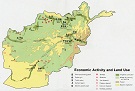
Afghanistan Economy Post 2014: Prospects and Issues


Brig (retd) Vinod Anand 
(Senior Fellow, VIF)

Secure and stable conditions remain crucial prerequisites for development and growth of economy. Though there are some analysts who believe that development and growth can take place without necessarily ensuring security first. However, that could be a self-serving argument without any solid basis for its support. Afghanistan which remains in turmoil and where plans for withdrawal of NATO/ISAF and US forces have been announced has started experiencing the adverse impact of the drawdown in both security and economy related areas.

While several statistics are given out about decrease in number of violent attacks by the Taliban yet it is also well known that the area of operations of Taliban has been expanding to cover areas in the North and the West where Taliban activity had been absent hitherto before. Though it might also be true that the number of attacks by the Taliban has decreased yet it might be a ploy of the Taliban to lie low till the western forces withdraw and thereafter test the mettle of Afghan National Security Forces which, sadly, is unlikely to be up to the mark for quite some time to come.

Meanwhile, the capital amassed by the private Afghan entrepreneurial class and wealthy Afghans has been flying out of Kabul to places in the Middle-East. Further, with draw down of the western forces and drying up of civil aid the Afghan economy is expected to suffer in a great measure. The World Bank has estimated that Afghanistan will face a projected financing gap of 25 percent of GDP by 2021-22. This in turn could impact security situation and development adversely.

There is another view that draw down of the western forces may not impact the Afghan economy much as most of the international funds do not stay in Afghanistan and find a way out in the shape as expatriated profits, salaries and imports. According to the latest Asian Development Bank Outlook, the planned foreign troop pullout by 2014 may lower growth by at least 2-3 percentage points which is being considered as not much of a decline in growth. There is also a belief that while the short-term impact of decline in aid could be disruptive there would be benefits in the long term. The World Bank has also presented a similar picture.

The international/ world wide experience is that political stability has been one of the key factors or rather a crucial factor for a successful transition. In this regard the examples of Cambodia, Mozambique, Rwanda, South Africa and Vietnam have been cited where the countries transitioned from conflict to stability and development. However, what needs to be remembered is that political, security and economic environment prevailing in every conflict-ridden country are usually unique and therefore unique solutions need to be found. Afghanistan in recent years has seen rapid economic growth which could be due to exogenous factors; what is yet to be seen is whether Afghanistan can create an economy which is self-sustaining. For its economy to become self-sustaining it would require international help for many years to come.

Along with stability, security remains another crucial factor for foreign investment and development. Unless there is a degree of security there will be little incentive for investment especially from private sector. On the other hand lack of development is also one of the major causes for insurgency and conflict. Thus it may be difficult to decide on priority between security and development. But with the planned exit (and that too at somewhat faster pace than announced earlier) there are anxieties and apprehensions that security situation is likely to worsen rather than improve and this would have negative impact on the investment climate. Can ANSF ensure security considering their yet to be developed capacities? The answer would most probably be in the negative.

It is also well-accepted that Afghanistan has large deposits of mineral and hydrocarbon resources exploitation of which could generate enough revenue for Afghanistan to move towards becoming self-sustainable. The gestation period for most of these projects, however is going to be long- thus full benefits would accrue only in the long run. To evacuate the finished products or ore from such resources would require building of the infrastructure in terms of roads, railway lines and pipelines which would also be adversely impacted by the geo-political interests of the stakeholders.

While China has planned to develop Aynak copper mines it is yet to start digging or commence this project in a meaningful way. Security remains the paramount concern. So far as its exploitation of hydro carbon reserves is concerned China National Petroleum Corporation has started production of oil in a small way in Amu Darya basin in Northern Afghanistan; the production is expected to rise to 25,000 to 40,000 barrels a day by end of the year. However, there appear to be some local rivalries and interests of the local warlords etc. which do not appear have to be taken into account. If everything turns out as planned the Chinese would also be setting up a refinery which would further add to government’s revenues and possibly create more job opportunities for the local populace.

Similarly, if and when India’s Hajigak iron ore mine project is realised it is expected to create 200 million US dollars per year revenue for the government. Hajigak's contract details include building of rail road, steel industry, power plant and others infra structure. There are plans to build railway line with linkages to Chabahar port; the other alternative could be trucking the products out which would slow down the rate of exploitation resulting into reduced volumes and lower economic activity and revenues- all this would depend on a number of factors including the expected returns from the project. Easier alternative would have been by transportation of products overland through Pakistan but obtuse policies of Pakistan prevent it from granting direct access to India.

India had also hosted an investors’ conference in June 2012 that focussed on inviting companies and businessmen to invest in Afghanistan. The conference was attended by private investors from 40 countries. The conference was timely as it was held between the Chicago and Tokyo conferences (May and July 2012)- one was about security funding i.e. for ANSF and the other for development aid (16 billion US $ over 4 years).

Five senior ministers handling mining, commerce and finance were in attendance. And they went out of their way to assure potential investors. As Anwar-ul-Haq Ahady, Afghanistan’s commerce minister said: “When you take into account the high level of risk, the return on investing in Afghanistan is much greater than most other parts of the world … Your investment will not only benefit you and your employees but also create conditions that will promote peace and stability in Afghanistan and the wider region.”

But investors who got a fair idea of opportunities for investment in Afghanistan seem to have adopted wait and watch stance. They appear to be waiting for the outcome of Presidential elections set for April 2014 and the impact of troops’ withdrawal on security and stability. No substantial commitments seem to have been made though the Afghan reps made good presentations about the incentives offered in terms of tax breaks, 100 percent ownership, easy repatriation of profits etc.

And of course, there is the question of Afghanistan’s geo-strategic location as a hub of multi-modal corridors in all directions. If the benefits of such a location are to be realised then regional cooperation is imperative. Presently, many of the regional players have their own versions of Silk Road strategies. America, China, Russia, Pakistan and even India have their own visions of such a strategy. While many initiatives for regional cooperation in building infrastructure through Afghanistan have been announced there is very little that has been accomplished on ground.

According to one Indian estimate if even 20 percent of the South and South East Asian trade were to pass through Afghanistan to Central Asia and beyond to Europe it would generate sufficient revenues for Afghanistan to become self-sustainable in the long run.

Further, traditional sectors that would aid economy are agricultural, health and education sectors- the agricultural and human resource potential are underdeveloped. They all need careful attention by the government and donors for accelerating growth, skill development and generating more jobs.

Thus, for the Afghan economy to stand on its own feet at least one to two decades would be required when all such projects could possibly be realised. Meanwhile, there is a serious risk of Afghan economy witnessing a down turn and therefore, the foreign aid and assistance would continue to be needed if the gains made so far are not to be lost.

Providing Security for the Projects

Foreign investment, especially by the private sector remains inhibited due to security concerns. Karzai has admitted that security situation was still fragile and attacks by Taliban are likely to continue post-2014.

So what are the alternatives or options available for providing security?

(a) It is business of the government to provide security for business enterprises in their territory- so ANSF would need to take on the task. Alternatively, a para military force could be created from demobilised ANA soldiers especially for this task. In any case over next few years the strength of ANSF is planned to be reduced from peak strength of 352,000(195,000 ANA, 157,000 ANP) to 228,500 by 2017; a large number of soldiers also leave after finishing their terms of engagement. (Planning for a $4.1 billion ANSF budget during 2017-2024, the United States expects to contribute about $2.3 billion yearly, and $500 million per year would be provided by the Afghan government, with that figure to rise steadily until 2024, at which time Afghans would have the capacity to provide funding themselves.)

(b) The second model is provision of security personnel by the country investing in Afghanistan which again is fraught with risks and additional costs in terms possible lives lost and money. This was tried out by India during construction of Zeranj-Delaram road in Nimroz province where the construction costs rose many fold and there were loss of lives in terms of security personnel and workers killed.

(c) Third possible alternative could be to provide international guarantees to the foreign investors to mitigate the risks of investing.

Monday, January 28, 2013

Taliban and Afghan Peace – No Tango after Paris


Monish Gulati 

A track II initiative was organized on 20-21 December 2012 by the Paris-based Foundation for Strategic Research (FRS) at the Chateau de la Tour Hotel in Gouvieux, Chantilly fifty kilometers north of Paris. The meeting was the third such event arranged by the FRS. About twenty Afghans from the quasi-governmental High Peace Council (HPC), the main political opposition parties in Afghanistan, the Taliban, as well as and the Hezb-e-Islami militant group met at Chantilly to lay grounds for more meaningful talks in the future between the Afghan government and the Taliban. The Afghan president had expressed support for the meeting, saying he backed any forum for discussion with the insurgents.

The talks were held against a background of frantic efforts to draw the Taliban and other opponents of President Karzai into negotiations on the future political arrangements in Afghanistan as the NATO and ISAF pull out by the end of 2014. Last peace talks between the US and the Taliban had broken down in March 2012 mainly because the Taliban had refused to agree to a deal under which detainees released from Guantánamo Bay would remain under Qatari government supervision at Doha. 

Meeting

Shahabuddin Delawar and Naeem Wardak represented the Taliban in Paris. Dilawar is a former deputy head of the Taliban’s Supreme Court. The Taliban negotiators were a part of what U.S views as a “pragmatist” faction within the Taliban headed by Akhtar Mohammad Mansour. A Taliban spokesman had been reported saying prior to the Paris meeting that “We are not going to discuss peace," he said. "This gathering is not about peace.”
 At the meeting Delawar and Wardak read a prepared statement and the five-point outline of their agenda called, amongst other things, for amendments to the Constitution. They said the current “constitution is illegitimate because it is written under the shadows of B-52 aircrafts” (referring to the US invasion). They demanded a new constitution be written by Afghans in “free atmosphere”, implying after the withdrawal of NATO/ISAF troops. And the new constitution should be based on “principles of noble Islam, national interest and historical achievements.” They also asked for the withdrawal of the NATO/ISAF troops prior to peace talks and the upcoming elections.

The FRS had presented an agenda for discussion during the meeting. A key demand was to study the possibility of moving the country towards a parliamentary system, with less concentration of power in the hands of the President. This view is also held by several western analysts who consider it as a drawback of the Afghan constitution. Other issues raised at the meeting covered human and gender rights, and amnesty from prosecution. The unanimous opinion regarding the Taliban at the meeting was that they should lay down their arms, stop the violence, leave their Pakistani sanctuaries and enter the Afghan political process starting with the participation in the upcoming provincial and presidential elections. 

The Afghan government initially expressed optimism after the Paris talks, “We welcome the Paris negotiations as well as the participation of Taliban at the meeting. We hope such negotiations continue,” Foreign Ministry Spokesman Janan Mosazai said at a press conference. He added that the government’s preconditions for the talks with the Taliban have not changed: a cease-fire, recognition of the Afghan constitution, cutting ties with international terrorists and agreeing to respect the rights of Afghan citizens including women and children. The Afghan government did not comment on the demands of the Taliban raised during the meeting. 

Mullah Abdul Salam Zaeef, who was the Afghan ambassador to Pakistan before the US invasion of Afghanistan was also present at the Paris meeting, not part of the Taliban team but in individual capacity. He suggested establishment of a commission comprising of all Afghan stakeholders to discuss proposed changes in the constitution in 2013. A suggestion the Taliban team did not oppose. This was possibly one of the positives of the meeting which otherwise was merely restating of positions by various stakeholders. Mohammad Hanif Atmar, former minister of interior and representative of the Rights and Justice Party at the talks said that another meeting, similar to the present one, will be held in Paris in a month. 

Post Meeting

The Afghan government and President Hamid Karzai in particular, are wary of peace efforts not led by Kabul and more so by the Taliban’s refusal to hold direct talks with it. After the Paris meeting, Afghan Minister of Foreign Affairs Dr. Zalmai Rassoul was called to the Afghan Senate to address the body's concerns over the Paris meeting. He reportedly told the Senate, surprisingly, that there was insufficient information about the backgrounds of the two Taliban representatives at the Paris meeting, and that the Taliban faction Delawar and Wardak represented could not be identified. He went on to add that there is no need of holding such meetings outside the country and such talks should be held in Afghanistan. Senator Rafiullah Haidari said the Paris meeting was not representative enough and did not represent those who fought in the Afghan jihad. 1 

Taliban Office

The second twist to the affair was provided by the Afghan government’s comments on the establishment of a Taliban office in Doha, Qatar. Afghan Foreign Minister insisted that the Afghan government will not allow the Taliban group to open a liaison office in Qatar unless the group is prepared for direct peace talks. He said, “The office for the Taliban group will not be opened unless the Taliban group or its representatives do not announce to start talks with the Afghan government. It will be highly risky if the office is opened and secret talks are held.” 2 However during the 11 January 2013 meeting in Washington, President Obama and Karzai endorsed the opening of a "Taliban office" in a third-party country to "facilitate" reconciliation talks3.

Taliban too firmed up its position after the Paris meeting and early this year a statement was released on ‘Voice of Jihad’, the official website of the Afghan Taliban, signed by "The Islamic Emirate of Afghanistan" which rejected any security agreement between the US and the Afghan government as "a personal deal between Karzai and America," and said "it shall hold no legal credibility. The Islamic Emirate shall continue its sacred Jihad against it just as it has for the past eleven years, if even a single American soldier" remains in country, the Taliban stated. The Taliban made the statement as the Afghan government is freeing hundreds of Taliban prisoners and the US government is debating the size of residual force for post-2014 period. 

Release of Taliban Detainees

Afghan officials believe that freeing Taliban members could be a positive step towards persuading the Taliban fighters to accept peace negotiations, hold direct talks with the government and eventually transform the Taliban into a political movement. The Afghan government has freed more than 250 Taliban prisoners formerly held by the U.S. and plans on releasing an additional 150 soon. 4 

Prisoners were released on January 4, 2013 from the Bagram military prison, north of Kabul, and other jails across the country. Their release was secured through a special complaints committee, amid hopes that it might help peace and reconciliation efforts. An Afghan Defense Ministry official, Jalaluddin Dehati said a total of 1,200 prisoners will be set free in the coming weeks. According to the official, Bagram prison at present holds about 3,000 Taliban fighters and suspected terrorists. 5

In neighboring Pakistan, 26 Taliban have been freed in recent months and there are reports that Kabul had presented a 40-man list of detainees to Islamabad. The list includes Mullah Noorudin Turabi, a former Taliban justice minister, Anwar ul-Haq Mujahid, a military commander who headed Taliban operations in Tora Bora. Others on the list include top advisers to Taliban leader Mullah Mohammad Omar. 

Pakistan has said recently that it plans to release all Afghan Taliban prisoners still in its custody. Jalil Jilani, Pakistan's foreign secretary said at a news conference in Abu Dhabi that Islamabad was coordinating the release of all prisoners and those released will include Mullah Abdul Ghani Baradar, the militants group's former second-in-command. Kabul has long called on Islamabad to free Baradar, whom it sees as key to moving forward the peace negotiations with the Taliban. 6

Analysts say the move to free Taliban detainees is fraught with risk. The Afghan government has not been able to track the freed detainees, and some are thought to be returning to the battlefield. Under a "safe passage" agreement between Kabul and Islamabad, prisoners have been released with no conditions and many have simply disappeared. The Afghanistan Peace and Reintegration Program, which offered resettlement opportunities including security to Taliban foot soldiers and received some $140 million from international donors, has persuaded only about 1,000 militants to join the mainstream. 7 

French Connection

The French Foreign Ministry had said that the Paris meeting -- called the “third inter-Afghan closed academic seminar” -- will bring together “participants from the various components of Afghan society for discussions on 'Afghanistan -- Toward 2020.'8 France, which hosted similar meetings in 2011 and December, 2012, says it has no direct involvement in the event other than hosting it. The Paris meeting had been preceded by similar talks on 28 June 2012 in Japan, between Qari Din Mohammad, a member of the Taliban’s former Afghan minister of planning, and Mohammad Masoom Stanekzai, head of the Afghan HPC, which had been facilitated by the Doshisha University, Kyoto. 

The meeting came on the heels of France ending its combat mission in Afghanistan as it withdrew its remaining 500 combat troops from the Nijrab base in the Kapisa region, a province northeast of Kabul. France was once one of the largest contributors to the NATO mission in Afghanistan, with a peak deployment of 4,000 troops. The Taliban did not fail to highlight the fact that their decision to attend the meeting in Paris was influenced by the French decision of withdrawing all their troops from Afghanistan which met their primary precondition for holding any talks. Hizb-e-Islami representative Ghairat Baheer, son-in-law of Gulbuldin Hekmatyar, too said that his militant group was attending the meeting in France because they admire the French government's decision to withdraw from Afghanistan. 

Analysts believe that the French interest in Afghan reconciliation comes from the fact that France had in the past backed Jamiat-e Islami, a northern, Tajik-dominated faction and the broader Shura-e Nazar, sometimes known as the Northern Alliance."The French now realise that the Taliban will be have a stronger role in Afghanistan in days to come”. They would like the interests of the Jamiat-e Islami and Shura-e Nazar, secured in the future power equations. The only progress in this direction has been Taliban’s public admission of the need to talk to the opposition groups from the former Northern Alliance. 

The US was observing the Paris meeting and would like to see this interaction take the next step toward reconciliation in terms of the resumption of what was known as the “Doha process”. This would involve an exchange of detainees and the opening of a Taliban office in Doha, Qatar. US analysts strongly believe Taliban can be persuaded to “cut a deal’, which might lead to an eventual cease-fire in Afghanistan. Taliban leaders on the other hand are said to resist any compromise that might not show them as victors. Significantly, the US ambassador to Afghanistan James B. Cunninghum has said that Washington will never attend any peace talks with the Taliban group where Afghan government representative is not involved. He said in the context of the recent meeting between Obama and Karzai that , “The two leaders made clear that peace negotiations and reconciliation are vital for the two nations and they encourage the establishment of Taliban liaison office in Qatar so that the Afghan government and Taliban group can hold peace talks. The decision will finally depend on the Taliban group.”9 

Taliban Strategy

Some observers feel Taliban leadership is changing its stance on the Afghan war and peace negotiations.10 Prior to the Paris meeting it was said that the Taliban leadership were considering a change of strategy on a wide array of issues. Zabihullah, a senior Taliban leader in the Quetta Shura informed that they are reconsidering the peace talks, the hostility towards the former Northern Alliance, their rejection of the Afghan Constitution and even participating in the next presidential and National Assembly elections. The Taliban affinity for the predominantly ethnic Tajik, Uzbek and Hazara Northern Alliance was attributed to the fact that it is opposed to the Karzai government and in favour of an Islamic state. Zabihullah also said that the Taliban is willing to accept the Afghan Constitution and democratic elections with some changes to the electoral law; a view that was debunked at the Paris meeting.

One political analyst in Kabul, believes that the conflicting signals are because the Taliban leadership is in a real quandary about how to proceed and where it can make compromises acceptable to its own followers.“For the last 11 years, Taliban leaders have motivated their forces to carry on the fight by saying the country is under attack, its government is not Islamic, and God's religion is under threat,” he said. “While the war is framed in terms of religion, it also highly personalised because the Taliban ranks include people who have lost family members. “If foreign forces are still based in Afghanistan, the constitution remains unchanged and the movement has no substantial guarantees inside or outside the country, how can its leaders convince the rank-and-file? This will split the Taliban."11

Others take a more cynical view of the insurgents’ ability to make peace, regarding them as merely an instrument of Pakistan’s intelligence service. Afghan HPC saw the release on 31 December 2012 by Pakistan of eight Taliban members imprisoned by them as supportive of the peace negotiations and promoting stability in Afghanistan. However, many observers feel the Taliban are tired of fighting and want to end the war, but have been prevented from proceeding with peace talks by Pakistan which is pushing for a larger role in the region. The softer stance of Taliban is also viewed as a manipulation by Pakistan to influence the upcoming elections in Afghanistan.

Conclusion

The Paris meeting was meant to "pave the way for formal talks in the future." But some analysts believe that “the incentives for the Taliban to negotiate a deal just aren't there". The Afghan government’s plan to draw the Taliban to the table through the release of detainees seems more like a shot in the dark as there are no assurances that the freed detainees will help bring the Taliban leadership to the negotiating table. For that matter these released detainees might reorient the power structure within the Taliban and give ‘jihad’ a new purpose and direction.


End Notes
  1. Rafi Sediqi. ‘Bona Fides of Taliban Representatives At Paris Meeting Unclear: MoFA’, Tolonews, 25 December 2012. http://www.tolonews.com/en/afghanistan/8852-bona-fides-of-taliban-repres...
  2. Sajad. ‘ Afghanistan sets conditions for Taliban office in Qatar’, Khaama Press, January0 2, 2013.
    http://www.khaama.com/afghanistan-sets-conditions-for-taliban-office-in-...
  3. Obama, Karzai endorse 'Taliban office,' agree to speed military transition’, January 11, 2013.
    http://www.foxnews.com/politics/2013/01/11/obama-and-afghan-president-ka...
  4. ‘ Afghan Militants Freed by Government’, Associated Press, January 04, 2013.
    http://world.time.com/2013/01/04/afghan-militants-freed-by-government/
  5. Afghan Government Releases Dozens Of Taliban Fighters, RFE/RL, January 04, 2013. http://www.rferl.org/content/afghan-government-releases-dozens-of-fighte...
  6. Pakistan Pledges To Free All Afghan Taliban, RFE/RL, January 18, 2013.
    http://www.rferl.org/content/pakistan-says-free-all-afghan-taliban-priso...
  7. Frud Bezhan. ‘Taliban Prisoner Releases Are High-Risk, Low-Reward’, RFE/RL, January 13, 2013.
    http://www.rferl.org/content/afghanistan-taliban-release-strategy-high-r...
  8. ‘Afghan Factions Meeting In France’, RFE/RL, December 19, 2012.
    http://www.rferl.org/content/afghanistan-talks/24802681.html
  9. Meena Haseeb . ‘Afghan peace talks pending Taliban agreement with Kabul’, Khaama Press, January 13, 2013.
    http://www.khaama.com/afghan-peace-talks-pending-taliban-agreement-with-...
  10. Ron Moreau and Sami Yousafzai. ‘Afghanistan: Drastic Changes for the Taliban’, December 15, 2012. http://www.thedailybeast.com/articles/2012/12/15/afghanistan-drastic-cha...
  11. Mina Habib, Hafizullah Gardesh . ‘Kabul Officials in Face-to-Face Meeting with Taleban’, Afghanistan ARR Issue 446, 01 January 2013. http://iwpr.net/report-news/kabul-officials-face-face-meeting-taleban

Wednesday, January 16, 2013

LoC Ceasefire Violation: Talking Peace only to Undercut The Dialogue by Other Means


Sushant Sareen 
(Senior Fellow, VIF) 

The flag meeting between the local Indian commander and his Pakistani counterpart has concluded in an utterly predictable fashion: India has protested the repeated violation of the LoC ceasefire by Pakistani troops and strongly took up the issue of barbarity displayed by Pakistani soldiers who crossed the LoC, killed two Indian soldiers and mutilated their bodies, carrying away the head of one soldier as a trophy; Pakistan has brazenly denied all the Indian charges and hurled counter-accusations at the Indians. 

Despite this talking at each other, the flag meeting could possibly have achieved the limited purpose for which it was being held viz. cooling down things so that hostilities don’t spiral out of control. Of course, how long the temperature remains lowered is another matter altogether. Sooner or later, efforts will be made from the Indian side to even the scores – the morale of the troops who are seething with rage over the savage actions of Pakistani soldiers depends on this. As far as the Pakistanis are concerned, they could well violate the ceasefire again, either to push in infiltrators and terrorists or in response to an Indian retaliation, or even in pursuit of some larger strategic game-plan which could very well have been the reason why tensions were ratcheted up in the first place. 

Basically, there are two possible explanations for the cross-LoC adventurism by the Pakistani forces at this stage. The benign explanation is that it was a routine ceasefire violation which spiralled out of control. In other words, it wasn’t part of any premeditated plan. Once the firing started, the two sides went up the escalation ladder with no easy way of defusing the situation because of political compulsions of all the main players. The civilian government in Pakistan is already coming under pressure of the Islamists and the military establishment for going soft on India and opening up trade and relaxing travel between the two countries. With general elections round the corner, the civilian government in Islamabad doesn’t want to appear as having backed down from giving a muscular response to an alleged Indian provocation along the LoC. 

The military leadership in Rawalpindi is also facing dissension within its rank and file for re-engaging with the Americans and opening up NATO supply lines post the Salala incident in which 26 Pakistan Army soldiers were killed in bombing by US aircraft in November 2011. For the Pakistan Army chief Gen Ashfaq Kayani to now appear as adopting a pusillanimous approach towards India will be quite disastrous. What is more, the Pakistan Army probably feels that it needs to send out a signal to India to not think that it is on its knees because of the myriad problems within Pakistan. In other words, the Pakistan Army wants to convey that it still has a lot of fight left in it and India shouldn’t think it can trifle with Pakistan just because it is in a tight spot on both the western front and internally. 

The predicament of the Indian political leadership is no less. Already seen as a weak, vacillating and extremely corrupt and incompetent government which is also seen as bending over backwards to appease Pakistan, the UPA-II finds itself in an unenviable position. It doesn’t want hostilities along the LoC to spread and would like to cool things down but without being seen as having thrown in the towel. Adding to its problems is the seething rage in the armed forces which cannot tolerate the thought of letting the extreme provocation by the Pakistan Army go unanswered. The manner in which the Indian government is trying to resolve the matter is by playing good cop – the political leadership playing down the incident and taking a soft approach – and the military leadership talking tough to cool down the soldiery – the air chief talking about ‘other options’ and the army chief warning of an ‘aggressive’ response to future violations of ceasefire and assuring his troops that India will respond to the outrage of mutilation of its soldiers at a time and place of its own choosing.

The bottom-line as far as the benign explanation goes is that neither side wants things to go out of control and the ceasefire to collapse. Despite India taking the issue of the treatment meted out to its soldiers extremely seriously, it doesn’t consider the matter to be of a level over which it is willing to either suspend the dialogue with Pakistan or start a general shooting match along the LoC. Of course, the incident has once again laid bare Pakistan’s treacherous conduct – talking peace and cooing sweet nothings on the one hand and displaying barbarity and indulging in unprovoked firing on Indian soldiers on the other hand. But India has somehow come to expect this sort of treachery from Pakistan and at least the current dispensation is more than happy to live with it. 

Before we touch upon the second and more plausible, if also more sinister, explanation of the entire LoC affair, it is important to disabuse ourselves of the nonsense that the Pakistan army is a professional and modern army which doesn’t engage in the mutilation of corpses of its adversaries. The fact of the matter is that despite all the trappings and traditions of the old British Indian army, the mindset of the Pakistan army is that of a medieval Islamist or Jihadist army. The only difference between the Pakistan army and its illegitimate offspring, the Taliban, is that the former is a uniformed force while the latter is not. None other than the former leader of opposition in Pakistan, Maulana Fazlur Rehman, has revealed that the Pakistan army would hurl living Taliban fighters out of helicopters flying from a height of a 1000 feet and more to instil fear and terror among the Taliban ranks. During the 1990’s, Pakistani Urdu press were full of stories and pictures of beheaded Indian soldiers which were displayed as trophies by the jihadist proxies of the Pakistan army. 

Apart from the mutilation of Limit Saurav Kalia and his men during the Kargil conflict, there is also the incident of Gen Pervez Musharraf felicitating the terrorist commander Ilyas Kashmiri after the latter presented him with the severed head of an Indian soldier. A former Indian general has revealed that during the 1965 operations in Chammb, the Pakistan Army severed the ears and noses and even genitals of dead Indian soldiers. And for anyone to suggest that in this latest incident, it was perhaps some jihadist force which carried out the mutilation is nothing but an apology, if not an alibi, for the Pakistan Army. The simple fact is that given the saturation presence of the Pakistan Army along the LoC, it is inconceivable for a jihadist force to operate without the permission and assistance of the Pakistan army. Therefore, there is no way that the Pakistan Army can be absolved of this dastardly and barbaric act which was carried out as part of a larger game-plan to deliberately increase tension along the LoC and the Eastern front.

This is where the second and more sinister explanation comes in. Ever since 9/11 and the subsequent US-led NATO occupation and operations in Afghanistan, Pakistan has been trying hard to convince the Western bloc and the international community that the road to Kabul goes through Kashmir. But until now, this ploy hasn’t received much traction, partly because India reacted very emphatically against drawing any such linkage and partly because Pakistan’s own double-speak and double-game in Afghanistan lost it all support and sympathy of the West. Now however, with the Afghan endgame unfolding – ISAF troop withdrawals from Afghanistan moving into a high gear, reconciliation moves with the Taliban gathering pace and the US desperate to leave behind some semblance of order before it quits Afghanistan – Pakistan senses another opportunity to draw the attention of the West to solve the Kashmir issue in accordance with Pakistan's wishes and holding out the threat that unless this is done Pakistan would be forced to divert its focus on the eastern front with India leaving the Western forces in the lurch in Afghanistan. The perceptible US tilt in favour of Pakistan is also emboldening the Pakistanis to indulge in some sabre-rattling and indeed adventurism on the eastern front under the belief that if things get heated up on the Indian front, the US and its other Western allies will be left with no choice but to intercede on Pakistan's behalf against India. 

The timing of the latest provocation along the LoC also makes sense because Pakistan is holding the presidency of the UN Security Council in January and tensions in Kashmir allow Pakistan to try and internationalise the Kashmir issue at the UN. The alacrity with which the Pakistani officials proposed involving the UNMOGIP to investigate the entire incident suggests premeditation behind the cross-LoC raid. Not only has the Pakistan foreign office been trying hard to get the UN involved, it has also launched a diplomatic offensive with the American and EU ambassadors to internationalise the issue. 

As far as India is concerned, it needs to operate at two levels to scotch this Pakistani move. India must react strongly to any provocation along the LoC, something that the Army Chief Gen. Bikram Singh has indicated in his press conference. At the diplomatic level, it is important that India convey to the US that while we understand their compulsions in Afghanistan and the fact that the Americans will want to protect their interests in the Af-Pak region by reaching out to Pakistan, India has also its own vital interests to protect and there are certain red-lines the breach of which India will never allow. The US cannot expect India to surrender its vital interests for the sake of the Americans. Once India makes clear to the international community where it gets off, the so-called pressure that is likely to be brought on India will disappear. 

India needs to keep in mind the lesson of Kargil. Once hostilities started, the international community tried to pressure India against responding forcefully to Pakistani aggression, holding out assurances that they will try and resolve the matter. Had India agreed, the Pakistanis would have been still sitting on the heights they occupied with the international community twiddling its thumbs. But once India responded with force and refused to listen to the self-serving advice of the international community, the boot was suddenly on the other foot and Pakistan was seen as the aggressor and all the international pressure was then on Pakistan to vacate its aggression. This then is the reality of international politics and soft-peddling on issues of vital interest will only lead to surrender of these interests.