Showing posts with label FDI. Show all posts

Thursday, May 16, 2013

Lip Service is Still Being Paid to Defence Indigenisation


Brig (retd) Gurmeet Kanwal, 
Visiting Fellow, VIF

The Defence Minister, Mr A K Antony, has repeatedly exhorted the armed forces to procure their weapons and equipment from indigenous sources in recent months. It is a well-established fact that no nation aspiring to great power status can expect to achieve it without being substantively self-reliant in defence production. However, it is not the armed forces that are the stumbling block. Unless the government drastically reorients its policies, the import content of defence acquisitions will continue to remain over 80 per cent.

India’s procurement of weapons platforms and other equipment as part of its plans for defence modernisation, must simultaneously lead to a transformative change in the country’s defence technology base and manufacturing prowess. Or else, defence procurement will remain mired in disadvantageous buyer-seller, patron-client relationships like that with the erstwhile Soviet Union and now Russia. While we manufactured Russian fighter aircraft and tanks under license, the Russians never actually transferred technology to India. Whatever India procures now must be procured with the transfer of technology being built into the contract even if it means having to pay a higher price. The aim should be to make India a design, development, manufacturing and export hub for defence equipment in two decades.

Though it seeks to encourage public-private partnerships, the government continues to retain its monopoly on defence production and R&D. The latest Defence Procurement Procedure (DPP) was amended in April 2013 to reflect the current thinking on ‘buying Indian’. However, in effect it still favours the defence PSUs over the private sector. MNCs are allowed to bring in only up to 26 per cent FDI as against 74 per cent for non-defence sector joint ventures. Though the procurement of weapons and equipment worth more than Rs 300 crore from MNCs has been linked with 30-50 per cent offsets, it is doubtful whether the economy is ready to absorb such high levels of offsets.

The DRDO is in the process of implementing the report of the P Rama Rao committee that had asked it to identify 8 to 10 critical areas that best fit its existing human resource pool, technological threshold and established capacity to take up new projects. Since its inception in 1958, the DRDO has achieved some spectacular successes, but also has many failures to its name. However, to its credit, it worked under extremely restrictive technology denial regimes and with a rather low indigenous technology base.

The DRDO must now concentrate its efforts on developing critical cutting edge technologies that no strategic partner is likely to be willing to share; for example, ballistic missile defence (BMD) technology. Other future weapons platforms should be jointly developed, produced and marketed with India’s strategic partners in conjunction with the private sector. The development of technologies that are not critical should be outsourced completely to the private sector. Also, the armed forces should be given funding support to undertake research geared towards the improvement of in-service equipment with a view to enhancing operational performance and increasing service life. Gradually, the universities and the IITs should be involved in undertaking defence R&D. This five-pronged approach will help to raise India’s technological threshold over the next two decades by an order of magnitude.
The defence production process must provide a level playing field between defence PSUs and private Indian companies forming joint ventures with MNCs where necessary. The amount of FDI that MNCs can bring in must be raised to 49 per cent immediately and to 74 per cent in due course to make it attractive for MNCs. However, no MNC that is unable to provide transfer of technology – either due to the home country’s restrictive laws or due to proprietary considerations – should be considered for future defence acquisitions.

India cannot leap-frog to a higher defence technology trajectory virtually overnight. Transforming a low technology base to a higher plane will need time, patience and large-scale capital investment. It will also need strong support across the political spectrum. In the interim period, there will be a further dip in defence preparedness. This short-term weakness in capacity building will need to be carefully weighed against long-term gains that will be strategic in nature.

The immediate requirement is to think big in keeping with the country’s growing economic clout and to plan for the future with a level of confidence that policy planners have not dared to exhibit before. In 10 to 15 years India must begin to acquire most of its defence equipment needs from Indian companies—with or without a joint venture with an MNC. Only then will the era of self-reliance in defence acquisition truly dawn on the country. It will be a difficult quest, but not one that a great nation cannot realise.

Tuesday, December 11, 2012

GMR Contract Termination and India-Maldives Relations


Dr N Manoharan 
(Senior Fellow, VIF)

India was upset when Maldives announced termination of $511 million contract with the Indian infrastructure company GMR Infrastructure Limited (GIL) on 27 November 2012. GIL-MAHB (Malaysia Airports Holdings Berhad) consortium with 77 and 23 percent stakes respectively won the project in June 2010 to maintain and develop Ibrahim Nasir International Airport in Malé. Despite done through a global tendering process conducted by the International Finance Corporation (IFC), the Maldivian government under President Mohamed Waheed justified the contract termination “on grounds that there were many legal, technical and economic issues.” The Singapore High Court initially stayed the termination, but later ruled that “the Maldives government has the power to do what it wants, including expropriating the airport.” Even before the Court’s final ruling, the Maldivian government conveyed its termination decision as “non-reversible and non-negotiable” and “no such injunction can be issued against a sovereign state”.

Significantly, when the project got underway in November 2010 it became the single biggest FDI into Maldives that too at the time of global economic recession. It was to upgrade, maintain and operate the existing Airport as well as build a new terminal by 2014. In the process, the aim was to increase the traffic from 2.6 million passengers per annum to over five million. Located in the Malé Atoll, the airport is not only the largest in Maldives, but is considered as one of the fastest growing in the region. All these have come to a naught now despite GMR spending over $230 million. Malé has agreed to compensate GMR, but the termination has sent negative signals to investors in general and India in particular.

If the reason is legal, Maldives would not have much problem in abiding by Singapore High Court’s stay on the termination. If the reason is technical, the project would not have stayed alive successfully for two full years; even otherwise Waheed, who was Vice President in Nasheed’s government, and later as President, had enough time to sort it out. If the reason is economic, Malé would have accepted GMR’s offer waving the $25 airport development fee for all Maldivians flying out of Maldives. The atoll state indeed has every right to take a call on matters that suits its national interests. But, what annoyed India most was the unprofessionalism displayed by Waheed’s regime on the issue and its disregard to abide by international agreements due to local political considerations. Surprisingly, even Indian Foreign Minister Salman Kurshid’s suggestion to iron out the differences between Malé and GMR through a neutral international expert was not considered by Maldives.

As a larger donor to Maldives, India is concerned that such thoughtless cancellations would hurt the interests of the atoll state in the long run. The move is not an encouraging one for prospective investors, especially the Indian ones. New Delhi quickly reached out to Waheed when he succeeded Nasheed, the first democratically elected president of Maldives, in a bloodless coup this February. It may look like that the Indian gesture went in vain. However, the fact that fringe parties like Adhaalath Party could dictate terms to the government of Maldives shows that President Waheed is not in control of things. What is more concerning is anti-Indian sentiments shown by the groups that have been behind the termination of GMR contract. This got India worried on the safety of about 30,000 Indians working presently in Maldives and the state of Indian interests there.

What is also more worrying is favourable disposition of these groups towards China that has been desperately looking for a strong foothold in the Indian Ocean region. In a tweet, Adhaalath Party stated that “We would rather give the airport contract to our friends in China, who now make the majority of our tourist population.” It further stated, “…the addition of Maldives as a friend [by China] would be a massive blow to future Indian power in this region.” Beijing has for long been building maritime and other linkages with the countries of Eastern Africa, Southeast Asia, Seychelles, Mauritius, West Asia, Pakistan, Maldives, Sri Lanka, Bangladesh, and Myanmar. The avowed objective behind is to ensure the security of its sea lanes, especially unhindered flow of critically-needed energy supplies from Africa and West Asia. At the same time, these linkages have had the impact of somewhat encircling of India, which some call as “String of Pearls” construct. Maldives is undoubtedly an important “pearl”. Sino-Maldives interactions have increased in the recent past to extent of China opening an embassy in Male in 2011. Chinese are among the top visitors to the Maldives lately. Beijing has evinced keen interest in developing infrastructure in Ihavandhoo, Marao and Maarandhoo Islands of the Maldives. Not without reasons that the current dispensation in Male holds the view that “It will be to the detriment of Maldives not to engage with China.”

Maldives may find China attractive now, but India’s long-term commitment and help in developing the island cannot be undermined. India’s Standby Credit Facility to Maldives runs into millions of dollars. Several state and private Indian institutions have been playing a vital role in the economic and cultural development of the Maldives. Above all, it was India that promptly dispatched its armed forces to foil a coup attempt (‘Operation Cactus’) aimed at deposing the then President Gayoom.

Ideas like suspending economic aid to Maldives until it falls in line are being floated in India. But, any such move would not work and in fact push Maldives further into Chinese hands. Any punitive measure would also help in strengthening radical anti-Indian forces in the island. New Delhi should, of course, let Malé know of its disappointments and the costs involved in the long run. At the same time, what is required is a patient handling of the issue in the interest of Maldives, in the interest of India-Maldives ties and in the larger interest of regional peace and security. On its part, the Maldivian government, instead of outright rejection, should consider negotiating with GMR and flush out amicable settlement. Narrow political considerations should not come in the way of image and development of the island.

Tuesday, October 9, 2012

Poll won’t Affect Ties with India


Kanwal Sibal
Member Advisory Board, VIF

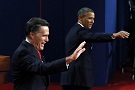
The upcoming presidential election in the United States lacks the excitement of the election four years ago when Barack Obama made history by being the first black person ever to occupy the White House. He cannot make that kind of history again. The issues he is grappling with in this election are humdrum ones of a sluggish economy and job-creation. They concern the lives of ordinary Americans but have no other extraordinary significance.

The challenger, Mitt Romney, is not an electrifying candidate either. On the contrary, his campaign has been judged as amongst the worst ever by a Republican nominee. To many he is not a credible candidate in terms of clarity and consistency of views and convictions. The domestic focus of the election also reduces the level of outside interest in countries that are not US allies.

Thinking

Whether Obama or Romney wins is not too material for India-US relations because of the level of maturity and stability they have reached in the last few years. Political and economic attitudes on both sides have been transformed, with a visible desire to work together in mutual interest. The claim that bi-partisan political support now exists in the US for closer ties with India is well-based. The electoral platform of both parties is positive about India, with the Democrats affirming that the US “will continue to invest in a long-term strategic partnership with India’ and the Republicans calling India a “ geopolitical ally and a strategic trading partner”.

India has grown out of the simplistic traditional thinking that Democrats are more friendly towards India than Republicans. If Kennedy was more understanding of India, Carter was much less so and Clinton’s positions on nuclear matters, Kashmir, human rights issues etc were highly negative for us, a reality his successful visit to India towards the end of his second tenure should not obscure. On the other hand, if Nixon’s attitude towards India was unspeakable, Bush was responsible for transforming US ties with India. In reality, Democrats and Republicans will do what they think is best for the US in given circumstances.

We know, of course, where we stand with Barack Obama, whereas Mitt Romney is an unknown quantity. But familiarity with one and the absence of it with the other is not important beyond a point as US policies emerge and evolve from an intensive internal inter-departmental process that has maximization of national interest as objective. Obama’s views were not initially too congenial for us on several issues, but they evolved more favourably for us in the course of his presidency. After election he publicly mulled over nominating Clinton as US Special Envoy on Kashmir. He believed that to obtain Pakistan’s support for the US in Afghanistan it was necessary to press India to make concessions to Pakistan on Kashmir. He was opposed to any prominent role for India in Afghanistan. He alienated the most pro-US section of the Indian entrepreneurial class by his position on outsourcing. But recognizing altered realities, his discourse on Pakistan, India’s role in Afghanistan, on Kashmir etc has changed in our favour, though on outsourcing he continues to play politics.

The Obama Administration is helping India strengthen its capacities to manage internal security, which the new Administration will also do. It has designated LeT and the Haqqani group as terrorist organizations, and declared a bounty on Hafiz Saeed. But then the US has to manage the political and military transition in Afghanistan for which they need a minimum of Pakistani cooperation, including access to supply routes. These realities will weigh with whoever wins the election.

Candidates

The US as a whole, though, is now deeply disenchanted with the vagaries of Pakistan’s policies towards terrorism and Afghanistan. Romney undoubtedly shares the general American disillusionment with Pakistan’s conduct. If Obama loses and Romney wins one can hardly see the US overcoming its distrust of Pakistan.

On Kashmir, Romney can be expected to pursue Obama’s present neutral line of leaving it to India and Pakistan to settle the issue bilaterally. The US is not yet ready to give India the kind of comfort in Kashmir that should logically flow from its own experience of Pakistan’s toxic policies in its immediate neighbourhood driven by military ambition and religious radicalism. However, on the whole, we will have less issues with US policy towards Pakistan whatever the outcome of the next election.

Romney is particularly tough on China. If the Democrats under Obama consider India a lynchpin in the US pivot towards Asia, the Republicans under Romney will hardly think otherwise.

Issues

Whether one candidate or the other wins, India and the US will have to contend with some irritants and unmet expectations. For India, easier export controls and high/dual use technology transfers, additional costs imposed on the Indian IT industry by hikes in H1B and L1 visa fees, outsourcing issues etc will remain on the agenda. US concerns about our nuclear liability law and stalling of economic reforms will continue even though the government has allowed FDI in multi-brand retail and raised its ceiling in the insurance and pension sectors. Despite our bilateral trade reaching $100 billion, with a significant spurt in US exports, the US will continue to press for more market openings. Growing US defence sales to India is a strategic advance denoting growing mutual trust, but the US will expect more in this area. With job creation concerns in the US, outsourcing issues will persist. India will continue to preserve its strategic autonomy in foreign policy, with the US complaisant but suspicious about its “nonaligned” logic.

Obama or Romney- for us in meaningful political terms the choice would not be of much import.

Thursday, September 27, 2012

Down With Subsidies, Up With Reforms


Dr. M.N. Buch

Visiting Fellow, VIF


There is unemployment in India? There is poverty? The economy is stagnating? What is causing all this? Obviously the only villain on the scene is a gentleman called Mr. Subsidy. Because the State gives subsidies it causes the budget to imbalance, raises the fiscal deficit and prevents our patriotic, people-friendly businessmen from accessing capital with which they can promote industry and create new jobs. Abolish subsidies and India will be prosperous.

What exactly is India? Is it a largely middle class nation in which the poor are marginal? Rajiv Gandhi and his admirers such as Mani Shankar Aiyer talked of a hundred million middle class consumers who form the backbone of our society and economy. Because the population of India then was eight hundred million, that still left seven hundred million outside the pale of that section of society which had the money to buy goods and services. Government and its policies were aimed at promoting the consumerist elements of society and the question which I asked Rajiv then was whether the government no longer existed for the seven hundred million people who could not afford to consume and were living at the subsistence level. Our intelligentsia, our press and electronic media were so engrossed in highlighting the achievements of middle class India and the business houses which serve it that the reality of India was lost sight of. The reality of India is that of our five and a half lakh villagers at least half has no access to road communications, very large parts of the country are cut off during the monsoon, have poor bus connectivity, highly unsatisfactory power supply, with very little scope for employment except that which is directly linked with agriculture and allied activities. There is very poor schooling, not even minimum health care and certainly very few urban amenities available. It is this India which lies outside the consumerist society.

Almost all our small and medium towns are bereft of even basic sanitation and the villagers are only slightly better off because here open defecation takes place in fields rather than along roadsides. For mere survival rural India and small town India, which is only one slot above the totally rural society, are heavily dependent upon government for infrastructural improvement, basic social infrastructure and the type of investment which will bring about marginal improvement in the economy. To give an understanding of this India let me give one example. My institution was doing work on watershed management in Ghodadongri Block of Betul District. Though the area lies within the Tawa Basin it has very little irrigation, the land is undulating and hilly, there are very few roads and many villages lie outside the reach of motor transport. The watershed management programme has brought about improvement in ground water and has also provided fodder and fuel to the villagers through the afforestation programme. Part of the programme includes promotion of horticulture, including planting and nurturing of fruit bearing trees. The villagers told us that they did not need papaya and guava plants because the fruit bruises easily, with the condition of roads it is difficult to transport this fruit to market and, therefore, the villagers preferred more hardy fruits of the citrus variety which could be transported over rough terrain. To develop this region one needs to build roads and if the cost benefit analysis were to be done on a commercial basis we would not be able to justify any roads. However, if we add the social benefit flowing to people and, over a period of time the economic benefits that would follow, the roads would be justified. Private business looks at the gestation period of a project and, therefore, would not touch rural roads with a barge pole. The State has to step in and the expenditure on the roads could be interpreted as a form of subsidy to rural areas. Should government stop building rural roads?

Before the nation adopts a particular stance on the subject of subsidies it might be worth considering what exactly is meant by a subsidy regime. In the United States, by no stretch of imagination a socialist country, the Federal Government has accepted as a matter of policy that social security, including pensions, will be made available to elderly people who have retired. There will be medical coverage but through a process of insurance, war veterans will be looked after by the State in the matter of health care, the unemployed will be helped to find jobs and in the meanwhile will be paid an adequate unemployment grant to keep body and soul together, education up to the school leaving level will be State funded and food stamps and unemployment insurance to pay rent for accommodation will be available to the poor and unemployed. Forty-seven percent of the population of the United States does not pay income tax because of the above welfare subsidies. How are subsidies paid? In a recent article published in The Guardian and reproduced in the Hindustan Times, Michael Cohen points out that first and foremost there is a basic social contract in the United States between the citizens and the State and health care, food, housing, unemployment benefits, etc., are all a part of this social contract. Senior citizens who have pension benefits have spent years when they were employed in paying social security fees and taxes and that what they are getting after retirement is only a deferred payment for what they have already contributed. Those who are unemployed and are receiving unemployment benefits are the very persons who, when they were employed, paid taxes and such social security fees, etc., as are prescribed and that these and taxes paid by the more fortunate citizens enable government to provide social security coverage to the less fortunately placed. In other words, subsidy in this case comes out of payment made in the past or payment made today because in the ultimate analysis even a capitalist State such as the United States of America has a clear understanding of its welfare role and its social responsibility to its citizens. Instead of looking at this as a subsidy it should be treated as a deferred payment for past taxes received and a financial accommodation temporarily for those who lost their jobs and are in immediate need of help. Similarly, State funding of education ensures that there is universal coverage up to the school leaving level and this represents an investment by the State in the future citizens of the country. This, too, is not really a subsidy because it is an investment the dividend of which is declared later but on which no quantifiable value can be estimated because the benefits flowing from an educated citizenry are virtually limitless.

Let us take three other areas of State concern. Unemployment benefits ensure that a person passing through difficult times does not starve and is able to either retrain himself to increase his employability quotient, or is able to arrange for an appropriate job without loss of dignity. Food subsidy by way of encashable food stamps prevents malnutrition and promotes health. This is equally true of medi-care, because ultimately speaking a healthy population is always a national asset. Of course Britain and most European countries carry the concept of social security much farther than do the Americans, but there is also the concept that a citizen with a substantial income base is responsible for looking after his less fortunate brethren who, in turn, by becoming part of labour force with a potential for high productivity, contribute to national prosperity through the employment that they get in due course. To call such a regime a subsidy regime is ridiculous.

There is another fallacy of a free market economy that it allows market forces to work and as a result of this the State does not need to provide subsidies. Market forces are largely a function of supply and demand and even the economies which pride themselves on being market based use the power of the State to influence or even manipulate the market. This is done in many ways, including by manipulating interest rates whereby the equivalent of the Reserve Bank of India regulates money supply by making money more expensive, thus reducing consumption and operating as deflationary measure. However, when money supply reduces because there are no takers it can lead to unemployment and unhealthy deflation. At this stage the Central Bank once again steps in and by reducing the interest rate it brings more money into the market. Why should administered interest rates be allowed to exist? Why should interest also not follow a demand and supply model, that is, if the demand for money increases the interest rates would naturally rise, but when this makes money too expensive and demand falls the interest rate would also decline. But that is not how the system functions because every government would like to ensure financial stability and not permit wild fluctuations based entirely on an unregulated market.

Let us take another case. About forty years ago the world faced a severe oil crisis because the oil producing countries deliberately reduced production. Petroleum prices rose exponentially, but countries such as the United States immediately intervened in the following ways:-
  1. Diplomatic pressure on OPEC countries with a veiled threat of force hovering in the background.
  2. Reduction in the demand of petroleum products through high taxes, severe speed limits so that consumption could be reduced and, in many countries, the promotion of public transport and a scaling down of privately owned people movers.
  3. Release of petroleum stocks from reserves, especially in the United States. How should one view these measures? They were aimed at keeping petroleum prices under control, thus protecting the consumer. Does this not also form part of a subsidy regime?
Let us take another example, which is of agriculture in the United States. Every year the Department of Agriculture makes forecast about production, not only in the United States but worldwide. On this demand models of the consumption of various agricultural commodities are prepared and calculations made of the quantum of product available and its effect on prices. If glut of a particular commodity is estimated, then farmers are encouraged to reduce the area under that particular crop, with a specific target being assigned for such reduction and a State subsidy is given for not producing that crop and heavy taxes imposed for growing it. When a shortage of a particular product is forecast the process is reversed and tax concessions given for bringing more area under cultivation of that particular crop and heavy taxes levied for not growing that crop. Is this interventionist regime also not part of a subsidy regime in which there are positive subsidies and also negative subsidies by way of taxes?

We have talked about countries which have a relatively high GDP and per capita income. Let us come to India, where our per capita income is well below the level of the more developed countries. There are vast numbers of poor people and whereas various calculations have been made about those who are Below the Poverty Line (BPL) it would be safe to say that at least thirty percent of Indians live below any rationally calculated poverty line. Then there are a large number of people who are just marginally above the poverty line, which means that they are able to survive a little above the margin, but whose capacity and propensity to consume does not go beyond the bare essentials. By any civilised standard these people also will be deemed to be below the poverty line. That rules out about fifty percent of the population of India from being capable of consumption of items beyond the bare minimum. Actually when Rajiv Gandhi was Prime Minister he and his cohorts trumpeted the fact that India had one hundred million consumers, which still left seven hundred million people. The then population of India was eight hundred million. Even today barely fifteen percent of the people of India are in a position to consume commodities beyond the bare essentials and though fifteen percent of one thousand two hundred million people, that is, one hundred sixty five million people, is a sizable number of consumers, there are more than one thousand million people who, if they are to be made a part of the consumerist society, would need either a direct boost of income or some form subsidy to give them at least a minimum standard of living.

The vast majority of Indians cannot afford health care and are heavily dependent on medical facilities provided by government. We have allowed our government medical institutions to run down, thus forcing people into the arms of private medical institutions. We have a scenario in which people have no affordable medical facilities and the high fees of private medical care either deprives people of any health care or forces them to pay medical bills by cutting down fees on absolutely essential items. How can any sensible person oppose either State funded medical insurance for these people or a major investment by the State in medical facilities which takes health care to the poor?

Let us take the case of education. Our best institutions of education in the field of technology, management and medical education are now virtually beyond the means of a child coming from an ordinary Indian home. Murli Manohar Joshi, as Education Minister, had advised the Indian Institutes of Management that they should not make their fees so high that a middle class Indian cannot afford to educate his child there. He promised to make available a level of state funding to the IIsM which would enable them to operate at a level equivalent to that of the best business schools in the world. Unfortunately the IIsM did not agree, with the result that today a high fees paying student has only one objective in mind, which is to improve his employability to a level where he can command a high salary on passing out from the institute so that he can repay the loan that he had taken. Research, fundamental or applied, becomes the casualty.
Let us come to school education. Most State run schools are of such miserable quality that they are hardly able to impart even literacy, much less education to their children. A suggestion that the government should create ten thousand new Navodaya Schools, which would be rural-based, to upgrade the level of education met considerable opposition in government, but eventually six thousand such schools were approved because of the Prime Minister’s intervention. But the Planning Commission and the HRD Ministry wanted them to be in the Public-Private Participation Mode and, therefore, the scheme is almost stillborn. Had these schools been set up would it be a subsidy or would it be an investment in our future? If affordability were the sole criteria for creation of infrastructure, no city infrastructure could ever be built. The entire Jawaharlal Nehru National Urban Renewal Mission is based on a policy of upgrading urban infrastructure and for this providing adequate funds, largely by way of grants but also by way of loans for assets which benefit individuals, such as social housing. A certain basic urban infrastructure improves the efficiency of cities and an efficient urban settlement also one to which employment generating businesses and industries are attracted. In turn this expands the employment base in that particular town, generates income for individuals, the enterprise, local government and the State and Central governments. Again, is this a subsidy or is it an investment?

One of the very successful examples of a healthy subsidy regime is the mid-day meals programme of Tamil Nadu and the provision of highly subsidised rice to the poor in the same State. These two programmes were considered as political gimmicks, but because the programmes have been administered efficiently and relatively honestly they have improved the levels of nutrition of school children, increased enrolment and reduced the drop out rate, while giving access to grain to the very poor who otherwise would not have been able to buy it. Whatever the cost, the social benefits of these two programmes have been universally accepted and most States are trying to replicate them. What marks out the Tamil Nadu programmes is the efficiency of delivery and unfortunately this is not universally replicated.

Another area of subsidies is the free or very cheap electric power to farmers. Electricity is the energy which moves a prime mover, the motor and pump which lifts water. Water is a direct input into agriculture and where irrigation is extended the farmers’ productivity undergoes a dramatic change. Unfortunately this is one area where the economics of subsidised power was not worked out, with the result that most Electricity Boards are bankrupt, transmission lines are not well maintained, there is erratic power supply and commensurate benefit has not flowed to the farmers. The present government of Gujarat moved swiftly to separate the agricultural feeder from the normal feeder, guarantee ten hours of three phase supply at constant voltage to the farmers and also guarantee twenty-four hours supply at full tariff to every village. Every village in Gujarat is covered by this scheme, the Electricity Board has shown a dramatic increase in revenue and because it is now surplus in financial terms, it has added generating capacity to the system and line maintenance has shown significant improvement. Because power supply is guaranteed for twenty-four hours many small scale industries and businesses have come up in villages throughout Gujarat. In this case what is needed is efficiency and guaranteed supply of power, which completely obviates the need for a subsidy.

The list would be endless, but I would like to close this paper by discussing two areas of subsidised supply of a commodity, LPG and diesel. Government has increased the cost of an LPC cylinder in excess of six cylinders a year by approximately Rs. 350 per cylinder. Gas is supplied in Madhya Pradesh for Rs. 452 per cylinder, which will now go up to Rs. 798 per cylinder. That represents a seventy-six percent increase in the cost of L.P.G at one go. In the case of diesel the price has gone up by Rs. 5 per litre, but when taxes are added this come almost to Rs. 6 per litre. Even this represents an increase of approximately fourteen percent. Diesel is the fuel for all major prime movers in the field of transportation. The percentage of diesel used by car owners is about six to seven percent of the total. The balance is used by goods vehicles and by public transport such as buses. Some diesel is used by railways and a substantial amount is used in rural areas as tractor fuel, fuel for diesel pump sets, etc. In other words, over ninety percent of diesel is used a fuel for prime movers which serve the ordinary citizen of India. A person who drives a diesel engined Mercedes car would use an aircraft for long distance travel, the fuel of which could be aviation kerosene and not diesel. It is the poor and lower middle class citizens who travel by bus and must of the goods carriage vehicles actually transport commodities which are not luxury items. The bulk of commodities would come within the definition of essentials or a level or two above essentials. The fourteen percent increase in fuel cost would automatically lead to upward revision of tariff and this would be reflected in commodity prices in the retail market. A person living at or only slightly above the level of subsistence just cannot afford to pay this additional impost. By raising diesel prices government has hit the poor hardest of all.

The philosophy behind introduction of LPG into India was that this is a nonpolluting fuel, it is an excellent substitute for all other fossil fuels such as soft coal, firewood, etc., and it is cleaner than the kerosene used for cooking. Government as a matter of policy gave subsidised gas cylinders to people living in hill areas so that they would refrain from cutting down trees for fuel. LPG then became the symbol of the movement for saving our forests. By increasing the price of LPG by over seventy percent government is forcing people to revert to some of the fossil fuels they burnt in the past, thus jeopardising our forests, increasing pollution levels and making it virtually impossible for an urban household to afford even a minimum quantity of fuel for the purpose of cooking food. This is an atrocious decision of government and if a cost benefit analysis is done of the carbon foot print that would be enhanced as fossil fuels replace nonpolluting gas, the cost of forests chopped down for fuel wood and the health hazards that would follow the burning of fuels which emit smoke, one would probably find that the entire amount saved by reducing or eliminating subsidy is in fact totally negated by the costs mentioned above. Worst of all the totally precipitate increase in the cost of two absolute essential commodities will leave average India poorer than before, more unhealthy than before and less well fed than before.

I cannot claim to be an economist though, I have studied the subject for seven years in Delhi University, Cambridge University and Princeton University. Therefore, I am not always able to understand the logic of the World Bank trained economists who now seem to dominate the corridors of power in Delhi. The argument advanced is that subsidies have increased the fiscal deficit and imbalanced the budget, which prevents government from making investment in the future of this country and, therefore, if we eliminate subsidies there would be more money with government for useful work, investor confidence would strengthen and employment opportunities for the poor would flood the market. The question is, how? The National Rural Employment Guarantee Scheme costs the exchequer something like Rs. 65,000 cores per year and it is estimated that leakages in the scheme drain away approximately seventy percent of the funds. That amounts to Rs. 45,500 cores per year. If leakages are plugged either the programme could be made seventy percent larger or approximately Rs. 45,000 crores would be available to the public exchequer for more development work or for maintenance of existing levels of subsidy. Blocking a leakage is more difficult than abolishing the subsidy and, therefore, in this nation of lotus eaters, of whom the largest number are in government, our rulers have taken the easy way out and opted for abolition of subsidies. In the process they have imposed an almost unbearable burden not only on the poor but even on the middle class. What sort of economics is this? Connected to this whole line of thinking is the opening up of our markets to Foreign Direct Investment (FDI). This paper is already quite long and I shall leave the question of FDI in retail trade and in civil aviation for discussion on another day. However, the stand taken on subsidies and on FDI are both negative and representative of a mindset which is so utterly divorced from the ground realities of India that one wonders how we tolerate such absolute arrant nonsense.

Wednesday, May 23, 2012

Daft of Hillary to Push Us on Iran


Kanwal Sibal
Member Advisory Board, VIF
India-US relations have neither burgeoned as much as the enthusiasts may have wanted nor withered as much as the skeptics may have anticipated. The relationship is neither in an impasse nor is it set to surge ahead dramatically.

The welcome improvement in India-US ties does not automatically mean a convergence of interests on thorny issues.

On Iran, for example, our differences are real. The US is pressuring India to scuttle its relationship with Iran, which India is resisting.

The inconsistency of the US position on Iran and Pakistan in relation to India is glaring. This weakens the US case on Iran in India’s eyes.

The US wants India to disengage itself from Iran which is not India’s adversary but engage Pakistan which is one.

It wants, moreover, to retain the freedom to disregard India’s concerns while maintaining a level of relationship with Pakistan that it feels its national interest requires. At the same time, it wants to constrain India’s choices vis a vis Iran irrespective of the requirements of India’s national interest.

India has interests in Iran that go beyond the US-Iran relationship, just as the US has interests in Pakistan that go beyond the India-Pakistan relationship.

What is different in the two cases is that while India is doing nothing to boost Iran’s capacity to directly threaten US security, US policies bolster Pakistan’s capacity to directly threaten our security.

The US wants India to recognize the frightening danger of Iran’s nuclear conduct and its involvement in international terrorism and therefore join it to squeeze Iran politically and financially. We are being asked to sacrifice our national interest for the sake of the larger interest of the international community as seen by the US and its allies.

For India, Pakistan’s nuclear conduct with China’s support and its long standing use of terrorism as an instrument of state policy is far more of a problem. Yet, while recognizing the reality of Pakistan’s doings, the US and its allies do not seek to squeeze Pakistan politically and financially.

The US threatens to use military means to prevent Iran from going nuclear, but it continues to give military assistance to Pakistan even when, according to its own assessments, Pakistan is rapidly expanding its nuclear arsenal and is blocking negotiations on the Fissile Missile Cut-off Treaty at Geneva in order to amass more fissile material as a riposte to the India-US nuclear deal.

It is in this background that Hillary Clinton’s heavy handed diplomacy on the Iranian question during her India visit earlier this month should be considered.

She thought she would convince our public that Iran should be prevented from acquiring nuclear weapons as its leadership intended to use them to wipe Israel off the map. Why Iran should commit national suicide by such recklessness was not explained.
She made far too much of Iran’s involvement in the terrorist attack in New Delhi against an Israeli embassy member to persuade us of Iran’s unspeakable terrorist affiliations when the US has been long equivocal about the terrorist attacks India has suffered at Pakistan’s hands for over two decades leading to the carnage at Mumbai.

India cannot see Iran as a bigger terrorist threat to international security than Pakistan.
Her open pressure on India to reduce oil supplies from Iran was not wise either. The US is not unaware of India’s energy compulsions and other valid reasons why it should maintain a viable relationship with Iran.

If placating Congressional opinion is a factor driving the US to put pressure on countries like India, the Indian government has also to take cognizance of parliamentary opinion which is against succumbing to US pressure on Iran.

Hillary Clinton was also ill-advised to publicly commend India for already reducing its oil purchases from Iran. This suggested that India was meeting the US demand, despite its protestations otherwise. Knowing the political sensitivity of the issue, why give ammunition to the opposition to attack the government?

This deliberate raising of the salience of the Iran issue to India-US ties and making it a test case of sorts for the strategic relationship is low-yield diplomacy in the long run as pressure breeds wariness.

Why Hillary Clinton felt the need to visit India just before the scheduled strategic dialogue between her and Foreign Minister Krishna next month in Washington is not clear.

It is one thing if the intention was to make some positive announcement on India-US relations on Indian soil to capture maximum attention. But if it was to mobilize support on Iran, FDI in retail or canvas for US nuclear suppliers, then the timing and the purpose can be questioned.

On Iran, the Prime Minister rightly reminded her that with the global economy in crisis, oil prices rising and India needing an additional 10 million tons, we could not afford to reduce oil supplies from Iran.

Foreign Minister Krishna acknowledged in his joint press conference with Clinton that Indian imports from Iran had in fact declined for commercial and technical reasons. The Petroleum Ministry has since declared officially that oil imports from Iran would be 15.5 MTs in 2012-13 as against 18.5 MTs in 2010-11 and 17.44 MTs in 2011-12.

Has India acted under US pressure or has it been forced to reduce imports because of payment and shipping insurance problems, as well as the reluctance of private sector companies and banks to risk losing access to the US financial sector because of the draconian US sanctions on Iran?

In either case, India’s legitimate strategic needs have had to yield to US’s dubious strategic calculus. This underlines the present limits of the strategic partnership between the two countries.