Showing posts with label Planning Commission. Show all posts

Friday, February 8, 2013

Hydro Power Projects Race to Tap the Potential of Brahmaputra River


Brig (retd) Vinod Anand 
(Senior Fellow, VIF)

For past many years while China has been in the news for its efforts in exploiting the vast hydro power potential of Yarlung Tsangpo River of Tibet Autonomous Region India has also been attempting to tap the potential of this river known as Brahmaputra in India.

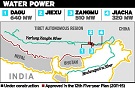
Recent reports indicate that China has approved the construction of three new hydropower dams on the middle reaches of Yarlung Tsangpo. Work on an older 510 MW hydro project in Zangmu in Tibet had commenced way back in 2010. The capacity of the two new projects coming up at Dagu and Jiacha would be 640 MW and 320 MW respectively while the capacity of the third new dam at Jiexu is yet to be confirmed. These projects have been planned to be completed in China’s 12th Five Year Plan period i.e. 2011-2017. China has, as usual, given the assurances that these are run of the river projects and in no way affect the downstream flows. In addition China has also built at least six smaller projects on tributaries of Tsangpo which again according to the Chinese would not affect waters flowing into India.


Earlier assertions by China that it has no plans to construct a massive dam at the Great Bend on Tsangpo (at Metog) to divert waters to the arid North have been met with a certain degree of skepticism in India. The proposed project has the potential of providing 38 gigawatts of energy. Chinese engineers have been claiming that technical difficulties in construction of the dam can be overcome. In fact, Yan Zhiyong, the general manager of China Hydropower Engineering Consulting Group stated in May 2010 that "The major technical constraints on damming the Yarlung Tsampo have been overcome."

According to a well known Chinese science forum, the Great Bend was the ultimate hope for water resource exploitation because it could generate energy equivalent to 100m tonnes of crude coal, or all the oil and gas in the South China Sea. Zhang Boting, the Deputy General Secretary of the China Society for Hydropower Engineering has claimed that such a project will benefit the project by marked reduction in carbon footprints.

While upper riparian states have an upper hand in controlling the water flows to the downstream states and therefore the lower riparian states usually raise objections to any damming activity upstream it was rather surprising when China raised objections to India’s Siang Upper hydropower project in Arunachal Pradesh.


Siang is the largest river of Brahamputra river system which originates from Chema Yungdung glacier near Kubi in Tibet. While in Tibet it is known as Tsangpo, and flows in West – East direction, it takes a turn in south direction before entering the Indian territory in Upper Siang district of Arunachal Pradesh. The river then flows in North – South direction, passes through Upper Siang and East Siang districts of Arunachal Pradesh and is known as Siang River. Further down, the Siang is known as the Brahmaputra.

As part of realizing the hydro power potential of rivers in Arunachal Pradesh the National Hydroelectric Power Corporation (NHPC) had completed the pre-feasibility study of the Upper Siang hydro power project last year. The output of the dam was originally planned for a massive power generation of 12, 000 MW. Because of the environmental and rehabilitation concerns the project was converted into two twin dams further downstream and given the name of Siang Intermediate dam. The earlier location being about 60 km from the border, the Chinese had also expressed concerns about their areas being submerged.

Now the project is targeted to produce 9,750-MW which is supposed to be the second biggest project after China’s Three Gorges dam. The project involves an investment of nearly Rs. 1,00,000 crore over a 10 year period. The Central government also plans to compensate Arunachal for any submergence. Arunachal had held up the plan for the past few years, mainly because it feared the project would submerge the town of Tuting in Upper Siang district. The dams’ reservoirs are expected to store 10 billion cubic meters of water, collected from the Siang and smaller rivers in the area, which can be released into the Siang if China plans to divert water massively.

Further, the overall hydropower potential of Arunachal Pradesh has been identified to be over 50,000 MW; in fact in the entire North East Region the potential is over 58,356 MW. When compared to the overall hydro-electric potential of India of around 150,000 MW Arunachal Pradesh has one third of the potential due to rivers and tributaries flowing into Brahmaputra. As of now only less than two percent of the capacity has been developed, that is only 405 MW; the capacity that is under construction is 4460 MW. This means that only about 8% capacity is under development. A number of factors like environment and forestation concerns, geographical and seismic conditions, rehabilitation and availability of funds besides poor implementation of the planned projects have affected the realization of the full potential of the State’s hydropower resources.

So far as the mega dam of 9750 MW to be developed by NHPC on Siang Intermediate is concerned, it has not progressed beyond the stage of pre-feasibility report. The state government has demanded from National Thermal Power Corporation an upfront payment of about Rs 4 lakhs per megawatt before it can start work on the project (i.e. a total of about Rs 400 Crores). This demand is believed to be based on existing State policy on the issue. This project has been termed as a strategic project to establish lower riparian rights but evidently there is a little to show that the Government is seized with the urgency to construct it in an earlier time frame.

In the 12th Five Year Plan i.e. from 2012-2017, Siang Intermediate project does not find any mention and no funds have been allotted for the purpose so far. This is despite the fact that in July, 2012 the Planning Commission had assured that the State would be provided with special funds even as Asian Development Bank had denied development funds to Arunachal Pradesh based on China’s objections. Obtaining funds for infrastructure projects in Arunachal Pradesh has been a difficult proposition.

On the other hand, when the Chinese 12th Five Year Plan has included the aforementioned four dams for construction on Yarlung Tsangpo it is a given that these hydro-power projects will be completed in time.

However, in the 12th Plan (2012-17) for Arunachal Pradesh, the central government has proposed to develop three dams with total capacity of 1610 MW and the Private sector has been given 23 projects with a total capacity of 7969 MW; thus total capacity to be developed during the five year period is expected to be 9579 megawatts in Arunachal Pradesh. Most of the projects with big capacity are planned to be developed in stages in more than one plan period. But what is of particular interest is construction of two hydro power projects known as Siang Middle and Siang Lower on the Siang River. Out of the 2400 MW capacity planned for Siang Lower only 600 MW is proposed for capacity addition in the 12th plan while full capacity of 1000 MW for Siang Middle is proposed to be developed in the plan period.

Environmental clearance and approval for construction of Demwe Lower Hydro Electric project with a capacity of 1750 MW on Lohit River in Arunachal Pradesh was given in February last year. Lohit originates in Tibet and is one of the main tributaries of Brahmaputra. Environment Minister Jayanthi Natarajan, who is also the chairperson of the standing committee of the National Board for Wild Life (NBWL) was instrumental in granting the clearance. There is some degree of awareness among the government circles that dam construction has to be speeded up to get the ‘first user rights’ as per international norms before China does it on its side of the river.

If India is able to harnesses the hydro-power of Brahmaputra in Arunachal Pradesh through the proposed projects, it will strengthen its case against China’s building of a reported mega-dam at Metog (in Tibet). But this would have to be done before China completes its projects as under the doctrine of prior appropriation, a priority right falls on the first use of river waters. Exploiting the full potential of Arunachal Pradesh would have the added benefit of making us less dependent on proposed hydro-power schemes of Nepal and elsewhere.

The future will tell whether India will be successful in completing its projects within scheduled time as its record of executing such projects in a time-bound manner has not been very encouraging.

Last year, there were reports of Siang River suddenly drying up and ‘some patches of sand’ were even seen near Pasighat town of Eastern Siang district. According to the State officials diversion of water or blockage of water upstream by China was suspected. Disruptions in water flow by China by damming/blocking the rivers originating in Tibet, is a recurring concern voiced by many analysts and experts.

The above problems are further compounded by a number of protests in Assam which is a lower riparian state about the damming activity and construction of hydro-electric stations in Arunachal Pradesh. These protests are by environmentalists as well as farmers and fishermen who would be affected adversely by reduced flow of water to Brahmaputra. According to an opposition party leader “Arunachal Pradesh is set to gain revenue from these projects, but Assam will be the victim if anything goes wrong”. Larger interests of the nation are however, glossed over due to parochial considerations.

Environmentalist lobby in India has been gaining ground and some of the decisions for such projects have been affected by environmental concerns. Chinese objections to damming activity may cause some consternation but environmentalist lobby and local/provincial politics besides provision of adequate funds are the major causes for causing delay in the realisation of mega-dam plans of Arunachal Pradesh.

There is an urgent need for fast tracking the hydro power projects in Arunachal Pradesh by providing adequate funds and by striking a right balance between the requirements of development and environmental concerns. Safeguards against earthquakes also need to be taken with alacrity as the region falls within Zone 4 and 5 of seismic sensitive zones.

Strategic imperative of establishing prior users’ right should also not be lost sight off. In April, 2010, no less than the then Environment Minister Jairam Ramesh had observed that “India needs to be more aggressive in pushing ahead hydro projects (on the Brahmaputra) - that would put us in better negotiating position (with China)”. China, as is its wont, would continue with its hydro power plans all the time assuring that water flows to the down-stream nations would not be affected. It would be dangerously naïve to believe in such banalities. 

Thursday, September 27, 2012

Down With Subsidies, Up With Reforms


Dr. M.N. Buch

Visiting Fellow, VIF


There is unemployment in India? There is poverty? The economy is stagnating? What is causing all this? Obviously the only villain on the scene is a gentleman called Mr. Subsidy. Because the State gives subsidies it causes the budget to imbalance, raises the fiscal deficit and prevents our patriotic, people-friendly businessmen from accessing capital with which they can promote industry and create new jobs. Abolish subsidies and India will be prosperous.

What exactly is India? Is it a largely middle class nation in which the poor are marginal? Rajiv Gandhi and his admirers such as Mani Shankar Aiyer talked of a hundred million middle class consumers who form the backbone of our society and economy. Because the population of India then was eight hundred million, that still left seven hundred million outside the pale of that section of society which had the money to buy goods and services. Government and its policies were aimed at promoting the consumerist elements of society and the question which I asked Rajiv then was whether the government no longer existed for the seven hundred million people who could not afford to consume and were living at the subsistence level. Our intelligentsia, our press and electronic media were so engrossed in highlighting the achievements of middle class India and the business houses which serve it that the reality of India was lost sight of. The reality of India is that of our five and a half lakh villagers at least half has no access to road communications, very large parts of the country are cut off during the monsoon, have poor bus connectivity, highly unsatisfactory power supply, with very little scope for employment except that which is directly linked with agriculture and allied activities. There is very poor schooling, not even minimum health care and certainly very few urban amenities available. It is this India which lies outside the consumerist society.

Almost all our small and medium towns are bereft of even basic sanitation and the villagers are only slightly better off because here open defecation takes place in fields rather than along roadsides. For mere survival rural India and small town India, which is only one slot above the totally rural society, are heavily dependent upon government for infrastructural improvement, basic social infrastructure and the type of investment which will bring about marginal improvement in the economy. To give an understanding of this India let me give one example. My institution was doing work on watershed management in Ghodadongri Block of Betul District. Though the area lies within the Tawa Basin it has very little irrigation, the land is undulating and hilly, there are very few roads and many villages lie outside the reach of motor transport. The watershed management programme has brought about improvement in ground water and has also provided fodder and fuel to the villagers through the afforestation programme. Part of the programme includes promotion of horticulture, including planting and nurturing of fruit bearing trees. The villagers told us that they did not need papaya and guava plants because the fruit bruises easily, with the condition of roads it is difficult to transport this fruit to market and, therefore, the villagers preferred more hardy fruits of the citrus variety which could be transported over rough terrain. To develop this region one needs to build roads and if the cost benefit analysis were to be done on a commercial basis we would not be able to justify any roads. However, if we add the social benefit flowing to people and, over a period of time the economic benefits that would follow, the roads would be justified. Private business looks at the gestation period of a project and, therefore, would not touch rural roads with a barge pole. The State has to step in and the expenditure on the roads could be interpreted as a form of subsidy to rural areas. Should government stop building rural roads?

Before the nation adopts a particular stance on the subject of subsidies it might be worth considering what exactly is meant by a subsidy regime. In the United States, by no stretch of imagination a socialist country, the Federal Government has accepted as a matter of policy that social security, including pensions, will be made available to elderly people who have retired. There will be medical coverage but through a process of insurance, war veterans will be looked after by the State in the matter of health care, the unemployed will be helped to find jobs and in the meanwhile will be paid an adequate unemployment grant to keep body and soul together, education up to the school leaving level will be State funded and food stamps and unemployment insurance to pay rent for accommodation will be available to the poor and unemployed. Forty-seven percent of the population of the United States does not pay income tax because of the above welfare subsidies. How are subsidies paid? In a recent article published in The Guardian and reproduced in the Hindustan Times, Michael Cohen points out that first and foremost there is a basic social contract in the United States between the citizens and the State and health care, food, housing, unemployment benefits, etc., are all a part of this social contract. Senior citizens who have pension benefits have spent years when they were employed in paying social security fees and taxes and that what they are getting after retirement is only a deferred payment for what they have already contributed. Those who are unemployed and are receiving unemployment benefits are the very persons who, when they were employed, paid taxes and such social security fees, etc., as are prescribed and that these and taxes paid by the more fortunate citizens enable government to provide social security coverage to the less fortunately placed. In other words, subsidy in this case comes out of payment made in the past or payment made today because in the ultimate analysis even a capitalist State such as the United States of America has a clear understanding of its welfare role and its social responsibility to its citizens. Instead of looking at this as a subsidy it should be treated as a deferred payment for past taxes received and a financial accommodation temporarily for those who lost their jobs and are in immediate need of help. Similarly, State funding of education ensures that there is universal coverage up to the school leaving level and this represents an investment by the State in the future citizens of the country. This, too, is not really a subsidy because it is an investment the dividend of which is declared later but on which no quantifiable value can be estimated because the benefits flowing from an educated citizenry are virtually limitless.

Let us take three other areas of State concern. Unemployment benefits ensure that a person passing through difficult times does not starve and is able to either retrain himself to increase his employability quotient, or is able to arrange for an appropriate job without loss of dignity. Food subsidy by way of encashable food stamps prevents malnutrition and promotes health. This is equally true of medi-care, because ultimately speaking a healthy population is always a national asset. Of course Britain and most European countries carry the concept of social security much farther than do the Americans, but there is also the concept that a citizen with a substantial income base is responsible for looking after his less fortunate brethren who, in turn, by becoming part of labour force with a potential for high productivity, contribute to national prosperity through the employment that they get in due course. To call such a regime a subsidy regime is ridiculous.

There is another fallacy of a free market economy that it allows market forces to work and as a result of this the State does not need to provide subsidies. Market forces are largely a function of supply and demand and even the economies which pride themselves on being market based use the power of the State to influence or even manipulate the market. This is done in many ways, including by manipulating interest rates whereby the equivalent of the Reserve Bank of India regulates money supply by making money more expensive, thus reducing consumption and operating as deflationary measure. However, when money supply reduces because there are no takers it can lead to unemployment and unhealthy deflation. At this stage the Central Bank once again steps in and by reducing the interest rate it brings more money into the market. Why should administered interest rates be allowed to exist? Why should interest also not follow a demand and supply model, that is, if the demand for money increases the interest rates would naturally rise, but when this makes money too expensive and demand falls the interest rate would also decline. But that is not how the system functions because every government would like to ensure financial stability and not permit wild fluctuations based entirely on an unregulated market.

Let us take another case. About forty years ago the world faced a severe oil crisis because the oil producing countries deliberately reduced production. Petroleum prices rose exponentially, but countries such as the United States immediately intervened in the following ways:-
  1. Diplomatic pressure on OPEC countries with a veiled threat of force hovering in the background.
  2. Reduction in the demand of petroleum products through high taxes, severe speed limits so that consumption could be reduced and, in many countries, the promotion of public transport and a scaling down of privately owned people movers.
  3. Release of petroleum stocks from reserves, especially in the United States. How should one view these measures? They were aimed at keeping petroleum prices under control, thus protecting the consumer. Does this not also form part of a subsidy regime?
Let us take another example, which is of agriculture in the United States. Every year the Department of Agriculture makes forecast about production, not only in the United States but worldwide. On this demand models of the consumption of various agricultural commodities are prepared and calculations made of the quantum of product available and its effect on prices. If glut of a particular commodity is estimated, then farmers are encouraged to reduce the area under that particular crop, with a specific target being assigned for such reduction and a State subsidy is given for not producing that crop and heavy taxes imposed for growing it. When a shortage of a particular product is forecast the process is reversed and tax concessions given for bringing more area under cultivation of that particular crop and heavy taxes levied for not growing that crop. Is this interventionist regime also not part of a subsidy regime in which there are positive subsidies and also negative subsidies by way of taxes?

We have talked about countries which have a relatively high GDP and per capita income. Let us come to India, where our per capita income is well below the level of the more developed countries. There are vast numbers of poor people and whereas various calculations have been made about those who are Below the Poverty Line (BPL) it would be safe to say that at least thirty percent of Indians live below any rationally calculated poverty line. Then there are a large number of people who are just marginally above the poverty line, which means that they are able to survive a little above the margin, but whose capacity and propensity to consume does not go beyond the bare essentials. By any civilised standard these people also will be deemed to be below the poverty line. That rules out about fifty percent of the population of India from being capable of consumption of items beyond the bare minimum. Actually when Rajiv Gandhi was Prime Minister he and his cohorts trumpeted the fact that India had one hundred million consumers, which still left seven hundred million people. The then population of India was eight hundred million. Even today barely fifteen percent of the people of India are in a position to consume commodities beyond the bare essentials and though fifteen percent of one thousand two hundred million people, that is, one hundred sixty five million people, is a sizable number of consumers, there are more than one thousand million people who, if they are to be made a part of the consumerist society, would need either a direct boost of income or some form subsidy to give them at least a minimum standard of living.

The vast majority of Indians cannot afford health care and are heavily dependent on medical facilities provided by government. We have allowed our government medical institutions to run down, thus forcing people into the arms of private medical institutions. We have a scenario in which people have no affordable medical facilities and the high fees of private medical care either deprives people of any health care or forces them to pay medical bills by cutting down fees on absolutely essential items. How can any sensible person oppose either State funded medical insurance for these people or a major investment by the State in medical facilities which takes health care to the poor?

Let us take the case of education. Our best institutions of education in the field of technology, management and medical education are now virtually beyond the means of a child coming from an ordinary Indian home. Murli Manohar Joshi, as Education Minister, had advised the Indian Institutes of Management that they should not make their fees so high that a middle class Indian cannot afford to educate his child there. He promised to make available a level of state funding to the IIsM which would enable them to operate at a level equivalent to that of the best business schools in the world. Unfortunately the IIsM did not agree, with the result that today a high fees paying student has only one objective in mind, which is to improve his employability to a level where he can command a high salary on passing out from the institute so that he can repay the loan that he had taken. Research, fundamental or applied, becomes the casualty.
Let us come to school education. Most State run schools are of such miserable quality that they are hardly able to impart even literacy, much less education to their children. A suggestion that the government should create ten thousand new Navodaya Schools, which would be rural-based, to upgrade the level of education met considerable opposition in government, but eventually six thousand such schools were approved because of the Prime Minister’s intervention. But the Planning Commission and the HRD Ministry wanted them to be in the Public-Private Participation Mode and, therefore, the scheme is almost stillborn. Had these schools been set up would it be a subsidy or would it be an investment in our future? If affordability were the sole criteria for creation of infrastructure, no city infrastructure could ever be built. The entire Jawaharlal Nehru National Urban Renewal Mission is based on a policy of upgrading urban infrastructure and for this providing adequate funds, largely by way of grants but also by way of loans for assets which benefit individuals, such as social housing. A certain basic urban infrastructure improves the efficiency of cities and an efficient urban settlement also one to which employment generating businesses and industries are attracted. In turn this expands the employment base in that particular town, generates income for individuals, the enterprise, local government and the State and Central governments. Again, is this a subsidy or is it an investment?

One of the very successful examples of a healthy subsidy regime is the mid-day meals programme of Tamil Nadu and the provision of highly subsidised rice to the poor in the same State. These two programmes were considered as political gimmicks, but because the programmes have been administered efficiently and relatively honestly they have improved the levels of nutrition of school children, increased enrolment and reduced the drop out rate, while giving access to grain to the very poor who otherwise would not have been able to buy it. Whatever the cost, the social benefits of these two programmes have been universally accepted and most States are trying to replicate them. What marks out the Tamil Nadu programmes is the efficiency of delivery and unfortunately this is not universally replicated.

Another area of subsidies is the free or very cheap electric power to farmers. Electricity is the energy which moves a prime mover, the motor and pump which lifts water. Water is a direct input into agriculture and where irrigation is extended the farmers’ productivity undergoes a dramatic change. Unfortunately this is one area where the economics of subsidised power was not worked out, with the result that most Electricity Boards are bankrupt, transmission lines are not well maintained, there is erratic power supply and commensurate benefit has not flowed to the farmers. The present government of Gujarat moved swiftly to separate the agricultural feeder from the normal feeder, guarantee ten hours of three phase supply at constant voltage to the farmers and also guarantee twenty-four hours supply at full tariff to every village. Every village in Gujarat is covered by this scheme, the Electricity Board has shown a dramatic increase in revenue and because it is now surplus in financial terms, it has added generating capacity to the system and line maintenance has shown significant improvement. Because power supply is guaranteed for twenty-four hours many small scale industries and businesses have come up in villages throughout Gujarat. In this case what is needed is efficiency and guaranteed supply of power, which completely obviates the need for a subsidy.

The list would be endless, but I would like to close this paper by discussing two areas of subsidised supply of a commodity, LPG and diesel. Government has increased the cost of an LPC cylinder in excess of six cylinders a year by approximately Rs. 350 per cylinder. Gas is supplied in Madhya Pradesh for Rs. 452 per cylinder, which will now go up to Rs. 798 per cylinder. That represents a seventy-six percent increase in the cost of L.P.G at one go. In the case of diesel the price has gone up by Rs. 5 per litre, but when taxes are added this come almost to Rs. 6 per litre. Even this represents an increase of approximately fourteen percent. Diesel is the fuel for all major prime movers in the field of transportation. The percentage of diesel used by car owners is about six to seven percent of the total. The balance is used by goods vehicles and by public transport such as buses. Some diesel is used by railways and a substantial amount is used in rural areas as tractor fuel, fuel for diesel pump sets, etc. In other words, over ninety percent of diesel is used a fuel for prime movers which serve the ordinary citizen of India. A person who drives a diesel engined Mercedes car would use an aircraft for long distance travel, the fuel of which could be aviation kerosene and not diesel. It is the poor and lower middle class citizens who travel by bus and must of the goods carriage vehicles actually transport commodities which are not luxury items. The bulk of commodities would come within the definition of essentials or a level or two above essentials. The fourteen percent increase in fuel cost would automatically lead to upward revision of tariff and this would be reflected in commodity prices in the retail market. A person living at or only slightly above the level of subsistence just cannot afford to pay this additional impost. By raising diesel prices government has hit the poor hardest of all.

The philosophy behind introduction of LPG into India was that this is a nonpolluting fuel, it is an excellent substitute for all other fossil fuels such as soft coal, firewood, etc., and it is cleaner than the kerosene used for cooking. Government as a matter of policy gave subsidised gas cylinders to people living in hill areas so that they would refrain from cutting down trees for fuel. LPG then became the symbol of the movement for saving our forests. By increasing the price of LPG by over seventy percent government is forcing people to revert to some of the fossil fuels they burnt in the past, thus jeopardising our forests, increasing pollution levels and making it virtually impossible for an urban household to afford even a minimum quantity of fuel for the purpose of cooking food. This is an atrocious decision of government and if a cost benefit analysis is done of the carbon foot print that would be enhanced as fossil fuels replace nonpolluting gas, the cost of forests chopped down for fuel wood and the health hazards that would follow the burning of fuels which emit smoke, one would probably find that the entire amount saved by reducing or eliminating subsidy is in fact totally negated by the costs mentioned above. Worst of all the totally precipitate increase in the cost of two absolute essential commodities will leave average India poorer than before, more unhealthy than before and less well fed than before.

I cannot claim to be an economist though, I have studied the subject for seven years in Delhi University, Cambridge University and Princeton University. Therefore, I am not always able to understand the logic of the World Bank trained economists who now seem to dominate the corridors of power in Delhi. The argument advanced is that subsidies have increased the fiscal deficit and imbalanced the budget, which prevents government from making investment in the future of this country and, therefore, if we eliminate subsidies there would be more money with government for useful work, investor confidence would strengthen and employment opportunities for the poor would flood the market. The question is, how? The National Rural Employment Guarantee Scheme costs the exchequer something like Rs. 65,000 cores per year and it is estimated that leakages in the scheme drain away approximately seventy percent of the funds. That amounts to Rs. 45,500 cores per year. If leakages are plugged either the programme could be made seventy percent larger or approximately Rs. 45,000 crores would be available to the public exchequer for more development work or for maintenance of existing levels of subsidy. Blocking a leakage is more difficult than abolishing the subsidy and, therefore, in this nation of lotus eaters, of whom the largest number are in government, our rulers have taken the easy way out and opted for abolition of subsidies. In the process they have imposed an almost unbearable burden not only on the poor but even on the middle class. What sort of economics is this? Connected to this whole line of thinking is the opening up of our markets to Foreign Direct Investment (FDI). This paper is already quite long and I shall leave the question of FDI in retail trade and in civil aviation for discussion on another day. However, the stand taken on subsidies and on FDI are both negative and representative of a mindset which is so utterly divorced from the ground realities of India that one wonders how we tolerate such absolute arrant nonsense.

Thursday, August 16, 2012

India’s Health Infrastructure and Policies Need a Revamp


Dr. M.N. Buch
Visiting Fellow, VIF

The Constitution of India, whose framers deserve great credit for the manner in which they have prescribed the duties of the State and laid down Directive Principles of how the State shall conduct itself, states in Article 47, “Duty of the State to raise the level of the nutrition and the standard of living and improve public health care. The State shall regard the raising of the level of nutrition and standard of living of its people and the improvement of public health as among its primary duties…” Just as Article 38 directs the States to secure a social order for the promotion of the welfare of the people, Article 47 makes ‘public health’ the primary duty of the State. In this behalf it has to be noted that the pre-independent government of India, which was administered by the British and the provincial governments had provided an elaborate network of rural dispensaries and health centres, district hospitals and medical colleges and their attached hospitals to provide health care to all Indians. One of the primary duties of the civil surgeon of every district was to ensure prevention and control of epidemics and the provision of universal immunisation against diseases such as small pox. The government health care system was supplemented by dispensaries, health care centres and hospitals run by local bodies, including the district boards and municipalities. Large city corporations such as those of Bombay, Calcutta and Madras even ran major referral hospitals and medical colleges. There were some private health care centres, but by and large it was a system very much in the public domain and the State did not shirk its duty to look after the health of the citizens. Princely India also more or less followed suit.

Let me reinforce my above statement by reference to the district gazetteers of two districts, now in Pakistan and one Princely State, Gondal in Gujarat. The district gazetteer of Montgomery District is of the period 1883-84. At that time Montgomery had a district hospital under the Civil Surgeon and dispensaries (primary health centres in today’s parlance) at Kamalia, Dipalpur, Gurgera and Pak Pattan. In 1930 in Attock District there was a district hospital at Campbellpur, the district headquarters and civil hospitals at Fatehganj and the Jand, apart from mobile dispensaries which toured the district. There was also a jail hospital and a railway hospital at Campbellpur. The District Board ran civil hospitals at Tallagang, Tamman, Ahdawal, Hassan Abdal and Domel, all tehsil headquarters, apart from seventeen rural dispensaries. To this six more were added in 1930, making a total of one district hospital, six tehsil level hospitals and twenty-three rural dispensaries. Besides this, the municipalities ran a women’s hospital and a general hospital at Hazro and a dispensary at Pindigheb, a Sub Divisional town in the district. Moving to Gondal State, we find that as early as 1906 the State hospital at Gondal, the capital of the State was upgraded to a high standard of medical and surgical care and it also became a training centre for nurses and midwives. Besides this a district level hospital was constructed at Dhoraji and smaller hospitals at Upleta, Bhayavadar, Sarsai and Jetalsar. In addition four charitable hospitals opened in the private sector. There was universal vaccination against small pox and very effective control over bubonic plague, influenza and other epidemic diseases which devastated large parts of Kathiawar and the Bombay Presidency. It is obvious that the British and the Princely States took their duty to provide health care coverage very seriously.

When independence came government took a conscious decision to vastly expand the public health care system and to give it multiple dimensions in terms of prevention of disease, control over epidemics, and provision of primary health care down to the last village and expansion of medical education in the public domain, together with world class medical facilities. In this context the medical colleges inherited from the British were strengthened and enlarged and State Governments set up new medical colleges. For example, even in a State as backward as Madhya Pradesh high quality medical colleges were set up at Bhopal, Indore, Gwalior, Jabalpur and Rewa, each with a thousand bedded hospital. The Central Government set up the All India Institute of Medical Sciences at Delhi and such top quality institutions as the Postgraduate Institute of Medical Research and Education, Chandigarh and the Jawaharlal Nehru Institute of Post Graduate Medical Education and Research, Pondicherry. The Government of India made available generous grants to medical colleges and medical educational institutions, thus substantially strengthening the health care system in India. Even today, with a large number of high quality health care institutions in the private sector, the All India Institute of Medical Sciences, Delhi has consistently been considered the best medical institution in the whole of India. So much so that Government of India has decided to set up five more All India Institutes of Medical Sciences, of which one is located in Bhopal and has just begun functioning. There are also super specialty hospitals, such as the Bhopal Memorial Hospital for the Bhopal gas victims, VIMHANS, that is, Vivekananda Institute of Mental Health and Neurological Science for neurological and psychological disorders, the specialist institute in Dehradun for the visually handicapped, Tata Cancer Hospital, Bombay and many others.

In a country as large as India in every field of endeavour there is always room for more and, therefore, in the private sector also specialist health care institutions sprang up. Escorts and Apollo for cardiac care, the Shankar Netralaya for eye disorders and Jaslok Hospital and Breach Candy Hospital in Bombay are early examples of private sector initiative in high quality health care. We already had a long tradition of private sector clinics and poly clinics on a small scale, to which in recent years has been added a whole range of diagnostic centres. All the hospitals, etc., in the private sector are institutes for making profit and the old tradition of business houses running charitable hospitals seems to have died down. The entry of the private sector into health care was initially welcomed by government, but without diluting government’s own predominant role across the board of providing health care to people at large. Notwithstanding the large number of private medical institutions which have come up in recent years, government hospitals are still considered to have a certain uniform standard of medical practices and, therefore, they have been the most popular medical institutions in the country. Even today CGHS institutions have the largest clientele because they are government run and the government servants still find that CGHS dispensaries and hospitals provide them the best health care. This is true of ESIC hospitals and dispensaries also in the field of industrial workers.

The Directorate of Health Services of every State is responsible for running hospitals in the public domain. Gradually the professional heads of the Directorate have been replaced by IAS officers designated as Commissioner for Health. The powers of the Directorate and Civil Surgeon/Chief Medical Health and Officers of the districts have been curtailed and centralised, with the result that there is a distinct drop in the professional competence and efficiency of government medical institutions. It is almost as if government does not want its own institutions to function effectively. Over the years recruitment to the medical service in the States has been deliberately kept restricted, with the result that there is no entry of fresh blood into a district level medical institution. This has created a shortage of doctors even at district level, where the district hospitals are the referral centres for our primary health centres. On paper for a cluster of villages with a total population of thirty thousand (twenty thousand in tribal areas) there is a full-fledged primary health centre and for every three thousand population (two thousand in tribal areas) there is a subsidiary health centre. Most primary health centres and subsidiary health centres have either no staff or are undermanned. In the district level hospitals there are no young doctors who can be trained for taking on higher responsibility and this is affecting their efficiency. There is equipment shortage, inadequate supply of drugs, inadequate maintenance of infrastructure and very little expansion of capacity and generally speaking there is an environment in which patients lose confidence in the ability of these hospitals to provide proper treatment. Diagnostic facilities are obsolete and very often out of repair. Many doctors in the government hospitals prescribe tests and refer the patient to private diagnostic centres which charge high fees, part of which would be shared with the referring doctor. This, in turn, pushes patients away from government hospitals and into the hands of private medical centres whose fees an average person can hardly afford. Ultimately the government hospitals are left only with hopeless cases which private hospitals will not touch and indigent patients come to government hospitals as a last resort because they cannot really afford even moderately expensive health care and treatment. One senses in this a deliberate conspiracy of government to reduce public sector health care to a level where the system dies an unnatural death, to the great benefit and advantage of the private sector. The rich in any case would go to private hospitals, which earn enormous profits. The poor either go to an unsatisfactory public health facility or suffer disease stoically and die without medical care. If this is not a negation of what Article 47 enjoins, then what is it?

I have always felt that except in the first two or three Plans our Planning Commission has been distancing itself from the reality of India in favour of an utopian world of its own imagination. Regardless of jugglery of figures the fact remains that India has huge numbers of poor people who barely subsist. Ever since Rajiv Gandhi became Prime Minister, surrounded by his Doon School cronies and their ilk, government entered into a new era of what Rajni Kothari called “The Baba Log Government”. I, as Vice Chairman of the National Commission on Urbanisation, had occasion to closely interact with Rajiv Gandhi when my batch-mate Gopi Arora was his Secretary and Mani Shankar Aiyer was his Joint Secretary. Gopi was level headed and had a more realistic view of India. Gopi was a minority of one in that crowd and the impression created was that India is a country of the middle class, who formed a huge group of a hundred million consumers. I remember that in one meeting I told Rajiv that if out of a population of eight hundred millions a hundred millions were consumers, it still meant that seven hundred million people had nothing with which to consume. That meant that seven out of eight persons in India existed only on the margin, whereas the government seemed to think that only the sole exception amongst the eight was a worthwhile Indian. A government whose thinking is along these lines can never understand the problems of the poor and regardless of whatever such a government says, it can never be pro poor. I am sure these people secretly must have thought that if one could only be rid of the seven hundred million non consumers India would be one of wealthiest countries in the world.

The Planning Commission is in the process of finalising its chapter on health for the Twelfth Five Year Plan document. If what the Planning Commission proposes is accepted India would be amongst the ten bottommost countries in terms of percentage of GDP spent on health care. The new Plan document talks in terms of - “Preventive interventions which the government would be both funding and universally providing clinical services at different levels, defined in an Essential Health Package, which the government would finance but not necessarily directly provide”. In other words, government would downgrade its own direct provision of health services and would increasingly fund and encourage the corporate sector. The document further states, “Each citizen family would be entitled to an Essential Health Package in the network of their choice. Besides public facility networks, organised private and NGO providers would also be empanelled to give a choice to the families”.
The above statement presumes that there will be an equitable distribution of health services throughout the country by the private sector. Because the private sector functions only on the basis of profit, the system is bound to degenerate into one similar to the civil aviation sector, that is, the lucrative profit making routes would largely be diverted to the private sector and loss making routes would be serviced by Air India, which would be beggared as a consequence, then held up as an example of the inefficiency of the public sector and ultimately be forced to close. The Planning Commission also presumes that every Indians understands the niceties of an Essential Health Package which, it is presumed, would be operated through a system of health insurance. Whether the Planning Commission likes it or not more than seventy-two percent of the people of India live in villages with poor connectivity and another ten percent of small town population lives in semi rural conditions with equally poor connectivity. Does the Planning Commission seriously expect these people to understand what an Essential Health Package is, identify the service providers in the corporate sector and then exercise a preference regarding the health package? So many people are on the verge of starvation that their only thought is on how to procure the next meal. They do not have the ability, the time or the knowledge to be able to choose between health packages. They can go to a primary health centre and obtain medicines, but they cannot fill up insurance forms and then try and get reimbursement of expenses incurred by them in obtaining medical care. Why villagers alone, talk to any middle class, educated citizen and hear his woes in trying to get payment from insurance companies.

Montek Singh Ahluwalia, the Members of the Commission and its officers are all beautifully serviced by CGHS. They have no idea of how the medical insurance system works in India. Till recently I was Chairman of the Board of Governors of the Atal Bihari Vajpayee Indian Institute of Information Technology and Management, Gwalior, one of the four highly specialised institutions set up by government to promote information technology in India. We decided to provide medical insurance to all our faculty and staff. We ran into such hurdles that we eventually abandoned the scheme and instead opted for full reimbursement by the Institute of any medical costs incurred by the faculty and staff. If this could happen to a high level institute of technology can the Planning Commission even envisage the problems which a villager would have in accessing what the Commission calls an Essential Health Package? Let me give another example. Many States have opted for insurance coverage against crop failure. Obviously the scheme is not working because in many areas, especially Maharashtra, failed farmers commit suicide. In sharp contrast is the scheme of many States to assess crop damage during a natural calamity or major seasonal vagaries which damage crops. The system is that the Collector asks the Tehsil authorities to assess crop conditions and by random ‘annawari’ each Patwari assesses damage to a particular crop in his Patwari Halka. For example, in the winter of 2011-12 there was some ground frost in parts of Madhya Pradesh and some crops, especially gram, suffered damage. My wife has a farm twenty-three kilometers away from Bhopal. She had not applied for compensation but nevertheless the Patwari included the farm in his assessment and must have given a report on his observations. One fine day, my wife received a cheque for rupees eighteen thousand from the Tehsildar by way of compensation for the damaged crop. Every other farmers in the village also received similar compensation, despite the fact that claims had not been filed. I cannot think of any insurance system which the geniuses of the Planning Commission may devise which will provide the kind of quick relief to farmers that Raja Todar Mal’s revenue administration system provides even today in India, corruption and leakages notwithstanding. Even today, there are many areas in which time tested systems in the public sector are more efficient than the private sector and governance in general and health care in particular are a part of them.

The only countries where there is satisfactory universal health care are those in which the equivalent of the national health scheme operates. Much of Europe and the United Kingdom have universal health care provided by the State. The system undergoes fine-tuning from time to time, but the underlying principle always is that it is the duty of the State to take care of the health of all its citizens. The United States, by far the most affluent country in the world, has a poor health care system despite having some of the best hospitals in the world. That is why President Obama had to virtually stake everything in order to widen the scope of medical insurance so that health coverage could be provided to the very poor. This system still does not measure up to the national health service of Britain but it is an improvement on the past. Capitalist United States has begun to take notice of the poor, Socialist India has a Planning Commission which wants to destroy the last vestige of public health coverage because of the peculiar notion of its Deputy Chairman that private is better than public, the rich include the poor and, in any case, the poor can always eat cake. India can survive militancy, terrorism, separatism, Naxalism, Jehad, even violent attacks by extremist Pakistani groups. I am, however, beginning to have serious doubts whether India can survive its own Planning Commission.