Showing posts with label CBMs. Show all posts

Monday, April 6, 2015

India-China Border Talks: No Progress to Show

Existing Agreements need to be Diligently Implemented


Brig Gurmeet Kanwal, 
Visiting Fellow, VIF

The Special Representatives of the Prime Ministers of India and China met on March 23, 2015 at New Delhi to discuss the resolution of the territorial dispute. This was the 18th round of border talks that have made little progress so far. A typically bland statement was issued by the Ministry of External Affairs after the talks: “The Special Representatives continued the discussions to reach a mutually acceptable Framework for resolution of the Boundary Question on the basis of the Agreement on the Political Parameters and Guiding Principles.”

The Special Representatives noted that the interaction between the border management forces had been growing. They said such contacts should be expanded as “these constitute important confidence building measures for maintaining peace and tranquility in the border areas.”

The two sides should have accorded the highest priority to discussing the measures that are necessary to give practical effect to the implementation of the Border Defence Cooperation Agreement (BDCA), signed during then Prime Minister Manmohan Singh’s trip to Beijing in October 2013, and its previous avatars so that the occurrence of destabilising incidents along the Line of Actual Control (LAC) can be minimised. This is important because of the recent instances of Chinese military assertiveness along the LAC.

The BDCA commits the two sides to “periodic meetings” of military and civilian officers and to exchange information – including information about military exercises, aircraft movements, demolition operations and unmarked mines. It emphasises the avoidance of border patrols “tailing” each other and recommends that the two sides “may consider” establishing a hot-line between military headquarters in both countries.

A close examination of the BDCA reveals that it falls substantially short of removing the anomalies and impracticalities of similar agreements that have not worked well in the past. These include the Agreement on Maintaining Peace and Tranquillity Along the Line of Actual Control in the India-China Border Areas, September 7, 1993; the Agreement on Confidence Building Measures (CBMs) in the Military Field Along the Line of Actual Control in the India-China Border Areas, November 29, 1996; the Agreement on Political Parameters and Guiding Principles for the Settlement of the India-China Boundary Question, April 11, 2005; the Protocol on Modalities for the Implementation of Confidence Building Measures in the Military Field Along the Line of Actual Control in India-China Border Areas, April 11, 2005; and, the Agreement on Establishment of a Working Mechanism for Consultation and Coordination on India-China Border Affairs, January 17, 2012.

The Line of Actual Control (LAC) between India and Tibet is quite different from the disputed 4,056 km-long international boundary. The term LAC implies de facto military control over respective areas and came into use after the 1962 border war. However, the LAC is yet to be physically demarcated on the ground and delineated on military maps. The un-delineated LAC is a destabilising factor as major incidents such as the Nathu La clash of 1967 and the Wang Dung stand-off of 1986 can recur. In fact, the two sides have failed to even exchange maps showing their perception of the LAC except in the least contentious Central Sector, that is, the Uttarakhand and Himachal Pradesh borders with Tibet. Despite the lofty rhetoric of all the agreements, it has not been possible for India to withdraw a single soldier from the LAC so far. It clearly shows how intractable the challenge is.

There are frequent incidents of Chinese transgression of the LAC both in Ladakh and Arunachal Pradesh. Both sides habitually send patrols up to the point at which the LAC runs in their perception. On many occasions in the recent past, Indian and Chinese patrols have met face-to-face. Such meetings have an element of tension built into them and, despite the best of military training, the possibility of an armed clash can never be ruled out. An armed clash that stretches over several days and in which there are heavy casualties can lead to a larger border incident that may not remain localised.

This is the reason why it is critically important to demarcate the LAC on the ground and map. Once that is done, the inadequacy of recognisable terrain features can be overcome by exploiting GPS technology to accurately navigate up to the agreed and well-defined LAC on the ground and even unintentional transgressions can be avoided.

Chinese intransigence in exchanging maps showing the alignment of the LAC in the western and the eastern sectors, while talking of high-sounding guiding principles and parameters to resolve the territorial and boundary dispute, is neither understandable nor condonable. It can only be characterised as an attempt to put off resolution of the dispute “for future generations to resolve”, as Deng Xiao Ping had famously told Rajiv Gandhi in 1988. China’s obvious negotiating strategy is to resolve the territorial dispute with India only when the Chinese are in a much stronger position in terms of comprehensive national strength so that they can dictate terms.

Fresh efforts need to be made to fine-tune the operationalisation of the Agreement on Establishment of a Working Mechanism for Consultation and Coordination on India-China Border Affairs, signed on January 17, 2012. The agreed measures include regular consultations and flag meetings or telephone and video conferences during emergencies along the LAC. The mechanism was expected to help prevent misunderstanding between the two countries arising from incursions into each other's territory. The joint mechanism was also expected to study ways to strengthen exchanges and cooperation between military personnel on the ground.

None of this has obviously happened as serious Chinese incursions continue and tensions continue to persist. This has been evident in recent incidents of reckless behaviour. The deep transgression by PLA troops at Depsang near Daulat Beg Oldie in May 2013 could have led to an armed clash if the PLA had not backed off. In September 2014, even as President Xi Jinping was being entertained by Prime Minister Narendra Modi on the bank of the Sabarmati River in Ahmedabad, Chinese and Indian troops were once again engaged in a tense face-off at Chumar in Ladakh.

The BDCA has failed to address the basic issue that is the root cause of most transgressions and patrol face-offs, which is the non-demarcation of the LAC, which leads to varying perceptions about where it runs. As such, it is merely another “feel good’ agreement that has not brought the two sides any closer to a final settlement of the territorial dispute and has achieved virtually nothing substantive to further even the immediate necessity of improving border management. Finally, it is in India’s interest to strive for early resolution of the territorial dispute so that there is only one military adversary to contend with. It is in this direction that the Government of India must firmly nudge the Chinese leadership during future meetings of the political interlocutors.


Published Date: 6th April 2015, Image source: http://ichef.bbci.co.uk
(Disclaimer: The views and opinions expressed in this article are those of the author and do not necessarily reflect the official policy or position of the Vivekananda International Foundation)

Wednesday, January 16, 2013

Inhuman Act at LoC: Need for an Appropriate Response


Brig (retd) Gurmeet Kanwal 
(Visiting Fellow, VIF) 

Despicable Act

The Pakistan army's dastardly and utterly irresponsible behaviour in crossing the LoC, killing Indian soldiers and mutilating their bodies in an inhuman manner – including the ruthless beheading of one soldier – is reprehensible and worthy of condemnation in the strongest terms. During the Kargil conflict in 1999 too the Pakistan army had returned badly mutilated bodies of Indian soldiers and had earned for itself the infamous epithet “rogue army”. Such incidents serve to further damage the dubious professional reputation of an army that has repeatedly let down its nation while claiming to be the sole saviour of Pakistan’s identity and its territorial integrity.

However, there is need for a measured Indian response at the diplomatic and military levels as the incident is in all probability a low-level violation of military ethics and conventions. It is unlikely to have been sanctioned by higher military commanders. India should demand the speedy trial of the soldiers involved in the brutal killings. If Pakistan’s response is unsatisfactory, India should suspend further discussion of peace and security and military confidence building measures (CBMs) in the resumed dialogue process. If Pakistan continues to stall on this issue like it has been dragging its feet on bringing to book the perpetrators of the Mumbai terror strikes in November 2008, the entire eight-point dialogue should be suspended. 

The aim of initiating appropriate military measures should be to inflict deterrent punishment so that the Pakistan army learns the right lessons from its repeated violation of the code of conduct of military operations. Several direct and indirect military options can be exercised without unduly escalating the exchanges to dangerous levels. The most suitable response would be to raze to the ground the forward post of 29 Baloch Regiment from which the vicious attack took place. This should be done through the employment of direct firing weapons like bunker busting missiles and rocket launchers as well as devastating artillery and mortar fire. 

As had been amply demonstrated during the Kargil conflict, India has a preponderance of artillery firepower – even if the guns are bordering on obsolescence – and this capability must be put to use. The guns are a custodian of the last resort of the country’s borders and send an unmistakable message when such a message is needed to be sent. The Pakistan army will retaliate but cannot hope to match India in a long-drawn exchange of artillery fire. Simultaneously, Special Forces must be used to degrade the Pakistan army’s logistics infrastructure in the areas behind the rogue post while remaining prepared for all contingencies that might arise.

Over the last three years and particularly in the summer of 2012, infiltration levels from across the LoC have risen sharply. The Pakistan army has been violating the cease-fire with impunity to push through its Jihadis under the cover of fire. It is obvious that protests at the diplomatic level have failed to elicit a positive response. It is now time to act decisively. The message must go home that while India has no grouse against the Pakistani people, its army’s cruelty will no longer be countenanced. 

The people of India expect the government to respond appropriately. The government must convincingly demonstrate that there is a limit to Indian tolerance. The sacrifice made by the soldiers who have been martyred must not go in vain.

Pakistan’s Internal Turmoil

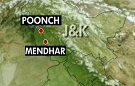
On a larger plane, the incident is likely to have been locally instigated, possibly in response to the killing of a Pakistani soldier during Indian retaliatory firing in the Uri Sector a week before the Mendhar incident. The Pakistan army has much to lose by activating the largely quiet Indian border when it is engaged in fighting major internal security challenges, even as the Pakistan government has been embroiled in countering continuing political turbulence, judicial activism, sectarian clashes and a stagnating economy. 

The Pakistan army is facing, perhaps, its deepest crisis since its strategic blunder in Kargil. Its counter-insurgency policy has been unsuccessful and casualties have been mounting. The use of air strikes and helicopter gunships to attack terrorist hideouts has proved to be counter-productive. The Pakistan army has been forced by the TTP to wage a three-front "war": against the TTP and the Islamic Movement of Uzbekistan (IMU) in South Waziristan; against the anti-Shia Lashkar-e-Jhangvi (LeJ) in the sensitive Darra Adam Khel-Kohat area of NWFP and the Shia-dominated Kurram Agency of FATA; and, against the Tehrik-e-Nifaz-Shariat-e-Mohammadi (TNSM), headed by Maulana Fazlullah, and the Jaish-e-Mohammad (JeM) sheltering across the Durand Line in Afghanistan. 

Though it has flirted with peace deals with the militants, the army finds it impossible to meet the demands of the TTP and the TNSM. According to B. Raman, a noted counter-terrorism expert, these demands include the suspension of all military operations in the tribal areas; the withdrawal of army posts from the FATA; the release of all tribals arrested under the Anti-Terrorism Act; the release of Maulana Abdul Aziz Ghazi and tribal students arrested during the commando action in the Lal Masjid of Islamabad in July 2007; and, enforcement of the Sharia in the tribal areas.

The US and its allies have become increasingly more frustrated by Pakistan’s failure to deal with al Qaeda and Taliban militants launching raids on US and NATO troops across the Durand Line. The Chairman Joint Chiefs of Staff of the US and other officials have been meeting General Kayani frequently to impress on him the need to be more pro-active in counter-insurgency operations. Unilateral trans-border intervention against militants inside Pakistani territory by the US is continuing through drone strikes. President Obama may soon approve trans-border ground action through Special Forces. Under these circumstances, it would be grossly illogical for the Pakistan army to activate the LoC with India.

Pakistan must Reduce Tensions

The Pakistan army must make amends for its grossly unethical conduct and completely stop further violations of the informal cease-fire along the LoC. It must also stop sponsoring terrorism, as promised by Musharraf in January 2003, or else it must be ready to face retaliation. General Bikram Singh, the Indian Army Chief, said during his press conference on the eve of Army Day that India reserved the right to retaliate at a time and point of its choosing. The IAF Chief has also stated that if Pakistan’s response is inadequate, other options will have to be considered. The Indian army has felt for long that the only place where it can gainfully hit back at the Pakistan army is at the LoC and it would make full use of a breakdown in the cease-fire. No one in India wants a complete reversal of the gains of the last ten years during diplomatic negotiations. However, when the need for self respect and national dignity is weighed against the gains of diplomacy, the balance will weigh heavily in favour of national dignity.

Pakistan’s political turmoil, internal instability, a floundering economy and weak institutions make for an explosive mix. It is apparent to even lay observers that the country is in for even greater difficulties ahead. Its leadership would do well to bring down the tension on the LoC.

Tuesday, July 10, 2012

Yet Another Round of Platitudes


Kanwal Sibal
Member Advisory Board, VIF


For those cynical about the dialogue process with Pakistan, the lack of substance in the joint statement issued after the latest round of Foreign Secretary level talks (July 4-5) confirms our neighbour’s unwillingness to fundamentally revise its thinking on core bilateral differences.

For those who remain hopeful about normalising relations with Pakistan despite decades of bitter experience, the platitudinous joint statement offers no peg on which to hang their optimism.
The talks were held in the same “frank and constructive atmosphere” prevailing in all past encounters, without, however, yielding much result. While we are committed to a “dialogue process”, the Pakistanis insist it should be “purposeful and result-oriented”- which, decoded, means India should make concessions. We accommodate Pakistan’s preferred but, in effect, harmless phraseology.

The issue of Peace and Security, including CBMs, has been discussed in the same “comprehensive manner” as before, but without comprehensive outcomes. Both sides have “emphasized the need to promote greater trust and mutual understanding through constructive dialogue”, repeating piously the hope expressed many times earlier. This trust and understanding refuses to materialize despite repeated “constructive” dialogues.

The issue of Nuclear and Conventional CBMs is complicated because India attaches importance to nuclear CBMs while Pakistan favours conventional CBMs. Pakistan continues to expand its nuclear arsenal and delivery capability with single-minded determination, even in a situation of mounting internal instability and financial stringency. It seeks to introduce tactical nuclear weapons as a counter to India’s “Cold Start” doctrine which it has studiously hyped.

Whether it talks of a conventional balance of forces or a strategic balance after both countries became nuclear, Pakistan omits from the equation India’s need to factor in the superior Chinese nuclear and conventional capability it must contend with. Pakistan, as China’s closest strategic partner, naturally refuses to take cognizance of this compulsion in India’s defence preparedness.

India’s interest in Nuclear CBMs is to make Pakistan accept a no-first-use agreement in order to raise Pakistan’s low threshold of nuclear weapon use. Pakistan, which has employed state terrorism against India under cover of its nuclear capability, is hardly likely to agree to a no-first use agreement until it decides to genuinely bury the hatchet with India. In that case India’s larger conventional strength, commensurate with its geographical size, large coast line and China’s menace, would pose no threat to it.

The source of conflict between India and Pakistan, it needs remembering, is its territorial claims on India and the use of jihadi terrorism to back them, and not any terror-backed Indian claims, territorial, water-related or religious on Pakistan.

On the issue of terrorism we have eschewed, to our credit, the absurd formulation conceded earlier that both countries are victims of terrorism, elevating Pakistan thus from a perpetrator of terrorism against us to a partner in arms against it.

Some equivalence has been conceded though in the formulation that both countries “affirmed the strong commitment...to fight and eliminate terrorism in an effective and comprehensive manner so as eliminate the scourge in all its forms and manifestations”, but having lost ground massively earlier it is not possible now to retrieve it diplomatically. Pakistan’s prevarications on the Mumbai terror attack, its give-me-more-and-more-evidence-which-I-will-ignore approach, its unwillingness to act against Hafiz Saeed and suppress the jihadi groups, and dismissal of Abu Jundal’s testimony as an “insinuation” hardly supports the above affirmation.

The formulation on Jammu and Kashmir is neutrally worded, with both sides prepared to “continue discussions in a purposeful and forward looking manner with the view to finding a peaceful solution by narrowing divergences and building convergences”. Given Pakistan’s claims about the centrality of the Kashmir issue and its reversion to its traditional position of resolving it on the basis of relevant UN resolutions, as confirmed in its parliamentary resolution earlier this year, this exercise of “narrowing differences and building convergences” is more an effort at verbal crafting than any serious political commitment.

Unsurprisingly, the Pakistani Prime Minster has, after the talks, promptly re-affirmed Pakistan’s full support for the Kashmiri cause till the UN resolutions are implemented.

The emphasis on cross LOC CBMs reflects our desire to win over public sentiment in the valley and Pakistan’s hope that these will eventually erode India’s sovereignty and give it a say in J&K affairs.
Pakistan, had in any case, made up for the tempered J&K formulation in the joint statement by its Foreign Secretary repeating the affront his Foreign Minister administered to us when he, like her, met the separatist Kashmiri leaders even before he held official discussions. Our displeasure conveyed to her then, which she dismissed with hauteur, has gone unheeded.

It is unacceptable that even Pakistani bureaucrats should be meeting Indian separatists in India’s capital, but we cannot now easily extricate ourselves from the web of our past mistakes. A right riposte would be to openly meet dissidents from J&K’s Northern Areas either in India or in third countries as Pakistan will not allow us to meet them in Islamabad.

The intention to promote more people to people, media and sports contacts, parliamentary exchanges etc is to be welcomed, even if the delay in signing the finalized revised bilateral Visa Agreement which would facilitate this remains unexplained.

The joint statement reflects the stalemate in ties- neither conspicuously improving nor notably deteriorating. Its ritual phraseology gives the text length but not any depth. Just as well, as we clutch at straws of peace with Pakistan as if we are drowning and end in making one-sided concessions to make the dialogue look meaningful. We should wait for drowning Pakistan to clutch at opportunities of peace with India.