Showing posts with label Bangladesh. Show all posts

Friday, May 1, 2015

Strategic Stalemate: State of the Internal Security Environment in the North-east

Brig Gurmeet Kanwal, 
Visiting Fellow, VIF

Paresh Baruah’s United Liberation Front of Assam-Independent and S S Khaplang’s National Socialist Council of Nagaland (NSCN-K) have joined hands with seven other militant organisations active in India’s north-east to form the United National Liberation Front of West South-east Asia. According to news reports, the meeting took place in the Sagaing region of Myanmar where Chinese intelligence personnel are known to be active.

Several of India’s north-eastern states have been in a state of turmoil for many decades. The primary cause of strife is an unstable internal security environment that has been compounded by political and economic neglect. While the militant movements in the north-eastern states are mostly home grown, some of these have developed links with Pakistan’s ISI and international terrorist organisations like the LeT and HuJI.

Due to porous borders, the militants found it worthwhile to seek shelter in India’s neighbouring countries like Bangladesh and Bhutan. After the governments of the two countries joined hands with India to fight these extremists, they have been operating from bases in Myanmar with support from China.

Various Indian insurgent groups have found it convenient to operate out of bases in the weakly controlled areas in Myanmar, but the government of Myanmar does not encourage or support them. In April-May 1995, Operation Golden Bird was launched as a joint operation. Approximately 40 insurgents were killed and a huge cache of arms was recovered. Since then the two armies have been cooperating with each other for mutual benefit. In November 2001, the Myanmar army had raided several bases of Manipuri rebels and had rounded up almost 200 rebels and recovered 1,500 guns.

The intensity of instability varies from state to state. In Nagaland, peace had prevailed till recently due to the cease-fire that had held for 14 years. However, it was only a tenuous peace and various Naga and Manipuri factions remained engaged in a fierce internecine struggle for power in both these states. Political negotiations with the Naga leaders for a final settlement were proceeding extremely slowly. In early-April 2015, the NSCN (K) unilaterally abrogated the cease-fire.

In Tripura, violent incidents tend to break out at regular intervals and invariably lead to demands for the deployment of the Army and other security forces. In Mizoram, which has seen many years of relative calm, subterranean tensions have been simmering for some time and may again rise to the surface if these are not addressed satisfactorily.

In Assam, the situation has improved a great deal over the last five to six years. The ULFA leadership that was safely ensconced in Bangladesh could have been targeted only in conjunction with the government of Bangladesh. The government of Sheikh Hasina and the Bangladesh security forces extended the cooperation that was necessary for the launch of joint operations to apprehend the ULFA terrorists active against India.

The government of Bangladesh dismantled the infrastructure of the terrorists, including commercial organisations like hotels that ULFA was running quite openly, and stopped the flow of arms and ammunition across the border. In case such cooperation had not been forthcoming, India would have been forced to explore other options including covert operations to address the remaining roots of terrorism.

The counter-insurgency campaign against the remnants of the Paresh Baruah-led separatist ULFA cadres has made substantial headway and most of them have now taken shelter in Myanmar. The Bodo (NDFB) extremists have lost several senior cadres in recent encounters with the army and this extremist organisation too appears to have reached a discernible level of strategic fatigue. The NDFB may soon opt for negotiations with the government so as to buy time for resuscitation.

The traditional narrative in the north-east has been that illegal migration from Bangladesh into lower Assam has altered the demographic profile of the affected districts and added a sectarian dimension to the internal security challenge. Though the Muslim population of the state has grown from about 16 to 18 per cent in the 1950s and 1960s to above 30 per cent now, the insurgency in Assam has never been driven by religious fundamentalism.

The government claims that it has instituted various measures like border fencing, reduction of distance between one border outpost and another, increase in the strength of the riverine police and the provision of floodlights to detect and prevent infiltration. However, the measures had remained ineffective till the government of Bangladesh stepped in pro-actively to deny sanctuary to Indian militants.

The vibrant culture of the beautiful Brahmaputra basin, which gave birth to an ancient civilisation and was once a flourishing centre of trade has been torn asunder by militancy and terrorism that are now several decades old. Sporadic acts of violence, a gun culture, extortion and kidnappings now mark daily life, even though the security forces have succeeded in maintaining a semblance of normalcy.

Unless a political solution is found to solve the underlying socio-economic problems and to ameliorate the “hearts and minds” challenge of alienation from the national mainstream, full blown-militancy could again bounce back without warning in Assam.

The funds earmarked by the Central Government for development must trickle down to the people in a transparent and accountable manner. Central funds worth thousands of crores of rupees must not disappear without a trace as has happened in the past.

Over a period of more than half a century, the Indian army has successfully conducted a difficult counter-insurgency campaign in the north-eastern states, despite adverse terrain and weather conditions, logistics difficulties and political flip-flops. Military operations against the terrorists who are still active must continue unfettered.

However, the mistakes made in the early 1990s must not be repeated. When the situation had deteriorated, Operation Bajrang was launched but was soon called off as it became inconvenient for the newly elected government to have the army deployed in the state; six months later Operation Rhino was launched and was again inexplicably slowed downwhen limited success had been achieved.

The proclivity of successive state governments to scale down army operations for political reasons as soon as the situation improves visibly is always a major setback for the conduct of sustained counter-insurgency operations. The security forces need time to become effective and establish a counter-insurgency grid, including humint networks to gain actionable intelligence. ‘On-off’ deployment policies hamper operations and reduce the ability of the security forces to deliver effective results.
Policymakers and those who are responsible for governance must introspect and try to understand why the Indian state has repeatedly failed to successfully counter the long-festering militancy in Assam and other north-eastern states and address the root causes, which are mainly socio-political and socio-economic in nature.

The nation cannot sustain a high growth rate over a long period if a major region is not part of the success story and, in fact, acts as a drag on it. High opportunity costs are imposed on the national economy due to unrealised revenues and taxes and the cost of maintaining internal security. India’s quest to ‘act east’ and enhance its trade with ASEAN countries through the land route will also remain a non-starter unless durable peace returns to the north-eastern region.

Finally, the re-emergence of Chinese support for militant movements inimical to India’s interests after almost 30 years of non-interference is an ominous development. In case the Chinese succeed in getting the nine extremist organisation that they have helped bring together to coordinate operations and intelligence, it will pose a fresh challenge for India’s counter-insurgency campaign.

Published Date: 1st May 2015, Image Source: http://m.ucanindia.in

Friday, September 14, 2012

India - Pakistan Relations: Lessons of History, Perils in the Present


Sushant Sareen
Senior Fellow, VIF

Folklore, if not history, has it that the King of Delhi, Prithviraj Chauhan, worsted in battle the Afghan invader, Mohammed of Ghor, some 17 times. After each victory, Prithviraj acted graciously and with typical, if also entirely misplaced, Rajput chivalry and spared the adventurer from Ghor his life. Unfortunately, the ruler (and as increasingly seems to be the case post-independence, rulers) of Delhi never understood the driving force that prompted, nay compelled, the attacker from the North-West to keep trying his luck. Nor for that matter did the latter appreciate, let alone acknowledge, the gesture that was shown to him. That Mohammed of Ghor had no use for such senseless displays of chivalry became clear after he defeated Prithviraj. Not only did he carry Prithviraj into captivity as a trophy of war but also subjected him to the worst sort of torture. What followed was a sordid tale of ceaseless invasions and conquests for the next millennium.

Today, the rulers of Delhi are once again faced with a close to Prithviraj Chauhan like moment. The question is whether the historical blunders of the last millennium will once again be repeated, as it wasnot too long back in Shimla in 1972. Under the mistaken pretext that the time is ripe to reach out to the legatees of Ghor (after all doesn’t Pakistan still swear by the Afghan invaders, so much so that it has named its missiles Ghori, Ghazni and Abdali), the Indian leadership is being inveigled to make far reaching concessions and grand gestures in the fond hope that this will help in normalising relations with Pakistan. Alternatively, will the Indian leadership press home the advantage afforded by fortuitous circumstances and events (almost all of them the result of a blowback of Pakistan’s monumental folly of using terrorists as an instrument of state policy) and drive a hard bargain that secures India’s economic and political interests, guarantees its security, settles its borders, enhances its strategic outreach, and rids it of the constant needling and irritation that Pakistan has caused for the last 65 years. In other words, will India fall for the nonsense of not forcing a Versailles on Pakistan?

If the track record of the Manmohan Singh government is anything to go by, India will probably go the Prithviraj Chauhan way, ignoring not just the lessons of history but also cavalierly disregarding the continuing hostile actions emanating from Pakistan which are aimed at undermining India’s security and its economy. Quite aside the irony that even as the Pakistani foreign minister Hina Rabbani Khar underscored the need to ‘let bygones be bygones’ and ‘forge ahead without being held hostages to the past’ (alluding to the 26/11 terror attacks in Mumbai four years ago) she couldn’t resist mentioning the ‘K’ word (a 65 year old issue), the fact remains that Pakistan’s State and non-State actors have continued with their inimical actions against India. From pushing in narcotics (which is destroying an entire generation in Indian Punjab) to infiltrating terrorists and jihadists, from smuggling fake Indian currency notes (FICN) to recruiting young Indians to carry out Pakistan's murderous agenda, from instigating and inciting communal violence through its proxies to sponsoring anti-India and anti-Hindu propaganda, from providing sanctuary and support to anti-India groups to attacking Indian targets and development projects in Afghanistan, from trying to sabotage India’s diplomatic initiatives at the UN to using India’s neighbours like Nepal, Bangladesh and Sri Lanka to forge a front against India, Pakistan hostility towards India is unrelenting.

And yet, the Indian leadership’s unfathomable quest to embrace Pakistan, knows no limits. Admittedly, over the last few months, the Pakistanis have gone out of the way in talking sweetly to India. Statements of top Pakistani leaders – President Asif Zardari, Prime Ministers Yusuf Raza Gilani and Raja Pervez Ashraf, foreign minister Hina Rabbani Khar, leaders of parties which are partners in the ruling coalition as well as senior opposition politicians – have all been expressing their desire to improve relations with India. There has even been a softening in the line taken by the Pakistan army, as was evident in the statement of the army chief Gen. Ashfaq Pervez Kayani during a visit to the Siachen sector. But notwithstanding all the nice words being mouthed, there is little on the ground to show that Pakistan has made a strategic shift.

When judged against the metrics that will actually demonstrate a paradigm shift in Pakistan's attitude and approach towards India – namely, handing over the most wanted terrorists who have been given refuge in Pakistan, ending the export of narcotics and FICN, providing India transit rights to Afghanistan and beyond, ensuring the end of ceasefire violations along the LoC, supporting India’s entry into the UN Security Council, dismantling the infrastructure of jihadist terrorism, reforming the school curricula by indoctrinates young children against India and Hindus, ceasing hostile propaganda and baseless allegations against India, and last but not the least, ending their irredentist claims on the Indian state of Jammu and Kashmir and stopping the recruitment and incitement of Indian Muslims against their country – there is practically nothing that would indicate that indeed Pakistan has changed course on relations with India.

The only positive development has been trade front with Pakistan moving from the restricted positive list of tradable items to a negative list (comprising some 1200 products) and holding out the assurance of granting India MFN status by the end of the year. But even this move needs to be qualified. First and foremost, trade is not a concession, especially not if the side relaxing trade stands to gain much more. The most optimistic projections of Indo-Pak trade estimate that bilateral trade will touch $ 10 billion in the next five years or so. By this time India’s total foreign trade will be around $ 700-800 billion. In other words, trade with Pakistan will constitute a miniscule portion of India’s foreign trade, just around 1.5%. But in Pakistan’s case, trade with India will be over 10% of its total foreign trade. Secondly, and more importantly, by projecting trade as a huge concession, Pakistan is pushing India to make ‘concessions’ on issues like Sir Creek and Siachen as a quid pro quo. In fact, there seems to be a certain desperation on part of Pakistan to get India to abandon Siachen. Since there has been little give so far on these two issue from India, despite turn-the-other-cheek liberals pressing the government to give in, Pakistan has stalled all further progress on the trade front.

Clearly, the thinking in Pakistan was that it would be able to get the best of both worlds by liberalising trade with India – it would benefit from the trade and at the same time beguile India into surrendering territory. To an extent, the Pakistanis seemed to have been vindicated in this belief of theirs by the unnecessary euphoria that the opening up of trade generated among not only the Indian businessmen but also among a host of political leaders cutting across the political divide. Partly to keep Pakistan engaged and partly to oil the wheels of this trade, India has tried to generate goodwill by relaxing the visa regime making it easier for certain categories of people to travel across the Radcliffe line. Indian officials insist that proper safeguards have been built into the new visa regime, and that the introduction of business visas, tourist visas, spouse visas and visa on arrival for senior citizens and children will not compromise the security interests of the country. But given the state of affairs and the sort of pulls and pressures that are brought to bear on officials to grant visas to Pakistanis, the new visa regime doesn't inspire too much confidence. Quite simply, there is really no failsafe method of ensuring that undesirable elements dont come into India using the relaxed visa regime. For instance, it is an open secret that many Pakistani businessmen who are keen on trade with India are also big financiers of terror groups like the Jamaatud Dawa, Sipah-e-Sahaba, Jaish-e-Mohammed etc. Keeping an eye on all these characters and stopping their entry into India is easier said than done.

Much of the bonhomie on display by both India and Pakistan is aimed at paving the way for the visit of Prime Minister Manmohan Singh to Pakistan. His visit to his ancestral village Gah is being touted as a landmark in Indo-Pak relations and the spin doctors of the government are busy churning out a prodigal-son-returning-home sort of narrative. But given that no Napoleonic feat will be achieved during this visit, why anyone should be going so gaga over his visit to Gah is rather mind-boggling. If anything, it would seem that Manmohan Singh will go to the land of his birth bearing gifts that the land that gave him refuge after he was unceremoniously thrown out from what is now Pakistan (and as many Hindus today are being hounded and forced out) can ill afford to give. For their part, the Pakistanis are quite clear that India will have to compromise on issues like Kashmir, Siachen, Sir Creek and water for any forward movement in bilateral relations. None other than arguably the most well-informed Pakistani journalist, Najam Sethi, insisted on this in his TV talk show a day after the Indian foreign minister returned from his visit to Pakistan. And Sethi is supposed to be the liberal, modern, moderate voice in Pakistan!

Quite clearly, until Pakistan can get over its compulsive hostility of India, normalisation of relations between the two countries will remain a pipedream. But breaking with the past will require a complete overhaul of Pakistan, something that appears practically impossible. While India must keep lines of communication open, there is absolutely no reason for it to push for a negotiated settlement and that too on Pakistan’s terms, even less so at a time when Pakistan is on the ropes. Let India follow the Chinese maxim that if you sit long enough on the banks of a river you will watch the body of your adversary float by. At the same time, if Pakistan forsakes the use of Islamist terror and other forms of sabotage and subversion as an instrument of state policy against India and accepts the reality and existence of India, then it will find India a more than willing partner, one that will go the extra step like it has done in the case of Bangladesh.

Monday, September 3, 2012

Violence in Bodo Areas: Issues and Options


Dr. N. Manoharan
Senior Fellow, VIF


Violence in Bodo areas is not a simple story of communal conflict between Bodos and non-Bodos, but is a complex issue with socio-cultural, economic, political and security dimensions.Clashes have erupted from time-to-time1 in the area, but the situation this time has reached a state where the number of killings has crossed 90. There is a displacement of about 400,000 people and its echo has been felt in other parts of India in terms of reverse flow of Northeasterners, triggered by rumours of reprisals. What factors were responsible for the present situation? Who were the actors involved? What were the major points of friction? What is the way ahead?

Land, language and livelihood have been the major elements of Bodos’ grievances that caused the community to agitate. Desire for political power came later, although the aspiration was basically to realise their core socio-economic demands. The Bodo movement in its long history “has had several forms moving gradually towards the demand for a separate state” and even a sovereign “Bodoland”. The entire movement can be broadly divided into six phases: Colonial, 1947-67, 1967-87, 1987-1993, 1993-2003 and post-2003. In each phase, the Bodos gradually advanced their socio-economic and political aspirations, but not without facing proportionate challenges in the form of resistance from other competing groups in the area, or lethargy of the state or even division within its own community. From the mid-1980s armed component to the movement took shape. Militant groups like Bodo Liberation Tigers (BLT) and National Democratic Front of Bodoland (NDFB) came to the fore. Since the 1993 signing of BAC Accord and later 2003 BTC Accord, there were concerted efforts made by the Bodos to “prove right of the autochthonous over the land” what they called “Bodoland”. They first turned to “illegal Bangladeshi immigrants” and then to Adivasis. The resultant violence and counter-violence led to large-scale killings and displacement.

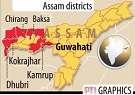
To take a snapshot of present cycle of violence, the events leading to July riots was triggered by a 24-hour bandh called by All Bodoland Minority Students’ Union (ABMSU) on 29 May 2012 to protest against the alleged removal of a signboard by cadres of the ex-Bodo Liberation Tigers (BLT) from a piece of land in the Badlangmari area that had been allocated for a mosque. The bandh turned violent injuring 13 persons. The momentum of violence, however, started with the killing of two members of All Bodoland Minority Students Union (ABMSU) allegedly by Bodo gunmen at Anthihara in Kokrajhar on 06 July 2012 and on 19 July, two more people were killed in Magurmari in Kokrajhar. In retaliation, on 20 July, four former BLT cadres were killed. Violence intensified since then and went out of proportion for the local police to be able to control. It subsided only when the Army was called in.

The challenge to crafting a way ahead is can the grievances of Bodos – safeguarding their culture and improving their economic conditions – be met without a separate state of Bodoland and without compromising the interests of other ethno-religious groups living in the so called Bodo areas? The answer lies in looking at the issue in a comprehensive, rather than segmented manner. The following six broad measures can be considered:

Timely Action: Analyzing all previous incidents of violence in the Bodo areas, it is clear that as and when the security apparatus missed taking note of symptoms of unrest and failed to take appropriate proactive action, the situation got out of control. The state police and Intelligence should have woken up by March 2012 itself when Bodos started commemorating 25 years of their “struggle”. Similar symbolisms and assertions were bound to be displayed by non-Bodo groups, especially Muslims and Adivasis. The manifestation of such assertions by competing groups was always through violence. This should be understood. Signs of imminent clashes were simmering since May, but were not taken seriously by the government. Nipping the problem at the bud would have averted indiscriminate violence and resulting killings and displacement.

Political Settlement: There is no point in going for a fresh accord. The failure of Bodo Autonomous Council (BAC) of 1993 and Bodo Territorial Council (BTC) of 2003 clearly shows the problem was more with the implementation and less with the provisions per se. It is vital, therefore, to fix the present BTC accord without any ambiguities and implement it in full. It was the ambiguities in the previous two Accords that led to lot of misunderstandings, opportunistic interpretations and confusions. Yet full and timely implementation would have averted many issues. The future amendment and implementation of the Accord is such that the provisions should satisfy both Bodos and non-Bodos in unequivocal terms. It should be realised that any success of the Accord lies also in cooperation between Bodos and non-Bodos.

Armed Groups: Armed groups representing Bodos and non-Bodos have to be tackled through appropriate means, either through political or military means or a mix of both. As long as they remain armed and active, insecurity and the consequent trust deficit would linger on. It would not suffice to prevail only on those groups that have not entered into ceasefire, but on all groups that have access to weapons and are motivated to kill.

Reconciliation: There is a significant gap between the present ground reality in the Bodo areas and the romance of Bodoland. It is important to bridge this gap. The political leadership should rise to the occasion in convincing the respective communities to see the things as they are and look ahead, instead of exploiting the situation to gain electoral mileage. Appropriate confidence-building measures and reconciliation among the concerned communities – Bodos, Mulsims, and Adivasis – are crucial.


Illegal Migration: It is also important to find a lasting solution to the issue of illegal immigration from Bangladesh. Despite the enormity of the issue, the response in stemming the flow of migrants from neighbouring Bangladesh has been grossly inadequate. The entire stretch of 4,096-km India-Bangladesh border is heavily populated, making monitoring extremely difficult. Fencing has to a large extent been acting as an obstacle, but only 2,760.12 km have been fenced so far.2 The remaining stretch should be fenced at the earliest, complimented with floodlights and hi-tech surveillance devices. Most importantly, existing border has to be demarcated at the earliest to make them free of ‘enclaves’ and ‘adverse positions’; much of the activities take place in these undemarcated areas. Although the Border Security Force (BSF), in charge of policing the border, has been doing its job creditably, the force levels are not sufficient to monitor the long and difficult border. Apart from raising new battalions, it is important not to divert the BSF for duties other than border management. They also have to be equipped legally to handle situations at borders that include not only illegal migration, but also smuggling, drug-trafficking, counterfeit currency, and militant movements. Apart from creating physical hurdles, it is also important to discourage illegal migrants through suitable deterrent legislation. Till recently, illegal migrants in Assam were handled by Illegal Migration (Determination by Tribunals) Act, 1983, that was held as unconstitutional by the Supreme Court in 2005 as it was “coming to the advantage of such illegal migrants as any proceedings initiated against them almost entirely ends in their favour, enables them to have a document having official sanctity to the effect that they are not illegal migrants.”3 An exclusive refugee/migration law is long pending. It is also vital to hasten the present plan of issuing multi-purpose identity cards, at least to curb further illegal migration. At some pockets, issue of temporary work permits can be considered so that Bangladeshis can come, work and go back. At the macro level, India should help in the overall economic development and prosperity of Bangladesh so that its citizens need not to go elsewhere for their livelihood.

Refugee Camps: Relief camps housing internally displaced requires due attention. All three broad categories of communities – Bodos, Muslims, Adivasis – are housed in various camps. Some of the camps have been in existence since 1993, as inmates could not return to their homes fearing violence. Because of overcrowding there is persistent lack of food, water, accommodation, medical attention, and sanitation. These concerns should be addressed urgently. Apart from making the living conditions of the internally displaced in relief camps better, the government should make sure that the displaced are rehabilitated at the earliest. Else relief camps would turn into breeding grounds for new militants.

Monday, August 6, 2012

Illegal Migration as a Threat to India’s Internal Security


Dr. N. Manoharan
Senior Fellow, VIF


Among other things, one of the major aspects that have come out of the recent communal violence in Bodo areas of Assam is illegal migration. According to the Group of Ministers Report on National Security, illegal migration
has generated a host of destabilizing political, social, economic, ethnic and communal tensions. Politically, the Bangladeshi migrants are in a position to influence the results of the elections in a large number of constituencies in the North East (about 32% of the constituencies in Assam). Economically, increased pressure on land, resulting in depletion of forest wealth, undercutting of wages of unskilled jobs, forcible occupation of Government land by the migrants and a host of other such issues, generate a ripple effect in the entire North East. 1
Illegal migration mainly takes place in the eastern and north-eastern parts of the country from neighbouring Bangladesh.

Bangladeshis have been moving out of their country due to economic, political and social reasons. There is a serious crisis of ‘lebensraum’ (living space) in Bangladesh due to alarming population growth rate without proportionate availability of land. This is going to worsen further in the future with the impact of climate change and natural disasters. As per 2011 estimates, the population density of Bangladesh is 964 per sq km, one of the highest in the world. Only Singapore and small city-states like Bahrain or the Vatican have higher figures.2 And, this is expected to increase further in the coming years.
As observed by the Group of Ministers Report, illegal immigration from Bangladesh has led to demographic upheaval and generated serious communal, political, social and economic tensions and conflicts in several areas of the northeast of India. The most affected states are West Bengal, Assam, Megalaya, Nagaland, Bihar, and Tripura, although migrants “have spread to far off states like Tamil Nadu, Maharashtra, Gujarat, Rajasthan and Delhi.” 3 Although the exact figure is not known, it is estimated that there are about 15-20 million Bangladeshis staying illegally in India. 4 The illegal migration of Bangladeshis in fact triggered the agitation in Assam by All Assam Students Union (AASU) in 1979-85. Despite the Assam Accord of 1985 5, the issue remains unresolved to this day and the “silent demographic invasion” persists. Due to vote-bank politics, the motivation to block illegal migrants from Bangladesh is absent. The gravity and scope of threats arising out of illegal migration was highlighted by the then Governor of Assam, Lt Gen S. K. Sinha in his report. Inter alia, he points out,
This silent and invidious demographic invasion of Assam may result in the loss of the geo-strategically vital districts of Lower Assam. The influx of these illegal migrants is turning these districts into a Muslim majority region. It will then only be a matter of time when a demand for their merger with Bangladesh may be made. The rapid growth of international Islamic fundamentalism may provide the driving force for this demand. In this context, it is pertinent that Bangladesh has long discarded secularism and has chosen to become an Islamic State. Loss of Lower Assam will sever the entire land mass of the North East, from the rest of India and the rich natural resources of that region will be lost to the Nation.6,
This applies to other states of the north-east, especially those that share borders with Bangladesh like Tripura and Meghalaya. In Tripura, the migrants have reduced the locals to a minority leading to rise of insurgent groups like All Tripura Tiger Force (ATTF). Bangladeshi migrants have even spread to far off states in the region like Arunachal Pradesh, and other parts of India and are seen as potential threat bearers. Some of these migrants give shelter to Bangladeshi militant groups like HuJI (B) and are very amenable to ISI activities. The Supreme Court, in its 114-page judgment, in July 2005 observed that “The presence of such a large number of illegal migrants from Bangladesh, which runs into millions, is in fact an ‘aggression’ on the State of Assam and has also contributed significantly in causing serious ‘internal disturbances’ in the shape of insurgency of alarming proportion making the life of the people of Assam wholly insecure and the panic generated thereby has created a fear psychosis.”7

Despite the enormity of the issue, the response has been grossly inadequate. The entire stretch of 4,096-km India-Bangladesh border is heavily populated, making monitoring extremely difficult. Fencing has to a large extent been acting as an obstacle, but only 2,760.12 km have been fenced so far.8 The remaining stretch should be fenced at the earliest, complimented with floodlights and hi-tech surveillance devices. Most importantly, existing border has to be demarcated at the earliest to make them free of ‘enclaves’ and ‘adverse positions’; much of activities take place in these undemarcated areas. Although the Border Security Force (BSF), in charge of policing the border, has been doing its job creditably, the force levels are not sufficient to monitor the long and difficult border. Apart from raising new battalions, it is important not to divert the BSF for duties other than border management. They also have to be equipped legally to handle situations at borders that include not only illegal migration, but also smuggling, drug-trafficking, counterfeits, and militant movements.

Apart from creating physical hurdles, it is also important to discourage illegal migrants through suitable deterrent legislation. Till recently, illegal migrants in Assam were handled by Illegal Migration (Determination by Tribunals) Act, 1983, that was held as unconstitutional by the Supreme Court in 2005 as it was “coming to the advantage of such illegal migrants as any proceedings initiated against them almost entirely ends in their favour, enables them to have a document having official sanctity to the effect that they are not illegal migrants.”9 An exclusive refugee/migration law is long pending. It is also vital to issue multi-purpose identity cards, at least to curb further illegal migration. At some pockets of Indo-Bangladesh border, issue of temporary work permits can be considered so that Bangladeshis can come, work and go back. At the macro level, India should help in the overall economic development and prosperity of Bangladesh so that its citizens need not to go elsewhere for their livelihood.

Endnotes
  1. See Group of Ministers Report on Reforming the National Security System, Chapter II, p. 6, para 2.35.
  2. For full details, see Bangladesh Bureau of Statistics, Ministry of Planning, Government of the People’s Republic of Bangladesh, “Population and Housing Census 2011,” p. 8, para 2.4.
  3. Group of Ministers Report on Reforming the National Security System, Para 2.35 of the.
  4. Ibid, p. 60, para 5.8 (h).
  5. Full text of the Agreement is available at http://aasc.nic.in/Acts%20and%20Rules%20(GOA)/Implementation%20of%20Assam%20Accord%20Deptt/Assam%20Accord.pdf Interestingly, there is a separate ‘The Implementation of Assam Accord Department’ in the Government of Assam that acts as “a Nodal Department for implementation of the Assam Accord and to monitor the implementation of various clauses of the Assam Accord by different Departments of the State Government.” For details see http://assamgovt.nic.in/departments/accord_dept.asp.
  6. See Chapter II, Para 24 of the Report. D. O. No. GSAG.3/98, dated 08 November 1998, full text of the report is available at http://www.satp.org/satporgtp/countries/india/states/assam/documents/papers/illegal_migration_in_assam.htm, accessed on 01 August 2012.
  7. Sarbananda Sonowal v. Union of India (UOI) and Another, No. 131 of 2000, India: Supreme Court, 12 July 2005, para no. 39, available at http://www.unhcr.org/refworld/docid/46b1c2eb2.html , accessed 4 August 2012.
  8. Ministry of Home Affairs, Government of India, Annual Report 2011-12, pp. 46-47.
  9. “IMDT Act is the biggest barrier to deportation, says Supreme Court,” The Hindu, 14 July 2005.