Showing posts with label Jamaatud Dawa. Show all posts

Monday, March 25, 2013

When the Periphery becomes Peripheral : Perils And Pitfalls of India's Neighbourhood Policy


Sushant Sareen 
(Senior Fellow, VIF)

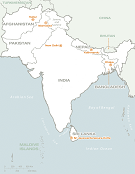
The Leader of Opposition in the Rajya Sabha, Arun Jaitley, best articulated the sentiment sweeping through large parts of India in the recent months. Reacting to the resolution of the Pakistan National Assembly on Kashmir and Afzal Guru’s hanging, Jaitley said that “if India can be kicked around in this manner, there is something seriously wrong about our external policy”.If it were only Pakistan, once again resorting to its incorrigible irredentism on Kashmir, it could have been explained away. But what has added to the sense of disquiet about the drift in India’s neighbourhood policy is the glaring inability of the incumbent government to play an effective role in India’s own backyard. From Maldives to Myanmar, from Afghanistan to Bangladesh, from Sri Lanka to Pakistan and Nepal, India almost appears to be a mute bystander, watching events unfold from the sidelines, events that have a serious bearing on India’s own security.

Despite India looming large in the region, not just because of its physical size and population but also its economic power and military strength, it has not been able to translate this into effective power on the ground. What is worse, India seems to have taken the fairy tale of non-interference and non-intervention, especially of the unsolicited or uninvited kind, in the affairs of other countries so seriously that it has even refused to exercise its natural influence in many of the countries of the region. While the lament that India doesn’t have or hasn’t developed sufficient leverages and pressure points that will allow it to use its influence in the neighbouring countries is often voiced, the tragedy is that India seems chary of using even the leverages that exist.

Like the perception in Pakistan of the US being behind every leaf that moves in that country, there is also a perception among some of India’s neighbours that nothing moves in their countries without India’s concurrence. A successful diplomacy would be one that exploits this perception and uses it as an asset in order to influence the course of events without being seen to be either interfering or intervening in the domestic affairs of any country. Instead, India goes overboard in trying to dispel this perception by adopting a hands-off approach. Worse, India expects all other countries to do the same.

Politics, whether domestic or international, however, abhors vacuum. Thus it is that India’s failure to use its considerable influence in Nepal to sort out the political mess there has resulted in China moving into Nepal in a big way. Consequently, India’s influence is withering away at an alarming rate. There was a time not long back when countries like the US and UK expected India to take the lead in Nepal. But after India’s failure to act in a meaningful way despite the bulk of Nepalese political players looking towards India, created a situation where Nepal is fast spiralling out of India’s sphere of influence. For India to now crib and complain about the inroads made by the Chinese is puerile.

In Nepal, a lot of the blame must rest on the cluelessness in the Indian foreign office about the enormous changes in the Nepalese polity. India’s Special Envoy, who had served as Ambassador in Nepal, failed to understand that the Twin Pillar policy – King plus multi-party democracy – had run its course. By continuing to support this anachronism, India only shot itself in the foot. The situation could have been retrieved subsequently, but only if India had a clear and coherent idea on what exactly served its interests in Nepal and how it planned to achieve its policy objective. But in the absence of this clarity, the easiest thing to do was mouth slogans and do nothing, except react and respond to situations as they developed.

Forget about Nepal, even in Sri Lanka, India seems hell bent on making a hash of things. Effectively, India seems to have reduced its Sri Lanka policy to a single point agenda – the state of Tamils in Sri Lanka. This is of course partly because of political compulsions of the government in New Delhi and the pressure being put on it by crucial allies in Tamil Nadu. But when emotionalism starts holding all other critical national interests hostage, then failure of foreign policy is a natural outcome. While even the Lankans understand India’s interest in the Tamil issue and are willing to engage with India in finding a solution, surely passing resolutions in the Indian Parliament or supporting Human Rights resolutions against Sri Lanka at the UN is hardly any way of conducting relations with a friendly country in which India has important economic and strategic interests. Moreover, India’s carping over Lanka asking the Chinese to develop ports is completely disingenuous. Since the 1950’s, whether it was on the Trincomalee oil depot, the Radio Ceylon frequency, or in recent years the Hambantota port and Colombo port expansion, the Lankan’s have always given the first offer to India. Only after India refused to participate in the project was it given elsewhere. After first rejecting the Lankan proposal and then complaining when the Lankans farm it out to someone else, India only invites ridicule.

Over the years, in the region, India has gained the dubious reputation where its friends have no faith in it and its adversaries do not fear it. According to a former chief of the Indian external intelligence agency, Research and Analysis Wing (RAW), this is because the policy framework (for whatever it is worth) is geared towards appearing as nice guys who are respected out of love and not out of fear. While repeatedly mouthing inanities like ‘friendly, historical, cultural and civilizational relations’, India seems to have actually internalised this tripe, and in the process forgotten the basic dictum of international diplomacy that nations have ‘permanent interests’ which should guide their foreign policy.

As for standing solidly behind friends, the words of a top Pakistani politician come to mind. Interacting with him as part of the back channel diplomacy, his Indian interlocutors tried to impress upon him the benefits of opening up to India. This Pakistani politician didn’t really need any convincing on this score. But his counter question to his Indian interlocutors stumped them. He asked “will India stand by me if I face trouble at home because of reaching out to India?” Sure enough, once he landed in trouble with the Pakistani ‘deep state’, India simply forgot about him, until he once again made a comeback when the same short-sighted Indian establishment started scurrying to curry his favour. But the damage had been done.

What happened with this Pakistani politician is something that has happened with innumerable well-wishers and friends of India in the neighbourhood. The result: no one really trusts India’s word anymore and only someone really crazy will go out on a limb for India. Some of this we are today witnessing with the deposed president of Maldives, Mohammed Nasheed. Beguiled by the approach and promises of the current President Waheed, the Indians let Nasheed hang out to dry and soon realised that they had been led up the garden path by the Islamist leaning Waheed and his cohorts. In a deliberate move, Waheed threw out the Indian company building the Male airport, has been openly bad-mouthing India in China, has been hobnobbing with Islamists (including the Pakistani terrorist group Jamaatud Dawa / Lashkar-e-Taiba), has allowed China to build infrastructure that could become part of the ‘string of pearls’ encircling India. And what has India done apart from twiddling its thumbs?

Instead of ‘winning friends and influencing people’, India seems to have perfected the art of ‘how to lose friends and alienate people’ in its neighbourhood. If the enormous time, treasure and thought wasted on trying to normalise what is an utterly fruitless relationship with Pakistan had been invested on the other countries of the region, perhaps India would a lot more to show for its labours. Of course, while it would be unfair to heap all the blame for this developing disaster of foreign policy only on the present government, the current political leadership – it is actually a travesty to use the word ‘leadership’ in the context of the current Prime Minister – must bear its share of responsibility for foisting a befuddled foreign minister on the country and not providing any sort of clear political direction to the bureaucracy.

But asides of the sheer absence of even a modicum of statecraft in the incumbents – quite natural for a technocrat-led government of the babu, by the babu, for the babu (and one daresay, baba) – there are other equally serious problems that have brought India to such a pass. There are structural and systemic issues, political compulsions, lack of practical policy making experience and even intellectual capacity and understanding in academia (think-tanks and universities), and a serious attention deficit syndrome (not just in the media but also in the policy making and political establishment) which have also contributed to the inability of the Indian state in playing a robust role in shaping developments in the neighbourhood.

The Ministry of External Affairs is sorely underequipped and understaffed, not to mention, overburdened (actually deluged) by routine matters that the officials just don’t have the time to do long term planning and strategising. The Perspective Planning Division which was supposed to do some of this work is essentially a dumping ground for officers. Perhaps, if there was synergy between the officials and academia (think-tanks and universities) some of this could have been outsourced. But partly because official India is more bothered about protecting its turf than protecting national interest, partly because of a certain superciliousness that characterises people who manage to pass the civil services exam and partly because of the generally poor intellectual capacity and wooly headed and theoretical approach of academia which is so often completely divorced from the hard and harsh realities of international politics and power, there is practically hardly any input in policy making from outside the government. Another huge problem is the tendency both among officials and non-officials to tow the line which they think the political master wants to hear. Sycophancy is a pervasive phenomenon in the system and hence no one is ready to make a dispassionate analysis or recommendation because it might jeopardise the post-retirement prospects of the bureaucrat. Actually, the re-employment industry that has been opened by this government for never letting pliable and fawning (if also foolish and incompetent) officers retire, is to a large extent responsible for the faulty policies on the neighbourhood.

Then there is the problem of a lack of specialisation even within the government on the region. Officials are regarded as experts on a country because they happen to have served there. But most of them don’t know the local language, don’t know the sociology of the place, don’t have any idea of political complexities, and have only a perfunctory knowledge of the economy. In any case, for most officials a posting in the neighbourhood is often a fate worse than death. Like in the IAS, where a young officer thinks his life has come to an end if he is allotted a North-East cadre, many IFS officers would rather serve as irrelevant third world diplomat in Europe or America than as a relevant diplomat in the neighbourhood. But why blame only the bureaucracy. Statecraft has been reduced to the misuse and abuse of CBI to arm twist political allies and rivals. The Central Government is unable to factor in the growing influence of border states in formulation of foreign policy. While there is no constitutional requirement to consult states or even parliament on issues of foreign policy, there is a political argument in favour of doing this. This means evolving a mechanism to engage with states not only through a regular liaison with state governments but also a public outreach for explaining foreign policy imperatives. Otherwise, be ready for fiascos like the Teesta water agreement and the current uproar over the Tamil question in Sri Lanka.

The media too must share part of the blame. Quite simply, for the media the neighbourhood isn’t sexy enough to cover on a regular basis. How much column space or air time has been devoted to the incredible Shahbagh movement in Bangladesh? And would the Tamil issue in Sri Lanka have got so much coverage if it wasn’t for its repercussions on domestic politics? The media indulges in parachute journalism in the neighbourhood and there is practically no specialisation on any of the neighbouring countries. Apart from one or two newspapers, how many media outfits have bureaus in the neighbouring countries? Having a stringer isn’t quite the same thing as posting one or more correspondents in countries which have such critical bearing on India’s national security. The think-tanks are no better. Most of them are nothing more than glorified event managers, spending large sums of money in hosting generally pointless track-II meetings and seminars. But ask them to send a researcher for a couple of months to a neighbouring country, and they will balk. The Americans on the other hand encourage and finance young researchers to spend even a couple of years in the country of their interest.

If India has to pull its weight in the international community, it must first be able to use its influence in its own backyard and shape the region in way that it advances India’s interests. But for this to happen, India must first know what it wants. Then, it must forge the instruments for achieving its objectives. This will require investment – of time, money and intellect. Without this, India will not just see a whittling down of its influence, but worse, face serious destabilisation in its periphery which cannot but have a severe impact on India’s own security and stability. If however the periphery remains peripheral for the policy and opinion makers in this country, then it will only be at the cost of India’s own well-being.

Wednesday, January 23, 2013

Shinde’s Shenanigans Grievously Damage National Unity, Integrity and Security


Home Minister Shinde has given comfort to India’s enemies with his reckless assertions at the Congress Party’s Jaipur chintan shivir that the BJP and the RSS were running “terror training” camps to spread Hindu terror throughout the country.

Clearly, Shinde’s comments lend credence to the belief that it is a clumsy attempt to cause communal polarisation simply with an eye to winning Muslim votes by instilling a sense of deep insecurity and victimisation among them.

In the process, he has not only provided grist to the propaganda mills of Pakistan’s state and quasi-state Jihadists and media mujahideen to portray India as no different from Pakistan in its involvement with terrorism. They are also being used to deepen communal cleavages in the country and provide justification to acts of terrorism by Pakistani sponsored groups like the Indian Mujahideen. These comments have furthermore politicised terrorism and thus, undermined national security, which ironically Shinde is sworn to defend as the Union Home Minister. 

Sadly, in this he enjoys the dubious company of the newly anointed Vice President and heir-apparent of the Congress Party. Rahul Gandhi betrayed his shocking ignorance about the challenge posed by Pakistani-based international terror groups like the Lashkar-e-Taiba/Jamaatud Dawa when he told a former US Ambassador that more than the Pakistani Jihadists who had spread murder and mayhem in India over two decades, he saw a bigger threat from the growth of radicalised Hindu groups. 

If indeed Shinde has evidence of any terrorist training camps being run by the BJP and RSS, then he must explain why his government has not acted against them. The fact that despite investigating the Samjhauta, Malegaon and Mecca Masjid blasts for a couple of years now, and arresting dozens of alleged conspirators, the Congress-led government has not even been able to bring these cases to the trial stage, increasingly suggests that these investigations are bogus. 

Shinde must furnish proof to back up his charges, failing which he needs to consider his position and do the honourable thing.

Friday, September 14, 2012

India - Pakistan Relations: Lessons of History, Perils in the Present


Sushant Sareen
Senior Fellow, VIF

Folklore, if not history, has it that the King of Delhi, Prithviraj Chauhan, worsted in battle the Afghan invader, Mohammed of Ghor, some 17 times. After each victory, Prithviraj acted graciously and with typical, if also entirely misplaced, Rajput chivalry and spared the adventurer from Ghor his life. Unfortunately, the ruler (and as increasingly seems to be the case post-independence, rulers) of Delhi never understood the driving force that prompted, nay compelled, the attacker from the North-West to keep trying his luck. Nor for that matter did the latter appreciate, let alone acknowledge, the gesture that was shown to him. That Mohammed of Ghor had no use for such senseless displays of chivalry became clear after he defeated Prithviraj. Not only did he carry Prithviraj into captivity as a trophy of war but also subjected him to the worst sort of torture. What followed was a sordid tale of ceaseless invasions and conquests for the next millennium.

Today, the rulers of Delhi are once again faced with a close to Prithviraj Chauhan like moment. The question is whether the historical blunders of the last millennium will once again be repeated, as it wasnot too long back in Shimla in 1972. Under the mistaken pretext that the time is ripe to reach out to the legatees of Ghor (after all doesn’t Pakistan still swear by the Afghan invaders, so much so that it has named its missiles Ghori, Ghazni and Abdali), the Indian leadership is being inveigled to make far reaching concessions and grand gestures in the fond hope that this will help in normalising relations with Pakistan. Alternatively, will the Indian leadership press home the advantage afforded by fortuitous circumstances and events (almost all of them the result of a blowback of Pakistan’s monumental folly of using terrorists as an instrument of state policy) and drive a hard bargain that secures India’s economic and political interests, guarantees its security, settles its borders, enhances its strategic outreach, and rids it of the constant needling and irritation that Pakistan has caused for the last 65 years. In other words, will India fall for the nonsense of not forcing a Versailles on Pakistan?

If the track record of the Manmohan Singh government is anything to go by, India will probably go the Prithviraj Chauhan way, ignoring not just the lessons of history but also cavalierly disregarding the continuing hostile actions emanating from Pakistan which are aimed at undermining India’s security and its economy. Quite aside the irony that even as the Pakistani foreign minister Hina Rabbani Khar underscored the need to ‘let bygones be bygones’ and ‘forge ahead without being held hostages to the past’ (alluding to the 26/11 terror attacks in Mumbai four years ago) she couldn’t resist mentioning the ‘K’ word (a 65 year old issue), the fact remains that Pakistan’s State and non-State actors have continued with their inimical actions against India. From pushing in narcotics (which is destroying an entire generation in Indian Punjab) to infiltrating terrorists and jihadists, from smuggling fake Indian currency notes (FICN) to recruiting young Indians to carry out Pakistan's murderous agenda, from instigating and inciting communal violence through its proxies to sponsoring anti-India and anti-Hindu propaganda, from providing sanctuary and support to anti-India groups to attacking Indian targets and development projects in Afghanistan, from trying to sabotage India’s diplomatic initiatives at the UN to using India’s neighbours like Nepal, Bangladesh and Sri Lanka to forge a front against India, Pakistan hostility towards India is unrelenting.

And yet, the Indian leadership’s unfathomable quest to embrace Pakistan, knows no limits. Admittedly, over the last few months, the Pakistanis have gone out of the way in talking sweetly to India. Statements of top Pakistani leaders – President Asif Zardari, Prime Ministers Yusuf Raza Gilani and Raja Pervez Ashraf, foreign minister Hina Rabbani Khar, leaders of parties which are partners in the ruling coalition as well as senior opposition politicians – have all been expressing their desire to improve relations with India. There has even been a softening in the line taken by the Pakistan army, as was evident in the statement of the army chief Gen. Ashfaq Pervez Kayani during a visit to the Siachen sector. But notwithstanding all the nice words being mouthed, there is little on the ground to show that Pakistan has made a strategic shift.

When judged against the metrics that will actually demonstrate a paradigm shift in Pakistan's attitude and approach towards India – namely, handing over the most wanted terrorists who have been given refuge in Pakistan, ending the export of narcotics and FICN, providing India transit rights to Afghanistan and beyond, ensuring the end of ceasefire violations along the LoC, supporting India’s entry into the UN Security Council, dismantling the infrastructure of jihadist terrorism, reforming the school curricula by indoctrinates young children against India and Hindus, ceasing hostile propaganda and baseless allegations against India, and last but not the least, ending their irredentist claims on the Indian state of Jammu and Kashmir and stopping the recruitment and incitement of Indian Muslims against their country – there is practically nothing that would indicate that indeed Pakistan has changed course on relations with India.

The only positive development has been trade front with Pakistan moving from the restricted positive list of tradable items to a negative list (comprising some 1200 products) and holding out the assurance of granting India MFN status by the end of the year. But even this move needs to be qualified. First and foremost, trade is not a concession, especially not if the side relaxing trade stands to gain much more. The most optimistic projections of Indo-Pak trade estimate that bilateral trade will touch $ 10 billion in the next five years or so. By this time India’s total foreign trade will be around $ 700-800 billion. In other words, trade with Pakistan will constitute a miniscule portion of India’s foreign trade, just around 1.5%. But in Pakistan’s case, trade with India will be over 10% of its total foreign trade. Secondly, and more importantly, by projecting trade as a huge concession, Pakistan is pushing India to make ‘concessions’ on issues like Sir Creek and Siachen as a quid pro quo. In fact, there seems to be a certain desperation on part of Pakistan to get India to abandon Siachen. Since there has been little give so far on these two issue from India, despite turn-the-other-cheek liberals pressing the government to give in, Pakistan has stalled all further progress on the trade front.

Clearly, the thinking in Pakistan was that it would be able to get the best of both worlds by liberalising trade with India – it would benefit from the trade and at the same time beguile India into surrendering territory. To an extent, the Pakistanis seemed to have been vindicated in this belief of theirs by the unnecessary euphoria that the opening up of trade generated among not only the Indian businessmen but also among a host of political leaders cutting across the political divide. Partly to keep Pakistan engaged and partly to oil the wheels of this trade, India has tried to generate goodwill by relaxing the visa regime making it easier for certain categories of people to travel across the Radcliffe line. Indian officials insist that proper safeguards have been built into the new visa regime, and that the introduction of business visas, tourist visas, spouse visas and visa on arrival for senior citizens and children will not compromise the security interests of the country. But given the state of affairs and the sort of pulls and pressures that are brought to bear on officials to grant visas to Pakistanis, the new visa regime doesn't inspire too much confidence. Quite simply, there is really no failsafe method of ensuring that undesirable elements dont come into India using the relaxed visa regime. For instance, it is an open secret that many Pakistani businessmen who are keen on trade with India are also big financiers of terror groups like the Jamaatud Dawa, Sipah-e-Sahaba, Jaish-e-Mohammed etc. Keeping an eye on all these characters and stopping their entry into India is easier said than done.

Much of the bonhomie on display by both India and Pakistan is aimed at paving the way for the visit of Prime Minister Manmohan Singh to Pakistan. His visit to his ancestral village Gah is being touted as a landmark in Indo-Pak relations and the spin doctors of the government are busy churning out a prodigal-son-returning-home sort of narrative. But given that no Napoleonic feat will be achieved during this visit, why anyone should be going so gaga over his visit to Gah is rather mind-boggling. If anything, it would seem that Manmohan Singh will go to the land of his birth bearing gifts that the land that gave him refuge after he was unceremoniously thrown out from what is now Pakistan (and as many Hindus today are being hounded and forced out) can ill afford to give. For their part, the Pakistanis are quite clear that India will have to compromise on issues like Kashmir, Siachen, Sir Creek and water for any forward movement in bilateral relations. None other than arguably the most well-informed Pakistani journalist, Najam Sethi, insisted on this in his TV talk show a day after the Indian foreign minister returned from his visit to Pakistan. And Sethi is supposed to be the liberal, modern, moderate voice in Pakistan!

Quite clearly, until Pakistan can get over its compulsive hostility of India, normalisation of relations between the two countries will remain a pipedream. But breaking with the past will require a complete overhaul of Pakistan, something that appears practically impossible. While India must keep lines of communication open, there is absolutely no reason for it to push for a negotiated settlement and that too on Pakistan’s terms, even less so at a time when Pakistan is on the ropes. Let India follow the Chinese maxim that if you sit long enough on the banks of a river you will watch the body of your adversary float by. At the same time, if Pakistan forsakes the use of Islamist terror and other forms of sabotage and subversion as an instrument of state policy against India and accepts the reality and existence of India, then it will find India a more than willing partner, one that will go the extra step like it has done in the case of Bangladesh.

Thursday, April 5, 2012

Sushant Sareen

Want to earn an easy $ 10 million? Just log on to the Rewards for Justice website of the US State Department, type in the submit a tip space on the website ‘116E, Johar Town, Lahore’ – the address of India’s and now also one of America’s most wanted terrorists, Hafiz Saeed, Chief of the international Islamist terror organisation, Jamaatud Dawa/Lashkar-e-Taiba – and Voila, you will be eligible for winning the Rs. 50 Crore bounty announced by the Americans for giving information leading to the arrest of the notorious terror boss. You could also inform the Americans that Saeed was strutting about openly, spreading his hate-filled venom in a public meeting organised by the ISI-sponsored Difa-e-Pakistan Council last Sunday at Jinnah Park, Sialkot, and on April 15 he is scheduled to address another such rally in Peshawar. Alas, easy money is not so easy to come by especially from the Americans who don’t believe in giving free lunches or money to anyone, except for the Pakistanis.

Quite frankly, the Americans have more dope on Saeed and others of his ilk than all of us put together and if they really wanted they could have fixed the hash of Saeed and his sponsors and supporters long time ago. They really didn’t need to announce a bounty on him because normally bounties are announced for people whose whereabouts are not known. But Hafiz Saeed and Abdul Rehman Makki are not in hiding. They operate in full public view, celebrated and feted by the Pakistani establishment, living under the ISI’s protection and patronage. What is more, placing Saeed and Makki on the most wanted list appears to have been done rather hastily, something that is apparent from the big blooper labelling the JuD a ‘radical Deobandi terrorist organisation’ when it is actually a Ahle Hadith (Wahabbi) outfit.

Clearly, putting Saeed and Makki on the most wanted list of terrorists has less to do with the US-led War on Terror or giving a favour to India; it has more to do with the downturn in the US-Pakistan relations and is a signal, even warning, to the Pakistanis to restore their relations with the US or else be prepared for some sort of US retaliation. It is also possible that this could be the start of preparing the ground for declaring Pakistan a terrorist state at some time in the not too distant a future. The reason Saeed has been picked is not very complicated. Apart from the fact that the LeT is a terror organisation with an international footprint, Saeed’s closeness to the Pakistani establishment – he is virtually an auxiliary of the ISI – makes him a perfect target for pressing home the point with the Pakistanis. Add to this Saeed’s murderous campaigns against India (not only in the Indian state of Jammu and Kashmir but also in other parts of the country) and he becomes an even more tempting target to deliver a message to the Pakistanis: either you give us what we want, or else we will use the India card against you. This is something that invariably helps to concentrate the Pakistani mind to the demands of the US.

Saeed’s case is of course not the first time that the Americans have used the India card to get something out of the Pakistanis. Just a few months back, when US-Pakistan relations had taken a big dip after the Osama bin Laden raid by US Special Forces, the Americans made an example of the ISI agent Ghulam Nabi Fai to inform the Pakistanis of the damage that can be caused to their pet obsessions like Kashmir. For nearly two decades Fai had been operating on ISI instructions and with ISI money to carry out his poisonous propaganda against India. But Fai’s anti-India activities were always either ignored or condoned. It was not until US-Pakistan relations went into a tailspin that the Americans decided to make an example of Fai and send a strong message to Pakistan by dismantling its entire propaganda machinery in the US.

Although the Indian establishment is exulting over the latest US move on Hafiz Saeed, it would do well to put any celebration on hold. India is really a beneficiary by default and not necessarily by design. If anything, other than the satisfaction of seeing a US bounty on Saeed and Makki, India shouldn’t expect anything much at this stage, certainly not any concrete action against either of these two terrorist chieftains. Just a couple of years back, the Kerry-Lugar-Berman law under which Pakistan was to receive $ 7.5 billion aid had required the US Secretary of State to certify that the Pakistanis were acting against terror groups like the JuD/LeT. Until now, the US Secretary of State isn’t known to have withheld this certification in spite of the fact that during this entire period, the JuD activities have only increased as indeed has its public profile.

In all likelihood, therefore, the US will desist from taking any precipitate action against Saeed despite having placed him on the most wanted list. As far as the US is concerned, it is trying to ratchet up the pressure on the Pakistanis at this point in time and if the Pakistanis play ball, no further action will be taken on the Saeed front. But if the Pakistanis continue to hold out and make utterly over the top demands to restore the US and NATO supply lines, there is every chance that the Americans might stop their kid-glove approach towards Pakistan on the issue of terrorism.

The problem however is that if the Americans now soft-peddle the issue of Saeed (in the fond hope of the Pakistanis delivering what is asked of them), they will only end up devaluing the seriousness with which their most wanted list is seen around the world in general, and by Pakistan in particular. In a sense, the US list will be treated the same way as the Indian list of 20, sometimes 30 and at other times even 50, wanted terrorists that is dusted and handed over to the Pakistanis every time a major terrorist attack takes place in India, only to see the Pakistanis throw the list in the rubbish bin.

Come to think of it, why should the Pakistanis take the Indian most wanted list seriously when even the Indian government doesn’t, something that is apparent from the perfunctory manner in which this list is treated by India. What is worse, notwithstanding the welcome being accorded to the US decision on listing Saeed on its most wanted list, one really wonders if this move isn’t a cause of discomfiture for the Indian Prime Minister and his advisors who have all but forgotten the terrorist outrage of 26/11 and the uncountable other similar incidents only so they can once again chase the chimera of normalising relations with Pakistan, a country that is far from normal and still remains implacably inimical to India.

Author is Senior Fellow in Vivekananda International Foundation