
Showing posts with label Islamic world. Show all posts

Wednesday, October 31, 2012

“Soft Power” Counts for very Little”


Kanwal Sibal (Advisory Board, VIF)

Much is sometimes made of India’s “soft power” as a diplomatic force multiplier. This kind of power is defined as the ability to attract and co-opt rather than coerce, use force or give money as a mean of persuasion. Through this power a country can supposedly obtain the outcomes it wants because other countries admiring its values, emulating its example, aspiring to its levels of prosperity, openness and availability of individual opportunities, want to follow it. Those who believe in the reality of such “soft power” in international relations think that Bollywood, yoga, Indian music, dance and cuisine, our practice of democracy and pluralism amidst huge diversity give India added diplomatic weight internationally. Is this true?

US

The concept of soft power may have gained wide international currency in political and academic circles but that does not mean it is unquestionable. The concept is very American, developed from the perspective of the world’s dominant political, economic and military power. One can do the academic exercise of separating the various components of US power and establish a new category of “soft power” on the assumption that American democracy, culture, values, Hollywood et al exert draw the rest of the world voluntarily into the American orbit.

The US, supposedly, attracts others through this kind of soft power to follow its lead, without the need to use force. This is a debatable proposition. If the US lacked the overwhelming “hard power” it has, if global institutions were not dominated by it, if it did not actively propagate its political,economic and societal values world-wide, if it did not control significantly the flow of information across the globe, its “soft power” would be ineffectual. Switzerland has many of the elements of American “soft power”- a veritable grass root democracy, respect for citizen rights, individual opportunities, high levels of prosperity, quality production etc. Yet no one talks of neutral, non-military oriented Switzerland’s “soft power”.

Furthermore, have countries at large progressively embraced democracy because of the American example? On the contrary, one now talks of the attractiveness of the Chinese model of governance for developing countries. Russia resists US ideas of democracy and the methods used to promote it in Russia itself and in its neighbourhood. Despite decades of US global domination, consolidated by the demise of the Soviet Union, no democracy wave has engulfed the world, except in areas liberated from Soviet domination in eastern Europe. The Arab world is seeing political convulsions that have been inspired not by US democracy but by local anger against protracted dictatorships, with power transferred to muslim groups averse to western style democracy. Moreover, American democratic freedoms and cultural values have hardly wrought change in the Gulf monarchies despite their long asociation with the US. Its “soft power” hasn’t prevented the US from being deeply unpopular in the Islamic world at large.

The claim that US soft power draws strength from its commitment to human rights would need to be reconciled with American military intervention in Iraq that has exacted an enormous human toll. Regime changes of the kind enforced in Libya and being currently promoted in Syria, with Iran to perhaps follow later, are exceedingly costly in human terms as whole societies are destabilized. In Afghanistan, and even in Pakistan where the US has become deeply unpopular, radical forces like the Taliban are unimpressed by US soft power, even with regard to basic human values such as proper treatment of women and the right girls have to education etc.

India

It is important also not to confuse entertainment with power of any kind. There is no relationship between enjoyment of Hollywood movies and political support for US policies across the globe. Because of the highly unequal quality of these films, in some ways the picture they convey of US society can be actually unflattering.

In India’s case, its putative soft power as a democracy has failed to exert much co-opting influence even in its neighbourhood. Countries like Nepal have actually viewed Indian democracy in the past as a threat. Governance issues have tarnished the image of our democracy, with the spread of corruption in all walks of life eroding further its prestige. With China racing ahead in economic development and pulling millions out of poverty, India’s failure to eradicate abysmal levels of poverty still prevalent in the country, besides wide-spread malnutrition and poor sanitation and hygiene, corrodes the attractiveness of its model, which some have begun to see as increasingly dysfunctional. In some areas the human development indices in India are lower than in sub-saharan Africa. It is ironical that the democracy argument has to be offered by apologists to explain the shortfalls in India’s performance.

Culture

Bollywood, which is loved by the Pakistani public, hasn’t reduced Pakistan’s hostility towards India, just as the fondness of some here for Pakistani plays and affection for sufi music does not change negative thinking about Pakistan in India. Our secularism and pluralism is hardly viewed with admiration in the Islamic world, where the more conservative regimes actually see secularism as a form of heresy and minorities are denied equal status in law. Our other cultural attributes, however attractive, haven’t persuaded countries to be on India’s side against dictatorships and military regimes that inflict violence or make teritorial demands on us. Across the world people can love Indian food and enjoy Indian art forms, but that does not lessen political differences on key bilateral or international issues, just as the popularity of Chinese food in India does not alter our thinking about Chinese claims on Arunachal Pradesh or its strategic alliance with Pakistan.
So, let’s not be soft-headed about the politically seductive force of India’s “soft power”.

Friday, September 28, 2012

When Bastions Become Insecure, Orderly Retreat Becomes Unavoidable


Sushant Sareen
Senior Fellow, VIF

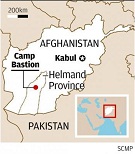
The portents of the Taliban strike against Camp Bastion in Helmand earlier this month are rather depressing and disheartening. Despite the brave face being put on by the NATO commanders, the devastating attack raises serious questions about the viability and sustainability of not only the exit strategy devised by the Americans but also their purported plan to retain some bases in a supporting role post 2014. The recent spate of attacks on NATO targets – Camp Bastion, the suicide bombing of a bus carrying Westerners to the airport, the damage caused to the aircraft of the US Chairman Joint Chiefs of Staff Committee at Bagram, the series of ‘green-on-blue’ attacks, targeted assassinations and what have you – have instilled a deep sense of foreboding both within Afghanistan and without.

Confidence in the ability of the current dispensation in Afghanistan to hold fast against the Taliban / Al Qaeda combine after the exit of the ISAF was never very strong. After the Camp Bastion attack, it would have been badly shaken, if not completely shattered. With nothing on the ground to reverse the sentiment of gloom and doom, chances are that the main players would have already started to prepare for the post-2014 situation. Some would be opening their channels of communication with the Taliban, others preparing for a fight to the finish against them and still others hedging their bets in all directions. In the process, the authority of the government, or whatever remains of it, would get severely compromised, making it even more difficult to maintain a modicum of stability once the foreign forces withdraw substantially.

Tempting as it would be to underplay the attack on Camp Bastion – after all, this wasn’t the first time that an ISAF base had been attacked – the simple fact is that the ferocity of the attack, the meticulous planning and flawless execution, and most of all the damage it caused (both material as well as psychological) makes it something of a game-changer. Coupled with the growing chasm between the foreign and local troops because of the spike in ‘green-on-blue’ attacks, manifest in the suspension of joint operations and training of troops, the Camp Bastion attack has put a big question mark over the efficacy, and indeed practicability, of the post-2014 strategy of the Americans.

By all accounts, the US strategy, as things stand, is that while the bulk of the troops will withdraw by the end of 2014, a small force – the numbers being bandied about range between 10000 and 35000 – will stay behind in a support and training role. Three to five bases are likely to be retained by the Americans in Afghanistan to house these troops and mount both ‘search and destroy’ as well as rescue missions. While the Afghan national security forces will be handed over security responsibilities, the Americans will be there to back them until the situation stabilises. Clearly, this is hardly a confidence inspiring strategy and, if anything, it is going to be unworkable. To put it simply, the only real choice before the Americans is to either comprehensively defeat the Taliban, their associates, proxies and supporters, or else cut and run from Afghanistan. Anything else will be a halfway house that is never going to work.

As the drawdown takes place, a security vacuum will be created. Although the ANSF will try and fill this vacuum, it is unlikely to have a good grip over the security situation. The Taliban are expected to make major inroads and hold sway (even if informally) over large swathes of territory, particularly in the South and East of Afghanistan. What is more, there are real apprehensions that the Taliban or their associates and affiliates could extend their baleful influence – either through force of arms or through imaginative use of psychological warfare to convince the local people to side with them as they are bound to emerge victors eventually – in parts of Afghanistan which currently are relatively unaffected by the insurgency.

Expecting the relatively small numbers of US troops to be able to stall such advances by the Taliban, who will also have the advantage of momentum and morale on their side, is not very realistic. This is not to say that the Taliban will sweep through Afghanistan. Chances are that there will be many more bloody engagements between the combatants and while there will be no clear victor after these engagements, they will end up exhausting both the Afghan regime as well as their American supporters.

What is worse, the Americans will be largely confined to their bases, practically under siege from hostiles in the surrounding countryside and extremely wary of their Afghan colleagues because of the ‘green on blue’ attacks. In such a situation, will not the US troops be more engrossed in securing their base and their backs rather than in targeting the Taliban or training and supporting the ANSF? And after the Camp Bastion attack, how secure will these bases be? How will these bases maintain their logistics lines? Will they be supplied only by air because the land routes will be extremely vulnerable to attacks by the insurgents? Will these bases only send out airborne patrols because ground patrols, if any, will be subjected to unremitting attacks? What will happen if the Taliban are able to mount a couple of devastating Camp Bastion type attacks on these bases, extracting a heavy price in men and material? Will not the continued US troops presence in Afghanistan become financially, militarily and politically untenable in such a scenario?

Currently, ballpark estimates of cost of maintaining a single soldier in Afghanistan is $ 1 million per annum. If around 10000 troops are retained in Afghanistan post 2014, it will mean an annual expenditure of around $ 10 billion. A force of around 25000 will entail a cost of $ 25 billion. How long will be the US continue to bear this expenditure? Until 2024? Appears unlikely. What is more likely is that once the bulk of the force is withdrawn, and the security situation takes a turn for the worse, there will be a growing clamour in the US to call back rest of the forces and figure out some other way to contain the Taliban and other Islamist radical groups that are bound to make Afghanistan their base.

Apart from the financial burden, continued presence in Afghanistan will also make the US hostage to Pakistan. While the dependence on Pakistan for ground lines of communication (GLOC) will reduce drastically because these would have probably become un-useable since they will be passing through Taliban dominated areas, the Pakistani airspace will remain crucial for the US military in Afghanistan. And if it is not Pakistan, then the US will remain hostage to all sorts of political, financial and diplomatic arm-twisting by the countries through which the Northern Distribution Network operates.

Quite clearly, the US exit strategy has gaping holes insofar as the future security scenario in Afghanistan is concerned. Although the military commanders are insisting on staying the course and the American politicians are emphatic about not abandoning Afghanistan, once things start going horribly wrong, none of these commitments will be worth the paper they are written on. The military bases that US intends to retain fit in well into the exit strategy only to the extent that they will allow for an orderly retreat as and when the time comes to throw in the towel. Perhaps the Americans have learnt the lesson from the British to not announce a complete withdrawal because that would mean that the next day there won’t be a single Afghan left on their side. By withdrawing to their bases, a strong signal will be conveyed that the Americans are here to stay for the foreseeable future, something that will keep many Afghans on their side and at the same time allow for bulk of the forces to exit. Once they are in their bases, they will be better places to leave lock, stock and barrel as and when the time for doing this comes.

Of course, quitting Afghanistan will not mean the end of the US fight against radical Islamists. Nor will it mean turning the back on the anti-Taliban Afghans. But instead of boots on the ground or bombs from the air, the Americans will probably devise a somewhat smarter and perhaps more effective strategy to support anti-Taliban and anti-radical groups in Afghanistan and around the Islamic world.