Showing posts with label Aung Suu Kyi. Show all posts

Friday, December 14, 2012

Obama's visit to Myanmar: Implications for India


President Barack Obama’s visit to Myanmar last month was recognition of measures taken by the current regime towards opening up of Myanmar. The visit has largely been viewed as a part of the Asia Pacific ‘pivot’ announced by the US President in November, 2011. Further, the US was also aware of significant inroads being made by the European countries particularly Germany, UK and France in Myanmar and therefore, did not want to be left behind especially in the era of economic downturn

The visit took place despite the fact there was a lack of consensus in Washington on the Myanmar policy with resistance from human rights groups as well as from nuclear non proliferation lobby given the revelations of North Korea supplying some missile related material to Myanmar.

Political Gains

From the political perspective the visit has had a significant impact. Firstly, this has reinforced the commitment of President Thein Sein and the reformers who are flagging the benefits that have been received post opening up of polity and economy. The government was quick to release another set of political activists prior to the visit; such tools may be used again for greater concessions from the US and the West.

Secondly, the separate meetings that President Obama had with President Thein Sein, Aung Suu Kyi as well as the parliament speaker U Swe Mann is indicative of the broad based approach that the US is following to support the reforms.

A major advantage gained in Myanmar was for civil rights groups, political activists and human rights agencies given that the space for information and activism has considerably opened up by the Obama visit.

From Indian perspective, there is a hope that the course of reforms would be progressive even though they may occur at a relatively gradual pace. There is a general belief that the core of resistance from the military is likely to continue and they need to be pushed by the international community in the right direction. India has continued with a broad based and balanced relationship with political leadership as was evident from the highly successful visit of Aung Suu Kyi to the country in November. The military in Myanmar was also engaged through the visit of the Chairman Chiefs of Staff Committee Air Chief Marshal Norman Browne to Myanmar in November.

Moderating the Chinese Influence

Myanmar’s recent political and economic reforms seem to have been driven by Naypyidaw’s desire to reduce its overdependence on China.

With the U.S. and the Western nations engaging Myanmar, the strong influence of China in Myanmar is likely to be impacted. Due to China’s imposing presence and its exploitation of Myanmar’s resources against the popular will there has been considerable public opposition to the Chinese projects. Last year, construction of Myitstone dam was suspended by the President, Thein Sein. The opposition against the project brought together conservationists, environmentalists, Kachin activists and the political opposition. Popular opinion has been building up against some of the other Chinese sponsored projects in Myanmar. Recently, there have been protests against a copper mining project in Monywa, Sagaing Division, jointly undertaken by China and a military sponsored local company. An enquiry commission headed by Suu Kyi has been appointed to investigate the issue.
China’s larger interests are likely to be certainly affected, but to what degree and extent is not clear so far. Firstly, China may lose its sole beneficiary and benefactor role but only to become the most preferred one. The subsequent developments would also be dictated by what stand the next governing duo in China, Xi-Le take to ensure primacy in Myanmar.

Meanwhile, Myanmar’s leadership has been attempting to balance its emerging relationship with the U.S. and China. President Thein Sein visited a trade fair in China in September and Soe Win, the Deputy Commander of the Burmese army headed a military delegation to Beijing for strengthening military and cultural ties before the Obama visit.

Secondly, the links between Yunnan province of China and Myanmar are well established and are thus likely to be sustained.

Thirdly, the U.S. has not lifted sanctions on trade of jade and related items, a crucial component of trade with China; thus trade relations with Yunnan/China are not likely to be impacted.

Fourthly, entry of major global energy players in Myanmar may be a setback for Chinese companies as increased competition would prevent greater off-takes for Beijing.

In addition, the US offer to the Myanmar army to participate in the Cobra Gold Joint exercises in Thailand in 2013 is also being seen with much wariness in Beijing. These exercises have now expanded from a bilateral U.S.-Thai format to a multilateral one with many American allies such as South Korea participating in the same.

On the whole however Beijing is likely to remain wary of the US attempting to make an imprint in its backyard and in other parts of South East Asia. Additionally, increased engagement with the U.S. and the west could also be useful to Myanmar to extract more developmental and economic aid as well as trade and economic concessions from China. Beijing would have to tread cautiously to keep Myanmar under its sphere of influence by adjusting its policies to suit the new circumstances.
Security Concerns
From the security point of view, Indian concerns are mainly related to firstly the influence of PLA through military largesse to the Tatmadaw (Myanmar armed forces) and sanctuaries offered to the North East militant groups in Myanmar and the ongoing conflict in Kachin areas. The U.S. President was non prescriptive during his visit on the ethnic issues and only highlighted challenges faced by the country. India needs to further strengthen its own equation with Myanmar government in order to curtail anti India activities by some of the Myanmar based rebel groups.

In the military field, India is ramping up cooperation with high level visits by the Defence Minister Mr A K Antony in January, 2013 and the Chairman Chiefs of Staff Committee and Chief of the Air Staff, ACM Norman Browne who visited Myanmar last month. Myanmar army is looking for hardware and there is some scope for India to provide items such as transport aircraft, helicopters and so on as well as expand training and capacity building.

Balancing of Chinese influence off the Myanmar seaboard with the entry of the U.S. is also likely and could be seen to be beneficial from the perspective of maritime interests of the country. However, this will continue to be a contested zone in the long term as China is unlikely to give a free run to others in the area which it sees as critical to its energy security.

Opening of the Myanmar economy presents a good opportunity for India to strengthen its trade and economic relations besides increasing venues for Indian investments in resource rich Myanmar. Hopefully, Myanmar’s engagement with the west would lead to some progressive reforms in governance supported by the US and Western institutions including the non government sector, aid agencies and business. Entry of international agencies such as World Bank, IMF, ADB and others is likely to lead to expansion of the economy particularly in terms of effective regulations for investment and conduct of business. Moreover, unlocking of Myanmar’s resources particularly oil and gas could be seen as beneficial to India given its dependence on West Asia so far. These factors indicate that support to transformation by Mr. Obama during the visit may provide an indirect impetus to Indian plans of economic engagement in Myanmar particularly to boost bilateral trade planned to increase from the paltry US$ 1070.88 million in 2010-11 to over USD 5 billion by 2015.

Impact on India's Look East Policy

Myanmar being the land route to South East Asia is the lynchpin of India’s Look East Policy (LEP). In addition, the Chennai-Dawei sea corridor is seen to be another growth highway for the LEP. With the opening of Myanmar economy the LEP is likely to get a boost. This apart the overall development of infrastructure including the railway and road network, ports and transportation is seen to be beneficial for the LEP and the prospects are likely to be enhanced. In this it is India’s own inefficiencies in project implementation that is of concern for New Delhi and how it will be able to get its act together remains to be seen?

There is a need to explore the scope for joint India China infrastructure projects in Myanmar to include oil and gas, transportation both road and rail and construction of dams. Indian and Chinese companies are presently engaged in the Shwe gas and pipeline projects which may provide a model for the future. GAIL and ONGC Videsh Ltd. own a 30% share in the A1 fields and intend to acquire a share in the A 2 fields which could be jointly exploited along with other majors such as Daewoo Corporation.

India also has a large number of projects in the pipeline in Myanmar many of which are languishing due to lack of impetus and tardy implementation. These include upgradation and resurfacing of Tamu-Kalewa-Kalemyo road; construction and upgradation of the Rhi-Tiddim Road; Kaladan Multimodal Transport Project and high speed data link in 32 Myanmar cities. ONGC Videsh Ltd. (OVL), GAIL and ESSAR are also working in the energy sector in Myanmar. M/s RITES is developing the rail transportation system and is supplying railway coaches and locos. Tamanthi and Shwezaye Hydro-Electric Power projects are also in the pipeline.
How much progress can be achieved in this direction will depend on the trust that each country, India and China can repose on each other and a favourable equation that can be worked out by the enterprises in what Chinese term as, “win-win,” agreements.

India- West joint projects also have major prospects in the fields indicated above. Some initiative will have to be taken by the Indian industry as well as such bodies as the CII which has a programme of cooperation Union of Myanmar Federation of Chambers of Commerce and Industry (UMFCCI). Indo-US/EU Business Councils and similar organizations may act as a catalyst for this purpose. A joint initiative will pay rich dividends in this direction.
Further, with Myanmar slated to chair the ASEAN Summit of 2014 it would also make efforts to move positively on the path of democracy and further political and economic reforms.

Finally, the domestic reform in Myanmar and its reconciliation with the U.S. and the West is expected to open up many economic and strategic opportunities for Myanmar. India is well positioned to cement its growing economic and strategic engagement with Myanmar both on bilateral and multilateral basis. Myanmar’s steps in balancing its relationship with China need to be supported. For India, Myanmar will remain a strategic land bridge for engagement of South East Asian nations. Improving regional connectivity and integration of regional economies would serve the interests of both Myanmar and India well.

Friday, June 8, 2012

India’s Myanmar Policy Gains Momentum

Brig Vinod Anand
Senior Fellow, VIF

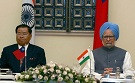
Indian Prime Minister’s visit to Myanmar after a gap of 25 years was recognition of the fact that the positive changes occurring on Myanmar’s political firmament had created conditions for enabling such a high level visit.

Though India had been engaging Myanmar earlier also for strategic and security reasons, raising the level of political exchanges highlights the fact that the Indo-Myanmar relations have reached a turning point and are poised for an exponential expansion. A dozen Memoranda of Understanding signed after the visit also indicate the diverse fields in which India is engaging Myanmar.

Politically, reestablishment of formal relations with Aung Suu Kyi can be seen as one of the major gains of the visit. While she had close linkages with India in the past including active support by the Indian government to the democracy movement in the 1980’s, there was a break in this relationship due to geopolitics of the region. Though there were informal linkages and India had been pressing both sides, the military junta of the past and Suu Kyi led NLD to reconcile their differences, Suu Kyi had maintained a public distance from New Delhi. She was no doubt encouraged by support that she got from the West including public statements at the highest level, for instance from President Obama who in the Indian parliament had called for support to democratic forces in Myanmar. However, finally it was India’s proposal for reconciliation that possibly led to political rapprochement and transition which is now reasonably well established. This was confirmed during the Prime Minister’s visit and his joint statement with Aung Suu Kyi. The common platform was a strong message to India’s past detractors and this could be seen as the biggest political gain for New Delhi.

Myanmar’s strategic salience as a land bridge to China on the one hand and to the South East Asia on the other hand can not be over emphasised. While approaches from China through Myanmar are important from military, security and economic point of view the connectivity to South East Asia is relevant from the economic point of view. Security and stability in the border areas is an imperative for overall development and establishment of multi-modal corridors linking India and Myanmar and beyond. Both Indian and Myanmar leaders have assured each other that territories of either country would not be allowed to be used for activities inimical to the other, including for training, sanctuary and other operations by terrorist and insurgent organisations and their operatives. This is relevant because recently a ceasefire agreement has been signed between NSCN (K) between the local government of Sangaing division of Myanmar which had been viewed negatively in Indian strategic circles. However, Indian PM gave a positive interpretation to the agreement saying that it would be useful for ushering in peace.

India has also sought to support border regions by providing monetary assistance and open border haats (markets for trade) to develop the area. Evidently, where Indian officialdom needs to pay attention is in implementation of the decisions taken on some of the projects and schemes. The record so far in respect of execution of projects has not been very satisfactory so far.

Strengthening of relations with the Myanmar military particularly in the field of training is another gain in this field though this was not as much reflected in the joint statements.

Major gains were also made on trade and economic front. India is developing major interests in energy, minerals, and iron ore in particular as well as hydro power sector of Myanmar. The target of bilateral trade to $3 billion, by 2015 is modest and achievable. India’s offer of soft loan of $500m could be a driver towards expansion of bilateral trade. Trade and economy related MOUs will add to impetus in this direction and include, Memorandum of Understanding regarding US$ 500 million Line of Credit, Air Services Agreement between India and Myanmar and Memorandum of Understanding on Establishment of Joint Trade and Investment Forum.

The visit will provide impetus to the Look East Policy. It needs to be noted that the year 2012 is being commemorated as two decades of India’s Look East Policy and comprehensive engagement with Myanmar would impart impetus to the realization of such a policy. Further Myanmar is scheduled to take over as the Chairman of ASEAN in 2014 and both leaders reached an understanding to coordinate and cooperate in making the forthcoming ASEAN-India Commemorative Summit successful.

Some of the initiatives in relation to major vectors of Look East policy are as follows:-
(a) Communication Linkages. Agreement to expand road linkages from India to Myanmar and Thailand by 2016 would improve connectivity to South East Asia exponentially. India is also implementing Kaladan multimodal transport project that involves upgrading the Sittwe port and constructing a highway to connect the town of Paletwa in Chin state to the Indian border in Mizoram state by 2015.

(b) Support to Regional Role. Support to Myanmar’s role in ASEAN, Bay of Bengal Initiative for Multi-Sectoral Technical Cooperation (BIMSTEC) and the Mekong Ganga Cooperation (MGC) has been affirmed. Myanmar is the current chairman of BIMSTEC and can play a very useful role in furthering the objectives of this grouping.

(c) Diverse Engagement. India is expanding engagement in diverse sectors, including science & technology, tourism, transport & infrastructure, information communication technology, agriculture and energy.

(d) Tourism. Opening up air service to Myanmar and road linkages would not only promote tourism but would also intensify people-to- people exchanges.
(e) Education. The number of training slots for Myanmar under technical assistance programme has been increased from 250 to 500 every year. An agreement on the setting up of the Myanmar Institute of Information Technology will boost capacity in the ICT sector in Myanmar.

Chinese official reaction to Indian PM’s visit was on expected lines as the Foreign Ministry spokesman Liu Weimin told a press briefing that China welcomes the engagement. "Both India and Myanmar are China's friendly neighbours. China is happy to see the development relations between them. We hope such development of friendly relations is conducive to the stability and prosperity of the whole region". However Chinese media has been less considerate and has clearly stated that India is making up for lost time after it finds itself left out by Chinese and Western initiatives in Myanmar. The truth may however be somewhere in between.

China’s overall policy on Myanmar is likely to remain unaffected by these developments both Indian and Western entry to Myanmar. China’s deep political linkages with Myanmar would be evident by Beijing recently hosting a delegation from Myanmar’s largest political party the Union Solidarity and Development Party (USDP) comprising of military junta loyalists which had an audience with Vice President Xi Jinping.

While there was a setback seen with suspension of work on the Myitsone dam, indications are that this is likely to be limited and some say that on the ground work is continuing. Thus China’s policy of trade routes and transportation corridors to the Indian Ocean through Myanmar is unlikely to be impacted.

India has been one of the last few major states to engage with the new regime in Myanmar including the emerging political order where Aung Suu Kyi despite her official status as only a parliamentary MP has a major role to play in the future. However India could be said to have made up for this lost time by establishing multi dimensional engagement covering all essential facets during the visit of Dr Man Mohan Singh. It is only effective implementation of the MOUs which have been reached with Myanmar that need to be monitored and executed.

Monday, May 28, 2012

India Needs to Seize the Initiative in Myanmar


Brig Vinod Anand
Senior Fellow, VIF

Forthcoming visit of Prime Minister to Myanmar after a gap of 25 years is an historic opportunity to seize the initiative in a country which has been described by many strategic thinkers as the lynchpin of our ‘Look East Policy’.

Myanmar is an important nation of the ASEAN that is strategically located between India, China and the rest of the ASEAN nations. This year we are celebrating two decades of our ‘Look East Policy’ and a series of events have been planned that will culminate in the India-ASEAN summit at the end of 2012.

Indianeeds to support the process of reconciliation between the Establishment and the democratic parties and leaders as National League for Democracy (c) and AungSuuKyi. India had been insisting on SuuKyi for long that there was a need for compromise. Thus India sees positive developments which to an extent are perceived to be Delhi’s initiatives though much of the diplomacy was conducted in the back rooms rather than upfront unlike the case with the US or EU countries.

Indianeeds to continue of this policy of seeking reconciliation between the two poles of Myanmar’s politics the Army and NLD to find a middle ground. Such a process has fructified in the form of the TheinSein led establishment and the parliament.

The election of SuuKyi to the parliament and her decision to join the parliament ending the controversy over taking oath based on the 2008 Constitution is a mature step that would in fact lead to greater popularity of the NLD Party amongst the people. This is despite the factthat some within the Party may see this as a compromise with the military dominated parliament and government. But recognizing the reality that there was no way the army would allow a change in the constitution and any attempt to have the same through voting would not work with 25 percent seats with serving army personnel and others with the military-backed Union Solidarity and Development Party (USDP), the NLD’s decision was quite pragmatic.

It is hoped that this positive outcome between the principal protagonists in the country would lead to concessions from the West on the sanctions and on the economic front.
India needs to sustain its engagement with SuuKyi building upon her old association with New Delhi, where she has been a college student. Thus an invitation has been extended by India to AungSuuKyi for a visit to New Delhi. While India had been some sort of a supporter of the military junta (for strategic reasons) there were lines open to AungSuuKyi.

However, of late there have been difficulties on the security front. India’s main concerns are related to how Myanmar deals with the militant groups operating in the North East of the country. On this front there are some disturbing developments which may need some ironing out.

On April 8, Myanmar’s local government in Sagaing signed an agreement with Y. Wangtin Naga of NSCN (Khaplang) who is a Konyak from Mon district of Nagaland in India. The five-point ceasefire agreement with Myanmar government by Wangtin and six others of the NSCN (Khaplang) was signed by the Sagaing region minister for security and border affairs, Col KyiNaing. Sagaing Chief Minister U Tha Aye was present during the signing.

Khaplang group is the first militant group to sign a pact with both India and Myanmar. The five points of the truce include cessation of armed conflict with the Myanmar army, opening of a liaison office by NSCN (K) at Khamti for further talks, coordination among both sides for carrying arms beyond their agreed jurisdiction, free movement of unarmed NSCN cadres within Myanmar and holding of sustained negotiations.

This, however, has raised a number of complications. The ceasefire between Government of India and NSCN(K) was due for extension but has been kept on hold as NSCN (K) signed a ceasefire on April 12 with Myanmar keeping the Indian government in the dark. Apparently there has been lack of communications between the Indian and the Myanmar government despite a high level coordination meet held recently in Nay Pyi Taw attended by India’s Home Secretary Mr R K Singh. It is not clear so far if the agreement with the( K) has been made with the approval of the central government in Nay Pyi Taw as the local governments and military authorities in Myanmar have the authority to work out such agreements on their own as well.

There is thus an obvious disconnect here at two levels the Indian and Myanmar government and Indian government and the NSCN (K). Therefore India cannot be happy for being left out of the loop and apparently has taken up these issues with the Myanmar government. Internally this may also complicate management of Naga militancy which is fraught with internecine conflicts.

More over a cease fire with the NSCN (K) will only provide the group a leeway to conduct anti India activities in Myanmar with links with other intelligence agencies including the Chinese from Yunnan. Thus security issues need discussion during our Prime Minister’s visit.

There is also a need to be cautiously optimistic about the improvement in Myanmar’s relations with the West. The Western political leaders will have to meet some harsh realities of the Myanmar political and economic spectrum. The present period in the words of some is a, “honey moon,” period between the West and Myanmar. Once this period is over and the two come to discussing the brass tacks, Indiacould play a far more important role as a facilitator. Though presently the West feels that it can go on its own there are many challenges that might arise.

With the entry of the West, there is a possibility that there would be a more level playing field. India would be able to use the strong political and diplomatic linkages with the government and business community to advantage with greater opportunities coming from opening of the economy to competition. It could also provide the local expertise to Western government and companies thus Indian entities could become lead service providers in some respects. Geographic location certainly helps India in exploiting its proximity.

Evidently, the engagement with Myanmar has to be broad based that would include political, defence &security, economy, trade, IT, education, religious and cultural issues. Yet, engagement in the spheres of trade, economy, energy and security remain the most important elements of strengthening our relationship with Myanmar. In the security arena the immediate focus needs to be on the militant groups operating across the border and how they can be brought under control. Further, our ‘Look East Policy’ would be of no avail unless we have an intense engagement with Myanmar in political, economic, strategic and security fields. It is time that we enhanced our presence and engagement with Myanmar and Prime Minister Manmohan Singh’s forthcoming visit is a good opportunity to secure mutual interests and solidify Indo-Myanmar relationship.