
Brig (retd) Vinod Anand, Senior Fellow, VIF
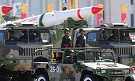
China has carried out a ground-launched anti-satellite missile test
on May 13 which according to reports was disguised as space exploration
rocket firing. China’s National Space Science Center claimed that a
sounding rocket was used in a high-altitude scientific exploration test.
The missile fired from Xichang Space Launch center has been identified
as Dong Ning-2 ASAT missile. However, in this case apparently there was
no target to be engaged like the disused Chinese weather satellite in
low-earth orbit in the first Chinese ASAT test of January 2007, the
debris of which is still causing problems. It was the very same Xichang
Space Launch center from where ASAT test of 2007 was carried out.
Apparently, the existence of this new ASAT missile was discovered
sometime in October last year. The Chinese spokesman, however, did not
directly confirm or deny the conduct of such a test.
The DN-2 is a high-earth orbit attack missile which is part of PLA’s
plans to build asymmetric warfare capabilities that could be used
against the US and regional competitors. According to some reports China
possesses an arsenal of at least a dozen ASAT missiles. Such a counter
space capability which is being viewed seriously by the US would also
pose a threat India’s communication and soon to be placed Global
Positioning Satellites besides a wide variety of critical civilian
infrastructure that is dependent on communication and navigation
satellites. Possibilities of ‘Unrestricted Warfare’ scenarios outlined
by two senior colonels of PLA in their book published in 1999 cannot
be ruled out.
Indian Space Research Organisation (ISRO) has plans to launch first
of a series of seven satellites of Indian Regional Navigation Satellite
System (IRNSS) starting from June 2013; the system will provide
positioning timing and navigation facilities. All the satellites are
expected to be in place by 2015. The satellites will provide facilities
to both authorized civilian and military users with inbuilt secrecy
devices.
In addition, a dedicated military communications satellite
GSAT-7/INSAT-4F is expected to be launched in August and GSAT-7A for use
of the Indian Air Force is scheduled to be launched next year. Further,
CARTOSAT-3 series of satellites that will give image resolution of .25
meters will replace the earlier ones have their slots for launch between
2016 and 2018. Further, Indian space programme is also very ambitious
with plans to launch a variety of satellites in the coming years for
collecting data, intelligence and for carrying out detection,
reconnaissance and surveillance activities. All such space assets would
be vulnerable to an adversary’s ASAT capabilities.
Therefore, the moot point is how can India protect its increasing
number of assets in the space? India’s rising ballistic missile warfare
capabilities including its ballistic missile defence would be of no use
without concomitant support from a variety of space based assets. Thus, a
deterrence capability in space becomes a necessary condition for our
long range precision strike of a strategic nature. In addition the
entire structure of C4ISR is largely dependent on space-based assets. It
can be easily surmised that we need an ASAT capability.
Last year in April after the successful test of Agni V, DRDO Chief VK
Sraswat claimed that "Today, we have developed all the building
blocks for an anti-satellite (ASAT) capability". In fact, China’s ASAT
test of 2007 had given impetus for undertaking such a project as India’s
space infrastructure (worth over 12 billion US dollars) had become
vulnerable. Agni V's launch in addition to substantively strengthening
our strategic deterrence has spin off benefits as the ASAT weapon would
largely be based on Agni V's propulsion system with the AD-2
interceptor missile becoming the kill-vehicle that is being developed
as part of India’s ballistic missile defence system. As the military
satellites operate in Low Earth Orbit (up to 2000 km) such a capability
would deter any adversary that seeks to neutralise our satellites.
According to DRDO projections the development of an ASAT capability is
expected to be completed by end 2014. DRDO says that there are no
plans to carry out an actual test; only simulation tests to verify the
effectiveness of the ASAT weapon system are likely to be carried out.
However, the question remains whether a demonstrated ASAT capability
would be more credible and effective as a deterrent than an untested
capability based merely on claims. After all deterrence is a mind game
or a psychological process and a demonstrated capability followed by
articulation of doctrine or even in some cases in the absence of a
doctrine would have more telling effect on adversary’s mind. It was only
after Pokharan nuclear tests of May 1998 that India was taken seriously
as a nuclear weapon power. Thus conducting a physical ASAT weapon test
rather than a simulated one would pay much more dividends in a world
which according to realist theory of international relations remains
largely anarchical.
Another development which needs to be kept in mind is that plans
are afoot to impose restrictive regimes in the space like the ones which
were imposed in the case of nuclear weapons and missile controls. Such
regimes have been largely favourable to the existing players in the
respective fields and especially the P-5. While China’s conducted ASAT
test in January 2007 the US seems to have reacted to this by conducting
its own ground launched ASAT test in 2008 against an unused satellite.
Both the US and Russia have carried out a variety of ASAT weapons tests
earlier commencing from 1950’s onwards but of late such efforts were at
low key. There have been indications that the US and some other powers
were moving towards instituting a framework that would restrict the use
of such kind of weapon systems against space based assets.
Currently, a proposed ‘Prevention of An Arms Race in Outer Space’
(PAROS) Treaty is under discussion in the Conference on Disarmament of
the UN. For the time being there appears to be a deadlock in the
negotiations. In 2008 China and Russia had put forward a draft of the
PAROS treaty which was shot down by the US as an attempt by both the
countries to gain military advantage. Russia-China proposals did not
include restrictions on ground based ASAT weapons. A PAROS treaty is
expected to be in consonance with the spirit of the 1967 Outer Space
Treaty, which aims to preserve space for peaceful uses by prohibiting
the use of space weapons, the development of space-weapon technology,
and technology related to “missile defense.” Having already gained
military advantage it would be natural for the ‘haves’ to deny the same
to ‘have-nots’ like India.
Another parallel UN initiative on the issue is the Group of
Governmental Experts (GGE) on Transparency and Confidence-building
Measures (TCBMs) in Outer Space Activities which was formed in 2011.
Its origins lie in UN General Assembly Resolution 63/68 which was
sponsored by major space-faring nations, such as Russia and China.
Though the US declared its support for the process, it abstained from
voting on the resolution, objecting to its mention of the
Chinese-Russian draft Treaty on the Prevention of the Placement of
Weapons in Outer Space, the Threat or Use of Force against Outer Space
Object (PPWT). The objectives of the initiative are to improve
international cooperation and reduce the risks of misunderstanding and
miscommunication in outer space activities and ensure strategic
stability in the space domain. The GGE naturally consists of P-5 powers
and ten other members; India is not represented in this forum. There
is also another UN initiative of formulating an ‘International Space
Code of Conduct’ which is based on a draft put forward by the EU in
Conference on Disarmament. Though the efforts are to move towards a
consensus on peace and security in the outer space domain the mutual
suspicions and distrust remain.
From Indian perspective it needs to be seen is whether any such space
regime would prevent it from exercising its strategic options. So far
India’s experience has not been very happy with most of such
international regimes/treaties which are unequal and have been
engineered in a manner so that benefit generally goes to the P-5
nations.
Therefore, before a strategic restraint regime places a bar on ASAT
tests it is imperative for India to conduct such a test to demonstrate
its capabilities in this sphere. Such a counter space capability is
required to defend our space assets and deter any adversary. Of course,
there is a need to take care to ensure that debris fallout from an ASAT
test is either very little or negligible to assuage international
concerns on this aspect. If space debris is to be avoided altogether
then ASAT missile could be fired with an inbuilt offset to the
designated target which would result in a near miss but validate the
resulting test data. According to some experts this is possibly what has
been done by China when it fired space exploration rocket on May 13.

