Showing posts with label Shaheen. Show all posts

Monday, September 3, 2012

Prepare Against Pakistan Nukes


Satish Chandra 
Distinguished Fellow,VIF


The rapidity of Pakistan’s nuclear weaponisation in recent years has been under constant scrutiny in the United States and has been well-documented in articles in the ‘Bulletin of Atomic Scientists and the Nuclear Threat Initiative’ as well as in numerous reports of the Congressional Research Service (CRS). Regrettably, this does not appear to have been the subject of as much independent analysis and comment in India as in the US despite the fact that Pakistan’s nuclear weapon programme is clearly India-centric. Accordingly, the CRS’ latest report of June 26, 2012 titled ‘Pakistan’s Nuclear Weapons: Proliferation and Security Issues’ merits attention.

Addressing widespread apprehensions, particularly in the US, about the possibility of Pakistani nuclear weapons falling into the hands of jihadi elements, the report tends to suggest that Pakistan has put in place adequate security systems to obviate such a development. It, however, concedes that ‘the collapse or near-collapse of the Pakistani government is probably the most likely scenario in which militants or terrorists could acquire Pakistani nuclear weapons’. It may be recalled that much the same point had been made by former president Prevez Musharraf. The attacks by jihadi forces with inside help on Pakistani military bases, most notably at the Mehran Naval Base in May 2011 and recently at Kamra, would suggest that the possibility of nuclear weapons falling into the hands of militants is much higher than the CRS report would have us believe.

Significantly, the report places the Pakistani nuclear warhead stockpile at 90-110 as against 60-80 for India and suggests that vigorous moves are underway in order to effectuate a ‘quantitative and qualitative improvement in Islamabad’s nuclear arsenal’.

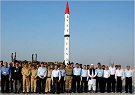
These assertions echo those made in a 2011 Hans Kristensen and Robert Norris report published by the Bulletin of Atomic Scientists which inter alia said that Pakistan has the world’s fastest growing nuclear stockpile and at current rates of expansion its 90-110 warheads could, over the next 10 years increase to 150-200 warheads; its stockpile of highly-enriched uranium and weapons-grade plutonium, as estimated by the International Panel on Fissile Material in 2010, were sufficient to produce 160-240 warheads; its current rate of production of fissile material is sufficient to produce 10-21 nuclear warheads annually. This capability will be enhanced as it is building two new plutonium production reactors and an additional plutonium reprocessing facility; its two squadrons of F16 A/B aircraft with a range of 1,600 kms have for long been earmarked for delivery of nuclear bombs. In March 2011 a new squadron of F16 C/D was also acquired for this role; it has three operational ballistic missiles: the Ghaznavi (Hatf-3, range under 400 kms), the Shaheen (Hatf-4, range over 450 kms) and the Ghauri (Hatf-5, range over 1,200 kms). In addition, it has three other ballistic missile systems likely to see early induction notably the Shaheen II (Hatf-6, range over 2,000 kms), the Abdali (Hatf-2, range 180 kms) and the Nasr (Hatf-9, range 60 kms). Pakistan is also developing two nuclear capable cruise missiles namely the ground launched Babur (Hatf-7, range 600 kms) and the air/sea launched Ra’ad (Hatf-8, range over 350 kms).

Unlike India, Pakistan does not have a ‘no-first-use’ policy and not only is its nuclear arsenal India-specific but also the threshold for its use is disturbingly low. This is corroborated by Pakistan’s focus on short range nuclear capable ballistic and cruise missiles. One may also refer to the interview given to the Landau Network, an Italian arms control organisation, in January 2002, by General Khalid Kidwai, the director general of the Strategic Plans Division of the National Command Authority of Pakistan wherein he indicated that Pakistan’s nuclear weapons were ‘aimed solely at India’ and would be used against it if India attacked Pakistan and conquered a large part of its territory, or if India destroyed a large part of either its land or air forces, or of India sought to strangle Pakistan’s economy or if India attempted to destabilise Pakistan’s polity or created large-scale internal subversion.

The rapidity of Pakistan’s India-centric nuclear weaponisation, the low threshold at it which it is likely to resort to a nuclear attack, its propensity to military adventurism, and its readiness to act as China’s cats paw, makes it incumbent upon us to ensure that the credibility of India’s nuclear deterrent is never in doubt. This calls for speedily undertaking a host of measures. India should think of enhancement and upgrade of its nuclear weapon arsenal with a view to inflicting unacceptable damage simultaneously on both Pakistan and China as they may well act in collusion. This would call for a nuclear warhead arsenal running at least into the low hundreds that can be launched from air, land and sea both by surface craft and submarines. Land-based missiles should be mobile and located in camouflaged and hardened shelters. A sufficiently large, diverse, and survivable nuclear arsenal is essential in order to deter an enemy from contemplating the resort to a nuclear attack.

The creation of a chief of defence staff in order to provide 24/7 leadership, guidance and oversight to our strategic forces command and to ensure the speedy development of an effective nuclear force must be done. Fail-safe procedures for the effective deployment and operation of our nuclear deterrent in all situations should be established. Alternative chains of command should me made fully functional so as to ensure an element of automaticity in the effectuation of a prompt and devastating retaliatory nuclear strike in the event of decapitation of our nuclear command authority.

Importantly, our ‘no first use’ policy needs to be tweaked by suggesting that if India is subjected to a nuclear attack by a country aided by a nuclear weapon state it would not merely react with nuclear weapons against the country, which initiated the attack, but may also do so against the abetting nuclear weapon state. Hopefully such a move may cause China to refrain from such collusive action with Pakistan and perhaps even induce it to act as a restraining influence on it.

Finally, the fact that India’s nuclear arsenal is being assiduously nurtured and that India has the political will to use it needs to be clearly signalled. The former can be achieved by holding regular meetings of the nuclear command authority and publicising the same as also the upgrade of our nuclear arsenal. The latter would be automatically signalled if we are uncompromising in addressing all security-related issues with firmness and despatch.

Thursday, June 28, 2012

Threats in The Long Range


Kanwal Sibal
Member Advisory Board, VIF

Tensions between the United States of America and Russia over the deployment of a ballistic missile defence system by the US in eastern Europe are sharpening. Japan is deploying such a system to ward off the North Korean missile threat.

With fears of increasing missile proliferation, BMD deployments could take place also in the Gulf region. What stock-taking can one do of the situation in South Asia?

India’s strategic neighbourhood is extremely difficult, with two large neighbours, China and Pakistan, possessing nuclear weapons and a panoply of missiles and collaborating with each other to contain India. No other country faces such a powerful combination of adversarial direct neighbours.

India is therefore compelled to develop technologies and capacities to protect itself. But it faces considerable technological and financial constraints. Its formidable challenge is to develop capacities that are autonomous but also available in reasonable time frames.
India’s political system and domestic economic and social challenges dispose it towards moderation. It seeks to develop the base of high technologies in the country, but without excessive investment of resources and determined acceleration of programmes.
India’s missile development programme began in 1986 and it is only this year that it has successfully launched its 5,000-kilometre range Agni V missile. Its earlier development of Prithvi and Agni III missiles gave it the means to develop a BMD programme, which began in 1999.

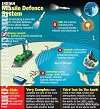
India’s BMD programme has a two-tiered system, with the Prithvi air defence for high altitude exo-atmospheric (50 to 80 kms) and advanced air defence for low altitude endo-atmospheric (15 to 30 kms) interception. Future plans include two new anti-ballistic missiles, AD-1 and AD-2, for intercepting intercontinental ballistic missiles at a range of around 5,000 kms.

India has carried out seven BMD tests in all, six of them successful, of which two used the PAD exo-atmospheric interceptor and four the endo-atmospheric one. The first was on March 6, 2006, the seventh on February 10, 2012.

India’s BMD system is being developed in two phases: in the first phase against missiles with less than 2,000 km range, like Pakistan’s Ghauri and Shaheen missiles, with 600 km-range radars and missiles at the speed of Mach 4-5 and expected deployment by 2013.
It will be a two-tiered terminal phase interceptor system consisting of a PAD exo-atmospheric interceptor missile, an AAD endo-atmospheric interceptor and the “Swordfish” long range tracking radar developed jointly with Israel. Under phase one, the national capital region will be covered and later other cities will be protected.

The current PAD missile is intended to be replaced by a PDV missile in the PAD/AAD combination by eliminating the liquid-fuel first stage and creating a two solid-fuel stage missile capable of interception at altitudes of upto 150 kms.

Phase two will cater for missiles with a range greater than 2,000 kms, will reach Mach 6-7 speed and have the capability to manoeuvre and deploy decoys. It will require long range radars with a detection range of 1,600 kms with greater indigenous content. Several technologies, such as a space based launch detection system, have to be integrated to make this possible, and all this will take several more years to develop.
A satellite kill vehicle, using Agni III, is reportedly being developed but no test has been scheduled so far, as delicate political considerations are involved. China’s ASAT test in 2007 has spurred Indian concerns because our growing space assets need protection.
While the achievements of India’s Defence Research and Development Organisation are impressive, claims that we can deploy an effective BMD system against intermediate range ballistic missiles and ICBMs in the next few years invite some scepticism. Of course, India is not planning a full spectrum BMD system because of technological and financial limitations. Even the US, after spending billions, does not possess such a system and is looking for financial burden-sharing now even for developing and deploying the Standard Missile 3 that can intercept an incoming missile mid-course. The Indian effort is concentrated on the terminal phase which gives limited geographical coverage as compared to mid-course interception.

However, in terms of actual effectiveness in battlefield conditions, like other systems, the Indian system will have to contend with the enemy overwhelming the shield with a large number of warheads or mirved missiles. The Chinese have this capability.

Just as the Russians are developing new missile and reworking systems to defeat the proposed US BMD shield, the Chinese and the Pakistanis will react similarly to India’s BMD system. Chinese experts claim China has never taken India as a strategic rival and that none of its weapons were designed to contain India. Similarly India says that its longer range Agni missiles are intended to deter China and not Pakistan, but this does not deter Pakistan from developing its missile capacities further to counter India. Regional diplomatic initiatives to address these problems are very difficult to work out.
The US BMD deployments are triggering Chinese responses with an impact on our region. China wants to deter the US, India wants to deter China and Pakistan, Pakistan wants to deter India. China will not limit its capabilities to assuage India’s concerns so long as it perceives a threat from the US. India will continue to develop credible deterrent capabilities against China so long as the China threat exists and expands, and will not be able to respond to Pakistan’s calls for a mutual strategic restraint regime that leaves China out.

Significantly, all those countries deploying terminal defence systems are integrated into the US surveillance and tracking capabilities. India and the US have signed a 10-year defence framework agreement that provides for expanding collaboration relating to missile defence. In January 2012, a senior Pentagon official stated that the US was open to collaborating with India on the missile defence shield project and would restart the dialogue with India on the subject.

For many years India and the US have been talking about missile defence issues, without tangible progress so far. India wants to retain its autonomy in this area.
In sum, India is making progress in developing a BMD system even if its effectiveness in battlefield conditions remains open to question. India has little choice in this regard as it cannot allow the strategic gap between it and China to grow irretrievably. It must remain abreast of vital strategic technologies. India has to consider developing ASAT technologies before any international regime is reached that excludes India like the non-proliferation treaty.

India is not a member of any alliance and must rely on itself for its defence. This makes it necessary for it to develop its strategic capacities sufficiently and independently. The conditions for a separate Indian subcontinental deal on such issues do not exist as China would not want to be constrained in its choices vis-a-vis the US by the India factor, apart from its unwillingness to deal with India on the basis of equality in nuclear matters, and India will not want to be constrained in its choices vis-a-vis China by the Pakistan factor.

This is a circular problem and squaring this circle will be exceedingly difficult indeed.