Showing posts with label Kuo-min-tang. Show all posts

Wednesday, August 8, 2012

The Complex Art of Political Organisation


Dr. M.N. Buch
Visiting Fellow, VIF


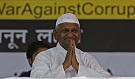
The science and business of government is what politics is all about. In fact the dictionary meaning of politics is “The science or business of government; moves and manoeuvres concerned with the acquisition of power”. Politics is played by political parties and in a democracy it is political parties which contest elections and which, if they are fortunate enough to be favoured at the polls, form a government. Therefore, in a democracy any group of people which wants to capture power and thereby determine the manner in which a country will be governed has to form a political party. Anna Hazare, who had taken up the theme of fighting corruption and eliminating it, largely through a law in this behalf to be enacted by Parliament, finding that the agitational approach alone was not enough to win success, has now decided to use the political road to power in order to achieve his objective.

Before India embarked on its campaign for independence this country did not have any meaningful political parties because the road to government and to power lay not through the political process but rested on the bayonets of an imperial power. One was either British; therefore a ruler or one was an Indian whose principal task was to be governed by his imperial masters. Here there was no room for politics or a political party. No doubt there were movements such as the revolutionary movement led by the Anushilan Party in Bengal, but this was a pure campaign of terror whose ultimate objective was nihilism and, therefore, this group did not really constitute a political party. Its origin was the partition of Bengal by Lord Curzon, which it hoped to undo by creating a situation of anarchy through terror. It suffered the fate of all such movements, which was that the British security apparatus penetrated its cellular structure and then destroyed it. This was an excellent example of how a terrorist movement could be broken, but in my view it did not constitute a political movement.

My contention could be questioned because on 28th December, 1885 the Congress was born in Bombay through the initiative of Allan Octavian Hume. This initiative had the blessing of the British Viceroy, Lord Dufferin. Hume intended this party to be a group which would meet under the chairmanship of the Governors of the Provinces as a type of grievance court which could place before government issues relating to India. However, the Viceroy wanted an Indian to preside over the Congress so that it could place the Indian point of view before government without inhibition. Hume was the first General Secretary of the party and remained so till 1907. Lest it be understood that the Congress at the time of its origin was a party fighting for independence, it might be noted that in 1888 the President of the party was George Yule, an Englishman, in 1894 it was Alfred Webb, in 1904 it was Sir Henry Cotton, a retired ICS officer and in 1910 it was Sir William Wedderburn, who had been Secretary to the Government of Bombay. The early role of the Congress is best described in the words of Louis Fischer in his book “The Life of Mahatma Gandhi”. I quote, “The Congress was organised to channel popular protest into legal moderation. But into the channel flowed the fresh waters of national revivalism… The world theosophist movement … likewise fed that pride in the past which constituted the foundation of the movement for national regeneration.

Thanks in part to the unification and orderly administration of the country by the British, Indian industrialists, Hindus and Parsees in particular, grew rich and began to buy out their British partners. The emergence of Indian capitalism and a new Indian middle class gave a powerful impetus to the urge for self-government. Under these multiple influences the Congress outgrew its collaborationist boyhood and became a demanding youth”. Here it needs to be acknowledged that in the conversion of the Congress from a group which petitioned the British into a political party which became a formidable instrument for organising the whole of India into a freedom movement, the greatest credit must be given to Gopal Krishna Gokhale and to Bal Gangadhar Tilak who coined the slogan “Swaraj is my birthright”.

The metamorphosis of Congress from a group representing Indian interests into a political party whose objective was the same as that of any modern political party, that is, the ousting of foreign rule and then gaining power to govern the country, followed a long and tortuous path. A comparison could be made with the African National Congress in South Africa which also began as a group of people believing that the white masters could be petitioned to recognise the existence of the black population and then gradually turned into a political movement which combined militancy with genuine politics and then culminated in the elimination of apartheid from South Africa and its replacement by a genuinely democratic polity. Because the Congress had a leader of the stature of Mahatma Gandhi and ANC of the stature of Nelson Mandela the transition of power from imperial rule in India to independent India and from white supremacy to genuine democracy in South Africa could take place without embitterment or hatred for the British in India and the whites in South Africa. In this lies a lesson for those who want to constitute new political parties in India, for example, Anna Hazare. There seems to be a belief in the followers of Anna Hazare that because theirs’ is a popular movement against corruption and if the movement converts itself into a political party it will instantaneously be voted to power. Thereafter it will then be able to use this political power to abolish corruption. Fortunately politics is not like a packet of Rasna, a flavoured powder which one dissolves in water to create an instant cold drink. Politics, even the politics of revolution, is an evolutionary process in which first there is an idea, then the idea is converted into a seed, the seed into a seedling, the seedling into a tree on which grow various branches which together constitute politics. People who start a political movement need enormous endurance and staying power if they want their ideas to mature into the tree of which I have spoken.

Let us take the example of two revolutionary movements, that of Lenin in Russia and of Mao-Tse-Tung in China. The seed of Marxist philosophy was sown by Karl Marx in the latter half of the 19th Century. It was the consequence of the horrors of the industrial revolution which planted in Karl Marx’s mind an idea that the future belonged to the proletariat and that could only be achieved through a total egalitarian dictatorship of the proletariat in which ultimately the State would wither away. This gave birth to the Communist Party which, after intense struggle in Russia and in the midst of the total defeat of that country in the First World War, resulted in the elimination of the Tsarist regime and the establishment of the Soviet Union under Communist rule. The objective of this political movement was the destruction of the existing State in Russia, but it was not an anarchist movement because its sequential objective was to establish the Soviet Union as a dictatorship of the proletariat. There was no instant fix in the change of the political and social order; it came at the end of a long, hard struggle. Similarly, the Communist triumph in China in 1949 was the result first of the Sun Yat Sen Movement in China in which the Kuo-min-tang party established by him overthrew the old imperial order and established a republic. Despite the interregnum of Chiang Kai-shek, during whose regime the Kuo-min-tang descended into the depths of corruption, Mao Tse Tung’s Communist Party struggled against the government and this ultimately resulted in the Chinese Revolution of 1949. Unlike the Soviet Union, where Lenin and Trotsky heavily depended on the urban proletariat, the Chinese Revolution was entirely peasant based because the reality of China was that it was a predominantly peasant based country. Mao’s genius lay in realising that dogmatic Marxism which depended on the urban industrial proletariat needed redefining in the Chinese context and here it is the peasants who constituted the proletariat.

In India independence saw the Congress in power in the Centre and the States, just as in Pakistan it was the Muslim League which gained power. After Jinnah’s death and the assassination of Liaquat Ali Khan the politics of Pakistan underwent a change. Multi-party democracy virtually disappeared and despite its sporadic emergence from time to time in various forms, the fact remains that in Pakistan it is the Army which calls the shots. India continued in the democratic mould. The Mahatma realised that the Congress was all powerful in India, it was in government and could not, therefore, oppose government and, therefore, Congress rule would degenerate into one party rule. No one-party rule can be truly democratic. He fully appreciated that the Congress consisted of many disparate elements which come together in the freedom movement, including the powerful group of socialists. The cementing force which held these groups together was power and this is the worst kind of a bond because it only temporarily binds groups within a larger whole which can ultimately only be destructive. He recommended that the Congress should dissolve itself and new parties should be formed according to their respective ideologies which could help democracy to function. When this did not immediately happen the Mahatma tried to create a group of Constructive Workers. They would not go into power politics but would guide government and the people in the running of government on truly democratic, nonviolent lines. For Anna Hazare and his associates I would like to quote the words of the Mahatma who said, “I do not want to take power into my hands, but abjuring power and devoting ourselves to pure, selfless services of the voters we can guide and influence them. It would give us far more real power than we shall have by going into the government. A stage may come when the people themselves may feel and say that they want us and no one else to wield power. The question could then be considered”. Let Anna Hazare not feel that he is the only crusader against corruption. This is what the Mahatma had to say “There is so much corruption today that it frightens me. Everybody wants to carry so many votes in his pocket, because votes give power… Banish the idea of the capturing of power and you will be able to guide power and keep it on the right path… There are other ways of removing the corruption that threatens to strangle our independence at its very birth”.

To return to the main theme of this paper, a multi-party democracy needs more than one political party, but does not need and cannot survive fragmentation of parties into tiny components, each with a highly selfish agenda of its own. Therefore, before a new player enters the political scene it must first identify its own ideology and spell it out, first to its members and then to the people at large. The Communist Party was born out of a Marxist ideology, the parameters of which were created by Marx and the body of which was created by Lenin. Karl Marx was the ideologue and Lenin was the person who gave substance to the party. Fabian socialism in Britain grew out of an idea and the originator of this dogma was the London School of Economics. Even the Nazi party, or the National Socialist Party to give it its full name, was born out of a somewhat confused amalgam of racist thoughts, Nietzsche’s philosophy of rejecting the Christian compassion for the weak and advocating the creation of the Ubermensch, or superhuman, combined with an ill formed idea which was generally anti capitalist and ultimately focused onto extreme anti Semitism. The point being made here is that even the ultimate horror launched on the world by the Nazis came out of some form of ideology. However, let me hasten to add that this was an aberration and does not represent what I mean by ideology in the context of politics.

From the ideology of a party emerge its programmes, aims and objectives. Whereas these can be flexible to a contextual reality, ideology must be based on firm foundations. Judged by the criteria of ideology and ideology-based programmes, no political party in India lives up to their ideal. Politics is a game of power and ideology is what lends a direction to the purpose for which power will be utilized. When Clement Atlee came to power as the head of the Labour Party in Britain his programme, based on the ideology of socialism, was to make available universal health care and education to all, to nationalise major industry and to transfer from private ownership to the public domain the major utilities and capital goods industries. Atlee’s government proceeded to achieve its objectives with single minded purpose and succeeded. That is the power of an ideology based programme. By contrast in India, especially after 1967, almost all programmes of all parties are based on expediency because the objective is no longer to govern but to gain power and to use it for self-aggrandisement. This means that even the existing parties are no longer ideology based and, therefore, Indian politics has become rudderless. That as a result of this India is fast becoming a victim of non-governance does not seem to cause any worry or concern to any politician or political party. I can think of nothing more cynical than L.K. Advani’s recent statement that in 2014 India may face a situation in which neither the BJP nor the Congress can form a government, that some third party candidate will become Prime Minister and an extremely weak coalition will be cobbled together, either with the support of the Congress or the BJP, which will just not have the capacity to govern India. As the senior most active leader of the BJP it was Advani’s duty to suggest steps which could strengthen the major political parties and thus enable either the BJP or the Congress to be sufficiently strong in Parliament to form a meaningful government. I am afraid a leader of his seniority and status cannot enjoy the luxury of making cynical statements without suggesting a remedy.

In an earlier paper I have referred to what is happening to this country because of the state of degeneration of our political class. Now into the fray has jumped Anna Hazare with his motley group of supporters whom he has now disowned. I myself was approached by a person who is a former civil servant, whom I personally like, to join this group and offer my candidature for Parliament. Fortunately I have had the experience of a parliamentary election in 1984 which I narrowly lost because the then Chief Minister, Arjun Singh, had heavily manipulated the votes in two assembly segments where I have not served as an officer. I am proud of the fact that I carried all six assembly constituencies of Betul District where I had been DC twenty-five years before the election. That, however, was a one time phenomenon only, because I had no organisation, no money, no vehicles and the entire election was fought by the students of the district and by people at large who had fond memories of me as their D.C. I certainly do not have the resources and energy to again fight such an election and I also acutely realise that I retired from Service twenty-eight years ago and I cannot expect people to fight an election for me on the basis of old memories. I mention this because whatever its intentions, the Anna Hazare group must realise that fighting an election calls for an organisation, which we call a party. Even after totally eliminating the corruption factor it should be understood by Anna Hazare that a parliamentary constituency, especially a rural constituency, covers an area of about ten thousand square kilometers and embraces at least eight assembly constituencies. For the candidate and the supporters to travel around the constituency and place their point of view before the electorate requires fairly complex logistics, including ten to twelve off road vehicles, their drivers, POL, maintenance, etc. A parliamentary constituency has probably about five thousand polling stations at each of which a candidate would need two polling agents to look after his interests. These agents would have to be given some small sum of money, say Rs. 100 each for the day of poll, for refreshments and food. Taking into account the cost of travel and of the polling agents’ allowance alone, a parliamentary election campaign needs a minimum of rupees twenty-five to thirty lakh. Which honest candidate from an ordinary background would be able to find this large amount? That is where party funding comes in and this becomes the root of all corruption. The very process by which Anna Hazare now wants to eliminate corruption is the genesis of corruption. By all means go into politics because that is a fundamental right of every Indian citizen, but do so with eyes open and an acute awareness of what politics requires.

At present Anna Hazare has no ideology at his command. Neither he nor his colleagues understand dialectics, they do not have the capacity to formulate long-term programmes, they have no clearly enunciated objective other than the elimination of corruption and that, too, through an Act, the draft of which has been prepared by Prashant Bhushan and his father, Shanti Bhushan, together with some inputs by their colleagues. The very act of drafting the Bill and then insisting on its adoption by Parliament without changing a comma or full-stop is aimed at completely undermining the democratic process as exercised through Parliament and does not bode well for the future of any political party to be set up by Anna Hazare. What will be the stand of this party on economic organisation in India? Will the economy be based on free market capitalism, will it be socialism or will it be a continuation of the present mélange? How will the new party tackle the problem of unemployment? How will it deal with questions relating to energy, physical infrastructure, social infrastructure, the future of education and health services, the policy relating to industry and a future blueprint for agricultural development? In other words, what will be the philosophy of government of this new party? I do not think anyone has applied any thought to these issues. It would be a tragedy if an anti corruption movement ultimately becomes a farce in which Don Quixote, Anna Hazare, mounted on a spavined charger and accompanied by his Sancho Panza, Arvind Kejriwal, goes careening across the plains of La Mancha tilting at windmills. That is how I see the fate of the Anna Hazare movement, for which I blame Anna himself. A novice at politics, totally unable to fathom how complex a political organisation is, led by the nose by unscrupulous former bureaucrats and half baked activists, on whose bandwagon has now jumped V.K. Singh , I see Anna Hazare and his laudable campaign to fight corruption disappearing without a trace in the dreary desert sands of Indian politics. Gandhi understood politics, used it to build a national movement for freedom, but then by choice preferred to stand outside politics. Anna is the exact opposite.

Monday, August 6, 2012

India’s Political Class Lacks Ideology


Dr. M.N. Buch
Visiting Fellow, VIF


The Preamble to the Indian Constitution rules out any form of government of India other than democratic because it constitutes India into a sovereign socialist secular democratic republic. Part V of the Constitution trifurcates the State into three equal constituents, the Executive, Legislature and Judiciary. The composition of the Legislature, the Parliament of India, is of members elected by adult suffrage in the case of the House of the People, the Lok Sabha, and indirectly by the State Legislatures in the case of the Council of States or Rajya Sabha.

The whole of Parliament in the Lok Sabha is divided into territorial constituencies and each elected member becomes the representative of all the people residing in his constituency and registered in the electoral roll of that constituency. Each Member of Parliament then acts in the House on behalf of all his constituents and it is for this reason India is a representative democracy. The division of powers between the Executive, Legislature and the Judiciary closely follows the Westminster model and, therefore, India is considered to be a representative parliamentary democracy in contrast with the United States of America, which is a presidential form of democracy. In the Westminster model government power is exercised by the Prime Minister and the Council of Ministers who collectively enjoy the confidence of the House and who advise the President on how the executive powers of the Union will be exercised. The minute the House loses confidence in government the Prime Minister and the Council of Ministers must resign and the government would fall. In the presidential form of democracy the President is directly elected by the people and neither he nor his cabinet is responsible to the House of Representatives, the lower house in the American Congress or Parliament. In fact in the United States a cabinet member cannot be a member of either House of Congress. There the balance of power is established by the Legislature through its functions of legislation and approving the budget, but by itself Congress cannot either dismiss the cabinet nor remove the President except through the process of impeachment. In India, which follows the Westminster model, legislation itself is initiated by government and because the Council of Ministers is collectively responsible to Parliament the Executive and the Legislature come together in the matter of legislative business. Because government enjoys a majority in the House the Prime Minister can and does influence what goes on in Parliament, whether it be in the mater of the budget, legislation or debate. To that extent the Executive embodied by the Prime Minister can override the checks and balances between the Legislature and Executive, which are a feature of the American Constitution. It should be remembered that the infamous Nazi rule was initiated, facilitated and executed through the entirely democratic process of Hitler as Chancellor or Prime Minister, persuading Parliament to approve the Enabling Act and further succeeding in making President Hindenburg sign the Act into law. This enabled Hitler to rule Germany for a year by decree and one of his first decrees was to abolish Parliament itself and establish an absolute dictatorship.

I mention this because in a representative democracy a Nazi Germany scenario is not beyond the realm of possibility. For example, under Article 75 the President can appoint a person as Prime Minister who doe not enjoy the confidence of the House but is a potential Hitler. Under Article 85 of the Constitution it is for the President to summon each House of Parliament and the only restriction is that six months shall not intervene between one session and the previous session. In other words, after swearing in the Prime Minister the President need not summon Parliament for a period of five months and twenty-nine days. In this period the President would have the power to legislate by ordinance under Article 123, except in the matter of the Appropriation Act under Article 114 because under Article 113 (2) all estimates relating to expenditure from the Consolidated Fund of India must first be assented to by the Lok Sabha and only when a demand for a grant on any subject is approved by the Lok Sabha can it be included in the Appropriation Bill. This then is the principal check on the ability of the President and Prime Minister in conspiracy to convert India into a dictatorship because if there is no grant and no Appropriation Act no money can be withdrawn from the Consolidated Fund and, therefore, government would come to a halt. Another check, of course, is the Judiciary which in India would strike down any attempt to bypass the Constitution or convert India from a democracy to a dictatorship. The Indian Constitution, therefore, does keep India safe from conversion to a dictatorship, notwithstanding an attempt made by Indira Gandhi in 1975 to superimpose her absolute rule on India.

A representative democracy cannot function if, for example, the Lok Sabha consists exclusively of 543 members, each independent and not part of a group or party. To form a government these members would have to come together in a sufficiently large group to form a majority in the House so that collectively this group can constitute a government which will enjoy the confidence of the House. 543 persons can form a group or groups only if they subscribe to and enjoy a common ideology, a common programme, a common platform and common views so that they act cohesively. Such groups are what we call political parties. Section 29 A of the Representation of People Act 1951 provides for registration by the Election Commission of associations and bodies as political parties. Section 29 A (1) reads, “Any association or body of individual citizens of India calling itself a political party and intending to avail itself of the provisions of this Part shall make an application to the Election Commission for its registration as a political party for the purposes of this Act”. In other words, the Act governing elections recognises the existence of political parties and provides for their registration, regulation and superintendence. It is the political parties which approach the people to vote for their candidates on account of ideology and programmes of the party as enunciated in the party’s election manifesto and the people have the freedom to exercise their choice, not only on account of the suitability of the candidate proper but also because the candidate represents the party whose ideology appeals to the electorate.

In Britain there was a fair balance between the Tories (now Conservative Party) and the Whigs (now the Liberal Democratic Party). Disraeli epitomised the Tories just as did Gladstone the Whigs. In fundamentals these parties by and large agreed, though any functioning and nuances of approach the parties differed. Gradually the Whigs faded away to be replaced by the Labour Party as socialism began to take roots in Britain. Now the Conservatives and Labour are the two main parties in Britain and government alternates between them, but at present the Conservatives share power with the Liberal Democrats in a coalition. By and large the parties are fairly and evenly balanced and this results in a fairly stable democracy in which political parties and their members have to behave, especially in Parliament, because if they did not the opposition would pull them up and the people would not vote for them in the next election. This leads to a healthy democracy. In India for many years after independence the Congress, whose ideology was rooted in Gandhian principles, ruled the country both at the Centre and in the States. The opposition was weak but the prevailing parliamentary culture was such that it was heard with respect and the opinions expressed by it in Parliament on any issue were considered very seriously without the majority party steamrolling them. Men of the stature of Ram Manohar Lohia and Shyama Prasad Mukherjee carried a weight in our politics far in excess of the numbers they represented in Parliament. Because the party in power had an ideological base and a programme in which the nation came first our democracy was healthy, our politics relatively honest and our politicians definitely nationalistic in outlook. The nation came first and the self came later. The Gandhian principles of austerity governed our politicians, whose life style, needs and attitudes were simple and, therefore, their greed was nonexistent. Govind Ballabh Pant, Gopinath Bardaloi, B.C. Roy, B.G. Kher, C. Rajagopalachari, Jainarayan Vyas, U.N. Dhebar, Ravi Shankar Shukla, EMS Namboodiripad, Jyoti Basu, Gulzarilal Nanda, Morarji Desai, not to mention Jawaharlal Nehru, Sardar Vallabhbhai Patel and Maulana Azad are all remembered almost with reverence by our people, generation after generation, because of their sacrifices, their simple living and their deep commitment to the people and the nation of India. These were examples of the political class who represented an ideal which has not been paralleled anywhere in the world.

In politics and in the political class the most important thing is ideology. The Chambers Twenty-first Century Dictionary defines ideology in the following words, “The body of ideas and principles which form a basis for a social, economic or political system: the opinions, principles and way of thinking, characteristic of a particular person, group of people or nation”. We cannot have a political system in which there are neither ideas nor principles and if that happens we cannot have a social or economic system. A political party bereft of ideology is no party. Unfortunately as politics stands today there is no party which has an identifiable ideology and I state this in the context of the Communist Party of India or Communist Party of India (Marxist) also. Ultimately the programmes of a party have to be based on an ideology and the Preamble to the Constitution itself states that this ideology must take into account the fact that India is and will be a republic, its form of government will be democratic, it will be secular in nature and it will be socialist in that it will promote both equality and equity. Here one is not talking about dogmatic socialism but rather of a republic in which socialism means that there will be social, economic and political justice for all and there will be equality of status and of opportunity for all. The socialist ideal here would ensure that the right to equality before law enshrined in Article 14, prohibition of discrimination on grounds of religion, race, caste, sex or place of birth enshrined in Article 15 and the equality of opportunity in matters of public employment enshrined in Article 16 will be the guiding stars of every government, regardless of party affiliations. Socialism in the Indian context also means that the directive to the state enshrined in Article 38 to establish a social order for the promotion of the welfare of the people in which justice, social, economic and political, shall inform all the institutions of the national life will determine every policy of government. The question is whether any of these ideals forms part of the ideology of any political party in India and whether in fact any party has an ideology.

Ideology cannot be a matter of the moment. Ideology is the core of any political party and that core can evolve, but it cannot change like a weathervane responding to erratic air flows. Certainly ideology cannot be twisted and turned as a means of expediency. In this behalf I would like to mention Margaret Thatcher, the Conservative Prime Minister of Britain. She made an ideological statement when she came to power that she would dismantle the socialist state in Britain and in the process would destroy the instrumentalities of socialism. She then proceeded single-mindedly to fulfill her ideological objectives and whereas she faced enormous opposition in the manner in which she dealt with the Arthur Scargil led coal miners strike, the issue of poll tax, the reduction of milk in the school mid-day meal schemes, etc., she remained unperturbed by the personal unpopularity which visited her on some of her more controversial decisions. Regardless of momentary praise or opprobrium Margaret Thatcher went ahead with her programme to an extent where the political philosophy of the country changed. When ultimately Labour came to power under Tony Blair after a Conservative interregnum under John Major, that party had to repudiate many of its shibboleths and instead adopt many of the programmes of Margaret Thatcher. That is called an ideological approach to ruling the country. No Indian political party today has any ideology.

Up to1967 the Congress ruled India and by and large the old political class we inherited from the freedom movement continued to uphold Indian traditions. One could recognise the political class and identify oneself with it because it represented the best there was in this country. In 1967 everything changed. Starting from Haryana and rapidly coming to Madhya Pradesh we had the Ayaram--Gayaram phenomenon in which Members of the Legislature were bribed to defect from the ruling party and form a separate group which caused the ruling party to be ousted and new united front governments to be formed for the first time. In the history of independent India for the first time power was thus purchased. Suddenly our legislators found that they could command a price and if this price was paid the mandate of the electorate could be undone and new political combinations could be formed to constitute the government. Of course the new government itself would be unstable, based as it was on bribery and, therefore, having illegitimately won power it had to continue bribing in order to retain power. That was the end of any form of principled government in India and it brought into existence a new political class whose origin was corruption. In order to buy power one needed money and unless the State was subverted money could not be had. Therefore, the instrumentalities of the State had to be overawed and made totally pliant so that they would not stand in the way of illegal money making and to facilitate it the Civil Services had to be suborned. A systematic attack was launched on the Civil Services, they were made to surrender to threat and coercion, the honest officers who stood their ground were identified and isolated and the corrupt and the pliant brought to positions of power. The reason for the existence of the All India Services, independence, fearlessness in giving advice and impartiality, integrity and fairness in implementing the orders of government, was attacked at the very root and virtually destroyed. Thus a nexus was built up between the Services and the political class and the binding force was corruption.

Let me give one or two examples of how the political class has changed. Prior to 1967, in fact prior to 1975 when the Emergency destroyed whatever was left of principled government in India, one could differ from the ministers but one never questioned their motive or their integrity. Takhatmal Jain, who had been Chief Minister of Madhya Bharat, was the Minister for Industries and for Development in the new State of Madhya Pradesh. P.D. Chatterjee was Secretary of the Industries Department. Takhatmal Jain told Chatterjee that a case of one of his friends was pending in the department and that he wanted it to be examined urgently. Thinking that this would please the minister Chatterjee prepared a favourable note and recommended approval of the applicant’s proposal. Takhatmalji sent for him and said that he had expected the Secretary to Government to examine the case and not a courtier of the minister. He then sent the file back for proper examination on merit and in doing so he wrote on the file, “Please examine the case on merit. If sanction is justified please give the reasons for this. If, however, the case does not merit approval please advise accordingly. If I still want to favour the applicant I shall do it at my discretion, but your job as Secretary to Government is to render the correct advice”. By way of sharp contrast when I was head of the Delhi Development Authority my then minister Sikander Bakht, wanted me to sanction the building of a five star hotel at 15, Aurangazeb Road, New Delhi by Bhai Mohan Singh, the owner of Ranbaxy Laboratories. When I pointed out that our Regulations did not permit this Sikander Bakht did his best to pressurise me into violating my own regulations, including a written directive to change them. I had to tell him that he was free to change the Delhi Development Act through appropriate legislation but so long as the Act was in force government could not direct me either to change the Regulations or to violate them. Thereafter I remained the target of his anger, but I refused to give in and the hotel was not built. The cumulative result of this and other fights with his successor, Ram Kinker, resulted in my ouster from Delhi Development Authority and I spent a whole year without a posting. Most officers are not prepared to undergo such a fate and that is why the Services are today in shambles. The moral of the story remains that a principled minister would not accept the flattery of his Secretary and an unprincipled minister would not accept a stand taken by his officer based on law and rules. This is the change which has come about in our political class over the years.

No democracy can function on the basis of the bureaucracy alone, however efficient, honest and forward looking it might be. The power to legislate vests in the Legislature and the power to take policy decisions vests in the Council of Ministers which consists of elected members of the Legislature. At different levels of government, including urban and rural local government, the same position prevails and ultimately it is the elected representatives who, in a democracy, take policy decisions based on their party ideology, their declared programme and the mandate of the people. It is a Civil Servant’s job to advise, to point out precedents and the law and to bring to the notice of the decision makers the various courses of action available and the consequences of each. Once a decision is taken the Civil Servant must faithfully implement the decision, though in doing so he must be totally fair, evenhanded and impartial. In other words, the policy decision will be political but its implementation will be totally impartial. These respective roles become completely blurred when all decision making becomes a function of expediency and it is dictated by either the bribe which is received or the fear that is instilled by the possibility of losing power if a particular pressure group is not pleased. Such a political class no longer cares for the duties mandated to it by the Constitution because to it service of the nation, the welfare of the people, the development of the country are not issues of importance. What is important is how to remain in power, may be even for one extra day, so that everything that the system has to offer to oneself is squeezed out of it. The objective of the leaders of the past was to govern well, whereas the objective of the leaders of the present is not to govern at all and yet to enjoy power. The dictionary meaning of ‘govern’ is, “to control and direct the affairs of a country, state or organisation” Power, on the other hand, is defined as “control and influence exercised over others”. If power is used to govern it is desirable. If, however, power is used for self-aggrandisement, for pelf, for nepotism or for creating the means whereby power can be re-purchased, it is highly undesirable. In the case of the Indian political class as it exists today it is the latter use of power which governs all its actions. Such a political class cannot run a true democracy.

What the Indian political class has forgotten is that the reason for its existence is not self-perpetuation. If that were the case India could have opted for a hereditary absolute monarchy. If that were the case India could have opted for a Kuo-min-tang type of autocracy which afflicted China under Chiang Kai-shek before the Communist take over in 1949, or we could have opted for a Pakistan style theocracy in which the most powerful force is the Army. Instead we voluntarily opted for a secular republic which today has a second largest Muslim population in the world after Indonesia. We opted for a democracy in which the armed forces are clearly subordinated to civil authority. We opted for good government. Unfortunately we have gifted ourselves a government which is virtually non-existent in terms of the will to govern, manned by extremely corrupt and self-seeking politicians and their Civil Service supporters. As a result a country with enormous potential for growth is hamstrung by government itself. India does not deserve such a political class.

Is the situation irremediable? The fact that Indira Gandhi was voted out of power in 1977 means that the electorate will not accept a dictatorship. The fact that the Left Front was voted out of power means that the electorate will not accept single party rule. The fact that in election after election those who are known to be corrupt often lose the election means that the people of India want honest leaders. The fact that where there is good government, as is the case of Gujarat under Narendra Modi, Bihar under Nitish Kumar, Orissa under Navin Patnaik means people vote the party back to power. Where there is bad government, as occurred in Tamil Nadu under M. Karunanidhi and in Uttarakhand, the ruling party was ousted. The electorate wants a political class which will serve the people rather than themselves. That is the message of the common man loud and clear. Now the ball is in the court of the political parties.

It is time that political parties took stock of the situation and restored the trust of the people in ideology and programmes. That has to start by eschewing every form of caste and religion based politics. Today every political party calculates its chances of success according to the mathematics of caste and religion. That is why Rahul Gandhi, who is clean shaven in Delhi, has a two-day stubble when visiting the house of a scheduled caste person and sports a beard when he visits a constituency with a sizable Muslim population. Does he think that everyone in India is born an idiot and that such symbols will get him votes? Therefore, starting with the Congress it will have to break away from its dependence on the Nehru-Gandhi family, it will have to think in terms of developing a grass-root leadership in which Sonia Gandhi, Rahul Gandhi and Priyanka Vadra do not count on account of their marriage or their birth and there is genuine democracy and development of leadership based on support at local levels. Then Congress must also have a specific ideological base from which programmes should develop and these should be presented to the people for their judgment. The Left Front, where leadership questions are not based on heredity, must also now decide whether it wants to become only a clone of China, a country ruled by the Communist Party but somewhat to the right of United States in the matter of a capitalist economy, or it wants to function under Indian realities in which a State Government cannot dare to acquire 38,000 acres of fertile agricultural land as the Left Front tried to do in Nandigram for allotment to an industrialist. The BJP itself must decide whether it wants to develop in a secular environment in which RSS is no longer its principal mentor. I say this because the dilemma before the BJP is that unless it widens its base it cannot be accepted in the South and in the East and if it widens its base the RSS may break away. Even if BJP were to work according to Hindutva philosophy, which could further widen the religious divide and polarise minority votes, there is no guarantee that there would be a counter Hindu polarisation and more Hindu votes for the BJP because the Hindu vote is already divided on the lines of caste. BJP fails to win not because the Muslims vote against it. It fails to win because a large number of Hindus vote against it. It is for the party to decide whether it can garner more Hindu votes through an aggressive pursuit of a Hindutva programme or whether a more genuinely secular approach will get it more Hindu votes. One phenomenon in Gujarat where anti Modi journalists, social scientists and politicians have spared no effort to attack Modi, is that in that State without in any way appearing to reach out to the Muslims Modi has been able to get a percentage of Muslim votes and in the last local government elections he had given party tickets to Muslims and succeeded in having a large number of Muslims elected. This means that at least a section of Muslims in Gujarat feels that good government, even though appearing to be communal in outlook, is more beneficial to them than a government which promises secularism but delivers nothing. Introspection by the political parties will have to include coalescing of parties on ideological lines so that the blackmailing pressure of small groups representing either individual interests or regional interests do not take over and overwhelm any future coalition. In other words, the parties must try and absorb smaller groups so that eventually we have a centrist party, a right of centre party and a left of centre party in which the limits of extremes on both sides become circumscribed. It is this which will lead to more meaningful coalitions and, therefore, better government. Ultimately the political class has to draw itself back from the brink of corruption and go back to what the Constitution envisaged for them -- principled politics whose objective is to promote the welfare of the people and wealth of the nation.

Lastly, as things stand today by 2014 we may reach a stage where no party, including Congress and BJP, may get more than a hundred seats. This would lead to very fragmented coalitions and there would be virtually no government. Nothing can be worse than a fragmented polity for that opens the door to a future Hitler. For the sake of India the political class must reform itself and parties who can win the confidence of the electorate and in return deliver good government are strengthened.