Showing posts with label Chief Justice of India. Show all posts

Friday, July 4, 2014

Appointment of Judges and Independence of Judiciary

Dr M N Buch, 
Dean, Centre for Governance and Political Studies, VIF

Though India is a Union of States we have a judicial system which is hierarchical, from the court of first instance right up to the Supreme Court. In all legal matters competent judicial officers can pronounce judgements on both Central laws and State laws. By contrast, in the United States, federal laws are interpreted and adjudicated upon by Federal courts and State laws by State courts. In India, the Supreme Court is at the apex, but under Article 227 of the Constitution, the power of superintendence over all courts and tribunals throughout the territory over which a High Court has jurisdiction vests in the High Court. At the same time, under Article 141, the law declared by the Supreme Court is binding on all courts and, therefore, the position of all courts, including High Courts vis-a-vis the Supreme Court is one of judicial subordination.

The appointment of judges to these two courts is strictly defined by the Constitution. In the scheme of things there is separation of powers between the three organs of the State which, nevertheless, are equal, that is, the Executive, the Legislature and the Judiciary. In order to ensure the balance of power, the Constitution provides for the Legislature to be constituted through a process of election, the Executive through a process of recruitment governed by an independent constitutional body called the Public Service Commission and the Judiciary to be completely free from interference by the Executive or the Legislature by giving the judges complete independence. Article 124 governs the appointment of judges to the Supreme Court and Article 217 does the same for the appointment of judges of a High Court. In the case of the Supreme Court, Article 124 (2) reads “Every judge of the Supreme Court shall be appointed by the President, by warrant under his hand and seal, after consultation with such of the judges of the Supreme Court and of the High Courts in the States as the President may deem fit… Provided that in the case of appointment of a judge other than the Chief Justice, the Chief Justice of India shall always be consulted”. In the matter of judges of the High Court under Article 217, the President is required to consult the Chief Justice of India, the Governor of the State and the Chief Justice of the High Court. The Supreme Court, in its wisdom, decided that consultation of the President with the Chief Justice means that a Collegium of Judges to be constituted by the Chief Justice will vet every case and on its recommendations the Chief Justice will give his advice to the President. This is an internal matter of the Supreme Court and need not be commented upon. As it is, there is a move to legislate for the setting up of a Commission for recommending judicial appointments, but this is still only at the proposal stage. Despite opinions to the contrary I would suggest that the system as it has evolved has served us quite well and we should not hasten to alter it.

The process of appointing judges to fill present vacancies in the Supreme Court had begun quite some time ago. Apparently in Septemebr 2013 Arun Jaitley wrote to the then Prime Minister, Dr Manmohan Singh, that the name of Gopal Subramaniam who, incidentally, had to resign as Solicitor General of India in an unconnected matter, was under consideration and, in the opinion of Arun Jaitley and the party of which he was Leader of Opposition in Rajya Sabha, there were strong reservations about this name. As has been reported, Arun Jaitley said that initially Gopal Subramaniam had offered his services to government in the Sohrabuddin case, which was pending before the Supreme Court. When it was decided that the Attorney General would handle the case, Gopal Subramaniam offered to assist the court as amicus curiae and though the court never formally invited him to do so, Gopal Subramaniam acted as if he was the amicus curiae and gratuitously advised the Supreme Court that (1) The investigation of the Sohrabuddin case be transferred from the Gujarat Police to CBI and (2) If Amit Shah was given bail, which had already been granted by Gujarat High Court, he should be restrained from entering the State of Gujarat. The Supreme Court ordered accordingly. In his letter, Arun Jaitley is reported to have said that this indicates the bias of Gopal Subramaniam and, therefore, he is not fit to be considered for appointment to the Supreme Court.

In a parallel development, it seems that CBI very foolishly had earlier recorded a note that Amit Shah should be arrested because this would cause Gujarat Police officers to be intimidated and through them CBI could reach its real target, Narendra Modi. This view was endorsed by Ashwani Kumar, then Director of CBI. Whereas I cannot vouch for the veracity of this report I would not be surprised if it were true because this is how CBI seems to function. Normally one should not interject a personal experience in an essay of the present sort, but I am forced to quote a personal experience in my official capacity as Head of the Delhi Development Authority to show that the notes recorded in the Sohrabuddin case are about par for the course for CBI. I received a letter from CBI in 1978 seeking permission under section 197 Cr.P.C. to prosecute Jagmohan, Ranbir Singh and other officers of DDA in what was known as the Kapashera, Samalkha and Andheria Mor demolition case. Sanjay Gandhi, Jagmohan and others were accused of mischief under section 427 IPC, criminal trespass under section 447 IPC, criminal intimidation under section 506 IPC, read with sections 34 IPC, that is, common intention and 120B IPC, that is, criminal conspiracy. I asked CBI to send me the case diary so that I could take a decision about giving permission to prosecute and after much hesitation and correspondence it was sent to me. I was horrified to find that the supervising officer’s note was also attached, which stated the purpose of the investigation was to bring home charges of criminal trespass, mischief, criminal intimidation, etc., against Sanjay Gandhi and others. This note itself indicated bias because the purpose of any investigation is to arrive at the truth and not try and fit the facts to arrive at a predetermined conclusion. The investigation was obviously tainted.

The case diary itself made strange reading. The demolitions were carried out at the behest of and as an agent of the Municipal Commissioner of Delhi, B.R. Tamta. He, therefore, was the main accused. In the case diary itself the investigating officer recorded that because B.R. Tamta had agreed to give evidence on behalf of the State he was not being named as an accused. Under Chapter XII Cr.P.C. the police has no power to drop from the list of the accused a person against whom there is prima facie evidence, nor can the police add to the list of accused a person against whom there was no prima facie evidence. Regarding pardon, that is governed by section 306 Cr.P.C. The Chief Judicial Magistrate, Metropolitan Magistrate or Magistrate First Class may tender pardon, but only in cases triable exclusively by the court of session or the court of a special judge and only where the offence is punishable with imprisonment of seven years or more. The police cannot tender pardon and in any case the maximum penalty for the offences for which Sanjay Gandhi, Jagmohan, etc., were charged only carried imprisonment for a maximum of two years. In such a case pardon cannot be tendered. I wrote to CBI that sanction could not be issued unless B.R. Tamta was also made an accused in the case. R.D. Singh, Special Director of CBI met me and threatened me with dire consequences if I did not issue sanction, on which I not only threw him out of my office but also finally rejected the application for sanction. The accused were never charge-sheeted or prosecuted in this case, but it did leave a lasting impression in my mind that CBI is not an ideal police force whose objective is to fight crime. Therefore, the attitude of Ashwani Kumar and his officers probably represented the reality of the matter, that is, CBI’s objective was not justice but to fix Narendra Modi so that he could be politically finished.

To return to the issue of appointment of judges, the Chief Justice of the Supreme Court recommended to government that four names, those of the Chief Justices of the Calcutta and Orissa High Courts and Gopal Subramaniam and Rohinton Nariman had the approval of the Chief Justice and the Collegium of Judges for appointment as judges of the Supreme Court. The President ultimately approved three names, but expressed reservation about Gopal Subramaniam. On this Gopal Subramaniam withdrew his assent for the post and in the process made scathing remarks about government. His allegation is that he was amicus curiae in the Sohrabuddin case and on this account he has been targeted by government for denial of the post of a judge of the Supreme Court. According to him, the Government of India is prejudiced against him and further, by denying him the post, has proved that it wants convenient judges on the Bench. He has further alleged that this will affect the independence of the Judiciary and will have harmful long-term effects.

Without going into the merits of the Gopal Subramaniam’s charges one cannot help but feel that in making an allegation that government wants to reduce the independence of the Judiciary there is a hint of slander. This is not the first time that government has rejected some names recommended by the Chief Justice of India or denied elevation to the Bench to certain judges of High Courts and to lawyers. In the United States of America, it is a well known practice to try and pack the Supreme Court with judges whose political views are in consonance with the philosophy of the ruling party. Franklin Delano Roosevelt, struggling with the Great Depression and wanting to push the New Deal, wanted liberal judges in the Supreme Court. President George Bush and President Ronald Reagan wanted conservative judges. Certainly Indira Gandhi wanted judges like A, N. Ray who, with Justice P.N. Bhagwati and others forming a Constitutional Bench of the Supreme Court ruled that when a proclamation of Emergency under Article 352 was in force the fundamental rights stood suspended, which meant that the right to life under Article 21 also stood suspended. Of course, the court did not clarify whether this meant that the Executive could arbitrarily and without trial put a man to death, but in effect that is how it can be read. Justice H.R. Khanna, in the lone dissenting judgement, strongly opposed this view and upheld the right to life and further ruled that the fundamental rights could not be suspended. Indira Gandhi never forgave him and he was not elevated to the post of Chief Justice. During the Emergency in the Bhimsen Sachar case, Chief Justice Tatachar of the Delhi High Court ruled that though the fundamental rights may have been suspended, the Code of Criminal Procedure remained intact, section 482 Cr.P.C. gave the High Court the inherent power to secure the ends of justice and, therefore, using the power of habeas corpus, he ordered the release of Bhimsen Sachar, Kuldip Nayyar and others. Similarly, the Gujarat High Court, in the case of Himmat, a journal produced by Rajmohan Gandhi, ruled against censorship and Himmat published without censorship thereafter. The Chief Justices of Delhi and Gujarat High Courts were denied elevation to the Supreme Court. Despite this, what is proved is that even during the Emergency, our Supreme Court and High Courts did not compromise on their independence, especially the High Courts, which proved that the independence of the Judiciary is strong and zealously guarded. Is it Gopal Subramaniam’s case that what could not be done in the Emergency, that is, bringing the courts to their knees has become possible because Gopal Subramaniam has not been elevated to the Bench? He is too eminent a lawyer to be pardoned for even suggesting such a thing.

The method of appointment and the autonomy of an organisation may be interconnected, but they are not inter-dependent. In any case, the scheme of the organisation of the State in India is such that the three major pillars, the Executive, the Legislature and the Judiciary are all autonomous within their own spheres. The Legislature has untrammelled powers of legislation, subject only to constitutional validity, approving the budget, calling the government to account through the collective responsibility of the Council of Ministers and through the various mechanisms worked out for legislative control. The Executive power vests in the President, who exercises it through officers appointed by him, but on the aid and advice of his Council of Ministers. The business of government is conducted according to the Business Rules framed under Article 77. This applies mutatis mutandis to the States also. In the exercise of executive powers, the Executive is autonomous, but subject to accountability to the Legislature and to such pronouncements that courts may make if adjudication is called for. Similarly, the Judiciary is autonomous, appointment of judges is not within the exclusive purview of the Executive, they cannot be removed except through due constitutional process and they are free in the matter of adjudication to pronounce judgement according to law. There is no encroachment on this autonomy nor ever has been. At the same time, the Legislature is constituted through election, a process under a constitutionally created Election Commission of India. Despite this the House is constituted by the President, who also summons it to session. The officers of the Executive are selected by a constitutionally created Public Service Commission, but their appointment is made by the President and protection is provided by Articles 311 and 312. In the case of the Judiciary, the selection is made by the Chief Justice of India and the appointment is made by the President. In all three cases, there is convergence at the level of the President. Article 124 makes consultation with the CJI mandatory, which means that a person not recommended by the CJI cannot be appointed to either the Supreme Court or a State High Court. That, however, does not mean that the President, on the advice of his Council of Ministers, cannot reject a name suggested by the CJI. There would be interference with independence if the President arbitrarily appoints judges. There is no interference if the President rejects a name suggested by CJI. That has happened in the past and may happen in the future also, which is precisely why Article 124 provides for a process of consultation.

Gopal Subramaniam is a legal luminary whose erudition and brilliance is universally recognised. He is eminently qualified for elevation to the Bench, which would be richer by his presence. Conversely his absence from the Bench is not tantamount to jeopardising the autonomy of the Judiciary. This last remark is made because by suggesting that the independence of Judiciary is in danger, Gopal Subramaniam has done no service to government, the Judiciary or even to himself.


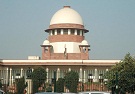
Published Date: 3rd July 2014, Image source: http://www.orissadiary.com

Friday, March 22, 2013

The Justice System


Dr M N Buch, Dean, 
Centre for Governance and Political Studies

The justice system in India is passing through an extremely difficult period, for which there are a number of reasons. Let us start with the basics, that is, the separation of powers. In this a very special position is given to the Judiciary which makes it totally independent of the Executive. This is most praiseworthy, but it would be futile to deny that the system is under stress. As the Executive fails to perform its functions of governing, as people develop a feeling that they cannot expect fairness, impartiality and efficiency from the Executive, recourse to the courts has increased substantially and in matters in which the Executive should have taken a decision the Judiciary is being forced to intervene so that people receive their due, especially in terms of delivery of services. Because it is impossible to maintain an absolutely fine-tuned balance when one constituent of the State is forced to order another, equal constituent to act in a particular way or desist from acting in another way, there are bound to be complaints that the Judiciary is intervening in executive matters. Looked at from the citizens’ point of view this is just fine because he is interested in his legitimate work being done. That, however, is not how the Executive views it. There have also been instances of clashes between the Judiciary and the Legislature, but fortunately the stand-off has never reached the point of irreversible crisis. However, the Executive must begin to govern and its lowliest functionary must being to do his duty as mandated by law, rules or executive order. If that happens people will find it unnecessary go to the Judiciary for remedy and courts can then go back to their main function of deciding issues between adversaries.

One of the areas of conflict is in the appointment of judges of the Supreme Court and the High Courts. Article 124 of the Constitution states how a judge of the Supreme Court may be appointed. Article 217 provides for the appointment of High Court judges. The operative part of Article 124 (2) reads, “Every judge of the Supreme Court shall be appointed by the President by warrant under his hand and seal after consultation with such of the judges of the Supreme Court and of the High Courts in States as the President may deem necessary for the purpose and shall hold office until he attains the age of sixty-five : Provided that in the case of appointment of a judge other than the Chief Justice, the Chief Justice of India shall always be consulted”. Under Article 217 for the appointment of a judge of a High Court the President is the appointing authority and he is required to decide on such appointment in consultation with the Chief Justice of India, Governor of the State and, in the case of appointment of a judge other than the Chief Justice, the Chief Justice of the High Court concerned”. The Supreme Court has ruled that consultation with the Chief Justice of India establishes the primacy of the Chief Justice in determining who shall or shall not be appointed a judge of the Supreme Court or a High Court. The Supreme Court has further ordered that it is a collegium of judges, to be selected by the Chief Justice which will help the Chief Justice to determine what advice should be rendered to the President regarding the appointment of a judge.

I have serious objection to the concept of a collegium of judges which limits the power of the President to consult such judges of the Supreme Court and the High Courts as he deems necessary, which is what Article 124 (2) states. I do not think that the Supreme Court can thus limit the authority of the President regarding consultation which vests in him through the Constitution, though the Chief Justice of India would be free to set up a collegium to advise him on the recommendations to be made on consultation. The question still remains about how a conflict will be resolved where the collegium advises the Chief Justice in a particular way and the judges whom the President consults give some other advice. The third player would be the Council of Ministers, whom the President is bound to consult before taking a decision because under the Constitution he is bound by the advice of the Council. This would apply to the Governor of a State also who, when consulted by the President about appointment of a High Court judge, would naturally have to abide by the advice given to him by his Council. In other words, the present provisions of the Constitution and their interpretation by the Supreme Court do leave open the gates of disagreement and even conflict because whereas the President may not appoint a judge whom the Chief Justice of India and the collegium have found unfit, he need not appoint a person recommended by the Chief Justice. In fact many vacancies in the High Courts and the Supreme Court have not been filled on account of such conflict.

Government has been trying to set up a National Judicial Commission, to be headed by the Chief Justice of India and with adequate representation of the Supreme Court and High Courts. The Commission, as envisaged, would have the Law Minister, the Leader of the Opposition of one of the two Houses of Parliament and an eminent jurist nominated by the President as members. Justice J.S. Verma, Justice V.N. Khare, Justice V.R. Krishna Iyer and Justice M.N. Venkatachalliah are all opposed to the collegium system. Perhaps the issue could be resolved if the proposed National Judicial Commission could have a majority of judicial members, with the Chief Justice having a veto power and if the eminent jurist is nominated by the Chief Justice of India rather than the President. Suitable constitutional and legal arrangement could be made for the advice of the National Judicial Commission being final, with neither the President nor the Prime Minister being authorised to overrule it. Without bringing the Executive into the process for the appointment of judges of the Supreme Court and High Courts, such an arrangement would widen the scope of the required consultation with the Chief Justice and by bringing the government, the opposition and the Bar on board through an eminent jurist, the system of appointment of judges could be made more broad based and more credible.

An independent judiciary is a sine qua non of a true democracy. However, the only system of governance in which authority does not go hand in hand with accountability is a dictatorship of the type established by Hitler or Stalin. This means that the more independent the judiciary the more should it be accountable. Accountability which does not lead to penalty for failure to discharge accountability satisfactorily is no accountability. Under Article 227 courts and tribunals located within the jurisdiction of a High Court work under the superintendence of the High Court and in exercise of the power of superintendence the High Court can call the court or tribunal to account. Under Chapter 6 of Part VI of the Constitution the District and Sessions Courts and the Courts of Magistrates and Civil Judges are termed as subordinate courts and under Article 235 control over subordinate courts vests fully in the High Courts. The Constitution, therefore, provides for High Courts to decide how subordinate courts will function, to prescribe measures to ensure accountability and to punish for failure to render account, in terms of finance, efficiency, judicial competence, etc. But what about the High Courts and the Supreme Court? Their judicial pronouncements are open to appeal, revision and review, but administrative and personal conduct are not subject to the superintendence, supervision or control of any judicial authority. If a judge does little or no work, is not regular in attendance, delays judicial pronouncements, does not promote efficient judicial process in his own court or in subordinate courts the maximum that can happen is that under Article 222, on the advice of the Chief Justice of India, the President may transfer a judge from one High Court to another. If there is serious misconduct the procedure laid down in Article 124 (4), it would be applicable. For High Court judges Article 218 would apply, which means that a Supreme Court or High Court judge can only be removed through impeachment proceedings. There is no other penalty prescribed, but as the Justice Ramaswamy case has proved, if equations in Parliament are such that the necessary majority cannot be mustered, a judge found guilty of misconduct by a tribunal constituted under Article 124 (4 and (5) the judge may still escape removal. Carried one step further, if a judge is found guilty in a criminal trial, convicted and given a jail sentence, the impeachment proceedings can still fail and the convict would continue to be a judge of a High Court or the Supreme Court. This may happen in the case of a lady judge of the Punjab and Haryana High Court who has been accused of taking a bribe. Government, Parliament and the Supreme Court must realise that what could never be dreamt of when the Constitution was drafted, that is, a judge of a High Court or Supreme Court committing a criminal misdemeanor, can no longer be ignored and, therefore, we must have a constitutional provision whereby in such cases, while taking great care to ensure that the independence of the judiciary is not thereby compromised, such a judge can be made to demit office.
The major problem with our subordinate courts from District and Sessions Courts down to a Magistrate First Class cum Civil Judge Class Two is that cases drag on for years. Formerly civil litigations were considered to be very lengthy and time consuming, but now unfortunately even the criminal justice system has become subject to inordinate delay. I have perhaps quoted this case else where, but it bears repetition. In Mach 1983 shortly before I left the Service we trapped a lady who was trying to bribe a Deputy Secretary. He had already reported that such an attempt was being made and we arranged a trap, catching the lady red handed. My evidence was proforma, but necessary because the bribe was being offered for expeditious processing of a case in which the accused person’s application to me had been forwarded by me to the Deputy Secretary for examination. It took eleven years for my evidence to be recorded because every time I went for a hearing the accused, by absence, by subterfuge, by downright lies was able to obtain adjournments. The case was finally decided fifteen years after the event. What is the deterrent effect of such proceedings? How can witnesses be expected to remember an event which happened several years earlier and give testimony which could withstand cross examination, the purpose of which is to discredit the witness? This was a simple case with only three or four witnesses, but imagine what happens in a serious case in which a heinous offence has been committed and there are a large number of witnesses. No wonder we have such a miserable record of convictions.

I have been trying to understand why cases are delayed. I am not even attempting to look at civil cases because that will require several volumes. In a criminal trial the first delay occurs at the stage of investigation. The available clues may be either so few as to be almost nonexistent, witnesses may not be available, the forensic tests may be inconclusive, the investigating officer may be overburdened and can give only limited time to a particular offence, the accused and the witnesses or even the complainant may come to some compromise or there could be sheer inefficiency. This is where superior police officers have a major role to play to ensure that investigation is consistent, sustained and done with intelligence. Forensic and other support must be made available freely to the investigating team. The legal niceties of investigation must also be taken care of. The submission of the challan must be accompanied by full documentation so that the charge-sheet is complete in itself. This has to be followed up by proper representation of the prosecution in court, with the public prosecutor and his assistants applying due diligence to the case. If the public prosecutor is wide awake and proactive many of the delays in court can be avoided.

One reason for delay is in the serving of process. The court moharrir, who would generally be from the police, or the reader of the magistrate or judge, would be responsible for issue of process which, in criminal cases, would generally be served by the police. The arrangement is not satisfactory and most courts report that service of process is tardy and very often summons and warrants are just not served in collusion with the accused or the witnesses. Surely, with modern means of communications, with speed post, courier service, SMS texting and the internet the High Courts can work out a system whereby service of process becomes efficient and cannot be used as an excuse for delay in court proceedings. Our courts cannot function in the eighteenth century when the twenty-first century gives such exciting and innovative means of communication, or are they waiting for that happy day when science evolves a means of apparatus-less communication of thought process whereby what the judge thinks is communicated to the witness or accused by a para-psychic process? Coming to the trial proper, defence counsels are prone to pleading for adjournments, especially in those cases where the defence case is weak. Adjournments must be avoided because whereas an adjournment which is unavoidable is given, in most cases adjournment is denied. It is for learned counsel to adjust their cause list in such a way that appearance in one court cannot be offered as an excuse for nonappearance in another court. There is no reason for a judge to give an adjournment only for the sake of convenience of counsel. Every defence counsel is an officer of the court and it is his duty to assist the court in speedy disposal of a case. A counsel who acts otherwise fails in his duty and should be treated as such.

I have talked to a number of judges and magistrates about why they are not strict in the matter of adjournment. Under Article 21 of the Constitution every person, including one accused of a heinous offence, is still entitled to be tried by due process before being deprived of his life or personal liberty. Under Article 22 a person who is arrested and detained in custody has the right to be informed of the grounds for arrest, he has the right to consult and be defended by a legal practitioner and he cannot be detained in police custody beyond twenty-four hours of arrest without the orders of a magistrate. Under Article 39 (A) every citizen is entitled to equal justice. This is enforceable by the provisions of Articles 139 and 226 which confer writ jurisdiction on the Supreme Court and the High Courts. The Code of Criminal Procedure prescribes the process of trial in criminal cases. Chapters XVI and XIX of Cr.P.C. state how proceedings shall be conducted before a Magistrate and Chapter XVIII does the same for trial before a court of session. Under sections 231 and 233 Cr.P.C. an accused person has the right to cross examine the prosecution witnesses and to enter upon his own defence and adduce evidence in this behalf. Suppose an accused person deliberately delays the taking of evidence for the prosecution and indefinitely defers his own defence. Should the court indulge him and go on giving adjournments indefinitely, as happened in the bribery case to which I have earlier referred? Under Indian law a person is deemed to be innocent till proved guilty but there is no provision of law which says that an accused and his counsel can go on creating obstruction so that the trial is indefinitely delayed. In other words, an opportunity, a manifestly fair opportunity, must be given to the accused on trial to present his case, but when the accused tries to indefinitely delay the matter the court need not succumb. Under section 309 Cr.P.C. the provision is, “In every enquiry or trial the proceedings shall be held as expeditiously as possible and, in particular, when the examination of witnesses has once begun, the same shall be continued from day-to-day until all the witnesses in attendance have been examined, unless the court finds the adjournment of the same beyond the following day to be necessary for reasons to be recorded”. The proviso to this section states that any trial relating to an offence under section 376 and 376(D) of IPC (sexual offence amounting to rape) must be completed within a period of two months from the date of commencement of the examination of witnesses. The scheme of Cr.P.C. is very clear, the accused is entitled to a fair trial, but he is not thereby entitled to indefinite delay.

I have spoken to some judges about why they so readily give adjournments. Even the most conscientious of them state that if they do not give an adjournment there are many defence lawyers who indulge in making complaints against the judge and, by and large, the High Courts tend to be more sympathetic to defence counsel than to their own judges. Rather than face such complaints many judges take the easy way out and adjourn the case. One of the things which many judges have forgotten is that bail is also a form of custody in which instead of physically holding the accused the court permits enlargement on bail, whereby surety of appearance is substituted for physical custody. If the accused person deliberately delays proceedings by non appearance or such other tactics it would be legitimate for the court to hold the person in physical custody and to proceed with the case on a day-to-day basis. The Supreme Court and the High Courts must try and move the courts in this direction. Greater adoption of evidence through video conferencing and other means of electronic recording of evidence would also help in expediting cases.

There are some recent developments which are causing me worry. The first is that recent rape cases have certainly shaken the nation, with the Chief Justice of India going as far as to say that he would have personally liked to participate in the public protest. Perhaps he was ill advised to make this statement because in a way he thus pre judges even the specific case under mention, which means that no trial court in India would hereafter readily acquit a person in such matters unless no case at all is made out and this could lead to mistrial of rape cases and denial of justice to the accused persons. We have seen a whole spate of very speedy trials, some lasting only for ten days, in which the accused has been sentenced to death. Murder, whether or not accompanied by rape, is the ultimate crime because it irreversibly deprives a person of his life. The accused also faces possible judicial termination of his life at the end of the trial and, therefore, courts have to be extra careful to ensure that the accused has full and fair opportunity to represent his or her case and that there is no miscarriage of justice through haste. The Supreme Court and the High Courts for years have ruled that there should be extreme caution in awarding the death penalty and that, too, only in the rarest of rare cases. In sharp contrast in at least half a dozen cases in the last two or three months rapists have been awarded the death penalty after trials which smack of the summary. The judiciary cannot swing between two extremes because our politicians, civil servants and the so-called civil society are already doing this. Certainly the judiciary should enforce the law with great strictness and there should be no misplaced and pseudo philanthropic attitude towards crime. At the time same justice has to be done because two principles of Anglo Saxon Jurisprudence that we follow are :- (1) An accused is presumed to be innocent till proved guilty, with the burden of proof of guilt resting on the prosecution. (2) It is better that a hundred guilty people go free rather than that one innocent person be punished. It is for the judiciary to ensure that the balance is maintained, the innocent are protected and at the same time the guilty are brought to justice in the shortest possible time.