Friday, March 22, 2013

The Justice System


Dr M N Buch, Dean, 
Centre for Governance and Political Studies

The justice system in India is passing through an extremely difficult period, for which there are a number of reasons. Let us start with the basics, that is, the separation of powers. In this a very special position is given to the Judiciary which makes it totally independent of the Executive. This is most praiseworthy, but it would be futile to deny that the system is under stress. As the Executive fails to perform its functions of governing, as people develop a feeling that they cannot expect fairness, impartiality and efficiency from the Executive, recourse to the courts has increased substantially and in matters in which the Executive should have taken a decision the Judiciary is being forced to intervene so that people receive their due, especially in terms of delivery of services. Because it is impossible to maintain an absolutely fine-tuned balance when one constituent of the State is forced to order another, equal constituent to act in a particular way or desist from acting in another way, there are bound to be complaints that the Judiciary is intervening in executive matters. Looked at from the citizens’ point of view this is just fine because he is interested in his legitimate work being done. That, however, is not how the Executive views it. There have also been instances of clashes between the Judiciary and the Legislature, but fortunately the stand-off has never reached the point of irreversible crisis. However, the Executive must begin to govern and its lowliest functionary must being to do his duty as mandated by law, rules or executive order. If that happens people will find it unnecessary go to the Judiciary for remedy and courts can then go back to their main function of deciding issues between adversaries.

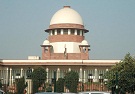
One of the areas of conflict is in the appointment of judges of the Supreme Court and the High Courts. Article 124 of the Constitution states how a judge of the Supreme Court may be appointed. Article 217 provides for the appointment of High Court judges. The operative part of Article 124 (2) reads, “Every judge of the Supreme Court shall be appointed by the President by warrant under his hand and seal after consultation with such of the judges of the Supreme Court and of the High Courts in States as the President may deem necessary for the purpose and shall hold office until he attains the age of sixty-five : Provided that in the case of appointment of a judge other than the Chief Justice, the Chief Justice of India shall always be consulted”. Under Article 217 for the appointment of a judge of a High Court the President is the appointing authority and he is required to decide on such appointment in consultation with the Chief Justice of India, Governor of the State and, in the case of appointment of a judge other than the Chief Justice, the Chief Justice of the High Court concerned”. The Supreme Court has ruled that consultation with the Chief Justice of India establishes the primacy of the Chief Justice in determining who shall or shall not be appointed a judge of the Supreme Court or a High Court. The Supreme Court has further ordered that it is a collegium of judges, to be selected by the Chief Justice which will help the Chief Justice to determine what advice should be rendered to the President regarding the appointment of a judge.

I have serious objection to the concept of a collegium of judges which limits the power of the President to consult such judges of the Supreme Court and the High Courts as he deems necessary, which is what Article 124 (2) states. I do not think that the Supreme Court can thus limit the authority of the President regarding consultation which vests in him through the Constitution, though the Chief Justice of India would be free to set up a collegium to advise him on the recommendations to be made on consultation. The question still remains about how a conflict will be resolved where the collegium advises the Chief Justice in a particular way and the judges whom the President consults give some other advice. The third player would be the Council of Ministers, whom the President is bound to consult before taking a decision because under the Constitution he is bound by the advice of the Council. This would apply to the Governor of a State also who, when consulted by the President about appointment of a High Court judge, would naturally have to abide by the advice given to him by his Council. In other words, the present provisions of the Constitution and their interpretation by the Supreme Court do leave open the gates of disagreement and even conflict because whereas the President may not appoint a judge whom the Chief Justice of India and the collegium have found unfit, he need not appoint a person recommended by the Chief Justice. In fact many vacancies in the High Courts and the Supreme Court have not been filled on account of such conflict.

Government has been trying to set up a National Judicial Commission, to be headed by the Chief Justice of India and with adequate representation of the Supreme Court and High Courts. The Commission, as envisaged, would have the Law Minister, the Leader of the Opposition of one of the two Houses of Parliament and an eminent jurist nominated by the President as members. Justice J.S. Verma, Justice V.N. Khare, Justice V.R. Krishna Iyer and Justice M.N. Venkatachalliah are all opposed to the collegium system. Perhaps the issue could be resolved if the proposed National Judicial Commission could have a majority of judicial members, with the Chief Justice having a veto power and if the eminent jurist is nominated by the Chief Justice of India rather than the President. Suitable constitutional and legal arrangement could be made for the advice of the National Judicial Commission being final, with neither the President nor the Prime Minister being authorised to overrule it. Without bringing the Executive into the process for the appointment of judges of the Supreme Court and High Courts, such an arrangement would widen the scope of the required consultation with the Chief Justice and by bringing the government, the opposition and the Bar on board through an eminent jurist, the system of appointment of judges could be made more broad based and more credible.

An independent judiciary is a sine qua non of a true democracy. However, the only system of governance in which authority does not go hand in hand with accountability is a dictatorship of the type established by Hitler or Stalin. This means that the more independent the judiciary the more should it be accountable. Accountability which does not lead to penalty for failure to discharge accountability satisfactorily is no accountability. Under Article 227 courts and tribunals located within the jurisdiction of a High Court work under the superintendence of the High Court and in exercise of the power of superintendence the High Court can call the court or tribunal to account. Under Chapter 6 of Part VI of the Constitution the District and Sessions Courts and the Courts of Magistrates and Civil Judges are termed as subordinate courts and under Article 235 control over subordinate courts vests fully in the High Courts. The Constitution, therefore, provides for High Courts to decide how subordinate courts will function, to prescribe measures to ensure accountability and to punish for failure to render account, in terms of finance, efficiency, judicial competence, etc. But what about the High Courts and the Supreme Court? Their judicial pronouncements are open to appeal, revision and review, but administrative and personal conduct are not subject to the superintendence, supervision or control of any judicial authority. If a judge does little or no work, is not regular in attendance, delays judicial pronouncements, does not promote efficient judicial process in his own court or in subordinate courts the maximum that can happen is that under Article 222, on the advice of the Chief Justice of India, the President may transfer a judge from one High Court to another. If there is serious misconduct the procedure laid down in Article 124 (4), it would be applicable. For High Court judges Article 218 would apply, which means that a Supreme Court or High Court judge can only be removed through impeachment proceedings. There is no other penalty prescribed, but as the Justice Ramaswamy case has proved, if equations in Parliament are such that the necessary majority cannot be mustered, a judge found guilty of misconduct by a tribunal constituted under Article 124 (4 and (5) the judge may still escape removal. Carried one step further, if a judge is found guilty in a criminal trial, convicted and given a jail sentence, the impeachment proceedings can still fail and the convict would continue to be a judge of a High Court or the Supreme Court. This may happen in the case of a lady judge of the Punjab and Haryana High Court who has been accused of taking a bribe. Government, Parliament and the Supreme Court must realise that what could never be dreamt of when the Constitution was drafted, that is, a judge of a High Court or Supreme Court committing a criminal misdemeanor, can no longer be ignored and, therefore, we must have a constitutional provision whereby in such cases, while taking great care to ensure that the independence of the judiciary is not thereby compromised, such a judge can be made to demit office.
The major problem with our subordinate courts from District and Sessions Courts down to a Magistrate First Class cum Civil Judge Class Two is that cases drag on for years. Formerly civil litigations were considered to be very lengthy and time consuming, but now unfortunately even the criminal justice system has become subject to inordinate delay. I have perhaps quoted this case else where, but it bears repetition. In Mach 1983 shortly before I left the Service we trapped a lady who was trying to bribe a Deputy Secretary. He had already reported that such an attempt was being made and we arranged a trap, catching the lady red handed. My evidence was proforma, but necessary because the bribe was being offered for expeditious processing of a case in which the accused person’s application to me had been forwarded by me to the Deputy Secretary for examination. It took eleven years for my evidence to be recorded because every time I went for a hearing the accused, by absence, by subterfuge, by downright lies was able to obtain adjournments. The case was finally decided fifteen years after the event. What is the deterrent effect of such proceedings? How can witnesses be expected to remember an event which happened several years earlier and give testimony which could withstand cross examination, the purpose of which is to discredit the witness? This was a simple case with only three or four witnesses, but imagine what happens in a serious case in which a heinous offence has been committed and there are a large number of witnesses. No wonder we have such a miserable record of convictions.

I have been trying to understand why cases are delayed. I am not even attempting to look at civil cases because that will require several volumes. In a criminal trial the first delay occurs at the stage of investigation. The available clues may be either so few as to be almost nonexistent, witnesses may not be available, the forensic tests may be inconclusive, the investigating officer may be overburdened and can give only limited time to a particular offence, the accused and the witnesses or even the complainant may come to some compromise or there could be sheer inefficiency. This is where superior police officers have a major role to play to ensure that investigation is consistent, sustained and done with intelligence. Forensic and other support must be made available freely to the investigating team. The legal niceties of investigation must also be taken care of. The submission of the challan must be accompanied by full documentation so that the charge-sheet is complete in itself. This has to be followed up by proper representation of the prosecution in court, with the public prosecutor and his assistants applying due diligence to the case. If the public prosecutor is wide awake and proactive many of the delays in court can be avoided.

One reason for delay is in the serving of process. The court moharrir, who would generally be from the police, or the reader of the magistrate or judge, would be responsible for issue of process which, in criminal cases, would generally be served by the police. The arrangement is not satisfactory and most courts report that service of process is tardy and very often summons and warrants are just not served in collusion with the accused or the witnesses. Surely, with modern means of communications, with speed post, courier service, SMS texting and the internet the High Courts can work out a system whereby service of process becomes efficient and cannot be used as an excuse for delay in court proceedings. Our courts cannot function in the eighteenth century when the twenty-first century gives such exciting and innovative means of communication, or are they waiting for that happy day when science evolves a means of apparatus-less communication of thought process whereby what the judge thinks is communicated to the witness or accused by a para-psychic process? Coming to the trial proper, defence counsels are prone to pleading for adjournments, especially in those cases where the defence case is weak. Adjournments must be avoided because whereas an adjournment which is unavoidable is given, in most cases adjournment is denied. It is for learned counsel to adjust their cause list in such a way that appearance in one court cannot be offered as an excuse for nonappearance in another court. There is no reason for a judge to give an adjournment only for the sake of convenience of counsel. Every defence counsel is an officer of the court and it is his duty to assist the court in speedy disposal of a case. A counsel who acts otherwise fails in his duty and should be treated as such.

I have talked to a number of judges and magistrates about why they are not strict in the matter of adjournment. Under Article 21 of the Constitution every person, including one accused of a heinous offence, is still entitled to be tried by due process before being deprived of his life or personal liberty. Under Article 22 a person who is arrested and detained in custody has the right to be informed of the grounds for arrest, he has the right to consult and be defended by a legal practitioner and he cannot be detained in police custody beyond twenty-four hours of arrest without the orders of a magistrate. Under Article 39 (A) every citizen is entitled to equal justice. This is enforceable by the provisions of Articles 139 and 226 which confer writ jurisdiction on the Supreme Court and the High Courts. The Code of Criminal Procedure prescribes the process of trial in criminal cases. Chapters XVI and XIX of Cr.P.C. state how proceedings shall be conducted before a Magistrate and Chapter XVIII does the same for trial before a court of session. Under sections 231 and 233 Cr.P.C. an accused person has the right to cross examine the prosecution witnesses and to enter upon his own defence and adduce evidence in this behalf. Suppose an accused person deliberately delays the taking of evidence for the prosecution and indefinitely defers his own defence. Should the court indulge him and go on giving adjournments indefinitely, as happened in the bribery case to which I have earlier referred? Under Indian law a person is deemed to be innocent till proved guilty but there is no provision of law which says that an accused and his counsel can go on creating obstruction so that the trial is indefinitely delayed. In other words, an opportunity, a manifestly fair opportunity, must be given to the accused on trial to present his case, but when the accused tries to indefinitely delay the matter the court need not succumb. Under section 309 Cr.P.C. the provision is, “In every enquiry or trial the proceedings shall be held as expeditiously as possible and, in particular, when the examination of witnesses has once begun, the same shall be continued from day-to-day until all the witnesses in attendance have been examined, unless the court finds the adjournment of the same beyond the following day to be necessary for reasons to be recorded”. The proviso to this section states that any trial relating to an offence under section 376 and 376(D) of IPC (sexual offence amounting to rape) must be completed within a period of two months from the date of commencement of the examination of witnesses. The scheme of Cr.P.C. is very clear, the accused is entitled to a fair trial, but he is not thereby entitled to indefinite delay.

I have spoken to some judges about why they so readily give adjournments. Even the most conscientious of them state that if they do not give an adjournment there are many defence lawyers who indulge in making complaints against the judge and, by and large, the High Courts tend to be more sympathetic to defence counsel than to their own judges. Rather than face such complaints many judges take the easy way out and adjourn the case. One of the things which many judges have forgotten is that bail is also a form of custody in which instead of physically holding the accused the court permits enlargement on bail, whereby surety of appearance is substituted for physical custody. If the accused person deliberately delays proceedings by non appearance or such other tactics it would be legitimate for the court to hold the person in physical custody and to proceed with the case on a day-to-day basis. The Supreme Court and the High Courts must try and move the courts in this direction. Greater adoption of evidence through video conferencing and other means of electronic recording of evidence would also help in expediting cases.

There are some recent developments which are causing me worry. The first is that recent rape cases have certainly shaken the nation, with the Chief Justice of India going as far as to say that he would have personally liked to participate in the public protest. Perhaps he was ill advised to make this statement because in a way he thus pre judges even the specific case under mention, which means that no trial court in India would hereafter readily acquit a person in such matters unless no case at all is made out and this could lead to mistrial of rape cases and denial of justice to the accused persons. We have seen a whole spate of very speedy trials, some lasting only for ten days, in which the accused has been sentenced to death. Murder, whether or not accompanied by rape, is the ultimate crime because it irreversibly deprives a person of his life. The accused also faces possible judicial termination of his life at the end of the trial and, therefore, courts have to be extra careful to ensure that the accused has full and fair opportunity to represent his or her case and that there is no miscarriage of justice through haste. The Supreme Court and the High Courts for years have ruled that there should be extreme caution in awarding the death penalty and that, too, only in the rarest of rare cases. In sharp contrast in at least half a dozen cases in the last two or three months rapists have been awarded the death penalty after trials which smack of the summary. The judiciary cannot swing between two extremes because our politicians, civil servants and the so-called civil society are already doing this. Certainly the judiciary should enforce the law with great strictness and there should be no misplaced and pseudo philanthropic attitude towards crime. At the time same justice has to be done because two principles of Anglo Saxon Jurisprudence that we follow are :- (1) An accused is presumed to be innocent till proved guilty, with the burden of proof of guilt resting on the prosecution. (2) It is better that a hundred guilty people go free rather than that one innocent person be punished. It is for the judiciary to ensure that the balance is maintained, the innocent are protected and at the same time the guilty are brought to justice in the shortest possible time.

Thursday, March 21, 2013

VIF Delegation Visits Beijing for Seminar on “Afghanistan Post 2014; Perspectives from the Region”


A five member VIF delegation led by Mr. Ajit Doval and comprising of Amb. PP Shukla, Gen. (Retd.) NC Vij, Lt.Gen. (Retd.) Ravi Sawhney and Brig. (Retd.) Vinod Anand visited Beijing from 13 to 15 March 2013 to participate in a seminar and interact with some of the think tanks of China.
On 13th March a trilateral seminar between China Institute of Contemporary International Relations, Vivekananda International Foundation and Royal United Services Institute, UK was organized to delibrate on ‘Afghanistan Post 2014: Perspectives from the Region’. The opening remarks were made by Prof. Malcolm Chalmers of RUSI, Mr. Ajit Doval and Mr. Yang Mingjie, Vice President (CICIR); all highlighted the need for regional cooperation to usher in peace and stability in Afghanistan.
First Session was devoted to prospects of political stability in Afghanistan where Prof. Wang Shida gave out Chinese perspective on the political and security situation in Afghanistan. He was appreciative of the negotiations process with Taliban. Sir William Patey, former UK Ambassador to Afghanistan opined that parties are not likely to deliver what is planned; post-2014 situation would be messy but manageable. Lt. Gen Sawhney stressed that security situation would be impacted by the exit policy; there was a need to build up the Afghan national security forces and provide them with adequate budget; conduct of Presidential elections in a free and fair manner with proper security arrangements was very necessary.

Second Session dwelt on Afghanistan’s Economic Future. All the three speakers i.e. Dr. Raffaello Pantucci (RUSI), Dr. Hu Shisheng and Vinod Anand brought the importance of exploiting mineral and hydro carbon wealth of Afghanistan to generate revenues for Afghan government. There was a need for private sector investment in Afghanistan but because of adverse security situation the private companies were reluctant to invest. It was highlighted that Afghanistan is a hub for multimodal corridors that could go in all directions for increasing trading and investment activity which again could generate large amount of revenues on a sustained basis but this would require building of infrastructure and regional cooperation. Some measures have already been taken in this direction but much more needs to be done. Further, a quick or accelerated withdrawal by the NATO/ISAF troops would also impact the Afghan economy adversely. The need for coordination between China and India on this aspect was also emphasised.

The third Session dwelt upon 2014 and implications for regional security. Gen NC Vij highlighted the role of Pakistan and Pakistani based Taliban groups in the ongoing turmoil in Afghanistan. He underlined the fact that entire process seems to be Pakistan-centric rather than Afghan centric with Pakistan aiming to be in the driver’s seat. Dr. Wang Xu discussed four possible scenarios in Afghanistan which included low level civil war, possible division, a relative power balance scenario and a worst case scenario. He also stressed that China’s Western Area Development plan cannot be realized unless there is stability in Afghanistan. He was of the opinion that SCO’s counter terror mechanism could be useful.

In Session IV the possible regional mechanisms for solving the Afghan puzzle were discussed. Amb. PP Shukla discussed the importance of all the neighbours including their interests. He was of the opinion that in case Taliban reverts to power it is unlikely that it will mend its ways as its ideology is deeply rooted in the Salafi/Wahabi mindset. Dr. Wang Xu questioned the formulation of third party meddling in Afghan affairs; he was of the opinion that there are too many parties to the Afghan issue. Therefore, can a limit to how many members should be there in a regional mechanism be drawn? According to him a regional mechanism under the aegis of the U.N would be more conducive for addressing the Afghan issue.
The closing remarks were given by Mr. Ajit Doval, Prof. Malcolm Chalmers and Mr. Yang Mingjie. There was a general consensus that what is needed is an Afghanistan which does not collapse after the western troops leave. There was a need to build up the ANSF and bring peace and stability in Afghanistan. Cooperation between China and India to help Afghanistan would also find positive resonance in the region.

Tuesday, March 19, 2013

Not in Our Interest to Escalate Matters


Kanwal Sibal 
(Member, VIF Advisory Board)

But it’s up to Rome to find an acceptable way out of the crisis it has created.

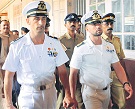
The refusal of the Italian government to send back their marines to India for trial complicates an already emotive issue.

The Italian government had till now shown respect for the due process of law by fighting the case upto the Supreme Court. It fulfilled its obligation to return the marines for trial after Christmas holidays in Italy. This time, after the Supreme Court permitted them to go home for voting- an indulgent decision -Rome has decided to dishonour its word to the SC and defy India politically. After showing patience, unavoidable in complex political and legal issues like this one, to precipitate matters like this is surprising.

If public opinion in Italy is agitated over the situation of the marines and had to be satisfied, public opinion in India is distressed too and has to be handled in a more complex federal situation. The reality is that Italian marines have killed Indian citizens close to India’s coast. The injured party is India; it has an independent judiciary and due process of law is assured. There are enough ambiguities in the legal aspects of the case to justify a trial in India. The SC has now ruled that Indian courts have jurisdiction. Why a law-abiding democracy like Italy should show such disregard for law and India is surprising.

The Italian government’s explanation is not convincing. How could it expect India to take a “diplomatic” view of the killing of its citizens in such dubious circumstances and not test facts and jurisdictional issues through the law courts? The formal dispute with India over the terms of UNCLOS, that it claims, can be pursued through mechanisms available in the Convention and not through unilateral action in circumventing the judicial process underway by reneging on its commitment to the Indian government.

This unfortunate development comes in the wake of the Augusta-Westland case, dealing with which will become more problematic with the trust gap now opening wider with the marines case. India-Italy relations are too important to allow them to be degraded. It is not in India’s interest to escalate matters as this case is not central to the relationship. Prime Minister is right in saying that the Italian decision is unacceptable. The burden is on the Italian governement to find an acceptable way out.

India, Afghanistan and Developments in Pakistan


Dr M N Buch, Dean, 
Centre for Governance and Political Studies

A wise man does not venture into unknown territory, at least not till he has reconnoitered it thoroughly. Perhaps I am not wise because I am trying, through this paper, to venture into an area about which my knowledge is sketchy at best. I do this not to pontificate on what India can do about Pakistan and Afghanistan, but to raise questions which, if answered by experts who know, may educate me and make me more knowledgeable. Many of the questions arise from how I perceive Pakistan, because ultimately what happens there affects both us and the Afghans.

I recently had a Pakistani gentleman as a guest. I would describe him as well off but not filthy rich, well educated and clued up about his county, an environmental activist, not a part of the ruling class but not far from it either, quite candid and optimistic about his country. The question came up about the future of democracy and the role of the army in Pakistan. I told him quite bluntly that we feel that the army, like the Prussian, succeeded by the German Army, has projected itself as larger than life, poses as the guardian of Pakistan against the enemy, obviously India in this case and needs this image to protect its place of pre-eminence in Pakistan. It may tolerate a sort of civilian government but will not accept subordination to it and, therefore, will never allow real peace with India because minus India as an enemy the army would lose its claim to predominance as the shield and buckler.

To this must be added Afghanistan, a country in whose internal affairs Pakistan has meddled, or been forced to meddle, in a big way. To oust all Indian influence from Afghanistan would obviously be one of the objectives of Pakistan so that when the Americans withdraw Pakistan would be the only country to influence developments in Afghanistan. The Pakistan Army is bound to be the driving force in this behalf, which means that it must continue to play a pivotal role in the government of Pakistan. How would that reconcile with a strong, democratically elected government in that country? The future of democracy, the building of institutions of civil government, the role of the army in Pakistan, therefore, are all issues of the utmost importance to India.
At about the same time a very senior and respected journalist from Bhopal visited Pakistan. He reported that he sensed a strange reluctance on the part of the army to seize power in Pakistan. General Kayani, the Pakistan Army Chief, has publicly stated that he is in favour of an elected civilian government ruling Pakistan. Is this a diversionary tactic to hide the real intentions of the army? Is it a ploy, a show of reluctance which ultimately accedes to a public demand for army intervention as the situation worsens? Is it a genuinely held belief, brought on by ground realities, which makes the army want to take a back seat?

My Pakistani friend candidly said that an army takeover was so remote a possibility that one could rule it out. According to him Kayani is ambitious, but not politically so. Abbotabad, the worsening situation in the North-West of Pakistan, the deteriorating law and order situation, the state of the Pakistani economy have all affected the credibility of the army, which does not want to gain more public anger or loss of credibility. The political parties in Pakistan will not support or participate in a coup which means that even with the support of Imran Khan’s party the army cannot muster enough political backing to be able to form and run the government. Incidentally, this coincides with the assessment of the Pakistani situation by one section of thinkers in India. I would welcome comments on this because depending on this would emerge the policy options available to us.

Suppose there is a civilian government in Pakistan. Would the army accept civilian control as is to be found in other democracies, including post war Germany? Recently General Kayani is reported to have met the Pakistani President and to have told him that the senior Pakistan Army Commanders were worried about law and order, especially sectarian violence against the Shias and wanted government to quickly deal with the situation. Such advice from the Indian Chief of Army Staff is unthinkable, but then the Indian Army is not engaged in a fratricidal war of the type that Pakistan faces in Baluchistan and the North West, especially North and South Waziristan. Does this mean that the Pakistan Army could assume and intervene in a police role in that country? In India the army can only act in aid of civil power on the specific summons of the executive magistracy. Can the Pakistan Army act independently and if so, under what law? My guest who is also a lawyer (non-practicing) told me that the Supreme Court of Pakistan, following the frequent attacks on Shias, especially the Hazaras, has directly ordered the para-military Rangers to intervene. Can it order the army to do so also? Will this provide legal cover to limited army operations or would it once again embroil the army in civil affairs and encourage it to seize power? My guest opined that in Pakistan they are moving towards constitutional government and neither the political parties nor the Supreme Court would accept an army takeover but, nevertheless and considering ground realities, the Pakistan Army would continue to be a key player in government. I would certainly like the expert opinion of our thinkers and policy makers on this proposition.

Suppose internal peace is restored in Pakistan. What next? Will this cover the Afghan border, the badlands of the North West, the internal situation in Afghanistan, the Afghan-Taliban and the Tehrik-e-Taliban Pakistan (TTP)? Where does that leave the L-e-T, the Sipaha-e-Saheba, the Lashkar-e-Jhangvi and other militant groups, all of whom target India in general and Kashmir in particular? Will the government of Pakistan bring ISI firmly under civil control, close down terrorist training camps and stop cross border terrorism? Will the Pakistan Army, whilst eschewing open war, curb low intensity conflict for which India is not extracting a heavy price? If the situation vis-à-vis India does not change, can the Pakistan Army afford to stop projecting India as an enemy? If that is so, can the army really be said to have accepted civilian rule in Pakistan?

One major problem in Pakistan seems to be that the institutional structures are either weak or non-existent. For example, in India the district administration, including panchayat raj institutions, is very much alive and kicking. There is Naxalite violence, but it is the district administration and State and Central Government who are tackling it. No one says, “Let the Army sort it out”. I told my guest the story of the siege of Hazratbal when militants seized one of the holiest shrines of Islam. The Army and Police were trying to starve out and smoke out the terrorists and had cut off all services and supplies. Someone filed a writ petition in the J& K High Court alleging that denial of food was a violation of the Fundamental Right to Life under Article 21 of the Constitution. The High Court accepted the plea and directed that the siege notwithstanding, the security forces will feed the terrorists. So strong is the judiciary that morning and evening huge degs, or cauldrons of food were carried in to the very terrorists we are trying to starve into submission. Fortunately they ultimately surrendered. This farce, under judicial orders, proved that even under extreme conditions our legal and constitutional institutions function and this is our real strength.

By contrast even liberal minded Pakistanis speak of the army’s pivotal role. If there is lawlessness the Supreme Court does not order action by the local or provincial administration. It gives direct orders to the Pakistan Rangers and, if need be, to the Army. This is unthinkable in India. But weak institutions of government create a whole series of problems. Law and order suffers because the police is poorly commanded and accountability is diffused. The delivery systems for development are not well organised. Politics may be noisy but, paradoxically, it is not vibrant. Can India, in framing immediate responses and simultaneously preparing a longitudinal policy towards Pakistan, ignore these factors? Do we see a gradual strengthening of institutions in that country, or will things deteriorate? Will the Army not become more assertive if things worsen and can it then resist adopting a bellicose posture towards us?

Before returning to the Indo-Pak scene let us see what is unfolding before us in Afghanistan. The Karzai Government is weak, the Afghan Police and Army are neither well trained, nor armed, nor disciplined, nor motivated to be able to ensure Afghan security after 2014. The country has the Pakhtuns, straddling North Western Pakistan and large parts of Afghanistan. It also has Uzbeks, Hazaras, Tajiks, Kazaks and other tribal groups who have their own territories and do not kindly accept Pakhtun hegemony. The Taliban, with their Pakistan sponsors, already occupy de facto large swathes of territory and, given a chance, would take over Kabul. Would darkness once again descend on Afghanistan? Would there be civil war? Certainly Pakistan would try and close down all Indian development activities in that country and we would have a major setback, notwithstanding that our doctors, engineers and teachers enjoy a good reputation there and are liked by the people. In the long run our support for the Pakhtun aspirations since 1947 and the close links of Mahatma Gandhi and Jawaharlal Nehru with Khan Abdul Ghaffar Khan and the Khudai Khidmatgar will pay dividends, but what do we do in 2014 and the immediate thereafter?

I ask this question because an extreme, bigoted regime in Afghanistan, especially if the government, be it the Taliban, is unable to establish a complete hold over that country, will be troublesome for Pakistan also. That country can hardly countenance a TTP resurgence because it would not only endanger peace and order but also threaten democracy and its institutions. I believe there is a strong section of the more liberal civil society which would be supremely unhappy at the forces of fundamentalism becoming strong enough to take over Pakistan and would expect the army to ensure that this does not happen. If civilian government gains strength, if the police and judiciary become effective instruments for ensuring law and order, as also justice, then the army could operate in aid of civil power. But if the civil power is non-existent or weak, as many Pakistani thinkers feel it to be, then the army becomes the surrogate of civil power, which is highly dangerous.

An interventionist army is, at best, unpredictable. It can play a legitimate role, put down disorder and restore effective government. It can equally adopt a disruptive role in which it tries to divert extremist forces to target a common enemy, India and use Jihad as an instrument of state policy. It has happened in the past and could happen again. In other words, encourage low intensity conflict with India, use the extremists for this purpose and keep chipping away at our safety and security till either the Indian State collapses, or else decides to enlarge the conflict into war. Bearing in mind that state sponsored low intensity conflict can both inject foreign terrorists into India as also encourage home grown terrorism, how do we respond? Do we batten down and try and ride out the storm? Or do we become proactive, aggressively repulse the enemy and take home the war to him?

My intention is not to lecture to the experts, but I want to be educated by them. As I see it the whole situation emanating from our immediate, unfriendly neighbours is composed of several layers. The first, of course, is what shape Pakistan will take politically in the years to come, what will be the role of the army and the impact on India of how Pakistan develops. The rules of engagement under different circumstances must be worked out by our policy makers so that instead of ad hoc track-II discussions, do-gooder contacts at different cultural and intellectual levels and mere wishful thinking on our part, we have a blue print, or series of blue prints, which help us formulate responses at all levels, but particularly the diplomatic and administrative. The purpose of the exercise would be to signal the people, government and army of Pakistan what to expect from India under varying scenarios. We can and must build flexibility into the system, but always within a framework in which our opponents know that any misadventure on their part will invite quick and effective response from us. As Theodore Roosevelt had said, “When faced by a large and angry dog smile at him, while reaching behind for a big stick”. That stick must never be far from our arsenal.

What is our internal security doctrine? India is no stranger to purely home grown conflict, be it separatism in the North East, militant Khalistani violence in the Punjab, endemic dacoity in the Chambal region (now fortunately much quieter) or Naxalite violence in the heartland of India. Kashmir I put in a separate category because that is a purely Pakistan sponsored militancy and has to be dealt with accordingly. The sub-continent has always had sectarian strife, mainly Hindu-Muslim, but there is also a fair amount of conflict on account of caste, region and issues of momentary local antagonism. In some ways terrorism exported by States such as Pakistan, aimed at destabilising India, is directly linked to sectarian violence which is religion based because one feeds the other. In Kashmir anti-national interests feed imported terrorism. The Indian State, its intelligence and counter espionage agencies, its strike forces, especially the police, have to be equally multi-layered, but highly coordinated so that whether the enemies of law and order operate in overlapping layers or they have a cellular structure, we have a response waiting for them. The question really is whether we have such an internal security apparatus in place and whether it has an extra-territorial outreach to deal with externally sponsored terrorism. Because our lives and the nation’s safety depend on a positive answer to this question we must come up with it without delay.

Diplomacy, an internal security doctrine, is all very well, but there are three other factors which are equally important. The first is the capacity to gather information on a global or regional basis, correlate, collate and analyse it and then, perhaps by gaming, perhaps by intelligent guess work, perhaps by commonsense, prepare possible scenarios of threat perception and suggest the options of action available to us. The second is the building up of military capabilities to deal with such situations, either by way of demonstrable ability to deter, or by credibly proving our strength to deal with limited conflict, or by showing that we can both contain and counter any enlarged or extended campaign. This would be particularly true of our relationship with Pakistan and China. The third factor is the strength of our economy. An economically progressive and strong India would be the biggest deterrent to any irrational action by Pakistan.

The United States has a number of what they call “think tanks”, in government, in academia and in the corporate sector. A great deal of foreign policy emerges from such intellectual exercises, as also covert and overt intelligence operations. Does this happen in India? I am sure that neither R and AW, nor IB would or should share any information in this behalf because deniability is a strong and legitimate weapon of the State. However, if the body of Daud Ibrahim were to be found in the rubble of his house or Hafiz Mohammed Saeed were to come in the way of a speeding bullet I would sleep much easier in the knowledge that some unknown someone is looking after my safety. I do not only want to read some newspaper report, ex post facto, that information about a possible attack on Bombay from seaward had been passed on to the Maharashtra Police. I would much rather read that an inexplicable explosion had occurred on a small motorised craft sailing toward Bombay and that there were no survivors.

I have raised a number of questions about what is happening and is likely to happen in future in Pakistan and would love to be enlightened. But regardless of whether the Pakistan Army directly rules or stands behind the curtain and manipulates the system, it is extremely doubtful whether, in the foreseeable future, it will change its attitude towards India. If India is no longer projected as the enemy the Pakistan Army would be reduced to an internal security force to deal with local disorder. The Afghan situation and the temptations it offers would probably prevent this from happening and, therefore, one way or the other India would still have to deal with cross border terrorism and its local ramifications. I hope we are realistic enough to recognise this and have the good sense to come up with the means to neutralise the enemy, secure the country and let us all sleep safely on bed.

Italy goes back on its word


Kanwal Sibal 
(Member, VIF Advisory Board)

The latest turn of events in the Italian marines case is most unfortunate for both India and Italy as the bilateral relationship is being put under serious strain. The Indian side had greater reason to feel aggrieved by the cause of the crisis. Indian nationals were killed near the Indian coast, plainly without justification, by Italian marines.

For the marines to believe that Somali pirates operate near the Kerala coast shows their limited awareness of the geographical reality of threats against which they were supposed to defend the Italian cargo ship. That they killed so readily showed the inadequacy of their training in dealing with suspected piracy situations.

The marines being in Indian custody, it was inevitable that there would be pressure on the government to bring them to justice in India.

The Italians argued from the beginning that the marines being Italian naval personnel, India had no jurisdiction over them. If an Italian warship were involved, international law would have upheld Italy's position. However, there is no clarity in international law about the sovereign immunity of military personnel deployed on commercial vessels because such vessels, unlike military vessels, have no sovereign immunity.

It was unrealistic on Italy's part to expect that India would simply hand over the marines to the Italian authorities and lose control over the judicial process to bring them to justice.

For India, it was for its courts to determine whether it would have jurisdiction over a crime committed against Indian nationals in the contiguous zone and whether naval personnel deployed on Italian cargo vessels under Italian law for protection against acts of piracy were entitled to sovereign immunity. These issues could not be decided purely at the diplomatic level.

If the Italians felt aggrieved that their marines were being subjected to Indian jurisdiction it was because of technical legal grounds, not for any crime committed against them. They were being subjected to due process of law, though in India and not in Italy.

In reality, the Italy accepted, however unwilllingly, to submit the marines to Indian jurisdiction, challenging India's legal position right up to the Supreme Court, unsuccesfully though as the Supreme Court has ruled that India has jurisdiction over the case.

Other developments have been favourable for Italy, in that the case was moved out of Kerala to the Supreme Court. The Indian side showed abnormal consideration for the marines, allowing them to join their families for Christmas on the basis of the Italian Ambassador's affidavit guaranteeing their return. The marines were allowed to go home again in February, again on the basis of a similar affidavit by the Italian Ambassador. The Supreme Court's generosity may have been intended to placate the agitated public opinion in Italy by treating the marines humanely. The India-Italy agreement on the exchange of prisoners also opened the possibility of transferring the marines to Italy to serve their prison sentence after conviction here.

The Italian government has suddenly escalated matters by reneging on the Ambassador's affidavit. That a major European power, a law-abiding democracy believing in the rule of law and sanctity of accords between countries, should so flagrantly disregard its own solemn commitment to a friendly country and show contempt for its highest court is unprecedented. That it ceded to domestic pressure is neither here nor there, as India too has to contend with public opinion, and, on top of that, with the ignominy now of being treated in such a cavalier manner.

Italy's explanantion that there is now an international dispute with India and that it is open to a solution through arbitration is doubly injurious as it presents India with a fait accompli, asks India to reject the finding of its own Supreme Court and indirectly endorse the legitimacy of the Italian government's step. The Italian Ambassador's second affidavit seems, with hindsight, a cynical ruse to get the marines out.

The fact that the marines were received on return by the Italian Prime Minister shows that they are not being seen as criminals but heroes who have escaped Indian persecution.

The Indian Prime Minister is right in describing the Italian decision as unacceptable and has warned of consequences if the marines are not returned. His statement that Italy has violated every rule of diplomatic discourse has called into question the solemn commitments given by an accredited representative of its government and that bilateral relationships have to work on the basis of trust is entirely to the point.

India is considering retaliatory options should the marines not return by the due date. The Ambassador could be declared persona non grata and all high-level official contacts could be frozen. Besides the repercussions on the Augusta Westland case, business relations will be affected by the downturn in bilateral relations.

The Italian government would have weighed all possible Indian reactions while taking its highly provocative decision. It is apparently not overly concerned about the consequences.

The Supreme Court has asked the Ambassador to explain why the Italian government is reneging on its commitment and told him not to leave the country. The court is within its right to ask for an explanation as the Ambassador had voluntarily submitted himself to its jurisdiction. The Geneva Convention of diplomatic relations protects the Ambassador so long as the Italian government does not expressly waive his diplomatic immunity — which it assuredly will not do.

The court cannot physically prevent the Ambassador from leaving the country should he choose to do so, as this will be violative of the Convention. If he refuses to explain to the court the Italian government's position on the ground that he is not subject to its jurisdiction and attempts to leave the country, the only option for the government would be to declare him a persona non grata and expel him. Italy may actually be ready for this.

It is most unfortunate that the Italian government has provoked this unnecessary crisis.