Showing posts with label Sushil Kumar Shinde. Show all posts

Monday, April 1, 2013

National Counter-terrorism Centre (NCTC): Issues and Options


Dr. N Manoharan 
(Senior Fellow, VIF)

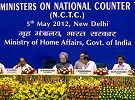
Going by the recent claims of Home Minister Sushil Kumar Shinde, NCTC would see the light of the day after next month’s Chief Ministers’ conference. Earlier attempts to set-up an umbrella body on counter-terrorism failed mainly because of opposition from states ruled by non-Congress parties. Their concern was that the idea of unilateral operations by the NCTC would infringe on the states’ powers and hurt the federal structure of the country. But, there was also another hurdle in the form of reservations about placing NCTC within the Intelligence Bureau (IB). These two issues have now been addressed: by taking out “operations part” of the NCTC and also by not locating the NCTC within the IB.

Way back in 2009, the then Union Home Minister P. Chidambaram had outlined his vision for “the broad architecture of a new security system that will serve the country today and in the foreseeable future.” His idea was to institute an umbrella body dedicated to counter terrorism on the lines of the American NCTC with control over intelligence, operations and investigation of all matters pertaining to terrorism. The NCTC’s goals, according to Chidambaram, “will include preventing a terrorist attack, containing a terrorist attack should one take place, and responding to a terrorist attack by inflicting pain upon the perpetrators”. The aim of NCTC, according to the former Home Minister Chidambaram, was to reduce the failures of busting terror modules to zero.

Even a die-hard critic would not question the need for NCTC. Response to threats should depend on their nature. Undoubtedly, India is one of the worst affected countries by terrorism and, in the recent period, it has witnessed more terrorist incidents than any other country in the world. India confronts varied forms of threats that range from militancy in Jammu & Kashmir, insurgency in the northeast of India, Left Wing Extremism in Central India, and jihadi terrorism threatening the hinterland. Then there are other threats, over and above the identified main forms, such as illegal migration, drug-trafficking, smuggling of counterfeit currencies, small arms proliferation, organised crime and cyber warfare. All these determine the nature of terrorism confronted by India. Yet, the country lacks a single overarching body dedicated to counter terrorism. The time limit for constituting the NCTC was initially set as end-2010, but is yet to see the light of the day. Now, the present Home Minister Sushilkumar Shinde has indicated his readiness “to tweak controversial proposals to break the impasse.” Any new counter-terrorism body would be a failure unless it is evolved based on consensus of all states of India.

To avoid duplication, Chidambaram wanted all related agencies involved in counter-terrorism (although they are part of different ministries) like Research and Analysis Wing (R&AW), Intelligence Bureau (IB), Joint Intelligence Committee (JIC), National Technical Research Organisation (NTRO), Directorate of Revenue Intelligence (DRI), Aviation Research Centre (ARC), Multi-Agency Centre (MAC), Defence Intelligence Agency (DIA), Central Bureau of Investigation (CBI), National Investigation Agency (NIA) to report to the proposed NCTC (under the Ministry of Home Affairs) on matters related to terrorism. However, there is an intense resistance to this “submission”. There is a pervasive fear that such an arrangement would lead to over-centralisation of powers in the Home Minister and the Ministry of Home Affairs emerging as “super ministry”.

Although the above apprehension is farfetched, it is the responsibility of the Center to convey in unambiguous terms NCTC’s focus i.e. “terrorism only”. It should be acknowledged that intelligence/investigation/security agencies have a far wider mandate than terrorism. Even on matters terrorism, the methodology of working would be cooperation and coordination and not subordination of one agency to the other. The final objective is to bring about synergy and cohesion in counter-terrorism efforts, by doing away with overlapping, duplications, bottlenecks and unnecessary hurdles. To achieve this objective, it is enough if NCTC functions as an umbrella organisation with representations from intelligence, investigation and security agencies. It should be in a position to integrate all instruments of national power, including diplomatic, economic, social, political, military, intelligence, and law enforcement to ensure unity of effort. It should happen at central, state and local levels. The tentacles of the NCTC should penetrate deep down upto district levels instead of being another top-heavy organisation.

It need not follow any international model – US, UK or European – but that which suits India’s capabilities and threats. It has to be innovative and proactive in its approach rather than defensive and reactive. ‘Prevention’ and ‘protection’ should be the main watch words. For this, the Centre should constantly monitor terror/militant groups, their support network, sponsors, sanctuaries, mode of operation, threat potential, and leadership and make periodic threat assessments for policy makers. In this regard, it can effectively use ‘Crime and Criminal Tracking Network System (CCNTS), National Intelligence Grid (NATGRID), Central Monitoring System (CMS) and Unique Identification Authority of India (UIDAI). Personnel for NCTC could be pooled from relevant intelligence, investigation and security agencies headed by the senior most experienced officer on rotation basis with simple command structure. In this way, turf wars could be avoided, with the potential and efficacy of the agencies maximised.

Wednesday, October 17, 2012

SAARC Home Ministers’ Meet: Injecting Multilateralism in Counter-Terrorism


Dr. N. Manoharan
Senior Fellow,VIF

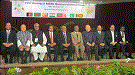
How significant did the fifth meeting of SAARC Home/Interior Ministers held in Maldives on 24-26 September 2012 prove to be? It is difficult to answer this question exactly in qualitative terms, but quantitatively, the meet was noteworthy in three aspects.
  1. Continuity: The fact that the Home/Interior Ministers of eight countries of SAARC met in three succeeding years is itself important. The first meeting was in Dhaka in May 2006, and subsequently in New Delhi (October 2007), Islamabad (June 2010) and Thimpu (July 2011). The event was postponed twice in 2008 and 2009, but resumed in 2010. This is not a surprising development; even SAARC summits have witnessed discontinuities. The South Asian countries, instead of placing a request for rescheduling arising from non-availability of the ministers, can consider sending a junior representative. However, continuity is a clearly important trend in multilateral discussions.
  2. Scope: The practice of conducting SAARC Home/Interior Ministers meets is to review progress and challenges in implementation of the SAARC Regional Convention on Suppression of Terrorism and its Additional Protocol. Apart from this objective, the Fifth Meeting took up considerable number of issues at three levels. Firstly, among immigration authorities of SAARC nations; secondly, at the Home/Interior Secretaries level, and thirdly, among Home/Interior Ministers. The immigration officers had discussed trans-border crimes, terrorism and enhancing security measures within and beyond the region from the perspective of border guarding. The Home Secretaries on the other hand had a fixed agenda for discussions and endorsement for the Home Ministers. Apart from reviewing follow-up action of the decisions made during the fourth meeting held last year in Thimphu, the Ministers covered all issues related to terrorism, maritime security and piracy, combating trafficking in narcotic drugs and psychotropic substances, mutual assistance in criminal matters, cyber crimes, counterfeit currencies, arms smuggling and trafficking in women and children. The scope of issues that were discussed was indeed varied but subject to crucial follow-up action. If decisions fail to translate into reality, the meetings would remain as mere “talking shops”.
  3. Opportunity: The SAARC meeting provided an opportunity for the Indian Home Minister, Sushil Kumar Shinde and his Pakistani counterpart Rehman Malik to meet on the sidelines to discuss issues bilaterally. For the Indian Home Minister, the meeting was a first multilateral confabulation in his current capacity and also the first with his Pakistani counterpart. The meeting between the two came in the wake of the arrest and deportation of Abu Jundal from Saudi Arabia, one of the masterminds of 26/11. It is worth noting that it was a luncheon meeting hosted by Malik and discussions primarily veered on the 26/11 investigations and prosecution of its perpetrators. India is unhappy with the pace of prosecutions of the accused presently jailed in Pakistan, especially LeT commander Zakiur Rehman Lakhvi. The LeT/JuD chief, Hafeez Saeed is roaming freely and indulging in anti-India rabble rousing. Although Malik had assured Shinde that the 26/11 trial would be taken to its “logical conclusion”, India is not confident as there appears to be undue procrastination in the trial process. The Pakistani judges trying the case have changed five times; there have been long adjournments on flimsy grounds; lack of witness protection; and thus far, Pakistan has disallowed the Indian National Investigation Team (NIA) to examine the witnesses in Pakistan. Thus, India believes that Pakistan is not serious about the issue.
The Government of Pakistan has placed a request to allow a second visit of its Judicial Commission to collect further evidence from the Indian judicial magistrate who had recorded the statement from Ajmal Kasab; the investigating officer in the 26/11 case, and the two doctors who had performed a postmortem of the remaining nine terrorists killed by the Indian security forces in the operations. Home Minister Malik posited that the first visit by the Pakistani Judicial Commission in March 2012 could not collect creditable information with an “evidential value”. For India, before processing this request, it is imperative that the Indian NIA team be permitted to visit Pakistan and examine all the evidences collected so far by Pakistani investigators and prosecutors. India also requires the original voice samples of those who were controlling the attack from Pakistan in the operation. These are not forthcoming from the Pakistani side, inspite of a promise to do so.

South Asia is one of the most troubled and vulnerable regions in the world; most of the major terrorist incidents have occurred in this geographic area. The terror groups that are responsible, ironically, enjoy the support of state and non-state actors of South Asian countries. Even so, the SAARC regional organization has been bound in effectively addressing the issue of terrorism. It is not that steps have been taken so far. The SAARC Regional Convention on Suppression of Terrorism, one of the oldest regional conventions on terrorism, was signed on 04 November 1987 and came into force on 22 August 1988 following its ratification by all member states. The Additional Protocol to the Convention came into force on 12 January 2006. The challenge is the absence of an enabling legislation within member states to give effect to these Agreements and, above all, enough political will in implementing them. Unless all SAARC countries consider terrorism as a common enemy and take appropriate counter- measures, the region will sink together.