Showing posts with label Cold Start. Show all posts

Friday, March 29, 2013

Pakistan’s Dangerous Quest for Tactical Nukes


Brig (retd) Gurmeet Kanwal (Visiting Fellow, VIF)
Monika Chansoria (Senior Fellow, CLWS)

Pakistan’s quest to acquire tactical nuclear weapons (TNWs) has added a dangerous dimension to the already precarious strategic equation in South Asia. The security discourse in the subcontinent revolves around the perennial apprehension of a conventional or sub-conventional conflict triggering a chain reaction, eventually paving the way for a potential nuclear crisis haunting peace and stability in the region.

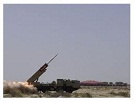
The Pakistan army’s directorate of Inter-Services Public Relations (ISPR), announced the successful testing of the 60-km nuclear-capable short-range missile Hatf IX (Nasr) on 11 February 2013 and declared, “…Nasr, can carry nuclear warheads of appropriate yield, with high accuracy… and has been specially designed to defeat all known anti-tactical missile defence systems.” The test, an implicit signal to the region about Pakistan’s commitment to developing “full spectrum deterrence including the use of TNWs”, was witnessed by the Chairman, Joint Chiefs of Staff Committee, General Khalid Shameem Wynne, Director General Strategic Plans Division, Lieutenant General Khalid Ahmed Kidwai (Retd), and Commander Army Strategic Forces Command, Lieutenant General Tariq Nadeem Gilani.

While Pakistan believes that the Nasr “adds deterrence value to Pakistan’s strategic weapons development programme at shorter ranges,” it has, in fact, further lowered its nuclear threshold through the likely use of TNWs. Pakistan has not formally declared a nuclear doctrine, but it is well known that nuclear weapons are its first line of defence. Its presumed “first-use” policy is aimed at negating India’s conventional military superiority by projecting a low nuclear threshold. The use of TNWs in the India-Pakistan case will alter the strategic scenario completely as Pakistan would threaten India with the use of TNWs in the event of New Delhi responding against Islamabad with a conventional strike in reaction to a 26/11-style terrorist attack. According to the Pakistan army, TNWs are designed to counter India’s Cold Start doctrine. Under this new policy, Indian troop formations could well face an onslaught of Pakistani TNWs.

Tactical nuclear weapons, often referred to as “battlefield”, “sub-strategic”, or “non-strategic” nuclear weapons, usually have a plutonium core and are typically distinct from strategic nuclear weapons. Therefore, they warrant a separate consideration in the realm of nuclear security. The yield of such weapons is generally lower than that of strategic nuclear weapons and may range from the relatively low 0.1 kiloton to a few kilotons. As Pakistan is already building its fourth nuclear reactor at Khushab—a plutonium producing unit, the clamour in the Pakistan armed forces for manufacturing tactical nuclear weapons has gone up.

Pakistan has been advocating the concept of a Strategic Restraint Regime based upon the principle of nuclear restraint and conventional force reductions and has termed it as a strategic confidence-building measure. Often citing what it terms as “India’s conventional military threat”, Pakistan forgets that given its offensive strategic posture and continuing involvement in terror strikes in India, it is New Delhi which is confronted with the problem of developing a strategy to counter Pakistan’s “first-strike” and proxy war in light of its declared “no-first-use” policy.

India has always viewed nuclear weapons as a political instrument whose sole purpose is to deter the use and threat of use of nuclear weapons against itself. India’s nuclear doctrine clearly outlines the strategy of credible minimum deterrence and also establishes that India will not be the first to initiate a nuclear strike. However, India shall respond with punitive retaliation should deterrence fail. To achieve this end, India’s nuclear doctrine calls for a sufficient, survivable and operationally prepared nuclear force; a robust command and control system; effective intelligence and early warning capabilities; comprehensive planning and training for operations in line with strategy; and requisite primary and alternate chains of command to employ nuclear weapons.

If Pakistan intends to develop these lower-yield nuclear warheads that can be fired from short-range tactical missiles, a future limited war scenario with India with grave repercussions remains a possibility. Pakistan should cooperate with India by taking requisite steps to stabilise nuclear deterrence and minimise existential nuclear dangers. It should not indulge in further destabilising nuclear deterrence in the name of “balancing the asymmetry with India in conventional capabilities.” India, yet again, has acted as a responsible player by not going down the TNW route fully acknowledging the perils involved. Pakistan needs to introspect. Even one nuclear strike-- tactical or otherwise --whether in India or against Indian forces, shall unquestionably invite massive punitive retaliation that will finish Pakistan as a nation state.
The history of nuclear deterrence tells us that TNWs lower the nuclear threshold and that makes them inherently destabilising. Their command and control is complex as it involves delegation of the authority to launch to commanders in the field if they are to avoid being confronted with the “use them, or lose them” challenge. Pakistan has opted to go down a dangerous path. It must stop its quest for TNWs as weapons of war.

Monday, October 8, 2012

Tactical Nuclear Weapons: Pakistan’s Dangerous Game (or Quest)


Gurmeet Kanwal
Visiting Fellow, VIF

The Pakistan army’s continuing efforts to arm the 60-km Hatf-9 (Nasr) short-range ballistic missile (SRBM) with nuclear warheads will adversely impact deterrence stability on the Indian subcontinent as tactical nuclear weapons are inherently destabilising and invariably escalatory. The Nasr missile was first tested in April 2011 and then again in May 2012 and is reported to be a replica of the Chinese M-20.

Even though 50,000 to 60,000 nuclear warheads were produced since the arguably senseless bombing of Hiroshima and Nagasaki in 1945, some basic human survival instinct “repeatedly stayed the finger that might have pushed the button.” The world’s abhorrence for nuclear weapons is now so widespread and deep-rooted that even if battlefield or tactical nuclear weapons (TNWs) were to be used against a purely military target in a conflict in future, the effect would be strategic. In fact, the impact would be geo-strategic as the explosion of even a single nuclear weapon anywhere on earth would be one too many. The employment of nuclear weapons as useful weapons of war was always doubtful; it is even more questionable today. Given the widespread abhorrence of nuclear weapons, the Nuclear Rubicon cannot be lightly crossed now and whichever nation decides to cross it will have to bear the consequences.

According to William R. Van Cleave and S. T. Cohen, “… the term tactical nuclear weapons in the closest approximation refers to battlefield nuclear weapons, for battlefield use, and with deployment ranges and yields consistent with such use and confined essentially in each respect to the area of localised military operations.” Some air-dropped nuclear glide bombs, carried by fighter-bombers, have been known to have yields of over one megaton. Parts of NATO’s erstwhile TNW forces, including Pershing missiles, were on constant readiness alert as part of the Quick Reaction Alert force. The line dividing tactical (including theatre) and strategic nuclear weapons is rather blurred. While a strategic strike can be conducted with weapons of low yield, a tactical strike can be effected with virtually any class of nuclear weapons – though the results achieved may not be commensurate with the effort put in. For example, hitting a forward military airfield with an ICBM would be a gross overkill and would result in extremely high collateral damage. In fact, the phrase ‘tactical use of nuclear weapons’ would convey a more accurate sense of the intended use rather than ‘use of tactical nuclear weapons’.

In the public perception, the most popular TNWs have been the 8 inch (203 mm) M-110 and the 155 mm M-109 atomic artillery weapons, and the Lance and Honest John SRBMs. At the upper end of the range scale were the Pershing missiles with a range of 160 to 835 km. These were intermediate range theatre SRBMs. The erstwhile Soviet and Warsaw Pact forces had their own corresponding TNWs. Among the better known ones were the FROG and Scud series of rockets and missiles. In addition, there was a category of weapons known as ‘mini-nukes’. These had yields from 0.05 to 0.5 kilotons. TNWs, particularly those of the US and its NATO allies, were nuclear warfighting weapons and formed an important part of NATO’s strategy of flexible response or ‘first use’ policy. These weapons were among the first that would have been used in the early stages of a NATO-Warsaw Pact war.

During the Cold War, the proponents of TNWs justified their requirement on the following grounds: they deter the use of TNWs by the enemy; they provide flexible response over the whole range of possible military threats; they offer nuclear military options below the strategic level; they help to defeat large-scale conventional attacks; and, they serve the political purpose of demonstrating commitment to the allies. The opponents of TNWs asserted that these ‘more usable’ weapons would lower the nuclear threshold and make nuclear use more likely. Fears of collateral damage in the extensively populated and developed NATO heartland spurred European opposition to TNWs. Many European political and military leaders convincingly argued that NATO would be better off without TNWs. Alain Enthoven wrote: “Tactical nuclear weapons cannot defend Western Europe; they can only destroy it… there is no such thing as tactical nuclear war in the sense of sustained, purposive military operations…”

There are other compelling reasons too for leaving TNWs out of the nuclear arsenal. Firstly, these are extremely complex weapons (particularly sub-kiloton mini-nukes, because of the precision required in engineering) and are difficult and expensive to manufacture and support technically. Inducting them into service even in small numbers would considerably raise the budget of the strategic forces. Secondly, the command and control of TNWs needs to be decentralised at some point during war to enable their timely employment. Extremely tight control would make their possession redundant and degrade their deterrence value. Decentralised control would run the risk of their premature and even unauthorised use – Kissinger’s ‘mad major syndrome’. Thirdly, since the launchers must move frequently to avoid being targeted, dispersed storage and frequent transportation of TNWs under field conditions, increases the risk of accidents. Lastly, the employment of conventional artillery and air-to-ground precision weapons by the enemy may damage or destroy stored nuclear warheads.

India has correctly opted not to go down the TNW route, but Pakistan has chosen to acquire these dangerous weapons. According to Pakistani analysts, the Htf-9 (Nasr) missile is their answer to India’s Cold Start doctrine as the use of TNWs will stop India’s armoured spearheads advancing into Pakistan in their tracks. They miss the centrality of India’s no first use doctrine completely: even one nuclear strike – whether in India or against Indian forces – will invite ‘massive punitive retaliation’, which Pakistan can ill afford.

It is now universally accepted that nuclear weapons are political weapons and are not weapons of ‘warfighting’. By extension, TNWs now have no role to play in combat. The international community must come together to stop Pakistan’s dangerous quest to acquire these destabilising weapons.